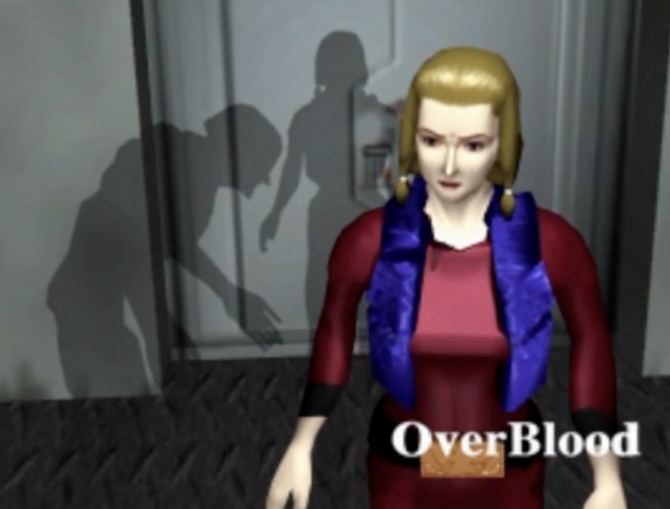
On August 2, 1996, River Hill Soft released *OverBlood* for the PlayStation 1.
This 3D active adventure game incorporates sci-fi horror elements and follows a protagonist who has lost his memory as he attempts to escape from a mysterious underground research facility.
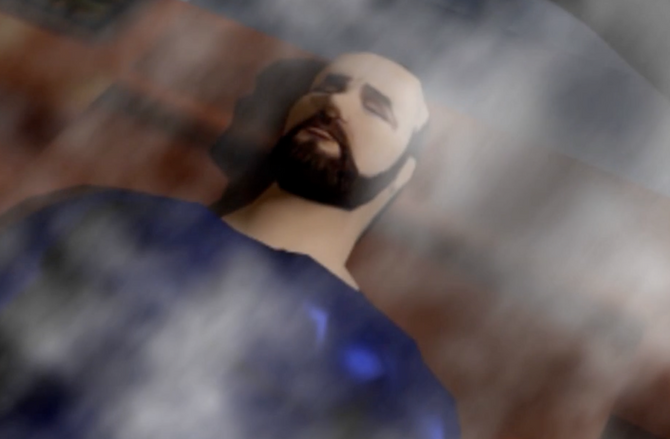
The story is set in the year 2095. The protagonist, “Raz Kashi” (age 32), awakens from cryosleep with no memory of who he is or why he is trapped inside the research facility.
Working together with “Pipo,” a small robot he meets inside the facility, and a mysterious woman, he attempts to escape the underground research facility while uncovering the truth behind terrifying human experiments.
The year 1996, when this game was released, was also the time when the landmark title *Resident Evil* debuted, and the survival horror genre began to attract significant attention.
However, *Overblood* took a different direction from *Resident Evil*, featuring exploration of a fully polygonal 3D world and a story that emphasized sci-fi mystery.
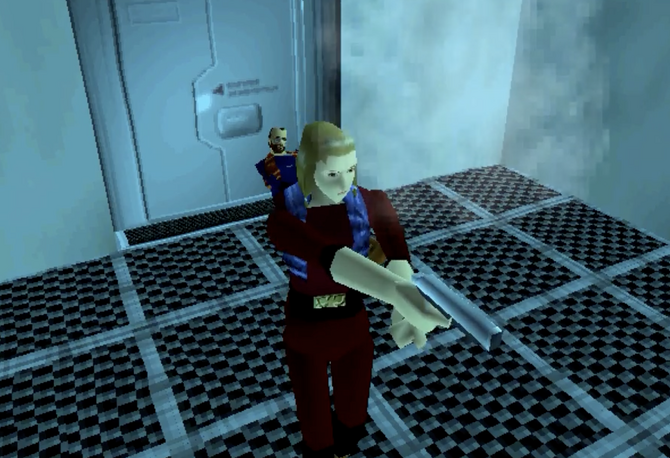
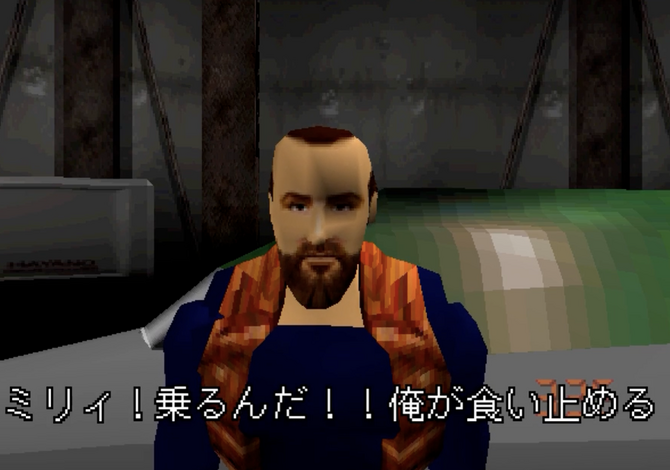
And what’s most memorable of all is the truly unconventional duo: the protagonist Raz, characterized by his deep voice and bearded face, and a small AI robot that emits strange electronic sounds.
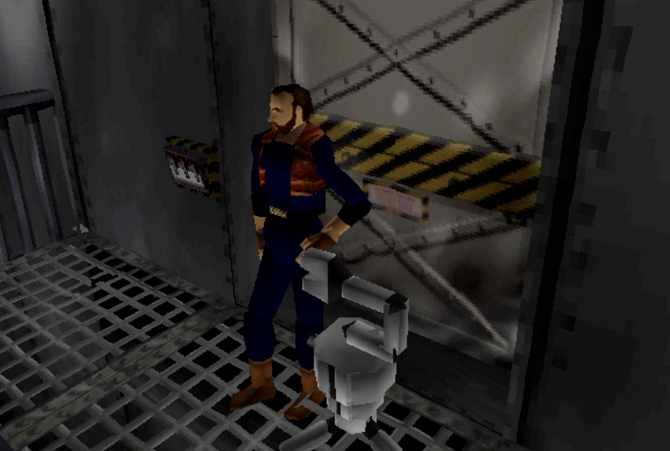
Contrary to its hard-edged sci-fi horror setting, the game featured a unique system, including the characters’ somewhat bumbling movements, sudden and unjust game overs, and a brutally high difficulty level.
In this article, I’d like to look back on its distinctive, richly developed characters, its game systems, and its appeal as a ’90s sci-fi horror title.
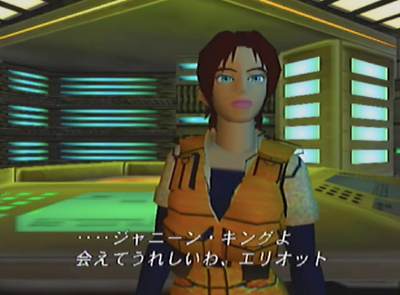
◆The Charm of “Raz Karsi,” the Strangely Intensive Protagonist with a Deep Voice and a Beard

The story begins in the year 2095, when a massive earthquake causes a man to awaken from a cryogenic sleep chamber in an underground research facility.
The protagonist, Raz Kashi, suffers from amnesia and can’t even remember his own name. His first challenge is to escape from a room with extreme sub-zero temperatures before he freezes to death.

Right from the start, players face a rather challenging introduction: if they don’t assess their surroundings and take the right actions, it’s game over.
Despite being placed in such a harsh situation, Raz is a truly unique character. With his rugged, masculine appearance—complete with a stubble beard—combined with a deep, gravelly voice, he looks exactly like a protagonist who could appear in a sci-fi action movie from the ’80s or ’90s.
Incidentally, Raz’s Japanese voice is provided by voice actor Yusaku Yara, best known for his role as Hiroshi in “Chibi Maruko-chan.”
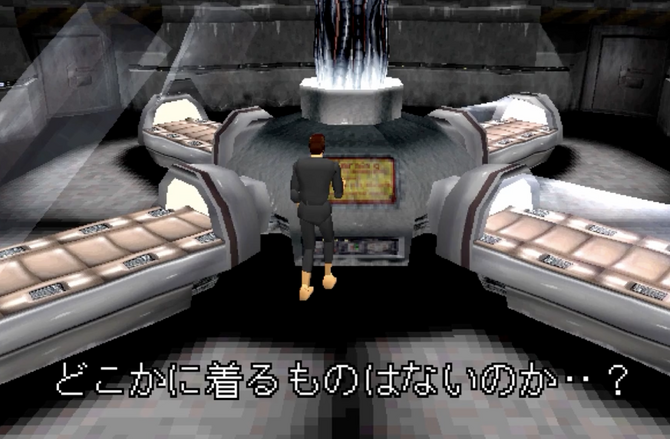
Another striking feature is his somewhat exaggerated gestures and unique posture. Combined with the stiff, polygon-based animations of the era, there are plenty of scenes where, despite the seriousness of the situation, he comes across as humorous.
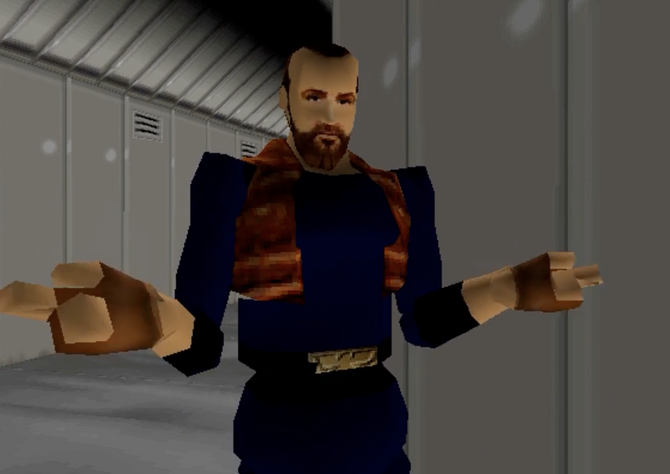

Raz himself isn’t fooling around at all; he’s earnestly trying to unravel the mysteries of the research facility. However, his oddly crouched stance, the way he runs, and his clumsy movements—like getting caught on obstacles—unintentionally give him a comical air.
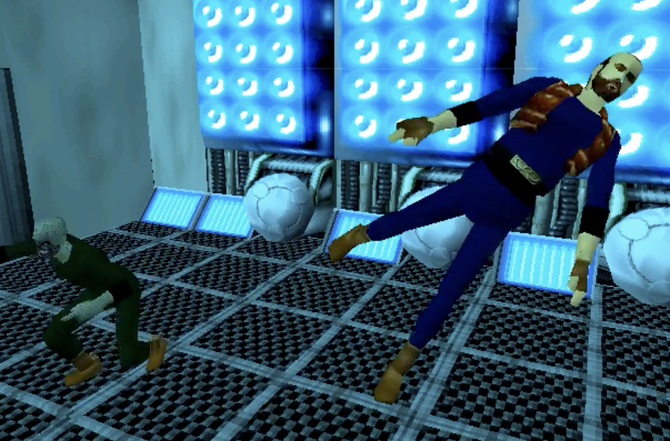
At the same time, he possesses a reliability that allows him to act without hesitation even in unfamiliar situations, as well as a human touch that shows he cares deeply for his friends.
Although Raz is a “middle-aged guy” character—a far cry from the typical handsome hero—he exuded a strong presence as a protagonist who, even if a bit over-the-top, is approachable and worthy of affection.
◆Weird but Dependable! A Bizarre Journey with the Soothing Little Robot “Pipo”
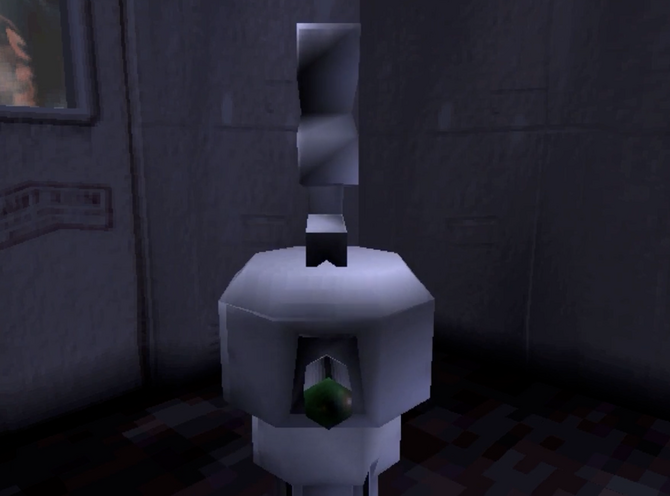
“Pipo” appears as Raz’s one-of-a-kind partner. Pipo is a small robot equipped with high-performance AI; Raz named him after the electronic sounds he makes, such as “Pee-poo” and “Pipo.”
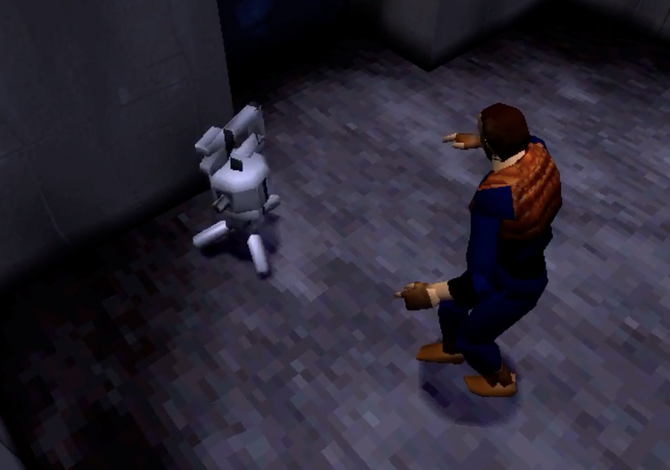
When Raz uses a microchip to activate the robot he discovered inside the facility, a strange partnership is born. Its tiny body and distinctive movements stand out strikingly even within the gritty world of sci-fi horror.
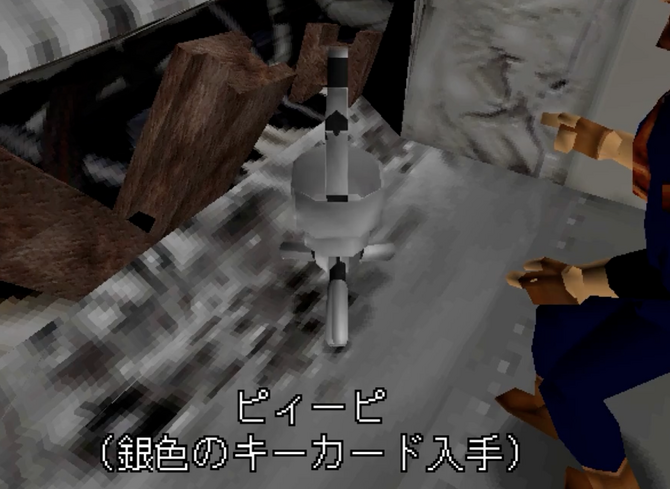
While it seems far from the image of a reliable combat robot, in actual gameplay, it proves to be an indispensable ally for exploration.
For example, this game features a system that allows the player to switch between Raz and Pippo. By utilizing Pippo’s unique abilities—such as accessing computer terminals Raz cannot operate or navigating narrow spaces inaccessible to humans—you can solve the puzzles within the facility.
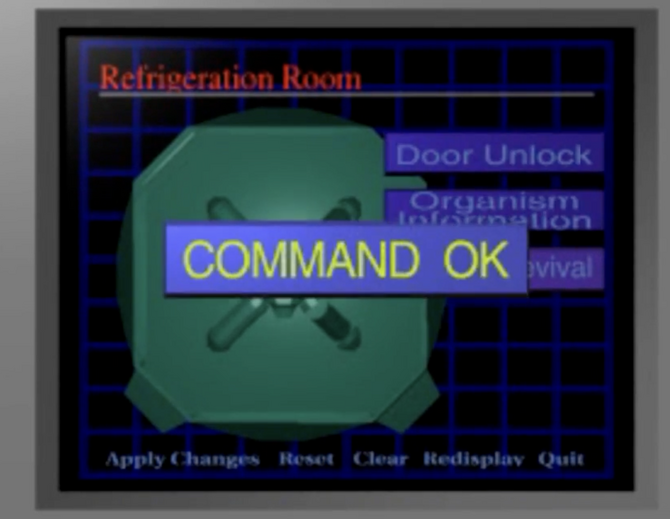
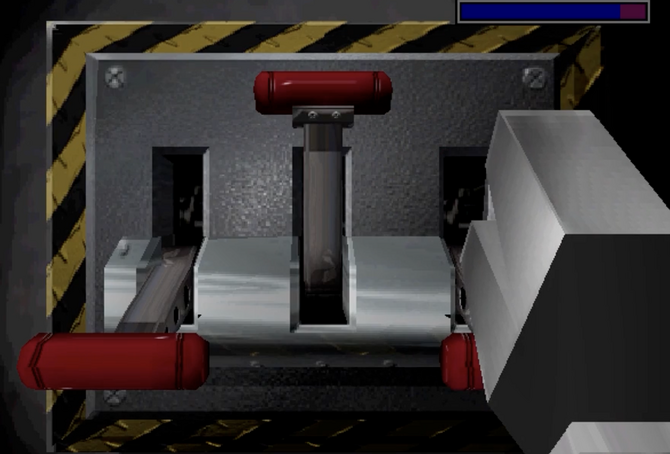
Pipo is not merely a companion character; the very act of switching between the two characters’ abilities is integral to the game’s system.
Furthermore, what makes the combination of Raz and Pip so interesting is how contrasting their personalities are. While Raz resembles a bearded, middle-aged man with a deep voice, Pip is a small, endearing character who emits electronic sounds.
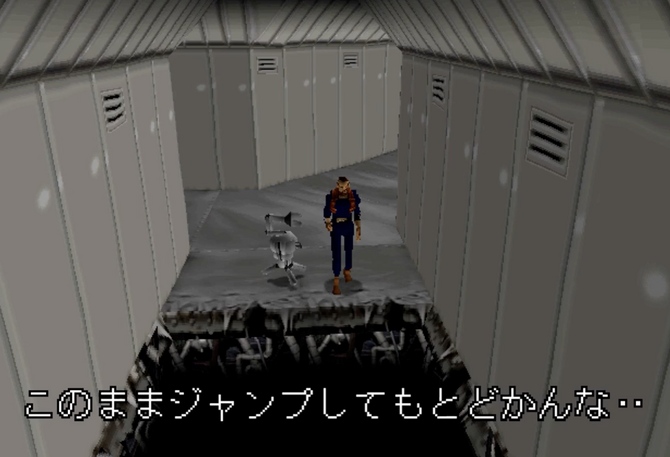
Even though they can’t communicate through words, their actions and reactions mysteriously convey the bond between partners.
At times, Pipo even boldly attacks enemies to save Raz from a pinch. In a research facility where humans have all but vanished, Pipo’s presence will surely be a source of comfort for players as well.

While this game is a serious sci-fi horror title dealing with amnesia and human experimentation, the relationship between Raz and Pipo ensures that the adventure isn’t purely about fear—it’s also a bit humorous and heartwarming.
◆ Human Experimentation, Genetic Manipulation, Cloning—The World of ’90s Sci-Fi Horror
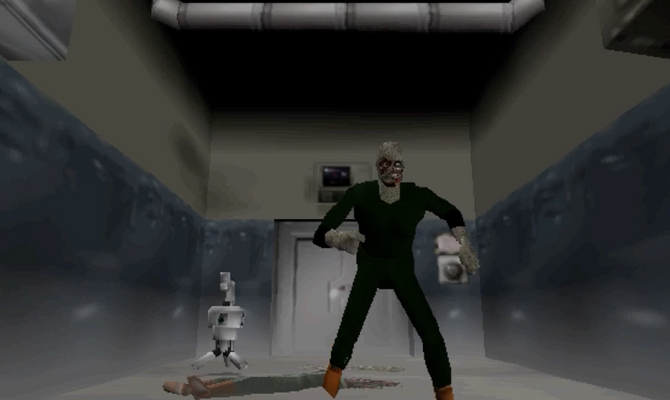
The game is set in the mysterious underground research facility known as “Listera Research Institute.” At the heart of the story lie sci-fi themes such as genetic engineering, human experimentation, and cloning technology.
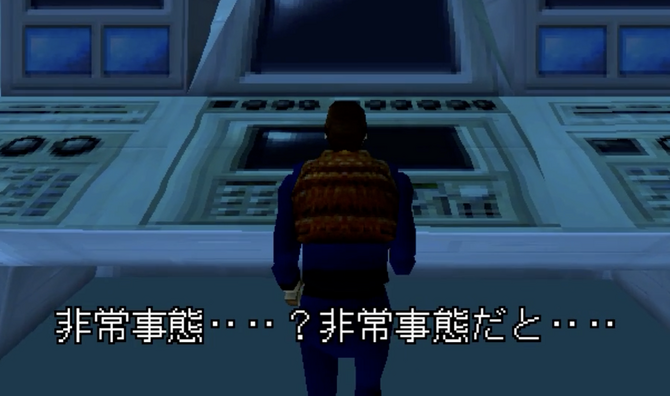
At the institute, research was underway to develop enhanced soldiers for military use, and as part of this process, a dangerous virus with a 100% fatality rate—known as the “ARNA Virus”—was being studied. However, the experiments claimed many lives and led to serious consequences, such as test subjects turning into monsters.

This setting brings to mind Hollywood sci-fi horror films from the 1980s and 1990s.
For example, there are numerous motifs in common with works like the “Alien” series—tragedies triggered by scientific technology and corporate interests—or the classic masterpiece “The Thing,” where fear of an unknown life form spreads within a confined space.
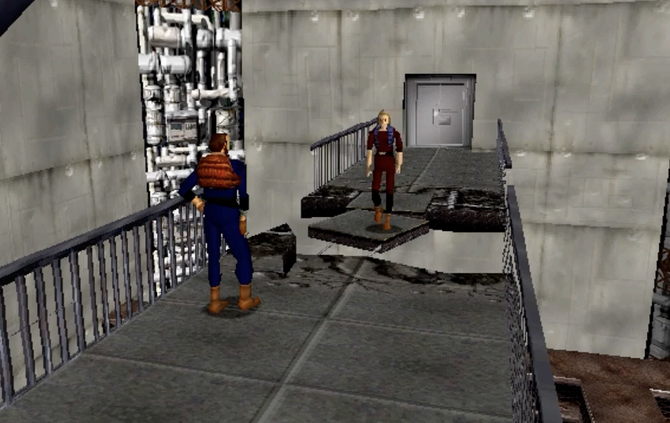
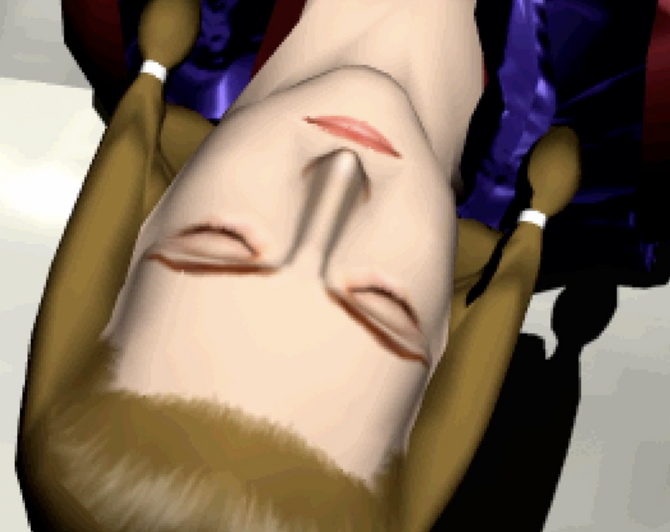
Partway through the story, a woman named “Millie Azlay”—who, like Raz, has lost her memory—makes an appearance. Through his encounter with her, doubts begin to arise not only about the true nature of the research facility but also about the protagonist’s own past.
One of the game’s main attractions is its full-fledged narrative, which unfolds as a sci-fi suspense story that goes far beyond a simple monster-hunting adventure.
◆ How Is It Different from *Bio*.? Unique Exploration and Combat Systems
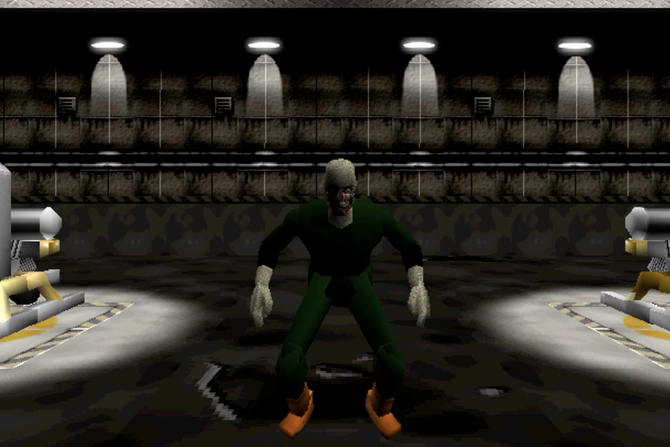
As a horror game released in the same year—1996—this title is sometimes compared to *Bio*. Both games follow a structure where players explore sealed-off buildings, expanding their range of movement by collecting items and solving puzzles, all while unraveling the secrets hidden within the facilities.
However, there are significant differences in the game design of the two titles.
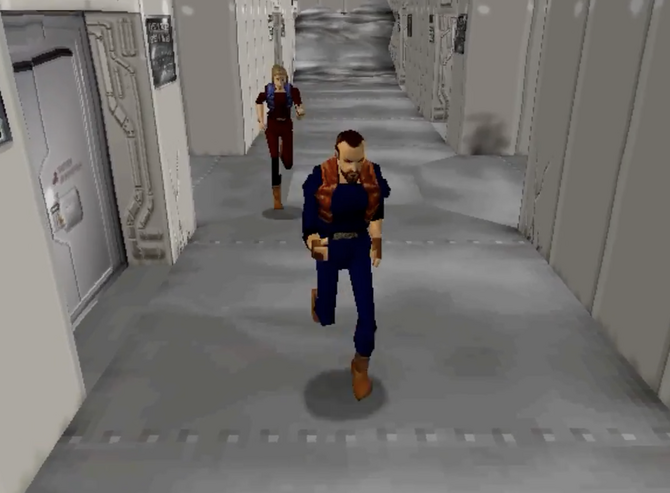
First, let’s look at how 3D space is rendered. The original *Bio* used the so-called “pre-rendered method,” placing polygonal characters against pre-rendered background images to achieve a cinematic visual style.
In contrast, *Overblood* constructs the interior of the facility—including the backgrounds—using real-time 3D polygons.When discussing this game’s full-3D exploration system, one cannot overlook *Dr. Hauser*, released by River Hill Soft for the 3DO in 1994. That title also featured exploration of a 3D space rendered in real time, and *Overblood* inherited that design philosophy.
Additionally, Akihiro Hino—who would later found Level-5—participated in this title as lead programmer. It is a fascinating work for understanding the trial and error involved in 3D adventure games of the 1990s.
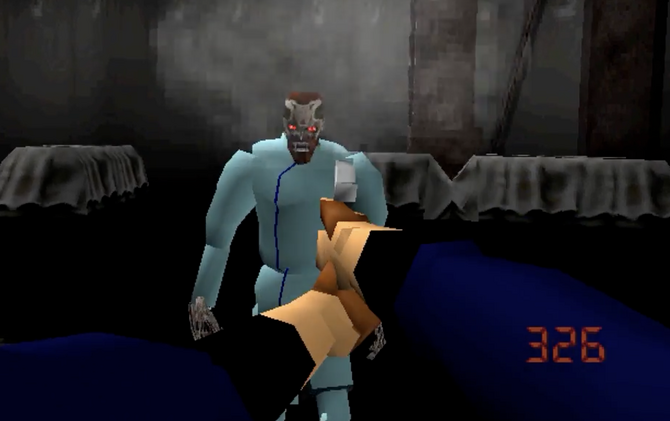
Furthermore, this game offered an exceptionally rich set of options for its time, allowing players to switch not only between a fixed viewpoint but also a camera that follows the protagonist and a first-person perspective.
Players could move while watching the character during normal exploration, or use the first-person view to examine detailed surroundings, allowing them to assess their environment according to the situation.
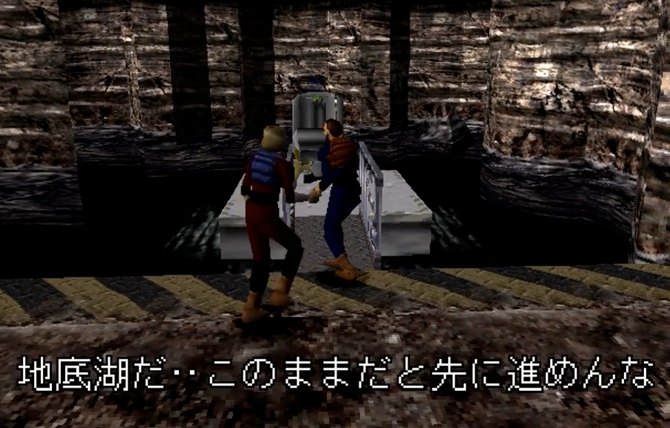
The game also featured a wide range of exploration actions—such as “crouching,” “jumping,” “running,” and “pushing” objects—making it a title with stronger action elements than *Bio*.
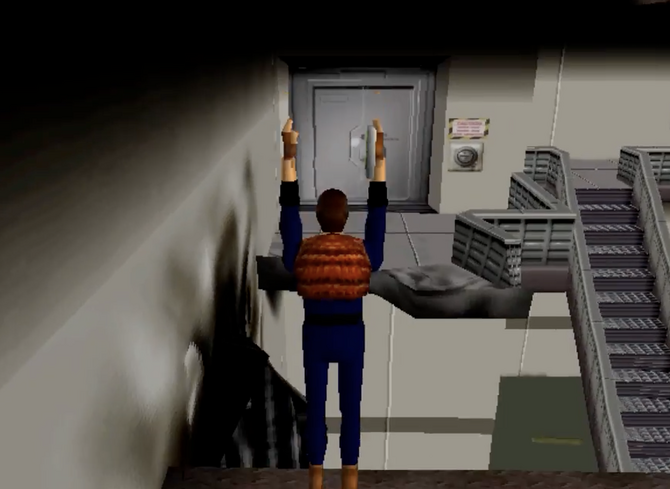
The puzzles are also relatively realistic. With numerous mechanisms tailored to the research facility setting—such as operating machinery or using tools to clear a path—the game features a strong emphasis on exploration. Including the cooperation with Pipo, this title has a strong adventure game feel to it.
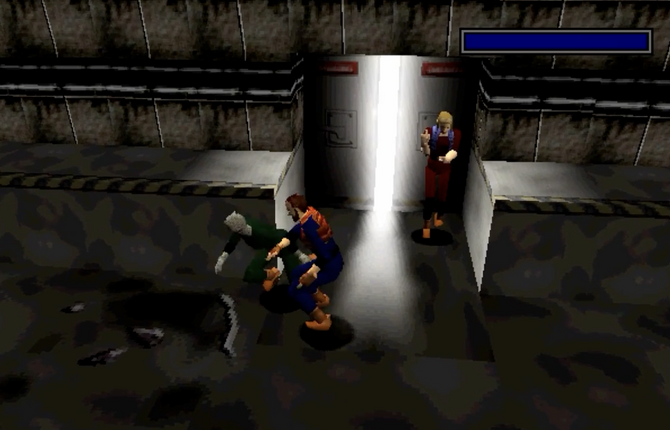
Now, regarding combat, to be honest, it isn’t as polished as in *Bio*. This is because the system doesn’t involve constantly keeping a weapon drawn to defeat enemies; instead, combat occurs during specific events, and gameplay is focused on exploration.
Furthermore, since ammunition is even more limited than in *Bio*, the standard strategy for defeating minor enemies is to simply “punch” them, which doesn’t feel very engaging.
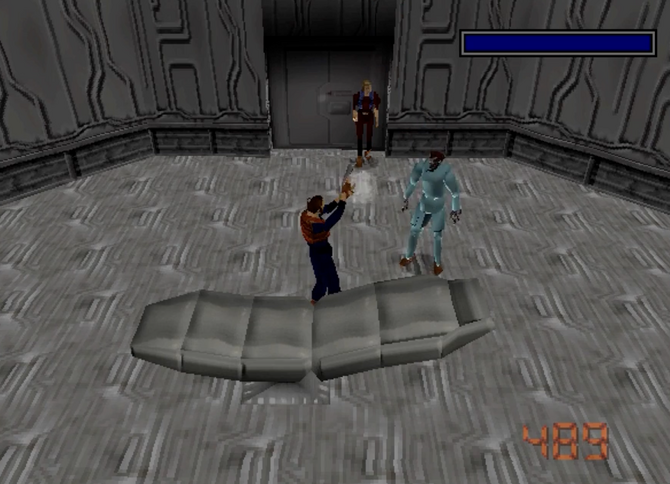
Additionally, the creature designs—which should be the game’s strongest point—lack charm, and with few attack animations (enemies often just charge straight at you), the combat lacks both tension and enjoyment, which is a real shame.
◆ A Sci-Fi Adventure Game with a Unique World

It cannot be said that this title was on par with *Resident Evil* in terms of polish. The controls and action sequences were often rough around the edges, and the game’s overall content wasn’t particularly substantial.
However, I believe it was a commendable challenge to realize a full 3D adventure game set in a research facility back in 1996 and to unfold a sci-fi mystery centered on human experimentation and cloning.
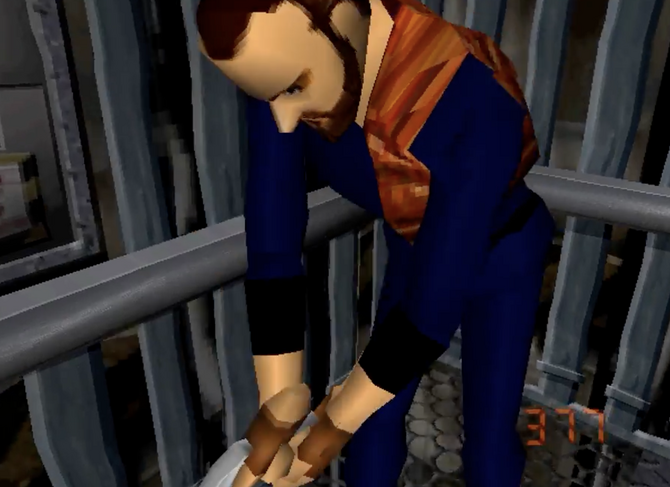
Above all, the unconventional duo of Raz and Pipo gave this game its own unique charm.
This game is not merely a *Bio* knockoff; it’s a title that blends a world reminiscent of 1990s sci-fi horror movies, authentic puzzle-solving as an adventure game, and the distinctive personalities of Raz and Pipo. The result is a unique experience that leaves a lasting impression on players—one that cannot be found in any other title.