


During the Wii era, Nintendo undertook an initiative called the “Island Concept.” The idea was to craft a single setting with as much detail as a character and feature it across various titles. That setting was “Woohoo Island.”This resort island, dominated by the iconic Denga Namanga Volcano, first appeared under this name in *Wii Sports Resort*.
*Nintendo Switch Sports Resort*, a Nintendo Switch 2 exclusive and the sequel to *Nintendo Switch Sports*—which marked the long-awaited return of the *Wii Sports* series—is, as its name suggests, set once again on Wuhu Island.
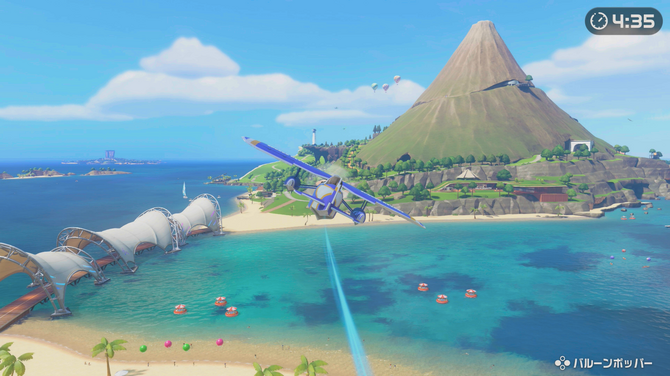
In the most meticulously crafted version of Woohoo Island yet, you’ll race across land, sea, and air while enjoying a variety of sports. Here’s our review of the latest entry in the *Sports* series.
A Minimalist, Dense Open World
The standout feature of this game, much like *Wii Sports Resort*, is that the entire setting takes place on a single island. The 12 sports included in this title—*Tennis*, *Bowling*, *Archery*,“Boxing,” “Volleyball,” “Table Tennis,” “Basketball,” “Golf,” “Finger Sumo,” “Propeller Plane,” “Skateboarding,” and “Jet Ski”—are all played at facilities located on “Woohoo Island.”
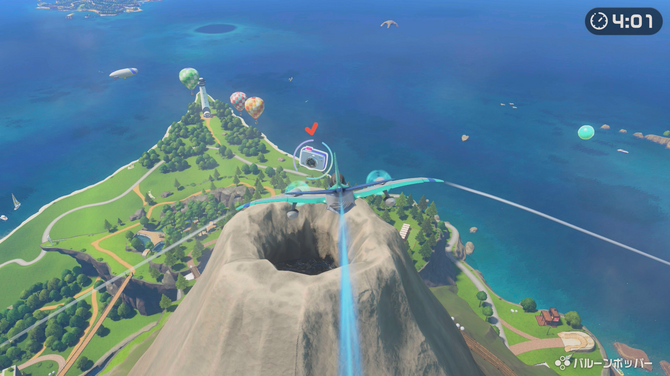
It wasn’t just a setting—one of the fun aspects of *Wii Sports Resort* was being able to freely explore the island from the air via “sightseeing flights.”
In *Nintendo Switch Sports Resort*, this “sightseeing flight” has been renamed “Island Sightseeing.” The goal of this mode is to touch as many “Spocco Photos”—spots scattered throughout the island—as possible within the time limit.
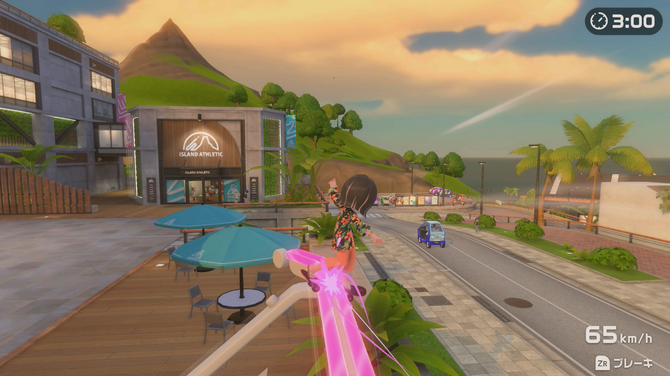
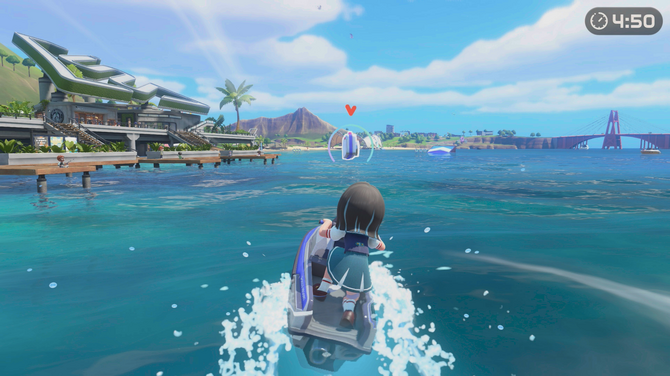
In “Island Sightseeing,” you can now play not only the “propeller plane”—which was also in *Wii Sports Resort*—but also the “skateboard” and “jet ski.” In short, this version of Woohoo Island allows for free exploration on land, at sea, and in the air.
Consequently, the island’s visuals have been crafted with meticulous detail to ensure they look just as impressive from a life-size human perspective—on a skateboard or jet ski—as they do from a bird’s-eye view in the propeller plane.
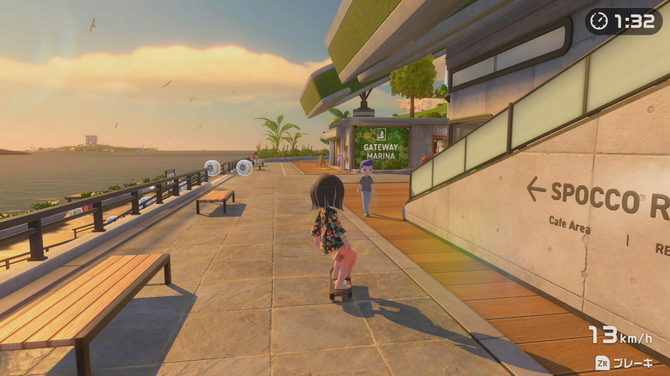
In particular, skateboarding—a first for the series—takes full advantage of the Nintendo Switch 2’s mouse controls. The controls are highly intuitive: hold a Joy-Con 2 like a mouse, slide it toward you to kick the board, tilt it to turn, and lift it to jump.
Among the game’s overall pleasant sound design, the “clack-clack-clack” sound of the skateboard gliding is particularly satisfying when combined with the HD vibration from the Joy-Con 2 you’re firmly gripping, providing a soothing experience as you glide effortlessly across the island.
The number of spots you’ll collect while “exploring the island’s landmarks” is quite substantial: about 100 by propeller plane, about 80 by skateboard, and about 60 by jet ski.In addition to Spoko Photos, the island is dotted with challenges called “Missions,” such as “White Balloon Pop,” where you pop balloons placed in specific areas, and “Hibiscus Hunt,” where you collect hibiscus flowers located in difficult-to-reach or hidden spots.
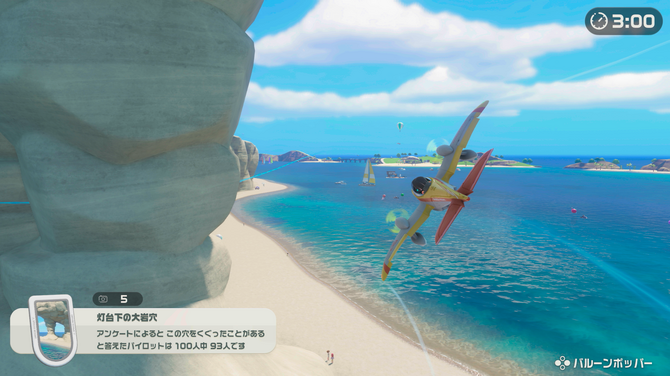
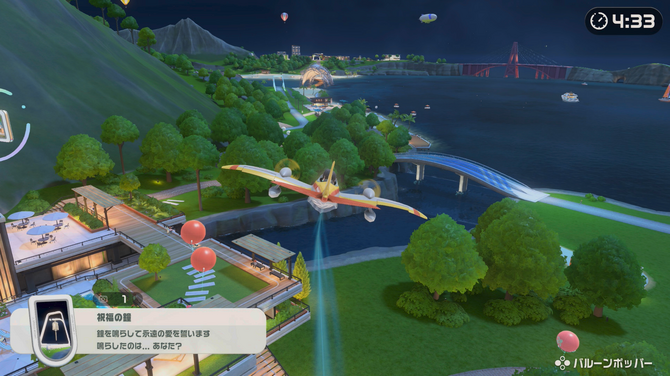
Similar to the “i-mark” in *Wii Sports Resort*, Spocco Photos come with text descriptions for each spot, giving you a sense of the daily lives of the island’s residents.Even for the same spot, different text descriptions are provided depending on whether you’re using a propeller plane, skateboard, or jet ski, as well as the time of day—day, evening, or night—and these sometimes reveal fun little tidbits about the location.
Furthermore, since the layout of some Spoko Photos changes depending on the time of day, exploring the island’s landmarks to achieve full completion requires a significant amount of time and effort.
All of this is densely packed into the relatively small field of Woohoo Island, and since the spots are well-connected by paths marked with coins and other cues, it offers a very fulfilling experience simply as an open-world exploration adventure.
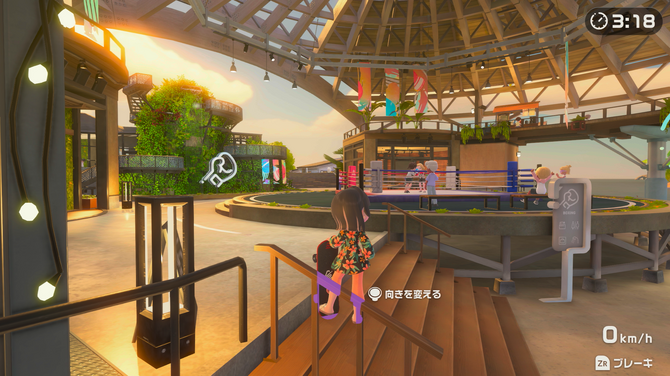
On the other hand, the more you savor this meticulously crafted open world, the more you can’t help but feel it’s a shame that this field can only be enjoyed within the standalone “Island Sightseeing” mode.
In “Island Sightseeing,” you can also visit locations that serve as venues for various sports. From volleyball matches held in the forest to boxing matches taking place at large facilities on the beach, the entire island comes alive as a resort where you can enjoy sports.
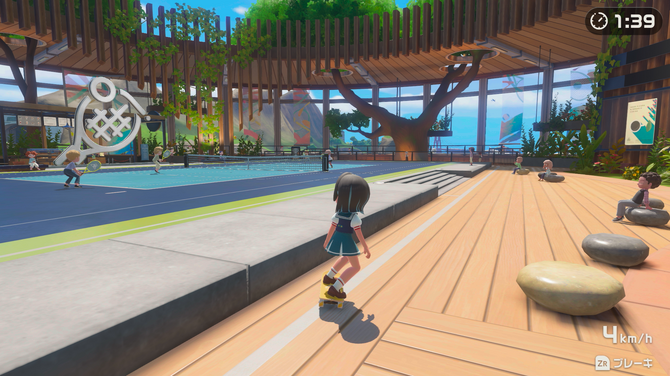
However, even though sports facilities are actually scattered throughout the island, their design is ultimately nothing more than a minor detail within the “Island Sightseeing” mode.
Despite the field being so meticulously crafted—to the point where the open world itself could be the game’s main focus, allowing players to actually visit facilities to play each sport or treat the field itself as an online lobby—the exciting elements that would enable role-playing in this resort setting have, for some reason, been excluded.
Of course, it’s precisely because they didn’t do that that the game achieves the fast-paced feel characteristic of the *Wii Sports* series, where you can access each sport or menu item instantly from the main menu. However, this is something that could easily coexist even if the open world were the primary focus. In any case, it seems like an excessive luxury—in a negative sense—that such a vast field exists solely for the sake of a single mode.
A Rich Single-Player Experience with Varied Content
The *Sports* series is characterized by motion controls that utilize the gyro and accelerometer sensors built into the Wii Remote and Joy-Con 2. Not only can you enjoy controls modeled after each sport, but the game also ensures a solid competitive experience with strategic depth.
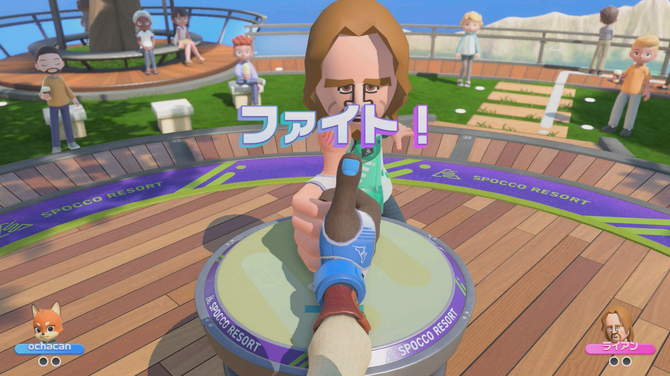
Among the 12 sports included in this title, the two mentioned above—“Skateboarding” and “Finger Sumo”—are making their series debut. Setting aside the question of whether it’s even appropriate to call “Finger Sumo” a sport, the strategic back-and-forth itself is quite intense.
Finger Sumo has a simple rule: you win by holding down your opponent’s finger for a certain amount of time.On top of that, the game features a system where “holding down a finger for a certain amount of time makes it grow larger,” and “pressing a smaller finger with a larger one makes it easier to knock it out.” This creates a strategic dilemma: should you take the risk of being pinned to make your finger grow, or keep your finger small to be ready to pin your opponent’s finger at any time?Above all, the controls are simple—just tilt a second Joy-Con and press a button—so it’s great that anyone can enjoy it as a party game.
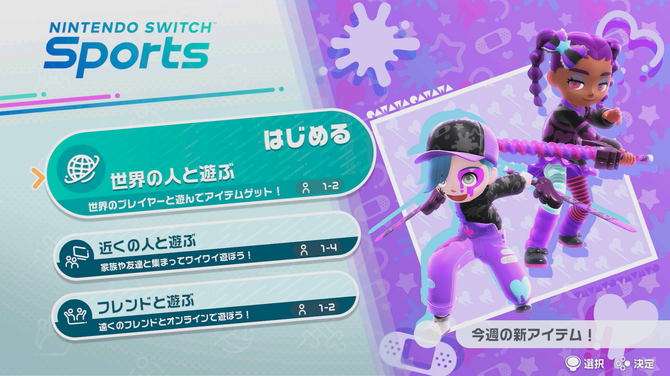
The biggest weakness of the previous title, *Nintendo Switch Sports*, was the significant lack of single-player content. Much of the content and gameplay loop was designed with online multiplayer in mind, and as a result, a lot of effort went into the ranked match system.
Even for the “Sports Mates”—the new avatar characters introduced in the previous game to replace Miis—the primary way to obtain their extensive wardrobe was essentially through online multiplayer. It had become a cycle where players would dive into online matches with their show-off avatars to earn new outfits.
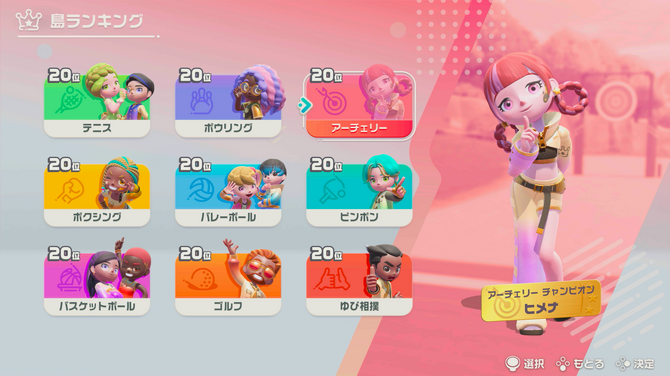
This title, however, is packed with features that make it enjoyable even in single-player mode, including the exploration elements of the aforementioned “Island Sightseeing” mode, as well as the addition of “Island Rankings,” where you take on powerful CPU opponents.
“Island Rankings” is a mode where you compete in nine sports—primarily focused on head-to-head matches—against CPU opponents who gradually become stronger. You start at 20th place and work your way up the ranks by defeating the CPU opponent ranked one spot above you, ultimately challenging the No. 1 Island Champion.
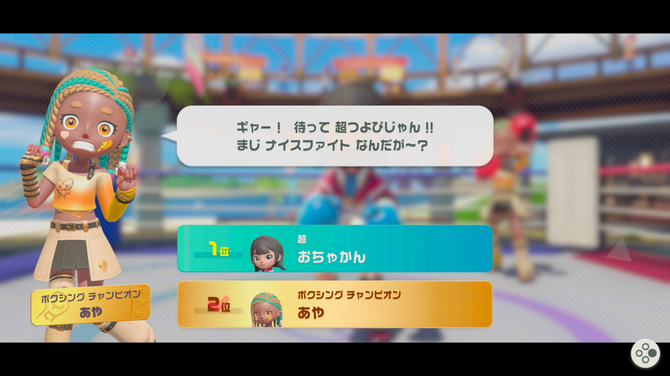
Surprisingly, each Island Champion is portrayed as a unique character. As you climb the ranks, they’ll chat with you about various things, such as sharing tips on how to master their respective sports.
It’s a nice touch that each character’s personality is carefully crafted—for example, they all have their own unique entrance poses. Since the Island Champions appear in pairs, there’s even some banter between the characters, which might make shipping them a bit more fun…?
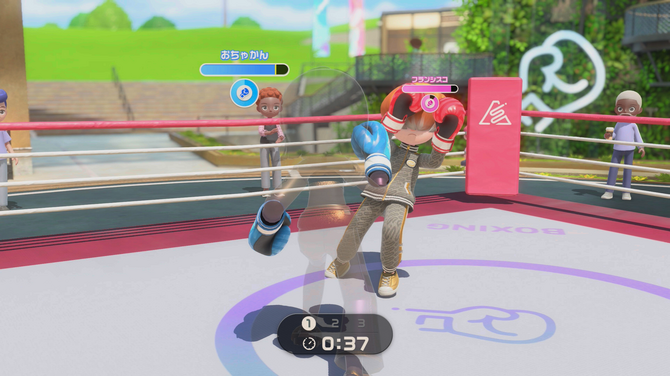
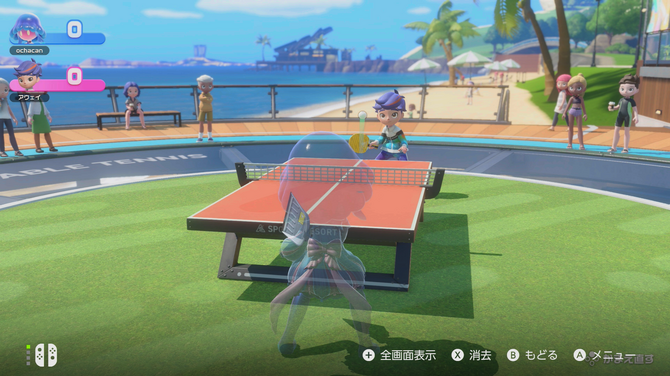
The CPU opponents you face on your way to challenging the Island Champions aren’t just getting stronger in terms of their range of moves and reaction speed. For example, in table tennis, you’ll encounter opponents who relentlessly fire “block” shots—CPUs with unique playstyles—so you’ll sometimes need to adapt your strategy on the fly.
The Island Champions themselves are genuinely powerful, and you won’t be able to win unless you have a solid grasp of the sport’s mechanics. On top of that, after defeating an Island Champion, you can take on even tougher opponents known as “Legends,” making for some truly challenging content.
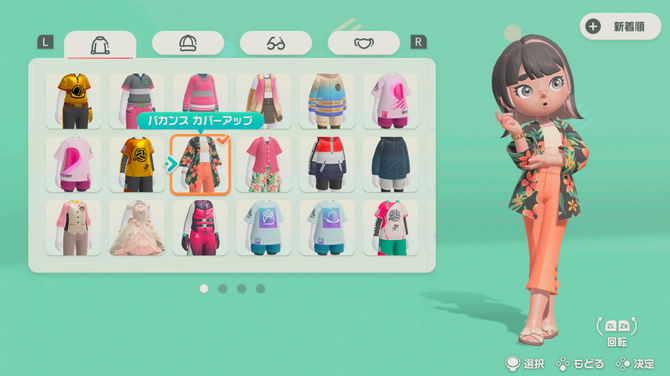
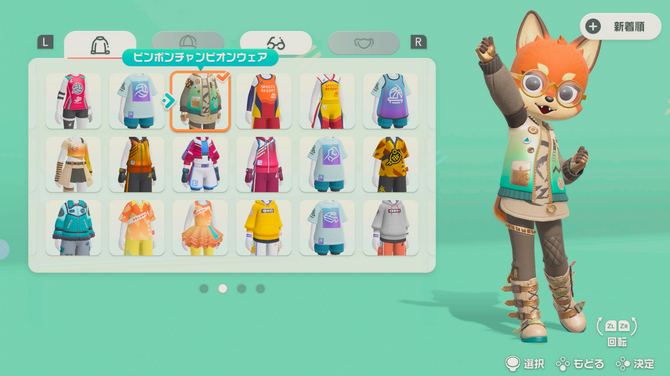
As you progress through various single-player activities—such as battling Island Champions or exploring the island’s landmarks as mentioned above—you’ll earn a currency called “Spocco Points.” In this game, you can use these points to unlock new outfits for your Sports Mates, creating a self-contained cycle where gameplay and rewards are entirely self-sufficient even in offline mode.
On the other hand, many of these Sports Mates’ outfits appeared in the previous game, and since the available outfits are randomized for each user, some players may find it difficult to obtain new ones. That said, since there were already many attractive outfits in the previous game, players starting with this title can still enjoy a wide variety of outfits.
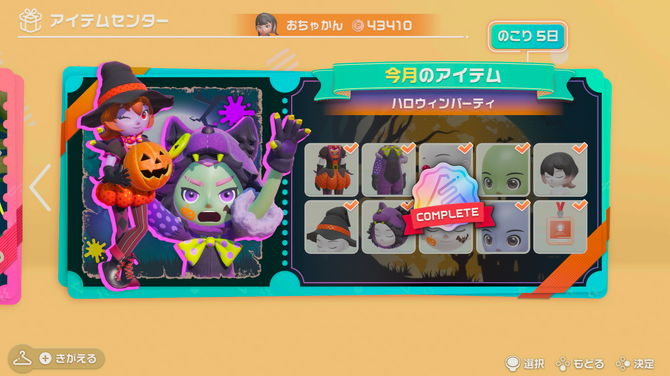
Additionally, while the pool of available outfits rotates weekly and monthly, once you’ve collected all the outfits for a given week or month, you’ll have no use for your Spocco Points, causing them to simply pile up.
As a result, when the weekly and monthly updates occur, players end up simply spending their accumulated points to complete the current set, creating a situation where the reward cycle doesn’t run smoothly.
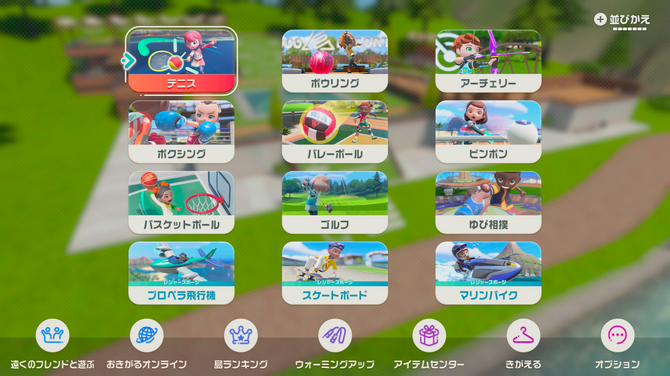
Similar to the outfits, many of the included sports are carried over from the previous title and earlier games, with relatively few new ones. New features are largely limited to the open-world elements mentioned above, and the lack of novelty is particularly noticeable to players who thoroughly played the previous game.
As with the previous title, if additional sports are added via updates for this game, I believe its appeal would be further enhanced if, in addition to new competitive sports, leisure sports such as “jogging,” “cycling,” and “canoeing”—which allow for greater use of the open-world fields—were included.
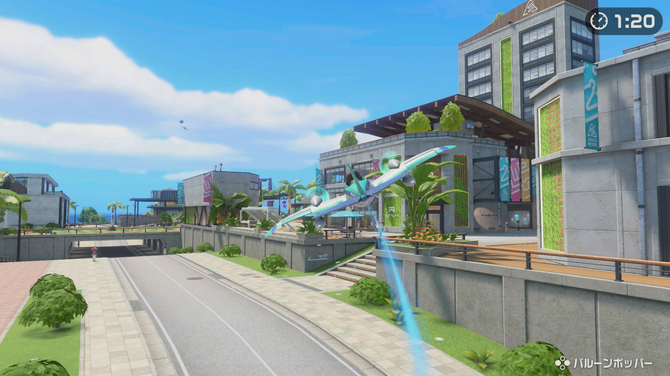
The biggest highlight of *Nintendo Switch Sports Resort* is “Island Sightseeing,” which can be described as a major evolution of the “Sightseeing Flight” mode from *Wii Sports Resort*.You can explore every corner of Woohoo Island—now with even more refined details—across three layers: the sky in a propeller plane, the land on a skateboard, and the sea on a jet ski.
Compared to the previous title, *Nintendo Switch Sports*, which focused almost exclusively on online play, the single-player experience is much more robust. In addition to the “Island Sightseeing” mode mentioned above, the “Island Rankings” mode now allows you to fully immerse yourself in each sport even when playing alone.
On the other hand, due to the limited number of new sports and outfits, the experience may feel less fresh—especially for players who thoroughly played through the previous title.Since the meticulously crafted open world is treated as just one mode among many, the game as a whole feels like little more than a slight upgrade over its predecessor. If the goal was to deliver a new experience to users as the latest installment, I can’t help but feel they could have taken it a step further.
Game*Spark Review: “Nintendo Switch Sports Resort” Nintendo Switch 2 October 22, 2026
The latest entry in the ‘Sports’ series features a fun, minimalist, high-density open world that’s thoroughly enjoyable even when playing solo
-
GOOD
- A minimalist yet densely crafted open world
- The “Spocco Photo” captions scattered throughout the island are fun
- The gameplay loop is now fully enjoyable even in single-player mode
- All the island champions are just too cute
BAD
- There aren’t enough opportunities to make the most of the high-quality field
- There are few new sports, systems, and outfits, so it lacks the freshness you’d expect from the latest installment


¥6,667
(価格・在庫状況は記事公開時点のものです)



