


The latest installment in the series, *Call of Duty: Modern Warfare 4*, was released on October 23.In addition to a campaign depicting an all-out war breaking out on the Korean Peninsula and a conspiracy surrounding Captain Price, the game features a variety of game modes, including an enhanced multiplayer mode and the escape shooter “DMZ.”
In this article, we’ll focus on the game’s campaign mode, providing an in-depth review covering its tense depictions of war, thrilling missions, the polish of its graphics and presentation, and even the story’s conclusion.
Please note that we received a review code from Activision for this review, and the content of this article, as well as the screenshots, are from the PC (Steam) version. Also, please be aware that this review contains major spoilers for the campaign.
A Campaign Story Unfolding Along Two Axes—Immersion Born from Tense Realism

*CoD: MW4* is the latest entry in the *CoD* series. As the sequel to the 2023 reboot *MW3*, its campaign weaves together two storylines: “a narrative centered on South and North Korea” and “the story of Captain Price and Task Force 141.”
First and foremost, what stands out most about this game’s campaign is its setting in South and North Korea. In reality, South and North Korea remain in a state of armistice following the Korean War, and recent incidents—such as a South Korean soldier being injured by a landmine near the Military Demarcation Line—make this a highly sensitive subject.


Although this is a work of fiction, tackling such a sensitive subject creates a unique sense of tension in the narrative. The South Korean storyline is primarily told from the perspective of Private Park of the South Korean Army.The story begins with casual scenes of banter among unit members and a trip to a convenience store—a daily routine that is suddenly shattered by an invasion by North Korean forces.
Even when viewed in light of the actual situation on the Korean Peninsula, there is a sense of tension that makes it difficult to call this a complete work of fiction; the realistic portrayal of Private Park’s inner conflicts and emotions—as an ordinary soldier—adds authenticity and enhances the viewer’s immersion in the story.


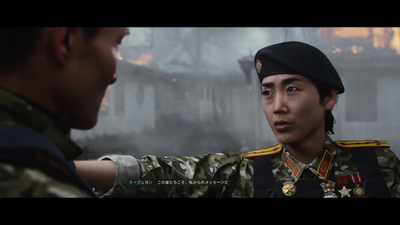
The same is true on the North Korean side. There is “Ri Seung-ho,” a moderate who assumes leadership as his late father’s successor, and, in contrast, his sister “Ri Ju-yeon,” who holds radical views.The story depicts the ideological differences between the two and the domestic situation in North Korea, which is rocked by a coup, leading the viewer to think, “There must surely be a future where this happens.”
Particularly striking is the scene in the midst of the coup led by his sister, where Seung-ho, reminiscing about his late father—who was revered as a “human god”—asks, “Why are my people trying so desperately to escape from North Korea?”

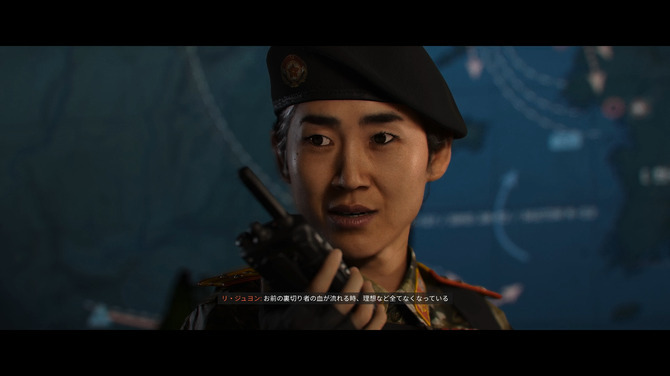
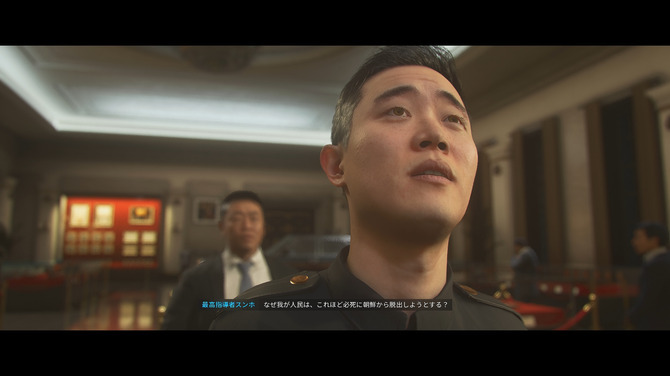
Furthermore, the meticulous attention to detail in the production enhances the game’s immersive experience. The graphics, in particular, are of exceptionally high quality, realistically recreating the atmosphere of city streets, the cold winter sky, and underground facilities; even the people walking the streets and the villagers in the countryside are depicted with great detail.
Cutscenes and events also feature explosive and intense gunfights. In particular, the scene toward the end of the story where the South Korean military carries out a large-scale amphibious landing operation, as well as the chapter where the air force base is blown up, are among my absolute favorites in this game.


The fact that squad members are portrayed as more than just comrades—as “brothers” or “family”—is also woven throughout the cutscenes and the subtle exchanges of dialogue scattered throughout the game.Park’s unit suffers casualties early on due to the North Korean army’s fierce assault, but the way the characters show their humanity—whether by comforting one another or trying to lighten the mood with jokes—is a key highlight.

Furthermore, in terms of gameplay, it’s not just about charging through urban areas in gunfights; you can also operate mortars, provide artillery support as a spotter, and deliver air support from helicopters.
There are also scenes where you fight while switching between characters in real time, dealing with the battle situation and crises facing the unit from each character’s perspective—a clear manifestation of the aforementioned concept of “comrades.”


It’s also worth noting that the Japanese version of this game imposed content restrictions on scenes depicting North Korea. In the chapter “Obey,” the narrative changes depending on whether you execute a village traitor or spare a hidden civilian; however, in the PC(Steam) version I played, not only were some scenes cut—including the interactive segment where you decide whether to hang the traitor—but the outcome also remained unchanged even if I chose to spare the hidden villager.
Furthermore, the options regarding content that were present in the international versions are entirely absent from the settings menu.

Since these are crucial scenes for depicting North Korea’s harsh, highly controlled society, the fact that parts of them have been cut significantly alters both the meaning of the scenes themselves and the gameplay experience derived from them; I must say this is a real shame.
In the story segment depicting Captain Price’s new saga, his former comrades from Task Force 141 appear, as does Makarov, their longtime adversary. The story revolves around “weapons” in locations around the world, such as Paris and Mumbai, revealing that this is a global conflict involving not only South Korea and North Korea but the entire world.


The campaign missions from Price’s perspective cover a wide range of scenarios, including a stealth mission to escape a detention camp, a car chase through the streets of Paris, a fierce gunfight in a garage, and blowing up vehicles on the highway using C4… The game is designed to be substantial and engaging, ensuring you won’t get bored.


However, the story progression, character development, and plot points that seem to exist solely to support other game modes leave something to be desired.

On the other hand, while this title features a story that could be considered the culmination of the “MW” series, I have to say that the story progression and structure leave something to be desired. Overall, the pacing feels a bit rushed, and it’s also concerning that the characters aren’t fully fleshed out.
First, in the story, during an early mission, Price corners Makarov—who is undercover—and finishes him off with his fists in a back alley blanketed in snow.This scene is meant to convey that Makarov—the arch-rival Price has been pursuing—is ultimately just a pawn in a much larger conspiracy… but compared to the Makarov of the past, one simply cannot help but feel he comes across as a “small-time villain.”

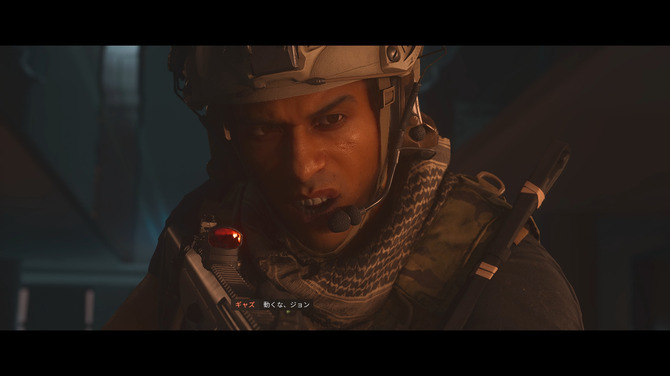
Characters like Valeria—with whom Price forms a partnership through a deal—and Graves of the Shadow Company also exit the story rather abruptly. The same can be said for Task Force 141; Gaz is killed by Archer without much fanfare.
Overall, the pace at which characters are written out feels a bit rushed, and the way the story wraps up comes across as somewhat sloppy. I felt that each character could have been explored in a bit more depth.


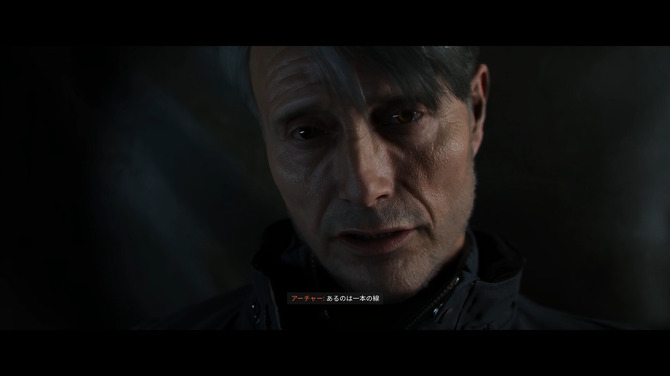
The fates of Price and Archer also leave some questions unanswered. Archer, in particular, was intended to be portrayed as a major villain operating across national borders—in places like Russia and North Korea—but the truth is, he doesn’t really leave a lasting impression.Given that Mads Mikkelsen was cast in the role, he could have been a villain with real presence, but in reality, his story ends rather anticlimactically.

Another character I felt could have been explored more deeply was the North Korean soldier, Ko Jin-hyuk. He defied the current regime of his own volition and exuded a strong presence as an indispensable key figure in the story, but if I had to be picky, I would have liked to see missions or scenes where he was actually in control.
Jin-hyuk plays a crucial role—whether it’s receiving instructions during stealth-focused missions where you control Lee Seung-ho, the Supreme Leader’s son, or supporting Park’s team’s operations—but you never actually get to control him; he only appears in cutscenes or via radio.
Since this game features a system where the playable character changes with each mission or scene, I believe that if there had been a mission or scene where you could control Jin-hyuk—such as “infiltrating a North Korean facility to retrieve a ‘trump card’ weapon”—it would have allowed the game to delve deeper into his inner thoughts while fully showcasing his heroic moments.


Another point of concern regarding the story structure is its connection to DMZ mode. In addition to the campaign, this game features DMZ, a game mode with PvPvE escape shooter elements. This mode connects to the end of the campaign, where the player, as a successor agent, enters “the world after the campaign” to uncover further truths.
While DMZ does have its own story elements, I can’t help but feel that these should be kept to a minimum—merely serving as flavor to complement the main story—and that the campaign should stand on its own, rather than being dependent on the existence of a separate mode.


Overall Impression

In this review, we’ve focused on the campaign of *CoD: MW4*. The overall quality—including graphics and presentation—is high, and there’s a rich variety of missions and playable characters. The scenario and themes centered on South and North Korea are challenging yet delivered with a sense of tension, making the experience feel very realistic.
On the other hand, the storylines surrounding Captain Price and the Task Force feel somewhat rushed; there are moments where the character development feels insufficient, and it sometimes feels like the campaign is merely a setup for other game modes.While there are many excellent missions when viewed individually, as a conclusion to the legacy built up by the *MW* series, it feels like it falls just short of being truly satisfying.
Game*Spark Review: “Call of Duty: Modern Warfare 4” Campaign – PC (Steam, Battle.net, Microsoft Store)/PS5/Xbox Series X|S/Nintendo Switch 2 – Released October 23, 2026
The realistic scenario features high-quality production values. However, as a sequel to the “MW” series, it leaves something to be desired…
-
GOOD
- A challenging storyline depicting the situation between South and North Korea
- Rich gameplay with characters that switch depending on the scene
- Cutscenes and cinematics with stunning graphics
- Immersive experience thanks to meticulous attention to detail
BAD
- A slightly rushed narrative structure
- Lack of depth in character portrayal and development
- Differences in the gameplay experience due to content restrictions



