


On October 14, 2026, the first-person action game *Valor Mortis* was released for PC (Steam/Microsoft Store), PS5 (international), and XBOX Series X|S (Game Pass compatible).
This game is a first-person, single-player "Souls-like" action title. It was developed by One More Level, the studio behind the popular parkour action game *Ghostrunner*.

Set in a fictional 19th-century Europe inspired by the Napoleonic Wars, players take on the role of William, a soldier resurrected from the dead, who battles people transformed into terrifying monsters while uncovering the truth behind a mysterious plague threatening the world.

The game’s most distinctive feature is that, unlike typical third-person “Souls-like” games, the entire experience unfolds from a first-person perspective.
The combat system—centered on melee sword attacks and parries, combined with long-range firearm attacks—evokes titles like *SEKIRO* and *Lies of P*, while also creating a unique sense of strategic interplay and fast-paced action.
Furthermore, it’s fascinating how the game skillfully incorporates elements from multiple genres, such as attacks utilizing psychic powers reminiscent of *BioShock*, the three-dimensional movement mechanics honed in *Ghostrunner*, and Metroidvania-style exploration.

In this article, we’ll examine the main elements of the game—from the story and world-building to combat, exploration, and the progression system—and review how this “first-person Souls-like action game” stacks up against previous titles, highlighting both its strengths and weaknesses.

Please note that in the October 21 update, adjustments were made to enemy and boss hitboxes, damage timing, and other aspects of the game. The information above is based on the author’s own gameplay experience, and behavior may differ in the current version.
◆Controls and Localization

Before diving into the review of the main game, I’d like to briefly touch on the game’s controls and Japanese localization.
First, the game supports both keyboard & mouse and gamepads; I played using a Steam Controller.

One positive aspect of the controls was that, despite being a first-person perspective game, the response for parries and attacks was very crisp, and the controls felt intuitive.
On the other hand, the movement feels somewhat slippery, which made it difficult to gauge distances during precise platforming—a point that did bother me.

As for the Japanese localization, it’s free of the typical “machine translation” feel; the polished translation deserves high praise for not detracting from the game’s immersive experience.
In particular, the writing style perfectly matched the game’s dark and decadent atmosphere, and the characters’ dialogue and text avoided overly modern expressions, blending seamlessly into the rich world of this alternate-history sci-fi horror.
◆ A Twisted Dark Fantasy Set Against the Backdrop of the Napoleonic Wars

This work is set in 19th-century Europe, a continent ravaged by the Napoleonic Wars and plagued by a mysterious epidemic.

The protagonist is William, a soldier who once served in the Army of the Continent led by Napoleon. Having perished on the battlefield, he awakens one day on a battlefield littered with the corpses of countless soldiers. Upon his resurrection, he witnesses an unbelievable scene—one a far cry from the glory of the empire to which he once swore allegiance.

It is a tragic situation in which people have been transformed into grotesque monsters by a mysterious plague, and settlements and military facilities across the land have been reduced to ruins.
Furthermore, William’s own body harbors a mysterious substance called “Nephtoglobin,” which grants him the ability to wield supernatural powers.

The “Main Quest” is organized into chapters, each set in a different location. The game is designed so that quests are updated and the story progresses as you defeat bosses or clear areas.
Since it’s a mission-based game rather than an open world, it feels compact—for better or worse. I also appreciated the ability to discover side quests along the way, which added a nice element of exploration.

What’s interesting about this game’s world is its bold fusion of military motifs based on the historical Napoleonic Wars with body-horror-style creature designs.

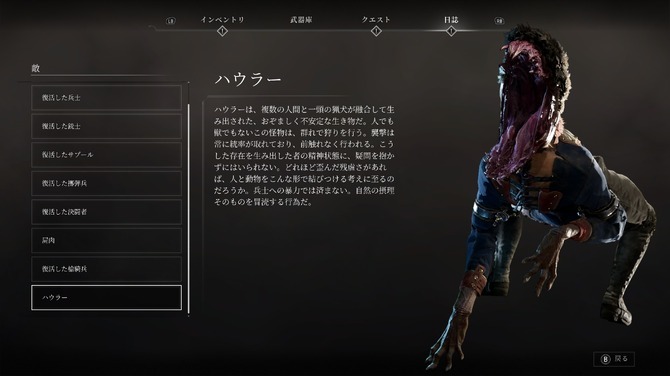
While historical elements—such as early 19th-century military uniforms, muskets, cannons, and military flags—can be seen throughout, the soldiers wearing them no longer retain their human form, with parts of their bodies abnormally enlarged or their physical structures completely altered.

In particular, the premise that soldiers of Napoleon’s army have transformed into monsters is central not only to the enemies’ visual design but also to the very foundation of the story.
This is because this is not simply a world where civilization has collapsed due to a plague; rather, “the victims of Napoleon’s military ambitions and endless wars” are deeply intertwined with the devastation of this world.

From ruined villages to abandoned military facilities and cityscapes scarred by war, each location you visit has its own distinct backstory, and you can piece together what once happened there through letters, records, and environmental descriptions.

However, it cannot be denied that, compared to the early and middle parts of the story, the developments in the final act felt somewhat rushed. Opinions are divided on whether the game fully capitalizes on the appeal of its setting.

That said, the worldview—which so boldly transforms Napoleonic-era Europe into a horror setting—is undoubtedly a major, unique selling point of this title.
◆ The Pros and Cons of the “First-Person Perspective” in Combat
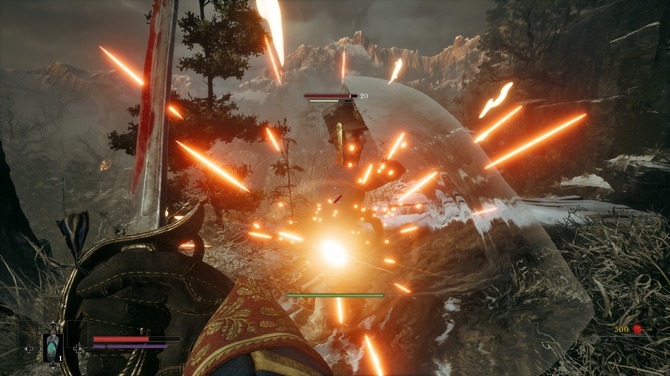
The game’s greatest appeal undoubtedly lies in its unique combat system, which utilizes a first-person perspective.
While third-person perspectives are the norm in typical “Souls-like” titles such as *Dark Souls* and *Lies of P*, this game delivers a combat experience unlike any before by having the player share the protagonist’s field of view.
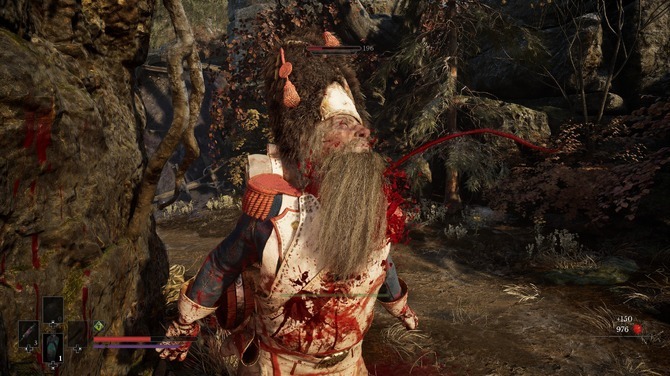
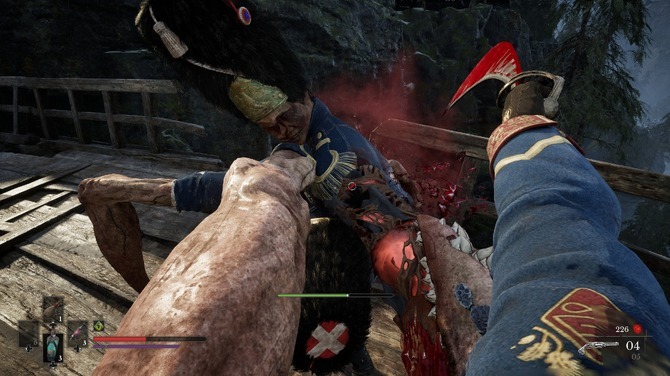
What’s particularly impressive is the satisfying feedback of “parries,” which form the core of melee combat. The basic mechanic—judging the timing of an attack to deflect it—is similar to that found in traditional Souls-like games like *SEKIRO*.
However, the first-person perspective in this game brings you much closer to enemies, and since weapon movements and attack animations fill the entire screen, the sense of tension and intensity is exceptional.

When you successfully parry, you deflect the enemy’s attack with a sharp metallic clang and can land a powerful counterattack on the off-balance (staggered) opponent.
The weighty feel of swords clashing and the exhilaration of landing a counterattack are impeccable, offering a sense of satisfaction unique to the first-person perspective that makes you want to repeat battles over and over.

Another positive aspect was that combat wasn’t limited to swordplay alone. In addition to his saber, the protagonist William can wield firearms such as pistols, and as the story progresses, he also acquires supernatural abilities—such as breathing fire or temporarily freezing enemies’ movements.


What’s interesting is that these weapons and abilities aren’t just means of attack—they function as tactical tools tailored to the enemies’ characteristics.
For example, you can use fire against enemies carrying explosives or trigger explosions by shooting at enemies wielding grenades—this added depth to the combat, requiring you to make situational judgments.


Furthermore, since ammunition is limited, you naturally cannot use powerful attacks or evasion abilities unlimitedly at any time.
In particular, stamina management is one of the crucial elements directly tied to survival.
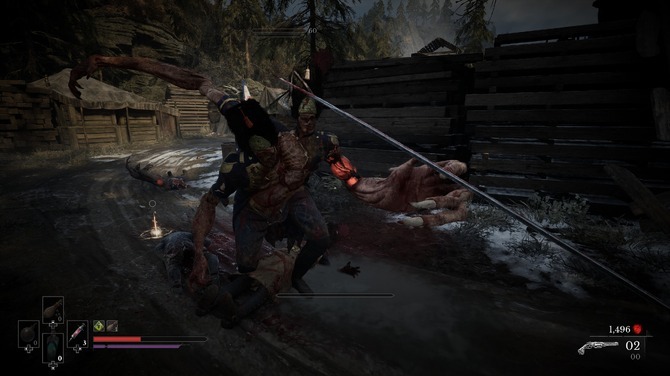
For example, early on, your stamina is low, and you can dodge at most two or three times. If you attack without paying attention to your gauge, you’ll almost certainly run out of stamina, leaving you unable to dodge and giving the enemy an opening.
Therefore, split-second decisions about your actions determine the player’s fate. This extremely strict stamina limit—typical of traditional “Souls-like” games—combined with the first-person perspective, created a nerve-wracking tension during combat.
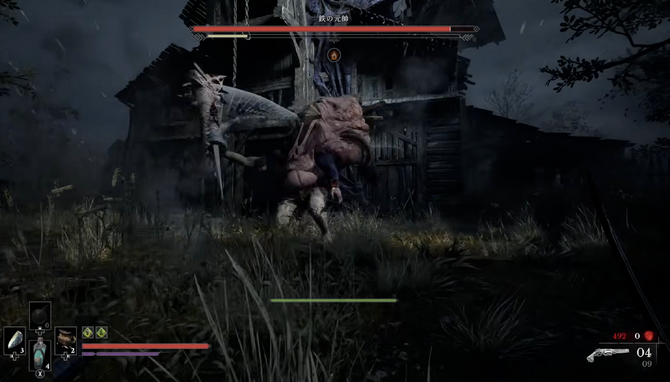
The appeal of this system really shines in the challenging boss battles. Facing formidable foes with complex attack patterns—different from those of regular enemies—and combo attacks, players must learn their movements through repeated attempts and strategically alternate between parrying and dodging to defeat them. This structure perfectly captures the essence of what players expect from classic Souls-like titles.


However, from the mid-game onward, I was bothered by a lack of variety—such as the reappearance of enhanced versions of past bosses or “bosses” that were essentially just slightly strengthened versions of regular grunts.

On the other hand, ironically, the first-person perspective also becomes a weakness during combat. What particularly bothered me was the poor visibility when facing multiple enemies and the difficulty in grasping the situation around me.

In a third-person perspective, the player’s field of view is wide, allowing for a comprehensive view of the surroundings. However, in this game, since you can generally only see enemies directly in front of you, it’s extremely difficult to respond to opponents approaching from the sides or from behind.
Furthermore, while the tension of closely observing an enemy’s attacks up close is part of the appeal in one-on-one combat, the first-person perspective makes it incredibly difficult to gauge the range of an enemy’s attacks.

In particular, the thrusting attacks of the mid-boss “Eternal Guardian,” whom you face early in the game, make it visually difficult to gauge exactly how far their reach extends. I often found myself unable to dodge them and ended up dying, which sometimes felt downright unfair… though, admittedly, that might also be a matter of my own skill level.

It’s also best to assume from the start that “the enemy’s sword will extend twice as far as you expect.” In first-person view, your sense of depth can easily be thrown off, so you’ll end up getting hit even at a distance where you thought, “It shouldn’t reach me yet,” based on the enemy’s attack animation.

Another drawback of the first-person perspective is that when you’re in close-quarters combat at extremely close range, the entire screen gets filled with the enemy’s body and visual effects, making it hard to see what kind of attack—like a downward swing—the enemy is currently performing.
Another issue is that when dashing through enemy lines, for example, you’re prone to taking hits from off-screen (directly to the side or from behind), which can be a major source of frustration (and feel unfair).
As such, while sword combat in the first-person perspective has the advantage of greatly enhancing immersion and tension, it also serves as a factor that increases the game’s difficulty.

Of course, with the right strategy—such as luring enemies out one by one, launching preemptive strikes, or using explosives for area-of-effect attacks—you can hold your own against multiple enemies.

Additionally, while the third-person perspective offers the advantage of being able to see your surroundings even while rolling—making it easier to escape from a group of enemies to a safe area—in this game, your field of view shakes significantly during evasion or dashing, creating the risk of running into another enemy at your destination.

Finally, let’s summarize how the “tactics of combat” differ between the third-person and first-person perspectives.
First, regarding the fundamental Soul-like mechanic of “how to parry an enemy’s combo,” the third-person view shows both the enemy’s full body and your character on the screen, allowing you to logically identify the enemy’s pre-attack animations and respond accordingly.

However, in first-person view, the enemy is so close that it’s difficult to discern their attack motions; furthermore, as mentioned earlier, it can be hard to judge distances. Consequently, I feel this approach is more akin to the reflex- and intuition-based tactics of a boxing counterpunch.
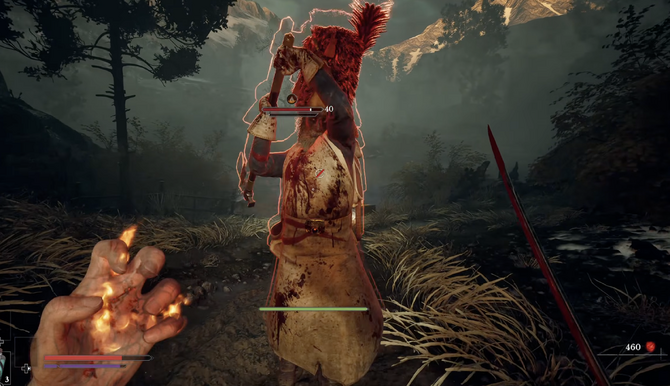
For example, the “Revived Sapur,” a relatively troublesome enemy among the grunts, uses an axe with a fair amount of reach.
While its downward swings have large wind-up motions that are easy to read, it’s still difficult to judge the exact distance at which the attack can be completely avoided. As a result, I often found myself backing up too far when trying to dodge, causing me to miss opportunities to counterattack.
You might be tempted to say, “If moving forward and backward is difficult, why not just dodge left or right?” But doing so can leave you vulnerable to sweeping attacks from the side. So, while you don’t want to get too close, you have to close the distance to land a slash. This back-and-forth of reading the opponent’s range and distance is, I think, the true thrill—albeit a frustrating one—of first-person Souls-like games.
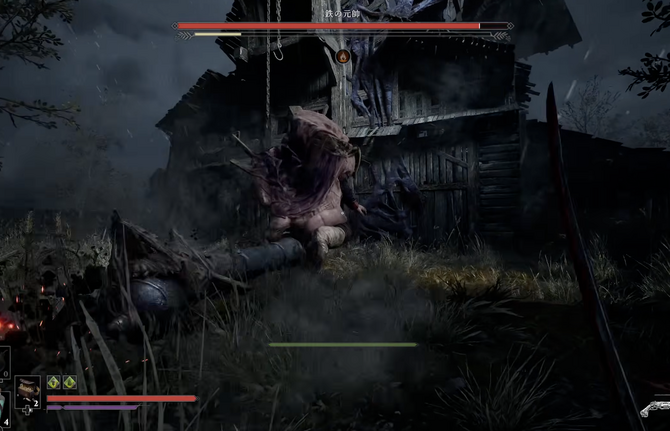
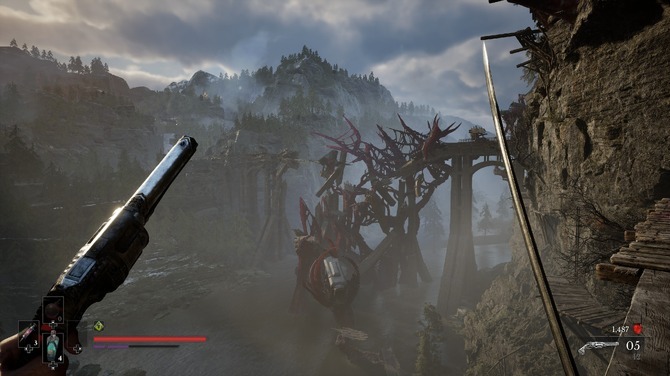
Personally, one of the most thrilling battles in the main campaign was the fight against the mid-game boss, the “Iron Marshal.”
Armed with a grotesquely bloated, massive body and a long cannon-like weapon, it launches attacks from medium to long range. As you’d expect from a boss, it’s a formidable foe with immense health and incredible durability.
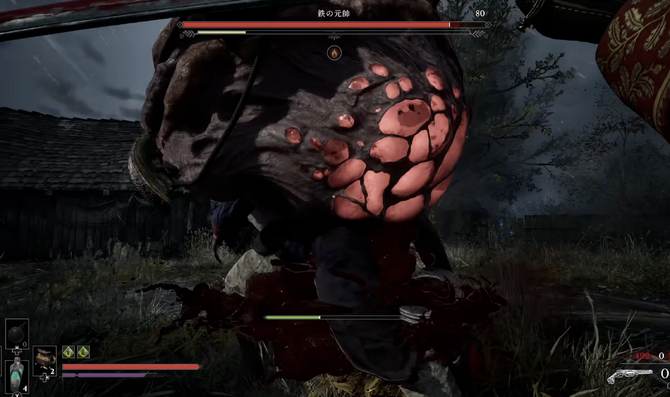
However, since his attack animations have large wind-ups and follow simple patterns, you can stay calm, chip away at his health with parries, and then—when he’s staggered after a perfect dodge—circle behind him and strike his vulnerable back with a pistol or similar weapon to deal massive damage.
With elements like explosive barrels scattered across the field, the design feels like a comprehensive test of all the combat skills you’ve learned and experienced so far in the game. I think it was a great boss battle that combined a nerve-wracking sense of tension with the exhilaration of pulling off a successful strategy.
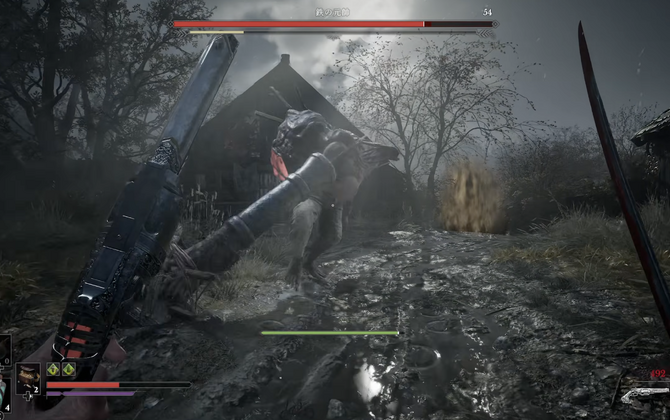
Also, during one of my later attempts, I thought I’d kept a more than sufficient distance, but I was hit directly by an overhead swing and died. Part of it was my own poor judgment, but I still don’t quite understand the hitbox mechanics…
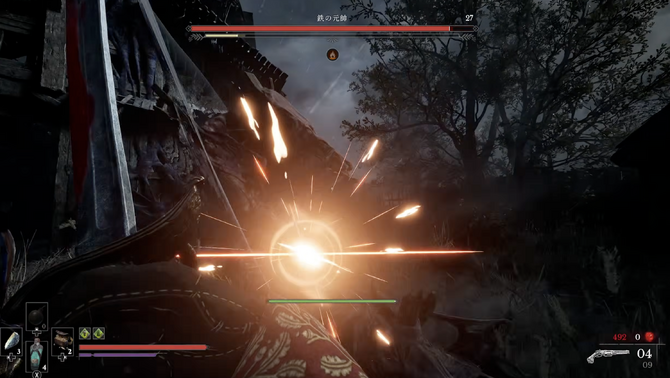
Unlike third-person Souls-like games, where you observe the enemy’s full body animations from a safe distance, parry attacks using the invincibility frame from rolling,and steadily chipping away at the enemy with the optimal counter-attack—that’s “outboxing.” In contrast, this game involves diving into the enemy’s close quarters amid the terror of a narrowing field of view, intuitively reading the timing based on the enemy’s gaze and weapon trajectory to parry, and subduing them with guns and swords—a close-quarters “infighting” style Soulslike where split-second courage and intuitive decision-making are key.
◆ Exploration that blends exhilarating movement action with Metroidvania elements

Another defining feature of this game is its combination of classic Souls-like exploration with parkour action.
While the game itself follows a largely linear path, each area features branching paths, hidden passages, and shortcuts, allowing you to discover upgrade materials, items, and side quests by taking detours.
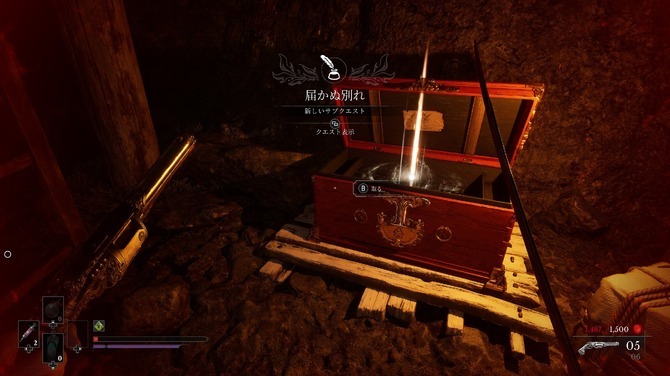
Additionally, the game incorporates Metroidvania-style exploration elements, such as gaining access to previously inaccessible areas once you acquire new abilities.
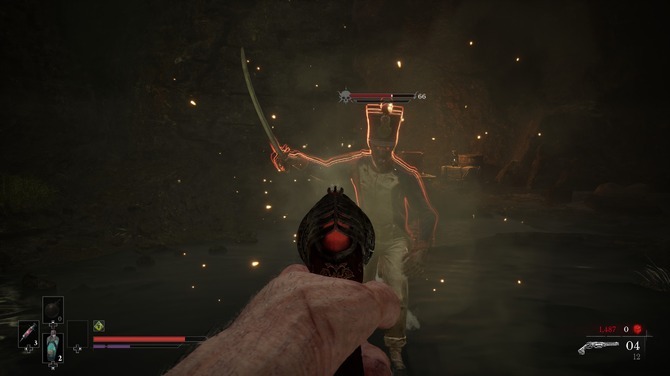
Particularly interesting is the three-dimensional movement made possible by wall-running and grappling. You can dash along walls to cross cliffs or hook a wire (tentacle) onto points in the air to leap to new footholds, enjoying a nimble style of action not typically found in standard Souls-like games.Furthermore, the appeal lies in the fact that these abilities can be applied not only to exploration but also to combat—such as sniping enemies from high ground or bypassing dangerous groups of enemies.
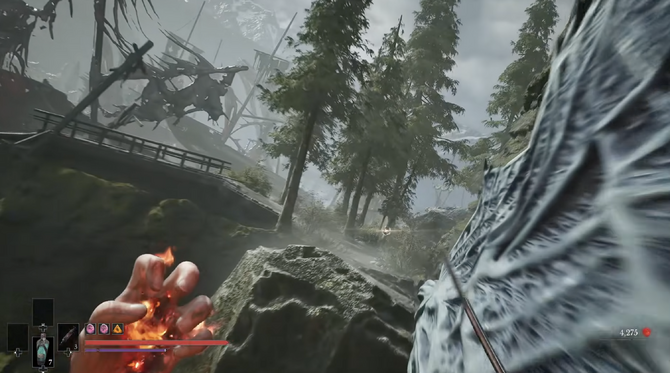
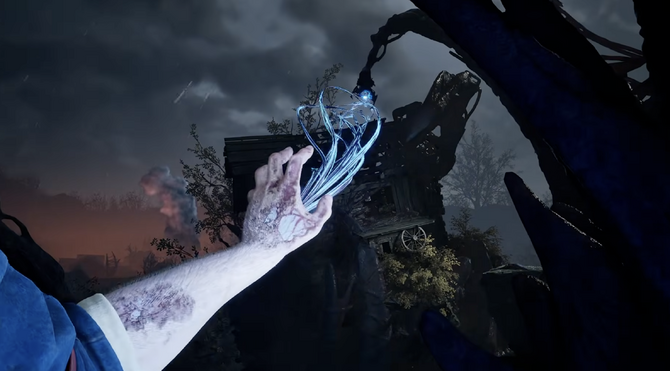
Moving through the maps with a sense of speed provides a thrill unique to the first-person perspective. In particular, scenes where you fight enemies while traversing the wreckage of a ship suspended in midair are impressive examples of how movement and combat are seamlessly fused.
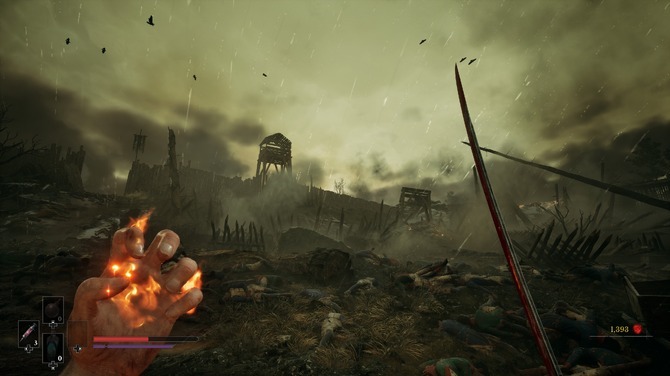
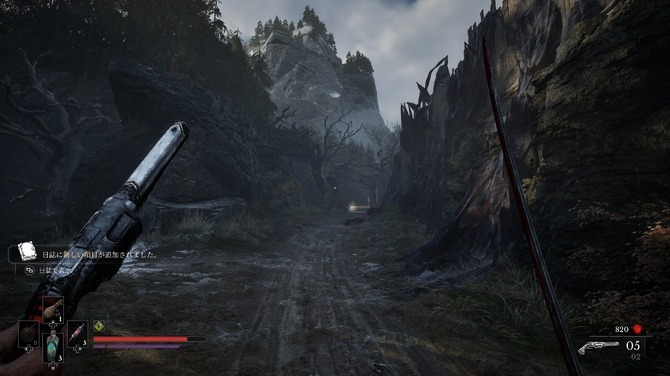
On the other hand, there are some drawbacks when it comes to exploration. The game lacks a map feature, making it difficult to keep track of your current location or destination in complex, labyrinthine areas.
Since many paths only become accessible later in the game, having to go back and forth through the same areas repeatedly felt a bit tedious.
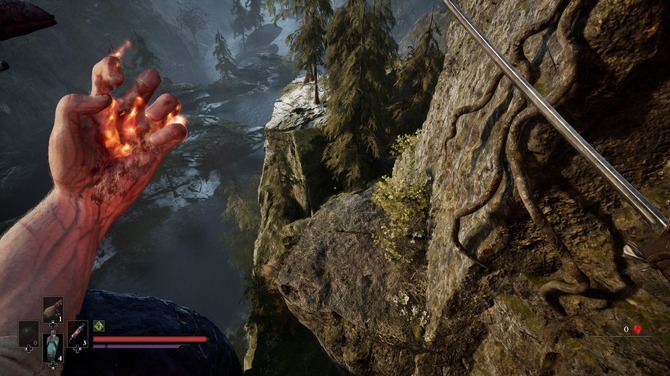
Additionally, the first-person perspective makes it difficult to judge the distance to footing and assess the surrounding environment, which can be stressful during parkour sequences that require quick reflexes. In the mine shafts in particular, the dark, labyrinthine terrain combined with obstacles like mine carts made visibility poor, further increasing the difficulty.
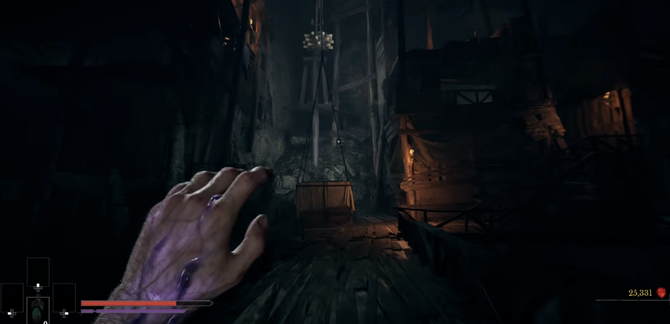
Still, the game deserves high praise for incorporating bold movement mechanics and adding a fresh sense of excitement to exploration. While there is room for improvement in terms of control comfort, these elements are what give this title its unique charm.
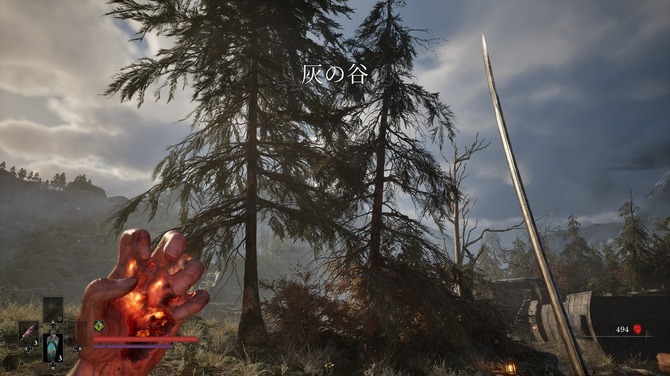
Personally, the stage I found most enjoyable was “Valley of Ash,” which you visit early in the game.
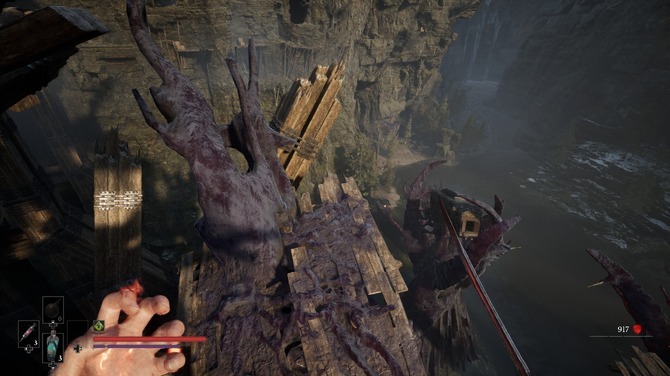
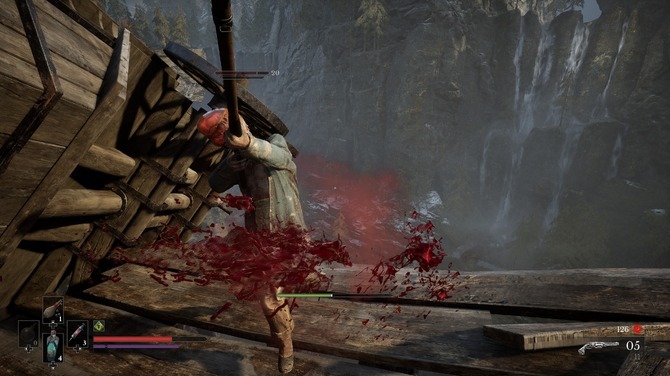
With its dynamic structure marked by extreme elevation changes, it’s common to die instantly if you miss a landing. There’s a constant sense of tension while moving, but you can also savor the thrill of a successful parkour maneuver.
On top of that, multiple enemies—such as snipers—lie in wait for the player in devious positions that seem tailored to the stage’s layout, and you’ll often find yourself shot down.


There’s also the “pulley” mechanic—a staple of Soulslike games—that moves you up and down. If you can jump skillfully to the platforms along the way, you’ll discover new routes and side quests, which really amplifies the excitement and fun of exploration.
◆Skill Trees and Weapon Upgrades—Progression Elements That Change Your Combat Style
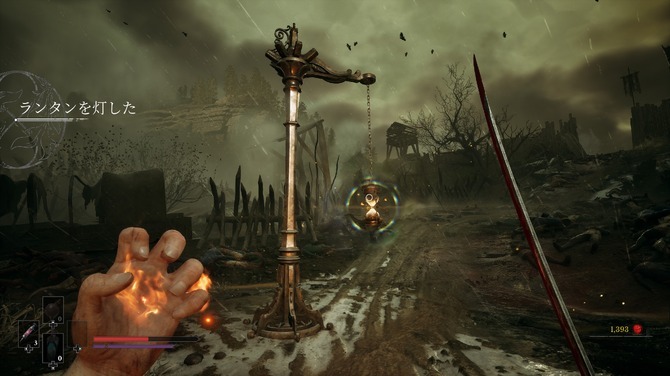
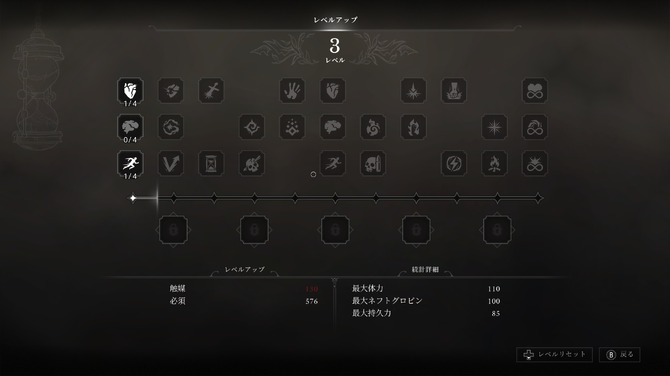
In this game, you can spend “Catalysts” (experience points similar to runes or souls) obtained by defeating enemies to enhance your character via the skill tree. You can boost stats like Health and Stamina, as well as improve melee attacks, gunplay, parries, and supernatural abilities—a system that lets you customize your character to match your preferred combat style.
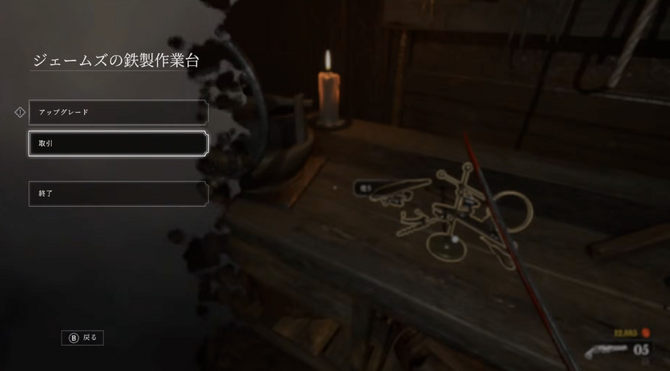
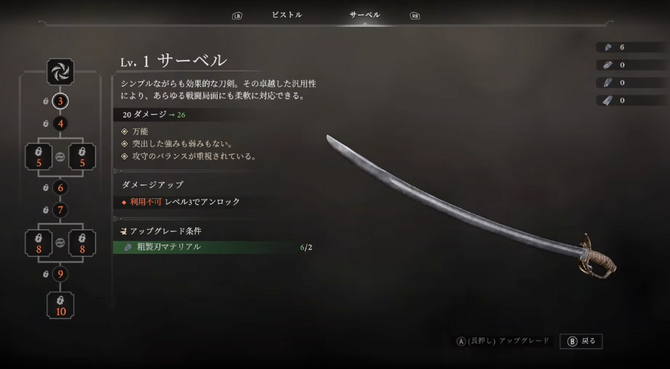
You can also upgrade weapons and supernatural abilities at “James’s Iron Workbench” using specific materials. Beyond simply increasing attack power, at certain upgrade levels you can select special effects—for example, with a saber, you can recover stamina from an attack after dodging, or regain HP upon a successful parry—adding a unique layer of variety to your combat tactics.
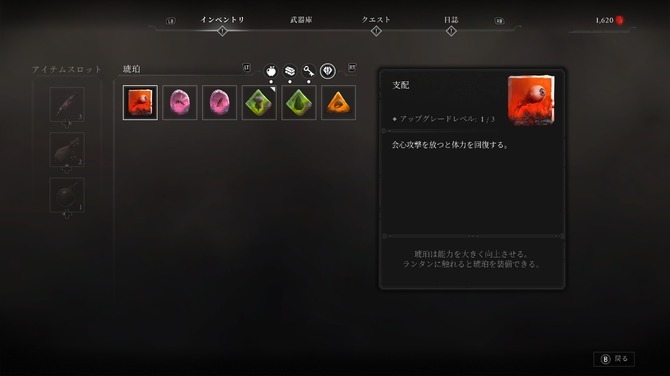
Furthermore, “Amber” is the game’s unique equipment system, equivalent to “rings” or “accessories” in other games.
It offers special effects not found in the standard skill tree—such as the ability to parry bullets—adding to the fun of experimenting with different equipment combinations.
On the other hand, it’s a shame that the skill tree focuses primarily on enhancing basic stats, and players couldn’t build their characters with enough freedom to dramatically change their combat style based on their own development strategy. The limited variety of weapons and scarce upgrade materials also make it difficult to casually experiment with multiple equipment setups.
That said, as a progression system designed to aid mastery of the action—allowing players to specialize in parry-focused swordplay, gunplay, or combat centered on supernatural abilities—it was just as compelling as traditional Souls-like titles.
◆Overall Impression—A Unique Souls-like Action Game That Can Only Be Experienced Through a “First-Person Perspective”
To reiterate, the game’s unique appeal lies in its seamless fusion of the core Soulslike gameplay mechanics with combat and exploration experiences made possible by the first-person perspective.
Furthermore, the world setting—a fusion of the Napoleonic Wars and dark fantasy—is outstanding. The bizarre soldiers clad in military uniforms and the European landscapes ravaged by war and plague are highly original, enhancing the joy of exploration.
On the other hand, the first-person perspective makes it difficult to assess your surroundings during battles against multiple enemies, and combat in tight spaces or parkour can sometimes feel stressful. There’s also room for improvement in areas such as difficulty balancing that relies too heavily on ambushes and traps, as well as the limited selection of weapons and character builds.
That said, even with these shortcomings, this title is a thoroughly engaging action RPG. It’s especially recommended for players who enjoy high-difficulty action games that emphasize parrying, such as *SEKIRO* and *Lies of P*.
While it has some rough edges in terms of polish, it deserves high praise for delivering a gaming experience distinct from existing “Souls-like” titles.
It’s an ambitious title worth playing that hints at new possibilities for “first-person Souls-like” games.
Game*Spark Review: *Valor Mortis* PC (Steam/Microsoft Store)/PS5 (International)/Xbox Series X|S (Game Pass compatible) October 14, 2026
While there are a few areas for improvement, this is a worthwhile title that delivers the fresh excitement and overwhelming immersion of a “first-person Soulslike action” game through its combat and exploration.
-
GOOD
- A unique world and artwork
- Tense, back-and-forth combat
- Dense maps featuring side quests and more
- Excellent, seamless localization
- Lightfoot parkour movement, a legacy of *Ghostrunner*
BAD
- Difficulty judging distance and hitboxes due to the first-person perspective
- Slightly limited variety of enemies and bosses
- Lack of fine-tuning in game balance



