


"G-STAR 2026" kicked off on November 19 at the BEXCO exhibition center in Busan. A zone where visitors can try out the Steam Deck has been set up at the venue of South Korea’s largest gaming expo. The Steam Deck is a portable gaming PC developed by Valve, the company that operates the PC gaming platform Steam.
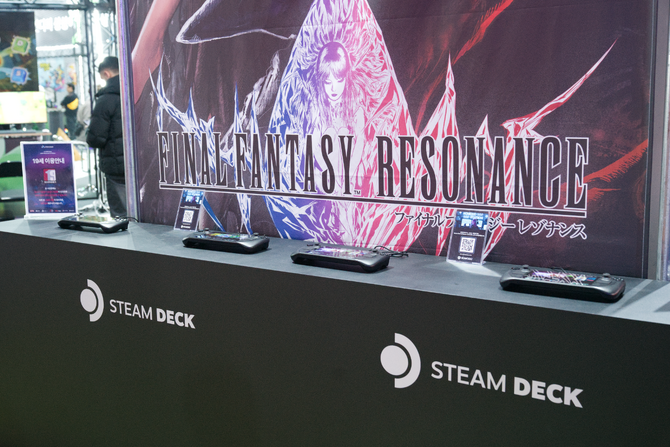
The demo zone is located in a corner of the indie showcase “GALAXY” on the first floor of Exhibition Hall 2, and is operated by KOMODO, which distributes the Steam Deck in Japan, South Korea, Hong Kong, and Taiwan.In addition to being able to play a total of 18 titles—ranging from AAA titles to indie games, such as *Pragmata*, *Sonic Racing Cross Worlds*, *Final Fantasy Resonance*, *OneShot*, and *Ultrapool*—visitors can also try out the Steam Controller.
In an interview with Yuki Adachi, a public relations representative for KOMODO, we gained insight into the unique PC gaming landscape in South Korea and the Steam Deck’s role in “expanding the reach of Steam.”

A Steam Deck on display in a corner of the Indie Showcase
The first floor of Exhibition Hall 2, where the event was held, brought together demo areas for global publishers and an indie game showcase on the same floor.Amid booths from Devolver Digital, the European Game Developers Federation (EGDF), and the Polish Cultural Institute in Korea, KOMODO’s Steam Deck demo zone was set up as a space where visitors could pick up and play games ranging from indie titles to AAA titles. Attendees could not only play games on the Steam Deck but also experience gameplay with the Steam Controller.
One eye-catching feature at the booth was the beanbag sofa (often referred to as the “sofa that ruins people”).Visitors could sink deep into the sofa and relax while playing. Given that the Steam Deck is a portable PC gaming device, the freedom to play in any posture is one of its key attractions. Unlike traditional PC games played at a desk, you can play while sprawled out on a sofa or even standing up while out and about. This booth recreated that experience right there on the exhibition floor.

Let’s take a moment to review what the Steam Deck is. The Steam Deck is a portable gaming PC developed by Valve. While it resembles a handheld game console like the Nintendo Switch in form, its internal hardware is closer to that of a PC, allowing you to play games directly from your Steam library. It runs on SteamOS, an operating system developed by Valve specifically for gaming.
The device features buttons and joysticks on the left and right sides, with an approximately 7-inch display in the center. It also has trackpads on both sides, allowing you to move the cursor just like a mouse. A key feature is that even games designed for a mouse and keyboard can be played using touchscreen controls and the trackpads. You can also customize the controls for each game.
The Steam Deck also features a certification program called “Steam Deck Verified.” This indicates that Valve has verified the game’s performance and usability on the Steam Deck, ensuring a smooth gaming experience. While PC games often have complex system requirements, this program makes it easy to determine whether a game is playable on the Steam Deck.
At this booth, visitors could also try out the Steam Controller. This is another game controller developed by Valve, designed specifically for playing Steam games. In addition to buttons and joysticks, it features controls similar to those on the Steam Deck. It allows users to comfortably play a wide variety of Steam games even when connected to a monitor or TV.
By offering both the Steam Deck—a handheld device—and a controller for use in a home setup, Valve appears to be aiming to expand the ways people can play on Steam.
In South Korea, “Single-Player Games” Are the Top Choice
According to Mr. Adachi, Steam Deck users in South Korea tend to play single-player games frequently. On the other hand, multiplayer games are typically played at PC bangs. In other words, in South Korea, there is a clear separation between where people play and the types of games they play: multiplayer games are played at PC bangs, while single-player games are played at home.
It’s well known that PC bangs are a common fixture in South Korea, and the games played there are primarily titles like FPS and MOBA, where large groups of players cooperate. As a result, games that can be enjoyed at a leisurely pace alone at home tend to be preferred, making them a good fit for devices like the Steam Deck that allow you to play anywhere.
Mr. Adachi also emphasized that with the Steam Deck, there’s no need to purchase a keyboard, mouse, or other peripherals later on. When getting started with PC gaming, players typically need to purchase not only the console itself but also peripherals, which can often be a barrier for those unfamiliar with the setup. With the Steam Deck, that’s not a concern.
This means it’s effectively reaching casual gamers who aren’t familiar with PC gaming. It offers the convenience of a game console—you can buy it and start playing right away—which is broadening its appeal to a wider audience.

Existing to “Expand Steam,” Not to Compete
In recent years, portable PCs other than the Steam Deck have been on the rise. However, according to Mr. Adachi, the Steam Deck isn’t meant to compete with them; rather, it’s a gaming device designed solely to expand the Steam platform.
Rather than competing on hardware performance or price, it’s positioned as a gateway to increase the number of people playing on Steam. The fact that the Steam Deck was placed in a corner of the indie game area at this year’s G-STAR can be seen as an exhibition that aligns with this approach and philosophy.

The Steam Deck demo zone, where visitors could casually play on beanbag chairs, was a place where attendees could clearly experience the concept of lowering the barrier to entry for PC gaming. This aligns with the Korean gaming culture, where multiplayer is typically played at PC cafes and single-player at home, and the convenience of being able to play without any additional peripherals seems likely to resonate with casual gamers.

¥3,680
(価格・在庫状況は記事公開時点のものです)

