


Released in 1998 for the Nintendo 64, *The Legend of Zelda: Ocarina of Time* is still widely regarded as one of the greatest video games of all time.Released during the dawn of 3D gaming, the game showcased exceptional spatial design and a wealth of ideas that would serve as a model for future video games; the astonishment it caused among players at the time is evident from the numerous review magazines of the era, which consistently awarded it perfect scores.
On the other hand, it is also true that the innovations of that era have since become standard features in modern video games. The long-awaited remake of *The Legend of Zelda: Ocarina of Time* contains nothing “new” compared to the original.
However, I believe that now—precisely because the noise of innovation has faded—the time has come to truly appreciate the game’s pure charm. Why is *Ocarina of Time* still a one-of-a-kind masterpiece? This remake, which fully embraces all the charm of the original, reminds us of that once again.
The First “3D Zelda” to Fully Utilize “Space”
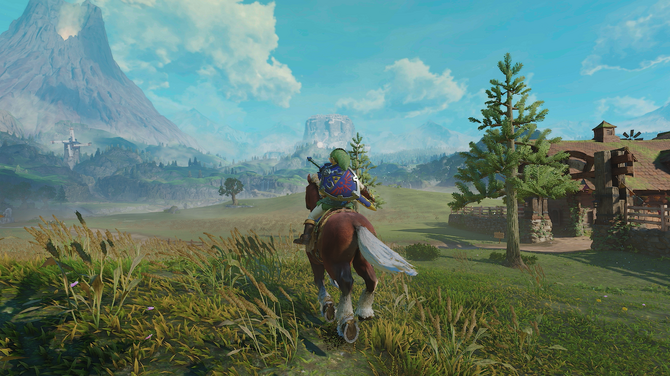
When discussing past *Zelda* games, it’s impossible to avoid comparing them to *The Legend of Zelda: Breath of the Wild*, which marked a major turning point in the series.As the series’ best-selling title and a masterpiece of non-linear open-world gameplay, *Breath of the Wild* introduced many people to a new kind of *Zelda*.
In contrast, earlier *Zelda* games were much more linear, based on a meticulously designed experience that predicted the player’s actions step by step. It was an experience rigidly structured by flags: “Get this item here,” “Have the player use it here,” “Give a hint about the next destination here,” “Advance the story here,” and so on.
But that’s precisely why the gameplay is nonstop and intensely immersive. There’s almost no downtime in this game; new ideas keep appearing before your eyes as you race through the levels like an amusement park ride.
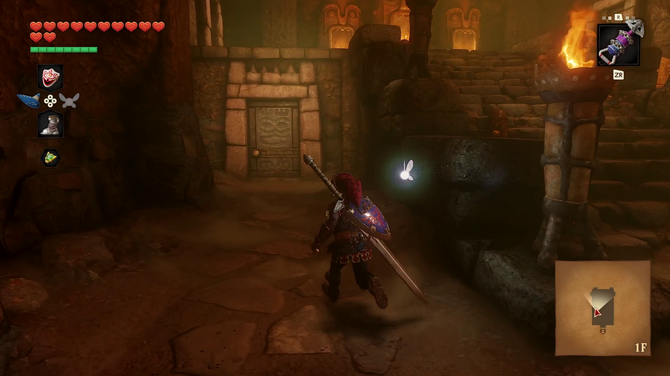
Furthermore, the fact that these ideas are fundamentally based on “puzzle-solving” is a hallmark of the series. A romantic adventure experience—as if you were personally exploring the ruins of “Indiana Jones”—has been the greatest appeal of the classic *Zelda* games.
The original *Ocarina of Time* was the first *Zelda* game to depict this very experience in a 3D space. While building on the puzzle-solving and adventure elements of the earlier “2D Zelda” games, this title actually expands that world into a three-dimensional space.Players rotate the camera with their own hands, search for mechanisms, observe, and think… and when they unravel the dynamic puzzles that make full use of the 3D space, a celebratory fanfare plays.
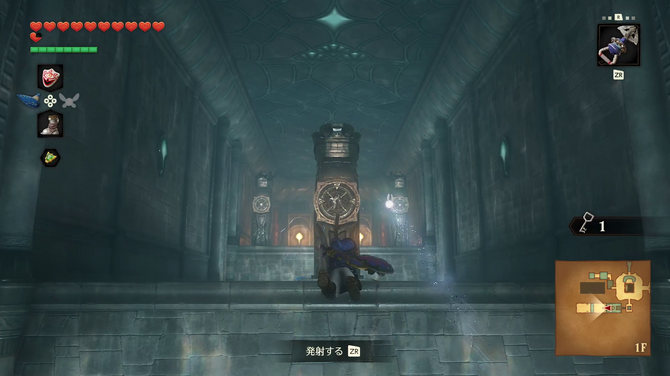
“Bombs,” “Boomerangs,” “Hookshots,” “Heavy Boots,” and “Hover Boots”… the myriad items acquired throughout the adventure and the puzzles that make use of their unique abilities.An exciting experience brimming with such rich gameplay unfolding in a 3D world—I can’t help but think that, for gamers back then, that alone was the greatest joy imaginable.
Nowadays, adventure experiences in 3D spaces like the one described above are nothing out of the ordinary. However, playing this remake anew reveals that it wasn’t just the sheer volume of such ideas—the design of the spaces and the way players are guided through them was so exceptional that it’s hard to believe this was created during the dawn of 3D gaming.
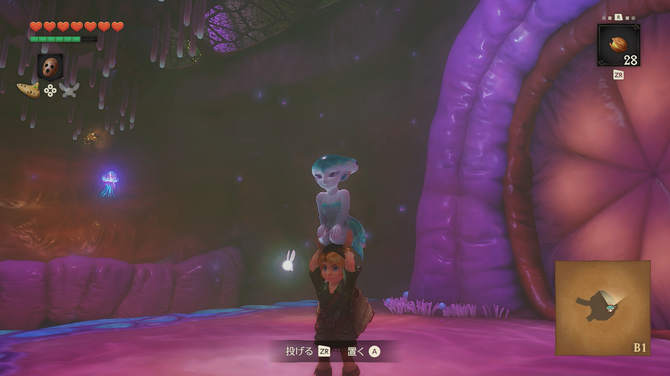
As a result, while there are differences in the finer details, both the story and the flow of the dungeons largely follow the original, proving that the gameplay remains relevant even today. In other words, this remake does not include any drastic changes to the content or the addition of new dungeons.The developers were thoroughly committed to preserving the core adventure of the original while bringing it to the modern era in a more accessible form.
A World That Has Become More Beautiful While Retaining Its Uniqueness
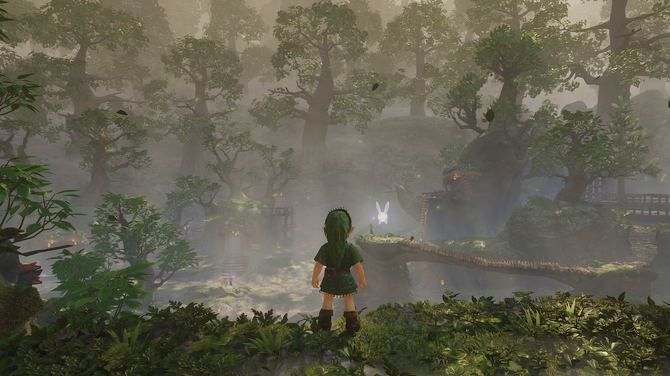
The story of this game begins deep within a forest. The “Kokiri” who live there are a tribe of child-like beings protected by the spirit “Deku Tree.” As you venture out of the forest on your adventure, you’ll encounter various tribes.
The “Gorons,” who live in a volcano and subsist on rocks; the “Zoras,” who live along the river that serves as Hyrule’s water source; the “Gerudo,” an all-female tribe of thieves dwelling in the desert; and the “Sheikah,” who have long supported the kingdom from the shadows.And in Hyrule Castle—which towers over the heart of this world, “Hyrule”—and its surrounding town, live the “Hylian people,” who, according to legend, possess long ears that allow them to hear the voice of the gods.
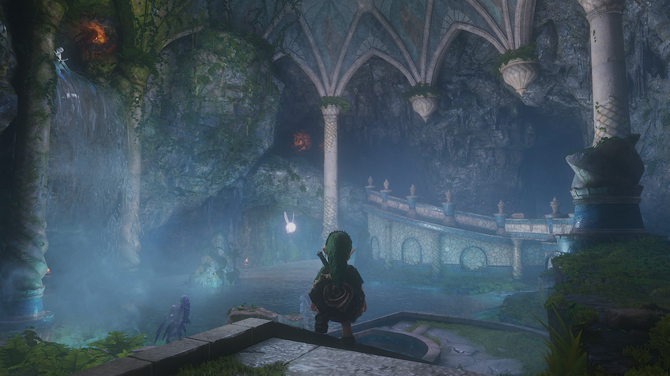
Even in the original game, the world was meticulously crafted so that the cultural differences among these tribes were conveyed through vivid colors, architectural designs, distinctive terrain features, and the characters’ attire. This is yet another aspect that fully capitalizes on the benefits of a three-dimensional world.
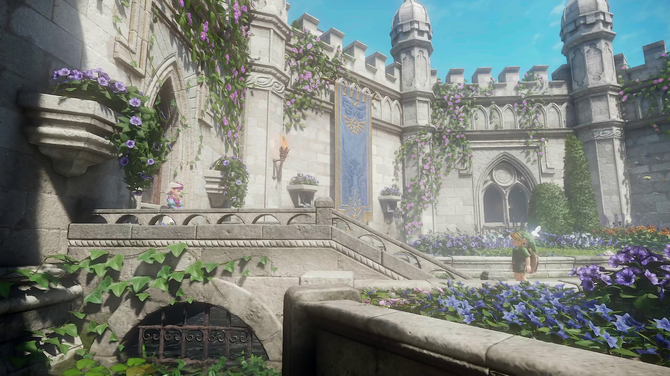
This remake adopts a photorealistic art style, which is rare for recent *Zelda* titles. Taking full advantage of the Nintendo Switch 2’s capabilities, the visuals now allow for even finer detail, and the depiction of each culture and the lives of its people is even richer than in the original.
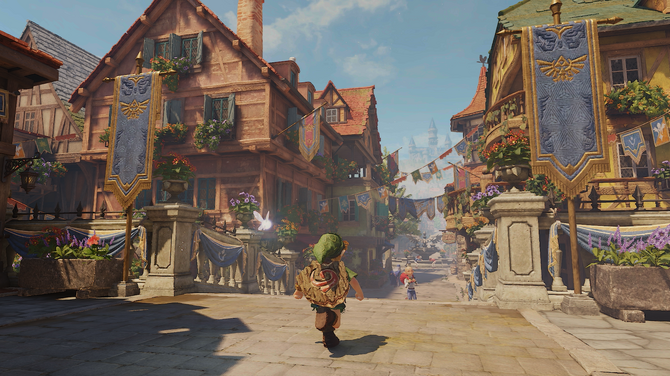
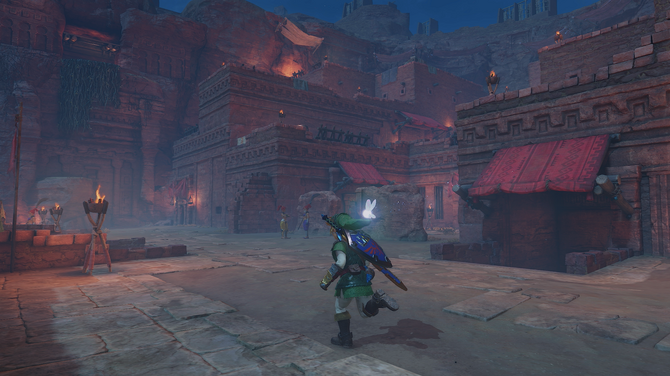
The town below the castle, bustling with people, is more vibrant than ever, and the newly added blue-themed banners featuring the Hyrule Kingdom’s design convey the kingdom’s majesty.In Goron Village, earthen lanterns resembling the Goron people are placed here and there, while Zora’s Village is filled with mysterious stone architecture reminiscent of the Zora’s Village from *Breath of the Wild*.
With the ability to render finer textures, you can now distinguish between different materials, and even the varying levels of upkeep on each building are evident. In contrast to the neatly painted exterior of the “Apothecary,” the “General Store”—with its weathered, unpainted walls—gives a sense of the shopkeeper’s personality.
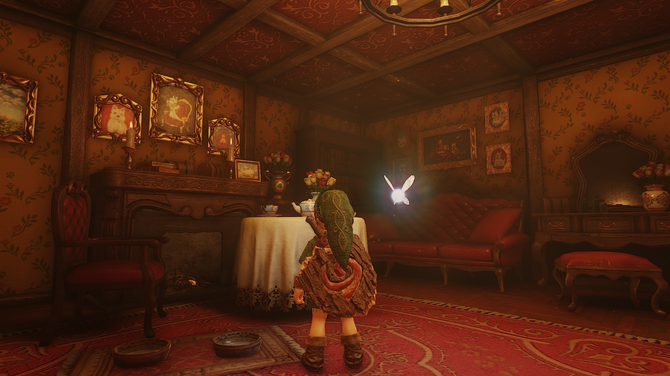
The various objects placed in the background also help bring the daily lives of Hyrule’s inhabitants to life.There’s the lavish room of the Madame, who dotes on her dog “Richard,” adorned with numerous framed paintings of him—and, in contrast, the room where the farm boy “Maron” has his drawings simply taped to the wall on their original drawing paper. The Kokiri seem to draw directly on wooden boards rather than using paper.
The world of Hyrule, which was already filled with locations as striking as a fairy tale in the original game, has been reborn through superb lighting and meticulous detail, evoking an even stronger sense of “being there” than the original.
Furthermore, the numerous classic tracks composed by Koji Kondo—which make adventures in this world even more special—have been reimagined in this remake to incorporate the know-how gained from recent *Zelda* titles.
Now that time passes even in towns, a new mechanism has been added so that the music for each memorable location changes depending on the time of day.During the day, the music plays at the same lively tempo as in the original game; as evening approaches, the tempo gradually slows and the number of instruments decreases, leading to a more relaxed arrangement at night. This is essentially a reimport of a mechanism first seen in *Breath of the Wild*.
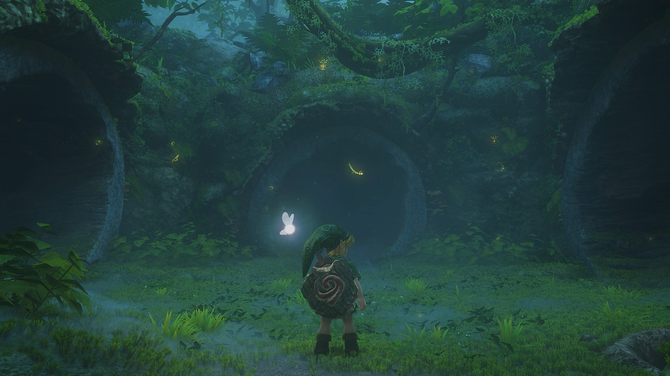
Unlike the original game, which used the Nintendo 64’s internal sound engine, this version is based on orchestral sounds. Combined with the photorealistic art style, it creates the sensation of walking through a cinematic world.
As for ambient sounds and sound effects, realistic foley sounds—such as the rustling of equipment, the whispering of trees, and the sound of water—have been incorporated to match the photorealistic art style, while iconic sounds from the original game have also been actively reincorporated.
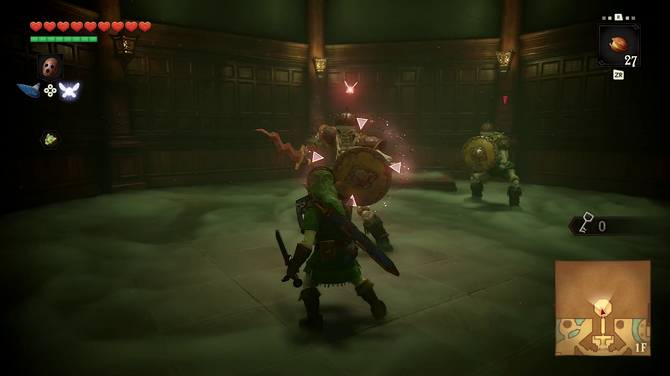
Many of the sound effects you’ll hear repeatedly throughout the game—such as the “plink” when you highlight an option or the sound when switching menu pages—use the exact same sound sources that played on the original Nintendo 64.
Then there are the roosters crowing from who knows where at dawn and the distant howls of wolves at night. While these may have been meta-mechanics designed to signal the time of day back then, this remake reminds us anew that these distinctive sounds were also key elements that gave *Ocarina of Time*’s world its one-of-a-kind atmosphere.

Above all, the “Ocarina” is an indispensable element when discussing the game’s sound. It serves as a mechanism that connects the player to the game world through the interaction of playing the ocarina; players actually perform music using button inputs or the voice input feature newly added in this remake.
The “Zelda’s Lullaby,” which Zelda has heard since childhood, serves as proof of her status as the Royal Messenger.From the “Song of the Sun,” which reverses day and night, to the “Song of the Storm,” which unleashes a tempest, this world is filled with hidden, magical music. The fact that your abilities gradually expand as you collect these songs is precisely what makes the experience of *Ocarina of Time* so special.
More Detailed and Richly Developed Characters
Compared to its predecessor, *The Legend of Zelda: A Link to the Past*, *The Legend of Zelda: Ocarina of Time* features significantly richer character relationships and psychological portrayals.It was a game that placed particular emphasis on the story, featuring extensive dialogue that made full use of the narrative structure spanning seven years to explore what the people living in this world were thinking and how they would face their destinies.
The series’ first foray into 3D graphics naturally contributed not only to the in-field gameplay described above but also to the storytelling itself, bringing the narrative to life through dynamic camera work, animations, and effects.With motion capture used in some of the animations, the game fully exploited every narrative expression possible on the Nintendo 64 hardware.
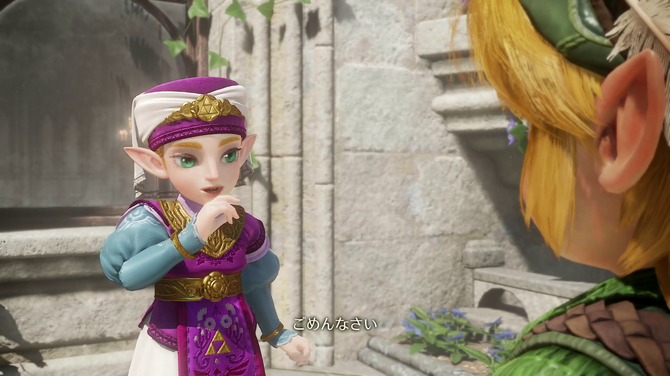
Twenty-eight years have passed since then, and 3D technology in video games has improved dramatically. We now live in an era where voice acting for characters is the norm, and in this remake, characters now speak during cutscenes.
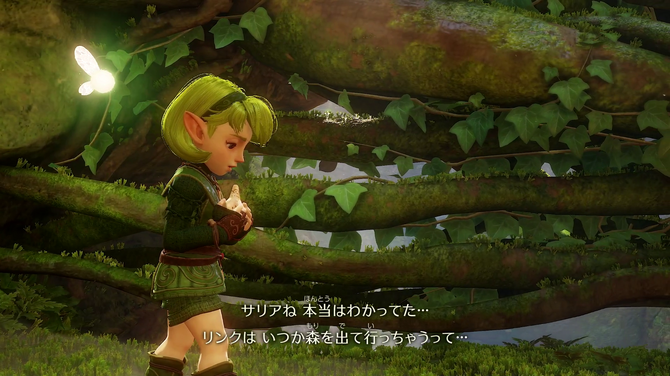
Naturally, facial expressions have also become significantly more nuanced. The characters—who feature a puppet-like stylization that perfectly matches the game’s photorealistic yet fairy-tale-like fantasy world—delicately convey their emotions through their expressions.
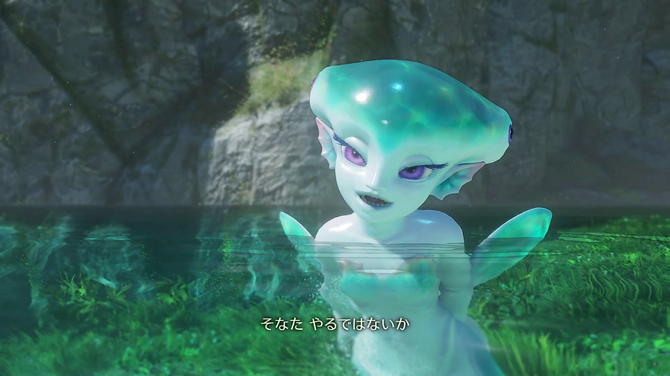
The sorrowful expression of Link’s childhood friend “Saria” as he sets out from Kokiri Forest; “Ganondorf’s” sharp glare when he realizes Link is watching him; and “Princess Ruto,” whose jagged teeth peek out from her smile.Expressions are rendered with even greater subtlety than in the original, significantly enhancing the characters’ charm.
This richer depiction isn’t limited to the main characters—it extends to the NPCs living throughout Hyrule as well. In the remake, the time of day now changes even in towns, and the daily routines of the people are depicted accordingly. As a result, even the same NPCs now react differently depending on the time of day and location.
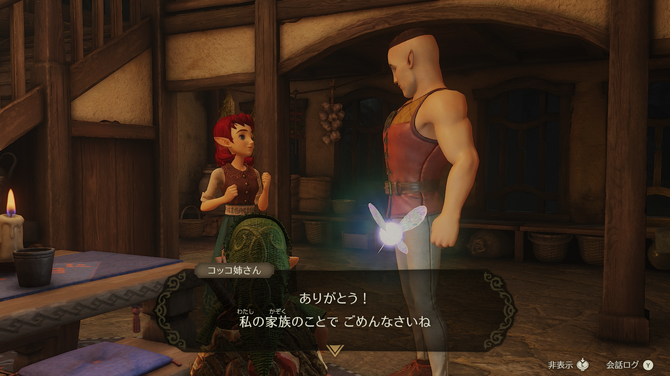
While these daily cycles for NPCs were also featured in titles like *The Legend of Zelda: Majora’s Mask* and *The Legend of Zelda: Breath of the Wild*, this remake incorporates the know-how gained from the latest entries in the series.
Furthermore, NPCs now react more to not only changes in time but also to the story’s progress, the player’s status, and interactions, leading to the addition of a vast amount of new dialogue. Through this dialogue, the NPCs’ personalities and backstories are conveyed in greater detail than in the original, making players feel a deeper connection even to NPCs they merely pass by during their adventure.
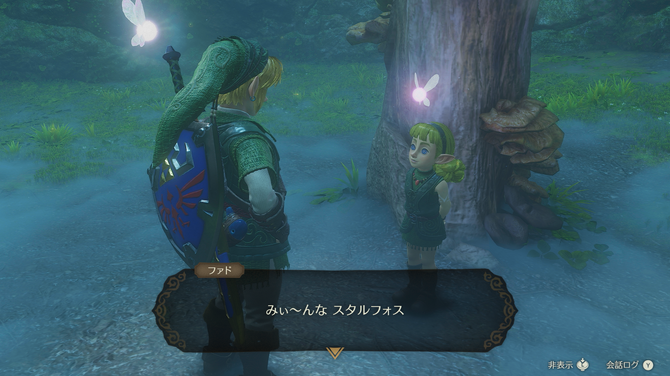
At the same time, much of the text that was memorable in the original has been left intact; just like the sound design mentioned earlier, this conveys a sense of careful curation and direction.
Striving to capture the “Ocarina of Time of that era” in its ideal form
For me, *The Legend of Zelda: Ocarina of Time* is one of my all-time favorite games. I believe there is no other game that offers such a beautiful, strange, gentle, and terrifying world—a world that serves as a substitute for Hyrule.
That’s why I’m truly delighted that this remake has remained so faithful to the original’s charm. It’s evident throughout the game that the developers have poured their absolute all into bringing *Ocarina of Time* to the modern era.
However, precisely because of this, I cannot confidently tell players who have already experienced the original *Ocarina of Time* that they “absolutely must play” this game. As mentioned above, this title contains almost no new gameplay elements for today’s audience.
Of course, the more you love the original, the more you’ll likely notice the subtle changes in this remake. That NPC has changed this way, this scene has been interpreted differently, this text has been added, that puzzle has been altered… However, these changes are consistently designed solely to further highlight the “charms that were already present in the original.”
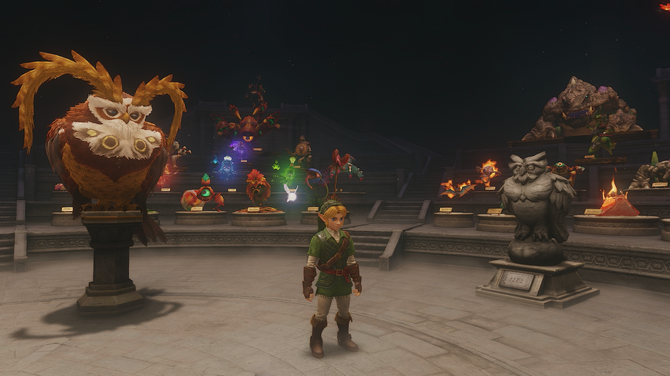
The “Hall of Demons,” which was touted as the only major new feature even before the game’s release and allows you to revisit the monsters you’ve fought so far, is, at the very least, a feature designed to meet the demand for rematches with bosses.
So, if you haven’t played *Ocarina of Time* yet, there’s nothing I envy more than that. I hope you’ll fully savor this one-of-a-kind world, its many unique characters, and its countless ingenious mechanics in this remake.
If you love every single aspect of the original *Ocarina of Time*, this remake is brimming with rich details that will surely satisfy that love.
However, if your experience with *Ocarina of Time* was limited to simply enjoying it as just another puzzle-adventure game, this remake might not offer an experience that goes beyond those memories.
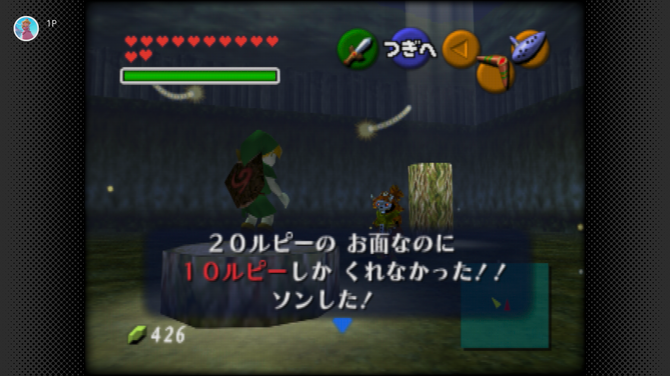
Originally, the original Nintendo 64 version of *The Legend of Zelda: Ocarina of Time* is a title that can be played anytime on current-generation consoles via the “Nintendo Classics + Expansion Pack.”*The Legend of Zelda: Ocarina of Time 3D*, a remaster featuring visual and playability improvements, has also already been released on the 3DS.
Given that, I can’t help but wonder if they could have taken a bolder approach with this remake and created a title that explores a different kind of appeal from the original. Even if they had added new, easily accessible dungeons or completely reworked the field layout itself, I’m confident that this team would have been able to fully bring out the charm of *Ocarina of Time*.
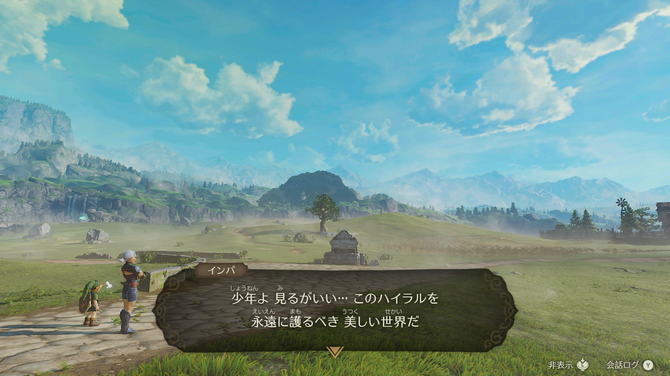
A game remake is the only opportunity to create something that offers “the best of both worlds” alongside the original. This remake, for better or worse, has turned out to be the kind of game where you could say, “You only need to play the remake.”
Even so, as a fan, there’s nothing that brings me greater joy than seeing the spotlight shine once again on *Ocarina of Time*, a game I love so dearly; seeing the current *Zelda* team re-engage with the game’s charm; and knowing that many gamers now have the chance to rediscover and enjoy it anew.
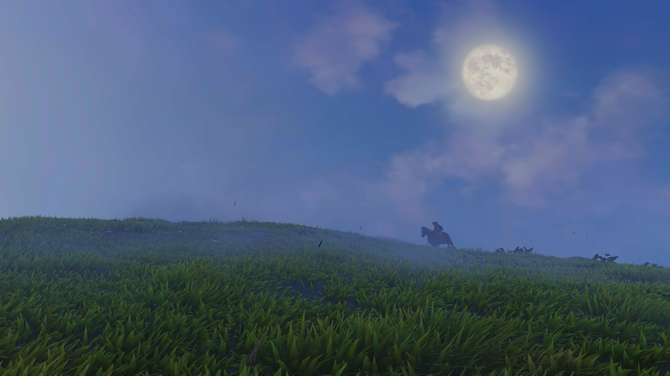
The *The Legend of Zelda: Ocarina of Time* remake is a work that focuses on understanding the charm of the original—down to the finest details of its ideas, art, sound, and text—and faithfully bringing it to the modern era.
By playing various melodies on the ocarina and making full use of the many items you acquire throughout your adventure, you’ll traverse the world of Hyrule, meet new people, and unravel the mysteries of ancient ruins. Just like the original, this adventure game experience is truly one-of-a-kind.
Furthermore, the revamped art, the abundance of added text, and the more detailed cutscenes that capture the daily lives of the people have brought the world to life with even greater depth than the original.
On the other hand, there are aspects that make it difficult to confidently recommend this title to those who have already played the original. The differences between this title and the original are focused solely on enriching the world; it does not incorporate new gameplay mechanics or bold changes.
This remake places the utmost importance on preserving the scale and experience of the original game’s fields. Perhaps that is precisely why it was able to capture the world’s details with such density. While it doesn’t offer any new surprises in terms of gameplay, there is no doubt that exploring the world of Hyrule itself is a special experience.
Game*Spark Review: *The Legend of Zelda: Ocarina of Time* (2026) Platform: November 5, 2026
-
GOOD
- An adventure game experience that makes full use of its environment
- A wealth of gameplay ideas and excellent level design
- Art that has been photorealistically reimagined while preserving the original’s silhouettes and color palette
- The world of Hyrule and its characters are depicted with even greater depth than in the original
- Mechanisms that connect the memorable music to the player’s experience
BAD
- There are no new surprises in terms of gameplay



