On the evening of Sunday, September 20, 2026, during the Tokyo Game Show 2026 (TGS2026), the developers of three roguelike action games—each from a different country and company—gathered at the “UKIYO GAME BAR” in Yurakucho, Tokyo.
The gathering brought together three developers from different countries and with different roles.They were Xiao Yu, producer of *Cinderia* from China’s MyACG Studio; Kim Min-su, lead programmer of *The Witch’s Garden* from South Korea’s Team Tapas; and Takumi Isobe, producer and director of *CRYMELIGHT* from Furyu.
*Cinderia* is a highly talked-about dark fantasy roguelite that sold 100,000 copies in just 10 days after its Steam Early Access launch in March 2026. *The Witch’s Garden* was officially released in August 2026 and has garnered “Overwhelmingly Positive” reviews on Steam.And *Crymelight*, the latest entry in the “Cry” series, is set to launch on Thursday, November 5, 2026.
Since the success of *Hades*, roguelike action has become a staple genre.Why did the three of them choose this genre, how did they develop their games, and what are they aiming to achieve? Mr. Koyu, who had just taken the stage at TGS 2026 that morning to announce a two-player co-op mode and new characters, spoke candidly throughout the interview in Japanese, while Mr. Kim participated via an interpreter.
—First, could you please introduce yourself again and tell us about the features of the project you’re currently working on?
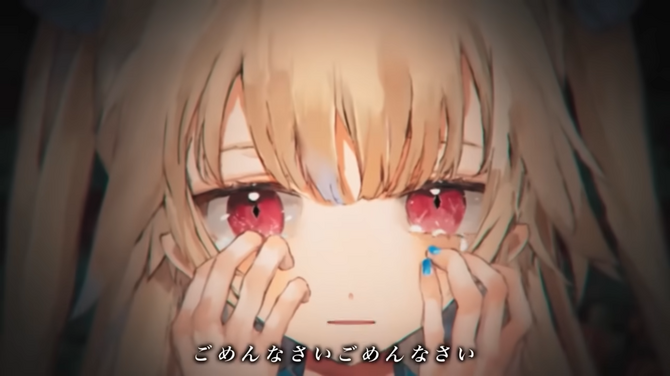
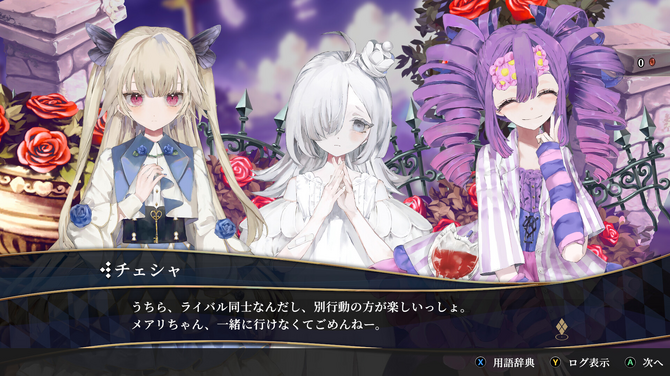
Takumi Isobe (hereinafter Isobe): I’m Isobe, the producer and director of *Crymelight* (hereinafter *Crymelight*).Since I think the genre is probably the same roguelike style across the board, I’ll skip over that for now—but I believe the characters are what really set *CRYMELIGHT* apart.The girls shed tears as they regret the sins they’ve committed, agonize over them, repent, and find a way to move past them—in other words, it’s a game where cute girls cry.
Koyu (hereinafter referred to without honorifics): I’m Koyu, the producer of *Cinderia*. If I were to describe it to players, it’s a dark fantasy game. If I were to describe it to developers, it’s *Hades*-like.In short, it’s a roguelike with visuals similar to *Cult of the Lamb*—a game that resembles *Hades* but with a Japanese anime-style design… I suppose that’s the best way to describe it. Its defining feature is that your choices determine the characters’ movements, skills, and more.
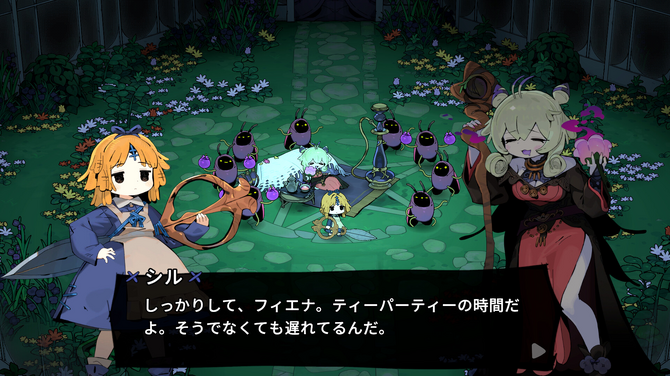
Kim Min-su (hereinafter Kim): I’m Kim Min-su, the lead programmer at Team Tapas. *The Witch’s Garden* is a game where you control Sil, the “Thread Witch,” and use your powers to persuade other witches to join you for a tea party.We’ve made the most of the cute characters and charming action sequences that Team Tapas is known for. While firmly capturing the genre’s appeal as an action roguelike, we’ve designed the game to be as accessible as possible for new players.
“To tell you the truth, roguelikes are cheap to make”—a surprising answer to the question of why we make roguelikes
—This might be a bit of a blunt question, but why did you decide to make a roguelike?
Kim: When we first created the prototype, we started development by drawing a little inspiration from *Vampire Survivors*.However, thanks to the hard work of our animator, Sonwon, as development progressed, we got the sense that the overall quality of the action was shaping up to be quite good. So, when we thought about what genre would allow us to make the most of the action while keeping development costs as low as possible, titles like *Hades* naturally came to mind, and that’s how we decided to develop it as an action roguelike.
Koyu: I… I’m not sure how to answer that. To be honest, roguelikes don’t cost much to make.
――The production costs are low.
Koyu: Yes. Since you can reuse the same scenes over and over, they’re well-suited for small teams. Take a big game from a few years back, like *Diablo*, for example.If we could make a game like that with hundreds of scenes, it would definitely be more fun. But with a roguelike, even with fewer than 100 scenes, players can enjoy it for a long time. If asked why we make roguelikes, this is really the reason.
――That echoes what Kim-san said. What about you, Isobe-san? Why did you choose to make a roguelike?
Isobe: In *Crime Light*, “restarting over and over” actually holds quite a bit of significance to the story, and there are many narrative elements that make use of that. For example, in the demo—which Team Tapas played this morning—you get defeated right at the start, time rewinds, and the opening sequence plays again.The game is designed so that if you restart multiple times and make it all the way to the end, you’ll understand the significance of that. A roguelike—where you restart over and over—was the perfect fit for that.
Also, as everyone has mentioned, *Hades* definitely had a major influence. A while back, roguelikes weren’t as mainstream a genre as they are now, but *Hades* really helped popularize them and raise user awareness. It fits well with our story, and since it’s become a genre everyone is familiar with, we decided to go with a roguelike this time.
――So the roguelike mechanics were a good fit for the kind of experience you wanted to create.
Isobe: That’s right. We chose it as one of the elements to bring out the best in the story and the world.
It’s Not Just *Hades*—Roguelikes That Influenced the Three of Us
――You mentioned *Hades* and *Vampire Survivors*, but are there any other roguelikes or roguelites that you found impressive or that influenced you?
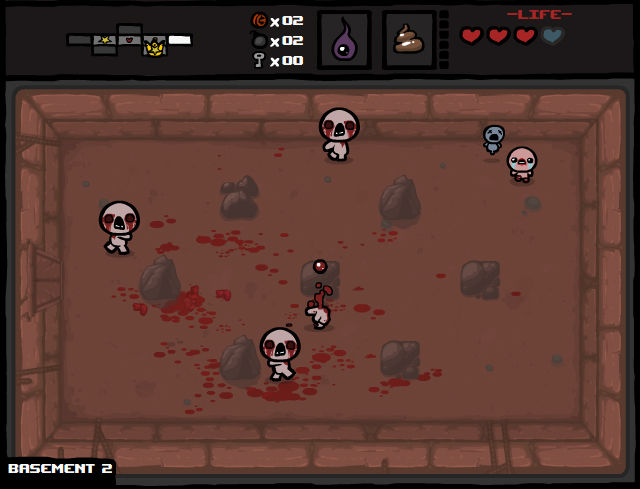
Kim: This is more about me personally than the team as a whole, but I’ve been a huge fan of indie games since high school. Among them, *The Binding of Isaac* is the game that popularized the roguelike genre in the indie scene, so I personally love it and played it a lot.I also enjoyed *Hades*, and when it comes to Japanese indie games, I remember *Vivid Night* and *Vivid World* being really fun. And of course, *Hades II* and *Cult of the Lamb* as well.
Koyu: I have quite a few favorite games… but I really like the Korean indie title *Skul: The Hero Slayer*. At first glance, the art quality didn’t give off the same “they really spent money on this” vibe as *Hades*, so to be honest, I initially assumed it wouldn’t be that fun.At first glance, the gameplay system also seemed inspired by *Kirby*, but once I played it, the sheer volume of content was overwhelming. A single skull contains enough content to fill an entire game. It’s a title that really makes you feel the passion behind it.
The best thing about roguelikes is, after all, that you don’t need money to play them. As for great games… if you count *Slay the Spire* as a roguelike, then that goes without saying.
Isobe: I feel like in Japan, it took longer—compared to other countries—for indie culture to take root, at least in my experience—though things are certainly different now. On home consoles, we’ve had *Shiren the Wanderer* and *Torneko’s Great Adventure* for a long time, so the genre itself has always existed.But starting with games like *Cult of the Lamb*, I get the impression that a style combining a slightly darker, “dark pop”—or rather, toon-style—worldview with roguelike mechanics has become popular. So personally, I’d say I’ve been influenced by *Fūrai no Shiren* and *Torneko*.More recently, it’s *Cult of the Lamb*, *Cinderia*, and *The Witch’s Garden*.
Koyu: Can I just say something? I have a bit of a gripe with *Hades*. Originally, roguelikes were designed so that players would die on their own, and that was part of the appeal. But starting with *Hades*, the idea became, “We should incorporate dying into the story,” which made it much harder to develop.In *The Binding of Isaac*, dying isn’t actually part of the narrative, is it?
――So the release and global success of *Hades* raised the bar for developers.
What’s the difference between Japan’s “doujin” and “indie” scenes?
Koyu: …Sorry, I might have gone a bit too far there. Also, the idea that “Japan was late to the indie scene” seems a bit off to me. Isn’t Japan actually the place with the most indie culture? It’s called “doujin.”
Isobe: I get the impression that Japan’s consumer gaming culture has been deeply rooted here since the days of *Space Invaders* and the Famicom. Because that’s the foundation, I always had the image that major publishers were dominant. However, as social media developed and individuals gained more influence, indie culture began to emerge.The culture itself probably existed, but I think indie games only really started catching users’ attention after social media became widespread. Until then, events like Comiket gave a somewhat niche impression, so even if the culture had been around for a long time, it wasn’t until after social media—though it’s not exactly recent—that it became more open.
Kogame: This might take a bit, but from my perspective, it’s simply a difference in culture between Japan and the West. The definition of “doujin” is “doing it as a hobby,” right?If you’re doing it to make money, it’s not a hobby. But indie developers are also doing it as a hobby. It’s just that indie developers create their games with the mindset that “precisely because it’s a hobby, we can take on those big companies.” The starting point is exactly the same as doujin.
Isobe: The roots are the same, aren’t they?
Koyu: It’s just that in Japan, when you start out thinking, “I’m a doujin creator, and I’m making this as a hobby,” you don’t imagine you’ll end up taking on big companies. I think that’s probably the difference between us and the indie scene. Sorry, I went on a bit.
Isobe: On the flip side, from your perspective, Kim, how does the Japanese indie culture—the kind Koame just described—look from South Korea?
Kim: It’s difficult to understand that accurately and deeply from a foreigner’s perspective, but… when I was in middle and high school, I was exposed to doujin works that were widely known in Korea as well—for example, the “Touhou Project” and TYPE-MOON’s works—which were doujin back then, right? They were known in Korea through various channels and by word of mouth.
From a Korean perspective, it’s hard to grasp exactly how Japan distinguishes between “doujin” and “indie,” and honestly, there are aspects where they seem similar. That said, I do think they’re certainly similar in that both are about “doing what you want to do.”
As for Japanese indie games, I had a lot of fun playing *Downwell* around the mid-2010s. For me, *Downwell* was the first time I realized, “They make indie games this cool in Japan, too.”Since then, I’ve enjoyed following events like BitSummit. In a way, I’m really envious of the depth and diversity of Japanese culture that emerges from the fusion of indie and doujin scenes. Indie culture has now become quite established in Korea as well and is thriving, so I hope you’ll keep an eye on it.
The Philosophy of Balance Adjustment—“Players Aren’t as Good as We Expect Them to Be”
――Now, I’d like to bring the conversation back to roguelikes. Since roguelikes are a genre that makes players repeat the same experience over and over, I imagine balancing them is incredibly difficult. To what extent do you rely on data, and at what point do you start relying on intuition? Could you explain each approach?
Isobe: With *Crime Light*, almost as soon as we announced it, we showcased the battle mechanics at events and released a battle demo. By observing user reactions and feedback, we’re determining whether the game is too difficult or too easy for our target audience. The most challenging aspect of balancing is the “poker system,” which is also a defining feature of this title.
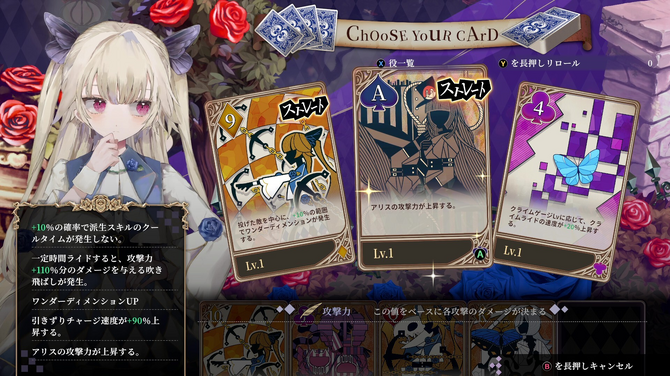
In this system, we use “Crime Cards”—which are modeled after playing cards—to build decks. Since your skill level jumps drastically when you make a poker hand, to be honest, luck plays a pretty big role.To put it bluntly, the experience changes drastically between a playthrough where you can’t make any hands at all and one where you land a Royal Straight Flush on the first try. To address this, we first calculated the probabilities of making various hands and set baseline values. When a Royal Straight Flush does appear, we’ve decided to prioritize the sense of exhilaration—so players can think, “This is super easy! It feels amazing!”
That said, the tuning process never really ends, no matter how much we work on it, so we’re gathering user feedback at game shows and making adjustments while listening intently to their opinions.
――How has the reaction been so far?
Isobe: It’s been a mixed bag. We’ve gotten two main reactions: “It’s too hard” and “It’s too easy.”Of course, we’ve included difficulty settings. In Story Mode, which is designed to let players focus on the narrative—though I’m not sure if this is appropriate for a roguelike—we’ve implemented a system that lets players restart from the beginning of the stage where they died, rather than having to start all over from the very beginning, as is usually the case. This is a measure to accommodate players who struggle with the game.On the other hand, in Normal Mode—where players can enjoy the challenge of combat—it properly resets you back to the beginning, just like a roguelike. We’re adjusting the difficulty not only through enemy strength but also through these system mechanics.
Koyu: There’s a lot to talk about here—this is going to take a while. First off, what’s the point of balance? Personally, I don’t think balance itself has much meaning.
I’m not entirely sure about Japan, but games that are popular in China and South Korea—such as Blizzard titles and *League of Legends*—are renowned for their excellent balance, and “good balance” has become the standard for what constitutes a “good game.” But if you think about why good balance is desirable, it’s because it gives players more options.The more options you have, the more fulfilling the experience becomes. So when designing balance, there’s no need to aim for a 50% win rate; for example, simply ensuring that characters are picked at an average rate makes the game more fun.
Talking about setting numbers is a bit of a technical, “craftsman-like” process, and I don’t think it’s very interesting… But when designing skills—and this is a bit of a risky way to put it—we set the numbers based on the premise that “players won’t make the best choice.” For example, in a game like *Slay the Spire*, suppose there’s a card that says, “Attack to deal damage and discard one card.”Here, we deliberately set the stats assuming that the card being discarded is a “useful card” (one that players wouldn’t normally discard). That way, actual players will almost always discard unwanted cards (ones with lower value than what we anticipated during development), so the players benefit and the game becomes more fun—we build in mechanisms that make everyone feel like “I’m smart.”
There are various small techniques like that, and then you incorporate a system for collecting data. Even so, in the later stages, no matter how you set things up, you can’t quite achieve perfect balance, so it becomes crucial to gather feedback from players. That’s another complicated topic in itself, though…
Isobe: I was listening to what you just said and thought, “That’s a great point.” It’s genuinely helpful.
—What player skill level do you have in mind when designing the game?
Isobe: In the case of *Crime Light*, we’ve set a very clear target audience. We assume that the users who’ll play our title are of this age group and have these characteristics. Based on that, we figure they’re probably playing similar titles, so they likely have this level of action skill—that’s our baseline. From there, we set a harder difficulty level and a slightly easier one.
Kim: This is an area where we, too, went through a tremendous amount of trial and error. *The Witch’s Garden* currently has three difficulty levels: Easy, Normal, and Hard. As an option, users can also toggle whether dashing grants invincibility.
Actually, our initial plan was to have “Hard mode with no invincibility during dashes.” But when we had as many people as possible test-play the game, far more people than we expected found the lack of invincibility during dashes to be extremely unfair. There were also many players who found the Hard difficulty to be much harder than they’d imagined. So, after a lot of deliberation, we established an internal standard.“If we can play and beat the game ourselves, then users should be a little less skilled than we are—roughly 30% less, in numerical terms.” We use this as the basis for setting all the game’s stats. There’s a difference of about 30% in health points between Normal and Hard modes, and we make adjustments based on that benchmark.
――That ties in with what Ms. Koame said. Players’ skills aren’t as high as the developers imagine.
Do you want players to clear the game? Or do you want them to “rise to the challenge”?
――These days, “difficult” can be a selling point in its own right. I think there’s also an approach that says, “It’s okay if you can’t beat it—just try to surpass it,” but do you all still want everyone who plays to beat the game?
Isobe: It depends on the title. With *Crime Light*, since it’s partly a roguelike designed to let players experience the story, we don’t want them to get stuck on the action or combat.However, in *REYNATIS*, which I developed previously, I included an insanely difficult hidden boss and took the stance that “if you can’t beat this, you don’t need to see the secret ending.” Depending on what the players are looking for and what kind of game the developer wants to create, I think both approaches are valid.
Koyu: Either way is fine with me, as long as the players themselves are happy. I don’t think I’m the type of developer who’s particularly focused on expressing my own will.
But speaking of players—and this is just my own observation—I think many Western players, for example, once they’ve cleared all the stages of a tiered difficulty system like the Ascension in *Slay the Spire*, tend to think, “The game is over now.” But many Chinese players have the feeling that “that’s just the beginning.” I think Koreans probably feel the same way, too.Because they’ve played PvP games extensively, many of them believe that “the game really begins once you’ve figured everything out.” So, it varies quite a bit depending on the region and culture.
Kim: Isn’t it every developer’s hope that players will clear as much of the content as possible?
Actually, when the discussion came up about whether to include difficulty settings in our game, I was against it at first.I love action games—Japanese titles like *DARK SOULS* and *SEKIRO: SHADOWS DIE TWICE*, and Chinese ones like *Black Myth: Wukong*—and those games basically don’t have difficulty settings, do they? So, as an action game enthusiast, I argued, “Maybe it’s better not to have a difficulty setting.”
However, with our game *The Witch’s Garden*, we hope it will serve as an accessible entry point even for roguelike beginners. The characters are cute, the world isn’t one of utter despair—it’s a bit dark, but the atmosphere is relatively lighthearted—so when I think about the users who might be drawn in by that, I realized we should probably add difficulty options after all.
Localization and “National Character”—First-Person Perspective, Throwing Knives, and a Crying Beautiful Girl
――Roguelikes are a genre that emphasizes the thrill of action and the experience of repeated playthroughs. On the other hand, both *Climelight* and *The Witch’s Garden* are titles where we want players to engage with the story, and I’ve heard that you also plan to delve deeper into the characters in *Cinderia*. How much emphasis do you place on localization?
Isobe: Localization is incredibly difficult. It can’t be done without someone who has a solid understanding of each language, and they also need to grasp our intentions. Even now, we often receive feedback from users saying, “Isn’t this part wrong?”
For example, in Japanese, even female characters use a wide variety of first-person pronouns. Alice, the protagonist of this game, uses “atashi” as her first-person pronoun—with an “a” sound, not a “wa” sound. “Atashi” is different from “watashi,” and there’s also the kanji form “私.”If it’s “boku,” it’s “boku,” but the kanji form “僕” conveys a slightly more mature tone than the hiragana “ぼく.” I believe these incredibly nuanced details are unique to Japan, and if you try to translate those emotions or character traits into a single word without that expertise, you won’t even understand what they mean. I know it’s difficult, but I’m being very careful about it.
Even so, there are still a lot of misunderstandings. Even though we take it seriously, there’s just so much text… We know we’re causing some inconvenience to our users, but we’ll keep emphasizing that “the main story is fine.”
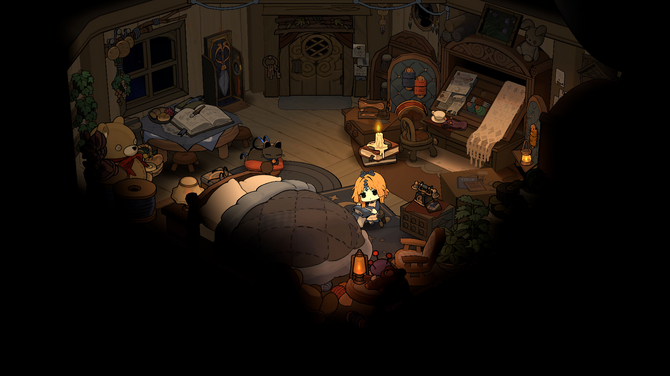
Kim: Team Tapas also considers localization to be extremely important. There are some very crucial terms—like attributes—that directly impact gameplay, right?We outsource the localization itself to an external company, but we’re so meticulous that our team members personally review the most critical parts and submit specific requests. Of course, it would be ideal if we could do this for every language, but realistically, that’s difficult.
However, our concept artist actually majored in Japanese, so when it comes to Japanese translations, he makes specific requests directly. Even regarding first-person pronouns, he’ll specify himself, saying, “This character should use this kind of first-person pronoun.”
In terms of cultural elements, our games aren’t designed to strongly reflect Korean culture, but there are still things that inevitably slip in. For example, *Crime Light* feels very Japanese. The very fact that a beautiful girl appears and cries is very Japanese—and incredibly cute.In *Cinderia* as well, the main character throws throwing knives, and with monster designs like the jingchi, you can sense Chinese cultural elements here and there.I’m sure there are elements of Korean culture in our games as well—things we might not even realize ourselves. We do localize our games, but I’d be happy if players could sense those subtle hints of our own roots embedded within them.
Art and Characters—“The Most Worthless Protagonist” and the Direction Behind the Tears
――Speaking of visuals, all three titles feature female protagonists and have a slightly dark tone. Are there any particular aspects you focus on regarding the art, or anything you’re conscious of when balancing the excitement of action with cuteness?
Kim: To be honest, since I’m a programmer… (laughs).
Still, speaking from my personal perspective after watching our artists work up close for seven or eight years, I’ve noticed that our artists don’t really like characters that are too easy to figure out. I sometimes get the sense that they think it’s not interesting if a character is one-dimensional—if you look at them and instantly think, “Oh, so this is the kind of person she is.”
For example, even the protagonist, Sil, deviates more from the typical protagonist archetype than you’d expect. She’s kinder and nicer than you’d think, but when you look at what she actually does… in fact, within the team, she’s sometimes called “the worst protagonist.” I think the artists pay a lot of attention to ensuring that characters have these kinds of multifaceted, three-dimensional qualities.
Lee Seong-won (Technical Artist, Team Tapas): May I add a little more?What you just said is mostly accurate, but from an artistic perspective, what we value most is that each character must be distinct from the others. So—and this is our biggest distinguishing feature—we make a huge effort to avoid creating shared resources for the main characters as much as possible.
Since this is essentially a mainstream game, we design them to be instantly recognizable, but we mix in something different—say, 3%, 5%, or 10%—to ensure each one feels like a “different person.” We’re really focused on that.
――What do you mean by “shared resources”?
Kim: For example, if we use an effect or texture for Character A, we don’t use it for Character B. It means preparing unique resources as much as possible.
Koyu: We’re also putting our all into the character designs for *Cinderia*. On that note, I’d like to say this… When a game becomes successful and famous, people often say, “The character designs are amazing,” right?Once they become famous, players and the media often say things like, “This character design accounts for 80% of the game’s value.” But from my perspective, even games where such character design is valued all prioritized gameplay mechanics from the very beginning.
I’m not an expert on all Japanese games, but let’s take the “Touhou Project” as an example. Nowadays, the character design might indeed be seen as the main source of value, but initially, it was a shooter with excellent gameplay—featuring great music, a thrilling sense of exhilaration, impressive bullet patterns, and stunning visual effects.Those games just happened to feature some interesting character designs. I think that’s ultimately what turned them into “games with amazing character designs.” It’s not that the character design was the main focus—it was simply that it was “also” excellent.
――In any case, the most important thing is whether the game is fun or not. What do you think, Mr. Isobe?
Isobe: With *Crime Light*, we’re fortunate to have a designer from the company we’re developing with who’s incredibly talented, so I’m really happy that users have given the art such high praise.This time, I’ve been creating the visual style and directing the screen design quite extensively. Since the game is based on the “Alice in Wonderland” motif, one of its defining features is that I provided very detailed direction to create a world that’s as strange and whimsical as possible—much like Tim Burton’s *Alice in Wonderland*.
Character design is, of course, one of the cornerstones of this title, so we’ve visualized the characters’ sins and inner turmoil and incorporated them skillfully into their clothing designs. Also, since the “Cry” series is known for “shedding tears”—as Kim mentioned earlier—we naturally focused a lot of attention on the eyes and the tears themselves.We paid close attention to details like the glistening look in their eyes. For the adventure segments, which we’re creating using a Live2D-style animation this time, we provided very detailed direction on how tears roll down their cheeks and how they well up and fall when they blink. While this isn’t strictly part of the design itself, we’ve put a great deal of effort into everything related to the eyes, including the animation.