


On September 22 and 23, 2026, “The Tenth Mosaic” was held at the Tokyo Franco-Japanese Institute.
This event featured various creators presenting content centered on video games—a medium that has come to be known as the “tenth art” in Europe and the United States.
A discussion took place here between Eric Chay, creator of *Another World*, and Fumito Ueda, creator of *ICO* and *Shadow of the Colossus*. Here is a report on the event.

How They Discovered Each Other’s Work
First, Eric Shai and Fumito Ueda spoke about how they first came to know each other’s works.
Mr. Ueda recalled learning about Mr. Shai during his college days, and his first encounter with his work was playing the Super Famicom version of *Outer World* at a friend’s house. He said he still vividly remembers how, toward the end of the game, he managed to clear the level with his friend’s help just one step before the final challenge.
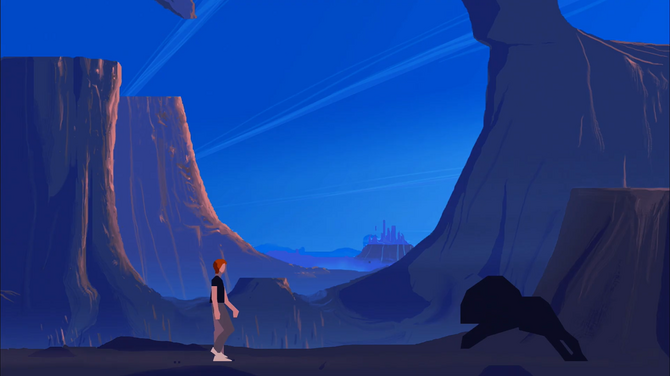
Meanwhile, Eric explained that he has been active as a creator since 1983 and had been making games even before *Outer World*. He said that after working on *Heart of Darkness*, he was recommended *ICO*, which was his first exposure to Ueda’s work.
What left a particularly strong impression on him was the relationship between ICO and Yorda. Eric reflected that he was deeply drawn to the mechanic where the two walk hand-in-hand, and revealed that he played *ICO* around the year 2000.
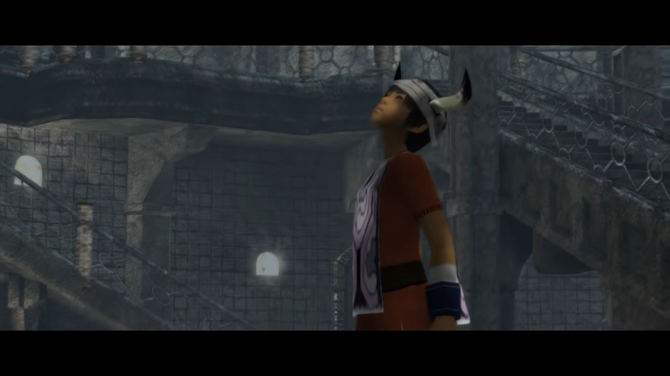
Ueda also touches on the relationship between Lester and the alien in *The Outer Worlds*. On this point, he asked Eric if he had noticed that *ICO* might have served as a reference for *The Outer Worlds*.In response, Eric asked whether he might not have been more directly influenced by the presence of the “Shadow” in his own *Heart of Darkness*.
While acknowledging that he had drawn inspiration from the shadows in *Heart of Darkness*, Ueda explained that the idea of “holding hands” came to him when he considered what the relationship in *The Outer Worlds* would look like if he were to explore it further.

Inspiration Behind the Work
The conversation then shifted to where the two draw their inspiration from.
Eric explained that he draws inspiration not only from games but also from a wide variety of external works. He said that in his early days, he was exposed to arcade games, and later, a diverse array of influences—including movies like *Star Wars*, Akira Toriyama’s *Dragon Ball*, and fantastical illustrations—accumulated within him.
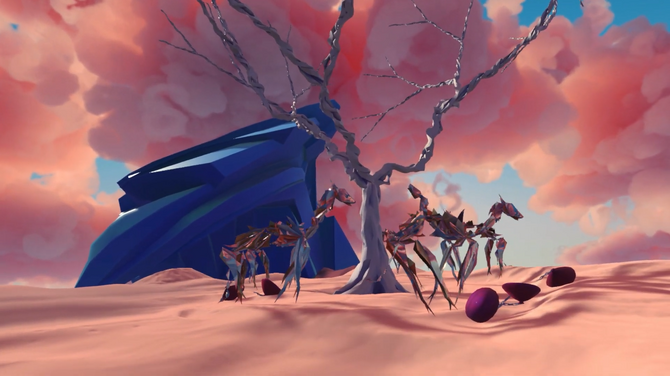
Regarding *The Outer Worlds*, he cited volcanoes and deserts as influences drawn from *Dragon Ball*. On the other hand, he explained that with *Paper Beast*, he aimed to explore the relationship with ecosystems. As time went on, the scope of his influences broadened, and he mentioned that the game was also influenced by *Karateka*.
Ueda explains that, in his case, the source of inspiration differs with each project. He noted that it’s also important to think, “If it were me, I’d do it this way,” when looking at other games.He explained that when watching movie trailers or game teasers, he sometimes imagines in his own way, thinking, “Isn’t this supposed to be something like this?” He says that even if the reality differs from his imagination, it’s important to delve deeper into that imagination.
The Impact of *The Outer Worlds*
Mr. Ueda also reflected on the impact he felt when he first played *The Outer Worlds*.
He said it felt as though a real “world” actually existed within the screen. For Mr. Ueda, in games up until then, it had felt as though behind the elements displayed on the screen lay numbers or conditions that needed to be met to fulfill certain functions.For example, game mechanics like earning points for defeating enemies. However, playing *Outer World* made him realize that “games don’t have to be built solely on rules.”
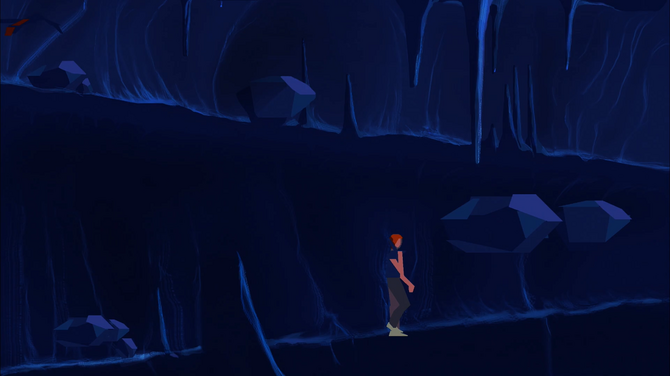
He also noted that while difficulty typically increases gradually in most games, *Outer World* lacked that predictable pattern—with easy stages sometimes following difficult ones—and said the very unpredictability of what would happen created a strong sense of excitement. I asked if this might reflect Eric’s artistic vision.
Eric replied that since he was working alone at the start of production, there were certainly aspects where his own artistic vision was strongly reflected.
He went on to explain that creating a “living world” is crucial. He pointed out that the sense of the world existing as an autonomous entity is something he shares with Mr. Ueda’s works.

He reflected that the 1980s were dominated by arcade games, and there were few games that truly immersed players. He went on to say that encountering a certain horror game—which was influenced by the movie *The Amityville Horror*—sparked his decision to incorporate atmosphere and cinematic elements into his own games.
He says that in *Outer World*, it was also important to minimize the interface as much as possible. He explained that he prioritized an experience where nothing unnecessary stood between the player and the world—where the wind blows, creatures exist, and the player moves forward within that world.

He also revealed that the game wasn’t designed in detail from start to finish; while the intro and early stages were prepared, the path beyond that hadn’t been clearly decided. He explained that this improvisational approach to development ultimately created a sense of cohesion within the world.
Building on that, Eric then turned the question back to Ueda, asking him how he goes about making games.
World-building, Mechanics, Visuals—The Starting Point of a Work
Mr. Ueda explained that there isn’t just one way to create a game; sometimes it starts with the world-building, sometimes with the mechanics, and sometimes with the art.
He said that what’s important in this process is to constantly ask himself, “If I were a player, would I want to pick up this game?”
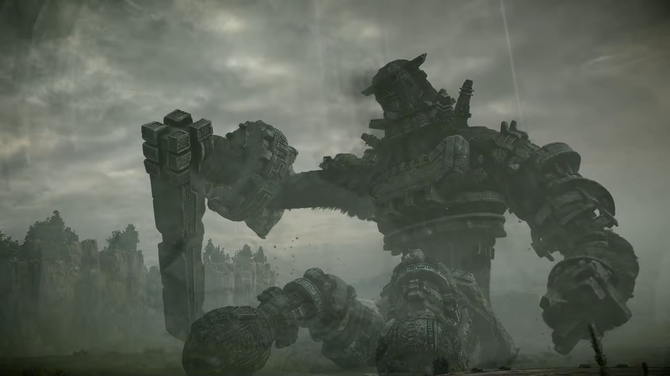
For *Shadow of the Colossus*, the game mechanic of “clinging” served as the starting point. He explained that he thought he might be able to create a fresh gaming experience by expanding upon the AI control technologies he had cultivated up to that point.
Eric also explained that, for *Paper Beast*, they first created a prototype. He says that as they refined the locomotion system within the 3D space, it gradually became a symbol of “being alive.” Only after that did they begin to build the game’s world.
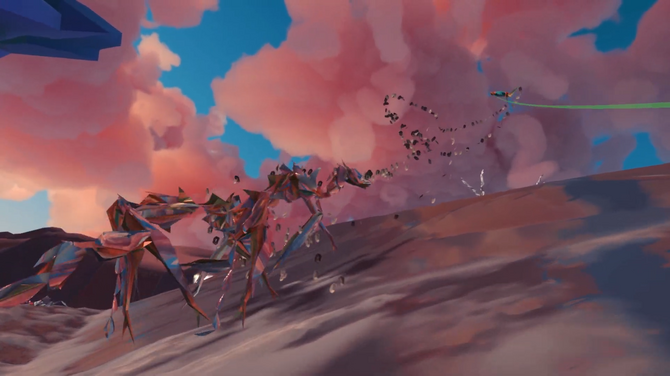
On the other hand, he noted that with *The Outer Worlds*, they started with the story, explaining that where to begin development varies from project to project.
Mr. Ueda noted that maintaining motivation is also crucial during production. He explained that it’s difficult to sustain motivation for years based solely on a game’s world-building, so the tangible sense of accomplishment—whether from mechanics working well or discovering new technology—plays a significant role in keeping development going.
Seeing Yourself as the “First Player”
The conversation then turned to how he evokes players’ emotions while testing his own games.
Eric explains that when testing his own games, he needs to forget that he is a game designer.
He plays the game not as a designer, but as a player, observing what he feels and what he tries to do in the moment. He says he uses those sensations—including parts he finds “boring” or “monotonous”—to improve the game.
In other words, he emphasized the importance of separating his identity as a designer from his identity as a gamer.

Mr. Ueda strongly agreed with Mr. Eric’s approach to playtesting, but noted that while his own works are sometimes praised for being good at evoking emotions, he isn’t necessarily consciously focused on that aspect.
In games, it’s impossible to control every single action a player takes; ultimately, certain aspects are left up to the player. For that reason, he says he focuses on “creating the game world” rather than meticulously designing emotions.
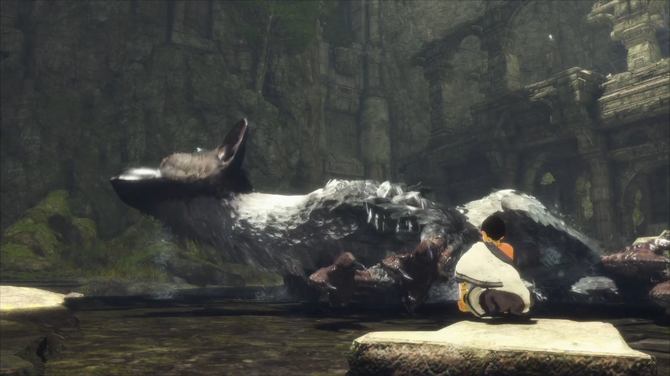
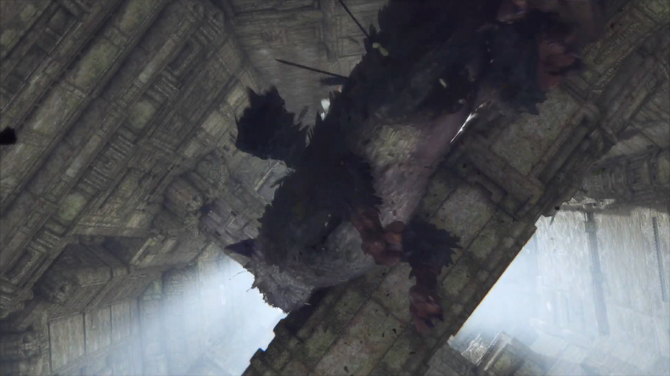
Looking back on *Trico*, he recalls that although the tagline at the time of release emphasized the bond between the protagonist and Trico, he personally found it a bit embarrassing. Rather than scripting emotionally moving scenes, he says he prioritized allowing players to experience the very essence of Trico itself.
Mr. Ueda likened the creative process to cooking, explaining that “movies” are like a full-course French meal where the chef controls all the seasoning. In contrast, he says that in video games, it’s more as if the player is doing the cooking themselves.
He drew laughter by comparing it to the sensation of grilling ingredients however you like while camping, or the act of making monjayaki.
Eric also explained that because video games are an interactive medium, the player’s actions themselves generate emotions.
Citing examples from *Trico*—such as petting the creature or pulling out its spear—he pointed out that even though the creators set the stage, it is the player’s own actions that are linked to the emotions.
He explained that while movies generally follow a single, linear narrative, games feature multifaceted dynamics. He noted that the world—including the wind, locations, and moving objects—continues to evolve independently of the player, which is a unique characteristic of games.
Furthermore, he noted that because more vigorous player actions can trigger different events within the world, games allow players to actively shape the narrative and the very direction of the experience itself.
Mr. Ueda cited *The Outer Worlds* as an example, noting that two layers—the character in the foreground and the monster in the background—move in parallel, and he responded that this also conveys a sense of “parallelism” unique to games.
Nonverbal Communication
They also discussed “nonverbal communication,” a common element in both of their works.
Mr. Ueda explained that rather than aiming for non-verbal expression from the outset, he “had no choice but to do so.”
He explained that, feeling uncomfortable with having NPCs repeat lines crucial to the game’s progression, he prioritized the realism of the world by reducing dialogue; as a result, this led to a style of storytelling that drives the narrative forward through visuals, plot development, and level design.
Eric shared this perspective, laughing as he explained that he isn’t particularly skilled at writing scenarios.
He noted that text and voice acting can sometimes break immersion, and they also create issues with memory and translation. Therefore, he says, it is precisely because there is no text that gestures and other non-verbal cues can be used to convey a wide range of meanings.
Citing *Trico*—which moves its gaze or looks in the player’s direction—as an example, he explained that the appeal lies in the fact that players can glean a great deal of information from such gestures.
Mr. Ueda explained that while a single line of text could convey a certain idea, achieving the same effect through motion requires a significant amount of development effort.
Nevertheless, he said he was committed to this approach because he had been influenced by games like *The Outer Worlds* and *Heart of Darkness*.
Technical Constraints Foster Creativity
The conversation also turned to the relationship between technical constraints and creativity.
Eric reflected that video games are strongly tied to technology, noting that from the 1980s through the 1990s, hardware generations changed roughly every two years.
He explained that there were more constraints back then than there are now, and while he had thought it would be better to have no constraints at all, those limitations ultimately gave rise to unique styles and art forms. He cited pixel art as a prime example.
On the other hand, he pointed out that technology can also become a “trap.”
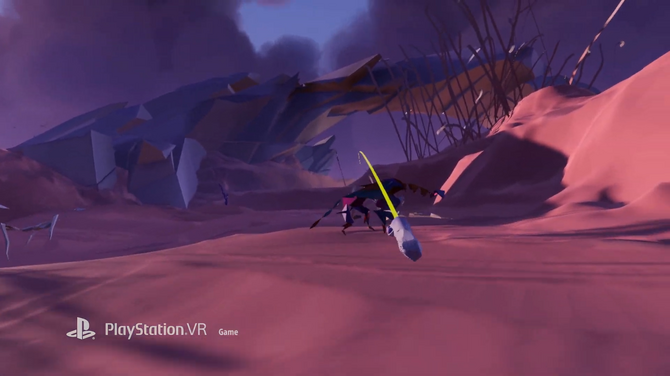
He reflected that, driven by a desire to always use cutting-edge technology, he incorporated various techniques into *Paper Beast*, which ultimately led to an excessive workload. He explained that pursuing new technology can sometimes result in becoming trapped by the technology itself.
Mr. Ueda described this as “a painful truth to face.”
He recalled that during the development of *ICO* and *Shadow of the Colossus*, hardware limitations came before his own. However, he explained that nowadays, he reaches his own limits before hitting hardware limitations.
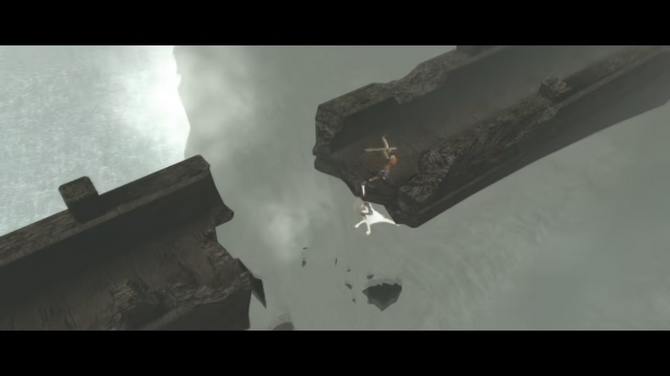
For *ICO*, they addressed this by creating just a single castle and obscuring the rest with fog. In *Shadow of the Colossus* as well, he said they had to be creative with the placement of the colossi due to memory constraints.
He emphasized the importance of striking a balance between constraints and creative vision while seeking realism and freshness.
Eric also expressed interest in how fog can create a sense of depth and a mysterious atmosphere, and spoke about the fun of creating something within the constraints.
Expectations for the Medium of Games
From here, the conversation shifted to what they expect from the medium of games itself.
Mr. Ueda pointed out that while some describe games as a “comprehensive art form,” the format of games itself has not yet been firmly established.
Regarding playtime and pricing, he explained that there is no set “best” formula, and that business operations are partly driven by conventions that have persisted from the past.
He noted that even if he wanted to create a short game, he is sometimes told he would have to lower the price because it wouldn’t be profitable, and he stated that figuring out how to make games viable as a business remains a challenge.
He went on to explain that when pursuing what he considers to be the best possible work, he does not necessarily dwell on questions such as what the medium of games should be or what art should be.
Eric says he feels the biggest challenge lies in distribution rather than technical aspects.
He noted that there are a vast number of games on Steam, and that the key is figuring out how to effectively showcase the good ones among them.
While he expressed discomfort with a landscape where only AAA titles with massive development budgets stand out, he explained that there are many wonderful indie games, some of which remain largely unknown.
He explained that while he feels uneasy about a situation where only AAA titles stand out, there are many excellent indie games, some of which are not yet widely known.
He went on to say that there is still room for improvement when it comes to game “distribution.”
Prototypes and Feedback
He also discussed how to balance feedback from others with his own vision of the game world during the prototype development stage.
Eric explains that this is the core of the work.
He reflected that *From Dust* was initially developed as a survival game, but that letting go of the direction ultimately made it better. He noted that it’s sometimes important to let go, and that, in the end, there’s a part of the process that relies on intuition.

Mr. Ueda explains that when it comes to feedback, it’s important to discern whether the content is actually helpful.
While it’s impossible to generalize whether decisions should be made by majority vote or by the director, he noted that there are certain aspects of a game that must be prioritized. On the other hand, he said that as long as changes don’t stray from the core concept, it’s also necessary to adapt the game to make it easier for today’s players to control.
He explains that, ultimately, the director is the one who makes the final call.
Distance from Gaming Industry Trends
Finally, the conversation turned to recent trends in the gaming industry.
Mr. Ueda explains that the studio neither immediately adopts trends nor ignores them entirely, but rather oscillates between the two.
He added that if there are elements he personally understands or that he believes players would enjoy, he incorporates them into his games.
On the other hand, he candidly admits that even when looking at games that are highly acclaimed, there are times when he simply “doesn’t get them.”
Eric mentioned that among recent indie games, he particularly appreciates *Cairn*, and also touched on titles like *Untitled Goose Game*.
He also revealed that he keeps his own personal ranking of indie games and makes a point of continuing to play any title that he finds interesting within the first 20 minutes.

From the words of these two creators, who have pursued the potential of the medium of games, it became clear that what matters is not the technology or features themselves, but rather “what feelings they evoke” through them.
It can be said that a common creative approach in both of their works is to allow players to experience the world itself, while embracing constraints, technology, and the players’ freedom of action.
Precisely because games are constantly evolving, their quest for new forms of expression and emotional impact seems set to continue into the future.



