


This series features interviews with the developers of intriguing new indie games. In this installment, we bring you a mini-interview with the developers of *Nimbit Frontier*, a creature-raising slow-life sim developed by Megasploot, which launched in Early Access for PC on August 18.
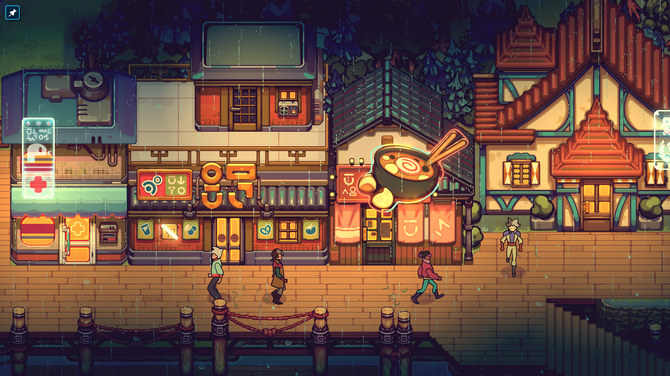
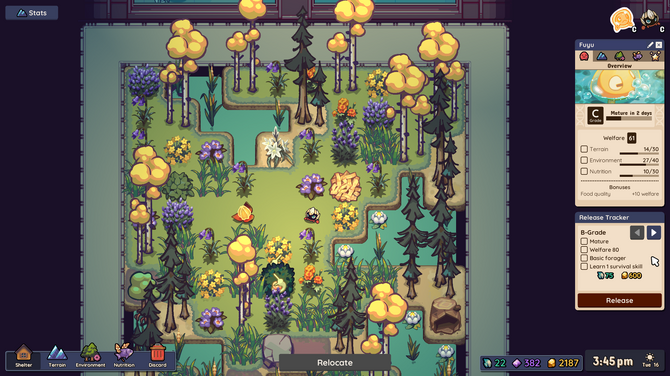
This game is a relaxing life simulation where you collect cute creatures called Nimbits. You raise these tiny, adorable Nimbits, prepare their habitats, and explore the ever-changing Underwild to discover fragments and rare species. The goal is to hatch Nimbits, care for them, and release them into the various reserves scattered throughout the world.As of this writing, the game does not support Japanese.
“Nimbit Frontier” is currently available in Early Access for 1,800 yen.
――First, please introduce yourself. What’s your favorite game?
Megasploot: I’m Megasploot, the game designer for *Nimbit Frontier*. My wife and I are a two-person development team working on this project; she handles all the art, while I’m primarily responsible for programming and game design. We’ve been developing *Nimbit Frontier* for over five years. Before that, we both worked at the same AAA studio.
In the past, when asked, “What’s your favorite game?” I would list titles like *Heroes of Might and Magic III*, *Shadow of the Colossus*, *Portal 2*, and *Pokémon*—games I loved as a child. However, these days I enjoy indie games far more than AAA titles, so I no longer feel that my previous answers fully reflect my current tastes.These days, I play a wide variety of indie games, and there are so many titles I love that I simply can’t narrow it down to just one.
――Could you tell us about the game’s key features? Also, how did you come up with the idea for it?
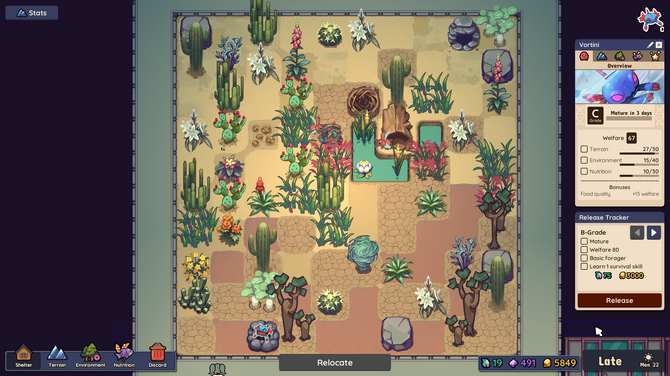
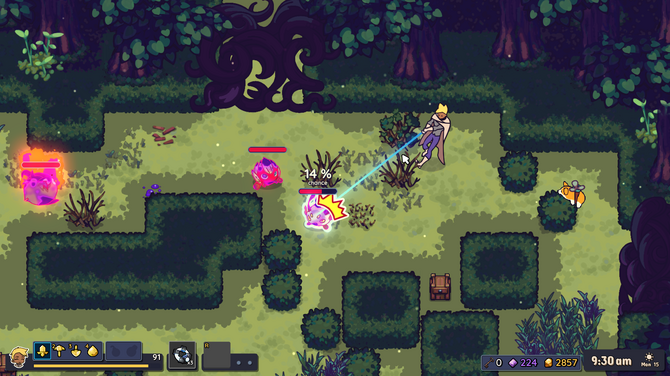
Megasploot’s *Nimbit Frontier* is a slow-life creature-raising sim designed not to keep creatures fighting in battle indefinitely, but ultimately to return them to the wild for the sake of species conservation.Players explore a roguelike field called the “Underwild,” discovering species thought to be extinct and collecting genetic fragments. They then hatch “Nimbits,” create habitats for them, care for them, and teach them the skills necessary to survive in the wild.
Compared to many other titles in this genre, we placed a significant emphasis on the process of “caring for creatures” itself. You raise Ninbits from eggs and welcome them into habitats you’ve built with your own hands.Since the Nimbits are very particular about their environment, players must teach them how to find food, survival skills, and even the sounds they’ll make as adults.
From the very beginning of development, we wanted to create a heartwarming, slow-life creature-raising sim that was a cut above the rest. That idea began with our vision of “a world where people create habitats to make creatures happy, rather than using them for battles or ranch management.”And once we came up with the concept that “in this world, wildlife conservationists are treated like superstars,” the rest of the game’s elements quickly fell into place.
I wanted players to experience the act of returning creatures to the wild not as “the sadness of losing a collection,” but as “the success of raising a single creature.” Centered around this core theme, I built a diverse array of systems, including exploration, combat, town life, social interaction, fishing, home customization, and growth elements as a “Nimbitia.”Both the “slow life” and “roguelike” elements serve to enrich and enhance the core experience of raising creatures.
――Were there any works that influenced the development of this game?
Megasploot: When considering what emotions we wanted players to feel while raising creatures, we wanted them to experience a sense of attachment to each individual creature, rather than simply managing them as “resources.” Wildlife conservation efforts and initiatives to return animals to the wild in the real world served as major sources of inspiration for this concept.
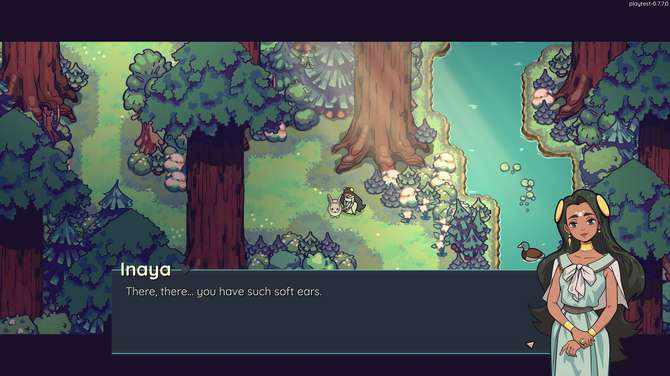
In terms of gameplay, we were heavily influenced by *Tamagotchi* and the “Chao Garden” feature from the *Sonic* series when it came to the experience of interacting one-on-one with individual creatures and training them.Additionally, titles like *Stardew Valley* served as a reference for depicting life in town, daily routines, and relationships with residents—all of which are the essence of a slow-life sim.
Furthermore, the game structure—which combines a slow-life sim with exploration of dangerous areas—draws inspiration from games like *Lusettia: How to Start an Item Shop*, *Moonlighter*, *Other Life: Other Dreams*, and *Rune Factory*.
――Please share one episode that left the strongest impression on you during the development of this game.
What left the strongest impression on me was an incident that occurred during the early stages of *Megasploot*’s development, while we were designing the core gameplay. At the time, we were studying creature-raising games like *Slime Rancher* and *Stardew Valley*, and we realized that much of the gameplay in those titles ultimately boiled down to “monetizing what the creatures produce.”However, this felt slightly at odds with the “heartwarming” atmosphere we were aiming for, and it didn’t quite align with the “animal-friendly” theme we wanted to convey in *Nimbit Frontier*.
I agonized over this problem for days, and one night, when I suddenly woke up, the image of a “snow globe” popped into my head.A small, self-contained world unfolding inside a snow globe… That led me to the idea: “What if we created a small habitat for each individual creature, and the rewards were determined by how well that environment suited the creature?”
Once I reached that point, the answer became clear: “The purpose of creating a habitat should be to prepare the creature so it can stand on its own in the wild.” This resonated with the work of real-life wildlife managers, who care for animals that have lost their parents or been injured and return them to the wild.This idea ultimately became the core gameplay mechanic—caring for creatures—in *Nimbit Frontier*.
――What kind of user feedback have you received since the release? Please share any particularly memorable comments.
We’ve received a tremendous amount of encouraging feedback regarding the Megasploot creature care system, the artwork, the characters, and—above all—the concept that “the theme is conservation and reintroduction to the wild, not battle.”I’m amazed by how passionately players are engaging with elements such as habitat design, Nimbit welfare and survival skills, fishing, and the various events that occur while exploring the Underwild.
At the same time, the feedback we receive during Early Access is incredibly helpful in identifying areas of the game that need improvement. We’ve received requests ranging from improving comfort to adding variety to repeatable activities, expanding Underwild content, and introducing new elements to deepen relationships with townspeople.
What stays with me most, however, are those moments when players perfectly understand the intent we sought to convey through the Nimbits. We wanted players to grow attached to their Nimbits as “irreplaceable, one-of-a-kind creatures,” while also recognizing that “returning them to the wild is the true goal.”Every time I see a player form a deep bond with a Ninbit and feel a sense of pride when the Ninbit is ready to stand on its own and return to the wild, I realize that the game’s unique theme has truly resonated.
――Taking user feedback into account, could you tell us about your plans for future updates?
Megasploot: Our top priority is the continuous improvement of the player experience. We’re working on adding features that make habitat management and daily routines smoother, expanding customization options, and addressing areas that players find frustrating.
Additionally, in major updates, we plan to expand the growth mechanics, relationships with residents, and the Underwild. Specifically, we’ll be adding new scenes to deepen relationships with characters, expanding customization options for pets and characters, introducing new bosses and exploration content, and adding new goals for existing players. In future major updates, we also plan to introduce new biomes.
Currently, the main content of the game offers approximately 20 hours of playtime (over 30 hours when including side content), but by the time of the official release, we aim to expand the main content alone to over 35 hours.
Since *Nimbit Frontier* is currently in Early Access, we are actively utilizing feedback from players to determine which areas of the game require the most development focus.While we’ve received overwhelmingly positive feedback on the creature-care mechanics overall, we’ve also heard requests to expand interactions with NPCs, quests, and romance elements. We plan to prioritize enhancing these areas in future updates.
――Could you tell us about the Japanese language support for this game? Is volunteer translation possible?
Megasploot: At this time, *Nimbit Frontier* does not support Japanese localization. We are a very small development team, and since the Early Access period involves frequent and extensive changes to text and content, implementing localization would be a massive undertaking for us.
However, Japanese is definitely one of the languages we hope to support by the official release. If we do add it, we want to establish a system that allows us to continue maintaining it properly even as the game’s content is updated in the future.
We’ve also received direct, heartfelt messages from Japanese fans saying, “We’d like to see this translated into Japanese,” which has been a huge source of encouragement. We’re currently exploring our options regarding whether to rely on volunteer translations, hire professional translators, or use a combination of both.
――Is it okay to stream or monetize this game?
Megasploot: Yes, of course. We welcome players and content creators to stream *Nimbit Frontier* and post videos on platforms like YouTube and Twitch. We have not imposed any special restrictions on streams or videos that generate revenue.
――Finally, please share a message for our Japanese readers.
Megasploot: Thank you so much for your interest in *Nimbit Frontier*. This game is a massive project for my husband and me; we’ve spent over five years meticulously crafting the creatures, the world, the characters, and the various game systems.
We are well aware that creature-raising and monster-collecting games have a very long history in Japan and are supported by a passionate fan base. We hope that the concept of raising creatures and ultimately returning them to the wild will offer players a unique and special creature-raising experience unlike anything they’ve experienced before.
“Nimbit Frontier” is currently evolving through Early Access, and thanks to feedback from players around the world, the game has already improved significantly. We look forward to the day when more Japanese players will be able to experience this game.
Once again, we would like to express our sincere gratitude for your interest in *Nimbit Frontier*.
――Thank you very much.
◆ About “Spotlight on Indie Mini-Q&A”
This series features email interviews with indie developers shortly after their games’ release. To ensure regular publication, we’ve standardized the questions, with the goal of sharing the perspectives of as many developers as possible. Please also enjoy our archive of over 1,000 other interview articles.
