


The front cover, back cover, and disc surface are all appealing
Haru Iida: To dig a little deeper, let’s ask everyone about their favorite things about physical editions and the titles that stand out in their memories.
Skollfang: When it comes to physical packages, it’s got to be the gimmicks in *Metal Gear Solid*. That game simply wouldn’t work without the physical package. I also really appreciate the meta-playful touches, like the line “Please swap out the disc,” and Director Hideo Kojima’s clever use of the packaging itself.

Takaroku: This ties into my childhood memories, but I really love the big, heavy feel of those boxed Super Famicom games.
At first glance, they look like books, but the excitement of opening them to find the game inside feels just like opening a toy box—it’s a memory that’s deeply etched in my mind, along with the times I played *FF6* and *Chrono Trigger*. Sadly, I don’t have a single one left now, so I’d love to get them back someday (laughs).
Haru Iida: Speaking of Nintendo hardware, I still have some GameCube games I used to play, but since I was just a kid back then, I’ve lost all the outer sleeves (laughs). Things like opening the package only to find a different game inside, or losing the included accessories—those “common mishaps” are unique to physical editions.
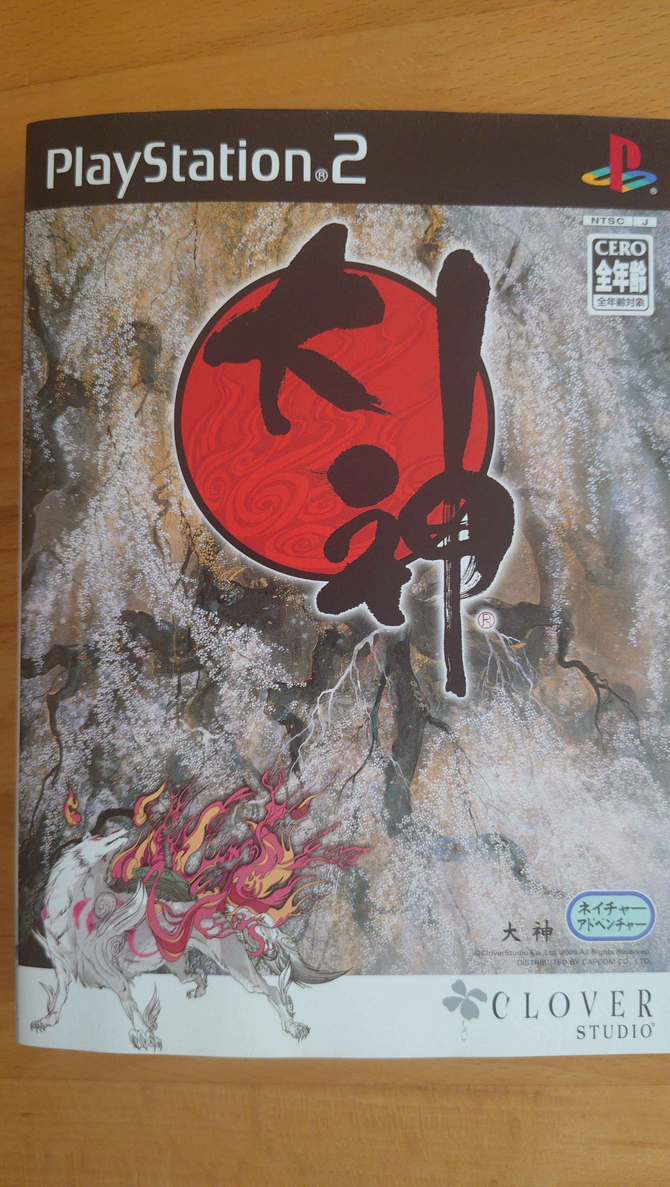
Skollfang: Box art is like a movie poster—it’s an original illustration that conveys the entire world of the game in a single image, and I think that’s a major part of its appeal.
Take *Ōkami*, for example—the main character, Amaterasu, is deliberately placed off-center, with the Japanese-style artwork taking center stage, right? I feel like this serves as the gateway to the world of *Ōkami*, and it’s a crucial element.
Haru Iida: It’s also nice when you can sense that attention to detail in the design of the package’s interior and the game disc itself. While the compactness of cartridges is certainly an advantage, there’s still something special about seeing a carefully crafted donut-shaped design for a disc—it makes you feel like you’ve gotten a real treat.

Takaroku: Speaking of discs, *FF7* came in a three-disc set, so I remember playing the first disc while looking at the second and third ones, wondering, “What kind of story will this be?” or “Since this logo is depicted, does that mean…?”
Haru Iida: It’s also interesting how the back cover of the package is packed to the brim with information despite the limited space. Since it summarizes the game’s content in a compact and appealing way, it seems like an area I should take note of as a game writer.
There are also a lot of catchy phrases, and I can really feel the designers’ hard work—that’s one of my favorite parts.

Takaroku: Well, since we’re writers, we naturally react to anything with text, don’t we? (laughs)
Haru Iida: I also really like it when they include “customizable covers”—I guess you could call them package jackets—as a bonus, taking advantage of the fact that this part can be swapped out.
The Nintendo Switch version of *Gnosia* came with interchangeable jackets for all the characters, which made me really happy. Though, since it feels like a waste, I don’t actually use them to change the cover—I just admire them (laughs).

Let’s not forget the frustrating yet fun world of bonus content
Haru Iida: Speaking of bonuses, sometimes bundles are released with ultra-luxurious extras that cost more than twice the price of the game itself, so talk of these extras is an essential part of the discussion when it comes to physical editions.
I remember being surprised when I bought the *Atelier* series 20th-anniversary box set in the past—a huge cardboard box arrived—but I’d love to hear about your experiences too. Especially since Skollfang collects soundtracks, I imagine you have a deep connection with bonus content as well.
Skollfang: That’s right. I’ve been collecting them since I was a kid, so I have quite a few.
One that stands out in my memory is a PS2 game called *Torino Hoshi ~Aerial Planet~*, released by Nippon Ichi Software.It features an image song composed specifically for the game by Hitoshi Sakimoto of Basiscape and sung by Hatsune Miku. Since this was released before the Vocaloid boom, it has a different vibe—it’s a real rarity.
Also, during the PS2 era, it was fairly common for packages to include a soundtrack CD, much like a two-disc set. Since the format is different from standard CDs, organizing them can be a bit of a hassle, though.

Haru Iida: To reiterate what I said at the beginning, I still get the impression that physical media remains very strong when it comes to game music. Even at the Tokyo Game Show, I still see lines forming at the merchandise booths as people wait to buy CDs.
Skollfang: To begin with, there’s a lot of game music that isn’t available via streaming. Also, since the number of tracks on game soundtracks has increased dramatically in recent years—and it’s not uncommon for them to cost tens of thousands of yen—I definitely feel that the landscape is changing.
These days, it’s become commonplace for games to exceed the maximum capacity of optical discs—100GB—and game discs have shifted from serving as installers to functioning more like license keys, haven’t they?
Haru Iida: It’s a situation where even if you buy the physical package, you end up downloading the game anyway. When it comes to bonuses for digital downloads, they often include digital content as a bonus, but Koei Tecmo Games—the publisher of the “Atelier” series mentioned earlier—also sells sets containing only the physical bonuses for people who think, “I prefer the digital version of the game, but I also want the physical bonuses.” Personally, I think that’s a really great approach.
Takaroku: I’ve also been a fan of Koei Tecmo Games—the “Neo Romance” series, released under their Ruby Party brand aimed at women, also has a standard “bonus-packed set” that costs nearly 20,000 yen.
We die-hard fans are more than happy to buy them, but the boxes are so huge that we struggle to find a place to store them. Even so, I feel that the joy and excitement of unboxing them never fade, no matter how old we get.
Haru Iida: I know exactly what you mean. I don’t have enough space to display them permanently either, but I enjoy regularly checking out the corner of my home where I keep all my game bonus items stored together.


Takaroku: It’s a little satisfying just to confirm, “I have this,” isn’t it? Also, if anyone from a game company’s marketing department is reading this article, I’d really like to convey this: please think very carefully before offering different bonuses in Japan and overseas…
A while back, I was thrilled to hear that a figure for *AI: Somnium Files* was coming out—only to find out it was exclusive to the international version… Luckily, I had family overseas who were able to buy it for me, but I suspect cases like this happen quite often.
Haru Iida: I understand there are various circumstances, but it would be great if—for example—they offered “overseas-exclusive bonuses for sale in Japan” as well.
Takaroku: I’d love that. Especially for titles where merchandise isn’t produced very often—it’s truly a rare treat.
Haru Iida: When it comes to bonuses, I often struggle with whether or not to buy the “first-print limited edition.”I usually end up buying the standard edition because of storage space issues, but if I get really hooked on the game later, I end up thinking, “I wish I’d gotten the limited edition bonuses…” In that sense, I was really happy that *Danganronpa*, which was released on the PSP, included a limited edition even in the budget version that came out a year after the initial release.
Also—and this strays a bit from the packaging itself—when I buy Nintendo titles on Amazon, they arrive in a special gift box, so I can’t bring myself to throw those away either (laughs).

Skollfang: With *Pokémon Scarlet and Violet*, it became a hot topic when purchases made through the Pokémon Center Online came with a message addressed to both the delivery person and the user, didn’t it?
Haru Iida: For the Nintendo Switch and Nintendo Switch 2, they even sell versions that come with an empty box for the digital download edition, so from our perspective, Nintendo is truly a blessing.
Takaroku: Since Nintendo started out as a toy company, I think they really value the experience of holding the product in your hands.
Skollfang: I get the sense that they develop games with the understanding that not only playing the game itself, but also the communication and excitement that arise from it with those around you, are extremely important elements of gaming.
Whether it’s game bonuses, packaging, or even bookshelves, catching a glimpse of these physical items in our daily lives helps reinforce our memories. On the other hand, with digital game libraries, there isn’t a single screen where you can view your entire collection at a glance, so if a long period goes by without seeing them, it feels like the memories of playing those games naturally fade away.
Haru Iida: It’s true—memories are tied to the physical packaging. When you pick up the package, it feels like your favorite scenes come flooding back.
Skollfang: You could say the appeal of physical packages lies not only in the joy of owning them, but also in how they really help solidify memories when you display them on a shelf.



