


Tokyo Game Show 2026 was held the other day. When you attend this event year after year, you start to notice that there are “regular booths” at Makuhari Messe every September.
The Malaysia Pavilion is truly a TGS staple. The country has set up a pavilion space every year since 2017 and continues to showcase innovative indie titles.I, who speak a little Indonesian, paid a visit to this pavilion, which is co-hosted by the Malaysia External Trade Development Corporation and the Digital Economy Corporation of Malaysia.
A ramen shop in the middle of space!?
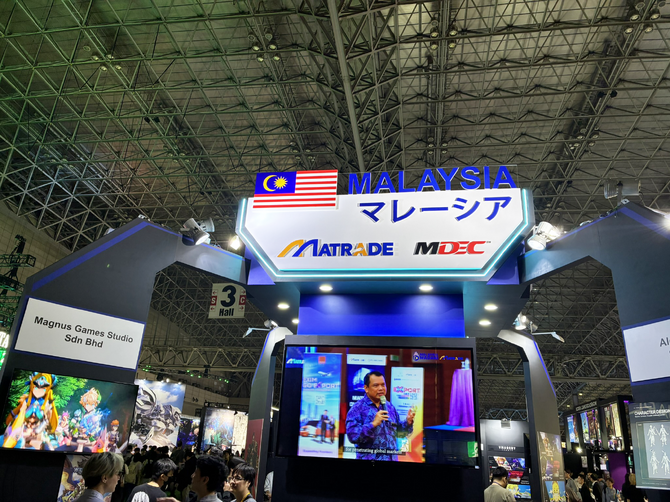
Once you learn Indonesian, you can easily interact with locals not only in Indonesia but also in Singapore and Malaysia.
This is because Indonesian is originally derived from Malay, and the two languages still share many common words. For example, the word for “capable” is “boleh” in Malay and “bisa” in Indonesian; “restroom” is “tandas” in Malay,“kamar kecil” in Indonesian; “airport” is the same in Malay as in English, while in Indonesian it’s “bandara”—there are differences like that. However, about 80 percent of the vocabulary is shared, and the grammar is exactly the same. I’m so glad I studied a foreign language!
“When it comes to Japanese food in Malaysia, people used to think of sushi and tempura, but in recent years, ramen has become well-known.”
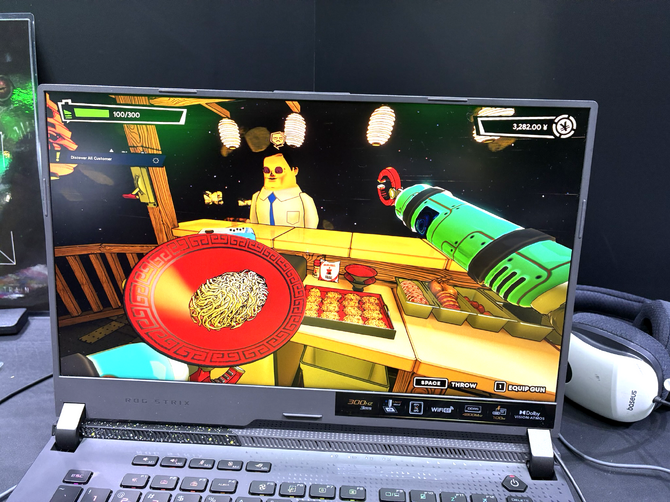
While listening to the Pavilion staff’s explanation in Malay, I played a game called *Totally Normal Ramen* (METROPOLICE), which is available on Steam. Its current Japanese title is *The Perfectly Ordinary Ramen*—a straight-up, literal translation.
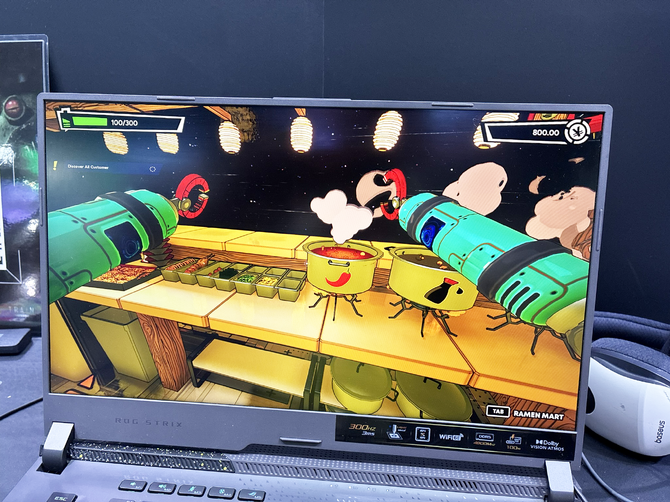
The setting is space. Customers come from far and wide to this ramen food truck-style spaceship. It’s a one-person restaurant sim where you have to quickly fulfill those customers’ orders… which, when you put it into words, is actually pretty crazy.
And let me tell you… it’s insanely difficult! It’s fine that the customers’ orders are displayed as illustrations, but since they specify things like the number of noodles, the number of slices of chashu, the amount of nori, the number of eggs, and the type of soup, you have to remember all that and serve it exactly right. Unfortunately, I was born with very little working memory, so I really struggled with this game…
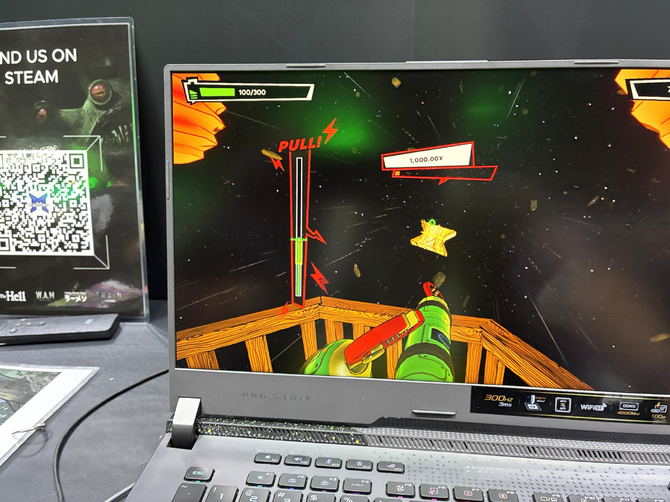
And this *Totally Normal Ramen* also has elements reminiscent of the raft-drifting game *Raft*. What I mean is, you have to use a manipulator to grab ramen ingredients drifting through vast outer space. Man, who came up with this game!? (← That’s a compliment.)
Next up was the bullet-hell shooter “Blue Star Engine” (Vmagery studio). This game incorporates character trading card elements, and as you progress through the stages, both the difficulty and your playable character’s abilities increase.
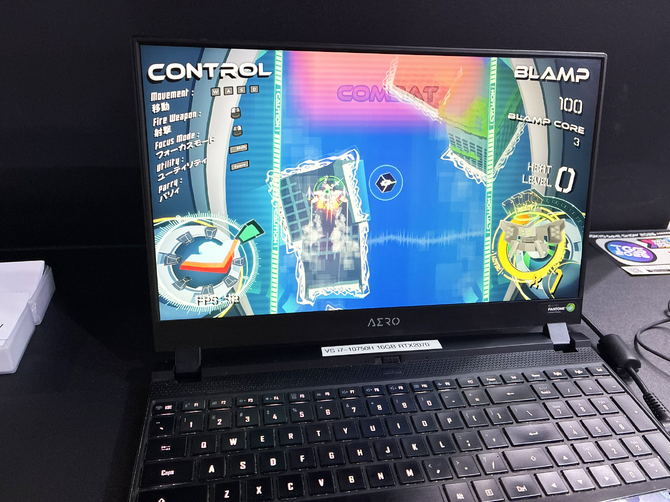
Shoot ’em ups with this kind of art style aren’t particularly rare, but when you actually play it, the “gradually increasing difficulty” mechanic makes it accessible even for those who aren’t great at bullet hell shooters. It also features some Japanese text, which suggests the developers have Japanese sales in mind.
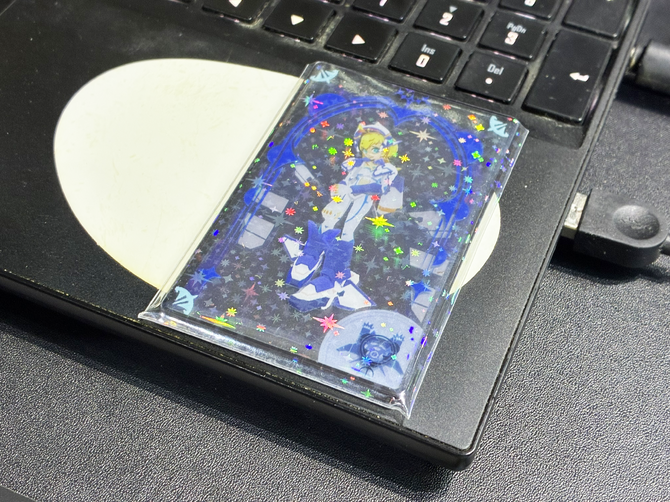
As of now, it doesn’t appear that a page for the game has been published on distribution platforms like Steam yet, so we’ll have to wait and see what the future holds in that regard… The chance to encounter such “unseen gems” is one of the real joys of visiting the various national pavilions.
Malaysia: An Industrially Developed Nation Within ASEAN
Malaysia is known as one of the most industrially developed countries within ASEAN.
It is home to numerous factories producing products essential to modern civilization—from steel to automobiles, batteries, and semiconductors—and this industrial base also serves as the foundation for the development of its gaming industry. While it is occasionally claimed on social media and in YouTube commentary videos that “Malaysia is a far poorer country than Singapore,” this is nothing more than a major misconception.
In the 1980s, when Mahathir bin Mohamad became Prime Minister, the “Look East Policy” was implemented—a strategy to learn about industrial development not from the former colonial power, the United Kingdom, but from Japan, which had achieved rapid economic growth in the postwar era.From this point onward, the business communities of Japan and Malaysia forged strong ties, and Japanese technology across various fields began to be introduced to Malaysia. Since computer games inherently rely on hardware, this kind of background is essential for the development of the gaming industry. In that sense, Malaysia can be described as a country where the gaming industry can thrive.
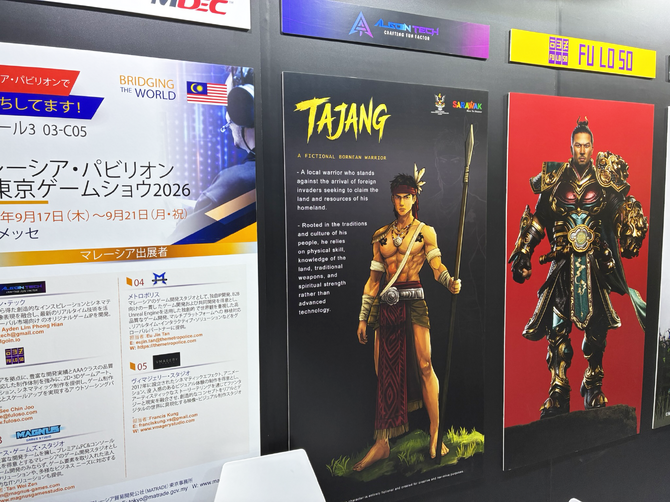
When viewing the Malaysia Pavilion at TGS with these international developments in mind, a different perspective seems to emerge.
TGS as Seen from the Malaysia Pavilion
A major difference between ASEAN and the EU is that the former does not share a common currency or unified standards; rather, its member nations engage in economic competition while maintaining loose ties.
Indonesia, which has an official language in the same linguistic family as Malaysia, is an “emerging nation” that has only just established its first national pavilion at TGS.As for the historical foundation of computer game development, one must admit that Malaysia currently has a slight edge. From Malaysia’s perspective, this also means it is investing considerable effort and resources to maintain its status as the “production hub of Southeast Asia” and ensure it is not overtaken by other emerging nations within ASEAN.
One could say that being able to catch a glimpse of this international balance of power is one of the defining features of a massive event like TGS.
