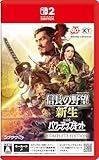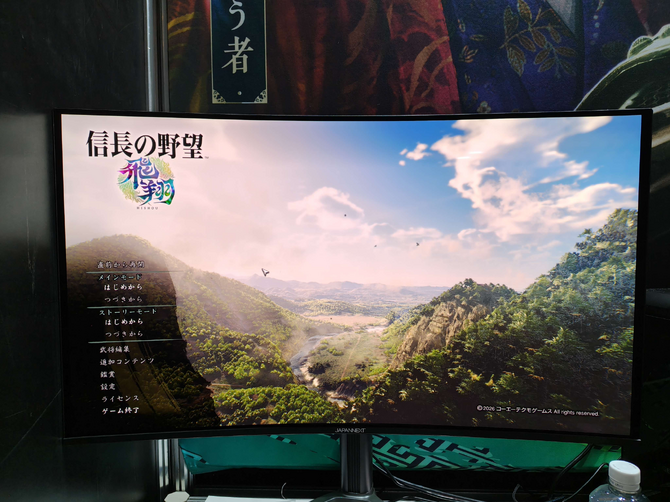
At the Koei Tecmo Games booth at the “Tokyo Game Show 2026 (TGS2026),” a playable demo of *Nobunaga’s Ambition: Hishou*—scheduled for release this winter—was showcased for the first time anywhere in the world.
I had the chance to play the demo at the TGS venue myself. I have virtually no experience with the *Nobunaga’s Ambition* series, nor am I particularly knowledgeable about historical simulation games in general. That’s precisely why, in this article, rather than offering a detailed comparison with series veterans, I’ll share my impressions of this title from the perspective of “someone experiencing it for the first time.”
The *Nobunaga’s Ambition* series debuted in 1983.Its latest installment, *Hishō*, is built around the concept of “Live for the ‘Great Cause.’” It incorporates “Just Cause”—a system that embeds the question “Why do we fight?” into the gameplay—as well as “Town-Building and Domestic Policy,” which makes a comeback after about 20 years, and the series’ first-ever “Story Mode.”
After actually playing it, I was impressed by how clearly the objectives and outcomes were presented in each of these features, making it less likely for newcomers to the series to feel lost and wonder, “What am I supposed to do?”
It’s Not Just About “Attacking Because You Think You’ll Win”—The New “Just Cause” Feature
The new feature that left the strongest impression on me this time is “Justification.”
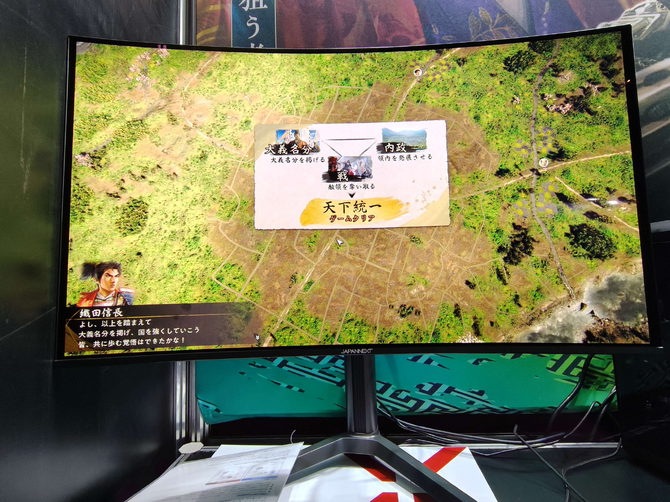
From the player’s perspective alone, the reason for invading a neighboring country could simply be “because I think I can win right now.” However, in the actual Warring States period, a reason strong enough to convince vassals and those around you was necessary to wage war. In this game, that “reason for fighting” is built right into the system.
For example, reasons to fight arise based on an opponent’s actions and your relationships with those around you, and declaring these as your just cause leads to war. Rather than simply “attacking because I’m being attacked,” you can see a clear progression of “I’m fighting this faction because of this reason,” which made it easy even for me—a first-time player of the series—to understand the situation.
What’s even more interesting is that this mechanism isn’t limited to the attacking side. Since other factions also act based on justifications, it becomes somewhat easier to read their motives—for example, thinking, “This faction might be the one to strike us next.” It feels convincing even from the perspective of the side being attacked, and personally, I found it to be a very straightforward system.
Warlords now have four distinct “temperament” types—“Innovation,” “Conservatism,” “Loyalty,” and “Pragmatism”—and possess both a primary and a secondary temperament.A daimyo’s temperament defines the “family ethos” of the entire faction; for example, the Oda clan is “Innovation + Pragmatism,” while the Takeda clan is “Pragmatism + Conservatism.” If the family ethos aligns with the direction of the stated cause, the effect is amplified.
Approximately 1,000 types of justifications—including variations—are planned, and they affect troop strength, general abilities, control over provincial lords, loyalty, and resistance to subversion. It goes beyond being a mere “reason for war” and can be considered a core system that underpins decision-making throughout the entire game.
“Town-building domestic governance,” returning for the first time in about 20 years, offers a fun, casual “sandbox” experience
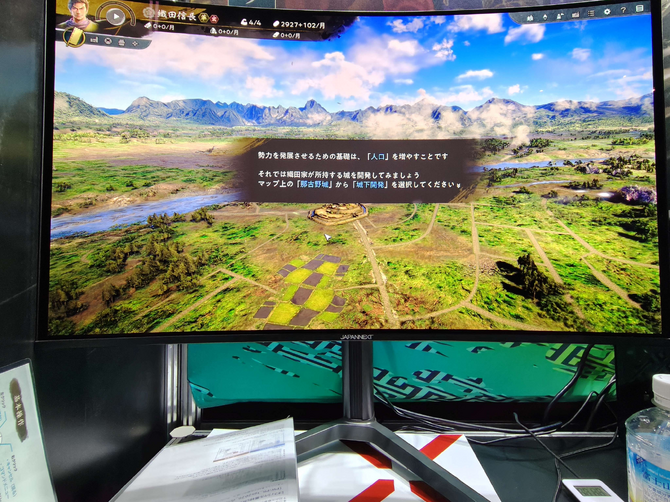
The “town-building and domestic governance” system, previously featured in titles like *Retsufuden* and *Tenka Sosei*, is making a full-scale return to the series for the first time in about 20 years.
The system involves placing facilities in the castle town to develop commerce, agriculture, and military preparedness. Boosting commerce increases the population, and agriculture becomes necessary to support that population. A growing population leads to increased military strength, and as the castle develops, the amount of land available for cultivation expands.
While the system is easy to grasp right away, what makes it interesting is that each type of terrain has its own strengths and weaknesses. For example, mountainous areas may not be well-suited for agriculture, but you can leverage region-specific advantages like gold mines. Rather than poring over complicated statistics, the demo let me experience the joy of building a castle town with a bit of a “SimCity-like” feel.
However, developing your town isn’t the end of the story. When a siege begins, the castle town itself becomes the battlefield.
If you want to strengthen your defenses, you’ll want to build defensive structures like watchtowers, but that means you’ll have to balance that against the land available for commerce and agriculture. Do you want to build a prosperous town, or a castle that’s hard to attack? Deciding how to use your limited land presented the kind of dilemma you’d expect a castle lord to face.
I thought battles would be a “spectator game,” but I actually got to participate quite a bit
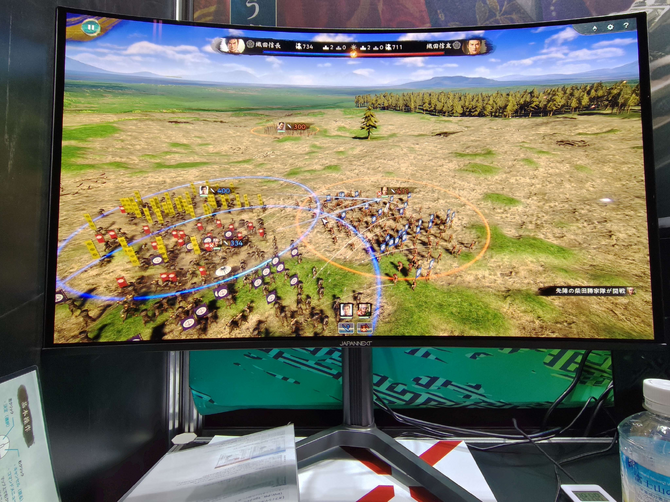
Since I haven’t played much of the recent *Nobunaga’s Ambition* series, I can’t compare the game to the latest entries in terms of minor differences. However, what surprised me after actually playing this time was how intuitively you can issue commands to your units during battles.
To be honest, before playing, I had a preconceived notion that “politics and domestic governance were the focus, and combat was something you mostly watched from the sidelines.” In reality, however, you directly command where to move your units and adjust their routes based on the battle situation—it really feels like you’re actively in control.
The battlefields in this game feature “open plains,” where you can move freely, and “narrow paths,” where movement is restricted. You can use the terrain to your advantage—not only by clashing head-on over key points on the open plains, but also by flanking enemies via the narrow paths or holding them off with small units.
On the other hand, since your vassals assess the situation and act autonomously, you don’t need to micromanage every detail yourself. You can start by letting them handle things until you get the hang of it, then gradually take more control as you become more familiar with the game.
Personally, there were moments when the gameplay felt closer to an RTS than a traditional SLG. This experience significantly shattered—in a good way—my preconception that “Nobunaga’s Ambition” was a difficult political simulation.
The series’ first-ever Story Mode serves as a gateway for beginners
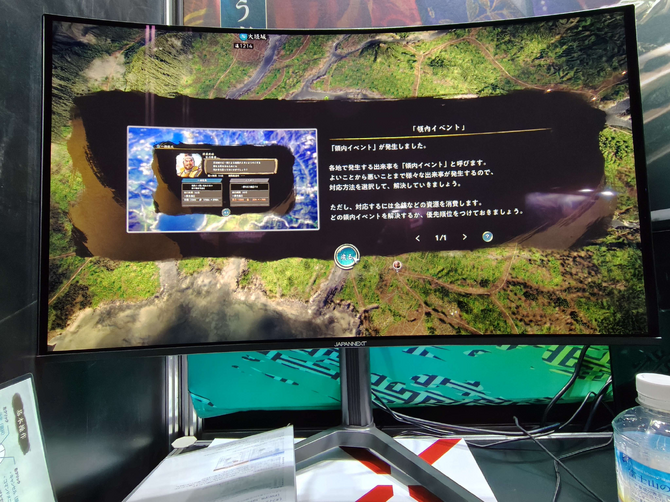
And as a newcomer to the series, what I appreciated most was the series’ first-ever “Story Mode.”
You play as Oda Nobunaga. As you follow the story and trace Nobunaga’s life, the game is designed to let you gradually learn its mechanics—from town-building to the concept of a “just cause.”
In the TGS demo, you can choose between “Main Mode” and “Story Mode,” but for someone like me with almost no experience with the series, I found it much easier to start with Story Mode. Rather than just going through a standalone tutorial, you naturally learn the controls as you progress through the story, thinking, “Next, I’ll try this.”
The developers are currently adjusting the Story Mode in the full release to take approximately 20 to 25 hours to complete. It’s not just a simple introductory bonus—it’s planned to have enough content to be enjoyed as a full-fledged mode in its own right.
What left the strongest impression on me after trying out *Nobunaga’s Ambition: Hishou* was how the game visualizes the “just cause” as the reason for fighting, creating a compelling motivation for conquering territories.
This is combined with the joy of domestic governance—building castle towns with your own hands—battles that feel more hands-on than I’d imagined, and a Story Mode that’s accessible even to beginners. Even as someone who has played almost none of the previous games in the series, I rarely felt stuck wondering “What should I do?” and was able to grasp the appeal of each element even within the short hands-on session.
While I’m certainly curious to see how these new elements will be received by series veterans, this title also seems like a great entry point for those who have previously avoided the series simply because it seemed “too difficult.”