


The visual novel *Shoelace Story*, released by developer KITTYPOOL, and its spin-off *PAIC: The Moon Rider Story*, were “eclectic” indie games packed with an obsessive love for subculture while vividly depicting real-world social issues.

However, according to the developer, KITTYPOOL, both titles are “nothing more than pop entertainment.” Looking back, the appeal I first felt in both games was their “quirky yet straightforward fun.”
What does “fun” mean to KITTYPOOL? The RPG masterpiece *moon*, the pinnacle of modern Chinese science fiction *The Three-Body Problem*, *Go for the Top!*—a representative work of early GAINAX—and ECD, a classic of Japanese rap…While looking back on KITTYPOOL’s hobbies and career to date, we asked him in depth about his vision for “pop game development.”
—Please introduce yourself.
KITTYPOOL: I started developing games under the name KITTYPOOL in 2021, and currently, as an independent developer, I’ve released several visual novel games on Steam.
――Could you tell us what inspired you to develop your signature work, *The Shoelace Story*?
KITTYPOOL: First of all, when I first started game development in 2021, it was just me and a friend—we were a team called “KITTYPOOL.”When we first thought about what kind of game to make, we both happened to be fans of a game called *moon*, which was released in 1997. So we said, “Well, let’s try making something like *moon*.” That was the starting point, and we gradually fleshed out the idea from there.
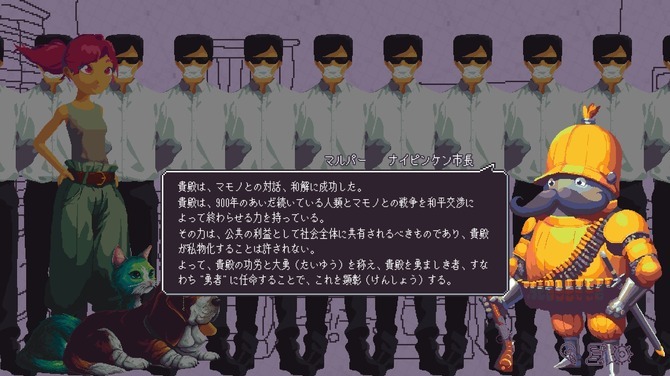
――I see! So the premise of *The Shoelace Story*—where the hero persuades the Demon King, who rules over monsters—is an alternative take on the traditional RPG formula, and that’s also influenced by *moon*, isn’t it?
KITTYPOOL: Exactly. It’s not just that we were “influenced”—in fact, we made *Shoelace Story* with the explicit intention of making it feel just like *moon*.
The “KITTYPOOL Universe”: A Miniature World

――When I take a broad look at KITTYPOOL’s works, I get the sense that they form a collection of virtual war stories that share a common worldview.I gather that the “alternate history” genre itself requires a tremendous amount of effort to develop. I imagine it must be quite challenging to deliberately choose this genre—and to create games as an independent developer—so what inspired you to do this?
KITTYPOOL: To be honest, I’ve never really thought much about the “alternate history” genre. I’m not even entirely sure what qualifies as alternate history to begin with…
――If I had to name a representative example, I think *The Lord of the Rings* (by J.R.R. Tolkien) is a virtual war chronicle that immediately comes to mind.
KITTYPOOL: Now that you mention it, that’s certainly true. I think I’ve always been drawn to works—not just novels, but also manga and anime—that have a core worldview and a logically constructed setting.
――So, would you say you’ve always preferred works with a “miniature-world” feel over the “alternate history” genre?
KITTYPOOL: That’s right. I hardly remember ever reading war stories for fun, so if anything, I’m actually more drawn to works with a “miniature world” feel.
Speaking of the effort involved, there are people out there who create things like fictional Tokyo subway maps—or even “fictional Japan subway maps” that aren’t even set in Tokyo.However, precisely because you can pack in so many details, when you start coming up with your own settings, you sometimes get stuck—like, “How am I supposed to make this all add up?”—and your work comes to a halt. There are plenty of times when I have to stop myself at a certain point.

First of all, in the works I create, I frame them as events that all take place within the same shared universe—the “KITTYPOOL Universe.”
For example, there are characters in this universe who clearly have African ethnic features. Since it’s pixel art, you probably can’t distinguish specific racial details, but it’s obviously clear that their skin is dark.
But once you start thinking, “Well, if they have dark skin, then…,” you can end up in an endless loop of questions like, “Was there a civil rights movement?” or “If there was a civil rights movement, then….” If I start thinking, “I have to come up with a logical explanation for this,” the project would probably never be finished.
When it comes to each individual setting detail, I try to be careful not to put in too much effort—basically telling myself, “Okay, this is good enough.”
――I see! Especially in *The Shoelace Story*, the world-building and the story are tightly intertwined with a massive number of events and characters, and I really enjoyed playing through that aspect. I feel that this is precisely the unique charm of a “miniature world” type of game—but at the initial conceptual stage, to what extent had you fleshed out the story?
KITTYPOOL: Since I developed the story and characters one by one, it’s hard to say exactly “how far back” counts as the initial stage.
The thing is, there was actually no hiatus during the production of *The Shoelace Story*. Ever since I began conceptualizing it in 2021, I’ve been building it up bit by bit while also working on other projects.
So while it’s a bit hard to pinpoint an exact answer, the basic overall direction—the plot that forms the main story—was already complete at that point.
For example, in the early stages, I had conceived plots such as one where two characters, “Maniera” and “Panulipe,” would develop a same-sex romance, and another where a character named “Joslinbell” would explore the topic of Texas’s abortion ban.Of course, some of the plots from the initial concept underwent major changes, and others were scrapped.
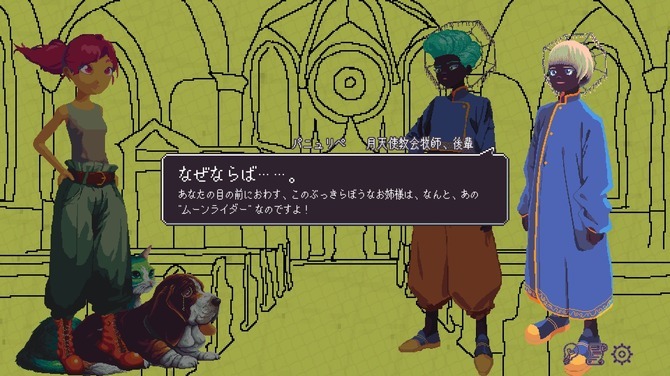
――So, even from the initial planning stage, the elements that would serve as the story’s hooks were already firmly established. On the other hand, was there also a significant aspect where you built up the plot and events layer by layer, like stacking bricks?
KITTYPOOL: Yes, I think that’s a pretty accurate way to put it.
Strong Influences from American Comics and “The Three-Body Problem”

――Next, I’d like to ask you in more detail about the world-building and characters.While playing *The Shoelace Story*, I was reminded of novelists like American sci-fi writer Kurt Vonnegut (best known for *Slaughterhouse-Five*) and Gabriel García Márquez, famous for his magical realism (best known for *One Hundred Years of Solitude*).Specifically, I was struck by the witty plot developments and world-building. So, what sources influenced the story and character designs in this game?
KITTYPOOL: Based on the names you mentioned, I actually don’t know much about those two authors.
If we’re talking about influences, I’d say I’ve been heavily influenced by movies.I’ve been watching all kinds of movies for a really long time. On top of that, I also enjoyed reading film reviews in movie magazines and pamphlets. That passion even led to a period where I uploaded video analyses of horror movies. In that sense, I’ve been learning about the structure—how stories are constructed—from various films.
There must be other sources of influence as well… Let me take a quick look at my bookshelf right now (voice fades into the distance). Whether it’s manga or movies, I’m particularly fond of superhero stories. Even when it comes to the category of “outlandish stories” mentioned in the question earlier, superhero stories come to mind.
My absolute favorite superhero work is the comic *The Top 10* by Alan Moore (translated by Shigeru Yasuda, published by Village Books). The sense of freedom—that you can do anything within the “superhero” genre—was influenced by outlandish works like *The Top 10*.
――That’s exactly why I felt that both *The Shoelace Story* and *PAIC: The Moon Rider Story* are works that reflect KITTYPOOL’s “view of heroes.”

KITTYPOOL: That’s right. Basically, whether it’s “hero stories” or any other genre, I think the key is asking, “What can I depict using that framework as a starting point?”
For example, whether it’s the mutants in *X-Men* or anything else, while I start with the “issue I want to raise,” I aim to present it in a pop culture way that will sell. This approach—taking the “story I want to tell” and fitting it into a fun and entertaining framework—might be heavily influenced by “hero stories.”
――By the way, I imagine this work is also heavily influenced by science fiction. Were there any novels you particularly enjoyed reading?
KITTYPOOL: If anything, I tend to read more specialized books, but when I was a kid, I loved Stephen King (best known for *IT* and *Stand by Me*).If I had to name a single author, I’d probably say I’ve read the most by Stephen King. However, the work that has had the greatest influence on *The Shoelace Story* is *The Three-Body Problem* (2019, by Liu Cixin; translated by Nozomi Omori, Sakura Mitsuyoshi, and Wang Chai; Hayakawa Shobo).
――Wow! Personally, that was a big surprise to me. I was convinced you’d be more heavily influenced by classic sci-fi works.
KITTYPOOL: I love it. I’m so hooked that even after reading the Japanese translation, I still check the “The Three-Body Problem” fan community on Reddit every day.
――Now that you mention it, there might be a certain similarity between the monsters in *The Shoelace Story* and the Three-Body aliens in *The Three-Body Problem*.
KITTYPOOL: Personally, I love *The Three-Body Problem* so much that I can’t even pinpoint exactly where or how I’ve been influenced by it, but I do think I’ve drawn inspiration from it in various ways.

As far as I’m aware, the most direct influence was on a certain character in *The Shoelace Story*, who was inspired by Ye Wenjie, a physicist and key character in *The Three-Body Problem*.
Although the character turned out completely different, I was very much conscious of Ye Wenjie—specifically the aspect of “an individual who, having suffered oppression from society and borne the brunt of all its hardships, has been driven to despair and a desire for revenge”—as I crafted the story.
The *Aim for the Top!* laser disc I found at my parents’ house

――I felt that both *The Shoelace Story* and *PAIC: The Moon Rider Story* were embedded with a massive, indiscriminate array of subculture references.
Moreover, these homages aren’t just fun in a “checking the answers” sort of way; they give you the pleasure of peering intently into someone else’s mind—or, to use otaku terminology, the thrill of reading a “mysterious document.” So I’d like to ask: if there was a particular work that served as your initial gateway into the otaku world, could you tell me about it?
KITTYPOOL: Hmm, “otaku-like”… My real entry point was *The Simpsons*, which I watched back in elementary school, but that’s not really that “otaku-like,” is it?
――I actually don’t think that’s necessarily the case.
KITTYPOOL: Is that so? I remember watching cartoons like *The Simpsons* on WOWOW at my parents’ house when I was a kid—I used to watch them all the time.If we’re talking about something more “geeky,” the LaserDisc* of *Top wo Nerae!* (1988, GAINAX) that we had at my parents’ house might have been my first real introduction.
*A optical disc format with a diameter of about 30 cm that existed before the rise of DVDs. It was known for offering higher picture quality than VHS.
――*Top wo Nerae!*, and on a laser disc, no less! That really hits the nail on the head.
KITTYPOOL: To tell you the truth, *The Shoelace Story* itself references *Top wo Nerae! 2* (2004, GAINAX) just as much as *moon* does. While I prefer *Top 2!* as a work, I think *Top wo Nerae!* served as my entry point.
I don’t even remember exactly what prompted me to watch it anymore… but “Go for the Top!” might actually be the origin of where I learned the spirit of subcultural references.
Even if you watch it without knowing the source material, it’s entertaining as a “regular story,” but for those in the know, there are various little Easter eggs sprinkled throughout—like, for example, the title being a nod to *Aim for the Ace!*.That sense of enjoyment from those “twists and turns”—like thinking, “You know this reference, right?”—might actually come from *Aim for the Top!*.
――Speaking of *Aim for the Top!*, aside from references to robot anime, there are so many references to battleships, Kiichi Okamoto (the film director), and even science fiction novels. In that sense, I’ve always wondered if it served as a gateway into the world of sci-fi.
KITTYPOOL: Talking about it, I’m starting to think that might be true. I hadn’t really thought about it that deeply before, but you might be right.
“My favorite rapper is ECD”

――Also, in *The Shoelace Story*, there are various musical references, such as BUDDHA BRAND’s “Green Five-Toed.” What kind of music did you start listening to as a gateway?
KITTYPOOL: As for music, I’ve been listening to it a lot since elementary school. What I remember very clearly is that I had this strong sense of, “I’m so cool for listening to all kinds of genres!” So rather than having a favorite specific artist, I was constantly hunting for and buying used CDs across various genres at Hard Off…
You mentioned BUDDHA BRAND earlier, but for me, the origin of Japanese rap was LUMP EYE’s “Gekokujō” (1995), which I heard in middle school.It was the very first hip-hop song I ever heard in my life. I was absolutely blown away—I thought, “There’s something this cool out there in the world!” From there, I got hooked on ’90s Japanese rap. By the time I was in my twenties, I was performing at local clubs, rapping over tracks I’d made myself, and even making albums with friends to distribute among our circle…
Because of those experiences, I absolutely love Japanese rap. While *The Shoelace Story* is peppered with all sorts of music-related trivia, the reason there’s so much Japanese rap in particular is simply because I love it.

――I see! When you mention ’90s Japanese rap, the names that immediately come to mind are Schadaraparr, RHYMESTER, THA BLUE HERB, and ECD…
KITTYPOOL: He’s my favorite rapper.
――I figured as much. ECD is great, isn’t he?
KITTYPOOL: He’s my all-time favorite rapper. When he passed away, I heard the news at work. I remember crying right there on the spot. Later, there was a fan who produced an NHK documentary about ECD, and I even sent that person a message of thanks—that’s how much I love him.
In *The Shoelace Story*, I even included an original song that sounded so much like an ECD track I worried I might get in trouble, and I quoted chapter titles from ECD’s personal label.

――Speaking of which, KITTYPOOL, you’ve produced soundtracks and insert songs as well. The insert songs, in particular, were so perfect—not just in terms of the song’s content but also the timing of their appearance—that it was almost disorienting. I don’t think there are many independent developers who go so far as to create their own game soundtracks. When you were composing the soundtrack, what kind of mindset did you keep in mind?
KITTYPOOL: It’s true that, looking at game developers as a whole, it doesn’t seem very common, but I also get the impression that quite a few well-known developers actually compose their own music. For example, Oishimizu from *Enjoy Family Restaurants*, ceroro from *Bat to the Heavens*, and NomnomNami from *BAD END THEATER*…
Looking at the big picture, I get the sense that most of them tend to create music within the genres they’re most skilled at.For example, if you listen to the soundtrack for *Enjoy Family Restaurants*, it’s easy to see that the tracks produced by Oishimizu are unmistakably the work of a pianist. This is just a guess, but I imagine it’s easiest for them to create demo tracks on a keyboard instrument and then arrange them from there.
And while the genres differ, I, too, compose using “my own preferred method.” My approach to music production is fundamentally based on a band sound—or, to be more specific, what’s known as “beatmaking” in the hip-hop scene. It’s a methodology where you start with the drums, then the bass, and once the rhythm is established, you add the upper parts (such as the melody and other parts in the mid-to-high registers)…
I find it easiest to create loop-based music where a set pattern repeats every four measures, rather than songs that unfold sequentially like a piano piece. That said, when I produce music solely based on what’s easiest for me, it can be hard to judge whether the resulting track is actually good or bad.
Since some of my past works left me with lingering doubts in that regard, for *The Shoelace Story*, I set the constraint of “using primarily Super Famicom-style sounds.” When you impose restrictions on your music production, the possibilities are limited, but that actually made it easier to express exactly what I had in mind.
I did experiment a little within those constraints and even strayed from the path at times, but fundamentally, the rule I kept in mind when composing the soundtrack was “to work within a genre I’m comfortable with while still imposing limits on myself.”
The Story’s Entertainment Value Over World-Building Consistency
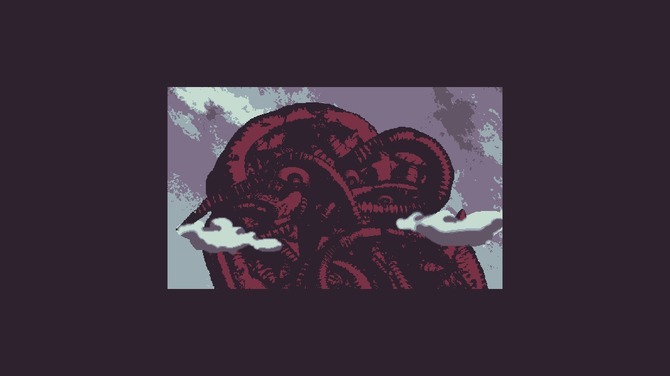
――While playing *Kutsuhimo Monogatari* and *PAIC: Moon Rider Monogatari*, I enjoyed reading the references to the story and the characters’ personalities, but personally, the references that made me think, “Could this be coming from KITTYPOOL’s subconscious?” left a stronger impression on me.
KITTYPOOL: Really!
――When incorporating references from past works, it often requires meticulous control to ensure the central story remains “meaningful.” However, in KITTYPOOL’s works, I feel that it’s precisely the parts where the world-building isn’t perfectly polished that contribute to the appeal of the ensemble drama.In terms of the actual production process, how did you go about developing each story?
KITTYPOOL: As I mentioned earlier, I basically build the stories layer by layer. When designing the story, I start by listing out as many ideas as possible for “What do I want to talk about?”
I jot down topics—such as the Texas abortion ban I mentioned earlier or the story about eel catch quotas—in my idea notebook. From there, I match characters to the ideas, thinking, “Which of these stories would suit this character living in this town?”
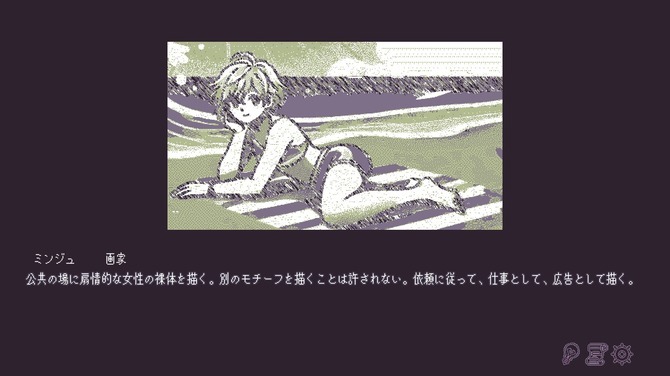
This kind of “casting” was part of our approach to building the story. From there, we flesh out the narrative, but if we prioritize consistency within the setting too much during that development phase, the “message we want to convey through the story”—which we established in the initial framework—can end up falling flat.
The methodology of asking, “What kind of story should we create within this world?” can actually become a kind of shackle. In some cases, the core of the story can get buried, so I prioritize the story’s entertainment value first. Even if the setting isn’t entirely consistent, it’s meaningless if the story isn’t interesting. I can’t think of a specific example off the top of my head, though…
――Speaking of individual monologues, lines like “eyes like Vivi’s from *FF9*” or the reflection in *PAIC: The Moon Rider Story*—“I wonder if I managed to get that AKAI sampler…”—were absolutely brilliant. It was really entertaining, right down to the flashback where that character becomes a Vocaloid producer and faces setbacks.
KITTYPOOL: Thank you—that’s exactly it. Within the “KITTYPOOL Universe” I mentioned earlier, questions like “What’s the state of the internet, computers, and smartphones?”—in other words, discussions about technological levels—don’t come up at all.
But if I start thinking, “Well, maybe I shouldn’t talk about that kind of thing too much,” I’ll end up tying myself in knots and won’t be able to write anything entertaining. That’s why I don’t hesitate to use the term “Vocaloid producer”—in fact, I even think it’s better to use it. After all, any setting I don’t mention upfront can be explained later in any way I want, so as long as it’s entertaining, I don’t worry about it and prioritize the story above all else.

――I see! Listening to you now, it feels like the references are deeply rooted in the “core” of the characters and the story.It’s the kind of thing that makes you think, “Yeah, that character would definitely mention ‘FF9.’” There are also scenes featuring movies or the literary magazine *Eureka*, but perhaps it’s the perfect synergy between each character’s unique personality and those niche proper nouns that really resonates.
Entertainment for Victims

――Now we’re moving on to some heavier questions. Chapter 5 of *The Shoelace Story* depicts the abhorrent crime of femicide and women who use supernatural abilities to fight back against it in a style reminiscent of American comics.
Personally, I was playing it with a sense of catharsis at first, but gradually, I began to wonder, “Is it really okay to find this so satisfying?” This coexistence of the “pleasure of entertainment” and an indescribable “uneasiness” is evident throughout the game. What was the reasoning behind this story design?
KITTYPOOL: I was working on it thinking, “Someone’s bound to point this out eventually.” First and foremost, in Chapter 5, as the final stretch of the story, we had to create a climax. In short, we had to set off one incredibly massive incident.
Also, personally, I’m strongly drawn to stories in the fantasy genre that suddenly introduce topics so realistic they’re startling. The fact that *The Shoelace Story* raises so many real-world issues stems from my own preferences.

As for the question, “Even though it’s fiction, is it really okay to resolve femicide in such a satisfying way?” there’s a movie that has left a lasting impression on me.
There’s a movie directed by Matthew Vaughn called *Kingsman* (2014, 20th Century Fox).In the film, there’s a scene where a villain played by Samuel L. Jackson—an African-American star actor—causes a group of racists gathered at a Christian church to kill each other.With Lynyrd Skynyrd’s “Free Bird” playing in the background, it’s an incredibly satisfying scene, but it faced fierce criticism when the film was released.
In the sequel, *Kingsman: The Golden Circle* (2017, 20th Century Fox), the plot took a slightly different twist. The villains in that film are people who want to kill drug addicts.The villains’ role clearly reflects the lessons learned from the first film.
However, personally, I didn’t think the first *Kingsman* was “misguided as a form of expression.” Of course, I agree with the approach taken in the second film, *Golden Circle*, to reflect on the previous installment. But this kind of entertainment is fundamentally about “how the story brings the villain to justice.”
While choosing to “kill the villain in a gruesome manner” to create catharsis is certainly controversial, I personally think, “Isn’t it okay for some works to choose that kind of portrayal?” After all, it is a “story told for the victims.”Of course, I’m not suggesting that depicting the “villain’s gruesome death” is ethically correct.
The “Afterward” to a Happy Ending

――In *PAIC: The Moon Rider Story*, the legal barriers and profound suffering faced by “Maniella,” a trans man, and his AFAB* partner, “Panulipe,” as they attempt to have a child through a sperm bank are depicted.
The issue of “childbirth and parenting between AFAB partners” itself is a topic that’s incredibly difficult to discuss in real life on so many levels. Furthermore, there’s almost no information readily available to those directly involved, let alone entertainment works on the subject. That’s precisely why I feel these stories are necessary, but what prompted you to develop this work?
*AFAB: Stands for “Assigned Female at Birth.” This term is used to refer to queer individuals—such as transgender and non-binary people—whose gender identity does not align with the sex assigned to them at birth.
KITTYPOOL: “PAIC: The Moon Rider Story” began as a spin-off project—we decided to create a free game to promote “The Shoelace Story.”As for how we chose the theme, it all started before we released *The Shoelace Story* when we asked Ginga Kondo—a queer feminist writer (author of *A Feminist Plays Video Games* and other works)—to review the game.
Ms. Kondo graciously agreed, and as I was scrolling through X (formerly Twitter), thinking, “What a kind review she’s writing,” I saw her post something along the lines of: “Stories centered on same-sex love often have their twists and turns, but ultimately the romance is fulfilled and ends happily—yet the real hardships come afterward.”
Of course, I don’t know if this comment was directed specifically at *The Shoelace Story*, but I realized that the love story between Maniera and Panulipe in *The Shoelace Story* had indeed turned out exactly as Ms. Kondo described.That’s why I thought, “I should depict what happens to Maniera and Panulipe afterward as soon as possible”—and that was the impetus for *PAIC: The Moon Rider Story*.

Also, on a meta note, there were some settings I wanted to establish for games I plan to develop in the future.In the future “KITTYPOOL Universe,” I’m aiming to create a world where “a realm inhabited by ghosts after death” exists, while in the real world, monsters disguise themselves as humans, and there are even children born of human-monster hybrids. *PAIC: The Moon Rider Story* was the project where I was crafting the story while weaving those settings into the narrative.
――Indeed, in *The Shoelace Story* and *PAIC: The Moon Rider Story*, ghosts are depicted.There are also the children of humans and monsters you mentioned earlier, as well as mechanical lifeforms called “Processians.” I feel that one of the defining features of the “KITTYPOOL Universe” is how minorities—depicted allegorically—live in various forms.
Was there a specific moment that inspired you to portray this?
KITTYPOOL: Well… I don’t think there’s one specific “trigger” that stands out. I’ve always loved reading, especially books about queerness and discrimination. Perhaps this long-standing focus in my interests has subconsciously influenced my ideas and creativity.

That said, “the fear of those who have been discriminated against becoming the discriminators themselves” has long been a theme I’ve wanted to explore. In *PAIC: The Moon Rider Story*, I also depict this fear in the protagonist, Maniera.
I also have a 4-year-old daughter myself, so I’ve always wanted to write stories involving children. The detailed experience of “having a child”—meaning the pregnancy, the long period leading up to childbirth, and the parenting that follows… After going through that myself, I think it’s probably pretty common to find myself drawn to works that depict “having a child.”
In that context, I felt a strong sense of unease about a particular depiction in the indie game *Void Stranger*. While I was left wondering, “What’s the deal with this portrayal?” I felt a lingering unease and wanted to express my own take on “depictions of pregnancy and childbirth” in my own way.

――Thank you. Finally, could you share a message for the players?
KITTYPOOL: In a sense, *The Shoelace Story* is a story packed with what you might call my philosophy—the things I want to convey, the things I want to express, the things I find strange about society, and my thoughts on what might be “right.”
But at the same time, I absolutely love pop culture—whether it’s pop music or movies; I generally prefer pop films. While I fully understand that “creating something pop is incredibly difficult,” I’ve essentially set out to make a pop game!
Based on this article alone, you might be thinking, “Is it really such a heavy game?” but if you actually play it, you’ll find it’s packed with surprisingly fun expressions, visuals, and text. I hope everyone will give *The Shoelace Story* a try, so thank you for your support.

――Thank you very much!
This interview gave us a chance to reaffirm KITTYPOOL’s take on “pop.” But the quickest way to experience that “pop” for yourself is to play both games!
“The Shoelace Story” and “PAIC: The Moon Rider Story” are now available on PC (Steam).



