


At the “Tokyo Game Show 2026” (hereinafter “TGS2026”), held over four days—including Business Day on September 17—at Makuhari Messe, I discovered a booth brimming with warmth and a handmade feel.It was “OmOchim,” a game developed by Asobism that blends a physical sandbox with programming elements.
As soon as I stepped into the booth, I was greeted by a lineup of dioramas made from cardboard and blocks, along with handmade decorations. Not only was the appeal of the game itself evident, but I could also truly feel the development team’s extraordinary passion for “crafting.”In this article, we’ll introduce the deep gameplay we experienced during our “OmOchim” demo and share highlights from our interview with the developers.


Even Failure Is Fun! Intuitive Robot Construction That Sparks Your Creative Spirit
You tackle various challenges and stages by moving objects in your surroundings and controlling OmOchim, the robot you’ve built. It’s not just about reaching the goal—the process of trial and error, figuring out “how to make it move exactly as you envision,” is elevated into entertainment in its own right.


You start with a tutorial to learn the basic movements. By entering an area called the “Invention Dock,” you can freely move the objects placed on each stage.Ahead of you lies Omotimu, with its cute red body and round eyes! You’ll chase after it by building platforms with pencil cases to climb high walls or rolling a bowling ball to break through barriers. All the items that appear are familiar everyday objects, and they’re rendered with realistic physics, perfectly stimulating your curiosity to just go ahead and give them a try.
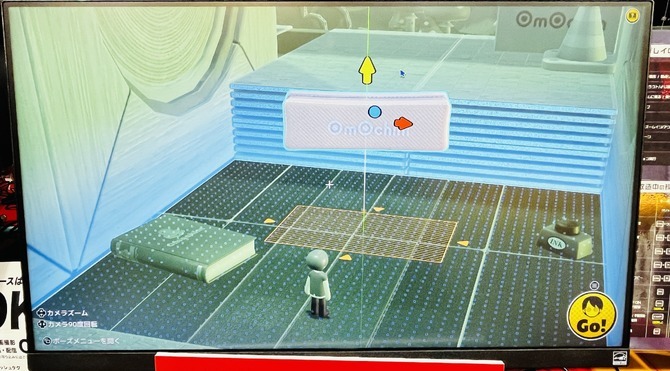
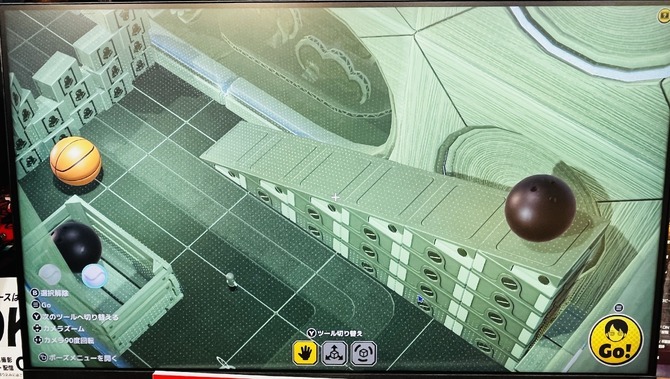
Finally, you board Omotimu, your new partner! With Omotimu’s power, you can overcome any obstacle.
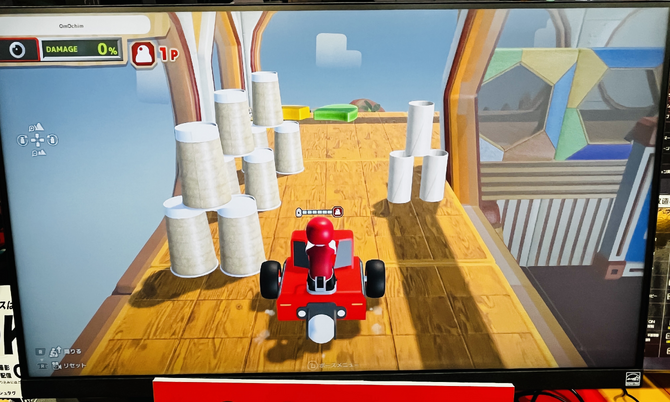
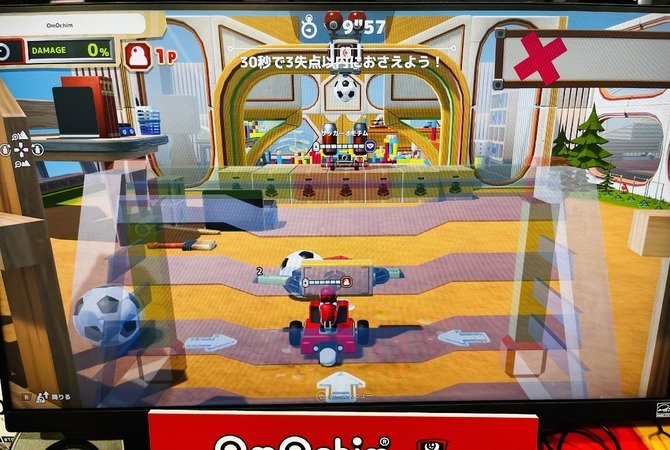
When you reach the area with the soccer goal, a mission pops up: “Keep the score to 3 goals or fewer in 30 seconds!” You’ll need to block the balls fired at you from the front, so it’s time to start customizing Omotimu’s parts.
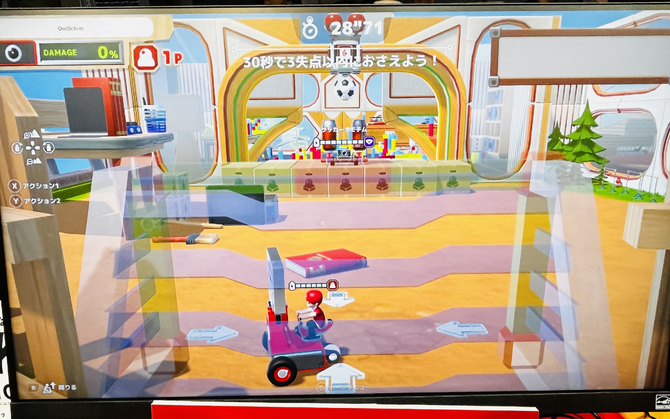
You can use a wide variety of materials—not just basic parts like joints, tires, and power units, but even stationery and snacks. Just like in a craft project, you’ll attach and detach parts while keeping their individual weights in mind to aim for the best possible build.The game features a user interface that’s a simplified version of 3D modeling tools like Blender; I could really feel the effort put into making the controls much more accessible and intuitive.
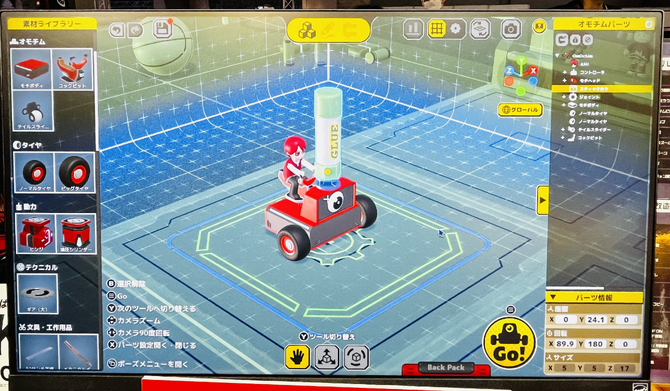
After some trial and error, I finally settled on a strategy where I attached a pack of chewing gum (a rectangular box) to both ends of a Jenga block (a rectangular box) to cover the sides of the goal. The resulting design really highlights the limits of an adult’s lackluster imagination…
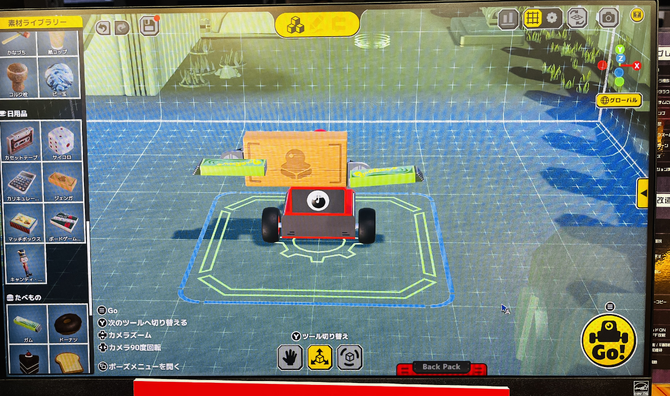
When I actually put it to the test, it surprisingly managed to block the ball, and I cleared the mission. I received a “motor” as a reward from the treasure chest.

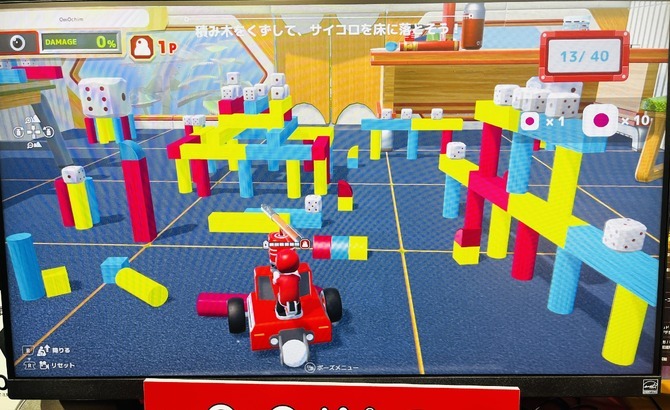
Moving further on, I arrived at an area filled with a large number of building blocks and dice. Maybe the motor I just acquired would come in handy for this new mission? Depending on your creativity, you can build any shape you want, and I enjoyed the fun of how the behavior changes drastically with just a single adjustment to the part placement—a depth that makes you want to try it over and over again.
After the demo, I received an “Omotimu Cap” as a souvenir!

The Warmth of Handmade Craftsmanship and a Passion for “Making Things”
Next, we present an interview with Mr. Taishi Yoda of Asobism, the studio behind the game’s development.
――Could you tell us how you came to develop “OmOchim”?
Mr. Yoda: If I had to pinpoint the very beginning, it definitely started with the physical “OmOchim” device. It’s really fun to bring a robot into a virtual space, isn’t it? However, it does have a bit of an “otaku” aspect to it… and the actual programming is difficult because you have to write it out in code.
In the U.S. and other countries, there are products like LEGO’s “Mindstorms,” which allow you to build and operate robots using block-based programming, but they’re a bit expensive and imported. Since they’re imported, they’re costly, and when the yen weakens, the price goes up even more.

I felt it would be fun to make something like that domestically, so kids could program it and play with it in the real world. However, I couldn’t physically bring in mass-produced products. So, when I thought about how to spread this fun, I realized, “Wait—we’re a game company, aren’t we?”
So, I decided to incorporate the fun of OmOchim directly into a game. The impetus for development was the idea of creating a game where players enjoy modifying, programming, and operating robots.
―― What aspects did you focus on in particular to strike a balance between a high degree of freedom and appropriate difficulty?
Mr. Yoda: We’re extremely particular about striking the right balance.If we make it too easy, there are fewer things players can do; on the other hand, if there are infinite possibilities, it becomes hard to convey that to players. So we really went through a lot of trial and error. During that process, we carefully examined each aspect—whether it could be solved through interface design or through in-game level design—and that’s how we arrived at the current form.
―― This process involves repeatedly failing and reworking the game—how did you design it to make players want to keep trying?
Mr. Yoda: What we’re careful about is designing the game so that retrying doesn’t feel like a chore. Fundamentally, OmOchim is built on the premise of “repetition.” It’s not quite a “die-and-retry” game, but the sense of accomplishment you get from finally solving a puzzle after multiple attempts is key, so we focus on making the process of repeating steps as quick and intuitive as possible.
However, if the path to success is too quick, it becomes a different kind of puzzle altogether. We’re very particular about striking that balance, and we’re working hard to figure out how to make the repetition and failure enjoyable for players.
―― You’ve created physical models and expanded beyond the game itself in a wide range of ways—is there a specific goal to create new experiences through these efforts?
Mr. Yoda: Since our company runs educational programs in Nagano, we meet with children in person, and I personally visit schools to teach programming classes. We really enjoy the feedback we get from these real-world settings, as well as the genuine connections and moments of surprise that come from actually handing over code and saying, “This is how it works.” We wanted to make sure to cherish those elements.
For the version currently in development, we’re also having children in classrooms actually touch the robots and provide feedback. Rather than confining the experience to the digital realm, we hope to expand the experience—for example, by taking it to schools and using it in lessons—so that children can experience “learning while playing games” and “learning to program using OmOchim’s robots.”
―― Was there any feedback from the children actually playing the game that left a lasting impression on you?
Mr. Yoda: It might sound like a cliché, but the children do things that make us think, “They’re actually doing this!” We set everything up very carefully on our end (laughs), but they completely shatter our expectations of “what they’ll do here.”
Naturally, they’ll crawl into any hole they find, and since invisible walls don’t fit the game’s world, we work hard to block them so they can’t climb over—but they still try their best to scale them anyway. The fact that “they can do whatever they want to do” is, in a way, a strength of the game, so I think we’re succeeding in making that a reality.
The kids in the classroom take desk dismantling to the extreme to build highly maneuverable OmOchims, or they create flying OmOchims and have them engage in aerial combat. When I say “Ready, set, go!” they take off just like in *Ace Combat*, and I’m always surprised and ask, “How are you doing that?”One kid who’s building right now says, “I want to make the strongest tank,” and has it reinforced to the max—and even though it shouldn’t be implemented yet, for some reason the missiles are firing through his programming (laughs). Up until now, missiles were powerful items, but because he’s added angled armor, they actually bounce off now—I’m constantly surprised by what they come up with every day.
―― Are there any specific points you’d like players to focus on in this game, or any particular ways you’d like them to experience it?
Mr. Yoda: OmOchim is a “game with no wrong moves.” While we’ve included clear objectives this time to make it easier to understand, the game’s true purpose is as a sandbox where players can enjoy bringing their own ideas to life and experimenting with “I wonder what would happen if I tried this?” I really hope players will give it a try whenever they think, “Maybe I can do this.”
And I’d also like players to ask our staff, “Can we do something like this?” It’s a game where new ways to have fun are born from those kinds of ideas.
―― Thank you very much!
“OmOchim” is scheduled for release on PC (Steam) in 2027.



