


Screen Burn Interactive, the developer behind *SILENT HILL: Townfall*, focused on evoking a sense of unease toward mysterious noises through realistic sound reflections and rich ambient sounds.
Game*Spark recently interviewed Jon McKellan, director of Screen Burn Interactive’s *SILENT HILL: Townfall*.
We delved deep into the behind-the-scenes details of development—from the CRTV, an evolution of the series’ traditional radio, to the DualSense’s haptic feedback that lets you physically feel enemies’ footsteps, the hesitation of the protagonist conveyed through the weight of the trigger, and the visual quality delivered by the PS5 Pro.Toward the end of the interview, we also spoke with Toshimasa Aoki and Kensei Akiyama of Sony Interactive Entertainment (SIE) about the PS5’s design philosophy and the technical support provided to developers.
Sound “Never Betrays You”—3D Audio That Makes You Sense Invisible Enemies
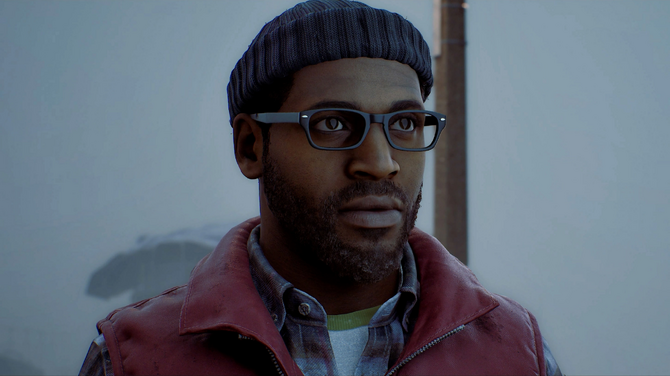
—*SILENT HILL: Townfall* uses a first-person perspective. By combining the PS5’s 3D audio with the DualSense controller, how did you aim to create the fear that “something is out there beyond the screen”?
Jon McKellan (hereinafter McKellan): When developing a first-person game, sound is absolutely critical for players to understand their surroundings. This isn’t limited to horror elements—it’s also essential for players to sense where they are at any given moment.In *SILENT HILL: Townfall*, we wanted players to naturally understand and trust the concept of sound obstruction and directionality, so 3D audio technology was one of the elements we began building from a very early stage of development.This technology allowed us to convincingly recreate how sounds emitted by creatures and objects in the environment reverberate as they travel through hallways and around corners. For example, if a creature is on the floor above, its movements aren’t heard directly from directly overhead; instead, because the sound travels through open space, it’s heard coming from the direction of the stairs leading to the upper floor.This technology alone proved to be a crucial element in creating a sense of fear. Because the surrounding world feels so believable and realistic, even strange and unidentified sounds carry greater conviction. Combined with the Arrival team’s masterful sound design, the world is filled with a dense, profound atmosphere—even in moments of complete silence.Even the gurgling sound coming from a heater is enough to stir up anxiety.
――In 3D audio, if you make the enemy’s position too obvious, the fear diminishes; on the other hand, if there’s too little information, it can cause stress during gameplay. How did you strike that balance?
McKellan: It was a lot of trial and error! We tried several methods to make the source locations a bit harder to pinpoint, but we found that adding natural reverberation to each area helped temper the excessive “precision” that could otherwise feel artificial.Ultimately, we realized that with convincing ambient sounds and reverb zones, players wouldn’t be able to pinpoint enemy locations with absolute certainty anyway.On the other hand, we also found that when players could pinpoint the direction of a sound source to some extent, it actually intensified their fear. If the direction is too ambiguous, it ceases to feel threatening; therefore, rather than manipulating sound direction for game design purposes, maintaining a sense of direction that’s quite close to reality actually heightens the overall tension and fear.
――You mentioned there are scenes where players must act relying solely on sound. Do you also use 3D audio for psychological effects that make players wonder, “Can I trust what I’m hearing?”
McKellan: Since sound is a crucial tool for dealing with enemies, we don’t use it in ways that would betray the player’s trust. For example, I think if we were to include effects that make an enemy’s voice sound like it’s coming from a different location, players would simply feel it’s unfair. Instead, we’ve woven in a large number of sounds that are difficult to identify.It’s like how, if you stare at a snowy TV screen for long enough, you might start to see shapes emerge—we’re doing the same thing with sound. Because the ambient soundscape is so rich, even if you think, “I might have just heard something,” it might actually be nothing more than your imagination. When that starts to happen naturally, it’s proof that we’ve created an excellent atmosphere for a horror game.We’ve hidden a few hard-to-understand sounds and left the rest entirely up to the player’s imagination. In fact, some people even mistook a regular water heater in their home for something else and got scared!
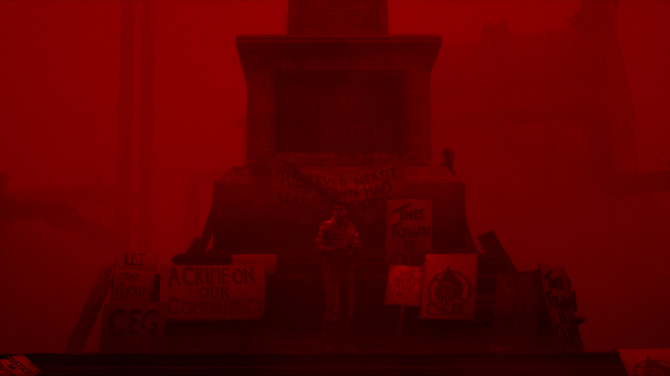
――Radio static was an iconic element in the “SILENT HILL” series. How have the CRTV and 3D audio in this game evolved the role that traditional radio played—namely, “alerting the player to the presence of enemies through sound”?
McKellan: The CRTV is our interpretation of the radio that best embodies the “Screen Burn” aesthetic. We’ve evolved the traditional radio into something the player can interact with more actively—and into an essential tool for survival.The role of sound is very similar to that in the early *Silent Hill* games: sudden static alerts you to the presence of an enemy nearby. However, in *Silent Hill: Townfall*, this also serves as a trigger to locate the source of the sound.By tuning in to the signal to pinpoint an enemy’s location and observing its movements and behavior in greater detail, you can then decide on your next course of action. If you’re close enough, you can hear the sounds of creatures within the world, but at the same time, those sounds also reach your ears through CRTV, creating an extremely unsettling moment.The longer you stare, the louder their cries and moans resonate right next to your ear—making it feel as if they’re right beside you—which only heightens your sense of anxiety.
Feeling the enemy’s approach with your “hands.” More vibration isn’t necessarily better
—The DualSense’s haptic feedback conveys everything from enemy footsteps to the impact of combat. I don’t think it’s simply a matter of “the stronger the vibration, the scarier it is,” but how did you design the intensity and timing of the vibrations to heighten the sense of fear?
McKellan: The development team did a great job of discerning when to emphasize haptic feedback and when to deliberately tone it down. Unconsciously, too much stimulation can lead to fatigue, and for some people, it can even cause sensory overload.If everything vibrates, none of the information becomes important. Therefore, we carefully selected elements that would actually help players during gameplay and emphasized only those. For example, the footsteps of the creature “The Weight” as it approaches help players sense—not just with their ears, but with their hands as well—whether it’s getting closer or moving away.Players have more information to make decisions with, and that information itself is terrifying. It’s a win-win for horror!
――Conversely, are there situations where you deliberately hold back rather than using the feature to its fullest potential?
McKellan: Yes. It’s important to determine where to tone things down so as not to overload the senses. If everything triggers haptic feedback, players will gradually get used to it, making it harder for them to notice during the moments when we really want them to feel something. As with every other element, the key is balance—and knowing exactly which moments to draw their attention to.
――The *Silent Hill* series has always placed great importance on psychological horror through visuals and sound. With the addition of “tactile feedback,” what forms of horror do you think are now possible that were previously impossible in the series?
McKellan: I believe the haptic feedback of the DualSense wireless controller, which can express vibrations in three dimensions, brings a tremendous sense of depth and subtlety to the experience.The sensation of the vibration’s balance and intensity shifting as the creature “The Weight” approaches or moves away is a new dimension of expression that was previously unattainable. While this information is conveyed through a sensation that’s almost subconscious—which helps the player during gameplay—it also heightens the fear.Because you can physically sense exactly how close the creature is and whether it’s approaching, the tension builds. This is far more effective than the simple vibrations found in traditional controllers.
Trigger weight, CRTV signal synchronization—connecting the DualSense to the game world
—I understand that the adaptive triggers are designed to convey the weight of firearms, but in this game, there are many situations where stealth is more effective than combat. Is there also a creative intent to make the act of firing a gun itself feel tense or hesitant?
McKellan: Yes. We wanted to give the trigger a definite weight so that players would feel that pulling the trigger is never easy for Simon. We’re striking a balance between the sense of weight and realism when aiming a weapon and pulling the trigger, and the ease of control.We’ve also added a “stick” right before firing, so the bullet is released only after you’ve pulled the trigger just a little bit. That split second makes the gravity of pulling the trigger feel even more profound within the game and the story.
――In the CRTV signal adjustment sequence, you actually tilt and move the DualSense controller. Why was motion control—rather than standard stick controls—necessary for *Townfall*?
McKellan: I felt this control scheme, in particular, was perfect for a one-to-one replication of a real-world experience. Anyone from a generation that used analog antennas has probably moved the antenna around in the air to catch a signal. It’s also similar to the sensation of moving your cell phone around to “catch” even the slightest bit of a better signal in areas with poor reception.In *CRTV*, we were able to intuitively link real-world movements to the quirks unique to old TVs—like how they’d lose the signal with just a slight movement while you’re holding them. I think it’s important to use motion controls in a way that feels natural and intuitive, without making players feel like they’re being forced to use them.
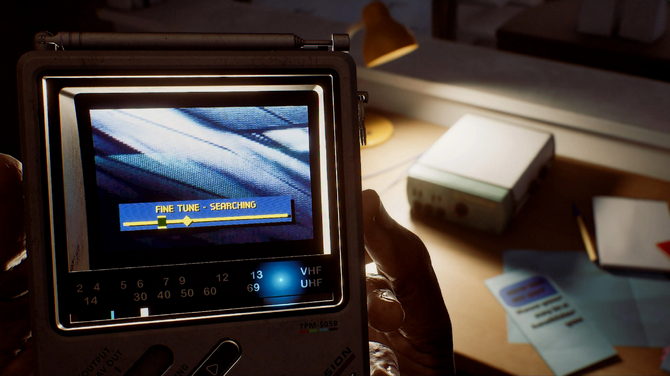
――While motion controls enhance immersion, some players find them difficult or physically challenging to use. How do you balance these features with accessibility?
McKellan: Some people find motion controls strange, difficult, or even uncomfortable. Additionally, for accessibility reasons, there are those who simply cannot move the controller in that way. For that reason, we’ve included an option in the settings menu to turn them off and use a different input method instead.
――There are many ideas that treat the DualSense as if it were an “in-game object” itself, such as manipulating the map as if holding it in your hand or tilting the CRTV. Was this a guiding principle for the game from the early stages of development?
McKellan: Since some players use a mouse and keyboard, we couldn’t design mechanics that would only work with the DualSense wireless controller. However, we made it a standard part of the development process to consider, whenever designing a new feature, whether there was an opportunity to utilize motion controls, adaptive triggers, the touchpad, or the lights.It’s important to incorporate these elements into the design from the very beginning, rather than adding them as an afterthought. Personally, I was quite skeptical about motion aiming with firearms at first. When I first heard the concept, I thought it would be difficult to control, but now I couldn’t go back.In other games, too, I can’t play without it anymore. That tiny bit of precision you get when aiming makes a huge difference. After finalizing this adjustment, we also explored how camera controls could be applied to other features.
――The PS5 Pro utilizes features like PSSR and ray tracing. In *SILENT HILL*, where fog and darkness play such a crucial role, what significance do higher resolution and high-quality lighting hold beyond simply making the screen look prettier?
McKellan: In horror, the more realistic the environment and situation feel, the greater the sense of immersion. While it’s possible to create fear even with low-poly or stylized works, in many cases, that fear tends to lean toward “jump scares”—the kind that make you laugh out of surprise.By using volumetric fog and ray-traced lighting to pursue photorealistic visuals to the extreme, players come to believe that the world they’re in is real—and they’re more likely to believe in the terror lurking within it.The result is a sense of tension and fear that makes you tense your shoulders, furrow your brow, and proceed cautiously, step by step, through what appear to be perfectly ordinary houses and streets. I believe this is a highly effective technique for horror.
――This game features a 30 fps “Quality Mode” and a 60 fps “Performance Mode.” In a horror game with combat, both visual quality and control responsiveness are important—is there a mode that the development team considers closest to the “intended experience”?
McKellan: Personally, I usually prefer Quality Mode. However, because the development team pushed the PS5’s capabilities to the limit, Performance Mode also delivers incredibly beautiful visuals. Since *SILENT HILL: Townfall* isn’t a game that requires quick reflexes, playing at 30 fps doesn’t put you at a disadvantage. Ultimately, it comes down to personal preference.Thanks to PSSR2, Performance Mode also achieves very high visual quality, and I don’t think most players will notice a significant difference in image quality—especially when they’re in the thick of a scary moment.
Horror was a key use case from the PS5’s design phase onward
—I think horror games are a genre where the effects of 3D audio and haptic feedback are particularly easy to appreciate. When designing the PS5, was its use in horror games also envisioned as a key use case?
Toshimasa Aoki: Yes, we envisioned horror games as one of the key use cases that could leverage the potential of 3D audio and haptic feedback. In designing the PS5, we placed a strong emphasis not only on the evolution of visuals but also on enabling players to immerse themselves in the game world through sound and touch.We wanted to expand the possibilities of the gaming experience by allowing players to sense not only what’s on the screen, but also the space beyond it and what’s happening there.
In horror games, the feeling that “something is there even though you can’t see it” is what creates fear. A sound heard from behind or a faint vibration felt in your hands makes you sense the presence of something invisible.Sound and haptic feedback have the power to create a sense of presence and tension that visuals alone cannot fully convey. I am very pleased that developers, like those behind *SILENT HILL: Townfall*, are skillfully utilizing these features to create unique horror experiences.
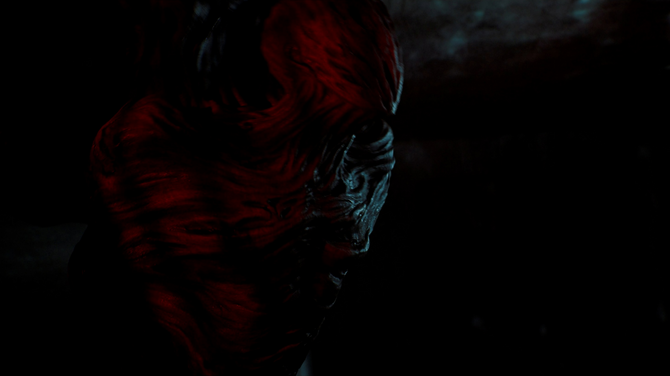
――For titles like *Townfall* that combine sound, visuals, and haptic feedback simultaneously, what kind of technical support does the PS5 provide to ensure that the various elements don’t clash and instead come together as a single cohesive experience?
Kensei Akiyama: PlayStation is packed with a variety of technologies designed to let players experience the game world more deeply and richly.
Game developers work day in and day out, experimenting and refining their ideas through trial and error to bring their visions to life using technology. At SIE, we provide development tools and technical documentation—as well as technical support as needed—to help these creators make the most of the PS5’s capabilities and realize the gaming experiences they envision.
Regarding features such as 3D audio and haptic feedback, we support developers not only in using each feature individually but also in naturally integrating them into the overall game presentation and gameplay experience to create richer expressions.
For example, sound and haptics are closely related. By combining the world and atmosphere created by sound designers with tactile expressions through haptics, players don’t just hear sounds—they feel as though they are being directly engaged by the game world.When audio-based storytelling is conveyed to the body through haptic feedback, immersion in the game world deepens, creating a more profound sense of emotion and realism.
At SIE, we also provide workflows for translating audio information into haptic feedback. Through these technologies and development environments, we listen to and incorporate feedback from game developers to support creators in efficiently and freely transforming their ideas and visions into experiences that resonate with players.
*SILENT HILL: Townfall* is now available for PS5 and PC (Steam, Epic Games Store, and GOG.com). The game is currently on sale on the PS Store at its lowest price—5,984 yen, a 20% discount—until 11:59 PM on November 20.
©Konami Digital Entertainment
©2026 Annapurna Games, LLC
©2026 Screen Burn Interactive Ltd. "Screen Burn" is a registered trademark of Screen Burn Interactive Ltd.
