In 2005, the survival horror game *Cold Fear* was released overseas for the PS2, Xbox, and PC.It was developed by Darkworks, the studio behind *Alone in the Dark: The New Nightmare*, but unfortunately, the console version was never released in Japan, making it a title known only to a select few in the country.
The story is set in the Bering Sea, which has been hit by a violent storm. The protagonist, U.S. Coast Guard officer “Tom Hansen,” boards a drifting Russian whaling ship with his crew to investigate it.
However, waiting for them there are crew members who have transformed into grotesque creatures and unidentified monsters. Having lost his teammates, Tom finds himself completely isolated as he sets out to uncover the truth behind the incident.
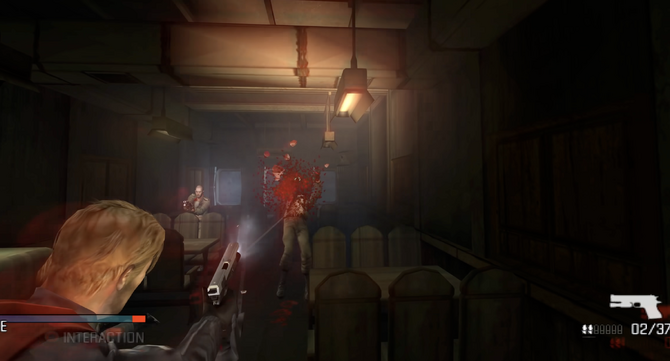
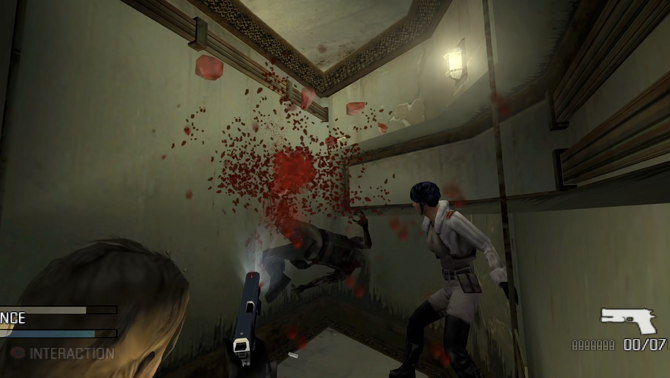
The gameplay—which involves fighting infected enemies with a variety of firearms, such as handguns and shotguns, while exploring the dimly lit interior of the ship—is reminiscent of the *Resident Evil* series. However, the game’s most distinctive feature is that it’s not just the infected who pose a threat to the player, but the raging “sea” itself.
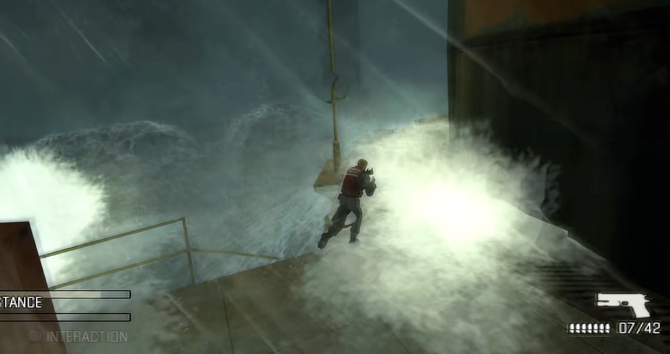
The waves that violently rock the ship and the storm that lashes the deck are not merely background effects; they evoke a sense of “thalassophobia”—a fear of the ocean—that sets this game apart from the *Resident Evil* series.
In this article, we’ll explore the game’s appeal by looking back at its unique maritime horror elements, gameplay mechanics, and its sci-fi horror world-building.
Incidentally, while *Cold Fear* was once available on Steam, Atari acquired the rights in 2025, after which it was removed from the platform. It has since made a full comeback with the release of a remastered edition on GOG.com.

◆ A “Marine Horror” Survival Game Set on a Whaling Ship in a Storm
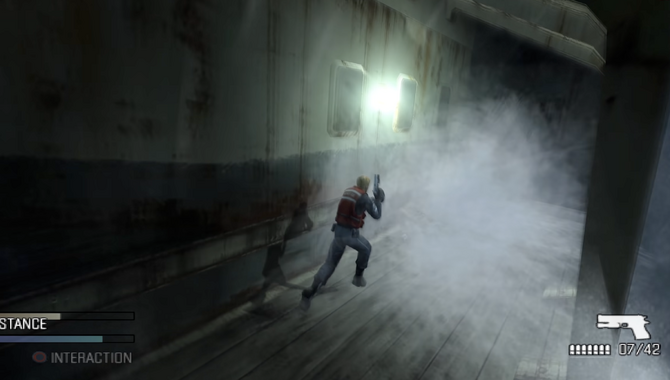
The game’s most distinctive feature is its incorporation of the harsh environment of a “sea in the midst of a violent storm” into its gameplay mechanics.
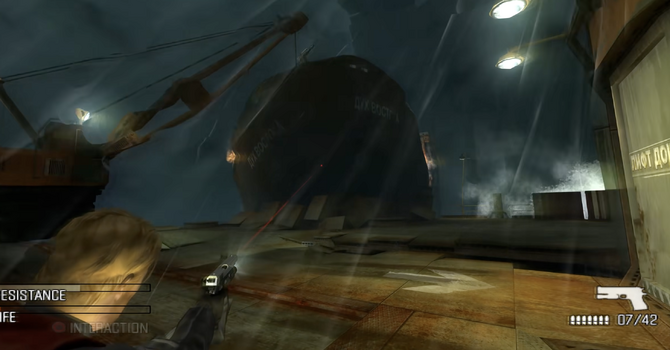
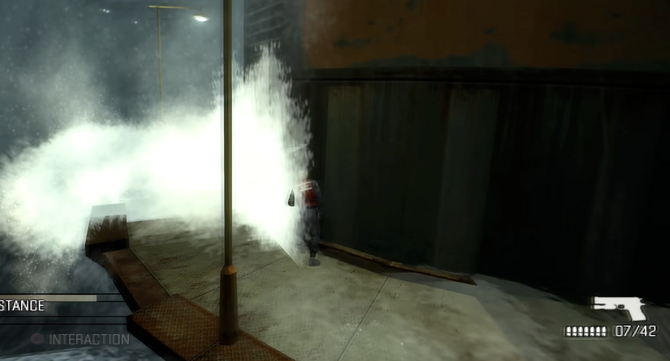
The Russian whaling ship “Eastern Spirit,” where the story takes place, is caught in a violent storm; when you step out onto the deck, massive waves crash down, and the gale blocks your view.The creaking of the ship’s hull and the roar of the waves create a realistic atmosphere, allowing you to experience the tension of being stranded at sea.
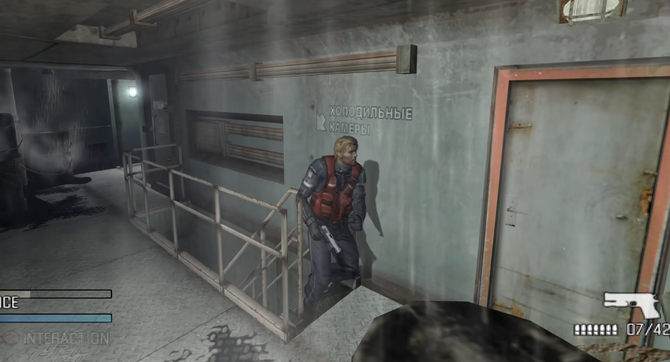
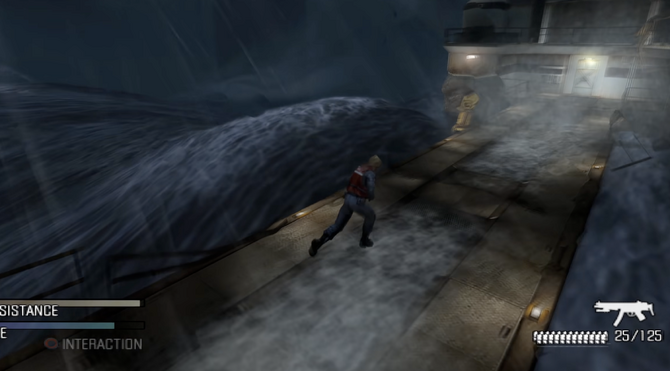
Furthermore, these in-game natural phenomena directly affect the player’s actions. For example, the ship is constantly pitching and rolling from side to side due to the waves, and when it sways violently, Tom may lose his footing and tumble across the deck. Moreover, if he is swept up by a crashing wave, he takes damage, and in the worst-case scenario, he risks falling overboard.
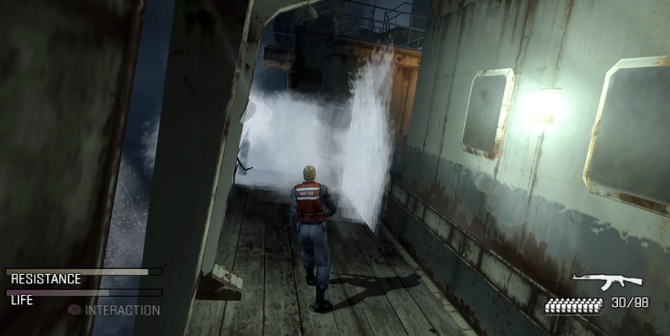
So, how exactly do you survive this? This game features a “RESISTANCE Gauge,” a system equivalent to the “stamina gauge” found in most games.
Using this Resistance Gauge allows you to dash, force your way up slanted floors, and move against waves or flooding—enabling movement and actions in these harsh environments.
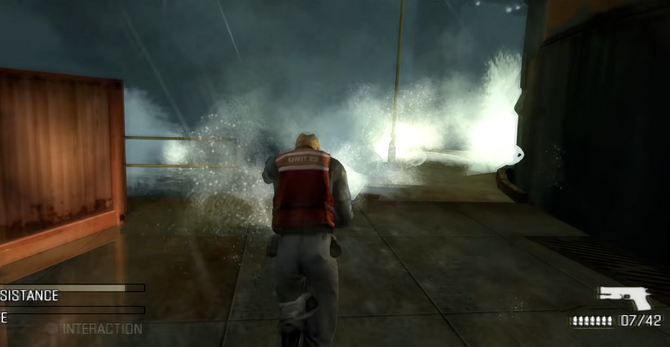
On the other hand, if the gauge is completely depleted, you won’t be able to dash. If the gauge hits zero while you’re hanging from something, your grip will slip, and you’ll fall into the freezing Bering Sea—resulting in an immediate game over. Your defense will also drop, causing you to take more damage than usual from enemy attacks.
To recover, you must stop running and either stand still or walk slowly; the gauge will then automatically replenish quickly over time.
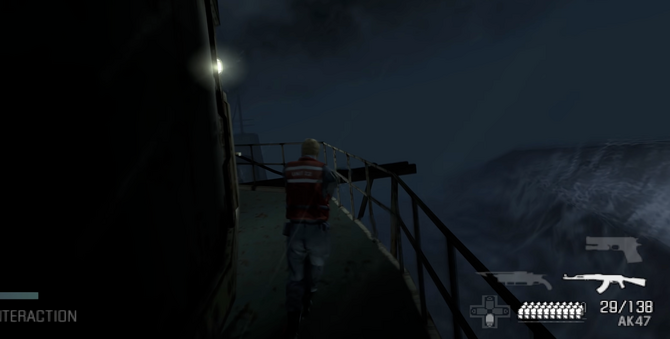
Precisely because you’re on a ship constantly rocking in the storm, this is an excellent system that creates a unique sense of tension specific to this game—the thought that “if I run now, I might not have enough stamina left to survive if I’m about to fall into the sea.”
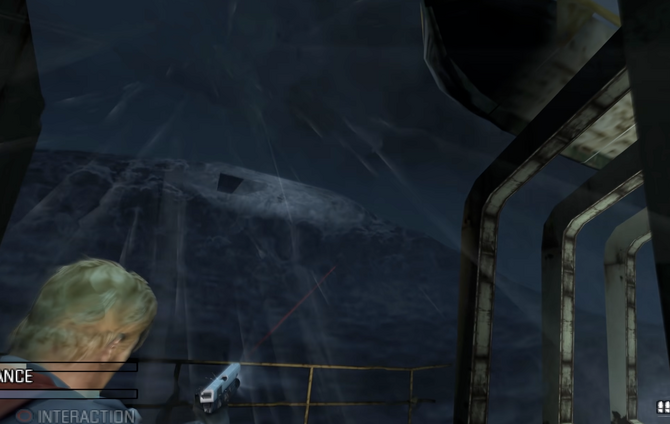
Additionally, the deck features cargo suspended by ropes and massive hooks, all of which swing like pendulums in sync with the ship’s movements. While colliding with them deals damage, you can also use them as a means of attack by skillfully luring enemies toward them. Furthermore, during gunfights, the tilting deck makes it difficult to steady your aim, making it hard to even target enemies.
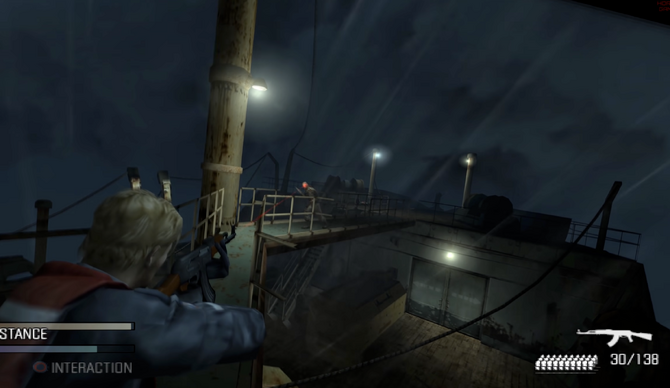
In typical survival horror games, encounters with monsters and limited supplies are the primary threats. However, in this game, you must constantly be mindful of the natural environment even while moving or fighting.
It is precisely this “Dangers at Sea” mechanic that earned the game the nickname “Resident Evil at Sea” and served as a unique survival element and source of terror that set it decisively apart from the original Resident Evil series.
◆ Parasitic Organisms, Human Experiments, and Mysterious Facilities—Its Uniqueness as a Sci-Fi Horror
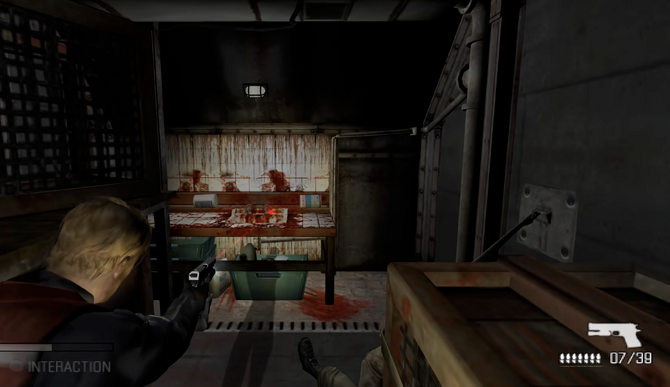
In addition to these external environmental threats, one of the game’s key attractions is the horror that awaits players aboard the ship.
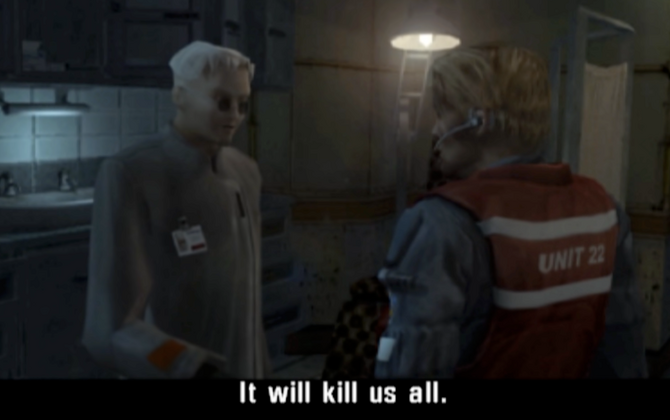
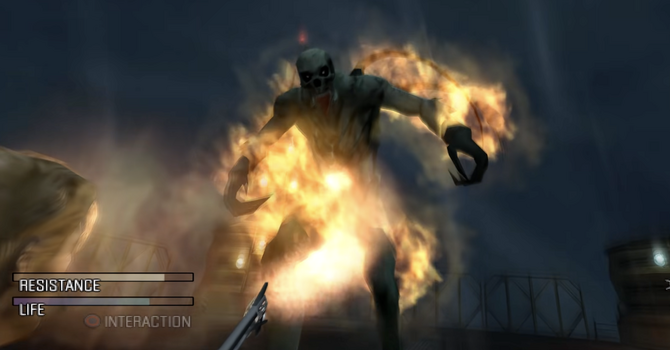
The cause of the strange occurrences on the whaling ship is a parasitic organism known as “Exocell.” Resembling small spiders, they move swiftly across floors and ceilings, infiltrating human bodies to control their hosts.
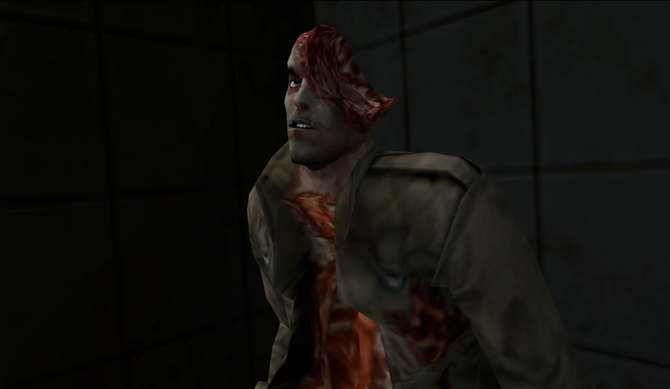
The attackers are different from the slow-moving, typical zombies seen in the early *Biohazard* games.
Infected crew members sprint toward you and sometimes fight back with knives or guns. Their behavior is virtually indistinguishable from that of uninfected humans.
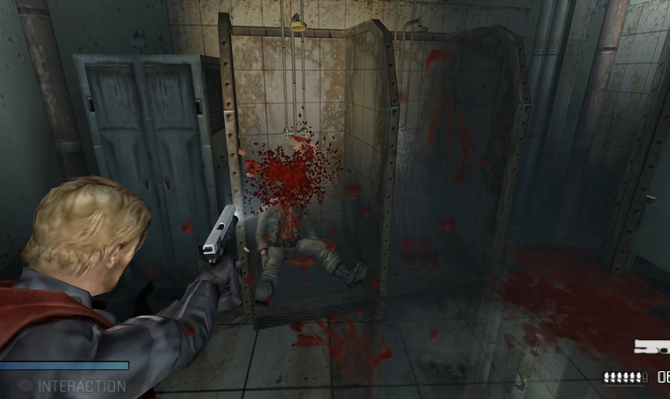
What makes them particularly troublesome is that parasites may crawl out of infected enemies you thought you’d defeated, latching onto other corpses to revive them—so you can’t let your guard down. You must deliver a finishing blow, such as crushing their head, and confirm they’re dead.
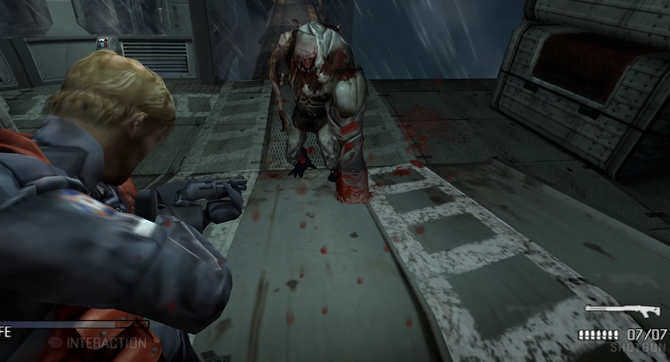
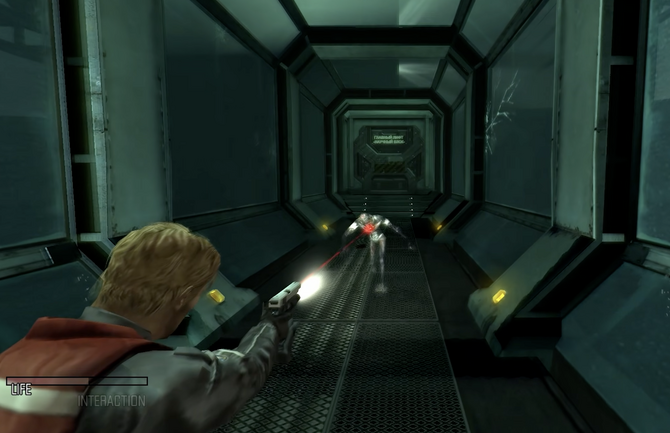
Additionally, there’s a decent variety of enemies—such as the “Exomas,” a large, hideous creature resembling a mass of flesh, and the troublesome “Exospecter,” which attacks while vanishing—ensuring the game maintains a sense of tension and never gets boring.
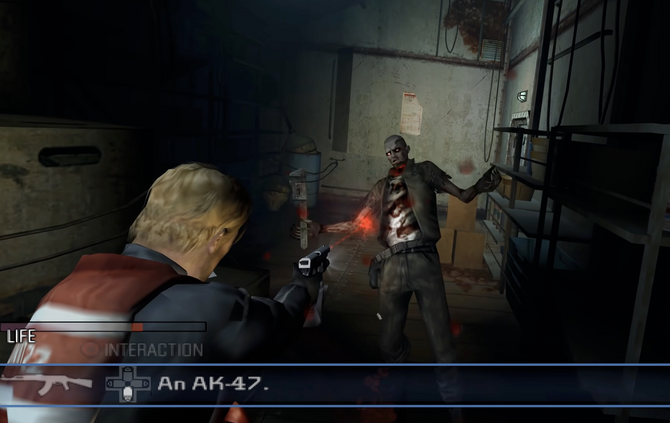
Tom’s arsenal isn’t limited to handguns; it includes a diverse range of weapons such as shotguns, assault rifles, flamethrowers, and grenade launchers. Among these, the “Spear Gun” is particularly distinctive.
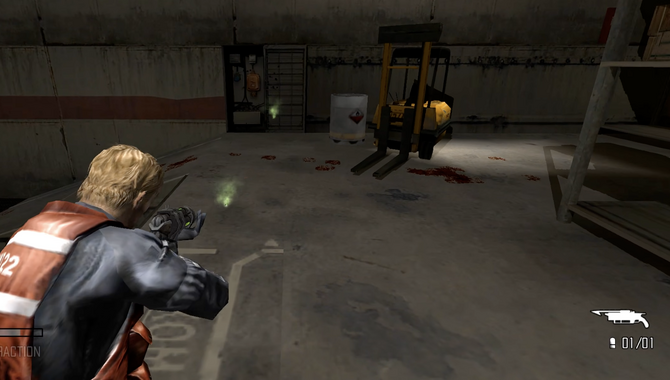
Rather than directly defeating enemies, it fires a green gas (chemical pheromones) to attract their attention, enabling tactics such as luring enemies together and combining them with explosives. There’s also ingenuity in combat that utilizes the surrounding environment, such as shooting at pipes or flammable materials to start fires.
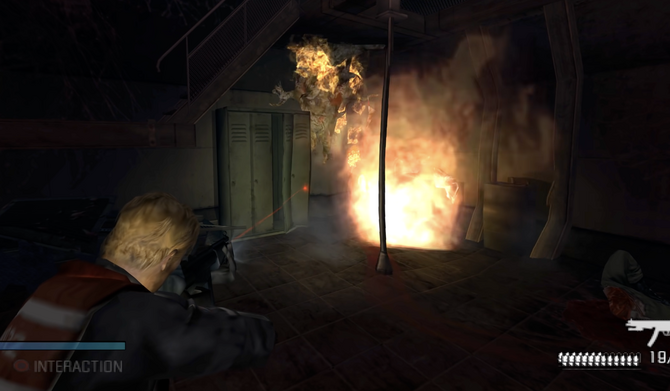
As the story progresses, the connection between the whaling ship and the offshore oil rig “Star of Sakhalin” is gradually revealed.
The first half of the game takes place aboard the Eastern Spirit, but from the middle of the game onward—triggered by the ship’s collision with the oil platform—the setting shifts to that facility, where even greater terror and despair await.
As the discovery and research of the parasitic organisms, the experiments gone awry, and the motives of those involved intertwine, the initial monster chaos gradually takes on the characteristics of a sci-fi suspense thriller.Gathering information from documents left behind on the ship to uncover why this disaster occurred is another charm reminiscent of classic survival horror games.
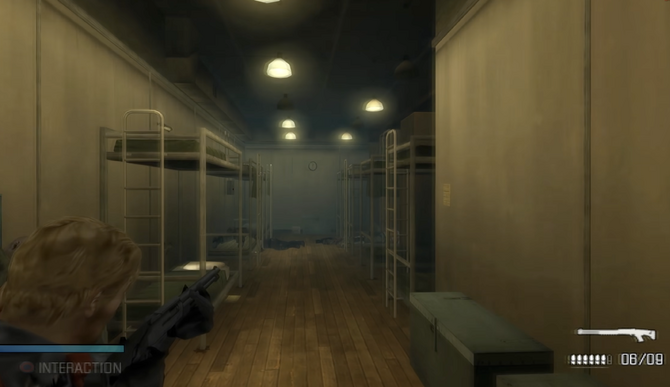
Exploration primarily involves obtaining key items and cards to advance into locked-off sections; the game is designed to emphasize the tension of stepping into unknown rooms while memorizing the ship’s layout, rather than focusing on complex puzzle-solving.
However, compared to titles like *Resident Evil*, these overly simplistic and underwhelming puzzles and exploration may leave players feeling somewhat unsatisfied.
◆ How Was It Different from *Resident Evil 4*?
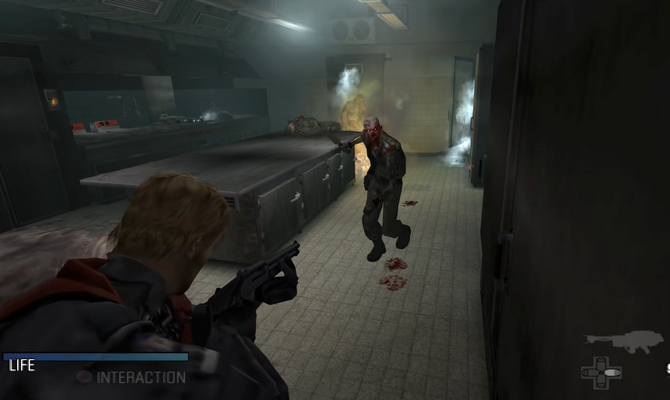
The year 2005, when this game was released, marked a turning point for the survival horror genre.
This is because the masterpiece *Resident Evil 4*, released that same year, adopted a so-called “TPS perspective”—neither a fixed camera nor a first-person view—and, while not the first of its kind, widely popularized the “over-the-shoulder” perspective, becoming an innovative title that spawned many imitators.
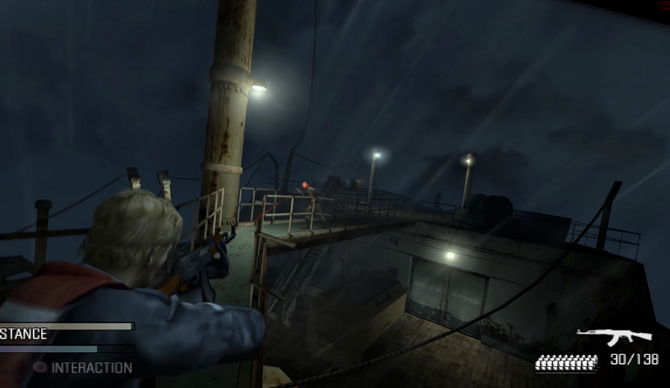
On the other hand, while *Cold Fear* also emphasized over-the-shoulder shooting similar to *Resident Evil 4*, its controls and approach to creating fear were significantly different.
For example, during normal exploration, the game primarily uses a top-down third-person perspective that shows the surroundings, but the view switches when the player draws a weapon. This allows players to directly scan dark hallways and areas behind cover to aim for the enemy’s head.
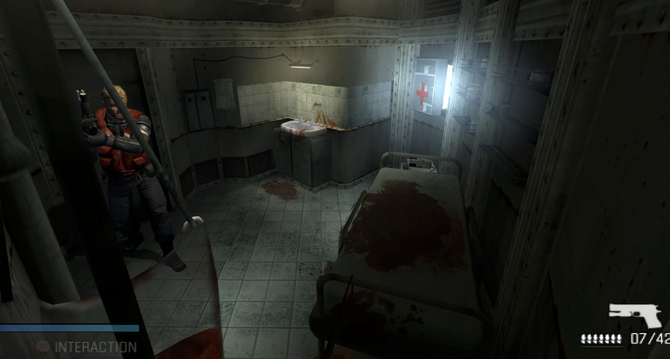
The biggest difference, of course, is that the setting is “at sea,” and because the ship is rocking, aiming itself becomes more difficult. The combat emphasizes survival in a situation where you can’t move as you please, rather than the exhilaration of landing precise shots exactly where you aim.
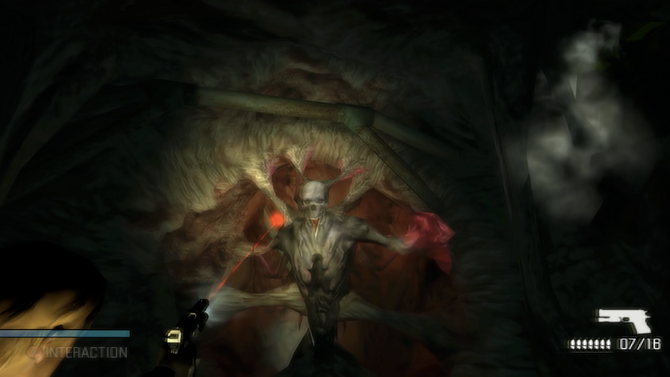
There are also differences in how you engage enemies. In *Resident Evil 4*, tactics for dispatching multiple enemies—combining limb-targeted attacks with melee combat—were highly refined.
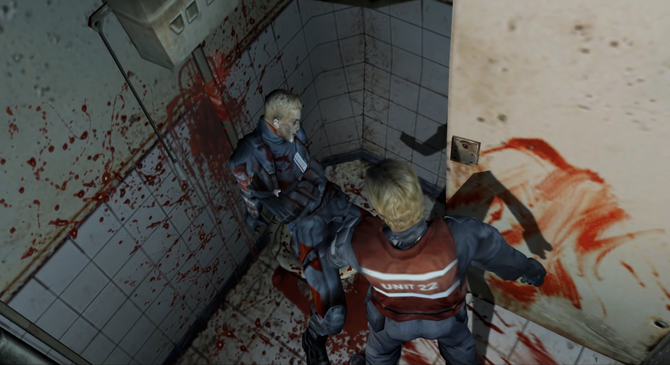
In contrast, in *Cold Fear*, it’s not just about shooting down rapidly approaching infected enemies; the most critical decisions involve whether to avoid enemies, use ammunition, or take advantage of the ship’s environment—such as explosives, electrical equipment, and other objects—to your advantage.
As for exploration, while *Resident Evil 4* strings together scene-by-scene combat and cinematic sequences, this game features relatively long stretches of time spent unlocking doors and searching the ship’s interior while moving back and forth along the same corridors.
Since there is no map provided—which some might find unhelpful—you may occasionally lose track of where to go. While this contributes to the feeling of being stranded in a confined space, opinions will likely be divided on whether it enhances the gameplay experience.
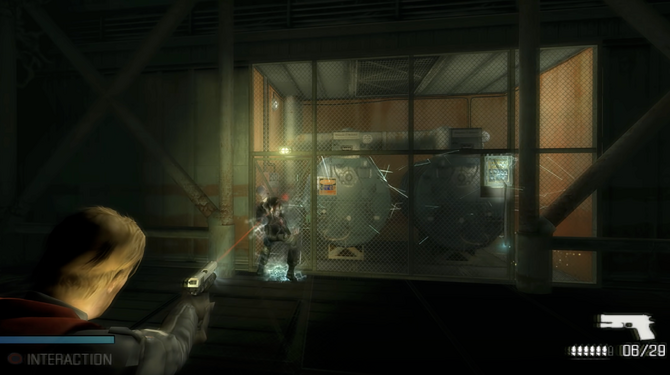
Graphically, the dynamic depiction of the “raging ocean”—with raindrops obscuring your vision, the wet deck illuminated by the lights, and the ship’s constantly shifting tilt—and the sense of terror it evokes are highlights of the game.
Despite technical limitations, the way the rough seas were integrated into both the presentation and gameplay was impressive.
◆A Marine Survival Horror That Remains Captivating Even After More Than 20 Years
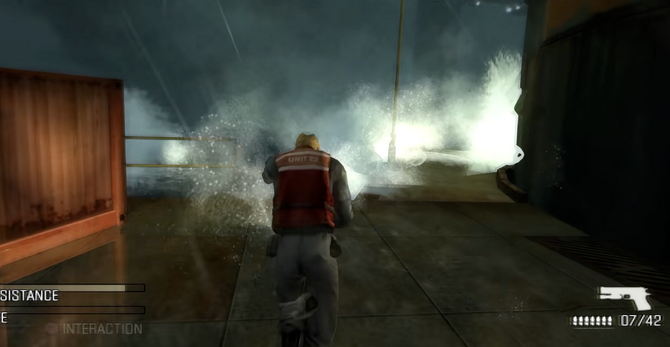
Of course, this title left many issues unresolved in terms of polish. While the opening sequence on the ship features ingenious environmental design, as the story progresses, exploration shifts increasingly indoors, and there are fewer scenes where you directly feel the impact of the storm.
Furthermore, the back-and-forth traversal of hallways, the difficulty in locating destinations, and the need to switch viewpoints between movement and aiming were all viewed critically at the time. It’s also true that the placement of save points and camera angle controls were problematic, and the game’s rough edges were conspicuous.
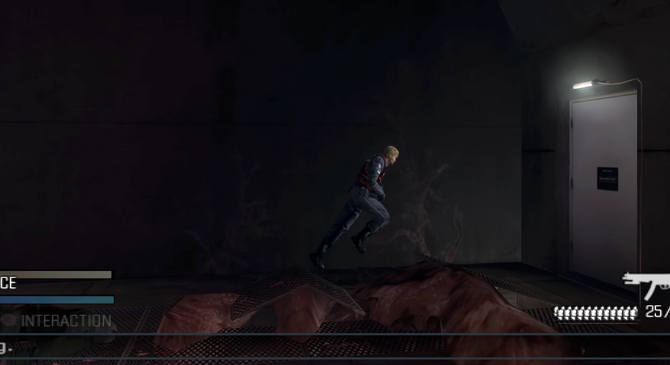
However, even taking these shortcomings into account, the concept of expanding the horror of survival horror beyond the presence of enemies to include the ever-changing natural environment is truly unique.
In particular, the system that reflected the ship’s swaying in the characters’ movements and combat is undoubtedly one of this game’s unique charms.
Although it was released in the same year as *Resident Evil 4*, *Cold Fear* sought its own unique direction. While it may have some rough edges as a game, it is rare to find a title that so boldly capitalizes on the characteristics of a “seaside” setting, and it remains a survival horror game worth revisiting even today.