


Madagascar is an island nation located in southeastern Africa. From this country, known for its unique ecosystem and culture, an action-adventure game has been created.
That game is *Kalanoro*, developed by the Madagascan indie studio Red Raketa Studio.
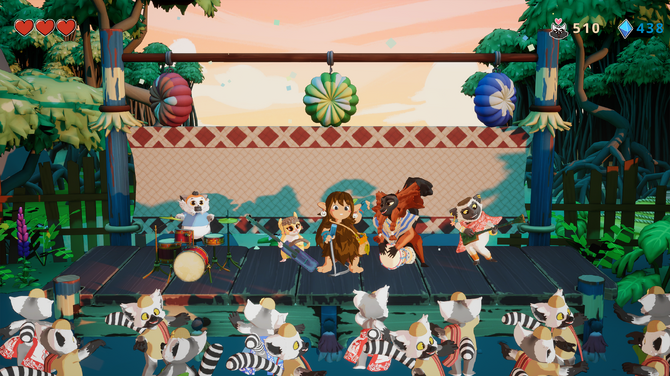
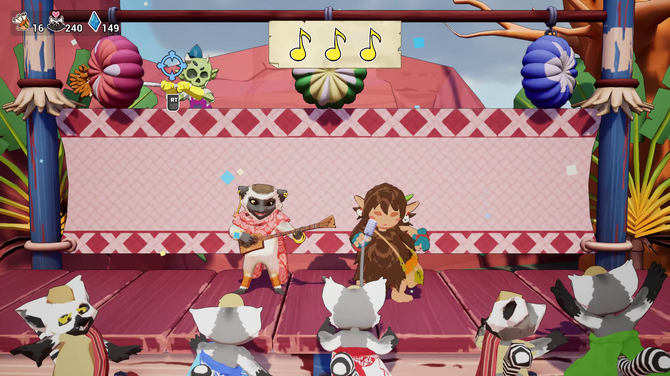
This action-adventure game is inspired by “Kalanoro,” a mysterious creature from Malagasy folklore. The protagonist, Karakelli, is tasked with saving the world following a prophecy and sets out on an adventure through the fantasy world of “Lemuria” while forming a band with his lemur friends.
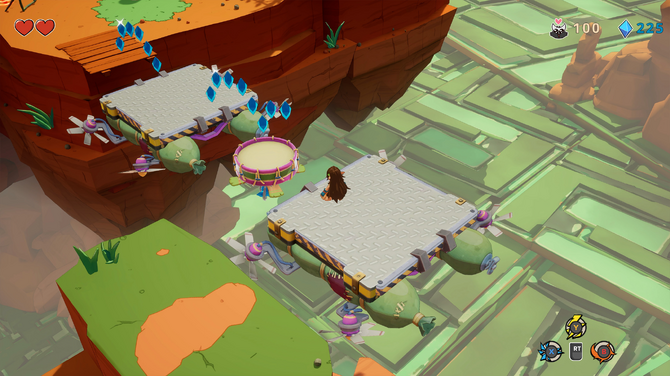
The game is richly infused with Madagascan culture, scenery, and music, and is characterized by its humorous characters and unique gameplay that combines band management with action.
The game was released on September 24, 2026, but what kind of gaming culture has actually developed in Madagascar? And what are the country’s developers thinking, and in what kind of environment are they creating games?
We conducted an email interview with Red Raketa Studio, the studio behind the game. We spoke with them about a wide range of topics, from the story behind the creation of *Kalanoro* to the state of the gaming industry in Madagascar.

“I Used to Believe My Neighbor Kept a Kalanoro”!? A Protagonist Born from Folklore
――First, please tell us about Red Raketa Studio.
Red Raketa Studio: We are an indie game studio in Madagascar founded in 2021.
Members with diverse backgrounds—including programming, game design, art, and content creation—came together through a shared “love of games.”
We started with just three people, but gradually expanded during the development of *Kalanoro*, eventually growing into a team of eight core members. In fact, for many of us, this was our first video game project, so it was truly a series of great adventures.
In addition to our core members, we were also supported by about 10 Malagasy creators and freelance friends specializing in fields such as animation, 3D production, concept art, UI, sound design, and music.
We all share a common goal: “To create a memorable game from Madagascar for the world.”
――How did you come to choose “Kalanoro” as your subject? Please tell us how “Kalanoro,” a figure from Malagasy folklore, is portrayed locally, and how you reinterpreted it as the game’s protagonist.
Red Raketa Studio: In Malagasy folklore, Kalanoro is generally described as a small, hairy, and somewhat mysterious being.
They are associated with the forest, mysterious powers, and sometimes even good luck. Depending on the story, they may be portrayed as helpful, mischievous, or even a bit eerie. You could say they’re like the Madagascan version of a shaggy leprechaun!
Actually, there’s an interesting story behind why we became so fascinated with the Karanoro.
Dina, our co-founder and narrative designer, genuinely believed for a long time that “her neighbor kept a Karanoro as a pet.” She was absolutely fascinated by these mysterious creatures!
We were deeply drawn to this legendary creature and made it the starting point for this fantasy adventure. However, rather than simply adapting the legend faithfully into a game, we wanted to prioritize creative freedom.
That’s how our protagonist, Karakelli—a cheerful, curious, and slightly clumsy girl—was born.
She had always dreamed of seeing the world beyond her hometown. But she certainly never imagined that, thanks to a somewhat dubious prophecy, she would suddenly find herself burdened with the mission to save the world!
We wanted to create a character with her own unique personality, humor, and charm, while still preserving the charm and spirit of the “Karanoro” legend. Even if players aren’t familiar with “Karanoro,” we wanted to make her a protagonist they could naturally relate to and feel a connection with.
――Does this game reflect the lifestyle, culture, and unique humor of Madagascar? Please tell us if there are any elements that only local players would notice.
Red Raketa Studio: Absolutely! We wanted to ensure that Malagasy culture blended naturally into the world of *Kalanoro*.
To that end, we’ve included lots of small details that will make players from Madagascar smile when they notice them.
One of the most obvious examples is the “Taxi-Brousse” (shared bus). This is a familiar mode of transportation in everyday life in Madagascar, but in the game, it appears as the protagonists’ tour bus!
In addition, the world of Lemuria is dotted with numerous, more subtle cultural elements.
The environments in each region are inspired by Madagascar’s diverse landscapes and vegetation, featuring plants such as baobabs, ravinara, and raketa mena (fan cactus).
We’ve also drawn inspiration from the architectural styles and traditional clothing found in various regions of the island, as well as the designs of textiles like the colorful “lambahoany.”
Food culture is also one of the elements that evokes a sense of our homeland! Players can prepare Madagascan dishes and sweets—such as ravitoto, koba, and menakely—for their lemur friends.
Furthermore, we’ve woven numerous local references into the text, dialogue, and even character names.
For example, the name of the enigmatic driver and guide, “Mille-Clément,” is a tribute to Mily Clément, a renowned Malagasy artist beloved across generations.
These references might make players from Madagascar smile unconsciously!
We wanted to portray these elements not as cultural exaggerations or stereotypes, but as a sign of respect and celebration of Malagasy culture.
Although Lemuria is a fantasy world we’ve created, it’s filled with many elements that feel familiar to us. We’d be delighted if it also becomes a world where players from other countries can enjoy making new discoveries.
What Kind of Games Are Popular in Madagascar? We Also Asked About the Local Development Scene
――How do people in Madagascar typically enjoy video games? Please tell us about popular titles, genres, and the gaming community.
Red Raketa Studio: Madagascar has a very passionate and diverse gaming community. Many people enjoy games on a variety of platforms, including smartphones, PCs, and home consoles.
Mobile games are particularly popular, and many players connect through titles like *Free Fire*, *PUBG Mobile*, and *Mobile Legends*.
At the same time, there are enthusiastic communities for PC and console games as well.
Soccer games like *EA Sports FC* and *eFootball*, fighting games such as *Tekken*, and even highly competitive titles like *Dota 2* and *League of Legends* are gaining popularity.
People enjoy gaming in various ways. Some play at home, while others gather with friends at gaming facilities or participate in local tournaments and events.
For many years, internet cafes and gaming spaces have served as places where players gather, compete, and share their common passion.
Today, online communities, social media, and streaming platforms also play a vital role in bringing people together.
We are particularly pleased that this passion for gaming is leading to an increase in events, tournaments, and opportunities for players to interact with one another.
Madagascar’s gaming community is incredibly vibrant, and we’re always delighted to see it grow.

――So, what is the current state of the game development scene in Madagascar? Please tell us about the connections between developers and the development environment.
Red Raketa Studio: The game development scene in Madagascar is still relatively small and may not be very well known internationally. However, its history is by no means new; activities have been ongoing for many years.
While there are only a handful of officially established game studios, there are also many independent developers, freelancers, and small teams working on their own projects.
Quite a few of them continue to develop games while working other jobs. As a result, it’s difficult to pinpoint the exact number of active developers or the typical size of a studio.
Over the years, many Madagascan game creators have acquired their skills through self-study, online resources, and knowledge-sharing among fellow developers.
In addition, local communities, workshops, and game jams have become important venues for developers to network, share ideas, test their work, and find opportunities for collaboration.
Furthermore, in recent years, educational programs specializing in game development have begun to emerge, which I believe is a very encouraging trend for the next generation of creators.
Of course, many challenges remain, such as fundraising, development equipment, and infrastructure development.
However, what encourages us most of all is the creativity of people driven by a pure passion for making games and a strong determination to develop the local game industry.
Madagascar holds tremendous creative potential.
We sincerely hope that, in the future, more Malagasy developers and studios will deliver their unique games and stories to players around the world.
――What kind of feedback have you received from players since the release of *Kalanoro*? Were there any reactions the development team didn’t anticipate?
Red Raketa Studio: That’s a pretty tough question to answer. That’s because players are drawn to so many different aspects of *Kalanoro*!
Some enjoy the action and platforming, while others particularly love the humor, characters, and music.
We’ve also noticed that players’ perceptions of the difficulty and the game’s pacing vary quite a bit from person to person.
We’re especially thrilled that the soundtrack has been so well-received!
When we watch players’ streams on Twitch and YouTube, we can really see how much they’re getting into the in-game radio tracks. “Lemuria Banana” has become a particularly popular track.
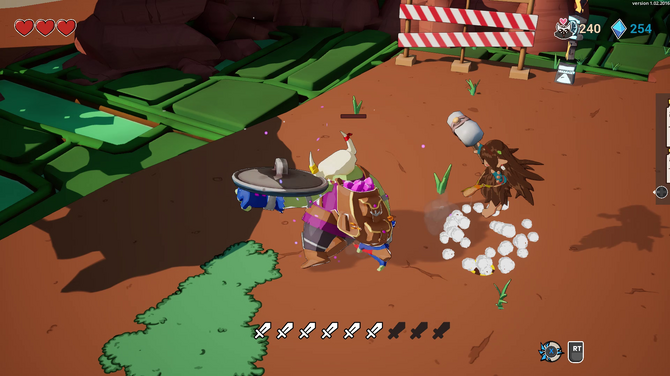
And it’s always fun to see that moment when players realize, “Wait, can I really hit enemies with my flip-flops!?” no matter how many times I see it.
And it’s not just hitting them—you can even throw them at enemies!
What was especially heartwarming for us, though, was discovering that some players have developed an interest in Madagascar itself because of *Kalanoro*.
Some people told us they wanted to learn more about Madagascar’s landscapes and culture, while others said they’d like to visit in person someday.
We’ve also heard from quite a few players who said seeing the Madagascan dishes in the game actually made them hungry!
Seeing these reactions is very special to us and means a great deal.
Ultimately, if players enjoy the adventures of Karakely and his little bandmates, love the music, and develop even a little interest in Madagascar, that alone makes us truly happy!
“It would be truly special if we could spark an interest in Madagascar’s culture and folklore.”
—Finally, please share a message for all our players.
Red Raketa Studio: We are truly delighted that our first game has reached players all over the world. This joy is especially profound when we think about where and how this adventure began.
Above all, we hope you’ll explore the world of Lemuria, meet its colorful characters, and fully enjoy the many fun and lively events that unfold there.
And if *Kalanoro* sparks even a little interest in Madagascar, its culture, folklore, and music, we’ll feel we’ve achieved something truly special.
Thank you so much for welcoming our beloved *Kalanoro* into your lives!
――Thank you very much!

*Kalanoro* is now available for PC (Steam), PS5, and Nintendo Switch. The PS Store is currently running a 25% off sale until November 20 at 11:59 PM, priced at 2,227 yen.
