


In the city-builder game *Beyond These Stars*, you build a city on the back of a space whale. Against this unique backdrop, the game incorporates supply chain management, terrain design, and urban transportation, combining all these classic elements into a single, all-in-one package.Despite its quirky appearance, the game is a serious title, and we guarantee it will meet the expectations of fans of the genre. This review is based on a preview version provided by the developer.
While the game doesn’t introduce any unique mechanics, its greatest strength lies in its high level of polish—there are no glaring shortcomings or rough edges. The secret to this polish lies in the rework of the developer’s previous title, *Before We Leave*. The developers addressed the flaws of the predecessor while emphasizing key features such as “ecology,” “planetary colonization,” and “no combat.”
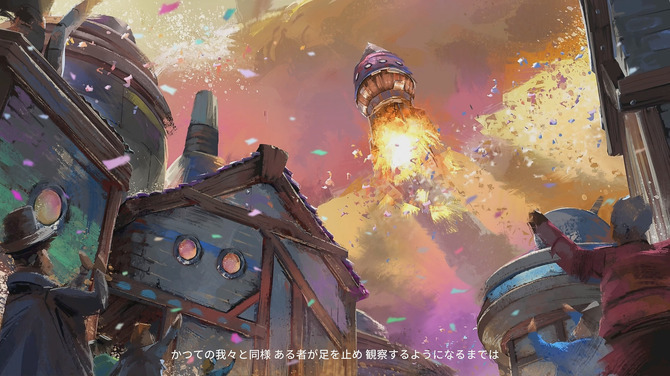
While this game shares the same world setting as its predecessor, you can enjoy it even if you haven’t played the previous title. The opening of the Story Mode provides a summary of the previous game’s events. As the title suggests, the previous game takes place “before leaving the planet”—in other words, it serves as a prequel. In this game, you set off on a journey “beyond the stars.”

Before beginning the review, I’ll outline the events from the opening through the early stages of the game. The Peeps, a human species plagued by a disaster in which space whales gnawed at the planet’s surface, managed to avoid extinction by observing the space whales and understanding their behavior patterns. That covers the previous game; in this one, we land on the surface of a space whale to conduct an ecological survey.
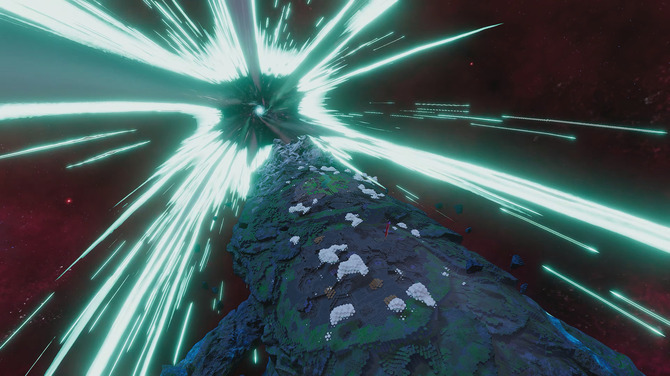
The surface had an atmosphere, rivers flowing, and vegetation growing—it seemed as if it were welcoming the Peeps. However, just as they set up their research camp, the Space Whale moved somewhere in the galaxy at superluminal speeds. With communication to their home planet severed, the research team is forced to survive in an unknown environment.
From Defensive Ecology to Offensive Ecology
While the very premise of building a city on the back of a space whale is a challenge in an extreme environment, the game begins in a mild, habitable area.The beautiful scenery and soothing background music invite relaxation, allowing for stress-free gameplay. What sets this game apart from others is that the atmosphere—and thus the range of action—is limited. Players extend rivers to expand green spaces and generate atmosphere through irrigation and reforestation. The game emphasizes ecology through the practical benefit of expanding the range of action.

The game’s core mechanic is supply chain management (referred to in-game as “resource flow”). The rules follow those of traditional city-building games: when you lay roads and construct facilities, Peeps transport resources and work at those facilities.The game begins by building a water pump along the riverbank, a potato field on green land, and a hut nearby. From there, you build a mining facility, a thermal power plant, and a steel mill to expand the industrial supply chain that processes materials.

The main content of the game, Story Mode, guides you through the game to its conclusion through a cycle of completing tasks and advancing the story. Tasks indicate what to build and what to collect. The story progresses through conversations among the four central members of the expedition team.Early in the game, tasks are frequently interspersed to introduce new facilities, resources, and gameplay elements. The story explains the situation the expedition team finds itself in and prepares players for what lies ahead. Unlocking facilities by completing tasks also grants Perk Points to enhance your Peeps, which effectively illustrates the town’s growth and is a welcome touch.

The theme in the early stages of the game is ecology. This manifests as two distinct gameplay elements. The first is pollution control. Many industrial facilities pollute their surroundings, causing facilities to shut down and Peeps to fall ill. The key lies in combining countermeasures: building pollution removal facilities and allowing the surrounding forests to absorb the pollution.This adds to the fun of the placement puzzle, which also involves optimizing efficiency through facility adjacency bonuses, ensuring efficient resource flow, and considering the Peeps’ commuting ranges. It’s a relief that moving facilities doesn’t cost resources, so you can easily rebuild them.
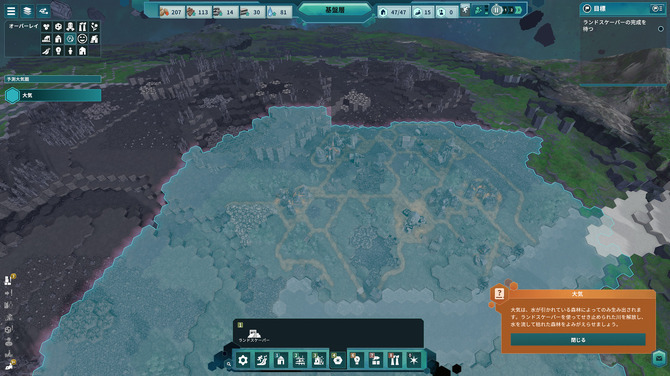
Another aspect of ecology is terrain design. After completing tasks for three hours from the start of the game, you’ll unlock terrain design.When you dig through terrain that was damming a river, the river extends, allowing you to access the land beyond. Grass grows on the fertile soil near the water, forests generate oxygen, and your atmosphere—that is, your range of action—expands. If you want to use resource sites far from the river, extending a tributary is the first step.

You’ll expand your town by utilizing the ecological systems described above. This leads to coexistence between the Peeps and the space whale “Kiwa.” By completing the early-game objective—building the Whale Communicator—you’ll be able to converse with Kiwa. At that point, Kiwa reveals that it’s pleased with the Peeps’ town-building efforts.If you zoom out, you’ll see that the land where the Peeps have settled is an area where Kiwa’s scales have fallen off, and the Peeps’ town has effectively taken the place of those scales. It’s as if they’ve received the landowner’s seal of approval, so this gives their town-building efforts a real boost.Now, let’s rebuild the town and boost production efficiency. That’s the only way to overcome “boredom,” the biggest obstacle standing in the way of completing the game.
A Journey with the Space Whale on the Great Journey
If I had to sum up the mid-game in one phrase, it would be the “Planetary Colonization Phase.” After building the Whale Communicator, you can ask Kiwa to let you travel across the galactic map. The tasks become more challenging, and you’ll take on challenges like colonizing ancient Peep planets and searching for artifacts coveted by aliens.The story also expands in scope alongside these tasks, delving deeper into the mysteries of the game’s world. In the process, the city built on Kiwa’s back faces numerous trials.
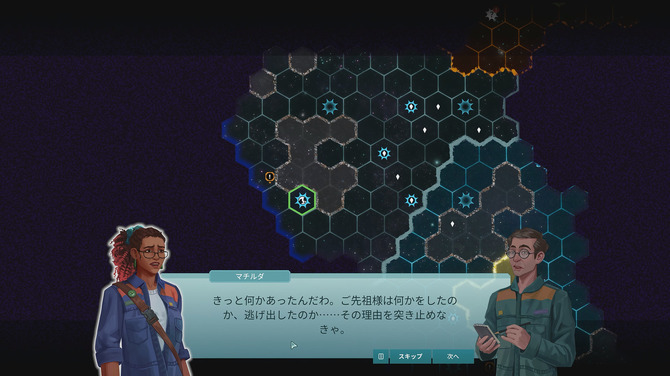
Most of the Galactic Map consists of cryogenic zones, and as you travel, the temperature in your city drops over time. If it drops to cryogenic levels, food production stops, Peep activity decreases, and illnesses go untreated, leading to death. High-temperature stars also cause problems due to extreme temperatures. Simply put, it’s a seasonal element.Since you can prepare stockpiles of food, clothing, and medicine before traveling, it’s easy to prepare for seasonal changes.

However, the resources you can produce from Kiwa’s back alone aren’t enough to sustain long-distance travel across the galactic map. This is where planetary colonization comes into play. By obtaining wool from planets inhabited by sheep to craft cold-weather gear, or using discovered food to prepare high-performance meals, planetary colonization helps you prepare for your journey.In the context of previous games in this genre, this is akin to establishing a “second city,” but with extreme environments—such as planets with absolutely no water—it’s exciting to put your city-building skills to the test.
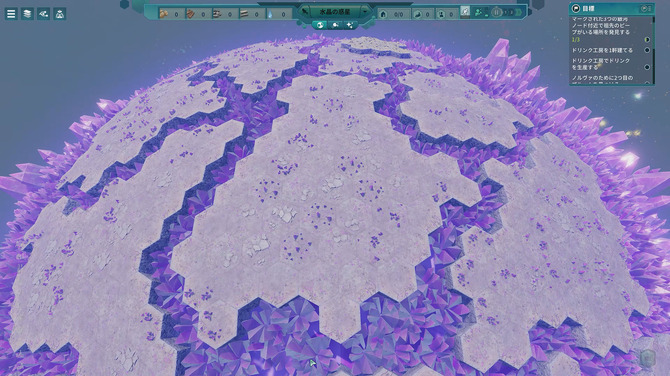
Each planet also has a limited variety of resources, so you’ll need to transport resources from the city of Kiwa until the planet can become self-sufficient. This adds a transportation element to the supply chain.Discovering a warp gate unlocks transport between planets. This enables you to build cities that make the best use of their strengths—for example, focusing on food production on a temperate planet and transporting it to a planet where crops are hard to grow.

What’s interesting is that even in the mid-game, the core of the gameplay remains production efficiency—essentially a placement puzzle. While building on the early-game experience, the game gradually increases complexity by introducing new resources and interplanetary transport, making things progressively more challenging.In the late game, your tasks will involve exploring the depths of the galactic map and constructing facilities that require highly processed goods. To make the most of the limited land available in Kiwa’s cities and planetary settlements, rebuild your cities to optimize your supply chains.
When “Great Desire” Is Fulfilled
As mentioned above, *Beyond These Stars* is a city-rebuilding game. This title has no combat elements, so you can rebuild your city whenever you like without anyone getting in your way. While the ability to play at your own pace might sound like a friendly feature, that very pace creates a problem: the game’s progression slows down, and it becomes difficult to find excitement.
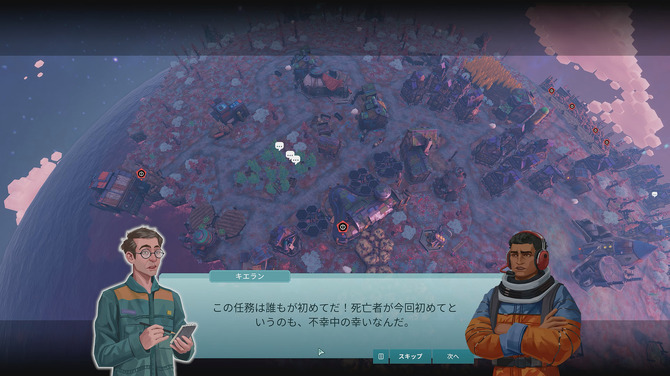
In the early stages of this city-building game set on Kiwa’s back, tasks are simple, and you can follow the story at a brisk pace. However, from the mid-game onward, completing tasks requires massive amounts of resources; if your production efficiency remains low, the story won’t progress, and the game becomes less engaging.Ideally, you should be mindful of production efficiency from the start, but on your first playthrough, you don’t know how the game unfolds, and at some point, you’ll need to redevelop your city. You end up stuck in a rut where waiting for resources to accumulate is agonizing and redevelopment is a hassle, eventually leading to boredom with the game.
This kind of stagnation in game progression was also present in the previous title. This installment partially prevents that stagnation. One way is through tasks. In the mid-game, the variety of tasks increases, and by prioritizing easier ones, you can prevent the story’s progress from slowing down to some extent. Even in dialogue events, the game celebrates even minor progress as a great step forward.

Another factor is the establishment of Keywa’s second city.The O-gawa area—which has been a prominent feature since the early stages of the game—is unlocked toward the end, revealing a large vacant lot with a red artificial structure jutting out of it. By that point, you’ll be tackling projects that require massive amounts of high-tier processed goods, making it the perfect location for a factory. It’s perfectly timed, saving you the trouble of clearing the land where the first city once stood.
Despite the measures mentioned above to address this stalemate, there are no quick-fix solutions, such as upgraded facilities or structures that enhance the surrounding area. The only way to increase production efficiency is through city design. The game takes a harsh approach, making the solution to breaking out of this stalemate “relearning the basics.”
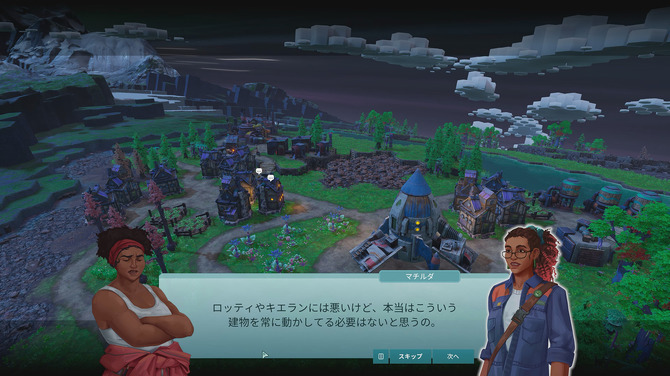
There are no battles, no criticism of inefficiency, and players can play at their own pace. Players who don’t want to be interrupted by anyone will likely appreciate this. However, this leniency has inadvertently created problems stemming from the lack of pressure on the player. It leads to situations where players become bored with the game because they cannot achieve the production efficiency required to complete it.Gamers who want to play through Story Mode to the end must overcome the battle against boredom.
Overall Review
“Beyond These Stars” centers on ecology and planetary colonization, incorporating a wide range of popular city-builder elements.While the game lacks unique original elements, it boasts a high level of polish as an all-in-one package of the genre. This high-quality, well-rounded feel, combined with the epic sci-fi story of searching for a home, creates a gameplay experience unique to this title. However, while the opening is engaging, the game becomes more of a niche experience from the mid-game onward.

On your first playthrough, you can’t avoid a grueling mid-game slump, and the challenge of overcoming it awaits. While the game includes measures to alleviate this slump, the only fundamental solution is to redevelop your city. It’s geared toward die-hard fans of the genre who don’t mind starting over, show no mercy to residents, and enjoy the “scrap and build” process.

And when you start a new game from scratch, you’ll find the facility placement puzzles—which require you to consider the city’s scalability right from the very beginning—to be quite challenging. Of course, for seasoned city-builders who can clear the game on their first playthrough, rest assured that there’s a Scenario Mode separate from Story Mode.With its strong survival elements and challenges like delivering resources within time limits, you can push the limits of supply chain management. Easy to pick up but hard to master—we highly recommend this game as a Spartan city-builder.
Game*Spark Review: “Beyond These Stars” PC (Steam / Epic Games Store / Xbox / GOG.com) October 17, 2026
An all-in-one city-builder that lacks any particularly catchy unique features and may feel repetitive during your first playthrough, but reveals its true value when you restart a new game with production efficiency in mind.
GOOD
- Supply Chain and Facility Placement Puzzles
- Terrain design for expanding your habitat
- Highly User-Friendly UI
- Plenty of story events
- No Combat
BAD
- Game progression slows down midway through the game
- No guidance to encourage improved production efficiency
- The game lacks a unique gameplay experience



