


On October 15, U.S. Representative Richie Torres announced that he would introduce the “Power To The Players Act,” a bill aimed at protecting the right to own and continue playing games that have been purchased.
“When you pay for a game, you should own it.”
According to the congressman’s announcement, this bill would require the Federal Trade Commission (FTC) to establish regulations to protect consumers’ rights to own and play the games they purchase.
The background cited for this bill is the shift toward digital-only games and gaming consoles, as well as the issue that purchased digital games are often provided as revocable licenses rather than as full-fledged property. The bill highlights as a problem the situation where players remain dependent on companies for ongoing support even after making a purchase.
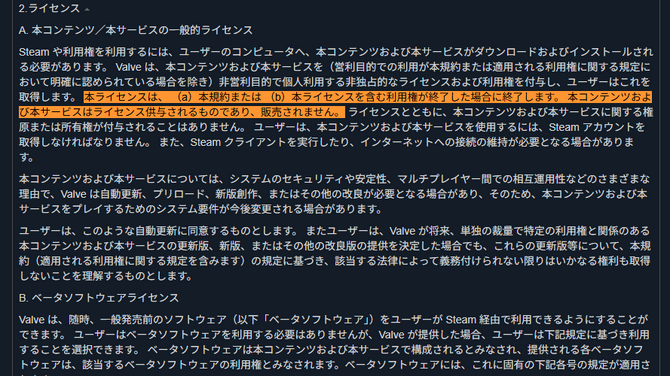
Congressman Torres argues, “When you pay for a game, you should own it.” He asserts that consumers need the right to own, play, and transfer the games they purchase.
“A game that is taken away the moment a company pulls the plug is not a purchase. It is nothing more than a rental disguised as a sale,” he stated, arguing that consumers who saved money to make a purchase deserve more rights than just a license that could disappear at any time.

The announcement also explains that for games with online features, developers will be required to provide an offline mode before shutting down the supporting servers. The goal is to bridge the gap between “purchase” and “ownership,” including the transfer and resale of games.
In the announcement, “NBA 2K25” was cited as an example illustrating this concern. Sales of the game on digital stores are scheduled to end on October 30, and online servers are set to shut down on December 31.

After the service ends, not only multiplayer but also single-player story modes like “MyCareer” and “MyTEAM”—which require a connection to the servers—will no longer be available.
However, players will still be able to re-download the game they’ve already purchased, and offline modes such as “Play Now” will remain playable. While the entire game will not become unplayable, certain modes included at the time of purchase will be lost when the service ends.
The Debate Over “Purchasing” and “Owning” Digital Games
US Rep. Ritchie Torres Introduces Legislation to Ensure Gamers Own Their Digital Games
by
u/genwz in
gaming
On Reddit, in addition to voices hoping for the bill’s passage, some users have pointed out that sales under a licensing model are not limited to specific game consoles or stores.
There were also opinions stating that what people mean by “ownership” is the right to continue playing individually, independent of a company’s survival, as well as posts addressing the difficulty of transferring digital games.
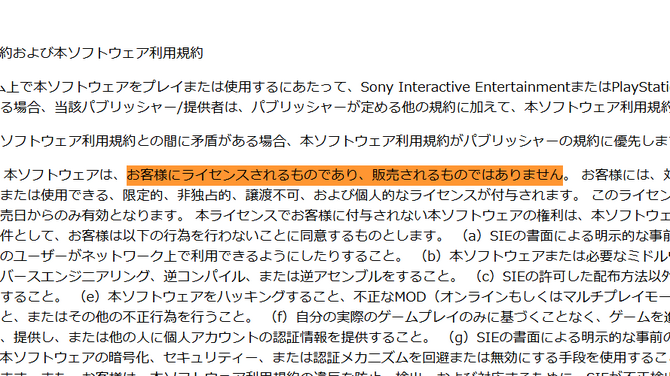
Regarding the “purchase” and “ownership” of digital games, a lawsuit has also been filed in the U.S. challenging the purchase descriptions on the PS Store.
While the plaintiffs argue that the PS Store does not sufficiently clarify that purchasers are acquiring a license, Sony counters that this is explained in the Terms of Service and that the labeling meets state law requirements. While that case centers on whether the explanation at the time of purchase is sufficient, this proposed bill represents a move to reexamine the very rights guaranteed after a purchase.

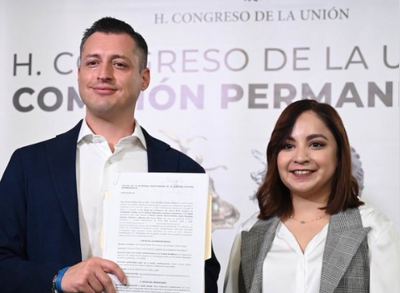
Additionally, in Mexico, a legislator has filed a complaint with the competition authority regarding the policy to discontinue the production of physical game discs for PlayStation. Concerns raised in this case include the inability to sell used copies, lend games, or trade them.
It should be noted that what was announced this time is merely a plan to introduce a bill; it has not yet been enacted. How long and in what form will players be able to play the games they’ve purchased? Attention is now focused on the upcoming debate surrounding the nature of “ownership” in digital games.


