


On September 22 and 23, 2026, “The Tenth Mosaic” was held at the Tokyo Franco-Japanese Institute.
This event featured a variety of creators presenting content centered on video games—a medium that has come to be known in the West as the “tenth art.”
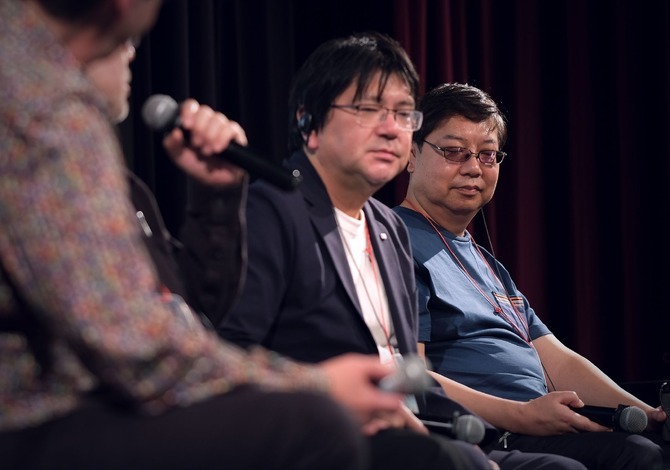
We’re reporting on a panel discussion held here featuring Frédéric Reynaud of *Alone in the Dark*, Keiichiro Toyama of *SIREN* and *SILENT HILL*, Makoto Shibata of *Zero*, and Hifumi Kono of *Clock Tower*.

The Roots That Led Each of Them to Create Horror Games
First, they discussed the circumstances that led each of them to work on horror games.
Reynal recalled that in 1985, when the store his father ran began operating as a 50-50 split between a video club and a PC corner, he found himself in an environment where he was exposed to both video games and computers from a young age.In 1988, he created his own brick-breaker game, *Popcorn*, and in 1989, he joined Infogrames and began working as a graphic designer.
A major turning point came in 1991. He says that after experiencing a 3D game called *Cube*, he began to envision bringing George A. Romero’s zombie movies to life in 3D. That’s where the idea for *Alone in the Dark* was born.*Alone in the Dark* was released the following year, in 1992.
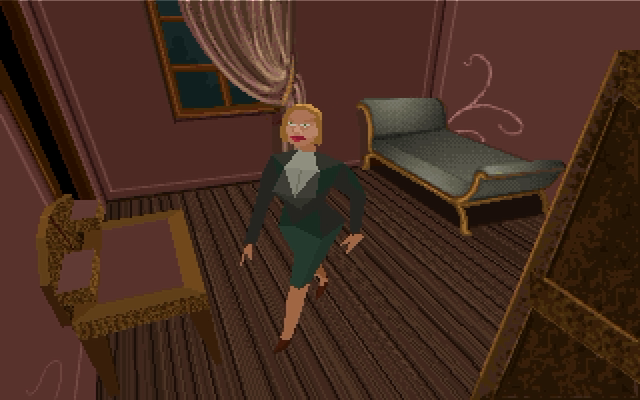
After joining KONAMI, Mr. Toyama worked on *Silent Hill* and *SIREN*. He explained that at the time, the survival horror genre was dominated by *Resident Evil*, and he felt that “we couldn’t compete by doing the same thing,” so he sought a different direction. He also noted that his experience working part-time at a video rental store was a major influence.
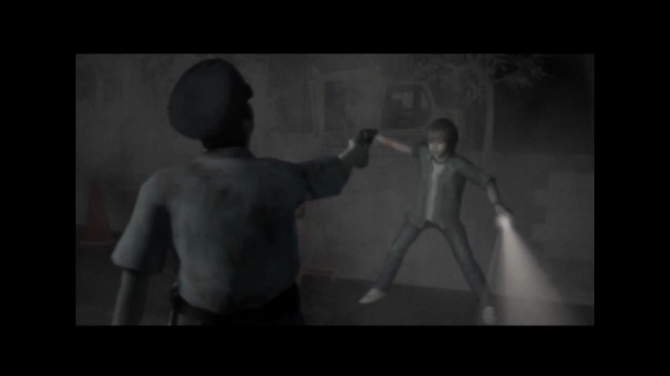
Mr. Shibata said that he sensed great potential in the significant improvement in graphical capabilities that came with the advent of the PS2 era, and that the starting point for *Zero* was his belief that “with this level of graphical capability, we could create a horror game unlike anything anyone had ever seen.” He explained that the prototype for the series was born from his vision of a game where players explore an old Japanese house and encounter ghosts as enemies.

Mr. Kono shared that he had been a fan of horror manga by Kazuo Umezu and Shinichi Koga since middle school. He recounted how, after graduating from college, he joined Human and launched the *Clock Tower* project there.

The Freedom of Horror Games: Moving Away from “Defeating Enemies”
The conversation then shifted to the appeal of horror games themselves.
Mr. Reynal explained that he had always loved horror movies, and among them, zombies were particularly easy to incorporate into games because, as he put it, “you can kill as many as you want” and “they’re slow and weird.”
He also mentioned being strongly influenced by Italian horror films from the 1970s and 1980s. Many of these films featured young people trapped in mansions or forests, with only one person surviving in the end—a concept that led him to the idea of survival and escape.
Regarding *Alone in the Dark*, he explained that it was “all about survival”—a game where the first priority was simply to escape the location. He revealed that he was also inspired by the tagline “Just get out!” featured on the poster for the movie *The Amityville Horror*.

Mr. Kono also cites “the ability to break existing game formats” as a major appeal of horror games. He explained that while in typical games, defeating enemies is crucial and the protagonist is often portrayed as the strongest character, horror games allow you to subvert those conventions.
He also touched on his fondness for *The Amityville Horror*, noting that he particularly likes the way the windows of the house depicted on the poster glow orange.

Mr. Shibata explained that horror and games should be a good match because “death is ever-present.” He noted that since games inherently feature a “Game Over” screen, they have a high degree of compatibility with horror.
On the other hand, he mentioned that he used to occasionally see spiritual entities himself and didn’t want to watch scary things even in movies. Nevertheless, he recalled that after being invited by a senior colleague to watch a horror movie, he discovered an unexpected enjoyment in it and began to feel a charm that so-called blockbuster movies lack.
Mr. Toyama pointed out that while entertainment is fundamentally meant to create a sense of satisfaction through empathy with the characters, horror is actually the opposite. He explained that it is precisely because tragic events occur after the viewer has become emotionally invested that our instinctive side is stimulated, suggesting that humans may have an innate desire to “hear stories about bad things happening.”
The World of Horror Games as Depicted in *Alone in the Dark*
For Mr. Toyama, Mr. Shibata, and Mr. Kono, *Alone in the Dark* was also an indispensable title when discussing the history of horror games.
Mr. Shibata recalled that when a senior colleague recommended *Alone in the Dark* to him, saying, “An amazing game has come out,” he was moved by its “sense of space and camera work.” He was shocked to find that even the timing of the scares and the pauses were carefully controlled—and that this had already been achieved in the very first installment.
He explained that this experience influenced *Zero* as well, leading him to first create locations where ghosts might appear and then attempt to recreate “the atmosphere before a ghost appears” within the game.

*Alone in the Dark* was a special title for Mr. Toyama as well. It was released just before he entered the game industry, but at that time in Japan, console games dominated the market, and there were virtually no opportunities to actually play overseas PC games.
As a result, he said he had to imagine the game based on articles in overseas gaming media and screenshots published in magazines. Even so, he was stunned by the level of detail in the graphics—unthinkable for that era—and said it remained in his memory for a long time as “a legendary game” in his own mind.
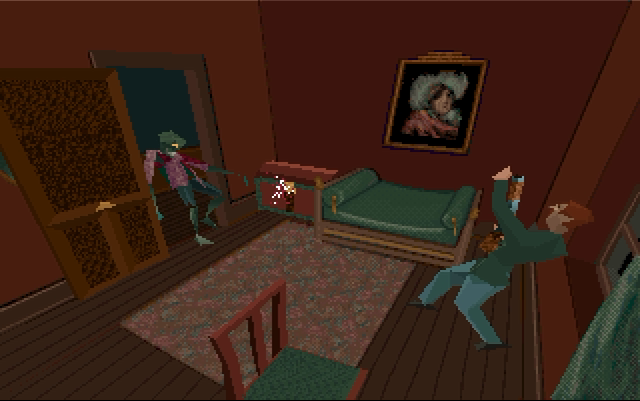
Mr. Shibata described a successful horror game as one that can make players feel “afraid to open a door.” He noted that it’s more important to make players think, “There might be something there,” rather than relying on simple jump scares, and he praised this as a highly sophisticated technique.
Mr. Reynal then touched on Mr. Kono’s *Clock Tower*, commenting, “The sound of Scissorman’s scissors is very important.”
He also explained with a laugh that *Alone in the Dark* “cheats a little” because the narration fills in parts that the player would normally experience firsthand. However, he ultimately emphasized that what truly matters is the player immersing themselves in the role, stating, “The player’s experience is the most important thing.”
Camera, Fog, Background—“Invisible Spaces” Generate Fear
Regarding the construction of fear in horror games, the use of the camera was highlighted as a key theme.
Mr. Shibata analyzed that the fixed, cut-scene-style camera in *Alone in the Dark* created an experience where the player moved through cinematic scenes.
What was particularly striking, he noted, was that the mansion itself became the protagonist. The characters were merely entities moving through that space, and by making “the background the protagonist,” a sense of human vulnerability and the feeling of being watched by a higher power was evoked.
He also touched on the third-person perspective—where the camera follows the player from behind—which has become mainstream in the current gaming industry.
He explained that while *Zero* experimented with both fixed and third-person camera angles, adopting the third-person camera for *Zero: The Red Butterfly REMAKE* created a different kind of fear. Since the third-person camera makes the character the protagonist, the nature of the fear changes even within the same horror genre.

In response, Mr. Toyama pointed out that the essence of fear lies in “rhythm and tension.”
He highlighted a key difference between movies and games: while movies progress in the order intended by the director, in games, nothing happens unless the player takes action. He explained that, as a result of this reliance on the player, periods of intense tension are prolonged. He described “the sensation of being in that situation but unable to move your feet” as a form of fear unique to games.
Regarding the camera, he highly praised the mechanism—passed down from *Alone in the Dark* to *Resident Evil*—where “there is space even in areas not visible from the fixed camera.” He reflected that encouraging players to imagine unseen spaces was an invention that truly stimulated their imagination.
Mr. Toyama himself explained that he achieved this in a different way. In *Silent Hill*, while creating the background with polygons, he used fog to create “unseen areas.” The space itself exists, yet it cannot be perceived. That structure was inherited from *Alone in the Dark*.
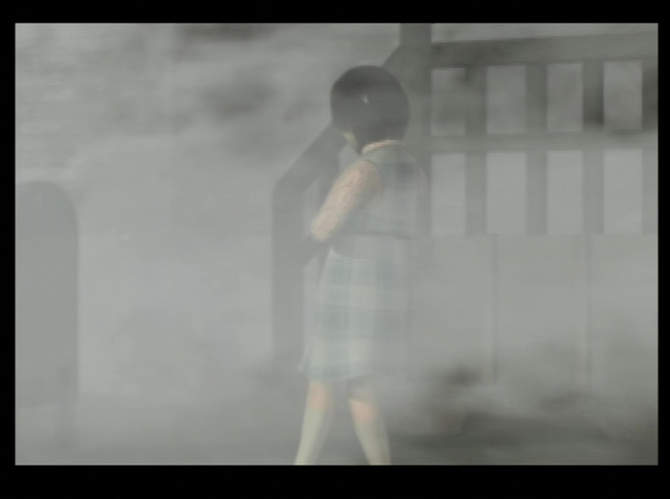
Mr. Kono also notes that, when it comes to the camera, “how much to show” and “how much to restrict” are two sides of the same coin. He explained that an FPS perspective allows for extremely limited field of view, while a TPS perspective allows for a wider view.
Looking back on the original *Clock Tower*, he noted that by utilizing the wide screen of a side-scrolling game, they created a sense of terror where the player was the only one aware of something the character hadn’t noticed.
Male or Female Protagonist—A Concept Unique to That Era
Building on this, the conversation turned to the gender of protagonists in horror games of that era.
Mr. Kono pointed out that *Alone in the Dark* and *Silent Hill* featured male protagonists, while *Zero* and *Clock Tower* featured female protagonists, and asked about the differences from the perspective of gender norms at the time.
According to Mr. Reynal, the initial plan for *Alone in the Dark* was to allow players to choose between a male and a female protagonist. He explained that he wanted the protagonist to be, above all, an “ordinary person,” and since male players were more common at the time, he had even considered a female protagonist with the aim of attracting female players as well.
However, he reflected that, based on the prevailing perception at the time—namely, the assumption that “women don’t like to fight”—as well as graphical limitations, they ultimately decided to stick with a male protagonist.

Regarding the original *Silent Hill*, Mr. Toyama explained that he considered the game’s direction as “modern horror.” He said that making a woman the protagonist would have carried special connotations, so he deliberately wanted to make the character “just an ordinary person.” As a result, he chose an everyday middle-aged man as the protagonist.
Mr. Shibata explained that for *Zero*, the protagonist was determined by the theme. For example, if the final boss is male, making the protagonist the same gender allows the player to understand the opponent’s state of mind. In other words, he said they chose the gender based on the relationship to the story.
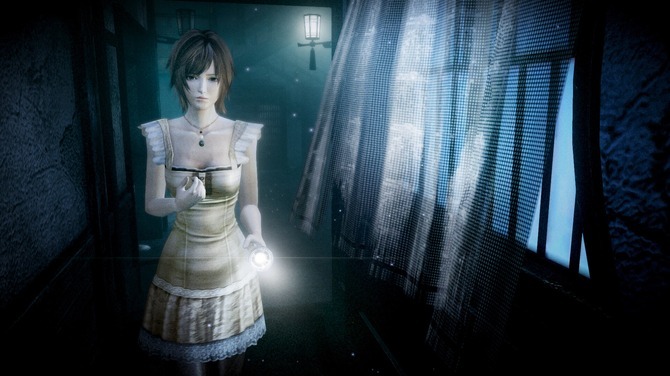
Mr. Kono reflected that, at the time, the image of female characters fighting freely wasn’t as common as it is today, and explained that there was a general perception that men were suited for active combat and exploration, while women were better suited for passively resolving problems.
On this topic, Mr. Shibata added, “After all, you can’t resist the Scissorman in *Clock Tower* to begin with.” Furthermore, when Mr. Kono shared an anecdote about a horror director he knew telling him, “I don’t want to hear an old man’s screams,” the audience burst into laughter.
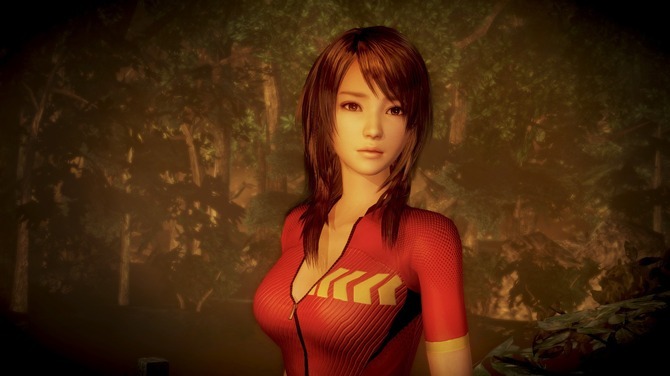
Regarding *Zero*, Mr. Shibata also explained that because the final boss is a ghost, the protagonist’s physical strength is meaningless, and since it’s crucial for the protagonist to empathize with the final boss in the end, he chose a female protagonist.
Creating “Places Where Ghosts Might Appear”—The Setting Itself Takes Center Stage
They also shared their respective perspectives on setting design.
Mr. Toyama explained that he often starts by thinking about the setting before the characters, noting that he frequently sets his stories in villages or towns.
He explained that what happens—and the inevitability of those events—is determined by the environment, and that the protagonist is both the player’s avatar and a stranger who has wandered into that place. He said he places great importance on the experience of what the protagonist feels and what captures their interest in that setting.
He noted that while *Silent Hill* was a modern horror game, in *SIREN* he aimed to create a sense of being an observer—where the more you learn about the village’s history, the more trapped you become. He added that, not just in horror but across various works, he is always conscious of “what you feel in that town.”

Mr. Shibata explained that in *Zero*, “ghosts appear in places where you’d expect them to.” He said he constructs the setting by gathering locations from everyday life where you might think, “A ghost would probably appear here,” and combining them to create a single house.
He also pointed out that spaces that simply look like ruins or are just dirty don’t evoke fear. He explained that it’s the traces of daily life left behind in places that appear lifeless—the feeling that “someone was just here a moment ago”—that creates a truly unsettling sense of dread.
Mr. Kono explained that it is crucial to be able to incorporate gameplay elements into the setting itself. He said the key lies in how many interactive elements can be incorporated into a single situation.
On the other hand, he pointed out that developing future horror games presents challenges because so many forms of expression have already been exhausted. That’s precisely why he suggested that coming up with a completely new setting alone could be enough to succeed.

The feeling of “having been there”—something unique to games
They also shared their respective experiences with creating content outside the realm of gaming.
Reinal explained that he has always loved making things and often crafted his own toys. Looking back, he said that game development in the 1990s felt a lot like making toys.
While digitalization has been advancing recently, he said he wants to create experiences that go beyond simply using a standard controller—ones where players can enjoy the act of playing itself. He is currently working on retro games again and emphasized the importance of “something you can feel intuitively.”
Mr. Toyama shared his experience creating video art during his college days. He laughed as he recalled that by abstracting visuals, he was able to create art even though he wasn’t particularly skilled at drawing, sculpting, or programming. Since his strength lay in “abstracting ideas into concepts,” he said that video games were his calling.

Mr. Shibata is also passionate about games, particularly describing the sensation of “having been in that place” that lingered after playing *Alone in the Dark*. He explained that the true appeal of horror games lies in the fact that the places you’ve just been feel even more real after finishing the game than they did while you were actually playing.
Mr. Kono revealed his experience producing a live-action drama—a project he kept secret from everyone—and discussed the differences in expression across media. He reflected that in live-action, the amount of information conveyed through an actor’s performance is immense, far surpassing that of game dialogue, and noted that both games and live-action have their own unique appeal.
Their Visions for the Future of Horror Games
Regarding future projects, each developer outlined a different direction.
Mr. Reynal announced that he is currently developing a game for the Mega Drive. He explained that his wife is handling the graphics, and that he is recreating the sense of fun he felt in his youth.
Laughing, he remarked that it’s more fun than making AAA titles, adding, “Maybe I’m just getting old.”
However, he clarified that he isn’t criticizing AAA titles; rather, he realized that what he was truly seeking was found in the games of the Mega Drive era. He reflected that games back then were both “toys” and “electronics.”
He further noted that it was fortunate that no one knew “what to make” back then, but pointed out that indie games still offer freedom. “Whatever it is, I want to go all out,” he said, expressing his enthusiasm.

Mr. Toyama responded to this by saying, “I’d love to make a Mega Drive game too,” drawing laughter from the audience.
On the other hand, Mr. Toyama mentioned that he has only created one title since going independent and emphasized the importance of continuing to build a foundation for horror games alongside his current team.
Mr. Shibata reported that *Zero: The Red Butterfly REMAKE* was released this past March. While noting that he couldn’t discuss the next project at this time, he explained that he isn’t even thinking about what comes next at this stage.

Mr. Kono revealed that he already has about three project ideas he’d like to develop and reported that he’d had some intense business discussions at the Tokyo Game Show for the first time in a while. “Please look forward to our new titles,” he said, expressing his enthusiasm for future activities.
The Limits of “Fear”—How Realistic Should It Be?
A rather in-depth discussion unfolded regarding the limits of horror expression.
Mr. Reynal mentioned that, in addition to *Alone in the Dark*, he had previously produced *2Dark*, a title centered on a serial killer who targets children.

He explained that he believed nothing was more terrifying than the massacre of children if one were to push fear to its absolute limit, but confessed that as production progressed, he repeatedly wondered, “Shouldn’t we stop this?”
He reflected that real-life murder is more terrifying than zombie horror, and while depicting the killing of children could heighten the fear, he was left with the lingering question of whether it was appropriate to go that far.
He explained that if the visuals had been too close to reality, the game wouldn’t have worked; while it might have been feasible in the medium of a book, real-life incidents simply cannot be turned into something to be played as a game.
Mr. Shibata explained that horror is “something that overcomes discomfort.” He said that as he continues to create supernatural horror, he gradually feels as though he is drawing closer to an invisible world.
While this is a valuable experience, he described it as a state where one “can’t come back.” He joked that if any other horror creators have had similar experiences, they should contact him, and he’d teach them how to escape.
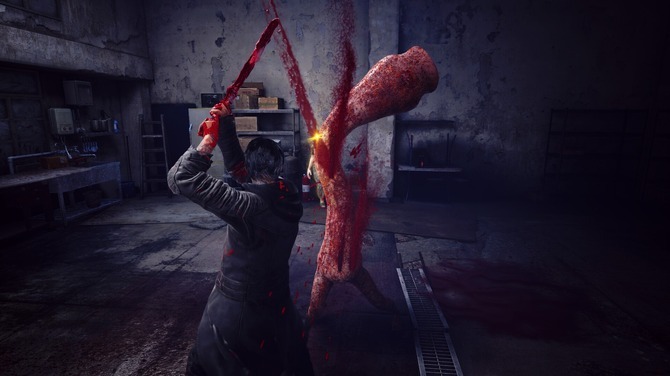
Mr. Toyama pointed out that while it’s possible to express certain things if one sets out to do so, whether or not those expressions can actually be released to the public is a separate issue. On the other hand, he noted that new ideas can sometimes emerge precisely because of social restrictions, and that there are many forms of expression that were acceptable in the past but are difficult to present today.

Mr. Kono also explained that he has his own personal limits when it comes to depictions of internal organs, gore, and bodily mutilation. He noted that even in the movie *Terrifer*, while the scenes may appear grotesque, they deliberately retain a “fake” look; since games can depict such scenes even more realistically, he said, it’s necessary to draw a line there.
What Do Creators See, and What Frightens Them?
When discussing what inspires them on a daily basis, their individual personalities became even more apparent.
Mr. Reynal explained that, as expected, he loves making things. He said his interest in electronics and toys remains unchanged to this day, and that even when facing deadlines, he can’t rest until he’s created something else.
Mr. Shibata mentioned that his hobby is watching and reading documentaries. He expressed a particular interest in the unique rules that exist only in a specific era and said he wants to sense the kind of laws that seem to exist only within a village.
Mr. Kono said he enjoys exploring mysterious spots throughout Japan. He mentioned that there are two wells dug in a mortar-shaped configuration right in Tokyo, noting that they have an atmosphere reminiscent of Junji Ito’s *Uzumaki*, and he highly recommended checking them out.

The “Raw, Unpolished Approach” Found in Indie Horror
Regarding indie horror games, there was also a humorous exchange among the four about their memories.
Mr. Reynal, while noting that he doesn’t usually play many games, explained that what’s important is “having curiosity.” Addressing the younger generation, he urged them not to become too obsessed with a single genre but to explore lesser-known titles as well.
Mr. Kono mentioned that he found an indie game where you’re attacked by a giant fish on the ocean floor to be fun, but couldn’t recall the title; Mr. Shibata also recommended a typing game where you enter ominous characters, but struggled to remember its name. In the end, Mr. Kono joked, “We’re all just a bunch of old geezers.”
*Author’s note: These are likely *Subnautica* and *Dyping Escape*.
Mr. Toyama praised indie games, noting that many are “rough around the edges but offer a unique perspective.” He cited *No Players Online* as a recent title that left a strong impression, describing it as “a tastefully crafted nightmare—something that could never actually happen.”

What the Four Consider “The Scariest Thing”
Finally, the question “What is the scariest horror genre?” was posed.
Mr. Reynal responded that, as expected, horror based on the real world is likely the scariest. He explained that reality is more terrifying than any horror story, and that the gruesome acts committed by real people are the most terrifying of all.
Mr. Toyama explained that the greatest threat to humans is “one’s own death.” He noted that precisely because we have never actually experienced death, it fuels a curiosity about the unknown, and humans are drawn to it. With the phrase “Death is the ultimate theme,” he shared his thoughts on the roots of horror.
Mr. Shibata said that even in the midst of fear, there are moments when you think, “This place feels familiar” or “I feel comfortable here.” He explained that fear and everyday life are interconnected—precisely because they are right next to each other—and that’s why he wants to create that sense within the game.
After a moment’s thought, Mr. Kono cited “making eye contact with someone about to jump off a skyscraper while you’re working there” as the scariest situation.
His second choice was “being pinned between the shells of a giant Akoya oyster while scuba diving, as the oxygen in your tank steadily runs out.”
He remarked that by thinking about why these situations feel frightening, one might uncover clues for creating horror games.
Mr. Shibata then pointed out that a scene where eyes meet also appears in *Zero*. Mr. Kono replied, “That’s the worst (laughs),” and the discussion concluded in a warm atmosphere of laughter right up until the very end.

Through this discussion, the four creators spoke about the importance of “showing” and “not showing” in horror games.
Restricting the field of view with the camera, shrouding the space in fog, leaving traces of daily life within the setting, and using sound to make the player imagine a presence off-screen—through these various techniques, players end up mentally filling in even what they “cannot see.”
The history of horror games is not just a history of how to show terrifying things, but also a history of exploring ways to make players themselves imagine that “something might be there.”
With such a long history, horror games will likely continue to take on the challenge of how to make players imagine “what they cannot see.”



