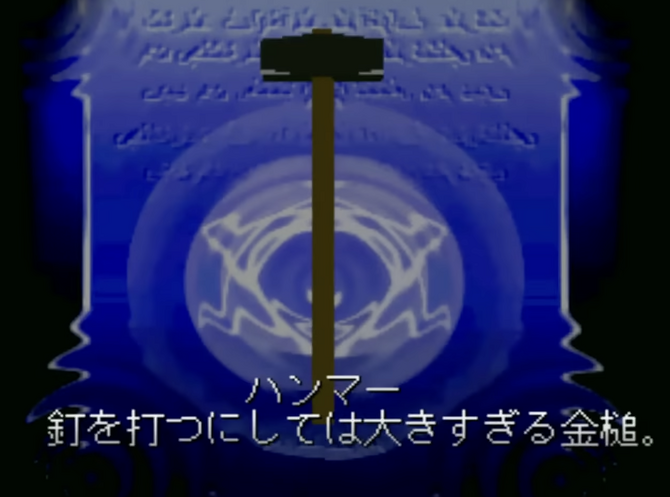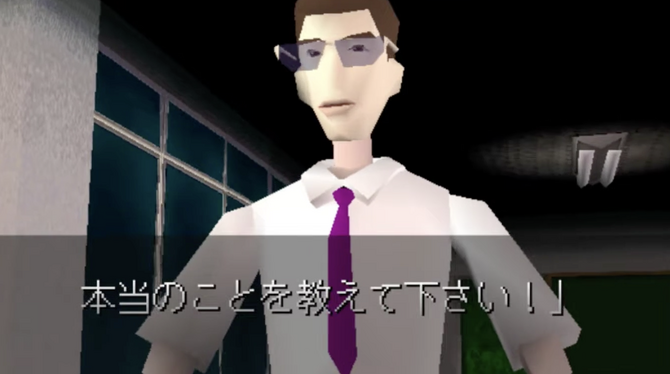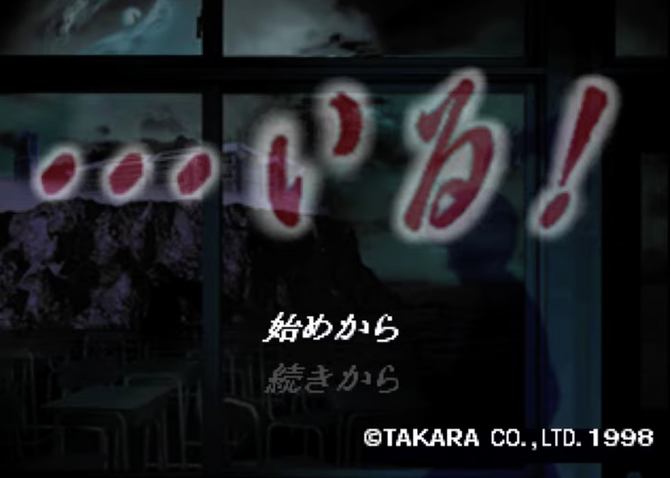
On March 26, 1998, Takara released the horror game “…Iru!” for the PlayStation 1. Set on the eve of a high school cultural festival, this first-person horror adventure game takes place within the school.
Players take on the role of the protagonist, high school student Tatsuya Inaba, and explore the school as mysterious incidents begin to occur.
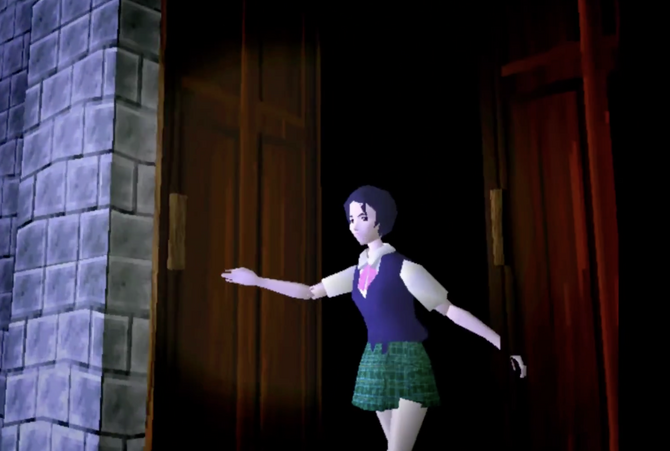
It’s true that the game received quite harsh reviews even at the time; it was heavily criticized by users for numerous shortcomings, including poor controls and clunky movement, unreasonable and unfriendly exploration with no hints, overly crude graphics, and a story lacking in explanation.
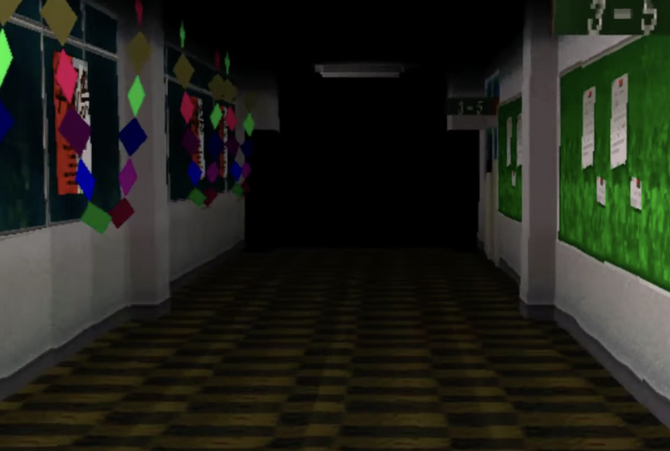
Of course, it’s easy to dismiss it as a “crap game,” but the eerie atmosphere of the school at night—the setting—its unique attempt to fuse J-Horror with the Cthulhu Mythos, and its eerie soundscapes designed to heighten fear… all of which give this game a “one-of-a-kind charm” in its horror presentation and world-building that still commands passionate support from a dedicated fan base.
In this article, we’ll look back at the school horror game “…Iru!” from both its “flaws” and its “strangely compelling aspects.”
◆ A Unique School Horror Game That Emerged During the Horror Boom Following “Resident Evil”
Following the success of *Resident Evil*, released in 1996, the number of horror games utilizing 3D graphics on the PlayStation increased rapidly. Elements such as exploration with fixed cameras, limited weapons and healing items, and battles against monsters became widespread, and it was a period when various developers were exploring horror expressions unique to next-generation consoles.
Released during this period, *…Iru!* chose as its setting not a Western-style mansion or a research facility, but a high school on a remote island.
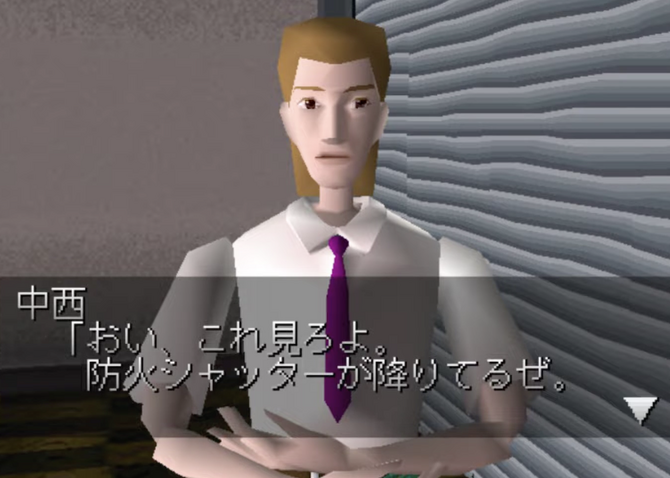
At Kirigahara High School, with the cultural festival just one day away, the protagonist, “Tatsuya Inaba,” dozes off while preparing for the event. After being woken up by “Yuma Ichinomiya,” he begins walking through the school, but a sudden power outage completely changes the situation.The story follows the students’ sudden transformation and a series of murders as the school building—which had been a place of everyday life—transforms into a dangerous space.
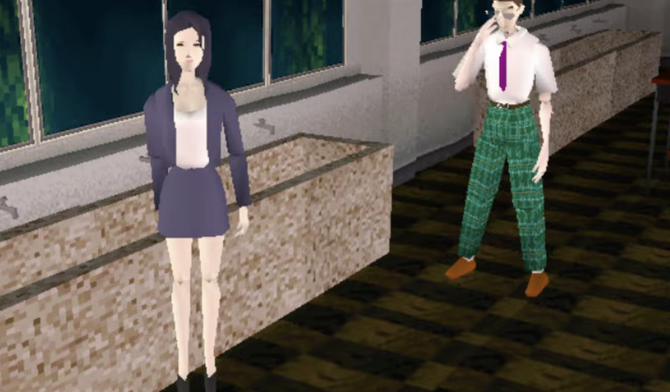
The setting of the eve of the cultural festival contributes significantly to the atmosphere of this work.
Preparation materials for the next day are left in the classrooms, and neither students nor teachers have fully gone home yet. The story begins as an extension of ordinary school life, and as the power outage serves as a turning point, familiar places transform into abnormal spaces. Consequently, the game successfully evokes a sense of eeriness in familiar settings without needing to create a special stage.
◆ Repeatedly traversing the vast school building. A game system with noticeable rough edges
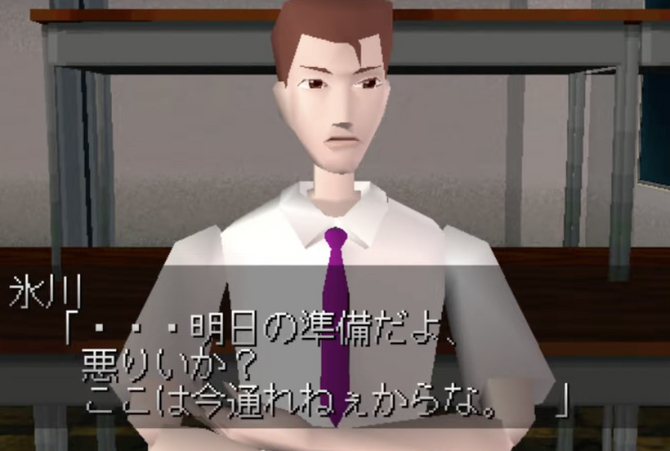
The game’s core system is an exploration-based adventure where you move through the school in a first-person perspective, advancing the story by talking to characters and examining items.
The school building consists of multiple wings and floors, and your range of movement expands as the story progresses. However, this exploration aspect is precisely where opinions on the game are most divided.
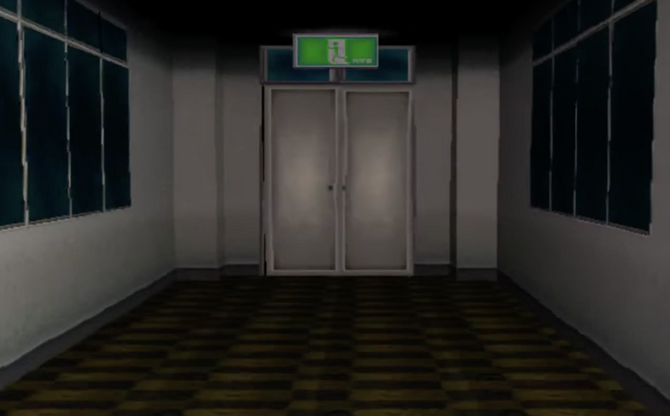
The biggest problem is that the conditions (flags) required to advance to the next event are difficult to understand.
For example, you may need to re-examine a room you’ve already visited or return to a different location after speaking with a specific character, making it easy to lose track of how to proceed on your first playthrough. Looking at an actual walkthrough, you’ll see that the story progresses by repeatedly visiting places like the library, the art supply room, and the connecting hallway, and by accumulating conversations and events.
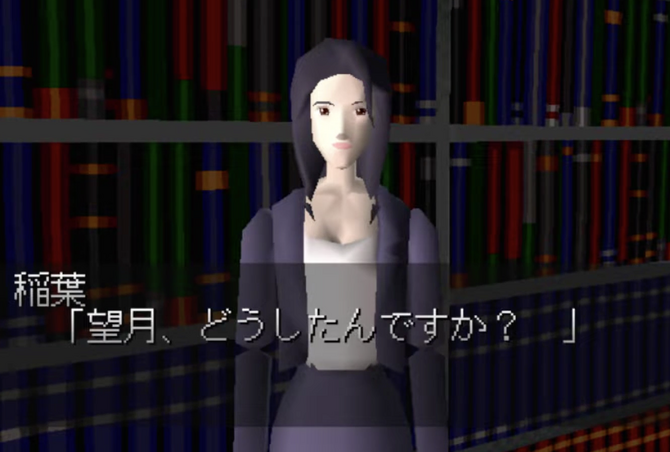
While this mechanic itself wasn’t particularly unusual for adventure games of that era, in *…Iru!*, players must physically navigate a vast 3D school building, making the back-and-forth travel quite burdensome.
Since there are no quest markers or objective indicators like in modern games, if you get stuck, you’ll have to check every room in what amounts to a brute-force search. The first-person movement also has a distinctive wobble, and when combined with prolonged exploration, this can easily make the pacing feel sluggish—a point on which there’s surely no disagreement that this was a clear weakness of the game.
◆ The Tension of “Run and Hide” Stealth Is Ruined
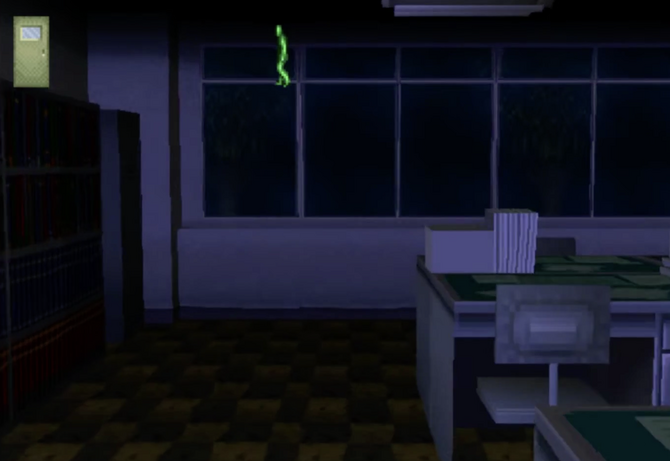
Another notable feature of this game is the system for evading enemies and hiding to avoid danger. Since the protagonist is an ordinary high school student—not someone with combat training—he cannot defeat monsters head-on using guns or knives when he encounters them. During certain events, a time limit is displayed, and you must hide in a safe location before it runs out.
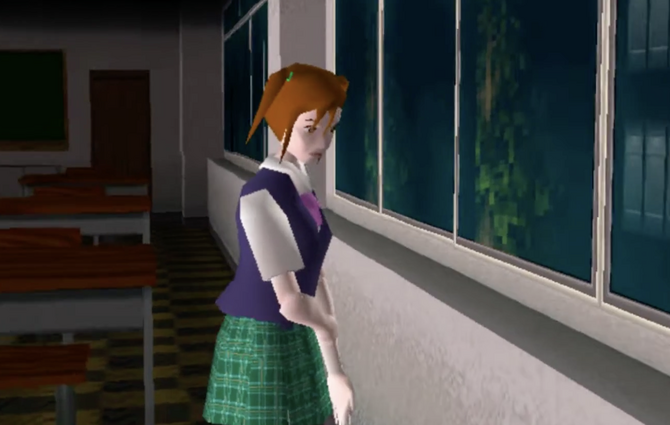
Events occur where you must hide behind cardboard boxes in the library, behind the teacher’s desk in the science lab, or inside a locker in the faculty room. Additionally, rather than simply running away from every monster, there are also scenes where you must use items obtained within the school to clear obstacles.
Whether it’s using a “Meat Block” to push aside a monster blocking your path or employing “Fragments of the Book of Avon” and “Ibn-Guhazi’s Powder” to deal with monsters, I find the structure—where knowledge and tools gained through exploration directly contribute to overcoming challenges—to be fascinating.
However, it’s truly a shame that there aren’t that many situations where stealth is actually required.
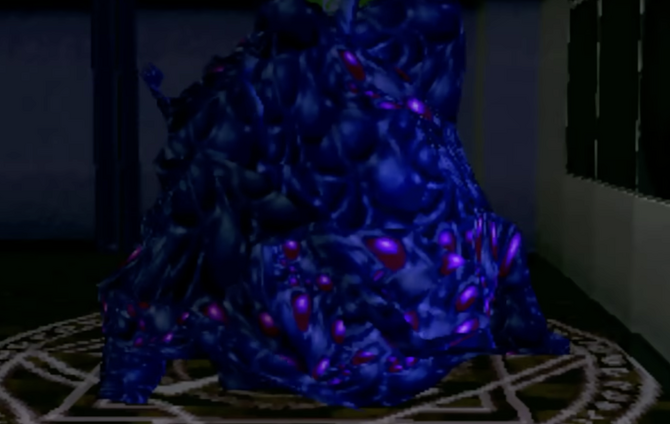
Since this isn’t a game where enemies constantly roam the school and you have to explore while avoiding them, it feels somewhat lacking if you’re expecting a “run-and-hide horror” experience by modern standards. The concept itself fits well with the game’s setting, but it’s a shame that it wasn’t developed enough to become the core of the entire game.
◆From School Ghost Stories to Cthulhu Horror: A Surprising Worldview
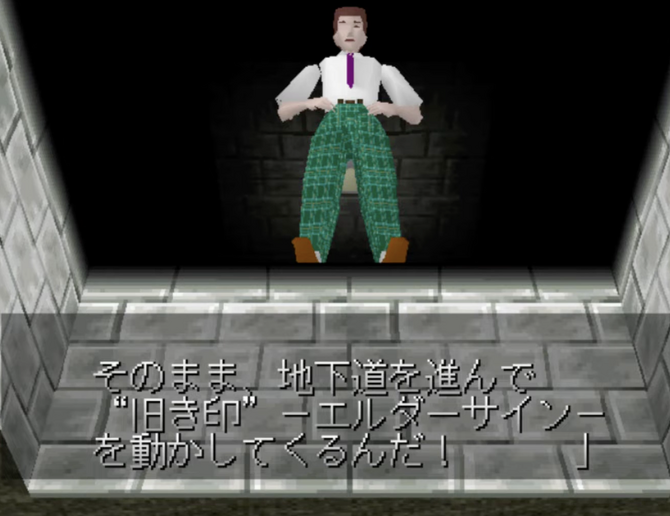
While the game system has noticeable rough edges, the unique worldview and setting are definitely worth noting.
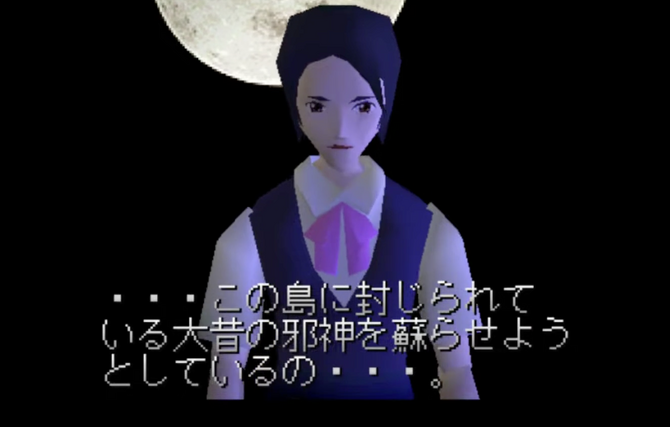
In the early stages, the story unfolds as a typical school horror tale—featuring ominous dreams, power outages, students who suddenly change, and murders occurring on campus—but as the explorable areas expand, it boldly shifts toward Cthulhu Mythos-inspired horror, with rituals and monstrous entities lurking behind the incidents.
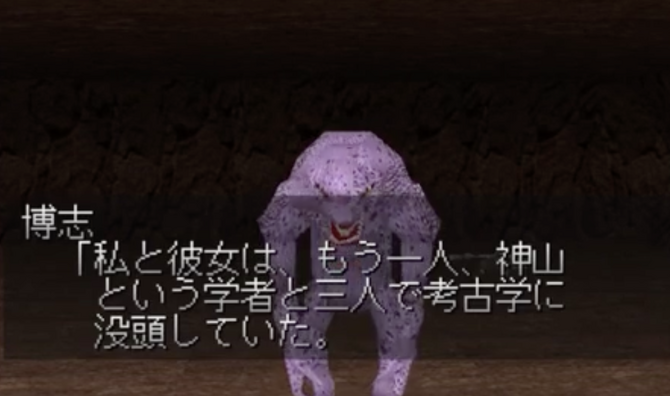
On the other hand, the lack of sufficient in-game explanations and the cramming of disparate elements into a single work do make the story feel somewhat disjointed. Nevertheless, the way the story gradually evolves from a relatable school horror into cosmic horror is a major defining feature of this title.
◆ The Unique Atmosphere of PS1 Horror, Preserved Precisely Because of the Rough Polygons
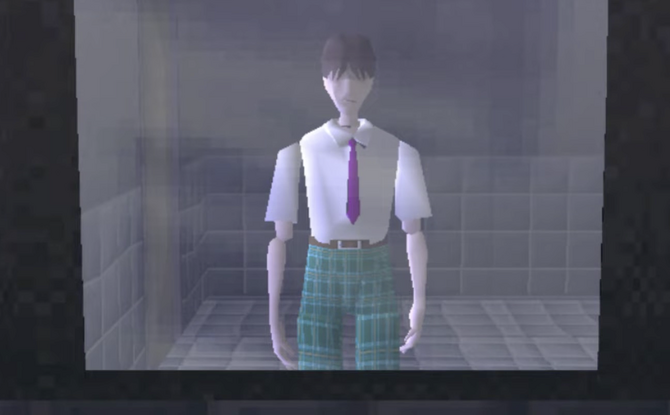
Opinions are divided regarding the quality of the graphics, which—even by the standards of the time—could hardly be called sophisticated 3D rendering. However, when viewed as a horror game, it is true that this roughness ultimately creates a unique atmosphere.
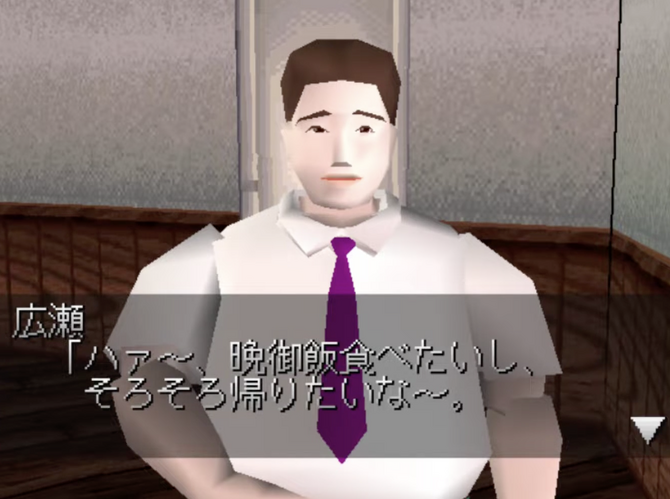
Of course, the controls and the rough graphics themselves are by no means strengths; in fact, they are flaws that make the game feel cheap. However, the combination of a school on the eve of the cultural festival, the first-person perspective, low-resolution 3D, and the distinctive BGM resulted in a uniquely unsettling atmosphere throughout the game.
◆ A Hidden, Unconventional Horror Game That Strangely Draws You In
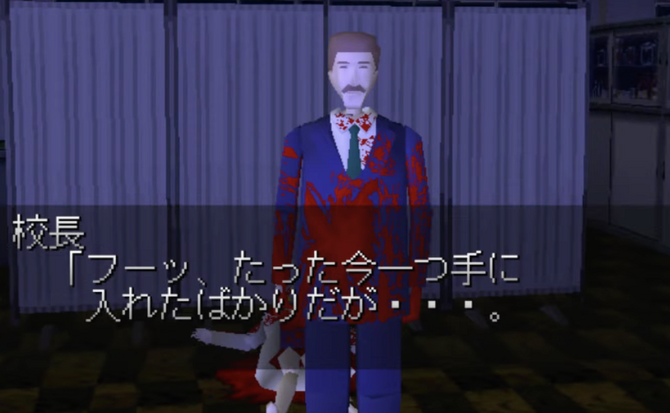
This game has various flaws—such as weak event guidance, an unfriendly game system that forces players to traverse the vast school grounds repeatedly, a lack of polish that fails to fully utilize its distinctive escape and stealth mechanics, and insufficient explanation of the story and Cthulhu Mythos setting—and there’s no doubt these are the reasons for its harsh reviews.
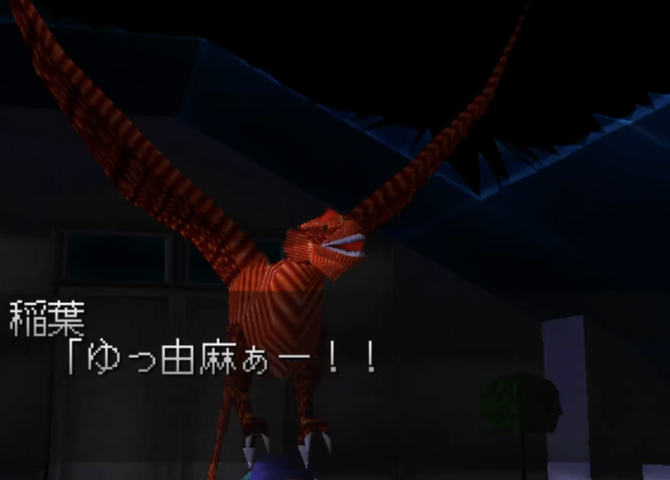
On the other hand, the game certainly possesses its own unique and compelling elements, such as the school setting, the first-person perspective used to explore the campus, the eerie visuals created by the PS1’s rough polygons, and the worldview that blends school horror with the Cthulhu Mythos.
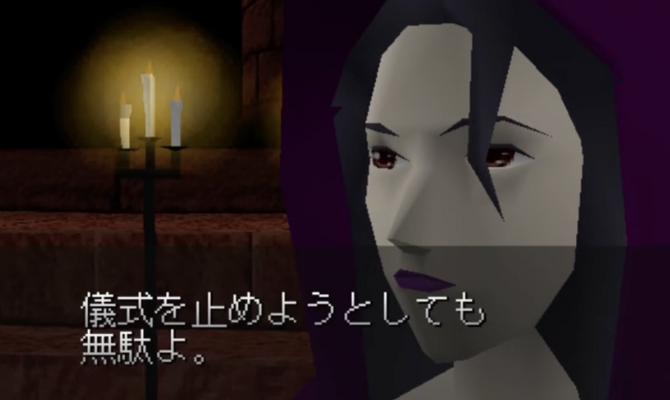
This title is a hidden gem that’s too valuable to simply dismiss as a “crap game.” Viewed as one of the many projects in which developers experimented with various ideas during the late 1990s—a time when the 3D horror genre was rapidly expanding—I believe it serves as a clear example of the trial-and-error process of game development at the time, flaws and all.