


In recent years, India’s gaming industry has continued to grow rapidly.From console games to PC and mobile, the pace of this growth is truly remarkable, and esports have also become increasingly popular. Furthermore, in recent years, a steady stream of titles developed by Indian creators and featuring Indian protagonists has been emerging. In other words, these days, the mere fact that “Indians appear in games” is no longer all that unusual.
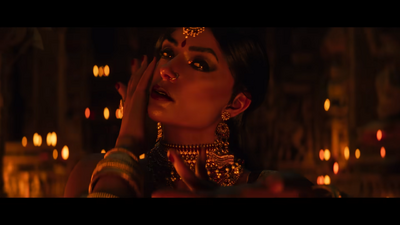
Now, setting aside titles produced in India itself for the moment, when you hear “Indian characters” appearing in games produced outside of India, who comes to mind?
In Japan, many people would probably answer “Dhalsim” from the *Street Fighter* series.
If you’re a *Street Fighter* fan, you might also recall Daran Meister, who appeared in the 1996 game *Street Fighter EX*. And in 2026, Arjun will be added to *Street Fighter 6* as a new Indian fighter.
With his burly physique and impressive mustache, his appearance is somewhat reminiscent of South Indian film action stars like Yash or Allu Arjun. It’s been 35 years since Dhalsim debuted in 1991. I’d like to say that the portrayal of Indians in video games has become much more modern… but the story isn’t quite that simple.
That’s because Arjun’s fighting style is also “yoga.” Ultimately, for Japan, the image of India is still very much tied to yoga.
So, something started to bother me. To begin with, how many Indian characters are there in fighting games, anyway…?
Surprisingly, there are quite a few Indian characters across the gaming industry
Of course, if we broaden our perspective to include all games, it’s not as if there were absolutely no characters of Indian descent or with Indian roots.
For example, the *Uncharted* series features Chloe Fraser, whose father has Indian roots. In the 2017 game *Uncharted: The Lost Legacy*, she became the protagonist and embarked on an adventure set in India that was also tied to her family’s roots.The *Overwatch* series also features Symmetra, whose real name is Satya Vaswani and who is originally from India, as well as Domina. Incidentally, Domina reflects the image of a modern Indian woman and has been well-received worldwide.
Furthermore, the *Assassin’s Creed* series features the Indian assassin Albers Mir. After first appearing in a comic book, he was chosen as the protagonist for the 2016 game *Assassin’s Creed Chronicles: India*.Set in India in 1841, the game incorporates the historical context surrounding the Sikh Kingdom and the East India Company into its narrative.
In other words, by the 2010s, Indian characters were no longer merely relegated to supporting roles; they had even become protagonists in games set against the backdrop of Indian history itself.
Furthermore, if we broaden the scope beyond “Indian” characters to include Hindu mythology, their presence becomes significantly more prominent.
Starting with the *Shin Megami Tensei* series, deities derived from Hinduism and Indian mythology—such as Shiva, Vishnu, Ganesha, and Kali—have repeatedly been adapted into characters in Japanese games.You can also find names and motifs derived from Indian culture and mythology in series like *Final Fantasy*. In fact, there may be quite a few of them overall.
Why are there so few in fighting games??
What’s strange is that fighting games—which have evolved with the direct exchange of blows between players from around the world as their defining feature—have so few Indian characters.
Series like *Tekken*, *The King of Fighters*, and *Virtua Fighter* all have histories spanning over 30 years. Over that time, they’ve introduced a vast number of fighters from all over the world—including Japan, China, South Korea, the United States, Brazil, Mexico, France, Italy, and Russia.However, when it comes to characters from India, there are surprisingly few major playable characters to be found.
If we go back to the 1990s, this oddity becomes even more apparent. Thanks to the global success of *Street Fighter II*, the concept of “gathering unique fighters from around the world” became a staple of fighting games.
Data East’s *Fighters History* also featured fighters from various countries, including Japan, China, the United States, the United Kingdom, Thailand, France, and Italy. In the sequel, the range of origins expanded to include South Korea and even Kenya. Yet there were still no Indian fighters.
An even more symbolic example is *World Heroes*.True to its title, this game features fighters modeled after heroes and historical figures from around the world, including bold reinterpretations of characters such as Hattori Hanzō, Joan of Arc, Rasputin, and Genghis Khan. Most notably, even though India appears as a battle stage, no Indian fighters were included as playable characters.
India is included as a stage, but no Indians fight. This situation persisted for a long time.
The Problem of “India” Themes but No “Indian” Characters
A similar phenomenon can be observed in the *Mortal Kombat* series, whose latest film was just released in May.In that series, characters like Rain from *Mortal Kombat 11* use the “katar”—a dagger originating from the Indian subcontinent—as a weapon, and their backstories as demigods who control water and lightning, along with their visuals, strongly evoke the mythological world of South Asia, including Indra.
In addition, there are names and designs that evoke South Asian and Hindu mythology, so it’s clear that these elements were intentionally incorporated. That said, characters like the four-armed Goro and Shiva belong to the Shokan race, which exists in a fictional world. They are not humans with roots in the real-world India.
It’s important to keep these distinctions in mind. Games have long featured a wealth of “Indian-inspired” elements.
Yoga, Hindu mythology, deities, temples, elephants, snakes, mystical philosophies… However, using these as motifs in a game is not the same as portraying a single modern Indian person as a character.
In other words, “India” has existed in video games for many years. Yet “Indians” have been surprisingly few and far between.
The Few Indian Fighters
That said, it’s not as if there were absolutely no Indian fighters besides Dhalsim and Dalan.
If we broaden our scope to include lesser-known titles, we can find several examples. The 2002 fighting game *Rage of the Dragons* features Abbo Rao, a giant fighter whose backstory places him as being from India.
Furthermore, in 2023, *Pocket Bravery*, developed by Brazil’s Statera Studio, introduced Marika Sharma, and the following year, *Diesel Legacy: The Brazen Age* featured Naira—though her exact origin is unclear since she hails from a fictional village. Both are interesting figures in that they are female fighters set against an Indian backdrop.If we expand our view to include indie games, as in these two examples, there are likely more, but it’s clear that Indian characters have been an extremely small minority in major fighting games that enjoy global popularity.
Dhalsim: The Image of the Strongest
Amid this landscape, only Dhalsim’s name stood out, and for over 30 years, the perception that “an Indian in a fighting game equals Dhalsim” has persisted.
Created in 1991, the “Indian” character Dhalsim was given easily recognizable cultural symbols so that players could instantly understand which country he represented.
For China, there’s Chun-Li in her cheongsam. For the Soviet Union, there’s the giant wrestler Zangief. For the United States, there’s the soldier Guile. For Japan, there’s Ryu in his karate gi and the sumo wrestler Edmond Honda. And for India, it’s yoga—visually, the character also draws inspiration from Gandhi.
Dhalsim has a slender build, wears a skull necklace, can extend his arms and legs at will, and breathes fire. Of course, this is not a faithful recreation of real-life yoga.
Dhalsim was an extremely stylized representation of the image of “mysterious India” that was prevalent abroad at the time, transformed into a fighting game character. However, that character design proved to be an overwhelming success. Dhalsim became a globally popular character and, in turn, ended up shaping the very image of “an Indian character in a video game.”
However, the way Dhalsim is viewed from the Indian perspective is slightly different. It’s important to remember that being a world-famous “Indian character” is a separate issue from whether Indians themselves accept him as a character that represents them.
There have been Indian players and commentators who have criticized Dhalsim’s design as a stereotypical portrayal of India from an outside perspective. This single character is packed to the brim with elements that foreigners consider “typically Indian.”
The casting of Vidyut Jammwal—known as a handsome actor—as Dhalsim in *Street Fighter: The Movie*, set for release on October 16, may have been a small act of resistance against these stereotypes.
Of course, it would be wrong to generalize and say that “all Indians hate Dhalsim.” He is also beloved as a popular character who has appeared in *Street Fighter* for many years, and opinions among Indian players are not uniform.
Nevertheless, it is significant that Dhalsim has been the subject of criticism not as a realistic portrayal of an Indian person, but as a character symbolizing an India imagined from abroad.
What made this sense of dissonance even greater was the fact that, aside from Dhalsim, there were virtually no other Indian video game characters with global recognition.
To begin with, the fighting game genre itself is a medium that lends itself very well to stereotypes. It must be possible for players to understand “which country this character is from and what kind of fighter they are” just by glancing at the screen for a few seconds.
That’s why Japanese characters became karateka or sumo wrestlers, Chinese characters became martial artists, and Russian characters became giant wrestlers. In a sense, they’re all stereotypes.
However, even if there were 100 Japanese characters and one of them was a sumo wrestler, that wouldn’t mean “Japanese people are sumo wrestlers.”However, the situation changes if there is only one Indian character. If that one character practices yoga, stretches out his limbs, and breathes fire, that becomes the very “image of an Indian” in the game. In other words, the problem isn’t just the existence of stereotypical characters. It’s that there were virtually no alternatives to those stereotypes.
What does “Indian” even mean in the first place?
What makes it even more difficult is that it’s inherently impossible to represent “Indians” with just one character. India is a multi-ethnic, multilingual, and multi-religious nation.
Hindi is not the only language in India. There are numerous languages, including Tamil, Telugu, Bengali, Malayalam, Marathi, Punjabi, and Kannada. Depending on the region, the cuisine, clothing, music, and cinema—as well as the culture and the way society has developed—are completely different.
Even between North and South India alone, the cultural differences are vast, and if you broaden your perspective to include Northeast India—which encompasses states like Nagaland and Manipur—even the vague image of “what an Indian looks like” that many Japanese people hold no longer holds true. There are Indians, like Thames Clover, whose facial features could easily pass for those of a Japanese person.
Nevertheless, for many years, international pop culture has compressed the vast and complex country of India into just a few symbols.
Yoga, curry, turbans, elephants, Hinduism, and “sing-and-dance movies.” Japan is no exception. In fact, it may be precisely because Japan held such strong stereotypes about India that a Japanese game company in 1991 was able, in a sense, to create Dhalsim without hesitation.
Rather than pondering “What is an Indian?”, they created a character based on the instantly recognizable symbol that “India means yoga.” It’s probably more accurate to view this not as malice, but as a direct reflection of the gap between game design at the time and cross-cultural understanding.
Daran Meister: Presenting “India Beyond Yoga”
That is precisely why Daran Meister was such an important figure. Although he is also Indian, he is the polar opposite of Dhalsim. He is not a slender yogi, but a wrestler with a massive physique—emphasizing physicality over spirituality.He relied on throws rather than long-range attacks. Initially, his goal was to defeat Zangief to become the strongest wrestler, but the two later became close friends. Although he didn’t appear in *Street Fighter V*, he was mentioned in a cutscene’s dialogue (presumably referring to Darlan).
While his move names and other elements still used easily recognizable Indian symbols, he was a character who broke away from the “Indian = yoga” stereotype established by Dhalsim.
However, Daran remained strictly a character in the *Street Fighter EX* series and never became a global “representative of India” on par with Dhalsim.
35 Years Later: The Birth of a New Indian Fighter, “Arjun”
Then, in 2026, Arjun made his debut in *Street Fighter 6*. What’s interesting here is the background behind Arjun’s creation.
In an interview, *Street Fighter 6* director Takayuki Nakayama touched on the growing number of Indian players and the fact that there hadn’t been many characters of Indian origin in the series. This is highly symbolic.
The 1991 Dhalsim was an Indian character created by a Japanese game company to represent the “world.” In contrast, the 2026 Arjun is an Indian character created after the development team recognized that the number of players actually enjoying *Street Fighter* in India is on the rise.
It’s not just character design that has changed over the past 35 years. The relationship between the gaming industry and India itself has changed.
So, has Arjun helped *Street Fighter* break free from stereotypical portrayals of Indians? …Honestly, I can’t say that’s the case.
When I first saw Arjun, the first thing that came to mind was an action star from South Indian cinema. This is clearly due to the strong influence of the “Baahubali” series and “RRR.”
The image of the “mass hero”—with a burly physique, a stately mustache, and the overwhelming power to mow down enemies—has become one of the new symbols that people abroad associate with Indian cinema, and Arjun’s visuals align with that image in a strangely fitting way.
However, it is important to note that Arjun himself is not specifically portrayed as being from South India. According to the currently revealed backstory, Arjun is described as being “from India.” In other words, it cannot be explained that “he was designed in the style of a South Indian film simply because he is from South India.”
Rather, it appears that the “mass hero” archetype from South Indian cinema is being used as a new symbol representing Indians as a whole—as an image of “modern India” that has become more easily recognizable to international audiences.
Of course, Capcom has not publicly stated that Arjun was modeled after any specific South Indian film or actor. Therefore, this is merely a cultural similarity that the author perceives based on Arjun’s visuals. However, the very fact that “it appears that way” is what makes it interesting.
From “Mystical India” to “South Indian Cinema-Style India”
I feel that the 35-year evolution from Dhalsim to Arjun is condensed right here.
Dhalsim was created based on the 20th-century stereotypes of India: “yoga, ascetic monks, and mystical philosophy.” Arjun embodies the image of India from the era when South Indian cinema gained worldwide recognition: “a powerful physique, a mustache, and spectacular action.”
In other words, the stereotypes haven’t disappeared. The nature of the stereotypes has changed. Moreover, the old stereotypes haven’t vanished entirely.
This is because Arjun’s fighting style is also based on yoga. The developers themselves have spoken about how, when creating Arjun, they were subconsciously influenced by the notion that “India equals yoga.” In other words, when a Japanese game developer conceived a new Indian fighter 35 years later, they ultimately returned to “yoga” once again.
However, for modern Indians, depicting yoga as a fighting style is not common. The yoga that is generally known today is a form that has fused with elements of gymnastics and fitness—primarily through Western influence—rather than being purely Indian, and the reality is that there are very few Indian films that use yoga as a combat style.Instead, combat styles modeled after India’s indigenous martial arts—such as Kalaripayattu and Adimrai—are overwhelmingly more common. In other words, even though there should be plenty of options to choose from, the very fact that they remain fixated on “yoga” suggests that the industry hasn’t really kept up with the times.
The Problem of “Modern, Stylish Indians” Not Existing in the Gaming World
Of course, modern India is home to a truly diverse range of people. There are young people working at IT companies in Bengaluru, and others who go out to clubs in Mumbai or Delhi. Some listen to hip-hop and R&B and enjoy street fashion and sneakers.
It’s not uncommon to find young people who share culture in real time with other major cities around the world—whether through independent music, fashion, art, games, or anime. Naturally, this is just one facet of India, a country with a population of over 1.4 billion.
However, when it comes to Indians in Japanese video games, these “Indians who don’t seem particularly Indian” rarely take center stage.
In 1991, it was the “mystical monk practicing yoga.” In 2026, it’s the “burly man reminiscent of a South Indian film action hero who uses yoga.” Their appearance has certainly changed significantly.
However, the very concept of burdening a character with a multitude of symbols that allow a foreigner to instantly recognize them as “Indian” does not seem to have changed all that much.
That’s why it feels off to simply position Arjun as an “update to the modern image of an Indian.” Rather, it makes more sense to think that the range of stereotypes about Indians, as seen from Japan, has shifted.
Next, I’d love to see a modern Indian female character—or other portrayals of Indians that differ from what we’ve seen so far…
