


In 1996, Sega’s arcade 3D fighting game *Last Bronx: Tokyo Outskirts* was released.
This weapon-based fighting game, which utilized the “MODEL2” arcade board, featured young fighters wielding nunchucks, truncheons, wooden swords, tonfas, and hammers as they battled against each other in 1990s Tokyo.
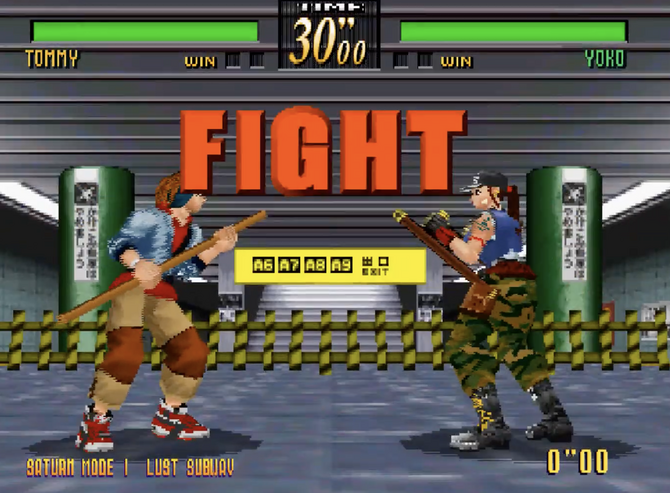
At the time, Sega had already established the *Virtua Fighter* series as the leading 3D fighting game franchise.
However, *Last Bronx* did not aim to be just another “ordinary” fighting game in that vein; rather, it sought to be a fighting game that served as an antithesis to the “mainstream.”
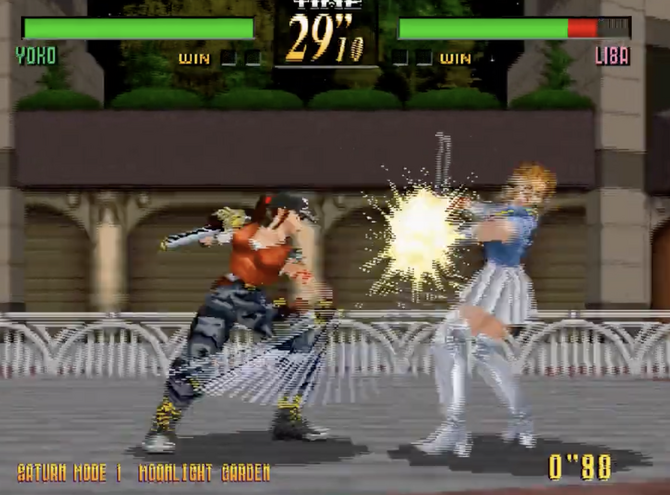
Featuring “young people living on the streets”—not professional fighters—as its protagonists, the game offered a groundbreaking worldview and setting that combined cityscapes reminiscent of real-life Tokyo, street fashion, and weapon-based brawls.
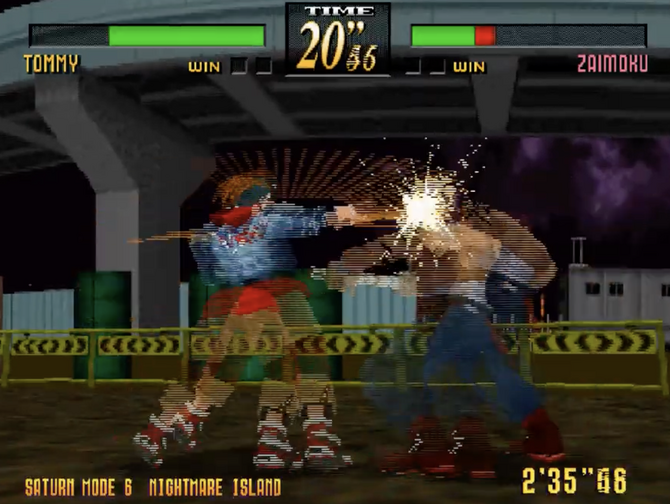
In this article, I’d like to look back on the timeless appeal of this game, which still offers thrilling strategic gameplay even 30 years later.
◆From the Arcade to the Saturn
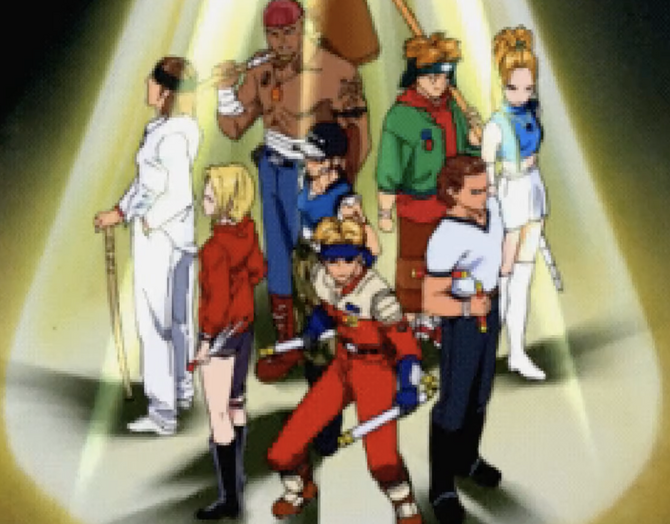
The original arcade version was released in 1996. It depicted the streets of Tokyo using 3D graphics powered by the MODEL 2, and established a weapon-based fighting system based on a three-button control scheme (P, K, G).
The core gameplay involves advancing through the ranks with a roster of eight characters to ultimately face “Red Eye,” a key figure in the story. Additionally, an Extra Stage was included where, upon meeting certain conditions, players could battle an “alter ego” that differed from their usual self.
The following year, in August 1997, the Sega Saturn version was released. In addition to “Arcade Mode,” which recreated the arcade experience, the home version included a new “Saturn Mode.” In this mode, the lineup of opponents changed: Red Eye was not necessarily the final boss, and instead, a rival with a personal history tied to each character awaited the player at the end.
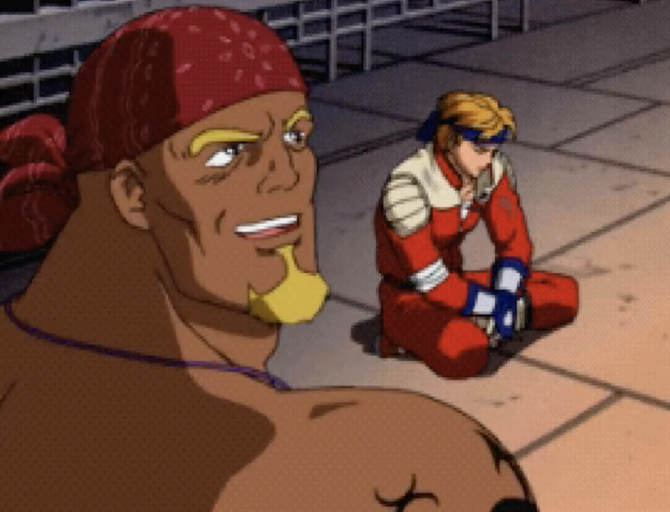
Furthermore, character-specific animated endings were added, delving deeper into the characters’ motivations and relationships than in the arcade version. Players could view footage of their completed runs in “Movie Mode.” Additional modes typical of home consoles were also included, such as Survival, Time Attack, and “Watch Mode,” which allowed players to watch CPU-versus-CPU matches.
The Japanese version also included a “Special Disc” separate from the main game. In addition to a practice mode, it featured tutorials using the characters’ voice lines, profiles, and more. This was not merely a port of the arcade version to the home console, but a highly ambitious package that complemented everything from gameplay to the characters’ appeal.
◆1990s Tokyo Itself Became the “Duel Ring”
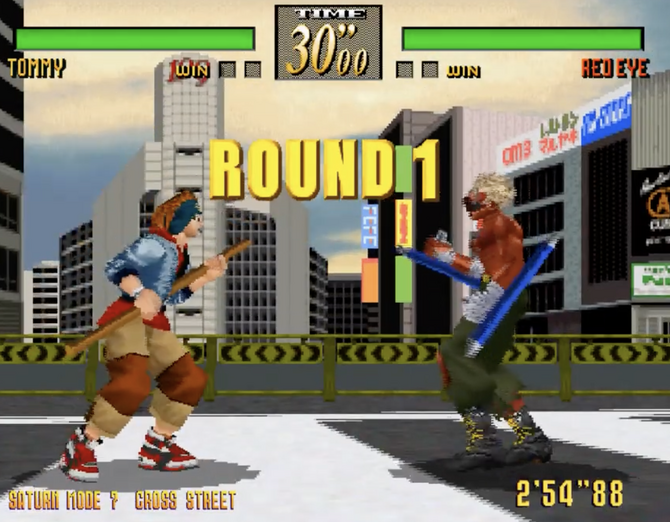
One of the game’s defining features is that it is set in “1990s Tokyo,” a setting that truly sets it apart from other fighting games.
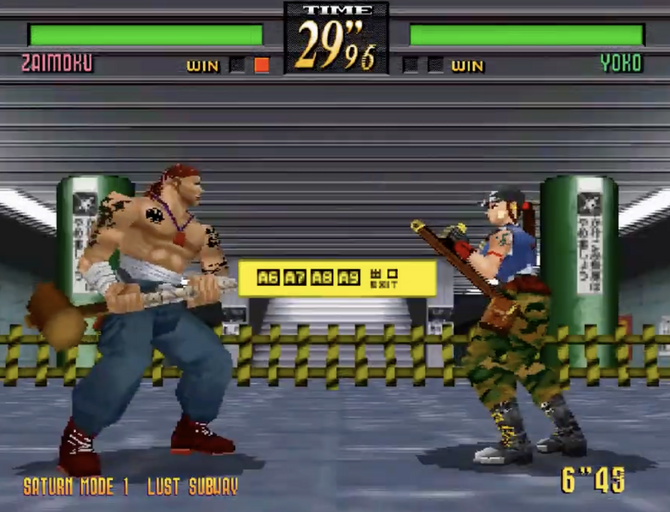
Battles unfold in urban spaces that feel close to everyday life—such as bustling downtown areas, street corners surrounded by skyscrapers, the subway, and the Tokyo Bay area. Stages modeled after actual landscapes also appear, making “Tokyo” itself a defining characteristic of the game.
To briefly summarize the plot: At the end of the Showa era, the “First Tokyo Conflict” broke out among young people. Even the legendary team “SOUL CREW,” which had brought the conflict to an end, split up and disbanded following the mysterious death of their leader.With the balance of power in Tokyo disrupted, the “Second Tokyo Conflict” begins anew, and the leaders of each group receive invitations from “RED RUM” to participate in underground matches—that is the premise of the story.
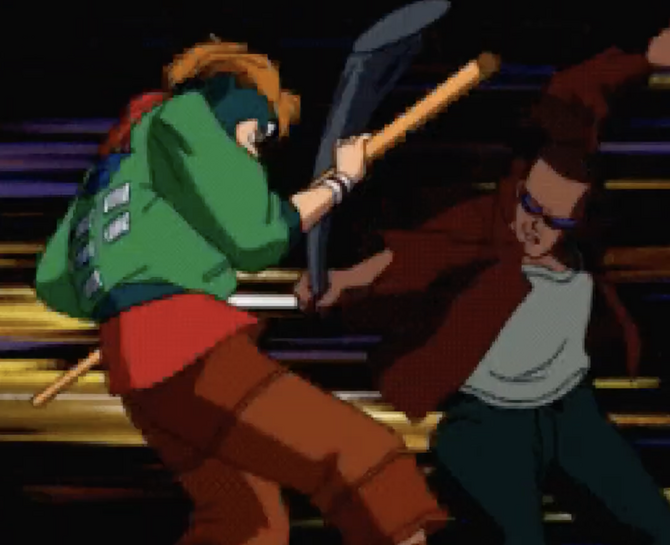
Although it’s a far-fetched fictional setting, what’s interesting is that this fictional Tokyo doesn’t seem entirely unrelated to the reality of that era.
As I’m sure you all know, “bōsōzoku” (motorcycle gangs) were one of the symbols of “delinquent groups” in Japan up until the 1980s. They have long been involved in conflicts between groups and are also tied to so-called “local” communities and school social circles.

The “SOUL CREW,” to which Yusaku Kudo—the protagonist of *Last Bronx*—belonged, is also portrayed as a “legendary biker gang.”
Groups that emerged from this, such as “NEO SOUL” and “Shinjuku MAD,” still strongly retain the naming conventions and organizational structures reminiscent of this bōsōzoku culture.
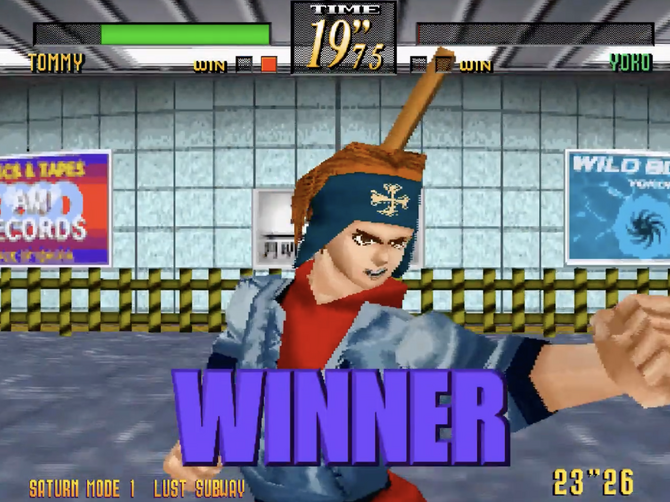
On the other hand, around 1996—when the game was released—youth culture in Tokyo was taking on a slightly different character.
In the early ’90s, particularly in bustling districts like Shibuya, groups of young people known as “Chima” began to stand out. Generally, “Chima” refers to young people who gathered in “teams” in entertainment districts and arcades; Shibuya Center Street was known as a prime example of such a spot.
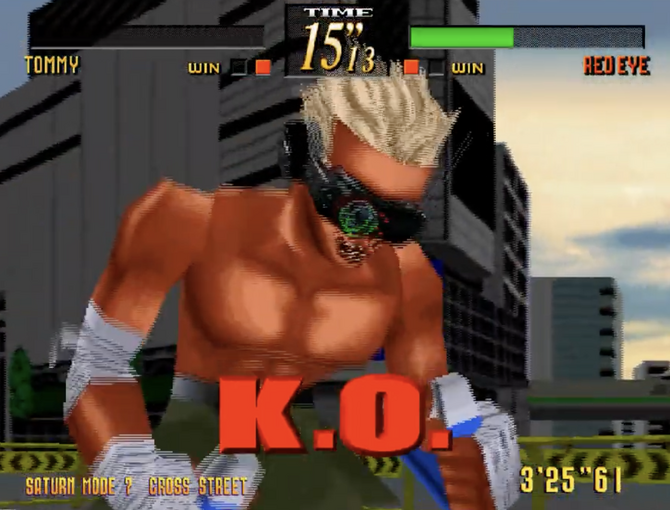
As an emerging force, the “chima” represented an urban delinquent subculture distinct from the traditional bōsōzoku.
For example, it was a completely new form of delinquent culture that intertwined fashion, music (particularly club music like hip-hop and reggae), and nightlife in entertainment districts, with “which neighborhood you were from and which team you belonged to” becoming the defining aspects of one’s identity.
In other words, from the early to mid-1990s, while remnants of the old bōsōzoku culture persisted, “chīma” and new street fashion emerged, centered around Shibuya—a period when the very image of the “delinquent” was changing.
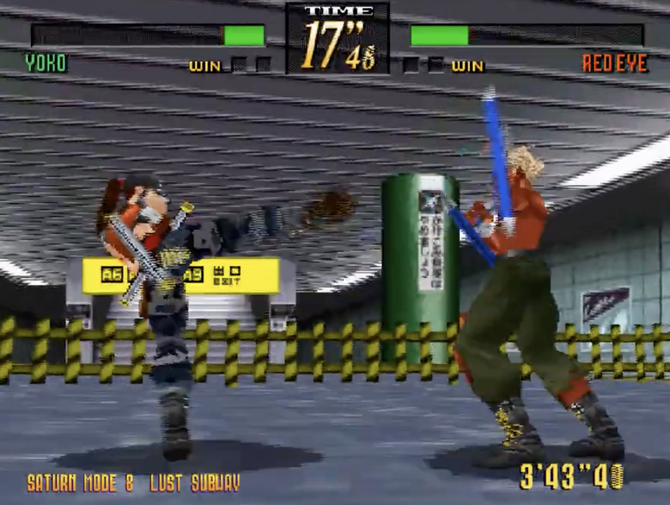
And the characters in this work are right at that boundary. For example, Yusaku Kudo still carries the culture of a biker gang, while Jo Inagaki represents Shinjuku, Toru Kurosawa represents Roppongi, and Saburo Zaime represents Katsushika—each embodies a different neighborhood and team.
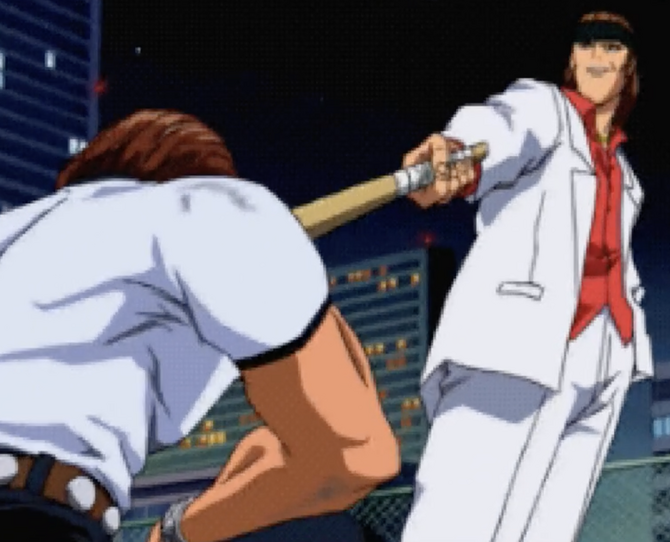
Furthermore, the characters’ fashion isn’t limited to “Riders”; it’s a mix of diverse street styles—including skaters, punks, and Americana—and the way they assert their own styles creates a very realistic overlap with Tokyo at that time, when delinquent culture was shifting from bōsōzoku to “chima.”
In this way, *Last Bronx* captured the atmosphere of an era where 1980s-style bōsōzoku culture and 1990s-style chima culture were intertwined. While boldly exaggerating the action in true fighting-game fashion, the game portrayed Tokyo itself as a “dueling ring.”
◆Three-section staff, nunchaku, wooden sword—the unique tactics born of “weapon-based combat”
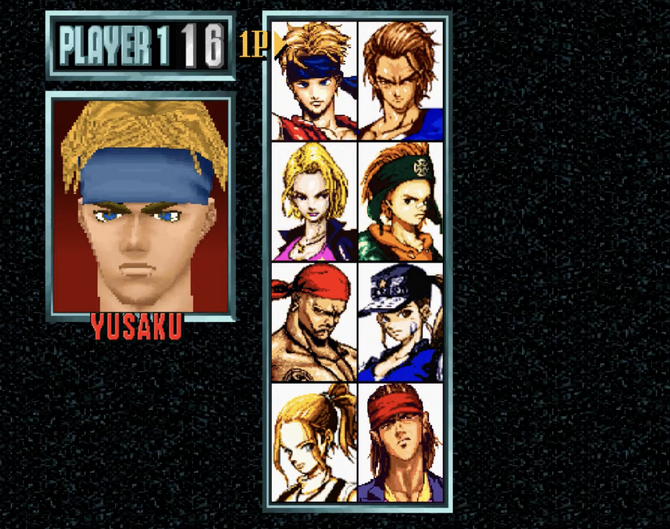
The game’s core system is a fairly simple three-button setup—using P (Punch/Weapon Attack), K (Kick), and G (Guard)—just like the *Virtua Fighter* series.
Unlike classic fighting games such as *Street Fighter*, there is no gauge to build up for special moves, nor are there “Special Arts” that can turn the tide of a match with a single strike.
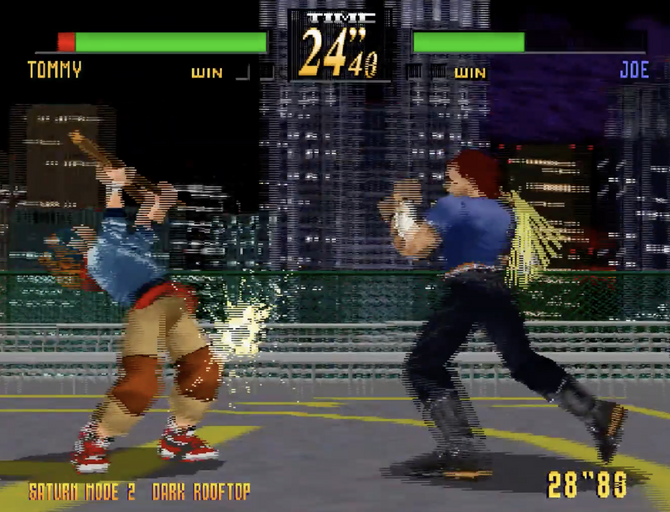
The game’s most distinctive feature is that all characters fight using weapons such as wooden swords, nunchucks, tonfas, and hammers. Coincidentally, Namco (now Bandai Namco Entertainment) released the weapon-based fighting action game *Soul Edge* that same year.
Additionally, key features of the game system include “Attack Cancel,” which allows you to stop a strike mid-motion, and “Duck,” which lets you lower your stance to close in on your opponent.
You use a “dive” to get inside the guard of an opponent swinging a large weapon. Then, you feign a full combo only to cancel it, throwing the opponent while they’re still reeling. While it’s a flashy weapon-based fighting game, the core of the gameplay lies in reading your opponent’s reactions and outmaneuvering them.
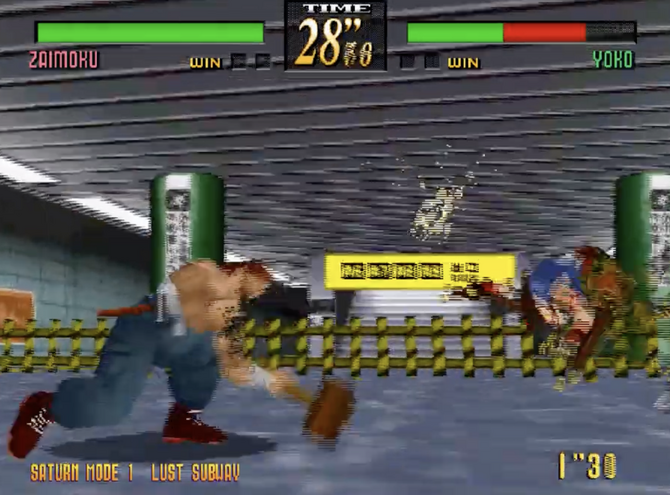
And what catches the eye most of all is that all eight playable characters wield different weapons.
The protagonist, Yusaku Kudo, uses a three-section staff; Jo Inagaki uses nunchaku; Saburo Zaime uses a hammer; and Toru Kurosawa uses a wooden sword—it’s fascinating how each weapon not only looks different but also influences their actual fighting styles.
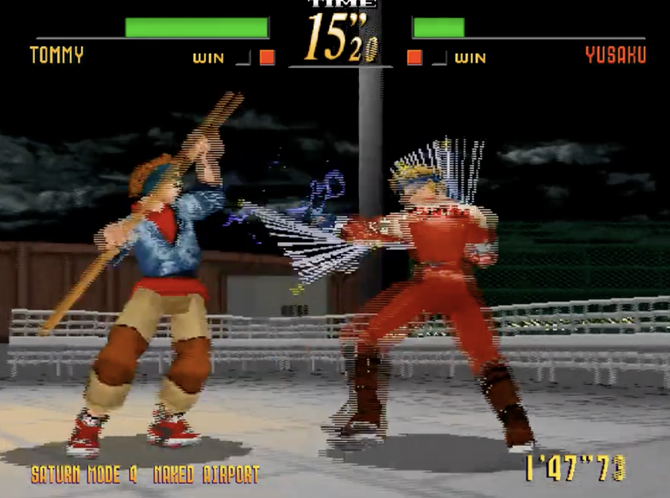
Yusaku’s three-section staff allows him to attack from multiple ranges by leveraging its reach; he’s the type who keeps his opponent on the move while aiming for mid- and low-level strikes. While his moves have the bold, dynamic flair befitting a protagonist, his combat actually relies heavily on maintaining proper distance.
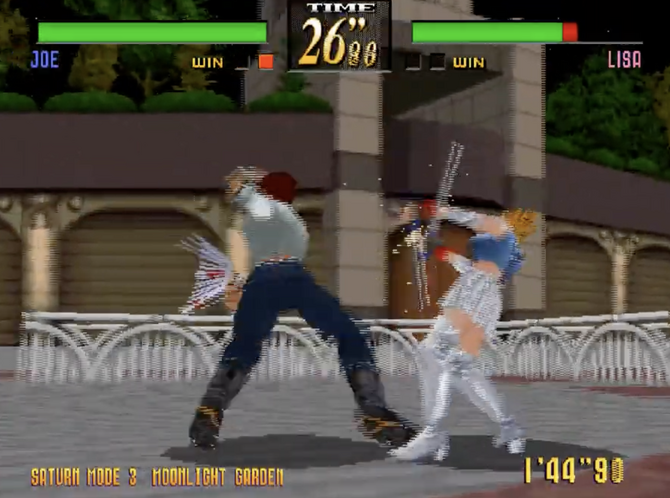
In contrast, Takashi’s nunchaku excels at overwhelming opponents with rapid-fire strikes at close range. His strength lies in a fighting style that keeps opponents guessing—he strategically decides whether to continue combo attacks or cancel them mid-strike, making it difficult to predict his timing.
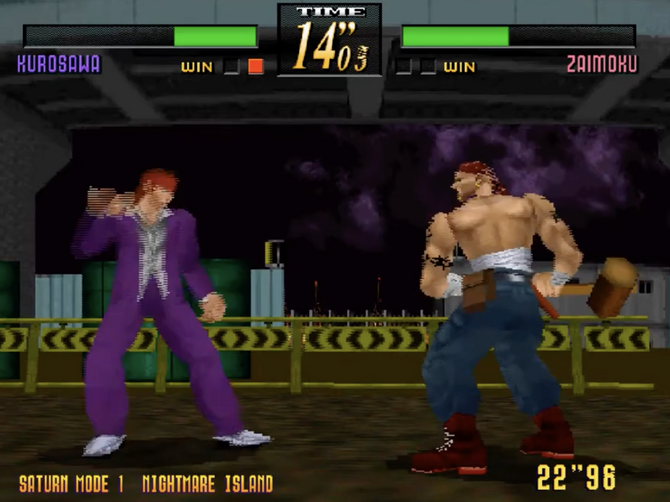
Kurosawa, who wields a wooden sword, is a classic power-type fighter. His attacks have wide swings, but once he knocks an opponent off balance, he can deal massive damage. Rather than a refined stance like in kendo, his rough-and-tumble motions—where he slams his body along with the wooden sword—fit perfectly with his character as a dangerous figure leading the “Roppongi Beast Club.”
A three-section staff emphasizes range; nunchaku, combos; tonfa, speed; and a wooden sword or hammer, the weight of a single blow. The differences in weapons directly translate into differences in character personality and gameplay feel. I think this straightforwardness is a major appeal of *Last Bronx*.
◆*Last Bronx*: Still a Hit 30 Years Later
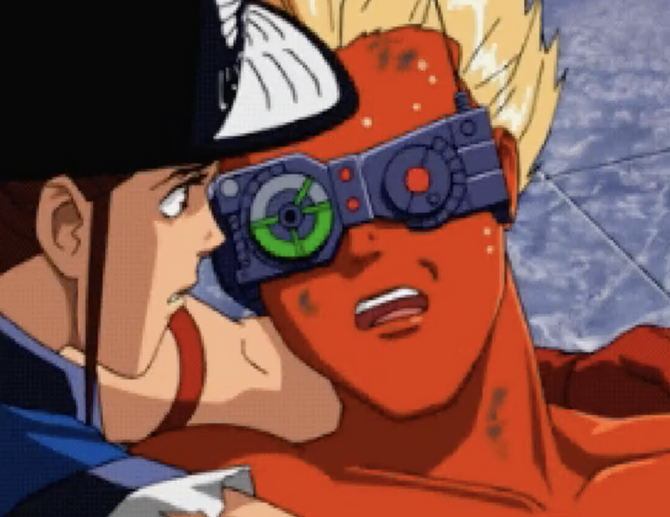
It’s been roughly 30 years since its 1996 release. Playing *Last Bronx* today, you can’t help but feel the gap in time due to the fashion and sensibilities that are so distinctly ’90s. However, the game’s inherent fun hasn’t aged a bit.
There’s the sheer excitement of wielding weapons like the three-section staff, nunchucks, wooden swords, and hammers. At the same time, the intensity of the battles—born from simple three-button controls—features strategic back-and-forth where players read each other’s moves through attack cancels and “dodges”—a dynamic unique to this game.
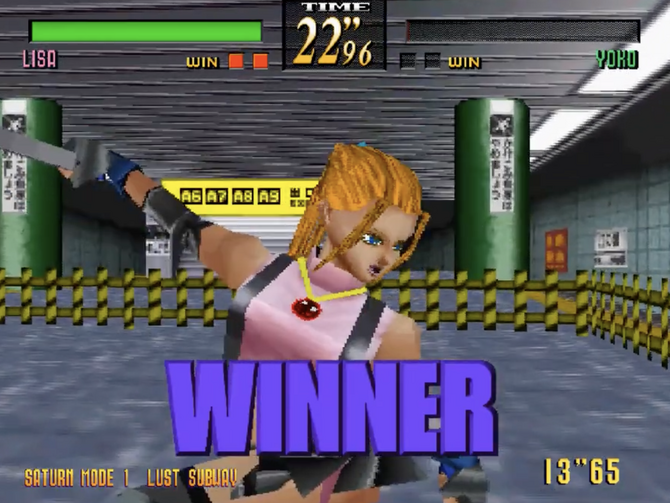
And perhaps the most captivating aspect of all is the depiction of “Tokyo from that era” captured on screen. Against the backdrop of city streets reminiscent of Shibuya and Harajuku, young people dressed in the styles of skaters, bikers, and punks stand ready with their weapons, fighting with their lives on the line as they defend the pride of their teams—a sight that truly stirs the heart.
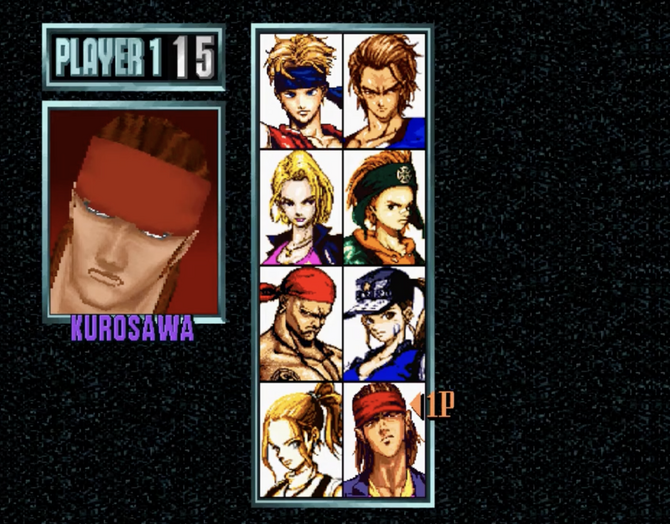
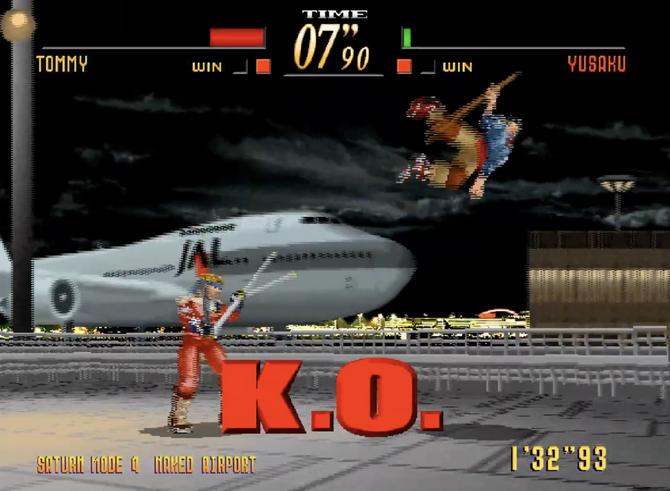
It’s not just fun because it’s old—it’s still cool, rough, and intense even when played today. *Last Bronx: Tokyo Outskirts* is a 3D fighting game that brings the energy of 1990s Sega right into the present.




