


Here is our report from the media briefing held on October 1 for DANGEN’s new roguelike RPG, *LitGirls: Literary Labyrinth*. Please note that since this briefing covered not only the new title but also a new version of *Tower and the Girl*, this article combines information on both titles into a single report.
Update 4 for *Tower and the Girl* Introduces “Mami,” a Curvy and Voluptuous New Character!
Before the presentation on *LitGirls: Literary Labyrinth*, the developers discussed Update 4, the new version of *Turrets and the Girl*. This new version introduces a new character named “Mami.”
She is a busty support-type character who wears a tight-fitting bodysuit.Mami’s defining feature is the attack drone “B.O.I.N 55,” which she can use as a special skill. Not only can she deploy the attack drone to boost firepower in addition to her turret attacks, but she can also level up the generators surrounding her turret.
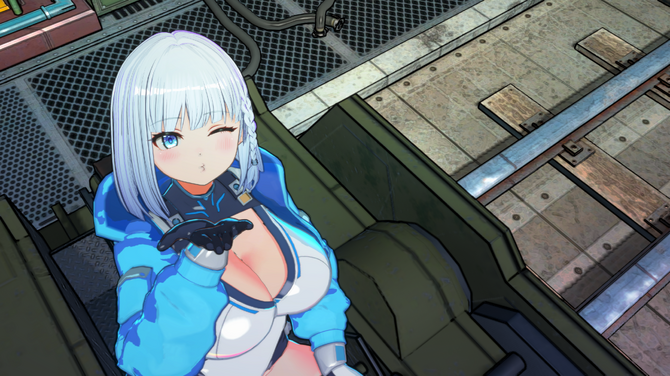


With these abilities, Mami requires a different combat style than Girl or Raven. While Girl and Raven have powerful attacks with their own weapons, Mami’s own attack power isn’t particularly high. Instead, her basic tactic is to level up the generators themselves to gain an advantage in battle.
Enhanced generators improve both fire rate and damage, making it easier to defeat enemies as time goes on. Furthermore, there are three types of drones: suppression, stun, and guard. They can also be equipped with various weapons, such as machine guns.


In addition, the new version will introduce multiplayer mode. Up to three players can battle together, and four stages are available. Endless mode is scheduled for implementation in the next update.


"LitGirls: Literary Labyrinth"—A dungeon RPG featuring beautiful girls inspired by "The Darkest Dungeon"
This title was inspired by the roguelike RPG *Darkest Dungeon*. Since *Darkest Dungeon*’s character designs cater to an international audience, development began with the hope that adapting them into cute girl designs appealing to Japanese players would help attract a broader casual audience.
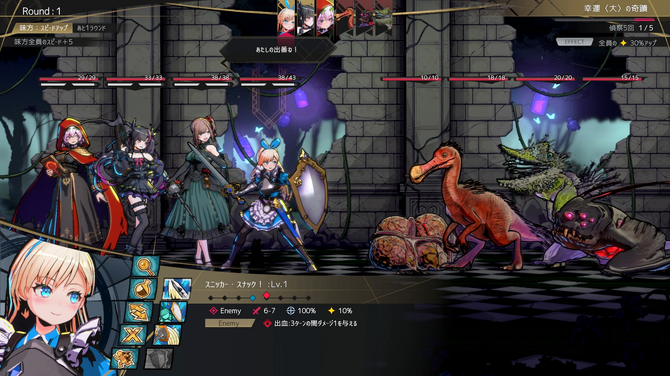
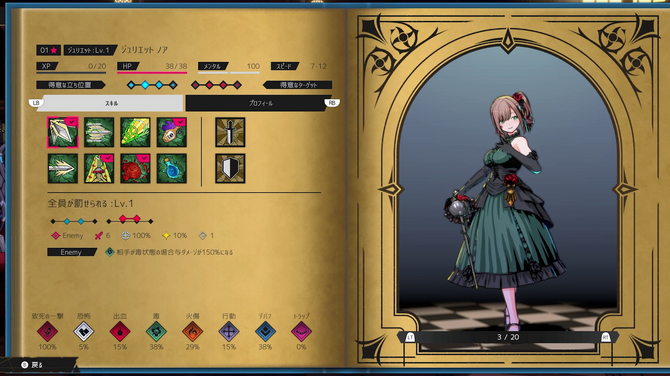
Another key feature of this game is that it features protagonists modeled after characters from world-famous works of classical literature. The characters announced this time include Alice from *Alice’s Adventures in Wonderland*, Dante from *The Divine Comedy*, Juliet from *Romeo and Juliet*, and Raven from *The Raven*.In addition, a total of up to eight characters—including the ones mentioned above—are scheduled to appear.
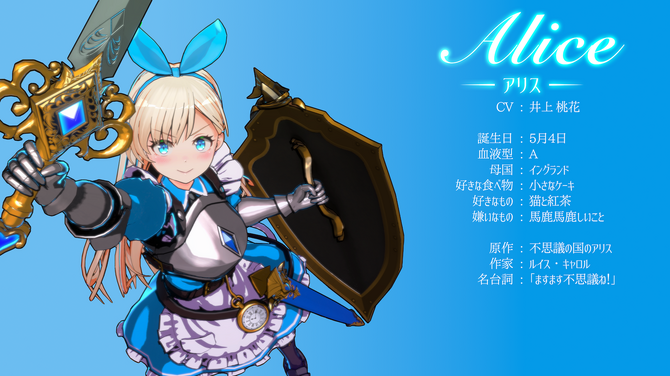
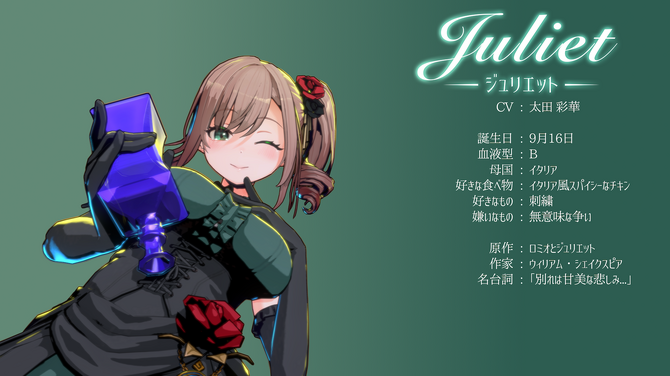
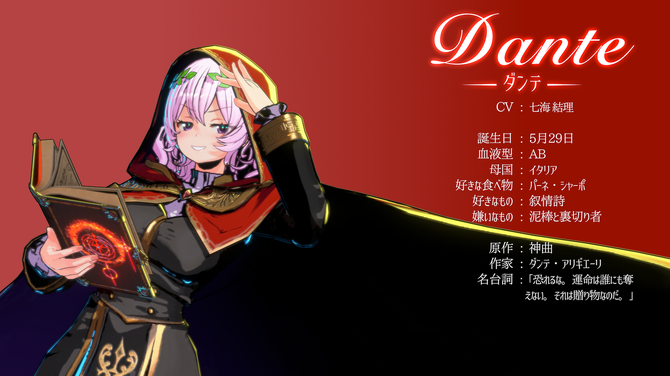
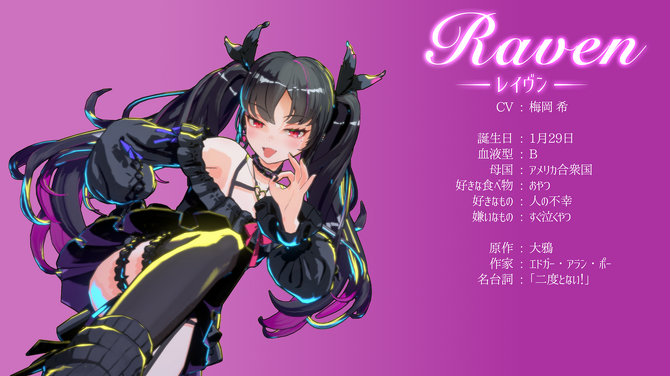
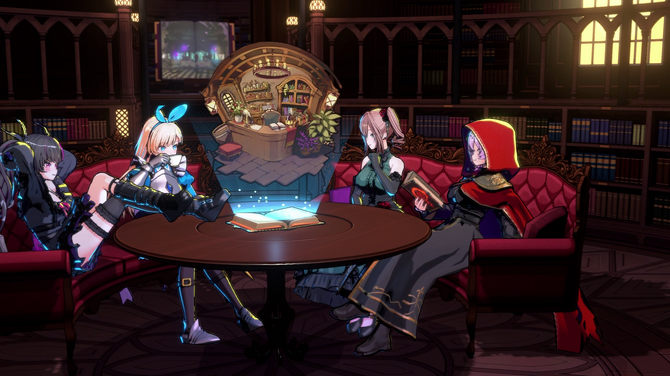
The game’s world is set in a universe where real-life girls transform into literary characters to fight against a certain organization. Their base of operations is the “Astral Library,” and as the title suggests, the books themselves become dungeons in this game. Consequently, the dungeon revealed during the presentation was themed after *Alice’s Adventures in Wonderland*.
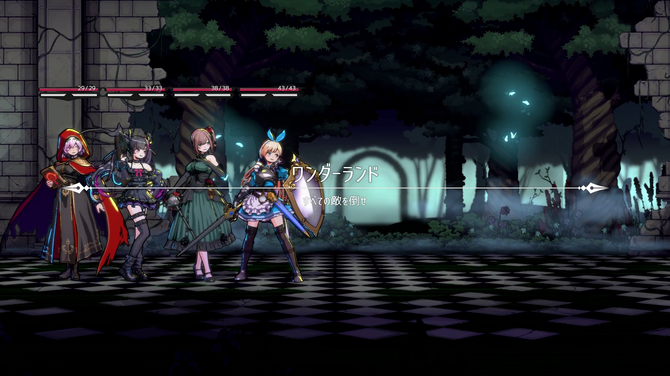
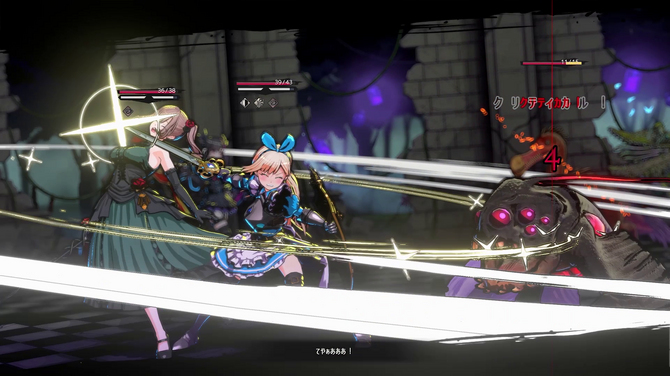
The combat system is also influenced by *Darkest Dungeon*. Although characters are arranged side-by-side, the use of 3D models and the UI give it a significantly different feel from its source of inspiration. As a unique system to this game, players can select a skill called LOGOS at the start of each round.LOGOS is characterized by its ability to turn the tide of battle, whether by inflicting debuffs on enemies or healing allies.
Furthermore, in addition to standard skills, each character has designated positions from which they can use specific skills. It’s also reported that the developers paid close attention not only to the game mechanics but also to the character animations. Beyond idle animations, there are animations for normal attacks and post-attack recovery motions, and the visuals were very well done.
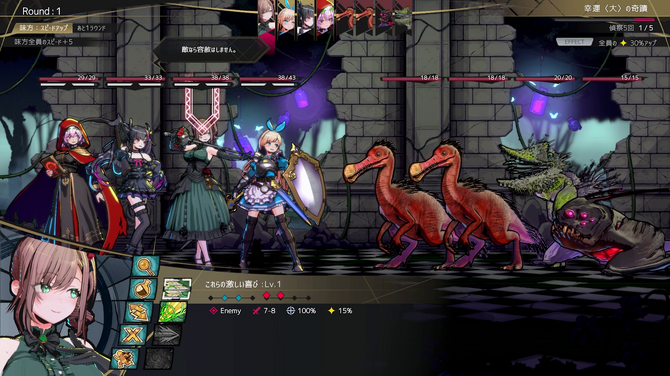
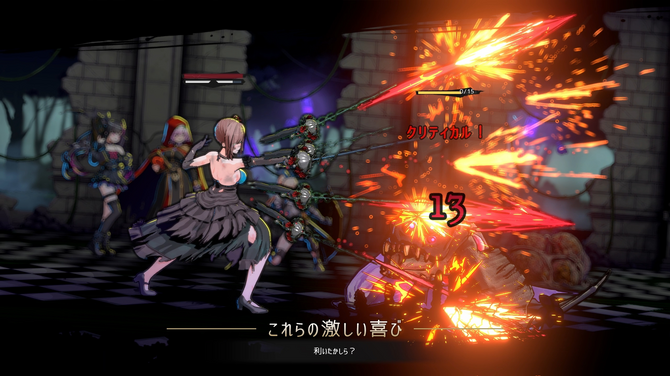
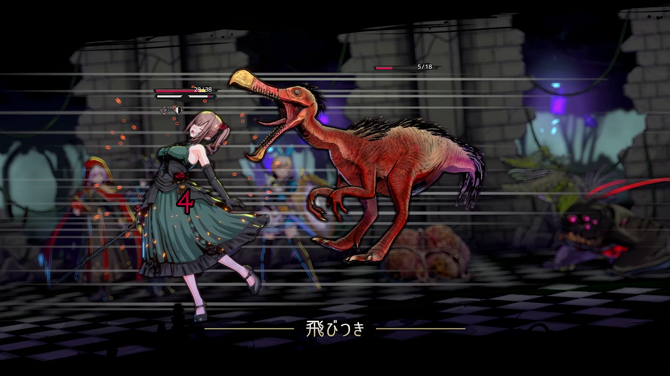
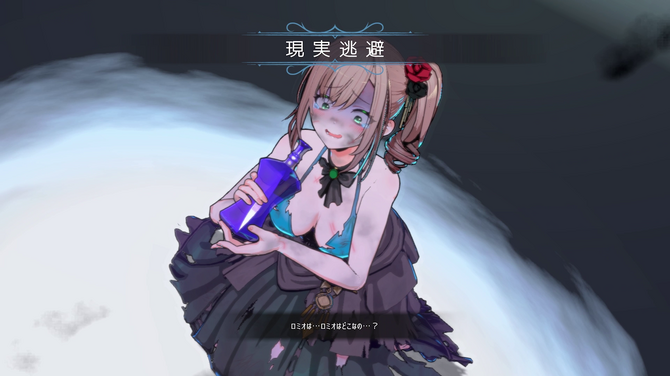
During combat, you must manage not only HP but also the “Mental Gauge.” If this gauge drops below a certain level, the character’s mental state breaks down, causing them to enter a state of “mental collapse,” so you must fight while keeping an eye on both. The moment the Mental Gauge runs out, a brief character-specific cutscene plays—for example, with Juliet, you’ll see her attempting to drink poison.
Furthermore, in this game, taking damage isn’t just a risk. There’s also a striptease element where, under certain conditions, the character’s clothes tear—and when damage is taken, you’ll be treated to some rather risqué, indecent views. The striptease begins when the character’s HP reaches 0 and a percentage appears above their head.This percentage represents the “probability of dying upon taking the next hit,” so players must fight while balancing the risk of instant death against the reward of progressing the undressing process. In a sense, I felt that how well players manage the undressing state is where their skill truly shines.
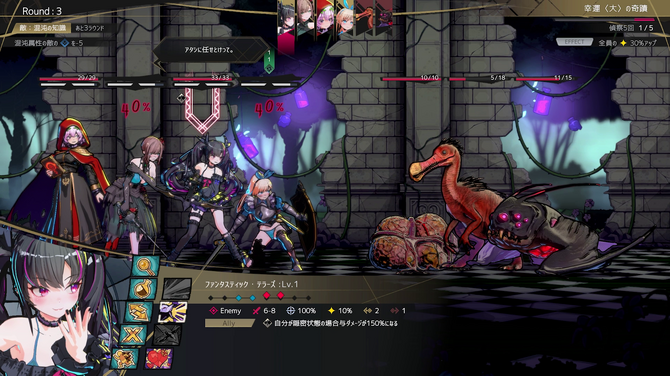
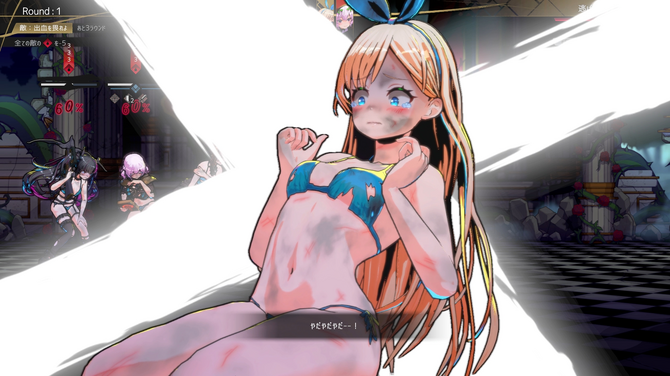
There are also victory cutscenes for winning while undressed, making it very easy to visualize damage and danger levels. Additionally, characters can set up camp along the way to recover HP. What’s more, this feature is available even when undressed. I thought it was a great feature that combines the reward of undressing with the strategic benefit of HP recovery.
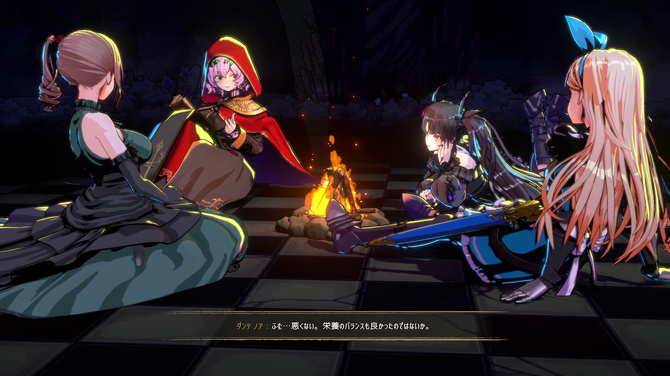
One key difference between this game and *The Darkest Dungeon* is that while in *The Darkest Dungeon* you lose your items when a character dies, in this game you don’t lose your Logos, and by upgrading them, the game is designed so you won’t get stuck.As for game balance, while *Darkest Dungeon* is extremely difficult and has a low completion rate, this game features a slightly more forgiving difficulty level in line with *Girls World*.
As mentioned earlier, four characters appear in this game, but one of them also appears in *Tower and Girl*. That character is Raven. The reason Raven ended up appearing in both games was that they were being developed at the same time.As *Tower and Girl* was gaining popularity, players began asking, “When will the next character be added?” and that prompted the decision to add Raven.Since Raven is a character who wields a crossbow, the developers thought, “Maybe she could be used in *Tower and the Girl* too?”—which led to her inclusion (also, it’s said that Raven was the first 3D model created by GIANTY, the development partner).
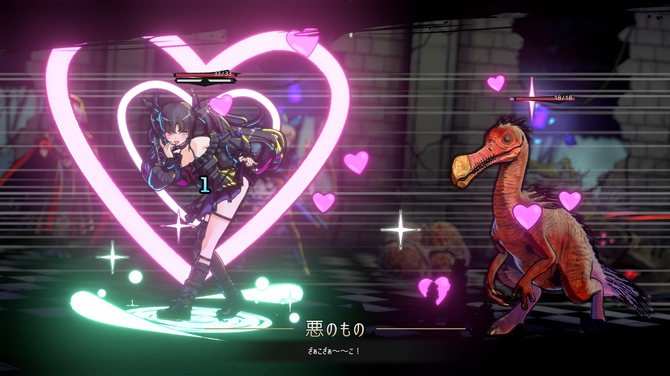
However, this isn’t the only reason Raven appears in both titles. There’s also a narrative connection between the two games, and hints about it are reportedly included within the games themselves. Through these connections between the titles, the developers aim to build out the “Girls World” universe.
This expansion of “Girls World” will also extend to characters to be added in the future. While the characters announced this time are based on Western classical literature, characters based on Asian classical literature are also set to appear. Additional characters will be announced in the future.Furthermore, each character features not only color variations but also multiple types of underwear. With so many patterns available—including cut-ins and different facial expressions—the game promises plenty of replay value.

On the other hand, there are challenges involved in actually implementing these sexy elements—including undressing scenes—within the game. The developers mentioned that releasing *The Turret and the Girl* taught them a bit about the numerous hurdles posed by differences across various countries and platforms regarding such undressing elements.
Building on the experience gained from *The Turret and the Girl*, the team plans to incorporate these sexy elements into this title as well. Furthermore, depending on sales, they plan to add various features via updates, so it will be interesting to see how the game evolves in the future.
We Hope This Game Will Spark Interest in the Original Work—The Development Team Shares Their Vision
At the conclusion of the media briefing for *LitGirls: Literary Labyrinth*, we also conducted an interview with the development team.The interviewees were Takanori Suzuki, Director at Nanairo Enterprises, who also attended the briefing; Nathan Denison, Producer at DANGENDANGEN ENTERTAINMENT; and Yun from GIANTY, who is in charge of 3D modeling and animation.
――Could you please explain the basic concept of *LitGirls: Literary Labyrinth* once again?
Takanori Suzuki (hereinafter Suzuki): It’s a game where characters from various literary works come together in a single game to cooperate and defeat a common enemy. Since there are fans of *Darkest Dungeon*, fans of *The Turret and the Girl*, and, of course, fans of bishoujo games, we hope to present this as a game that can appeal to all of them.
――I understand this is the second title in the “Girls World” universe. How did you develop the worldview and concept from the first title, *The Turret and the Girl*? Also, how do you plan to expand “Girls World” in the future?
Mr. Suzuki: This title takes place in a different dimension from *The Turret and the Girl*. So, I’d like you to keep those two separate for now. However, I do plan to include a few small, surprise-like connections.
Nathan Denison (hereinafter Mr. Denison): We received feedback asking, “Why doesn’t *Turrets and the Girl* have a story?” so we’ve incorporated story elements starting with this title. By including these narrative elements, we hope to create a sense of connection even when we develop other games.I’d like to create not only shooters in *Girls World* but also various other games, starting with RPGs.
――So the next one might take a different form, then?
Mr. Suzuki: However, even when we release the third title, we’re considering a project structure where we might be able to feature familiar characters who serve as links to the first and second games.
――I understand each game is based on a famous literary work from around the world. Why did you choose “literature” as your theme?
Mr. Denison: Many games based on novels have been released so far. I think *The Witcher* is the prime example, but while there are games centered on the theme of classical literature, I felt there was potential there.
There are characters known all over the world, the stories have depth, and there’s a lot we can incorporate. Of course, we also want to achieve global popularity. I thought people would be happy if we included literary characters from all over the world.
――So you chose literary works with the market in mind, then?
Mr. Suzuki: I think incorporating famous works from around the world as literary motifs offers a unique appeal.
――What criteria did you use to select the works to serve as motifs?
Mr. Denison: We want characters from various countries, don’t we? If they were all from the UK, it would be monotonous, but since multiple characters appear, what’s important is the appeal of the original work and whether it fits the game.
In addition, it’s important that not only the characters but also the settings be appealing.We’ve prepared stages for this game, but “Alice in Wonderland” is, well, a wonder in itself. We also consider whether we want to use that setting. Furthermore, when designing characters, we use the criterion of whether they’d be cute if turned into a “bishoujo.” There are also elements like skill mechanics, what kind of weapons they use, and what kind of weapon Juliet wields.
――Rather than simply porting the original characters and themes directly into the game, what do you value most when reinterpreting them as “LitGirls: Literary Labyrinth”? Are there any elements that only those familiar with the original works would notice?
Mr. Suzuki: For example, Alice has a skill called “Snickers Snacker.” Starting with that, Alice’s sword and the names of her moves are all inspired by small motifs from the original work. We’ve designed the moves and dialogue to convey a sense of respect for the original.
Mr. Denison: (Pointing to Alice’s outfit) Clocks like this one appear in the original work as well.We’ve incorporated elements tied to the original works for each character. In *Romeo and Juliet*, Juliet drinks poison and dies at the end, but in this game, she pulls out a vial of poison intending to drink it when she has a mental breakdown. I hope that when people familiar with the original work see this, they’ll think, “Ah! I see.”

Mr. Suzuki: I hope players will feel the authenticity of the original work through these kinds of elements.
――Some literary works deal with heavy themes such as tragedy, death, religion, politics, and loss. To what extent do you reflect the themes of these source materials in the characters and gameplay?
Mr. Suzuki: We can’t go into too much detail on that right now, but as part of our current plans, we do intend to include a page similar to character profiles.
Mr. Denison: We’re creating a collection where, while exploring dungeons, players can gather note items—such as items or memos—that explain what Dante’s *Divine Comedy* is about and what happened in the book.
――So you’re also creating a pathway where players can start with the game and then think, “Maybe I’ll give the original a try”?
Mr. Denison: We’d be delighted if that sparked an interest in the original work.
Mr. Suzuki: The character Raven is named after “The Raven,” and since that work is essentially a short story that can be read in about 10 minutes, I’d be happy if players developed an interest in the original work through this game.
――Finally, please share a message for Japanese players looking forward to *LitGirls: Literary Labyrinth*, as well as those who discovered this title through literary works.
Mr. Suzuki: Since this is a bishoujo game, it’s fine to approach it through the visuals, or through the literature—there are multiple entry points. We hope that players will be able to sense our respect for literary works through the characters’ skills and dialogue.To digress a bit, I’d be happy if we could convey a level of character appeal that can rival that of recent Chinese mobile games.
Mr. Denison: Since the largest user base for *The Turret and the Girl* is Japanese, we naturally place a high priority on what Japanese players think. That’s the first thing on our minds, so we truly appreciate your support. And please look forward to this game.
Mr. Yun: There are many beautiful characters, so I hope you’ll all look forward to them. Each character has its own story and visuals, so please choose the style you like best and enjoy the game.
――Thank you very much!
“LitGirls: The Literary Labyrinth and the Girl.” The standard edition is scheduled for release in the first half of 2027 for PC (Steam). Plans for a console version are currently undecided.




