


In September 2026, the GameSpark editorial team received a set of “GeForce Trading Cards: Series 1” from NVIDIA.These trading cards are special GeForce-themed items, and when they were announced in July, they drew surprised reactions such as, “April Fools’ Day is already over,” and “Are they confusing video cards with trading cards?
”
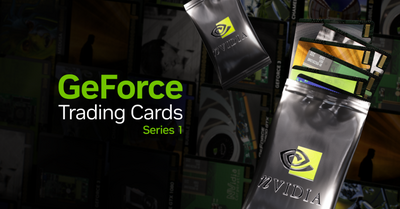
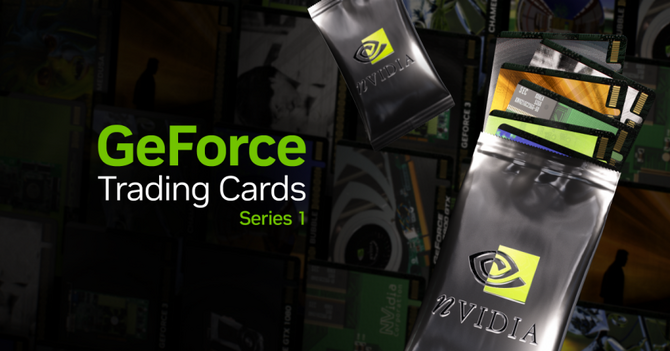
When we opened one of these much-talked-about trading card packs, we found a total of nine different cards (*some duplicates included), ranging from NVIDIA’s early processors to the “Cyberpunk 2077” collaboration model and even classic tech demos. It was a collection that allowed us to look back on the evolution of GPUs and technology in the palm of our hands.
What Are NVIDIA’s “Trading Cards”?

“GeForce Trading Cards: Series 1” are, of course, not GPUs themselves, but rather collector’s items featuring NVIDIA’s technology—including historic hardware and real-time tech demos—in card form.
These trading cards are not available for general sale; instead, they are distributed through NVIDIA’s in-house campaigns, events, and promotions on official social media channels. With a design reminiscent of a black circuit board and PCIe connector-style details, they are meticulously crafted down to the finest details as “trading cards for graphics card enthusiasts.”
Unboxing Two Packs! Relive NVIDIA’s History Through These Cards
Here are the nine cards found in the two packs the GameSpark editorial team received from NVIDIA:
NV1

An early NVIDIA multimedia processor released in 1995. This card symbolizes NVIDIA’s pre-GeForce era.
GeForce 256

An iconic early model that marked NVIDIA’s widespread adoption of the term “GPU.” Equipped with hardware T&L, it made a strong impression on the evolution of 3D graphics for PCs.
GeForce 3

This model marks the era when GPUs began to evolve from fixed rendering processors into processors capable of creating complex visuals through the introduction of programmable shaders.
GeForce 7800 GTX

A high-end GPU from the mid-2000s. It serves as a reminder of the performance race in PC gaming at that time.
GeForce GTX 1080

A GPU based on the Pascal architecture, it is a flagship model of the generation that supported the growth of high-resolution gaming and VR.
GeForce RTX 2080 Ti Cyberpunk 2077 Edition

A limited-edition model created in collaboration with *Cyberpunk 2077*. It symbolizes the connection between the RTX generation—which prominently features ray tracing—and this highly anticipated title.
Bubble / Chameleon / Medusa

Technical demos showcasing real-time rendering performance powered by GPUs. These cards embody not only the product names but also the evolution of visual expression that NVIDIA has pioneered.
This collection is arranged like a “GPU History Card Pack” that spans from the early NV1 to the RTX generation.In particular, the inclusion of the GeForce GTX 1080 and the GeForce RTX 2080 Ti Cyberpunk 2077 Edition allows us to sense not only the performance race in PC gaming but also the trend of GPUs becoming intertwined with video games and popular culture.
Additionally, “Bubble,” “Chameleon,” and “Medusa” are all technical demos through which NVIDIA has demonstrated real-time rendering performance in their respective eras. They can be seen as visual representations of GPU evolution—something that’s hard to convey through a simple spec sheet alone.
The History of GeForce Through Its Cards
Released in 1995, the NV1 was one of NVIDIA’s early multimedia processors, integrating support for joysticks, audio, VGA, 2D, and 3D. Rather than being a product directly linked to modern GeForce cards, it serves as a testament to the era when NVIDIA was striving to establish a foothold in the PC graphics market.
On the other hand, the GeForce 256, equipped with hardware T&L, was the product that firmly established the term “GPU” in the public consciousness.From there, programmable shaders took center stage with the GeForce 3, and the competition in graphics performance and visual expression has evolved significantly with each generation, from the GeForce 7800 GTX to the GTX 1080 and the RTX 2080 Ti.
Among these, the GTX 1080 adopted the Pascal architecture and represented a model that delivered a quantum leap in performance and power efficiency for high-resolution gaming and VR.The RTX 2080 Ti Cyberpunk 2077 Edition can be seen as a symbol of the collaboration between the RTX generation—which prominently features ray tracing—and a massive blockbuster game.
More Than Just a Novelty
For those familiar with the history of hardware, simply seeing the card’s name might bring back memories of the DIY PC scene at the time, benchmark results, and even the shock of seeing the first technical demos. On the other hand, for users who started with the latest GPUs, it serves as a gateway to tracing the legacy that today’s GeForce is built upon.
Looking at the card and asking, “What was the first GeForce I used?” “How many years did I use the GTX 1080?” or “When did I first see Chameleon?” is sure to spark lively conversation among PC gamers.While GPUs eventually reach the end of their useful life as new generations emerge, when they’re reduced to such small cards like this, they begin to look like a medium for preserving memories of PC gaming.

Incidentally, this “GeForce Trading Cards: Series 1” set consists of 11 regular cards plus 2 secret cards.The names of the secret cards in question are “JHH 01 Jensen: Early Years” and “JHH 02 Jensen: CES 2025.” It appears they depict Jensen Huang in his younger days and Jensen Huang during his appearance at CES 2025 in the U.S.Although the Game*Spark editorial team unfortunately wasn’t able to get their hands on any, the “NVIDIA GeForce JP” X official account was running a giveaway campaign, so our readers might have a chance to “unwrap” an NVIDIA card in the future!





