


Microsoft held a joint interview and main presentation for the Japanese media in Tokyo regarding *Call of Duty: Modern Warfare 4* (hereinafter referred to as *MW4*), scheduled for release on October 23.
We bring you the highlights from the event, which featured Jeff Negus, Narrative Director at Infinity Ward, and Jeff Smith, the studio’s Multiplayer Creative Director.
Gameplay Is King—Negus Outlines the “MW4” Story
At the start of the presentation, Mr. Negas emphasized that “gameplay is the top priority” for this title, stating that the player’s experience is of the utmost importance.He also added that the world of *MW4* depicts events that could realistically occur in our world, which is why the game offers a realistic, raw, and grounded story that sparks the imagination.

While *MW4* was developed under this philosophy, the *MW* reboot series—which has been ongoing since 2019—has so far depicted the stories of three titles. Building on the narratives of that trilogy while aiming to deliver a fresh experience, “South Korea” has been chosen as the new setting for this installment.At the same time, *MW4* returns to the series’ roots by emphasizing the experience of fighting as a single soldier—and as a cog in a massive organization—amid large-scale battles. This is depicted by examining the conflict between South Korea and North Korea from the perspectives of various characters, while taking historical context into account.
Furthermore, the setting of *MW4* is not limited to the Korean Peninsula. It reportedly extends to locations such as Mumbai, New York, Paris, and Russia.
Private Park and the Lone Wolf Price—A Three-Act Campaign
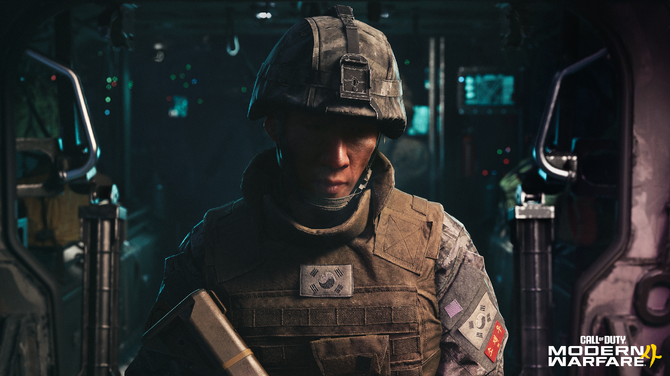
Act 1 begins with the story of Park, a private who serves as the central figure from the South Korean military’s perspective, as he carries out his routine patrol duties. However, that everyday life is suddenly turned upside down by a surprise attack from North Korea.
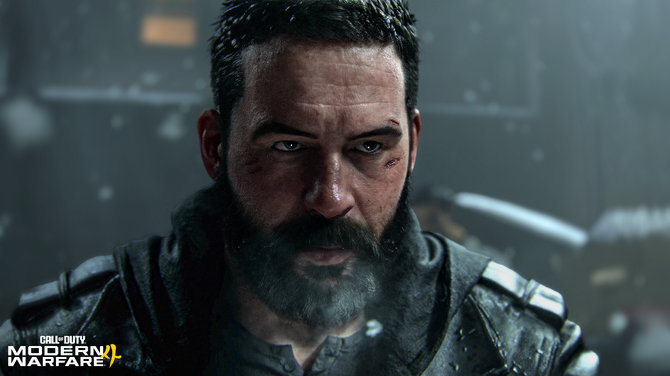
The story then shifts to New York City shortly before the incident occurs. Here, the narrative centers on John Price. He is no longer part of a unit and is acting alone, driven by a desire for revenge.His targets are his former superior and a man known as “Archer,” who ranks above him. However, to confront the formidable enemy known as Archer, Price joins forces with Valeria, the leader of a Mexican cartel and his former rival. He receives weapons from Valeria and uses them in battle.

Meanwhile, on the North Korean side, a young new Supreme Leader has seized power, and the story is told from the perspectives of Ri—his sister who leads a special forces unit—and her second-in-command, Ko. Additionally, the DMZ serves as the setting for battles against the North Korean regime.
In Act 2, the conflict between Price and Valeria escalates. With support from Ghost Company, the two throw themselves into battle. Amidst these battles, Price learns various lessons from Valeria and begins to act differently than he has in the past. The story also explores his relationships with the SAS operators he once served with.In previous installments of the series, Price was in a position where, as a soldier, he had to follow orders from his superiors. However, in this installment, he is acting of his own volition to defeat Archer.
Act 2, from the North Korean perspective, depicts a battle based on an invasion of the Korean Peninsula—a scenario that could still occur today. While they achieve successes on the front lines, the background leading up to the invasion is gradually revealed.
In Act 3, the South Korean side launches a counterattack to push back the front lines that have been expanded by North Korea. Within this, the story depicts the battle to retake the town of Hajin.From Park’s perspective, the story explores not only the war itself but also what it means to fight for one’s family and siblings. In a narrative like this, the raw, emotionally resonant decisions made by the characters are crucial.
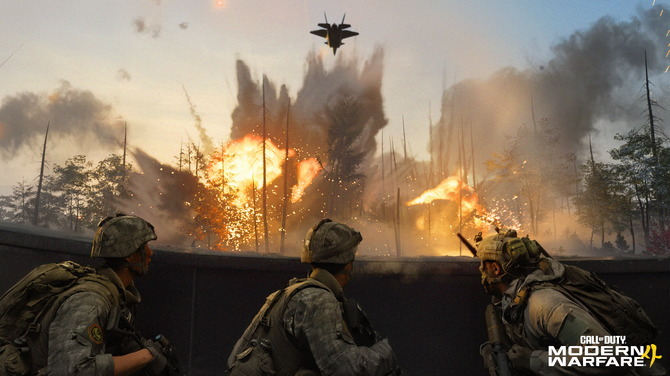
In depicting this authentic portrayal of war, the production team reportedly placed great importance on “where to draw the line” and “how to portray those decisions.”
The Series’ Largest Cast and Archer’s True Identity
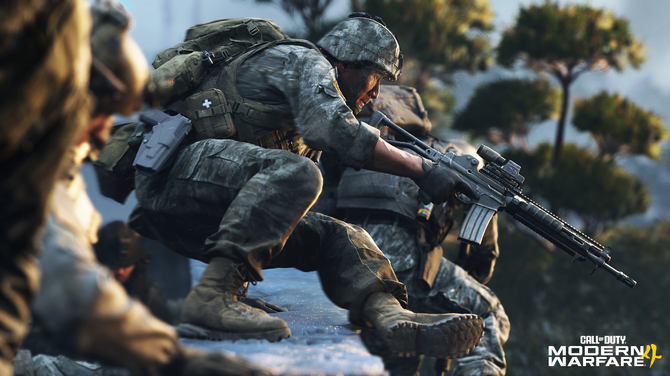
According to Mr. Negas, *MW4* features “a cast larger than ever before.”In portraying new characters, the team prioritized modern culture and values, focusing on the question, “How would a young South Korean soldier act if placed in this situation?” They placed South Korean soldiers and U.S. Marines in the same unit to depict the clashes between soldiers from different cultural backgrounds.
Meanwhile, the existing character Price will also undergo significant changes.
Driven by the goal of defeating Archer, he will be forced to make even tougher decisions that “will take the character of Price to a new level.”
As adversaries, Graves and Makarov will return, joined by Ri, the sister of the newly appointed supreme leader. Furthermore, Archer appears as a shadowy Russian collaborator who has joined forces with North Korea to support its attack on South Korea.
The new footage unveiled at this event featured a shocking finale in which Mads Mikkelsen made an appearance.
Multiplayer: “Sophisticated Yet Grounded”
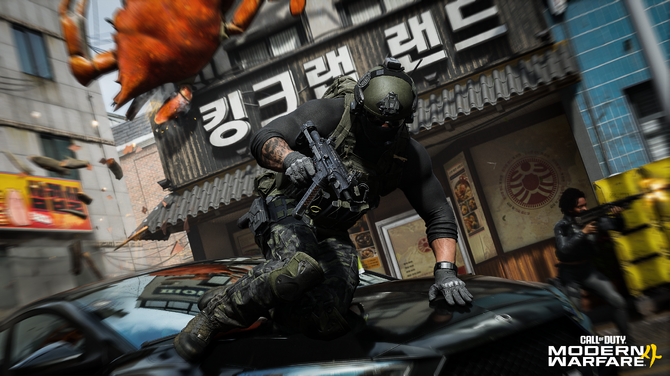
Mr. Smith, who took the stage next, briefly outlined the development philosophy behind the multiplayer mode, which is already undergoing beta testing. He explained that the overall direction for multiplayer is to create an experience that is sophisticated yet grounded.
They added cinematic effects to the gunfights and placed numerous objects on the maps that react to gunfire and explosions. When you shoot, items on shelves scatter, potted plants burst, and fire hydrants come loose, spraying water everywhere. By layering these elements, they designed the game so that cinematic moments naturally occur in every match.
Furthermore, regarding character movement, the team focused on the smoothness and fluidity of animations and movement speed.With the goal of giving players the sensation of “becoming the coolest hero ever,” the developers revisited aspects of previous titles that had been criticized for “clunky movement” and aimed to achieve faster, smoother movement in this installment.
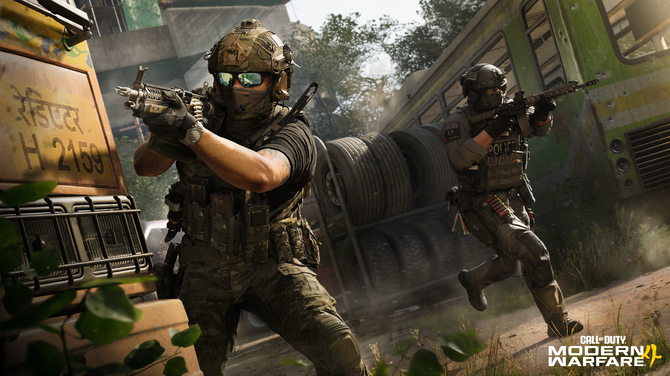
The “DMZ” Minigame
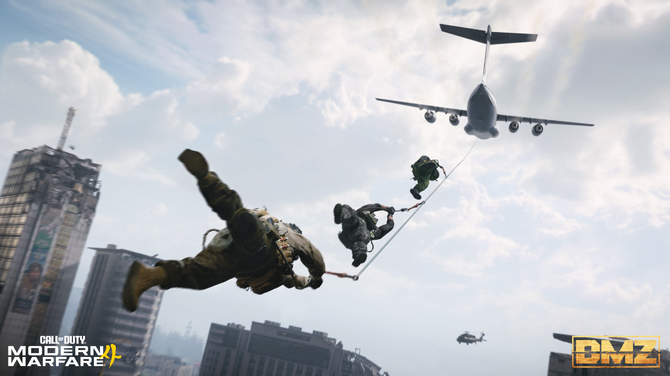
Smith then turned his attention to the new “DMZ.”He reflected that while the beta version of DMZ released four years ago was very well-received, they learned a great deal from the experience. Precisely because it was an experimental project, many of the challenges that emerged there became the driving force behind the creation of this new DMZ. He also noted that the beta test allowed them to hear directly from players about what they wanted.
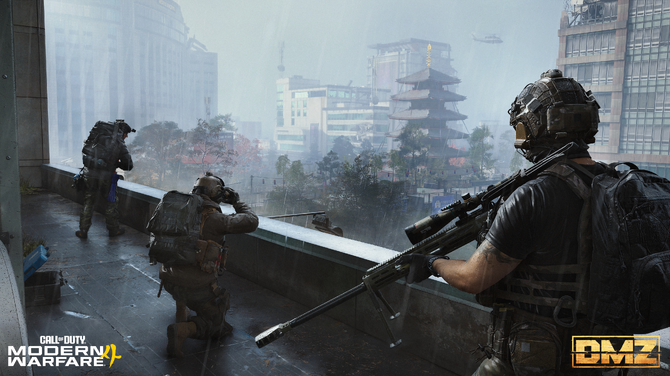
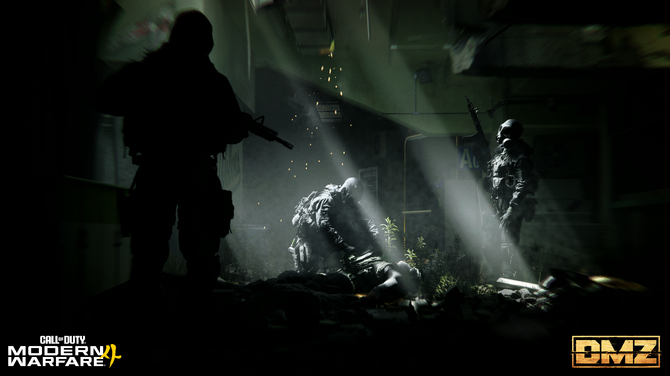
This mode is linked to the campaign mode, and the “Restricted Zone” serves as the setting for the new story.The story begins after the conclusion of the *MW4* campaign and leads further into the *MW* universe. In addition to the narrative, the mode features a variety of elements, including the threat of AI weapons that grow progressively stronger, commanders roaming the field, raid-style puzzles, and story-driven missions.
Given the massive scale of this mode, Infinity Ward reportedly refers to it not as just another game mode, but as a “game within a game.” It is said to offer an experience akin to a standalone game, encompassing not only actions within the DMZ but also the developments after escaping the battlefield and the player’s progression.
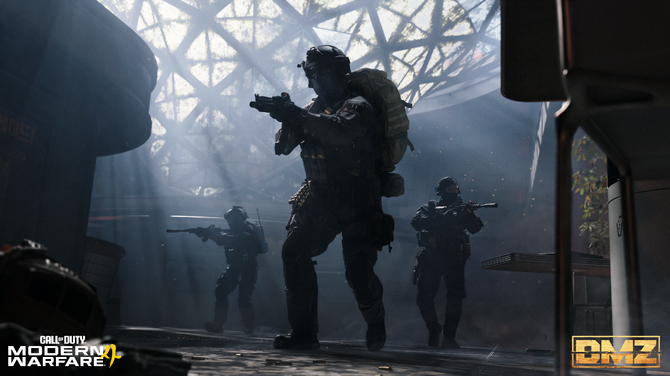
In the DMZ, players act as unofficial operatives working to clear the restricted zone. While uncovering the many military technology secrets hidden within the city, players will be tasked with neutralizing these weapons and eliminating threats; however, other operators and combatants are also present on the map, and it’s up to the player to decide whether to cooperate with them or not.
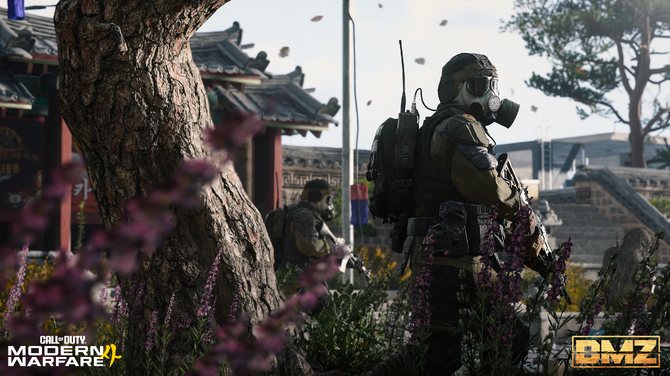
The setting for this DMZ is “Hajin,” a region contaminated with radioactive material following a nuclear reactor meltdown. It is said that Hajin was designed from the very beginning to support both single-player and DMZ modes.Since it naturally appears in single-player mode as well, revisiting the location in the DMZ after some time has passed allows players to see the consequences of the events that occurred during their single-player campaign. Incidentally, Hajin is reportedly located exactly halfway between North Korea, South Korea, and Russia.

Hajin in the DMZ features a dynamic weather system that ranges from light rain to heavy rain, light fog to thick fog, strong winds, and clear skies. These weather changes have a variety of real-world effects on both characters and the environment. It’s not just visually stunning—it actually affects the AI’s vision and hearing, ensuring that every playthrough feels different.

In addition to these environmental changes, a base is provided to support the player’s progress: the Forward Operating Base (FOB). Every time you go on a mission, your DMZ rank increases, and even if you’re taken down in-game, you’ll earn experience points, allowing you to unlock new areas, level up, and upgrade your weapons.The Active Duty Slot allows you to level up your operator’s unique skill tree.
Even if a player or Operator is eliminated, you can use the NYA system to pay in-game currency to assemble a rescue team and retrieve the missing Operator. Although any items or equipment the Operator was carrying will be lost even if they’re rescued, their progress on the unique skill tree remains intact.As operators level up, the cost of rescue increases, so it’s up to the player to decide how to use their limited resources. The two types of in-game currency found in the DMZ play a key role in these decisions.

There are two types of in-game currency in *MW4*: cash and items. Cash is used to buy and sell items and for attachments, while items are created using a 3D printer. Note that using the 3D printer requires a special item that can be found in the field.Materials are automatically collected into a dedicated compartment in your backpack, so you don’t need to manage them during gameplay.
Three DMZ Modes, Three Ways to Play
The DMZ offers three ways to play: “Story Missions,” “Dynamic Ops,” and “Free Roam.”
Story Missions are campaign-style missions that unfold the DMZ’s narrative. Dynamic Ops is an evolution of the “Contract” system from the previous game; numerous nodes across the vast map are randomly selected, and completing them triggers large-scale events.In Free Roam, you earn points by completing DMZ Orders—which are available at any time—and these points unlock Story Missions.
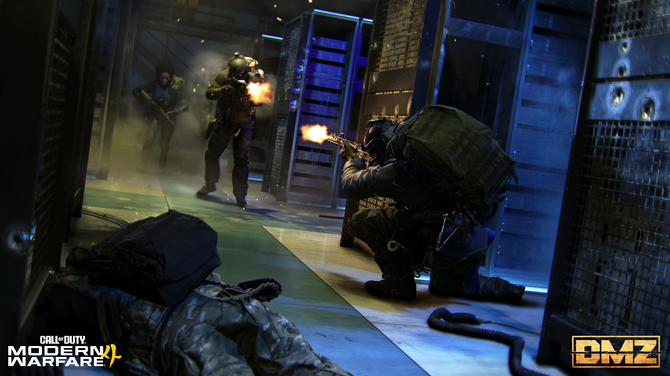
The common enemy for all players is an armed faction known as the “Hundred Spirits.” The difficulty varies by area, and if players advance, the enemy will push back. While the AI generally has three difficulty levels, it’s said that, on extremely rare occasions, a fourth level—featuring exceptionally powerful enemy AI—will appear.A new feature, the “Lieutenant,” is a mini-boss and a combatant hired by the Hundred Spirits. A new stealth system has also been added.
As for PvP, a full-fledged bounty system has been introduced. If you defeat many players and cause chaos, you’ll be placed on the wanted list, and your status can be checked at any time on both global and local leaderboards. Of course, you can also act as a bounty hunter to take down players on the wanted list.

Furthermore, completing the “DMZ Orders” page—a list of tasks assigned to players—will unlock additional story missions.
Finally, Smith summed up the game by describing it as “a playable movie (campaign), intense PvP, and the DMZ right in the middle of it all. It’s the ultimate military adventure.”
“MW4” with Mr. Smith and Mr. Negas
A joint media interview was also held at the venue. Below is a summary of that interview.
――I felt the campaign for this game tackles a rather challenging theme. Could you tell us how you arrived at this theme and what the internal reaction was?
Mr. Negas: We’ve always pursued more content, higher quality, and greater authenticity and realism. We chose this theme to depict contemporary, ongoing conflicts.
I think taking on this theme was quite a challenge for us as well. However, throughout the process, we received a great deal of cooperation from many people, including military personnel—and since we ourselves are not citizens of that country, we also relied on the cooperation of people from that country.
We’ve also been committed to respecting and accurately portraying each cultural context.
――The campaign in the rebooted *Modern Warfare* is striking for its realistic depiction of modern warfare. Were there any specific aspects you focused on to convey that realism in this game?
Mr. Negas: There are many ways to answer that question, and many aspects I’d like to address, but let me respond to a few of them.First, the breadth of gameplay in this title is among the most extensive in the entire MW series to date. Furthermore, in terms of team-based combat, solo missions, and the story itself, we’ve placed a strong emphasis on what it means to sacrifice oneself to defend one’s country and how such battles are fought.
Personally, I envisioned this reboot series as a trilogy. We’ve brought back characters from previous games and will continue to introduce new characters all the way through *MW4*. I’m particularly proud of how the story flows seamlessly from one installment to the next. We also believe this is a unique element not found in other games.
――There was one familiar face in the new trailer. Is that Mads Mikkelsen?
Mr. Negas: I wonder if there was… (playing dumb). Well, of course, since this is the first time everyone is seeing this trailer, I think you’ll find out all sorts of things tomorrow.We’ve been developing this project for the past four years, and since the story takes place in new territories and regions, we wanted to carefully select the right cast. So, when we met with him, he gave us a really cool response—so please look forward to it.
――Why did you include part of the campaign in the recent beta test?
Mr. Negas: First of all, when we released the “MW4” trailer, we received a lot of feedback from many people, including a great deal of praise. So, the reason we included a portion of the campaign in this beta test was that we wanted those people to see what we’ve been working on and to show our appreciation—that’s why we included that portion.
We also included this portion of the campaign because we wanted everyone to experience firsthand the story that connects to the DMZ and other elements like that.

――In the update for Beta Weekend 2, the aim assist was reduced and the TTK was increased simultaneously. It feels like the comments “TTK is too fast” and “aim assist is too strong” are simply different ways of describing the same experience.Did the development team treat these as separate issues, or did they view them as a single phenomenon?
Mr. Smith: Receiving feedback like this is the whole purpose of beta testing. However, adjusting one aspect doesn’t necessarily solve the other; adjusting one aspect always requires adjustments to the whole. Therefore, we will continue to fine-tune each element one by one and strive constantly to create a better gaming experience.
――In the beta summary, it stated, “We’re not yet satisfied with the TTK.” Where do you plan to settle on this by the time of release? If you have a target for the ideal average TTK, please share it.
Mr. Smith: This might not be the most satisfying answer, but first, regarding TTK in this beta test, we’ve been making repeated adjustments to each weapon. So, while it depends more on the stats of each weapon than on the player character’s stats, we’re currently continuing to fine-tune each weapon even after the beta test, in preparation for the game’s launch.
Consequently, the team is still carefully evaluating the optimal TTK for each weapon. While we don’t have a specific target number for the ideal TTK, we’re constantly refining it based on the TTK we perceive through the accumulated experience of players across various teams. I apologize for not being able to provide a definitive answer.
――The change to move Tactical Sprint to the “Blood Rush” perk was officially described as an experiment during the beta. How do you evaluate the results of this experiment? Please also tell us about any plans to revert it to the default or reconsider its placement within the perk slots.
Mr. Smith: First, regarding the reason we moved Tactical Sprint to the Perks menu, this was an idea we had been considering for some time prior to the beta test.We also recognize the importance of this beta test, so we’ve made numerous adjustments based on how players reacted during that test. Regarding Perks and Abilities, we continue to prioritize a better gaming experience and improved mobility, so we plan to keep making adjustments moving forward.
――Although it wasn’t mentioned in this presentation, I think “Kill Block” is a very fresh map with a dynamically changing structure. Were there any challenges you faced in balancing the competitive aspects, such as changes in lines of sight and clearing areas?
Mr. Smith: That’s a pretty difficult question to answer, but first, we created it based on the concept of building it out of three blocks. We didn’t design it to constantly transform into a much larger map; instead, we wanted to offer variety without confusing players during their gameplay experience.
We created several maps, divided them into blocks, built over 10 maps, and conducted playtests on them—that’s how we finalized the “Kill Block” system.
――Unlike previous DMZ betas, this version of DMZ will be released as part of the full game. Is it designed for long-term play, and what updates or content expansions are planned?
Mr. Smith: We’re placing a lot of importance on this launch. Since the previous DMZ was a beta, DMZ is a system we’re introducing alongside the launch. Also, since this DMZ mode itself is one we’ve poured our passion into—though there’s a lot I can’t say just yet—please look forward to what’s to come.
――All of the campaign missions were impressive. Are there any stages the developers would particularly like to recommend, or any cinematic elements or details you’d like players to pay attention to while playing?
Mr. Negas: First of all, it’s actually quite difficult to choose, but I’ll try my best not to overstate things. In the campaign, I think what we’ve particularly focused on this time is depicting each character’s struggle as they make realistic, raw, and weighty decisions.
And, of course, the conflicts and tensions on the Korean Peninsula. We believe these elements will excite players and surprise them as part of the gaming experience. And, of course, the sight of characters fighting for someone else is something I personally hope players will pay special attention to—I think it really captures the heart.
――Finally, please share a message for Japanese players.
Mr. Negas: No matter what culture we’re portraying, that’s what’s truly important. We’ve depicted Mexico, the Middle East, and the entire world. Every time we create a game like this, we conduct extensive research to ensure that our vividly portrayed characters are authentic—not only as individuals but also as representatives of the conflicts they face.I’m really looking forward to seeing how Japanese players will receive this campaign, which our team has poured so much care into. Thank you very much for taking the time to speak with us today.
Mr. Smith: I grew up playing Japanese video games. I used to play Namco games a lot. So, being able to create a game that Japanese players care about—or are willing to give a try—is personally very important to me.

*Call of Duty: Modern Warfare 4* is scheduled for release on October 23, 2026, for PC (Steam/Battle.net/Xbox), PS5, Xbox Series X|S, and Nintendo Switch 2.Those who pre-order or pre-purchase the Standard Digital Edition or Collector’s Edition will be able to play the campaign in early access starting October 17. Game*Spark has also published play reports from the beta test and details on the DMZ.

¥8,464
(価格・在庫状況は記事公開時点のものです)




