



On July 26, 1996, Pioneer LDC released *NOëL NOT DiGITAL* for the PlayStation 1.
This dating simulation game lets you interact via “videophone” with three beautiful girls—Ayumi Shimizu, Yuka Okano, and Emi Sanokura—whom you meet at the beach one summer, and deepen your relationships with them leading up to Christmas.
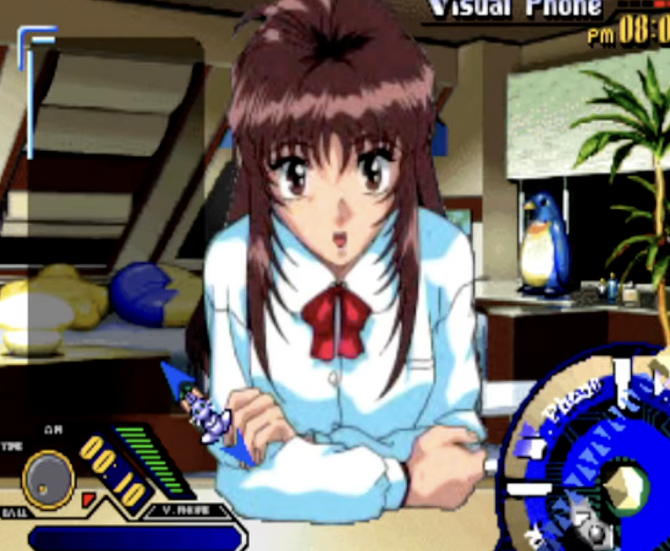
However, the game features almost none of the typical elements found in dating sims of that era—such as attending school, going on repeated dates, or developing character stats. Instead, what the player sees is the screen of a terminal and, on the other end, lovely young women who laugh, talk, and sometimes even make faces that clearly show they’re bored.
Now, in 2026, video calls are nothing out of the ordinary. That’s precisely why the “video calls of the future” depicted 30 years ago seem strangely nostalgic.

In this article, we’ll look back at the online communication of 1996 as imagined by *NOëL NOT DiGITAL*, as well as its unique game design—which transformed the very concept of “not being able to meet” into a tangible aspect of romance—and the game’s appeal.
◆1996: When Videophones Were the “Future.” Another Everyday Life Created Within the Screen
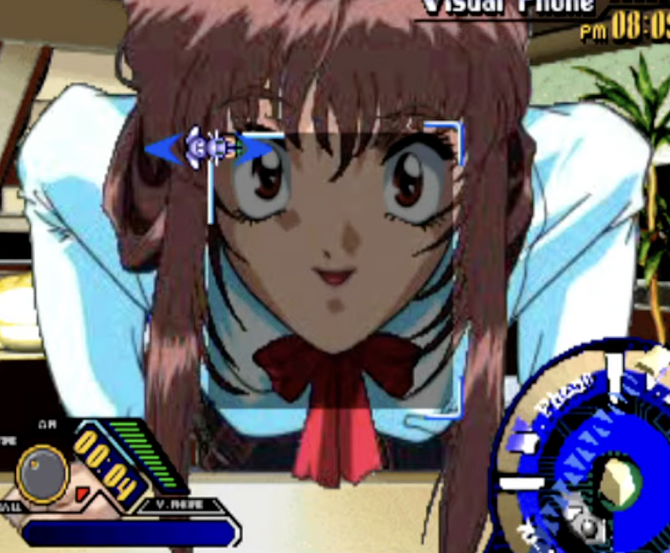
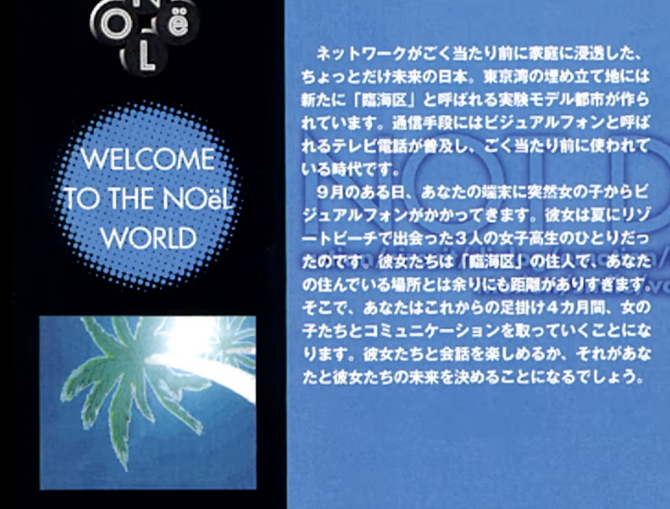
The story begins when the protagonist meets three girls on a summer trip. They are classmates at Eka High School, and once the trip ends, they will return to their respective daily lives.
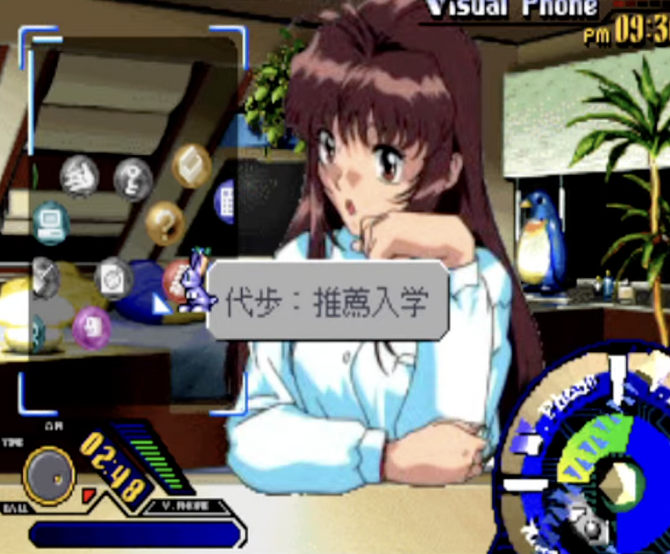
What connects the protagonist to them is the “video phone (Visual Phone),” which could be called the symbol of this game. From then on, the player calls them from a terminal at home, gradually closing the distance between them through casual conversation. The game spans from fall through Christmas. Opportunities to meet in person are limited, and most of their daily interaction takes place through the screen.
The setting for all this is a computer environment called “Rabbit OS.”
In addition to video calls, you’ll spend most of the game on this terminal—searching for information online, viewing received visual emails, and advancing the in-game time.

In today’s terms, it’s like a combination of video calls, search, video messages, and schedule management all in one.
Of course, since the visual style is strictly “the future as imagined in 1996,” the 3D icons, sterile windows, and the distinctive sluggishness felt with every action evoke a strong sense of nostalgia for the multimedia culture of the ’90s.

Back in 1996, “Windows 95” had been released the previous year, and home Internet access was just beginning to take off. In that era, the game was quite avant-garde in bringing a digital lifestyle—such as “talking while seeing the other person’s face from home” and “learning about the other person’s daily life through the network”—into a dating sim.

However, the true appeal of this game lies not so much in the appearance of cutting-edge gadgets, but in its portrayal of the “human beings” on the other side of the screen—people who, no matter how advanced communication technology becomes, still agonize over questions like “What should I say?” or “Is it okay to call right now?” That is the essence of this game.
◆ Close the Distance with the Heroine Using the Unique “Conversation Ball” System
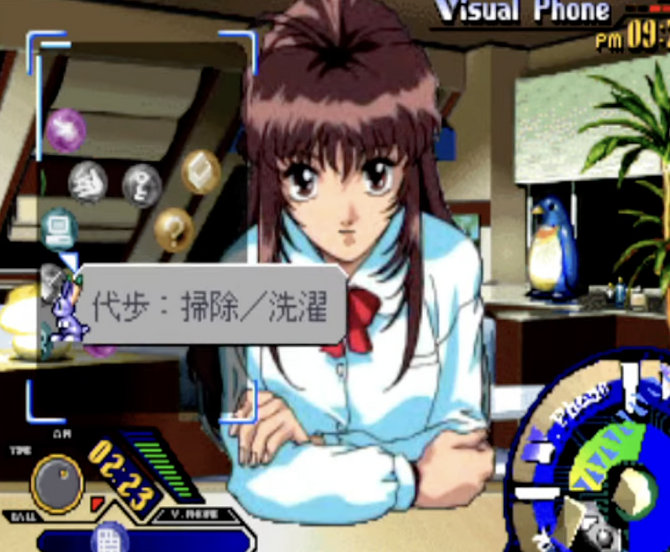
A defining feature of this game is its unique system called “Conversation Balls.” In typical dating sims, the standard approach is to choose a response from multiple options to advance the conversation, right?
However, in this game, new topics emerge from conversations as “balls.” Players collect these and throw them back at the right moment, gradually closing the distance with the heroine—a mechanism that was groundbreaking at the time.
It’s also a treat to see the heroines react with full voice acting and animations. It’s wonderful how this makes you feel as though they truly exist.
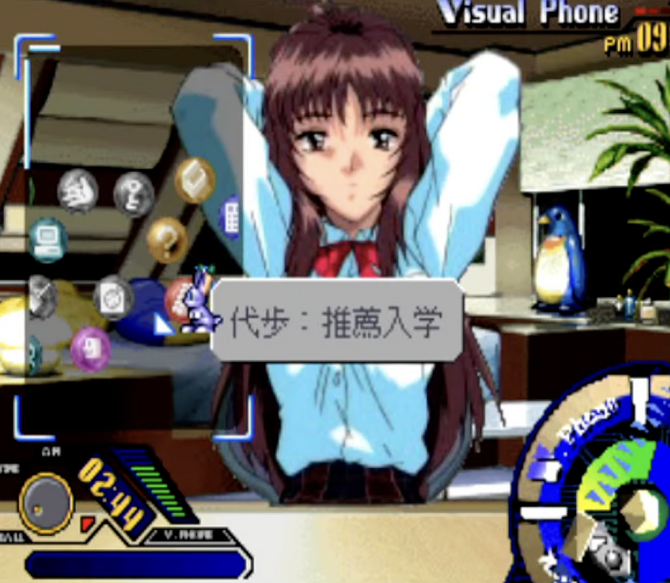
In other words, rather than searching for the “correct choice” to set flags like in typical dating sims, the game itself revolves around listening to the other person and reading the room.
And the feel of those conversations varies greatly depending on the three heroines.
★ Ayumi Shimizu (CV: Satoshi Sakurai) — A chatty girl who’s clumsy when it comes to love

One of the main heroines, “Kaho Shimizu,” is a cheerful girl who loves shopping, talking on the phone, and dressing up. She lives in a student dorm and used to be on the track and field team.
She talks a lot, moves a lot, and is the liveliest of the three during video calls. However, she has a side where she suddenly becomes clumsy when faced with someone she likes.

Although she usually has an endless supply of topics to talk about, she struggles to put into words what she really wants to say. This contrast is a major part of Kaho’s charm.
She is likely the heroine who most clearly embodies the appeal of this work—that her character doesn’t come to life through her profile, but only through conversation.
★Yuka Okano (CV: Masami Iizuka) — A cool girl whose “contrast” grows more appealing the more you get to know her
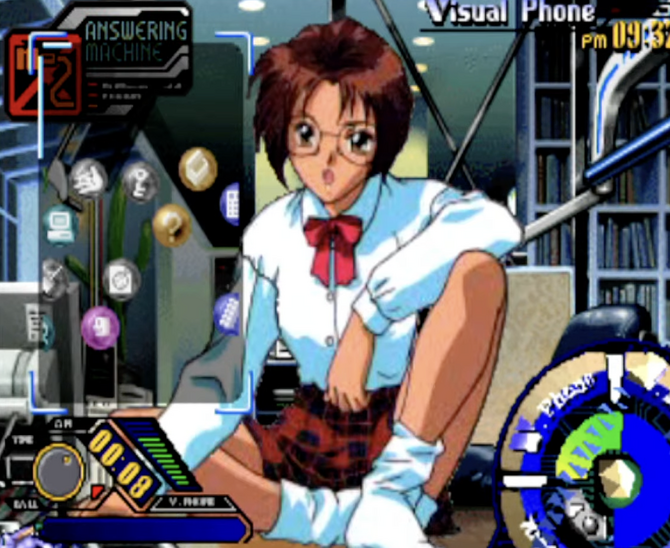
The second heroine, “Yuka Okano,” is a member of the Science Club and a girl who’s knowledgeable about computers and video games. She has little interest in fashion or the opposite sex, and her first impression is quite cool. She isn’t the friendly type either.
However, she’s actually quite shy, and as your relationship deepens, she gradually begins to show softer reactions.
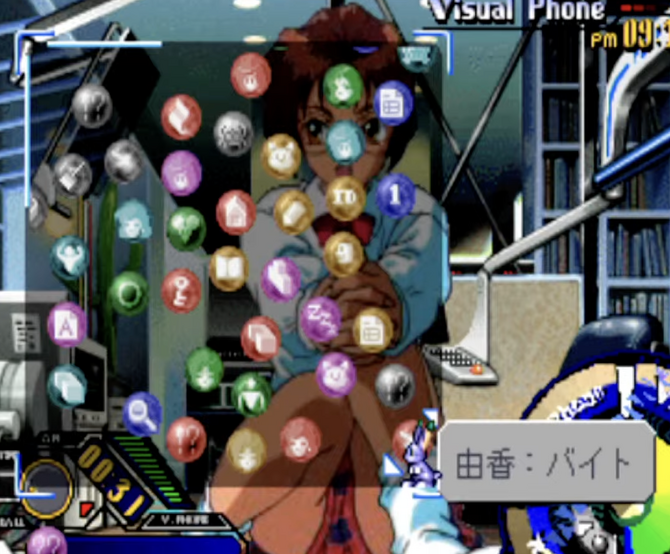
What makes interacting with her so enjoyable isn’t that her attitude suddenly changes during flashy events, but rather that you’ll find yourself delighted by subtle shifts—like thinking, “I feel like she smiled a little more than before,” or “Our conversation lasted longer today.”
She also has a surprising side—she was the captain of the basketball club in middle school—and the more you talk to her, the more your initial impression of her changes. That “gap of surprise” is precisely what makes a romance with Yuka so interesting.
★Emi Sanokura (CV: Junko Iwao) — The competitive spirit hidden behind her responsible exterior

The last character I’ll introduce is “Emi Sanokura.” She’s the star of the track and field team and excels academically. She’s also skilled at the piano—in short, she’s the epitome of a responsible person.
Among the three, she often takes on the role of the leader, and her first impression is that of a calm, older-sister type.

She’s the most mature of the trio—a cool beauty who’s extremely reserved. Though she’s a mysterious girl with a somewhat detached gaze, she has a dual nature that gradually opens up through video calls; her charm lies in her quiet demeanor combined with a strong inner core.

Each of the three girls has her own unique charm: Daibu offers the “joy of conversation,” Yuka the “joy of reading reactions,” and Keimi the “joy of growing closer.”
In this game, rather than “conquering” the characters, you gradually “get to know” them through conversation.
◆ An Analog Love Story Set in a Digital Future

Video calls, which seemed like the future itself back in 1996, have now become everyday tools available the moment you open your smartphone. Video messages and learning about someone’s daily life over the internet are no longer rare.
Even so, *NOëL NOT DiGITAL* doesn’t seem strangely dated. That’s undoubtedly because this game focused not on communication technology itself, but on the “people” on the other end.

You call, but the other person doesn’t pick up. Even when you finally get through, if you miss the right moment to throw the conversation ball, an awkward silence settles in. You’re happy just to see them smile a little more than they did yesterday.
Even though we can now get in touch at any time, that hesitation—“Is it okay to call right now?”—never goes away. That’s why, in this game, the simple, trivial exchanges—calling repeatedly, making small talk, and watching their expressions—gradually, without us even realizing it, evolve into “romance.”
This series continues with the second installment, *NOëL ~La neige~*, which features new heroines, followed by the epilogue *NOëL ~La neige~ Special*. Furthermore, in *NOëL 3: Mission on the Line*, the original girls—Ayumi, Yuka, and Emi—make a comeback.While centered on the concept of communication via video calls, the series has branched out in different directions with each installment.

Now, in 2026, the “digital future” we dreamed of 30 years ago has already become a reality. Yet the desire to talk more with someone, to get to know them better, and to get just a little closer remains surprisingly “analog.”
Waiting for someone on the other side of the screen, listening to their voice, and being moved by the slightest change in their expression—perhaps the reason *NOëL Not Digital* still feels fresh even 30 years later is precisely because it turned that troublesome yet endearing “distance” we feel when we fall for someone—a distance that remains unchanged no matter how much technology advances—into a game.



