


You know how sometimes you just end up going outside in the middle of the night?
Maybe you head to an empty convenience store for a quick snack, sneak out to take out the next day’s trash, or just step out onto the balcony to breathe in the fresh air. At first glance, the dark, silent streets may seem cold and even a little scary, but at the same time, they feel like a space where you can take a slow, deep breath—a quiet void that quietly welcomes those who are all alone.
The walking adventure game *A Passing in the Night*, exhibited at the PLAYISM booth during the Tokyo Game Show 2026, was a title that quietly reminded us of this “quiet, late-night gentleness” amidst the hustle and bustle of Makuhari Messe.
In this article, we’ll introduce the “unique warmth” I felt while playing *A Passing in the Night*, along with an interview with the two developers from .iris. We asked them about the game’s unique “one-hour completion” system, behind-the-scenes stories from development, and the thoughts they poured into the game.
A Surreal, Open-World Strolling Game You Can Finish in One Hour
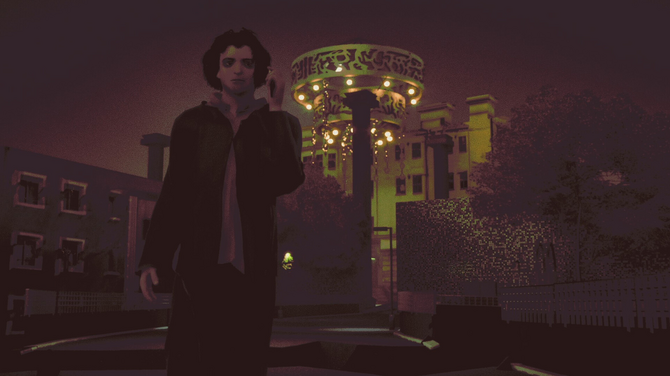
The game is set in the deserted suburbs of Tokyo late at night. Night and morning, the mortal world and the spirit world, and the living and the dead—in this place straddling the boundary between “there” and “here,” the protagonist, “Kai,” is offered a deal by a “demon.”
“Will you surrender your most precious memory to be freed from suffering?”
Kai has just one hour to answer the demon’s question. Between 3:00 a.m. and 4:00 a.m.—the time leading up to dawn—Kai wanders the streets, grappling with this choice.
The game’s defining feature is, without a doubt, its gameplay system. Rather than progressing by completing events, the game reaches its ending within a single hour of real-time. Players control Kai as he simply strolls through a small-scale open-world city.
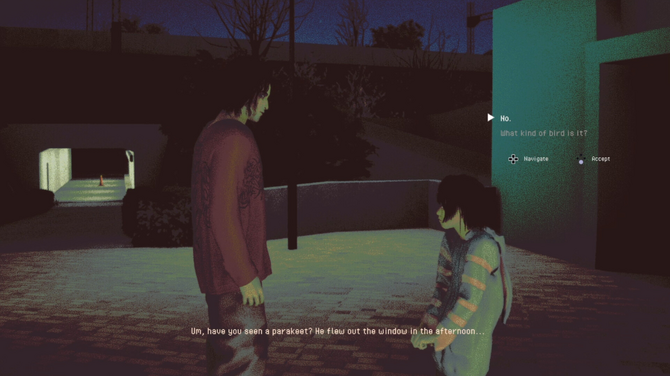
Of course, various NPCs and events are scattered throughout the town, but it’s entirely up to the player whether to interact with them. Since the game features multiple endings, the player’s choices will influence the outcome, but there’s no need to “travel to specific locations and complete events.” You can simply wander aimlessly through the quiet town, or actively engage with others.How each player chooses to spend that limited hour will likely reflect their individual personality.
In addition to the events scattered throughout the field, there are also world events that occur at specific times. The game appears to be designed so that players can enjoy a high degree of freedom in the main story while gradually piecing together the narrative through these world events.
Full Immersion, Leisurely Strolls
The character controls in this game are also unique. While the control scheme is similar to that of a typical 3D game, this title surprisingly lacks a “run” function. Hearing that you “can’t run” might sound very inconvenient at first, but the game offers a unique play experience through two switchable modes.
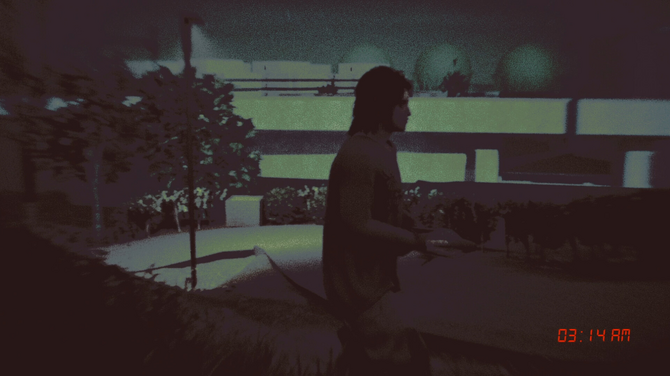
One is “Mental Image Mode,” which supports interaction with events. You enter this mode by pressing a specific button, and it highlights interactive objects, NPCs, and environmental elements like streetlights and trees.Additionally, the current time is displayed in the lower-right corner of the screen, making it easy to check your progress in the game—a nice touch.
When you approach a marked object, short phrases like “Mabushii” or “Akumu” may appear alongside it. As the mode’s name suggests, these markers seem to represent the protagonist Kai’s inner impressions.I myself often find myself noticing little stickers or trash on the side of the road while taking a walk, so “Imagination Mode” wasn’t just convenient—it was an element I couldn’t help but relate to.
The hand-drawn, anime-style UI is eerie yet somehow cute, and you can enjoy yourself just by walking while following the markers. However, the walking experience in this game doesn’t end there. The second mode I’ll introduce, “Daydream Mode,” immerses you in aimless wandering.
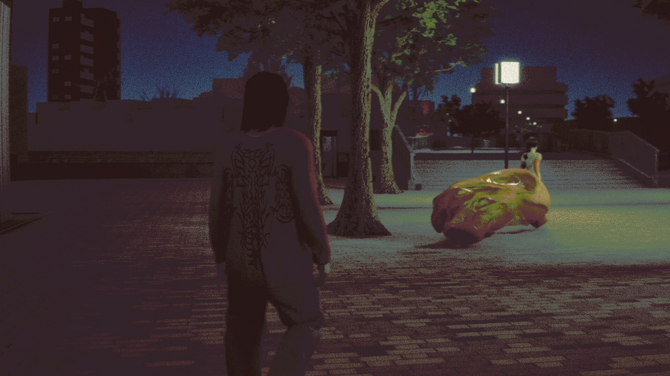
“Daydream Mode” is a mode you automatically enter just by walking. Once you enter this mode, the graphics and music gradually change. The UI that served as a guide in “Mental Image Mode” disappears, the camera tracking your path gradually zooms out, and the sound resonates deeply and heavily.
It’s quite difficult to fully explain in words, but to give a relatable example, the experience was similar to the sequence in *Death Stranding* when you approach a base.Slow, lyrical music begins to play, and before you know it, your mind—which had been focused solely on controlling the character—becomes absorbed in gazing at the scenery. Even though all you’re doing is tilting the joystick forward, the experience of being completely immersed in the game world could be described as a kind of trance-like state.
Characters Spending Time in the Liminal (Boundary)
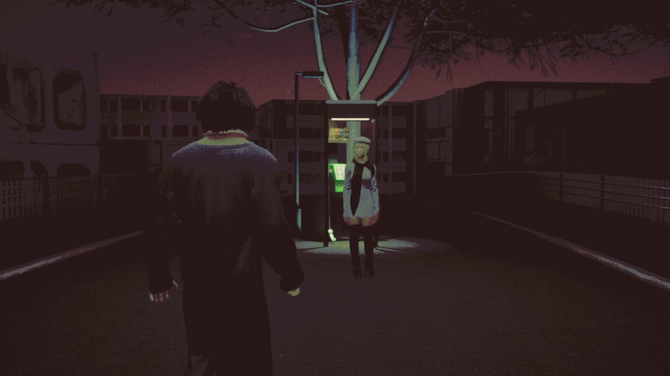
Another charm of this game lies in its diverse cast of characters. Beyond the protagonist, Kai, there are humans, ghosts, and other characters with whom you can spend this strange night. What particularly stuck with me from the demo was a mysterious, invisible older man who kept taking photos in various locations.
This man is usually invisible; you only hear the sound of a camera shutter or see a flash go off from time to time on the field. When I squinted, I could faintly make out a moving shadow after he took a photo.I tried to interact with him, but since I wasn’t very skilled at controlling my character, I ended up accidentally bumping into him. After his form became clearly visible for a split second, he let out a “Whoa!” and vanished. Poor guy—he got bumped into…
This photographer was full of mysteries, but I really hope readers will discover his true identity for themselves.
Additionally, this title features full voice acting in both Japanese and English. The restrained character voices, which match the game’s laid-back tone, will help you immerse yourself in the experience.
Interview
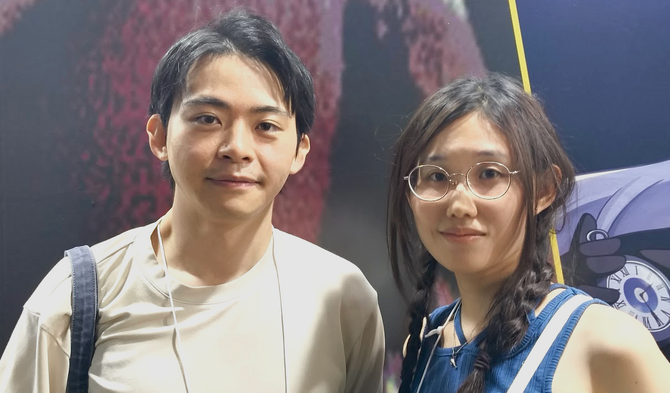
Below is an interview with the developers of *A Passing in the Night*: Mr. Unnis Kim (hereinafter “Kim”) and Mr. Hirofumi Furuta (hereinafter “Furuta”) of .iris. We spoke with them in detail about everything from what inspired the game’s development to the mechanisms packed into its “one-hour gameplay.”
――When I first saw this game on the Steam store page, I was immediately drawn to its cool visual style. How did the development of this game come about?
Unice Kim (Story, Visual Design, Soundtrack): *A Passing in the Night* is our first project as .Iris.We’re a married couple, and we’ve been playing lots of games together for a long time. Since Hiro (Mr. Furuta) used to work in media art involving 3D CG, we got married while talking about how we wanted to “make a game together.”
Hirofumi Furuta (3D Graphics): I quit my previous job when we got married and started working on *A Passing in the Night*.
――That’s amazing. So is this sort of a life’s work for you, or more like the first step toward that?
Furuta: That’s right.
――Why did you decide to create a “walking game” after that?
Furuta: Well, to begin with, the two of us just love going for walks together at night.
――That sounds like a lot of fun, doesn’t it?
Furuta: Thank you (laughs). At first, it was just a habit of “taking a quick walk in the middle of the night,” but it gradually got later and later, until we were walking around 3 a.m.—a time that’s a bit dangerous, or rather, a bit sketchy.
But because of that, there was no one around, and since we live in the suburbs of Tokyo, it had this strange atmosphere. I was drawn to that “slimy, eerie vibe” and the “sense of the extraordinary” that comes from being completely alone. That’s when we decided to make a game about taking a walk in the middle of the night—a game where you literally just walk.

Kan: In terms of what I wanted to create, I also had the feeling that I wanted to make “something you can play casually.” Since this game has a one-hour time limit, it’s a quick, easy play. Personally, while I play all kinds of games—and of course, there are plenty I love—spending a lot of time on long games is…
Furuta: Lately, I’ve even found myself thinking, “This game is taking a while” (laughs).
Kan: I thought, “It’d be nice to have something that’s quick to play but still memorable and has a slow pace.” I also like games like *Yume Nikki*, so I drew inspiration from that as well.
――It’s pretty rare to find a game that “ends in real time within one hour,” isn’t it? But it’s true that even on a real-life walk, you’re often conscious of a time-based endpoint—like thinking, “I’ll head home once I walk to the next nearest station,” or “I’ll head home when dawn breaks.” What was the reason for designing a system where you reach the ending within a time limit?
Furuta: “The fact that there’s always an end” was something we were conscious of while developing the game. The timeline for this title runs from 3:00 a.m. to 4:00 a.m., and the field changes as dawn breaks. It’s a pretty early dawn, but that’s because it’s a summer dawn. In terms of the story, we’ve also incorporated the element of “What decision will the protagonist make as dawn breaks?”
Kan: One of the main reasons was that “we couldn’t complete the game without imposing some development constraints.” We figured that if we set a goal of a one-hour playtime, we’d be able to make it work. Another reason, as Hiro (Mr. Furuta) just mentioned, was that we wanted to incorporate the theme of “time passes, for better or for worse” into the story.
Furuta: Time passes even if you do nothing.
Kan: And people die (laughs).
Furuta: The title “Passing” was a play on that, wasn’t it?
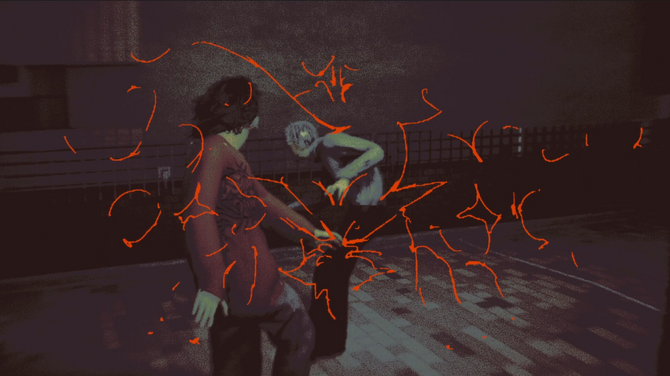
――That’s right. Given the theme, the store page description even includes a line like, “You’re going to die.” I really liked that part, and it left a strong impression on me.
Influences from Cronenberg and David Lynch
――Next, I’d like to ask about your references. You mentioned *Yume Nikki* earlier, but this game’s surreal worldview and its story, which straddles the line between dreams and reality, also brought to mind the *Silent Hill* series. Beyond video games, what other references did you draw from?
Furuta: Aren’t there actually more references outside of games?
Kan: That might be true. I’m in charge of the story, and personally, I’ve been influenced by horror film directors like Cronenberg* and other slightly surreal and dark movies and works.
*A leading director of body horror, known for depicting the horror of the human body undergoing grotesque transformations. His representative works include *Videodrome* (1983, Universal Pictures) and *The Fly* (1986, 20th Century Fox).
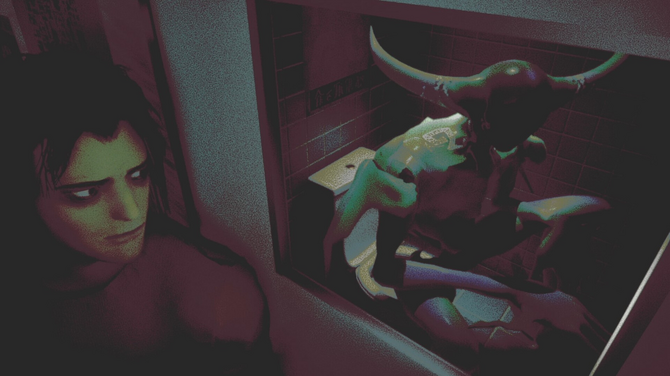
Furuta: I used to watch works like David Lynch’s “Twin Peaks” (1990–91, ABC). “Twin Peaks” is more of a show for our parents’ generation, so we’re actually from a slightly different generation.
Actually, I’d never played *Silent Hill* before we started production. When I actually played it, I felt, “This is really similar.” While this game isn’t as extensive as *Silent Hill*, we were definitely influenced by its oppressive atmosphere.
A Strong Commitment to “Just a Stroll”
――What surprised me while playing the demo was that there’s no “running” in this game. In so-called exploration-based games, I think the convenience of movement is crucial, but the leisurely walking in this game left a particularly strong impression on me as a gameplay experience.
So, I’d like to ask about the aspects you focused on regarding the gameplay feel, such as the responsiveness of the controls.
Kan: I really struggled with the pacing.
Furuta: I’m still struggling with it even now. We exhibited at last year’s BitSummit the 13th, but at that time, we hadn’t even been in production for a year yet, so the character could run.
――Is that so?

Furuta: But once players could run, they’d do nothing but run. The experience we originally intended—a “game about taking a stroll”—turned into “running through the city looking for events,” and I thought, “This isn’t right.”
So I decided, “In that case, let’s remove the ‘running’ and improve the walking action itself.” I wanted to create an experience where players didn’t have to search for events, so I added elements like just zoning out, as well as the ability to set your own walking pace by switching modes. Through a lot of trial and error, my goal is simply to get players to walk.I want players to walk slowly and just zone out.
Kan: I realize these aren’t elements that generally appeal to the masses, but I really want players to play at a slow pace and stay focused.
Furuta: It’s fine if they’re focused, or even if they just want to tilt the left stick.
――There was a mode that focuses on objects, which is particularly important for exploration, right? Early on in the demo, I kept using it because the UI looked so cool, but when I turned it off on a whim, I found it interesting how the camera would gradually do a dolly zoom as I walked. Even though I was just walking, it felt like my mind was becoming incredibly calm.
Furuta: If you walk for a certain amount of time in normal mode, it switches to that mode. For now, we’re calling it “Zoning Out Mode.” Actually, for this game’s soundtrack, Unice (Mr. Kim) created a single track that corresponds to one in-game hour.
――She’s creating a single track that covers an entire hour of background music!?
Furuta: That’s right. Since various events occur in the field depending on the time of day, she’s composed a one-hour track that aligns with those developments. Also, in “Zoning Out Mode,” the music is emphasized—it’s structured so that an extra layer is added. When you’re zoning out, the music suddenly comes in, allowing you to keep walking while remaining fully immersed in the atmosphere.
――I especially thought the timing of the music’s entry was absolutely perfect. The way you gradually fade into “Daydream Mode” and get pulled deeper and deeper into the experience felt very cinematic.
Mr. Kan, you also produce ambient pop and other genres under the name Mothfly—what kind of tone are you aiming for with the soundtrack for this game?
Kan: Well, in terms of technique, I basically create the music by programming on a PC while incorporating live performances on instruments like the guitar. But since it’s an hour-long soundtrack, there were parts where I ran out of ideas. So, partway through, I drew inspiration from existing horror games and adapted them in my own way.
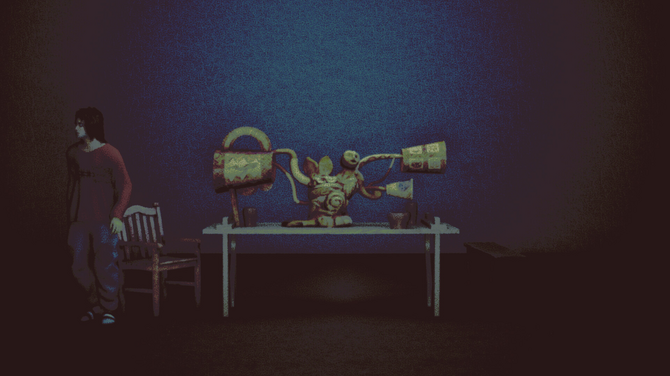
Also, for the beginning and end of the score, I structured it so that the motif* introduced at the start would come full circle by the end. Additionally, as mentioned earlier, I crafted the progression to correspond with specific events that were bound to happen. For example, “a section would play in sync with the event at 3:15.”
*A short melody that serves as the starting point for a phrase. A clear example is the iconic opening “da-da-da-da-da” from Beethoven’s “Fate” symphony.
――I see. So the events and the soundtrack are closely linked?
Kan: Yes, it really feels like music created specifically for this game.
Furuta: Aside from the events triggered by the player’s actions, there are several “world event”-like elements, and music is always synchronized with them. We were able to pull this off precisely because we had the one-hour time limit.
――So it was crafted to make full use of that one-hour constraint.
“It’s on the edge, yet somehow comfortable”—an analog-style visual aesthetic
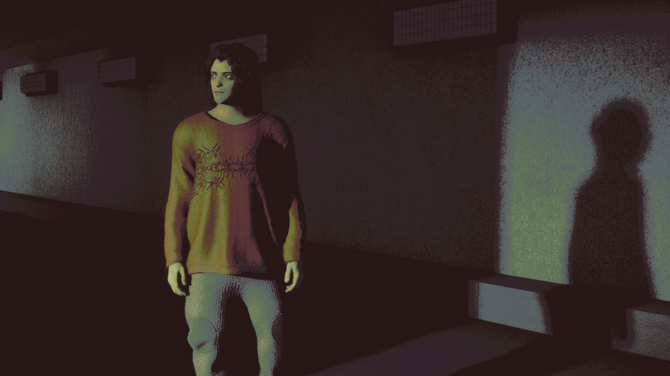
――Next, let’s talk about the visuals. In recent years, visual styles like “liminal space” and “weirdcore”—which originate from internet memes and feature inorganic, eerie aesthetics—have become more widely accepted.
While this game is influenced by those trends, its visual design also manages to convey a subtle sense of warmth.For example, the hand-drawn UI, color palette, and film-grain-like effects… So, what aspects did you prioritize most in the visual design?
Kan: As for the 3D effects, Hiro (Mr. Furuta) is the one creating them…
Furuta: But we do come up with the original concepts together. In terms of inspiration, we’ve been influenced by Japanese painting and print media like risography*. As for games that feature grainy effects, there’s *Return of the Obra Dinn*, but that title is characterized by a digital-style dithering.
*The name of a widely used stencil printer manufactured by Riso Kagaku Corporation; the term has come to refer to the printing method itself. It is a form of screen printing in which a stencil with fine holes through which ink passes is created for each color, and the colors are layered one by one, much like a print.The finely grainy texture and the subtle blurring of outlines caused by slight misalignment of the screens have enjoyed enduring popularity, and the technique is still used today as a form of retro printing.
While those kinds of effects are nice, for *A Passing in the Night*, I wanted to go for a slightly more analog look. I wanted to mix in some natural grain to create a texture that looks like it was printed on film.
Kan: A warm feel.
Furuta: Exactly. Printing that involves plates and ink—as opposed to a so-called inkjet printer—has an analog texture, so it has a certain warmth to it. We created the visuals with that in mind.
Kan: The term “liminal space” itself implies “the boundary between one place and another,” doesn’t it? Based on that, I created the visuals by imagining an ambiguous space between night and morning.
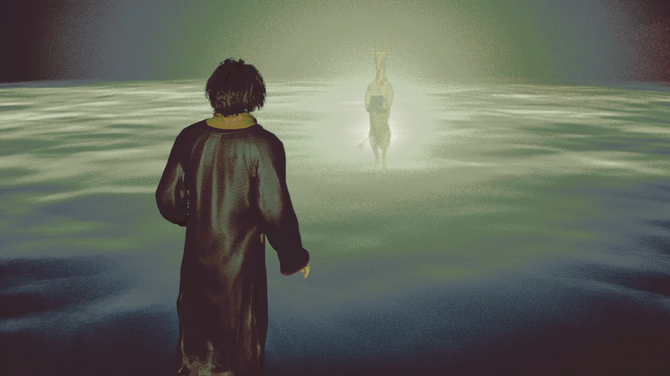
Furuta: That said, I feel like liminal spaces are often portrayed as “dangerous spaces,” but I also thought, “It doesn’t have to be dangerous, does it?” Even though it’s a liminal (threshold) space, we’re aiming to create a space where people can feel, “It’s actually pretty comfortable to be here.”
――By the way, when are you planning to release this title?
Furuta: Well… (wry smile). It feels like it might be released in 2026.
Kan: That said, we can see the end in sight, and we’ve prepared a demo version. We’d love for everyone to play it and give us some feedback.
――Finally, please share a message for our readers.
Furuta: Please enjoy a stroll through the muggy night.
Kan: We’re creating this game with the hope that even if you’re feeling down, you’ll be able to find beauty and comfort within it.
――Thank you very much!
During the hands-on demo at TGS, we got a glimpse of this game’s indescribable charm, as well as the strong dedication to game design shown by the two members of .Iris. Even though it’s supposed to be just a aimless stroll, I can’t wait for the full release.
“A Passing in the Night” is scheduled for release on PC (Steam) in 2026.



