


The term “cyberpunk” may already be overused.
Neon-lit cityscapes built on highly advanced technology.Dominance by massive high-tech corporations and rebellion against them. Cyborg bodies. Nowadays, just listing any of these elements is enough to create countless works that are merely “cyberpunk-esque.” That’s precisely why I was so surprised when I revisited *RUINER*—a game I’d originally played on PS4 upon its release and later repurchased for PC.
It gave me the same overwhelming sense as when I first played it—the feeling that “this is what cyberpunk action is all about.” Works that make you feel that way are actually quite rare.
Developed by Poland’s Reikon Games and released in 2017, *RUINER* is a top-down action shooter set in the corrupt corporate metropolis of “Rengoku City,” where a protagonist who has had her memories stolen rampages through the city to rescue her kidnapped brother.Although it’s been quite some time since its release, the game is starting to garner renewed attention following the announcement of its sequel, *RUINER 2*, and the decision to adapt it into a live-action film.
However, the reasons to play this game now go beyond just the buzz surrounding it.
“RUINER” retains—almost in its raw, unadulterated form—the very “essence” that the cyberpunk action genre was meant to embody: the feeling of a human being who, even while being crushed by immense power, still pushes forward.
In this article, we’ll explore why *RUINER* remains as relevant as ever and why it stands as one of the finest examples of the genre.

Experience the “essence” of cyberpunk action firsthand
The gameplay in *RUINER* is surprisingly simple. Shoot, slash, dodge, punch, and die. Then try again—it’s a cycle that repeats.
Dodge enemy bullets in slow motion, deploy an energy shield, and charge into the crossfire. Dive into the heart of the enemy, snatch their weapons on the spot to counterattack, and take control of the area. Combine abilities and optimize violence itself as you keep pushing forward.
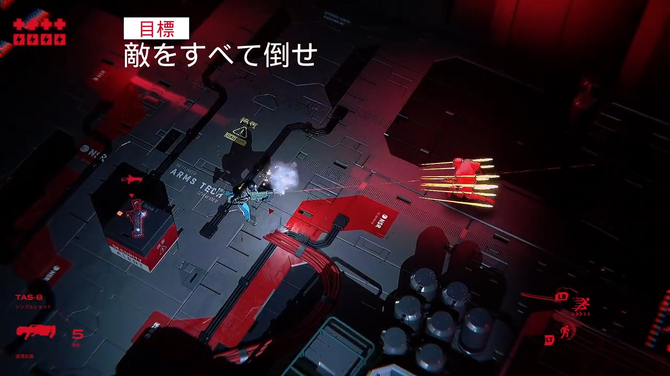
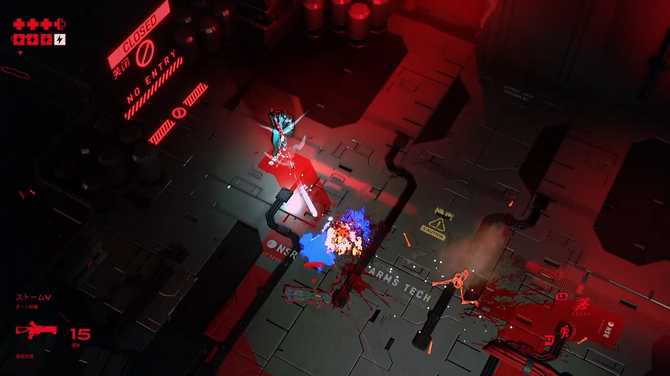
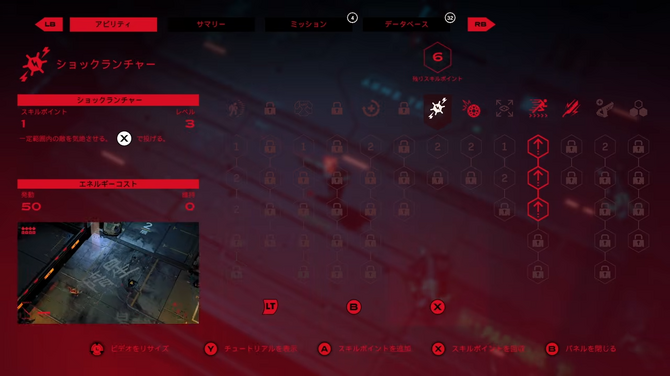
feels extremely simple, but it is precisely this straightforwardness that is the greatest charm of *RUINER*.
A protagonist who has lost his memory. A city dominated by corporations. Enemies who have lost their humanity. While these are familiar themes in cyberpunk, this game doesn’t dwell on them at length. By walking the streets, fighting, and surviving, players come to understand the distortions of this world through their own experiences.
The core of the cyberpunk action genre is by no means to depict “violence illuminated by neon lights,” but rather to portray humans who survive by relying on violence as their only means.
It can be said that *RUINER* is a work that has honed precisely that sensation to its absolute limit.
There is absolutely no compromise—neither in the music nor the art
When discussing *RUINER*, the music is an indispensable element.
Featuring talented artists such as Susumu Hirasawa, Zamilska, and Sidewalks and Skeletons, the soundtrack is not merely background noise—it’s a powerful engine that propels the player forward.
The heavy electronic sounds—a blend of industrial, EBM, and synthwave—mesh perfectly with the very rhythm of shooting and dodging.The moment the tempo and beat align as you mow down enemies, *RUINER* transforms from a “game to watch” into an “experience to immerse yourself in with your whole body.”
And the art that underpins this world is nothing short of breathtaking. Alleyways bathed in neon, advertisements for giant corporations, and citizens with cybernetic enhancements. An inorganic yet densely packed urban space is meticulously constructed in intricate layers.
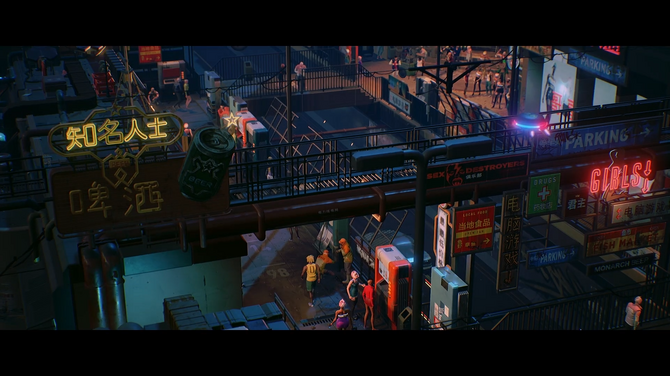

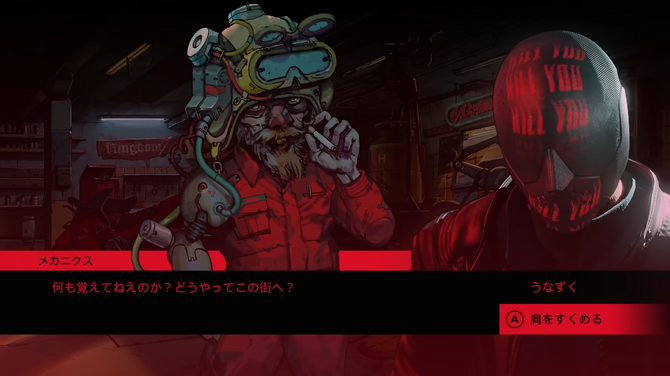
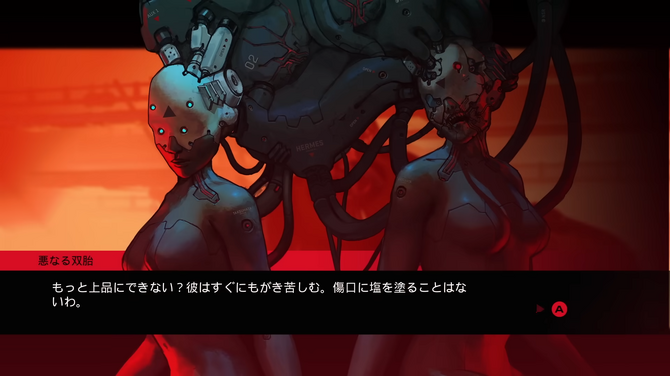

This isn’t simply a case of borrowing “cyberpunk-style” designs. Built upon a refined philosophy, this city genuinely strives to depict a “corrupted future.” This commitment is consistent from the backgrounds to the UI and character designs, with absolutely no compromise.
High difficulty, yet never unfair
*RUINER* is by no means an easy game. Enemy attacks are relentless, and a split-second mistake in judgment leads to instant death. It’s safe to say this game falls into the category of so-called “die-and-retry” games.
Yet, strangely enough, it’s not very stressful to play. The reason is obvious: retries are surprisingly fast.
I died countless times while playing. My controls were shaky, and I think I died at least 20 times just on the first difficult section. But since retries take only about two seconds, I’m back gripping the controller before I even have time to get frustrated. The time it takes to retry is a mere two seconds. You don’t even have time to feel frustrated before you’re heading back into battle thinking, “This time I’ll get it.”
You analyze why you failed and try again. You die again, then make adjustments. That rhythm is excellent. That’s why, even though it’s challenging, you never want to stop playing. This design seems to mean more than just comfort.
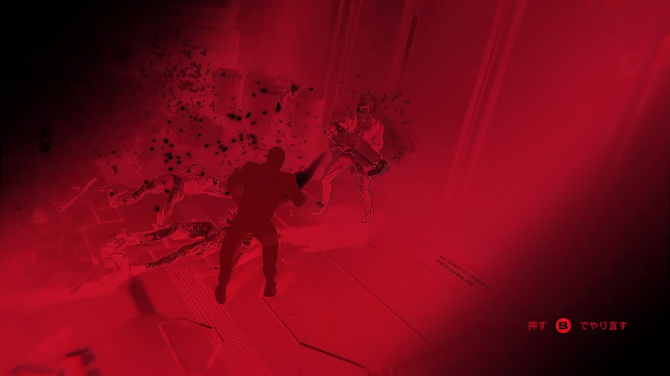
In Rengoku City—a city where even death is accompanied by hardship—no matter how many times you fall, you can get back up and keep moving forward; you have no other choice. The very act of the player repeatedly retrying is an integral part of this world.
“RUINER” teaches you, through gameplay, that high difficulty is not the same as unfairness.
Reasons to Play ‘RUINER’ Now
Now that *Cyberpunk 2077* is being reevaluated and the new *Ghost in the Shell* anime—which closely reflects the original manga—has been well-received, the cyberpunk genre is once again in the spotlight and has reached a turning point where it will be passed on to the next generation.
That’s precisely why no game is better suited than *RUINER* for experiencing the “over-the-top sensation” at the heart of this genre.
Of course, there are practical reasons as well. The game frequently participates in major seasonal sales and publisher sales on Steam, offering chances to purchase it at a discounted price almost every month. It’s not uncommon to find it for just a few hundred yen—a price that’s practically a steal considering the experience it offers. For those who’ve been curious but haven’t played it yet, the price barrier is very low.
Furthermore, the *RUINER* IP itself is now gaining new momentum.
In the sequel, *RUINER 2*, the game has evolved into an action RPG where you fight by using the bodies of defeated enemies as unique tools called “Shells,” and co-op play for up to three players is planned.
Furthermore, a live-action film adaptation by Universal Pictures is currently in the works. The production team includes 87North—known for films like *Mr. Nobody* and *Bullet Train*—with Wes Ball, director of *Planet of the Apes: Kingdom*, at the helm, and the project is drawing significant attention as an adaptation of a video game.
As the cyberpunk genre gains momentum, *RUINER* is also poised to enter a new phase. The number of people discovering this title through the sequel or the movie is sure to grow. That’s precisely why it’s worth experiencing the original game now.
A lingering sensation even after beating the game
Even after I finished the game and put down the controller, the chaos of Heaven and the sensation of dying and respawning over and over again were the only things that lingered in my ears and hands.
It’s not just because it’s cheap, or because a sequel is coming out—it’s more than that. I simply couldn’t help but want to tell someone who hasn’t yet experienced this sensation—that “over-the-top feeling” that *RUINER* provides. That’s why, right now, I want to talk to someone about *RUINER*.
“Cyberpunk” isn’t just a term referring to symbolic neon lights or cybernetic bodies themselves. It’s a genre that depicts human resistance—people who keep moving forward even as they’re on the verge of being crushed by a colossal force. In *RUINER*, that very sensation remains with astonishing purity.
That’s precisely why, to anyone who wants to know the “essence” of cyberpunk action, I can say this without hesitation:
“First, I want you to play *RUINER*.”




