


Recently, following his unique take on the *Armored Core* series, Mr. Ollie Bader has become known among many Japanese people as “the foreigner who knows way too much about robot games and robot anime.” In fact, he is a journalist who has spent many years introducing Japanese subculture—primarily games and anime—to the rest of the world, as well as a game creator who has been involved in a wide variety of titles.

In an interview with our magazine, he confided that his recent biggest frustration is, “I can’t find a studio that will let me make a robot game!” In this article, we’d like to share a glimpse of his perspective and aesthetic regarding “robot games and robot anime” through his own words.
The Decades-Long Struggle of the International Version of *Heavy Armor Valken*

One of the mecha games that became an unexpected hit overseas in the ’90s was a title that is very well known and highly regarded in Japan. However, since the title used for its overseas release differed from the one known in Japan, some readers may not have recognized it.
Back in the ’90s, Konami released Messiah’s *Heavy Armor Valken* overseas under the title *Cybernator*. At first glance, it appeared to be *Valken* itself, but in reality, it was a version that had undergone numerous changes—whether intentional or not.
First, all the character portraits created by Satoshi Urushihara were removed, and much of the story was mistranslated. Additionally, the scene toward the end of the game where the enemy nation’s president commits suicide was also cut.
Nevertheless, “Cybernator” was beloved overseas and had a significant impact. That influence extended to titles like “Metal Warriors” (as explained previously, this game has no direct connection to “Cybernator”), and “Metal Warriors” would later go on to influence the “Titanfall” series as well.
Why Is *Heavy Armor Valken* Special?

Although *Heavy Armor Soldier Raynos* had previously been released for the Mega Drive overseas under the title *Target Earth*, it wasn’t until *Heavy Armor Soldier Valken* appeared that overseas players truly understood what a 2D mecha game should look like and how it should be played.
At the time, titles like *BattleTech* and *MechWarrior* were already well-known, and there was a certain degree of consensus regarding what a mecha game should be like.
However, the release of the *Heavy Gear* series for PC was still a few years away, and mecha anime like *Armored Trooper Votoms* were relatively unknown overseas at the time.
Consequently, when *Cybernator* was released in the U.S. in 1993 and in Europe the following year, there was no other title that resembled it in either visuals or gameplay.
As mentioned earlier, gamers overseas tend to prefer mecha games with a strong military theme and an emphasis on realism, and *Valken*—a very well-crafted game—truly delivered on that front.
Even so, some people were dissatisfied with the game’s difficulty, but with enough practice, they were able to master the controls and complete the campaign.
Japanese games were rarely translated accurately
Although this is a bit of a digression from the main topic, I feel it’s important to address this issue here. Simply put, the vast majority of Japanese games—and a significant number of anime—are not accurately translated overseas.
When anime and Japanese games first began expanding overseas, the prevailing view was that each work needed to be adapted to fit the culture of the country or region where it was released.
As a result, titles and names were often changed entirely, and new characters or storylines were frequently added to make them more accessible to international audiences.
Eventually, companies realized that what overseas fans actually wanted were versions faithful to the original Japanese games and anime, but another problem emerged at that point.
Back when these early games and anime were being translated, some English translators, seeking to make a name for themselves, began altering the stories and claiming credit for them as their own creations. (For Japanese mecha fans, the relationship between *Super Dimension Fortress Macross* and *Robotech*—which continues to this day—is well known.)
Simply put, they wanted to be recognized and appreciated not merely as translators, but as creators.
This remains a major issue in the gaming industry today, and I sincerely hope that Japanese game and anime companies will recognize this situation and take appropriate action.
Rectifying One of These Cultural Injustices

This brings us back to *Valken*. After working on various projects in the gaming industry, I was given the opportunity to resolve one such cultural injustice with my own hands.
That project was *Heavy Armor Soldier Valken: DECLASSIFIED*, released for the Nintendo Switch on March 30, 2023.Through a series of fortunate circumstances, I came to serve as the creative director for this version. Based on the Japanese version of the Super Famicom *Heavy Armor Valken*, we not only completely retranslated the entire game into English but also added various convenient features and included an English-language version of the guidebook and interviews with the development team.
At the time, I had several options to choose from, but the reason I specifically chose this game was to restore the translation and story to their original form and to bring back the final scene that had been removed from the international version. There were several major challenges in that process, but as you can see from the finished product now on the market, I believe we were able to achieve them in a thoroughly satisfying manner.
First, for this project, I wanted to work withM2, a studio with an impressive track record in “remastering” retro games. And they truly did a fantastic job on *Valken*.Even before we worked together on *Valken*, I held this studio in very high regard, but after seeing the work they accomplished on this game, I can only describe them as “wizards of game development.”
Next, we needed to include the original Japanese guidebook with this game. This was a crucial element of the original version released in Japan—it contained nearly the entire backstory of the game—but it had never been published in English before.
Third, it was important to identify the game’s mecha designer. M2 helped us with this as well, directing us to contact Satoru Nakai, who had created much of the game’s art and was also responsible for the mecha designs. Mr. Nakai is a truly delightful person, and we worked hard to include an interview with him in the game.
Finally, we needed a completely new translation that accounted for the terminology used in the guidebook. By doing so, we were able to ensure consistent terminology throughout the entire English version.
As you can imagine, translating the 80-page guidebook and the entire game, plus conducting an interview with the game’s mecha designer, required a tremendous amount of work—but that was still just the tip of the iceberg.
Super Plays and Additional Content

In addition to the above, we were able to secure new artwork by Satoshi Urushihara for the game, though this was by no means an easy task.
In addition to the game’s soundtrack, we also included wonderful arranged versions of the tracks.
Furthermore, for both the Japanese and English versions, I was responsible for preparing the source data for the game’s “Super Play” (a feature similar to an advertising demo that lets you watch a playthrough of the game’s various elements from start to finish without dying). When the project first began, my skills had naturally gotten a bit rusty, but by the end, I was able to naturally complete a no-death run that reached the “Good” ending.
Of course, the release of this title wasn’t the result of my efforts alone—the entire staff atRainmaker, who served as the publisher at the time, worked incredibly hard, so I don’t want anyone to think I did it all by myself.
Why “Valken” Is Important
I still believe that being able to re-release *Valken* in this form—especially for an international audience—helped right a decades-long cultural injustice. All the work was worth it. Because now, players can experience the original version exactly as the Japanese developers intended.
This might seem like a trivial matter or a silly obsession, but for someone like me who has been involved in game development for many years, these things are important in the long run.
I, too, was able to properly play *Valken* with an accurate English translation and actually experience what kind of game it was meant to be.
Also, now that I’m of a certain age and have watched my fair share of mecha anime, I’ve come to understand how games like *Valken* were heavily influenced by anime series such as *Armored Trooper Votoms*. Now that I’ve gained both age and experience, I think it’s truly wonderful to be able to understand all of that.
That’s not to say I didn’t enjoy *Cybernator* back in the ’90s. It was a wonderful game in its own right. However, it was a great joy for me to correct the various issues from that era and bring *Valken* back to its true form.
With that in mind, I’d like to conclude by sharing another “Superplay” video—one that wasn’t included in the retail version of *Heavy Armored Soldier Valken: DECLASSIFIED*—which I recorded for my own YouTube channel. Please forgive me if the gameplay appears a bit clumsier compared to the version included in the retail release.
Any studios or organizations interested in collaborating with Mr. O’Leary to create a “robot game” are welcome to contact him directly via the profile link at the end of this article.

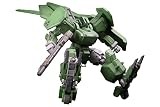
¥7,255
(価格・在庫状況は記事公開時点のものです)
