


It’s been seven years since *Fire Emblem: Three Houses*, the best-selling title in the *Fire Emblem* series. *Fire Emblem: Elysian Blossoms*, the latest installment set in the same world, has finally been released.
With a story that changes depending on the protagonist you choose and a narrative that spans five years, at first glance, it might seem like a natural sequel that faithfully carries forward elements from *Three Houses*.
However, in reality, the gameplay in this title is vastly different from *Three Houses*. In fact, it has become a work with an extremely unique design unlike any previous *Fire Emblem* game.
What’s most overwhelming of all is its incredibly grand game design. I’ve played this title for about 70 hours so far, yet I still feel I haven’t been able to explore every single element.Game*Spark plans to publish a review of *Fire Emblem: Three Houses*, but for now, to convey just how extraordinary this game is, we’re bringing you this play report.
An Ensemble Drama and Epic Tale of Heroes with a Bottomless, Enormous Scope
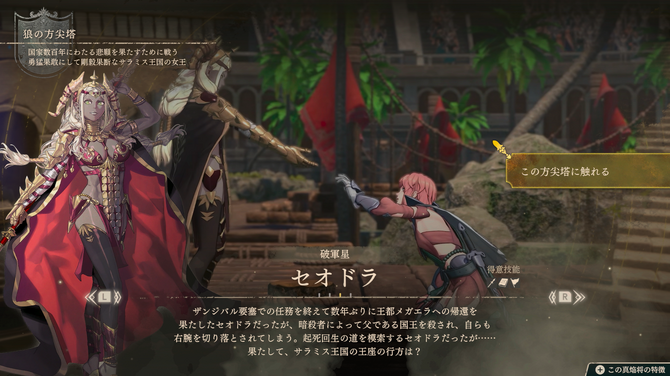
As mentioned above, the story spans five years, and the game’s structure is broadly divided into two parts: five years ago and five years later.
The “five years ago” segment depicts the four protagonists—Kai, Dietrich, Theodora, and Leda—as they take on the “Great Gladiatorial Festival,” a festival held in the imperial capital of Dagshion, each from their own perspective.Through the stories of these characters—each with their own motives and goals—the full scope of the land of Dagza, where the story is set, is gradually revealed.
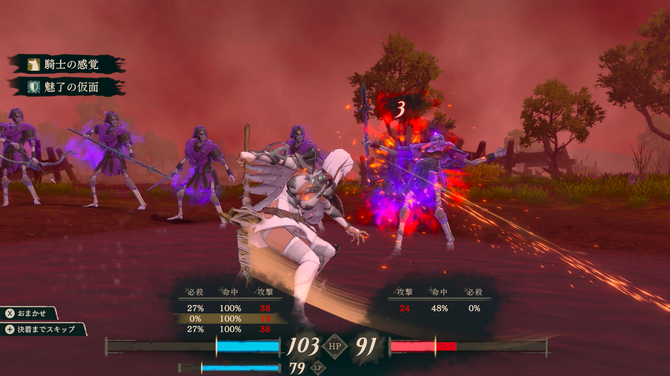
In the “five years later” segment, you take on the role of the “Savior” to rescue Dagza, which is on the brink of destruction at the hands of the demon Barol’s army. The protagonists who cleared the “five years ago” segment join you as allies, and from here, the battle shifts to an all-out offensive.
As a result, the Great Gladiatorial Festival segment set five years prior is not only an ensemble drama in its own right but also serves as preparation for the events five years later. The characters you’ve carefully nurtured to win the Great Gladiatorial Festival will go on to play a key role in the decisive battle against Barol.
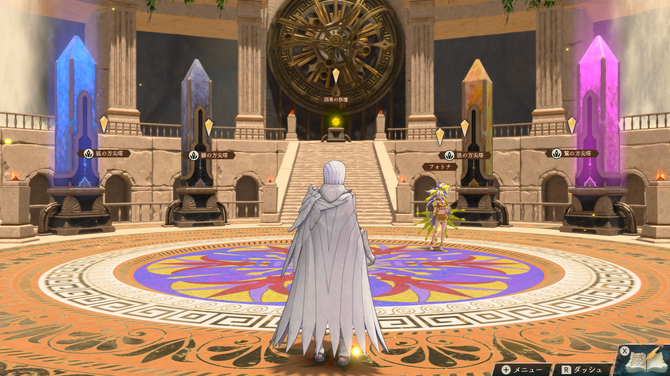
However, many players with a playtime similar to mine may not have reached this “five years later” point yet. If you aim to clear the stories of the four protagonists and rescue them before the decisive battle five years later, it seems it would take around 100 hours at that point.
Since you can take on the final battle even without having cleared all the protagonists’ stories, I decided to attempt it once I had finished the “Kai” and “Leda” routes.
Even in this state, the game allows you to progress through the five-year-ago protagonists’ routes while maintaining your progress from five years later. Since the game uses auto-saves, making it harder to perform what’s commonly known as “reset farming,” it appears the game is designed to minimize “irreversible elements” as much as possible throughout the entire experience.
Adventure and Daily Life: A “Challenging Simulation”
In *Fire Emblem: Three Houses*, there was a character-development segment centered around school life, where you nurture students as their teacher. As the calendar advances day by day, you teach classes to improve skills, make full use of facilities within your base, and go on expeditions to battle enemies—all while seeking the most efficient way to develop your characters.
Even so, the available choices are somewhat limited, and regardless of what you choose, the story ultimately progresses in a linear fashion; as a result, if your goal was simply to clear the game on Normal difficulty, you probably didn’t have to worry too much about character development.
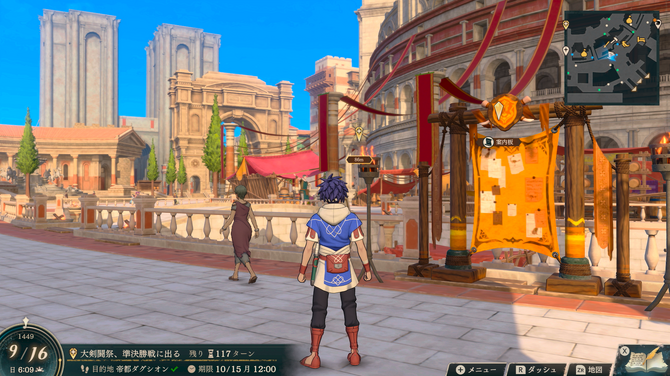
In contrast, *Manjikikou* significantly complicates the options available during this preparation phase, leaving you to agonize over “what’s the right place to start.”
Within the Imperial Capital of Dagsion, located at the center of the Dagsia Continent, you can perform various actions, such as “Training” to improve your allies’ skills, “Dining” and “Watching a Play” to raise support levels between characters, and “Service” to enhance the blessings received from the Divine Rank.
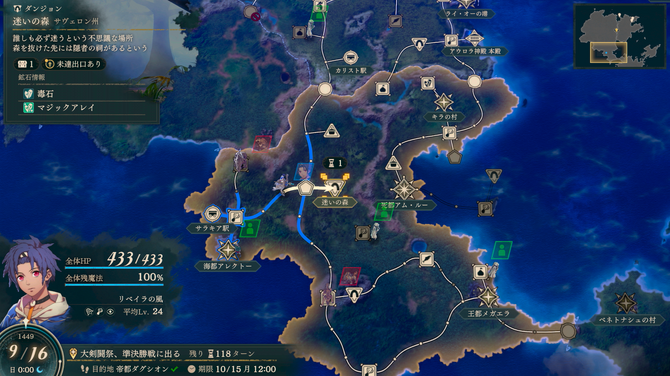
It’s also important to leave Dagsion and perform various actions on the “World Map.” There’s a vast array of things to do on the World Map, such as completing quests received in Dagsion, utilizing each protagonist’s unique abilities, collecting materials, acquiring equipment, and leveling up in dungeons.
In most cases, these actions consume “turns,” a unit of time linked to the in-game date and time. Your management and scheduling skills will be put to the test as you strive to develop your characters as efficiently as possible within a limited number of turns.
On the world map, resources such as remaining magic points and HP do not recover after battle, so you must recover them at specific locations—a requirement that demands careful resource management throughout your adventure.
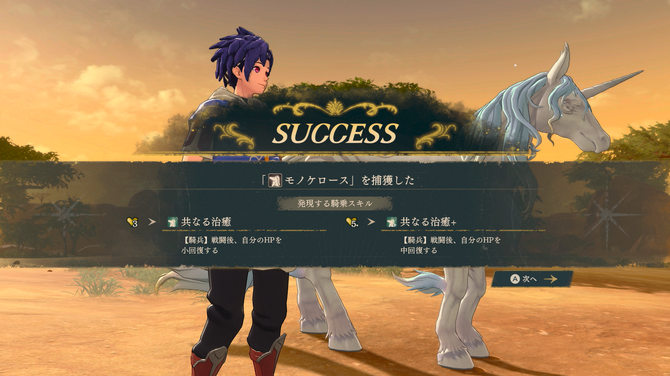
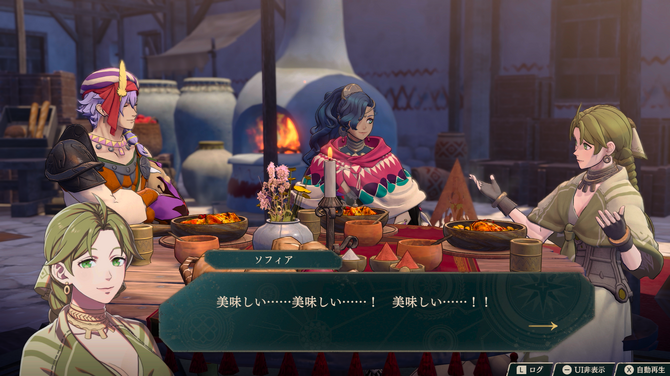
Given this level of complexity, it feels less like a mere “preparation phase” and more like a “simulation” of adventure and daily life within a fantasy world.You acquire new weapons for the next battle, train to strengthen yourself, consider who to spend time with and when, and devote yourself to exploring the world map as your horizons expand step by step. Including actions that vary depending on the protagonist, this game spares no effort in letting you role-play life in the Land of Dugza.
As you enjoy the adventure and character development—feeling a sense of immersion similar to playing a CRPG—battles in the main story occur regularly, providing opportunities to fully test the results of your efforts.
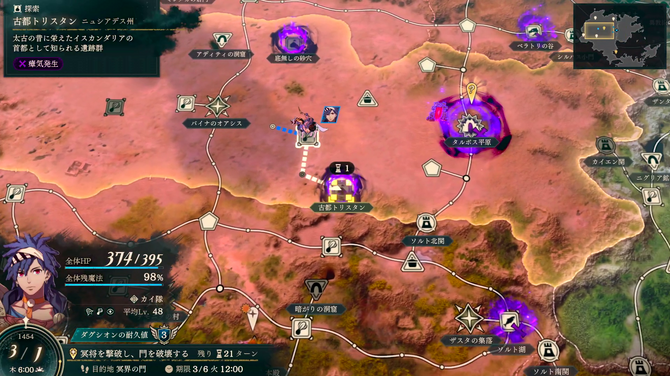
And five years later, the reason why movement and actions on the world map were designed as a simulation-style system that consumes turns becomes clear. I’ll avoid going into specific details, but I was amazed by the design—from as far back as five years ago—in which every system and story element was meticulously laid out to converge into an epic heroic saga.
Combat eventually becomes quite challenging
Perhaps because the game features such a complex system, the early stages include a fair amount of tutorials. In line with this design, the combat difficulty is quite low at first, so players who are well-versed in the series might find it a bit underwhelming for a while.
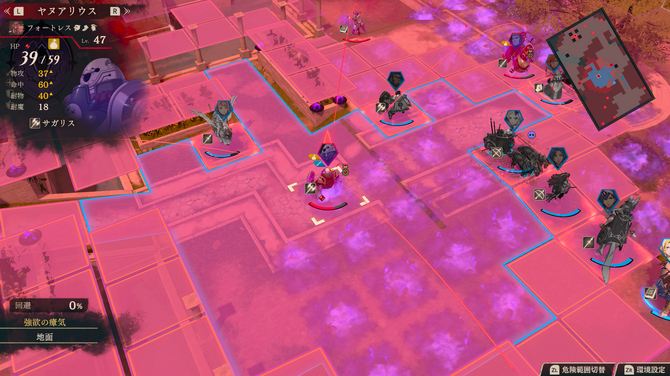
While following this gentle difficulty curve, the game gradually begins to show its true colors. In particular, after clearing the Great Gladiatorial Festival section, the size of the battle maps visibly expands, and both the number of allied troops required and the number of enemies increase.Including the side story maps, each stage is designed to offer a unique gameplay experience, and the variety of victory conditions and distinctive map layouts ensure that nothing is straightforward.
Exploration on the world map also evolves into gameplay that demands more resource management, making every single move crucial. It feels like the game is balanced so that you can win by fully utilizing the weapons, skills, and stats of the characters you’ve painstakingly raised over the past five years.
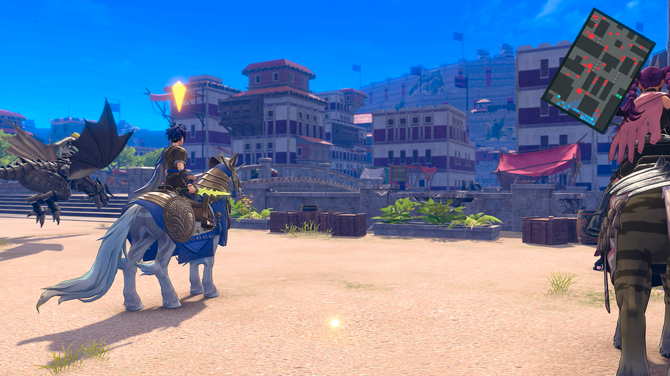
Since it takes time to grasp the game’s overall structure and for the challenges to really kick in, this title is one where your assessment can change significantly between the early and late stages. However, once you get the hang of it, you’ll find yourself getting sucked deeper and deeper into this unique yet harmonious new *Fire Emblem* experience.
*Fire Emblem: Ten Thousand Colors* is currently available for the Nintendo Switch 2.





