


*Tales of Eternia* (hereinafter referred to as *Eternia*) was released for the PlayStation in 2000.It is the third installment in the *Tales of* series, following *Tales of Phantasia* and *Tales of Destiny*, and is widely recognized as one of the titles that laid the foundation for the series’ history, which continues to this day.Now, *Eternia* is being revived for the modern era as a remastered edition.
Based on the PSP version released in 2005, this title features remastered graphics and various new features tailored to modern gameplay, such as icons indicating destinations and fast travel across the field. Rather than completely overhauling the game system through a large-scale remake, the focus is strictly on making the original *Eternia* experience more accessible in today’s gaming environment.
Game*Spark recently had the opportunity to play *Tales of Eternia Remastered* (hereinafter referred to as *Eternia Remastered*). In this article, we’ll share our impressions after playing for about 30 minutes and discuss the game’s enduring appeal.Additionally, the latter half of this article features an interview with Shuhei Tamakoshi, the producer of the remastered version.
*Screenshots are from the in-development version.
Traveling Between Different Worlds Is the Theme of the Story
*Tales of Eternia* is set in a world where two realms coexist: Inferia and Celestia. The protagonist, Rid, who lives in Inferia, along with his childhood friends Fara and Keel, encounter a mysterious girl named Merdi who has come from Celestia, leading them to embark on a journey far removed from their everyday lives.

In this demo, Merdi informs the party that the “Grandfall”—a collision of the two worlds—is imminent, and they discover that to stop it, they must enlist the power of the “Great Crystal Spirit,” which governs all phenomena.The plot follows Rid and his party as they head toward the Crystal Spirit River, home to “Undine,” the Great Crystal Spirit of Water… That’s the basic synopsis.

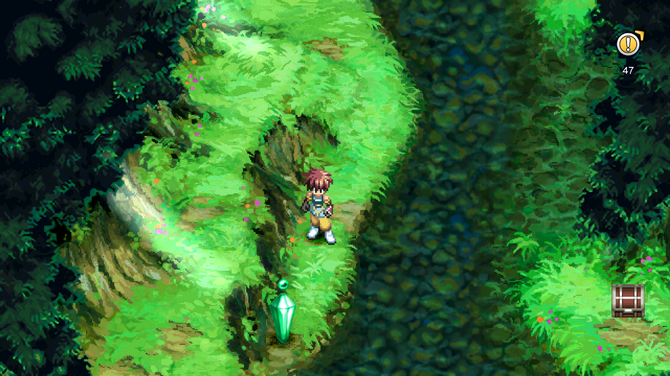
This playthrough took place in the early dungeon of this epic story, where we made our way toward the deepest chamber where Undine resides. One feature I found particularly helpful was the destination icon added in this remaster.Since an icon indicating the destination appears on the screen, you no longer have to constantly wonder, “Where should I go next?”—a problem common in games from that era where it was hard to distinguish between passable paths and impassable walls. Basically, just follow the icon, and the story will progress.

However, exploration isn’t simply a linear path; there’s still room to take detours on your own, such as searching for treasure chests. This removes the inconvenience while preserving the joy of exploration from the original game. This aspect demonstrates how *Eternia Remastered* has been fine-tuned to make the original gaming experience more accessible to modern players.

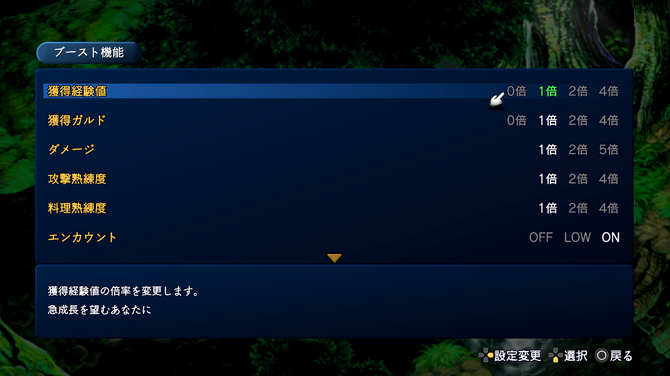
A “Boost Feature” has also been added as a new function in the remastered version.In addition to adjusting the multipliers for experience points, Gald, and damage, players can also toggle features like random encounters and death penalties on or off. This makes it useful not only for those who want to level up efficiently but also for players returning to *Eternia* after a long absence who wish to enjoy the story quickly.Furthermore, since you can switch between two types of background graphics—the remastered version and the original version—I felt this was a balance designed for both fans who want to play while preserving the original atmosphere and new players who want to enjoy the game comfortably in a modern gaming environment.
Lid and the others aren’t “heroes who save the world” from the start
A major appeal of *Eternia* is how the relationships between the four characters—Rid, Fara, Keel, and Merdi—gradually evolve as the story progresses. In particular, the protagonist, Rid, isn’t someone who has lived with a mission to save the world from the very beginning. Rather, he’s a person who prefers a peaceful life and is bewildered by being suddenly swept up into a journey to save the world.As he continues his journey with Fara, Kiel, and Merdi, he begins to confront the world’s problems and reflect on what he himself should do.
As depicted in the demo footage, when it was revealed that preventing the Grandfall would require the power of Great Spirits other than Undine, Rid’s remark—“This is beyond our capabilities, so let’s leave it to the king”—symbolizes his humanity.Even in the face of a global crisis, he doesn’t feel he should be the one to confront it head-on; instead, he tries to leave it to someone with greater power. It is precisely because he displays these down-to-earth reactions—and because he wasn’t a hero from the start but rather a character who discovers his purpose through his journey—that players can easily empathize with him, and following his growth has become a major focal point of the story.


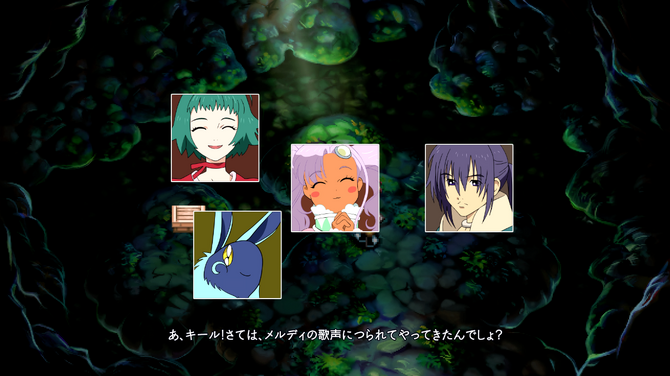
His companions also each have their own circumstances and pasts. Fara is straightforward, proactive, and a pillar of support for Lid.Keel, who is logical and has the meticulousness of a scholar. Merdie, who comes from another world and is pure-hearted and honest. As the four continue their journey—clashing over opinions, learning about each other’s perspectives, and occasionally exchanging lighthearted banter that strays slightly from the main plot—it’s heartwarming to see their relationship evolve not as a “party assembled to save the world,” but as “friends traveling together.”
Battles That Still Feel Great Today
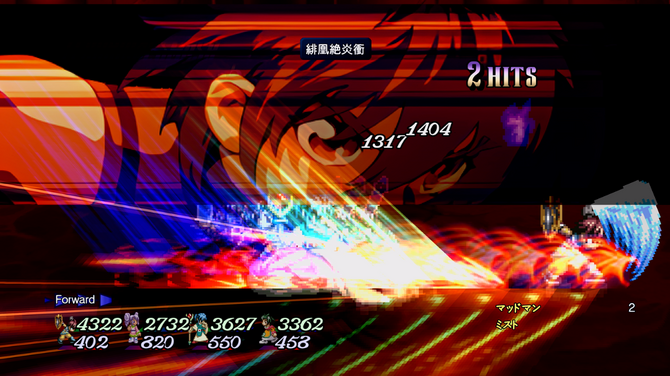
When introducing *Eternia*, the combat system is an essential element. This title employs the “Aggressive Linear Motion Battle System (A-LMBS),” allowing players to chain up to three normal attacks and enjoy exhilarating battles where combat isn’t interrupted even when using intermediate or higher-level spells.While these features may seem “obvious” in hindsight, this game—which also marked the first implementation of Secret Arts—is an epoch-making masterpiece that served as the culmination of the series’ early years and had a massive influence on the *Tales of* franchise.

In battle, characters move around a 2D field, fighting enemies by combining normal attacks, special moves, secret techniques, and magic.While combat in the current series mainly involves moving freely through 3D spaces, revisiting *Eternia*’s battles now makes you strongly feel the unique satisfaction of 2D gameplay—intuitively gauging distance from enemies and attack timing while unleashing a continuous barrage of attacks. Because the characters’ movements and the player’s inputs are intuitively linked, allowing combos to be executed with simple controls, I didn’t get the impression that it was “hard to play just because it’s old.”

Although this game is over 25 years old, the enjoyment I still feel playing it today cannot be explained by mere “rose-tinted nostalgia.” It’s precisely because the fundamental aspects of the game—moving your character to attack enemies, chaining attacks together, and using spells and techniques while identifying enemy weaknesses—were so well-crafted back then that I could still enjoy it even in today’s gaming environment.

This remaster includes features such as the ability to toggle encounters and death penalties on or off, as well as the option to speed up battle pace during auto-battle, allowing players to adjust the game’s difficulty to their own preferences.A major highlight of this remaster is that it allows players to choose how they want to play based on their current circumstances: those who want to savor *Eternia* at a leisurely pace can play as they always have, while those looking to efficiently level up or handle battles while on the move can make use of these various features.
Strength that evolves, a passion that remains unchanged.
*Eternia Remastered* includes convenient features designed to make this RPG—released over 25 years ago—accessible in today’s gaming environment, such as destination icons, fast travel across the field, and a boost function.What struck me during my roughly 30-minute hands-on session was that while the gameplay has been adapted for modern audiences, the story, characters, and battles of *Eternia* still possess an enduring charm that hasn’t changed.
Although the 30-minute hands-on session only covered a small part of the game, playing *Eternia*—now optimized for modern environments—allowed me to rediscover the core of its appeal.In particular, the battles retain the satisfying feeling of moving characters across a 2D screen and chaining together attacks—a sensation that hasn’t faded, reminding me that some things remain unchanged even after all these years.
*Eternia*’s tagline is “Strength That Changes, Feelings That Remain the Same.” More than 25 years have passed since the game’s release, and both the gaming landscape and the level of comfort players expect from games have changed significantly. However, the memories held by those who played it in the past—and the experiences that new players will find enjoyable—have not changed with the passage of time.
This remastered edition serves to reconnect the original version—separated by a long span of time—with today’s players. It is precisely because some things have changed that we can appreciate what remains the same. How will *Eternia* be perceived not only by those who know it, but also by those who are encountering it for the first time? *Eternia Remaster* seems poised to offer an opportunity for you to discover the answer for yourself.
An Interview with the Remaster Producer!

――It’s been over 25 years since the original version was released. Could you tell us why you decided to remaster *Eternia* now?
Mr. Tamakoshi: This will echo the official stance on the remaster project previously communicated by the series, but the project is being managed with the goal of making as many of the numerous titles in the *Tales of* series—which is celebrating its 30th anniversary—playable on current-generation consoles as possible.
Our policy for the remaster project is to announce and release titles in the order that their completion is most certain, and this marks the first time we’re able to deliver a remaster of *Eternia*, a title from the 2D era.
――“Eternia Remaster” is priced more affordably than previous titles in the Remaster Project or the original versions. Is this also intended to reach a wider audience?
Mr. Tamakoshi: Taking into account factors such as this being the first remaster in the 2D series, we’ve set the price so that as many customers as possible can enjoy the game.
――I think *Eternia* is a particularly popular title in the series—did you feel any pressure regarding the remaster’s production?
Mr. Tamakoshi: To be honest, I felt a great deal of pressure. *Eternia* is a wonderful game, and even now—more than 25 years after the original was released—it still has a large following of passionate fans. We’re approaching this project with the mindset of not betraying their expectations and are working to ensure the remaster lives up to them.
――Could you tell us about any challenges you faced while developing *Eternia Remastered*?
Mr. Tamakoshi: *Eternia* was originally released for the PlayStation in 2000.Including the PSP version released in 2005—which serves as the basis for this remaster—the game provides far fewer in-game explanations compared to modern titles. I believe it was born in an era where players enjoyed figuring things out on their own while gathering information from external sources like print media and the internet.Given that this is a title that players associate with positive feelings like “It was fun” and “It’s a memorable experience”—including the playstyle of that era—our goal was to preserve the essence of the original while ensuring that modern players could enjoy it comfortably thanks to the remaster’s additional features. The entire team spent a great deal of time carefully balancing these two aspects.
First, regarding the core systems, we developed the remaster in accordance with the original version, just as we have with past remastered titles. On the other hand, for elements that would be difficult to discover without a guide, we decided to include support features in the remaster.For example, regarding destination icons, in addition to those indicating the next destination, we’ve added new destination icons for valuable items and time-limited sub-events—elements that received no specific guidance in the original version. While there were elements in the original version that you couldn’t discover unless you talked to every single NPC, I believe the game’s accessibility has improved significantly.
――“Eternia” features hidden elements, such as secret techniques. How did you approach guiding players toward these elements in this remaster?
Mr. Tamakoshi: As for the hidden elements from the original version, we have not made them obvious just by looking around the game world in this remastered edition either. Regarding hidden elements, we hope players will experience the game with a playstyle similar to that of the original version.
――In *Eternia Remastered*, have all the bugs that occurred in the original *Eternia* been fixed?
Mr. Tamakoshi: While there are various types of bugs, we have thoroughly fixed any issues—such as those related to flags—that hinder normal gameplay.
――Regarding the content in the main *Eternia* game, some elements might be considered quite intense by modern standards. Is the policy to remain faithful to the original rather than modifying those parts to meet contemporary standards?
Mr. Tamakoshi: While we’ve adjusted the designs of some items and effects from the original version, we haven’t made any changes to the characters’ dialogue or the story; we’ve remastered the game in a way that stays true to the original.
――I understand that subtitles have been added to skits and cutscenes in the remaster. Did you refer to historical materials when creating the Melniks language and other elements?
Mr. Tamakoshi: For the subtitles we’ve added this time, we transcribed the dialogue based on development data from that era and materials provided by the development team.
――The original version had a feature that allowed players to change character names, but this has been removed in the remaster. Could you tell us why it was removed?
Mr. Tamakoshi: Regarding that feature, even if you changed Lid’s name to something else, the name “Lid” would still appear in the character’s dialogue text and voice lines. We determined that leaving the names unchanged would enhance immersion in the scenario and emotional connection to the characters, so we decided not to implement the character name change feature in the remastered version.
――A remastered “Graphics Mode” has been added. Are there any specific spots or areas you’d like players to pay special attention to?
Mr. Tamakoshi: Regarding the graphics, the entire team—including the development and debugging teams—worked together to thoroughly check the game, improve its quality, and fine-tune the balance. Therefore, rather than focusing on specific spots, I hope players will simply enjoy the game as a whole.
――Mr. Tamakoshi, what do you personally consider to be the appeal of *Eternia*?
Mr. Tamakoshi: Speaking purely as a fan—not as a producer—I’m a huge fan of *Eternia* myself, and I’m particularly fond of Keel. I think its appeal lies in how every element—from the captivating story and charming characters to the polished battle system and music—is perfectly balanced and harmonized, so I highly recommend the game as a whole.
――I imagine some people will be experiencing the *Tales of* series for the first time with this title. Is there anything in particular you’d like new players to focus on or enjoy?
Mr. Tamakoshi: I would be absolutely delighted if there were players who were introduced to the *Tales of* series through *Eternia Remastered*.The elements that the *Tales of* series has consistently cherished—from its earliest titles all the way to the latest, *Tales of Arise*—such as encounters with wonderful characters, adventures, and dramatic storytelling—are still very much present in *Eternia*, even though it is a relatively older title in the series.So, I believe that whether you’ve played the original version or are experiencing the series for the first time with this title, you’ll be able to enjoy the adventure story of “Eternia” unfolded by Rid and his companions and be moved by it in the same way.
――You just mentioned appealing to new users, but conversely, what aspects do you hope fans who played the game back then will focus on to encourage them to pick it up again?
Mr. Tamakoshi: I think even among players who experienced the original version, there are those who are looking for different ways to play compared to back then. The convenience features we’ve added this time are essentially designed to be turned on or off at the player’s discretion.
For example, players who want to experience the atmosphere and gameplay similar to the original can turn off the convenience features and play in “Original Mode” with the graphics set to the original style.On the other hand, for players who prefer a certain level of convenience, I hope they’ll experiment with the new features we’ve added—such as the boost function—and adjust the settings to suit their current environment, allowing them to rediscover the game’s timeless appeal.
――Thank you very much.
*Tales of Eternia Remaster* is scheduled for release on October 15, 2026, for Nintendo Switch 2, Nintendo Switch, PS5, PS4, Xbox Series X|S, and Steam (*the Steam version will be released on October 16*).The price is 3,960 yen (tax included).
Please check the official website for details.
Tales of Eternia Remastered & ©Bandai Namco Entertainment Inc. ©Mutsumi Inomata



