


The soul-triage adventure game “UN:Me” is set to be released in 2027. Historia Co., Ltd. is handling development, and Shueisha Games will serve as the publisher.
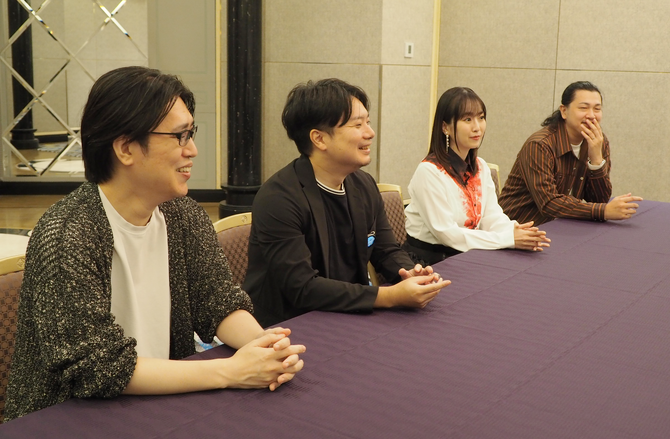
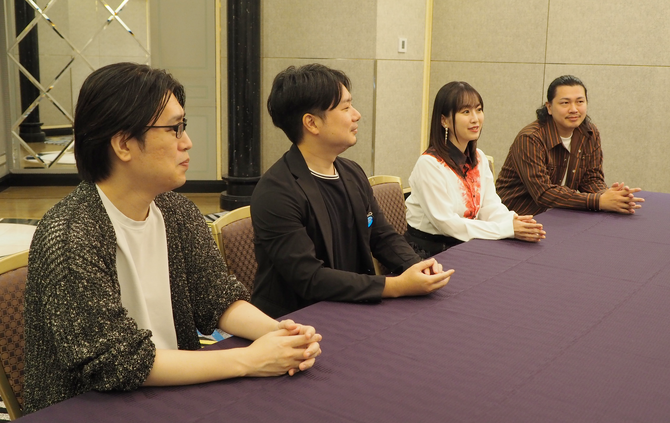
To coincide with the game’s exhibition at the “Tokyo Game Show 2026,” an interview was conducted with Mr. Taiichi Kawai, the game’s executive producer at Shueisha Games; Mr. Shun Sasaki, CEO of Historia Co., Ltd. and the game’s planner and director; Mr. Takuya Yamanaka, who is in charge of the game’s planning and scenario; and Ms. Yumiri Hanamori, who voices the protagonist.
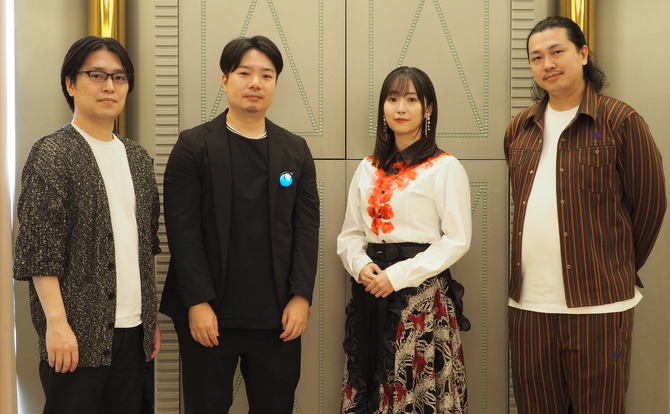
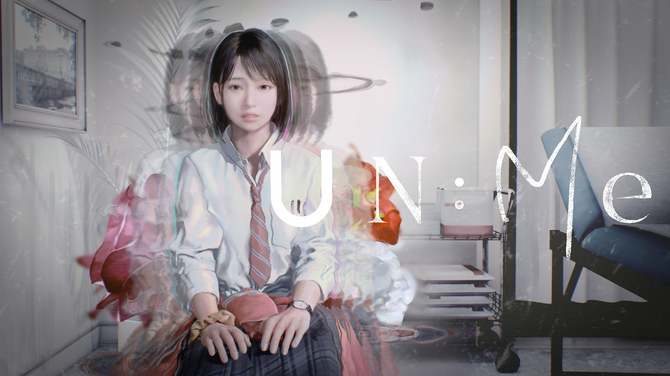
We asked them about the game’s concept and themes, as well as what Yumiri Hanamori prioritized in portraying the four souls and her thoughts on her performance.
The desire to take on new challenges, the reason for focusing on “anxiety,” and how this differs from the *Caligula* series
――Thank you for joining us today. First, could you please tell us once again what makes this game unique?
Taichi Kawai (hereinafter Kawai): The protagonist of this game is a girl who harbors four souls within her body. The player controls the girl and advances the story while exploring a world that is both beautiful and eerie.
Along the way, the player engages in repeated dialogue with each of the four souls to determine which one is the true owner of the girl’s body. It’s a game where the player gradually eliminates the souls one by one and ultimately decides which soul to keep.
――Please tell us about the background of the game’s development and its concept.
Shun Sasaki (hereinafter Sasaki): About five years ago, when we finished developing *Caligura 2* with Mr. Yamanaka, we were at the wrap party and said, “We’d like to make something together again.”
Rather than fitting the game into an existing genre, we wanted to build it from the ground up, starting with the question, “What kind of experience do we want players to have?” We wanted to take on a new challenge—something without a predefined template.
Fueled by the exhilaration of having just finished our first game, we launched the project, confident that “We can definitely pull this off.”
Mr. Yamanaka took charge of the setting, and I handled the systems; we each drafted a proposal and began looking for a publisher. During that process, I pitched the idea to Mr. Kawai, whom I’d worked with on another project, and he said, “That sounds interesting—let’s definitely do it.” That was the beginning of this game.
Takuya Yamanaka (hereinafter Yamanaka): At the time, Mr. Sasaki and I were working on several projects, but among them, I thought *UN:Me* would be the hardest to bring to life.
When we submitted multiple proposals, we decided to include one “show-off” project just to demonstrate, “Look, we’re thinking about things this edgy, too.” That was *UN:Me*, but to our surprise, the most out-there proposal ended up being the one chosen (laughs).
――I understand this work isn’t a horror film; its theme is “anxiety” rather than “fear.” Why did you choose to focus on “anxiety”?
Sasaki: When I looked back at the early proposal documents, the word “anxiety” actually wasn’t in the very first draft. The premise itself—that what lies within the mind takes physical form—was there from the start, though.
However, back then, we were still thinking like commercial creators, so we initially incorporated action elements, thinking, “Considering the gameplay, we should add some action, right?” But as we worked through the details with Mr. Kawai, we started discussing whether this might be a project where we should really pursue what we truly wanted to do. “Is it really okay for us to go this far?” (laughs).
As we continued to refine what we wanted to do, we realized that what we truly wanted to depict were the anxieties, inner thoughts, and traumas people face in their daily lives. From there, we completely reevaluated the backgrounds and level design and decided to structure the entire game around the theme of “anxiety.”
Yamanaka: The idea of a situation beyond one’s control—where “you never know when the owner of your body might switch”—was present from the initial concept.
As we explored that further, we went from thinking, “It’s unsettling not knowing when you might change,” to arriving at the word “anxiety.” In that moment, all the various elements fell into place. From there, the entire team came to share the understanding that “this is a game that depicts ‘anxiety.’”
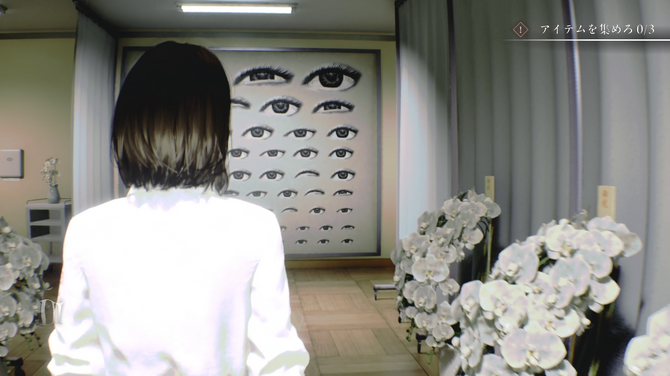
Sasaki: To be honest, we really didn’t intend to make a horror game at first. Instead, we were drawn to the sensation of “feeling anxious for some reason, even in a bright place,” and that’s where we started steering the project. Of course, there are scary scenes, but we’re still committed to creating a sense of eeriness and anxiety in as bright a setting as possible.
Yamanaka: We don’t have any experience or background in making horror games, but we are, after all, experts on life (laughs). We understand exactly what kind of anxiety people feel in their daily lives.
Kawai: It’s fine as long as the people who play it call it a horror game.
Yamanaka: I also feel that calling it “horror” might not be entirely honest to the established horror genre…
――By the way, did you consider the genre at the early stages?
Sasaki: We didn’t think about the genre at all. We’d start with something like, “This concept is interesting,” then reset the project and start over from scratch. When we did that, we were really just doing basic research.
For example, “It’d be interesting if you could tell which spirit was inside just by seeing someone’s back as they walk,” or trying to vary the animations when picking up objects—we experimented with all sorts of things, wondering, “Maybe this won’t come across, or maybe it’s too difficult.”
We set our goals as high as possible and, rather than relying on dialogue to explain things, we repeatedly experimented, aiming for an experience where we’d think, “It would be amazing if players could figure this out just from this alone.” We
also tried placing a giant sunflower right in front of the player to see if it would make them feel uneasy.
Kawai: We also did a lot of research, looking at old paintings and thinking, “This is the kind of thing that evokes a sense of unease.”
Sasaki: Usually in game development, we start by setting the genre, target audience, and concept before beginning development. However, this time we didn’t decide on a genre; our approach was to see what kind of game would emerge once we’d thoroughly explored the experience we wanted to create.It was the first time we’d ever worked that way ourselves.
On the other hand, precisely because we’d had so much experience with orthodox game development up to that point, we also felt a desire to try a different approach this time.
Actually, before *UN:Me*, we were producing experiential content for VR facilities. I felt that these arcade games and experiential digital content had a different kind of appeal compared to consumer games, which are based on specific genres.
For example, arcade game developers sometimes create works based on instinctive human sensations—such as the idea that “people are fundamentally afraid of heights.” Drawing on that experience, I personally wanted to create a game that started from “what humans feel on a fundamental level.”
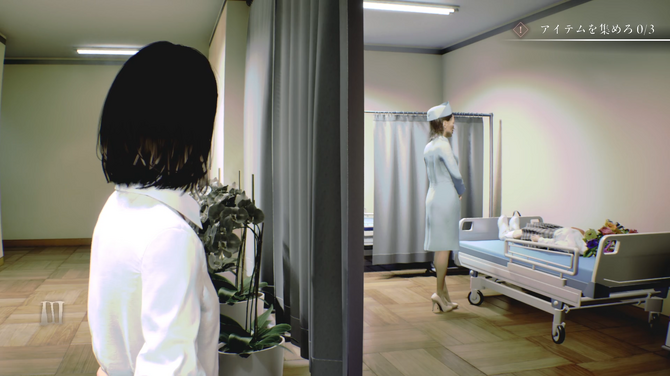
――I imagine you researched and crafted the art design with great care to evoke a sense of unease. The building’s structure and layout are strange, creating an eerie atmosphere that feels like it’s suspended between reality and fiction. What were your thoughts and challenges when designing the space?
Sasaki: I wanted to create a sense of unease in a bright setting, but of course, making it dark instantly amplifies the fear. Just not knowing what might come out from where is enough to be scary.
However, I didn’t want to go in that direction; I wanted to create a title that also felt bright and stylish. So, my first challenge was figuring out how to evoke emotional responses from players in a well-lit setting.
On the other hand, I didn’t want to make the entire world a fantasy either.Since I was depicting the inner world of a girl living in reality, I wanted to use reality as a theme. While staying grounded in
reality, I wanted the visuals to stir up anxiety and move the player’s emotions—and I also had to make sure it worked as a game. Striking that balance was difficult; I think I’ve reworked it more than ten times.
――The visuals in *UN:Me* differ from those in the *Caligula* series, which you planned, Mr. Yamanaka. Are there any similarities or differences between *UN:Me* and *Caligula* in terms of the story or gameplay?
Yamanaka: If I had to name something we’ve carried over from *Caligula*, I’d say it’s the aspect of focusing on certain facets of human nature. I think what they have in common is the detailed portrayal of the human psyche and the spotlight we shine on aspects of humanity that haven’t been explored much in games before.
Sasaki: And then there’s that—the flowers.
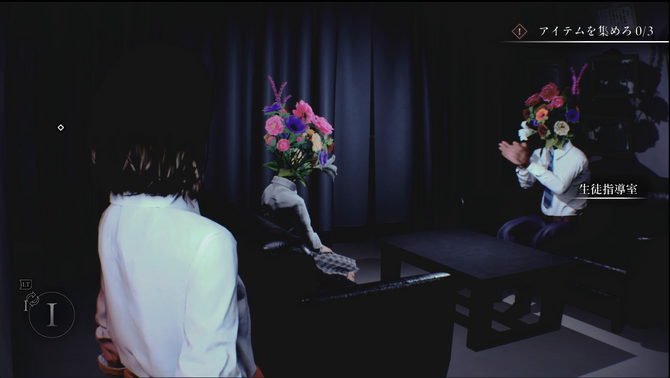
Yamanaka: That’s right. However, the reason I used flowers in *Caligula* was as a form of “allegory”—an artistic technique. Let me get a little nerdy here.
For example, imagine a painting depicting a family in the midst of a fight, with a cracked egg placed within the scene. Someone with that knowledge could interpret it as, “This egg symbolizes an abortion, and that’s the cause of the family’s conflict.” In this way, there’s an artistic technique where placing a specific motif within a single painting imbues it with meaning and context.
We did the same thing in *Caligula*. For example, someone familiar with the symbolic meaning of a certain flower might interpret it as, “Since this flower is depicted, this must have a specific significance for this character’s story.” We incorporated that kind of context into each individual illustration.
In *UN:Me*, we initially chose to deliberately avoid this technique, but we felt that using a single flower to convey meaning was a form of communication with players that would fit well with this title. So, we decided to carry over the flower motif to this game as well.
Sasaki: When we were thinking about how to handle the NPCs appearing in the background, we created prototype stages centered around themes like hospitals, illness, patients, and nurses. During that process, the idea emerged to make their heads into flowers and use the condition of those flowers to express their vitality. Additionally, the visual concept of flowers resembling faces really aligned with the theme of this game.
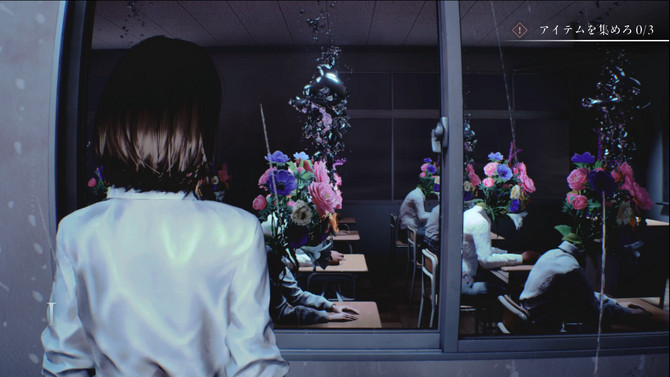
So, it wasn’t that we intentionally set out to carry over the flower motif from *Caligula*; rather, as we delved deeper into the themes of this game, we naturally arrived at the conclusion that “flowers would be good.”
In fact, we even had discussions among ourselves, asking, “Are flowers really the right choice? Won’t this end up just like *Caligula*?”
――As you mentioned earlier, Mr. Yamanaka, you’ve consistently created works that delicately portray the struggles, identities, minds, and emotions people face, while placing great importance on “humanity.”I think this work embodies your distinctive style, stemming from the concept of engaging with the soul of each individual in this story. I imagine this ties into the
work’s unique characteristics as well—what do you think is unique to *UN:Me*, or what specifically are you aiming to express through it?
Yamanaka: What I enjoyed most about writing *UN:Me* was probably the abundance of idle chatter.
Generally, characters in stories only say what’s necessary, but in *UN:Me*, I’m conscious of creating realistic dialogue, so they talk about things that aren’t really relevant and take detours. There are even exchanges that have nothing to do with the story—they’re just there to create awkward silences.
It’s not the kind of dialogue you find in typical RPGs—where conversations are just a means to convey necessary information via the shortest route—but rather, I’m able to depict conversations where the conversation itself is the goal. That really aligns with the human nature I want to portray, and it was a lot of fun to write. I think that enjoyment has become a defining characteristic of the dialogue and characters in *UN:Me*.
――In *Caligula 2*, conversations would sometimes pop up in the lower-left corner while you were walking, right? Those weren’t essential to the story either, but it was a system that let you listen in on conversations.
Yamanaka: However, with *Caligula 2*, I did have a bit of a desire to have players enjoy themselves within those limited conversations. I was conscious of wanting to create something entertaining (laughs).
On the other hand, with *UN:Me*, I wasn’t even aiming for “fun” per se—I’m just having the characters say things they’d actually say. That’s why I think I was able to write such pure, authentic dialogue.
How to express “movement” within “stillness.” Hanamori-san’s feelings toward the four souls, and so on
――Speaking of off-topic conversations, are there any lines from the recording sessions that Ms. Hanamori remembers?
Yumiri Hanamori (hereinafter Hanamori): Aside from the main storyline, we also recorded conversation scenes—sort of like icebreakers—to help each soul bond with the player. Among those, even though they might be called “small talk,” there were many instances where I felt the characters’ personalities and individuality really shone through in those seemingly unrelated little conversations.Take love talk, for example.
I think love talk is one of the first topics that comes to mind when you think of high school girls’ conversations. But just because it’s a common topic doesn’t mean everyone is eager to talk about it, right?
How would a girl react if someone she hasn’t established a relationship with yet brought up a love story? What really resonated with me personally was how these conversations felt so realistic—they even captured the subtle dynamics of interpersonal distance, like when a girl thinks, “I usually talk about love, but if I bring that up in this kind of relationship, it’ll create this kind of awkward atmosphere.”

Even though she was the one being asked a question, before she knew it, she found herself thinking, “Wait, am I the one doing the talking now?”—and the roles of listener and speaker had naturally switched. Or there were girls who would steer the conversation toward a completely unrelated topic. I felt it was truly natural that, rather than just talking according to a given theme, the conversation evolved into “If this topic came up, how would this girl react?”
As I was performing, I found myself thinking that these casual conversations were probably the most crucial moments for unraveling the nature of each character’s soul.I mentioned earlier how characters would change the subject or divert the conversation, but I think we do that unconsciously in our everyday conversations as well. The challenge is how to naturally shift the flow of the conversation without making the other person aware of it. I was conscious of making those interactions work effectively within the context of the play.
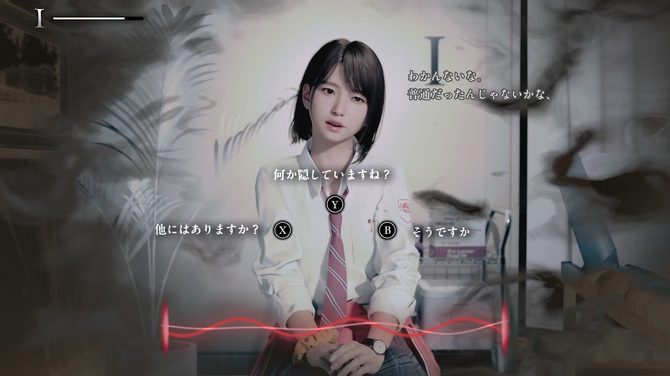
Since the theme of this story is “the inner world of people,” I think it’s a production with relatively few action-oriented movements. That’s precisely why I focused on how to express “movement” within “stillness”—how to convey the inner workings of the mind despite the lack of visible physical action.
Even if there isn’t much physical movement on the surface, something is definitely stirring inside. The dialogue in this production is filled with moments where the acting consciously captures these emotional shifts. I hoped to fully utilize what I’ve cultivated throughout my career in these aspects. I approached this role with the desire to pour the very time I’ve spent living as a human being into this work.
――Yumiri Hanamori played “Shonen Doll” in *Caligula*, another work you were involved in, Mr. Yamanaka. What was the reason for casting Yumiri Hanamori in this project?
Kawai: I was the first person he consulted. There’s a sound engineer at Shueisha Games whom I’ve trusted for a long time, and when the time came to decide on the lead role for this project, I also consulted with Yamanaka-san.
Since Mr. Yamanaka is also in charge of recording and direction, I asked him what kind of performance he had in mind, and he said, “I want to pursue a performance that truly feels like a real person is speaking.” So, who could make that happen? As I discussed this repeatedly with the sound engineer, Yumiri Hanamori’s name came up.
――So it wasn’t decided that Ms. Hanamori would be the best choice simply because you worked together on *Caligula*?
Kawai: That’s right. As we explored how to best realize the kind of performance Mr. Yamanaka was seeking, Hanamori-san’s name came up as the ideal candidate. When I conveyed that to Mr. Yamanaka, he said, “It’s reassuring that we’ve worked together on *Caligula*, and that’s absolutely great!” The fact that we’d collaborated in the past just sort of came together later on.
Yamanaka: It was a coincidence. When it comes to the style of acting I’m looking for, there are people who can pull it off and those who can’t—and it really comes down to whether people like that style or not. So, if I’m working with someone for the first time, I think there’s always that anxiety about whether I’ll be able to properly convey what’s important to me.
In that regard, I met Hanamori-san 10 years ago, and I know she’s been steadily building her career over the past decade. So I’m sure she’ll be interested in what I want to do, and she’ll go along with my “acting is a hassle” philosophy too (laughs).
Hanamori: (Laughs). That’s interesting!
Yamanaka: It was truly reassuring to be able to share that way of thinking. No matter how realistically I write the script, if the final output—the performance itself—isn’t realistic, that realism just falls flat.
The moment I knew you’d be taking on that crucial acting role, Hanamori, my anxiety about whether I could realize my vision vanished, and I could entrust it to you with complete confidence.
――Hanamori, what did you think when you received the offer?
Hanamori: I thought, “Wow, this is an incredibly interesting project proposal.” Plus, when I saw the names of the staff members, my manager and I got really excited, saying, “This is definitely going to be a great show!” They were also very honest from the start, telling me, “It’ll be tough because I’ll be doing most of the talking during the recording.” Taking all that into account, I felt I absolutely wanted to contribute.
Also, given where I am in my career right now, I wanted to tackle this kind of subject matter and find out for myself just how closely I could align with the themes the project aims to express. So I told them, “I’d definitely like to take on this role with enthusiasm.”I first recorded a separate voice clip for the trailer, and even at that point, I’d already received the backstories—spanning an entire lifetime for each character—along with the script. I even read through them right there on the spot.
Even at that stage, I could really feel the atmosphere of a life-sized conversation, as if I were facing each character one-on-one.
He also shared his specific vision for the performance, saying, “If the words are too clear, it might actually detract from the realism, so I want it to sound as if the person is really speaking right in front of me.”
Ever since the trailer recording, I’d been hoping to capture that sense of connection when facing another “person” in my performance. I worked with Mr. Yamanaka to refine that sense of conversational distance.
――Is there any particular anecdote from the recording session that stands out to you?
Hanamori: If I had to pick one thing that stands out, “where to break up the conversation” was a challenge for us at first.
Conversations, after all, are meant to flow endlessly, aren’t they? We discussed how we wanted to record the dialogue in as natural a flow as possible, as if we were actually talking face-to-face. As a result, there were times when we’d record quite long conversations in one take, thinking, “Hey, this is actually working out.”
However, the longer we recorded, the higher the risk that it would become difficult to correct the course midway. Even so, the production team told us, “We’ll stop if you really go off track, but as long as you don’t, please keep going,” and they left the pacing and rhythm of the conversation entirely up to us. There were times when we recorded more than 10 pages of script in one go.
I think those are the kind of words you can only hear if someone truly trusts you, and conversely, I felt I had to be an actor capable of living up to that trust. I felt I had a responsibility to make sure everything that could work within my own performance actually did work. Of course, I also made it clear from the start that if they thought something was off, it was perfectly fine to scrap the whole thing and start over from the beginning.
Yamanaka: That’s right. When recording for games, we usually record in blocks of a certain length, but basically, if we say, “You messed up that line here,” we just re-record that specific part. However, this time, doing that wouldn’t have kept the flow going, so it was more like, “You messed up here, but I want to keep this part. So, let’s just redo the whole thing.”
Hanamori: It was like, “Let’s do the entire dialogue section today.”
Yamanaka: Of course, people who don’t mind it probably won’t notice, and technically, it might sound fine. But those in the know can tell when the emotional flow isn’t connected. That’s exactly why we decided, “Let’s make it so that those who understand will recognize it,” and that’s why we went ahead and re-recorded the entire scene from scratch.
Hanamori: But, ironically, that actually felt really good. I think it’s pretty rare these days on recording sets to have an environment where you can actually redo the dialogue from the very beginning just to properly resolve any sense of dissonance.
I think that’s one of the unique aspects of this particular recording session. What’s more, instead of seeing it as a hassle, we all agreed, “Let’s do it one more time,” and they made sure to set aside the time to properly re-record it. For me, too, it really felt like a truly luxurious experience on set.
Yamanaka: The longer it takes, the higher the studio costs get, after all (laughs).
Kawai: The sound engineer who consulted with us about casting Hanamori-san understood the complexity of this project and its setting, so they booked the studio for a longer period right from the start, anticipating that we’d need it.
Sasaki: I totally understand the urge to start over from the very beginning when doing a retake. But usually, that’s something that’s hard to pull off. I’m involved in recordings from time to time, so I know—without the kind of trusting relationship that Yamanaka-san and Hanamori-san have, it’s hard to say, “I’d like to re-record from the very beginning.”
It’s great if the other person feels the same way, but if they don’t, it’s really hard to bring it up. I think it was precisely because there was that bond of trust between the two of you that you were able to pull off a recording session like that.
Yamanaka: It’s not just about trust; it’s also a big factor that we’re on the same page to a certain extent about what constitutes good acting. Even if the audio itself was fine, when we’d say, “I think we can make this even better from here, so let’s do it one more time,” it was a huge relief that it never caused any friction.
Hanamori: I think our sensibilities—regarding which specific details within the performance we want the audience to notice—are very much in sync. That’s why he’s been so accommodating of my selfish requests, like, “If we’re going to rework that detail, let’s rebuild the entire sequence leading up to it from scratch.”
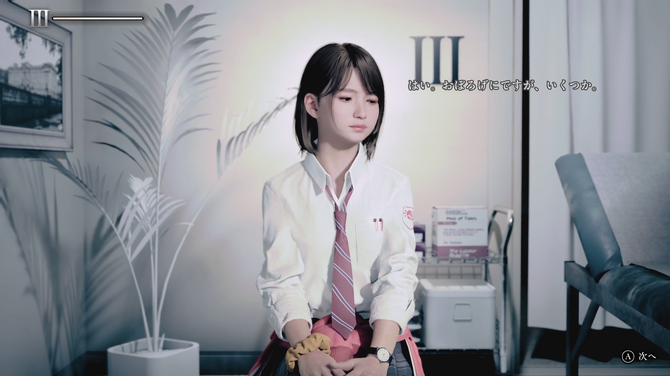
――You mentioned playing the souls of four characters—how was the recording process handled?
Hanamori: Rather than recording all four souls at once, we basically proceeded by focusing on one at a time. We’d record “just this soul today,” splitting each one into two or three sessions. So, rather than worrying about distinguishing between the four characters, I focused on the life each soul had lived and the personality that had been shaped by those experiences.
This work is structured so that each soul rediscovers itself through dialogue, and what was once formless gradually takes shape. What was vague at first becomes clearer as the story progresses. That’s exactly when you start to realize, little by little, “So, which one is really me?”
I was conscious of that gradual gradation—as memories and self-awareness become increasingly vivid—whenever I portrayed any of the souls. Since we sometimes recorded scenes for the same soul on different days, I’d have the staff play back the dialogue from the previous recording session, and I made a point of acting in a way that felt true to that character so that the performance would flow naturally from where we left off.
――Was it difficult to distinguish between the four roles?
Hanamori: I didn’t really think about the difficulty of distinguishing between the roles. That’s because the four share the same body, so rather than differentiating them through my voice, I acted differently based on the nature of each soul. Instead of explicitly thinking, “I’ll change this part,” my approach would naturally shift based on the thought, “If it were this soul, they’d feel this way.”
So, rather than thinking about how to differentiate them intellectually, I focused entirely on how each character was acting within the script. I also gathered information to connect more deeply with each soul and bring them into sharper focus.
For example, when portraying a soul with a masculine way of thinking, I’d ask everyone for their input before recording on how to express masculinity.I’d ask things like, “Would doing this make people feel it’s masculine?” or discuss thought patterns. Through those casual conversations, everyone cooperated with me, and I internalized the information I gained to reflect it in my performance.
――Since the game hasn’t been released yet, I imagine there are some things you can’t discuss in detail, but could you share your own feelings about each of the souls, within the limits of what you’re able to say?
Hanamori: I think the Soul from Part I is the character with whom everyone will feel the most familiar—the one where they’ll think, “Oh, I know a girl like that.” She’s the one who feels the most like a young girl, even when you’re just talking to her.
However, precisely because she’s such a simple character, I had to think carefully while performing about what aspects of her are appealing and how to draw the player in during conversations. I suspect she’s the kind of character players tend to choose as the last soul they keep. She’s that kind of character—one you just want to keep.
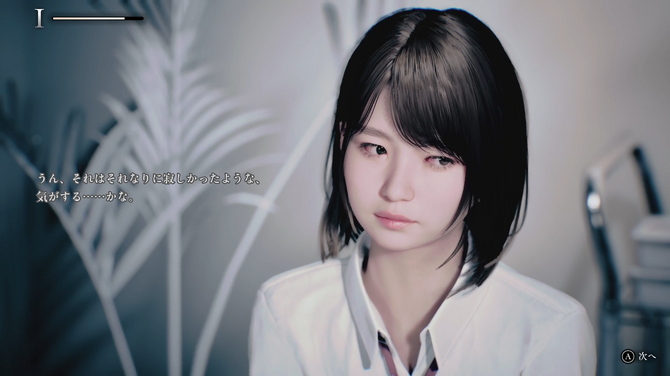
Yamanaka: It’s a story filled with tension, but since the Soul from I speaks in a way that’s completely free of tension, I think there’s definitely something about her that makes you feel, “I want her to be there.”
Hanamori: Precisely because it’s a world where anxiety is stirred even in bright, cheerful places, I think this character is the one who provides the sense of security that players are seeking the most. That’s why I think the Soul from I is the one you want to talk to the most—the one you’d want to keep talking to forever. But, speaking of which, I also feel that way about the Soul from II…
Kawai: I see what you mean.
Sasaki: I get II, definitely.
Hanamori: Soul II is actually really good at talking. She’s skilled at keeping conversations flowing, so the character who actually makes you feel the happiest while talking might actually be Soul II.
However, as you talk with them, you naturally come to realize that their conversational skills are something they’ve acquired after giving it serious thought.
The moment you think, “This child is a great conversationalist,” you’ll feel the urge to keep talking—in a way that’s different from the Type I soul. That’s why I think the Type II soul is also a child you find hard to let go of, for reasons different from Type I.
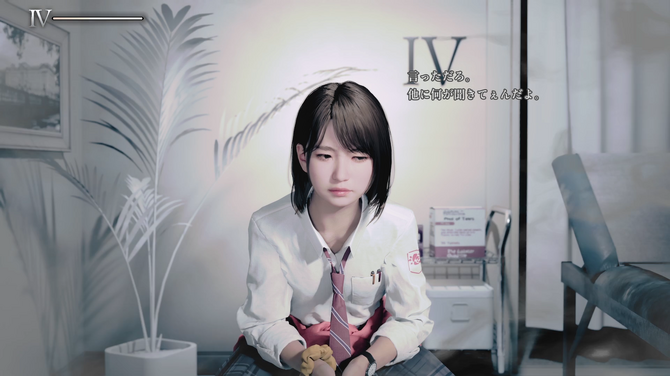
On the other hand, I think the Type III soul might be the one who makes conversation the most uncomfortable out of the four. That’s because I suspect this child is the least skilled at dialogue among the four souls.I believe that in dialogue, it’s important to consider the other person’s feelings and try to understand them. Of course, understanding someone else’s feelings is difficult, but I feel that the Type III soul is the one who struggles with this the most.
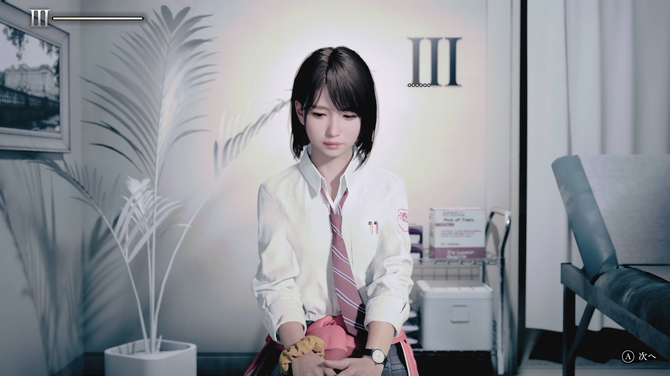
Still, this child genuinely has the desire to “get their message across.” That’s exactly why I find myself thinking the most about how to best accept this child’s feelings, and they might be the one who makes me feel most strongly that “I have to become stronger” when conversing with them.
I’m not sure if this counts as a spoiler, but I think the emotion of “anger” lies at the core of Soul III, so I feel that the key lies in how we confront that anger and engage in dialogue with them.

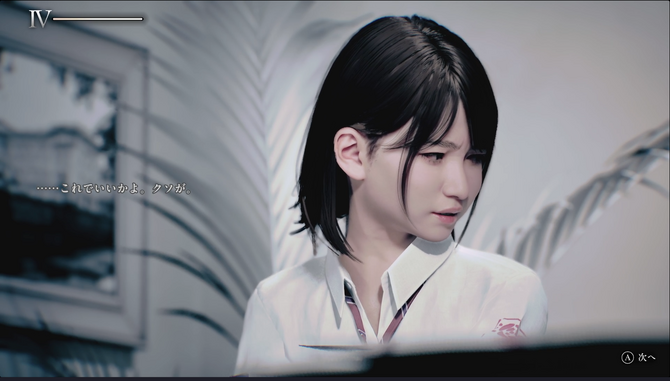
And I think the soul of Character IV is the scariest of them all. As for where that fear comes from, I believe this child understands the very source of the emotion of fear. They know fear firsthand, and they also know exactly how to instill fear in others. That’s the kind of child they are.

In a sense, I think fear is also a means of getting people to listen to what you have to say. This child understands that, and I feel that comes across very strongly even through conversation. That’s precisely why I feel that “seeing”—understanding the true intentions and feelings lying deep beneath that fear—is what this child needs.
Right now, I’ve explicitly named the emotions associated with Souls III and IV, but each child has their own key emotion in their own way. I believe that discovering what lies beneath those emotions through dialogue is the very foundation of this work.
After seeing what lies beyond those emotional barriers, we’ll have to face the question: “So, which soul should we choose?” I imagine players will surely go through a great deal of anguish during that process.
――It sounds like it’ll be interesting to reread this answer after clearing the game. Now, regarding sound: Mr. Yamanaka, you’ve created numerous projects centered on “song,” such as the *Caligula* series, the music project “MILGRAM,” and “Utagoe wa Mille-Feuille.”While we haven’t seen that element in this title yet, I imagine you have a particular dedication to “sound.” Could you tell us about your approach to sound in this game and the direction of its development?
Yamanaka: In my previous works, I’ve actively used singing as a means to strongly appeal to the player’s emotions. However, I think there are many instances in this project where such sound-based direction could end up feeling somewhat arbitrary. For that reason, the entire team—starting with Mr. Sasaki, who is in charge of development—is being very careful about this.
Sasaki: That’s right. I believe there are two main perspectives when it comes to sound. First, in this game, we want players to experience truly subtle changes in every aspect.
That’s precisely why even natural performances can effectively convey emotional shifts. During development, I wanted to unify the game’s color scheme around white. I did this because I wanted to create a balance that makes it easier to perceive those subtle changes. In other words, we establish a fundamentally very calm state and then introduce variations within it. This forms the core of our creative process, common to every aspect of this game.
If the sound stands out too much within that context, it ends up overshadowing those subtle changes we worked so hard to create. So, one of our key design principles is to ensure the sound doesn’t dominate the experience.
Another consideration, however, is that this alone isn’t enough to stir the emotions of many players. The game also needed sections where anxiety builds as players progress through their exploration. To achieve this, we’ve incorporated elements such as moments where nothing is visible in the player’s field of view, but sounds suggest the presence of something.
In this way, we’re creating the game while keeping both of these goals in mind: ensuring that sound doesn’t interfere with the subtle changes, and using sound to gradually heighten a sense of unease.

Yamanaka: The power of music is truly immense, so there’s also the downside that it can overwhelm a wide range of emotions. That’s why, for this kind of delicate sound design, we on the development side made detailed adjustments to suit each scene.
Sasaki: We want to stir the player’s emotions with even a single footstep. To do that, we first have to create a sense of calm.
Kawai: Up until partway through development, there wasn’t even any BGM, was there?
Sasaki: There are parts where we want the sound to feel like ambient noise, not just something you listen to as BGM. Of course, depending on the project, there are times when “rhythm is key,” so in those cases, I’ll sometimes insert placeholder music early on to keep development moving forward.
However, for this title, to ensure players could perceive even the subtlest changes as much as possible, we adopted an approach where we first eliminated unnecessary elements as much as possible and then built things up one element at a time.
――Finally, please share a few words for those who are interested in this game and those who are looking forward to it!
Kawai: We announced *UN:Me* around last winter and have been gradually revealing information through trailers, the official website, and X (formerly Twitter). By incorporating motion capture, we’ve significantly improved the overall quality of the game and the dialogue experience. I think we’ve come quite close to what everyone has been expecting.
We’ve decided to postpone the release to 2027, so we’ll need a little more time, but I’m confident we can create a game that lives up to everyone’s expectations.
We’re also planning to create opportunities in the near future for those who can’t attend events to experience the game, so please stay tuned and keep your expectations high.
Sasaki: As was mentioned many times in today’s discussion, in this game, you face a young girl head-on and, as you gradually come to understand her heart, subtle changes begin to take place within her as well. I believe this is a truly unique title that depicts that process with the utmost care and attention to detail.
I’d be thrilled if you could enjoy the experience of getting to know the girl little by little while noticing these subtle changes.
We’ve been refining the game repeatedly—incorporating motion capture and other techniques—to ensure you can truly sense those subtle changes, so I hope you’ll bear with us just a little longer.
Yamanaka: I see this game as one we set out to create without defining a specific genre—a work in which we made a conscious decision to stop relying on symbols, formats, or templates.
There are countless games out there, but I believe that the recognition of a game like this proves just how rich the possibilities for expression are within the medium of games. So, I hope you’ll support this title, and I hope we’ll live in a world where all kinds of quirky games continue to be created.
Hanamori: While voicing the four souls of this young girl, I felt that this was the quietest environment I’ve ever worked in throughout my career. Precisely because it was so quiet, I found myself instinctively listening closely—trying to follow where the emotions of the character I was facing were moving, where her gaze was directed, and even where she was physically located.
Ever since the recording sessions, I’ve felt that the quiet conversations exchanged in the “Room of Dialogue” are truly one-of-a-kind. That’s exactly why I’m very curious to know what everyone will feel and what they’ll want to do next once their time spent listening intently and engaging with a single girl has come to an end.
I truly hope that as many people as possible will pick up this game and engage in a dialogue with their own souls. And after that dialogue, I’d love to hear what you took away from it—what stayed with you in your heart after you finished playing.
Of course, in order for me to hear your stories, you’ll first need to pick up the game (laughs). While the term “triage” takes center stage in this title, I believe that the “choice” itself—the act of “choosing me”—is the game’s central theme and driving force.
For those drawn to these elements, this is a game I’d love for you to experience, so I’d really appreciate your support.
――Thank you very much!
“UN:Me” is scheduled for release in 2027 on PC (Steam),PS5, and Nintendo Switch 2.
(C)SHUEISHA, SHUEISHA GAMES developed by historia
*Screenshots are from the in-development version.



