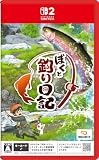
Imageneer will release the fishing action RPG *My Fishing Diary*, developed by Toybox, for the Nintendo Switch 2 and Nintendo Switch on October 8, 2026.
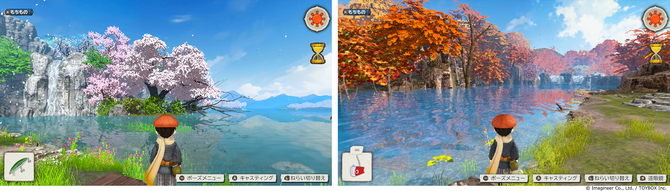
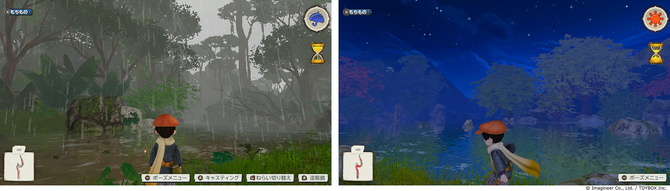
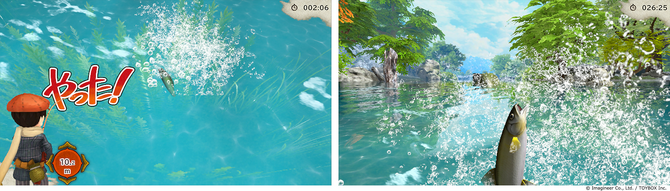
The game is being developed by Toybox, led by Yasuhiro Wada, known as the creator of the *Harvest Moon* series. It recreates the strategy and excitement experienced by real anglers, where players cast their lines by predicting fish habitats rather than relying on fish spawns.Set against the backdrop of rivers and lakes rendered in a traditional Japanese style, players can enjoy intense battles against over 100 different species of fish.
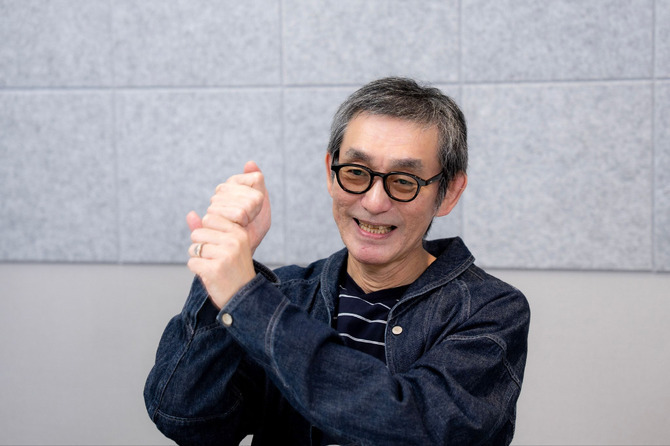
So, Game*Spark sat down with Yasuhiro Wada for an interview.
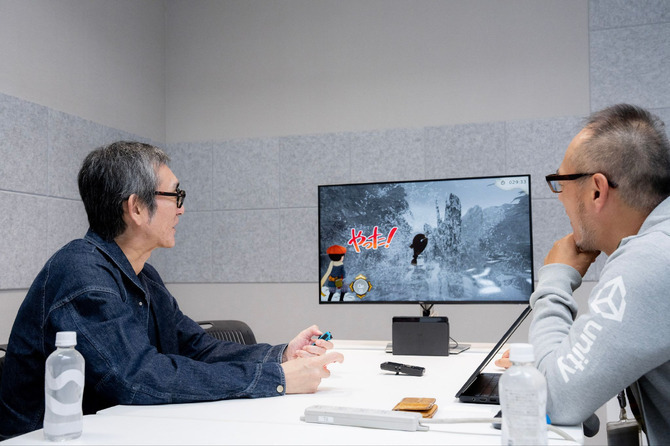
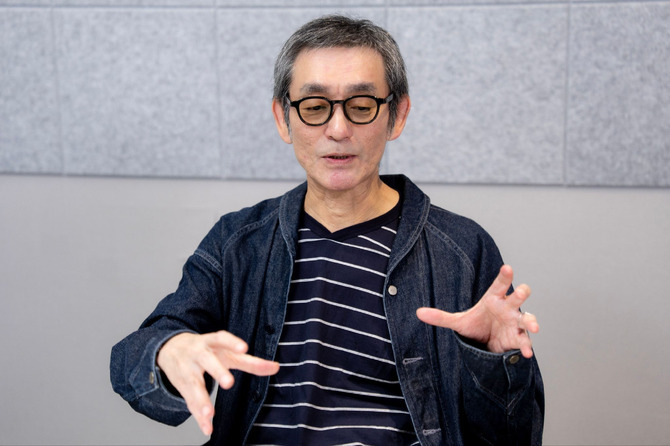
Yasuhiro Wada and Katsuaki Kato

Mr. Wada is the President and CEO of Toybox. He is known as the creator who nurtured the series starting with the first *Harvest Moon* in 1996 and pioneered the genre of non-combat life simulation games.
Serving as the interviewer this time is Katsuaki Kato, known as “Bakatāru Kato.” He has held positions such as Editor-in-Chief of *Weekly Famitsu* and currently serves as Editor-in-Chief of *Animedia*. The two have maintained a long-standing friendship as bandmates, and this conversation marked their first reunion in five or six years—since their interactions were interrupted by the COVID-19 pandemic.
A Long-Awaited Reunion
Kato: Toybox is celebrating its 15th anniversary, isn’t it? How have things been going for you lately?
Wada: As for the past few years, in Kanazawa, we worked with Arc System Works on *World End Syndrome*, and after that, we did the *How to Walk a Mystery* series with Imaginia.As for me, after *Birthdays*, I worked on Nintendo’s *DC Super Hero Girls*, served as development producer for Spike Chunsoft’s *Natsumon! Summer Vacation in the 20th Century*, and then spent several years working on Takara Tomy’s *The Game of Life*.
Kato: So *The Game of Life* took that long, huh?
Wada: That’s right. I wanted to create something different from previous *The Game of Life* titles, so it was quite a challenge. Between the preparation period and the DLC released after launch, it took quite a long time.

How the Project Came About
Kato: Was that when the offer for *My Fishing Diary* came along?
Wada: Imageneer hadn’t made a “real game” in a while. Titles like *Fit Boxing* were doing well, but we wanted to take on a new challenge. In that context, we noticed that fishing games had disappeared from home consoles.
Kato: It’s true—there aren’t any fishing games these days.
Wada: These days, fishing is mostly just a minigame in some other game or a casual mobile game, right? Back in the day, there were titles like *Super Black Bass* and *Nushi Tsuri*, but they’re gone now. I’m not sure if that’s because there’s no demand or because no one’s making them. It seems Imageneer thought, “If we make a proper fishing game, there might be a market for it.”

Kato: That’s an interesting angle.
Wada: At first, we considered a *Gran Turismo*-style fishing game that used realistic fishing gear from around the world, but it would have taken too much time and money. That wouldn’t have fit with Imagineer’s policy of “expanding the market through new challenges.”So, instead of going broad, we decided to go as deep as possible and focus on the game’s world and characters. I figured that approach would let me bring my own style to the project.
Kato: Did it take surprisingly little time to get the basic concept of the project off the ground?
Wada: From the time I first heard about it until I said, “Okay, let me do it this way,” it took about half a year.
Pursuing “the fun of fishing”
Kato: In terms of the actual work, where did you start refining the details?
Wada: First and foremost, I really dug deep into the question of what exactly makes fishing fun. There were even people at Imaginia—true fishing masters who knew far more about it than I did. The conclusion we reached was that more than half the fun of fishing comes from “preparation” and “thinking.”
Kato: It’s like fishing as a way to test a hypothesis.
Wada: Exactly. Where to fish, what to catch, how to put together your gear. Even if you go fishing and don’t catch a single fish, it’s still fun, isn’t it? Today’s mini-game-style fishing just isolates the moment of the catch and presents it in a game-like way. So we decided to make a fishing game that was different from that.
Kato: What about the fish shadows? I heard in another article that “there are no fish shadows,” and I was worried about that.
Wada: The fish are sometimes visible and sometimes not. Actually, at first, once we’d built the basic mechanics as we’d envisioned, we tried playing it—and it was a bit boring. There was no feedback; you couldn’t tell if you’d succeeded or failed. From there, we spent about half a year just on the fishing mechanics, repeatedly building and refining them.
Kato: It really is the heart of the game, isn’t it?
Wada: The game could work even without a story, characters, or a world setting. But if the fishing—which is the core—isn’t fun, the game is a failure. That was our mindset.
Kato: Once the system was finalized, did it feel like you were on the right track?
Wada: No, we’d made progress on everything—the fishing spots, the characters, and the story—but we were still working on that part right up until around the end of last year.We finally reached a point where we felt, “This has become fun,” but when we had Imageneer test it, what we thought we’d made easier to understand wasn’t clear, and what we thought we’d made easier to catch actually didn’t result in catches. So we spent another month or two making adjustments. We also had external testers look at it, and finally, around spring, we reached a point where we were satisfied.
Kato: So you were making adjustments right up until the very end.
Wada: It’s the most important part, after all.
The DNA and Worldview of *Nushi Tsuri*
Kato: When the house first appeared in this world, I thought, “This is ‘Nushi Tsuri’!” It’s a traditional Japanese house straight out of a folktale, and suddenly an old man pops out.
Wada: I didn’t actually set out to do that, though. That might be the first time anyone’s mentioned it.
Kato: Really?
Wada: Of course, I have a lot of respect for *Nushi Tsuri*, and its DNA is definitely ingrained in this game, but there’s no point in just making another *Nushi Tsuri*, so I tried to create something in my own style. That said, I am conscious of the “catch a Nushi to move on” flow from *Kono Nushi*. There’s definitely an homage there.
Kato: Even though the title doesn’t include “Nushi Tsuri,” it felt like it was there.
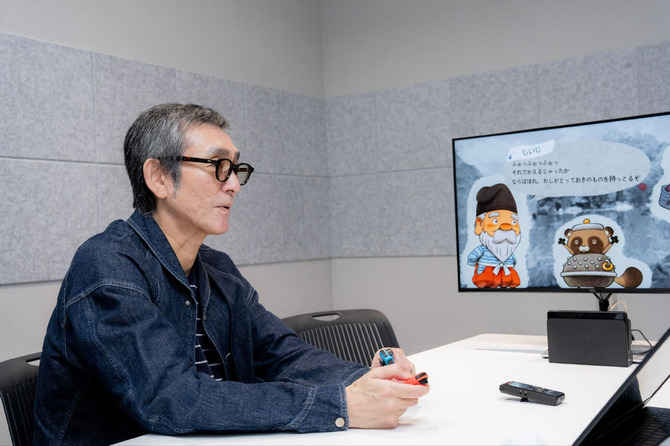
Wada: For the world-building, I drew inspiration from “Manga Nihon Mukashi-banashi.”And “Pudding Pudding Monogatari,” too. It’s so silly you’d never believe it aired on NHK, right? They take full advantage of the fact that it’s a puppet show to go completely over-the-top. It’s ridiculous but fun; it makes you grin, and somehow it’s comforting too. I drew this with that vibe very much in mind.
Kato: That kind of lighthearted, carefree attitude is being gradually weeded out of content these days, isn’t it? That kind of “casualness” in a good way.
Wada: Exactly, exactly. It’s that slightly silly, unserious, laid-back, yet somewhat amusing vibe that’s missing from today’s world. If you pour too much emotion into it, it gets annoying, doesn’t it? I didn’t want it to come across as preachy.
108 Species of Fish: Art by Matsuyama Igusa
Kato: I hear there are a lot of weird fish out there.
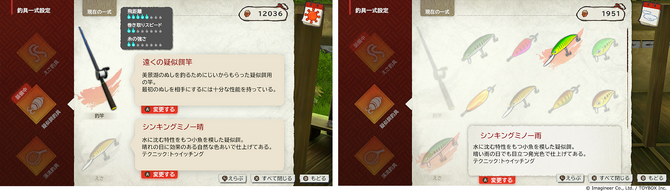
Wada: This time, I narrowed the scope down to freshwater fish. But there aren’t that many species of freshwater fish in Japan, and if they’re all just subspecies, there isn’t much variation in their appearance. We’d decided to create 108 species, but I thought it wouldn’t be very interesting if we ended up with 108 similar subspecies.
Kato: It’d be like, “Oh, the same one again?”
Wada: Exactly. When I got to about 50 or 60 species and noticed similar-looking fish starting to pile up, I started including invasive species, foreign fish, and even ones that definitely don’t live in Japan. Even after that, I was only at about 70 or 80, so I thought, “Well, let’s just have some fun with it.”
Kato: There’s that fish that looks like the Hanshin Tigers, right?
Wada: The Half-Tiger Fish. Matsuyama and I call it the Hanshin Tigers. Because half of it is a tiger. The motif is a mermaid, but usually that’s a beautiful woman, right? This one’s more like a tiger.
Kato: Are you saying there are even worse ones coming up?
Wada: Some really wild ones are coming up.
Kato: As a creator, what would you say is the main selling point here?
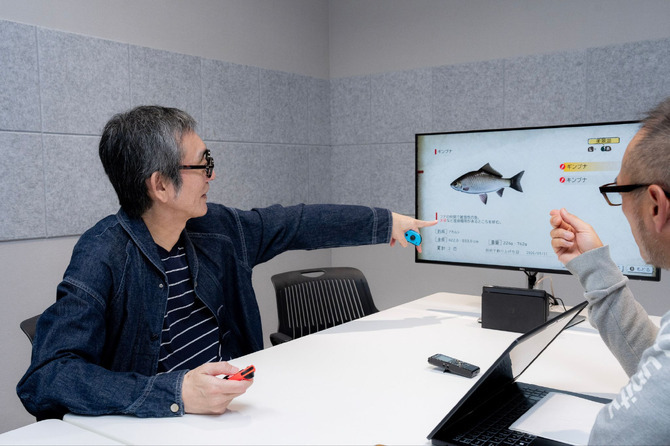
Wada: The characters. Igusa Matsuyama has been working with me since our days at the ranch. In typical character design work, you have someone draw concept art, and then the game’s graphic designers use that as source material to build the models, right? But in this game, aside from the 3D models, everything is displayed exactly as she drew it herself.
Kato: Wait, really?
Wada: It’s true. She drew dozens of different poses, and she even drew every single layer for the facial expressions.
Kato: How do you see this game’s place in the fishing game genre?
Wada: I think it’s very different. To put it a bit boldly, I think it’s the kind of fishing game that makes you say, “There’s never been a fishing game like this before.”
Future Prospects
Kato: Mr. Wada, are you going to keep making games?
Wada: I haven’t really thought about it much. If someone asks, “Want to make a game?” I’ll show them what I have in mind and say, “If I were to make one, it would look something like this.” If they say, “Go for it,” I’ll gladly do it. That’s my approach.
Kato: “Birthdays” is your life’s work, after all.
Wada: For me, I’ve only managed to realize about 30% of what I had in mind for that one. I want to make it 100%. If I could make that, I probably wouldn’t make anything else after that.
Kato: Like *Nobita’s Earth Experiment*, right?
Wada: Exactly. It’s an homage to Kazutoshi Iida—the up-and-down mechanics are a nod to that. I know it could actually be even more interesting; I want to explore the kind of drama that unfolds when each creature has its own unique AI and acts on it.Males and females getting together, monkeys starting to communicate, humans approaching and asking for fire. I think it would be interesting if the player could take on a role similar to the monolith in *2001: A Space Odyssey*.
Kato: Do you have anything coming up next?
Wada: Next, I want to try something a bit out of character for me. It’s not fully formed yet, so I don’t know if it’ll move forward. I actually came up with the concept and plan about two or three months after I started debugging this game. That, too, started with someone asking, “Why don’t we try making this?”
Kato: What genre is it?
Wada: I can’t say that. It’d give it away.
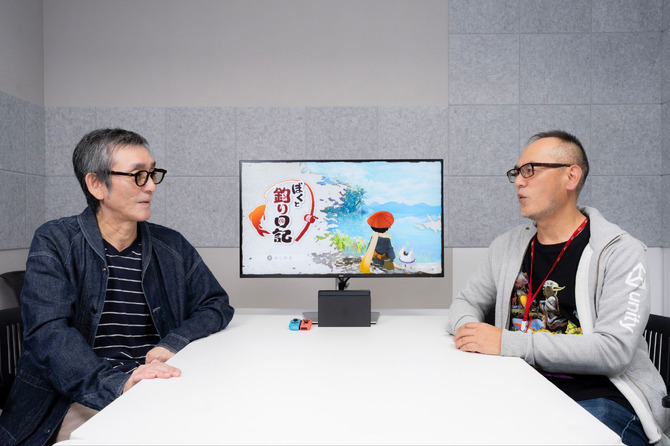
*My Fishing Diary* is scheduled for release on October 8, 2026, for Nintendo Switch 2 and Nintendo Switch. The price is 6,578 yen (tax included).