


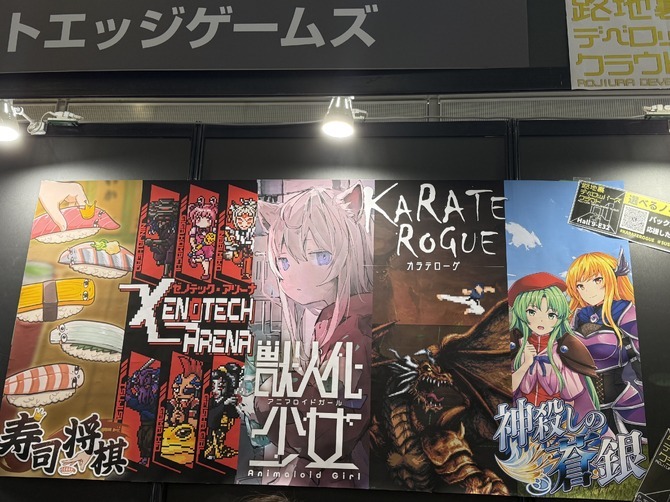
Hall 9, Indie Game Corner at “TGS 2026.” In one corner of that area, at booth H9-E32, there was a booth featuring five titles, each with its own unique quirks.
It was a joint booth organized by the indie game developer community “Rojiura Developers Cloud” and Blast Edge Games Co., Ltd.
On display were a roguelike where you tackle dungeons using karate, an adventure game where you raise a girl who gradually turns into a beast, a shooter where you pit enemies against each other, a ’90s-style simulation RPG, and a game of shogi where players beat each other up over the sushi bill. They were a wonderfully eclectic mix, and each one was uniquely edgy.
And the story behind this booth is fascinating in itself. Let me start by telling you about that.
It all started with the question, “TGS is now five days long—isn’t that tough for indie developers?”
“Back Alley Developers’ Cloud” is a community organized by Kiiido LLC.
The impetus for its creation was the fact that, starting in 2026, TGS would be held for five days for the first time in its history. A longer event means developers must staff their booths continuously for the entire duration. Exhibiting for such an extended period places a significant burden on individual and small-scale developers, both in terms of manpower and finances.
So, Kiiido posted on social media, “TGS is now a 5-day event—isn’t that tough for independent developers?” to recruit participants—and the number of members on their Discord server quickly surpassed 100. It’s said that the community has since grown to include not only developers but also translators, streamers, and media professionals.
From there, five volunteer groups brought their projects together to create this booth. A somewhat impersonal event—a change in regulations—gave rise to mutual support among developers. This backstory alone is dramatic enough.
Now, let’s take a look at the five titles on display, one by one.
KARATE ROGUE
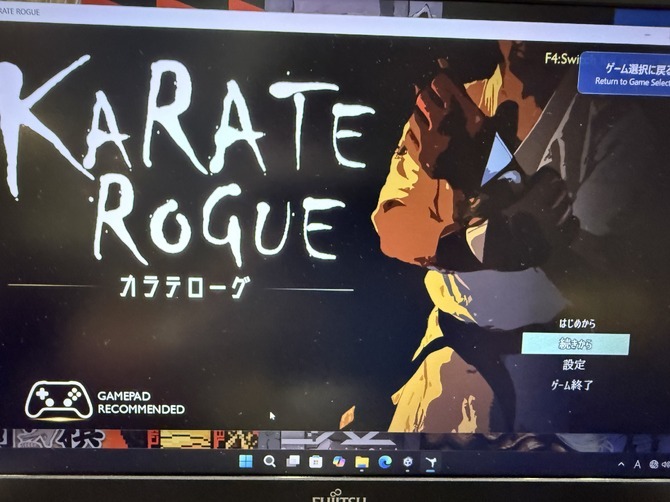
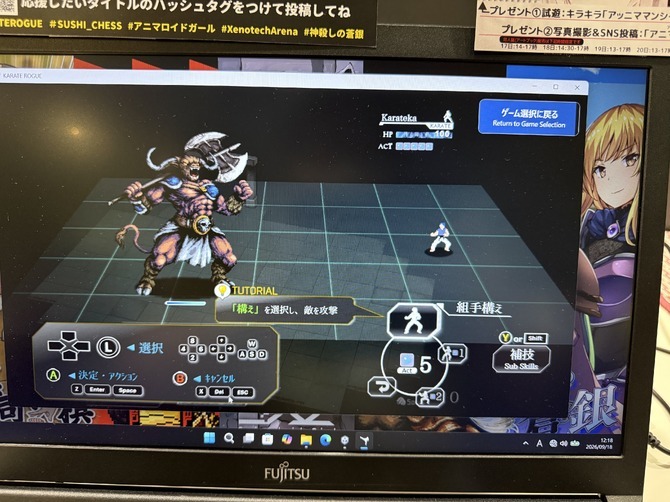
First up is *KARATE ROGUE* (terry-do GAMES). It’s a roguelike fighting dungeon crawler RPG in which a karateka—cast into the abyss with nothing but the clothes on his back due to the “Dungeon Punishment”—climbs his way back to the surface using nothing but his fists.
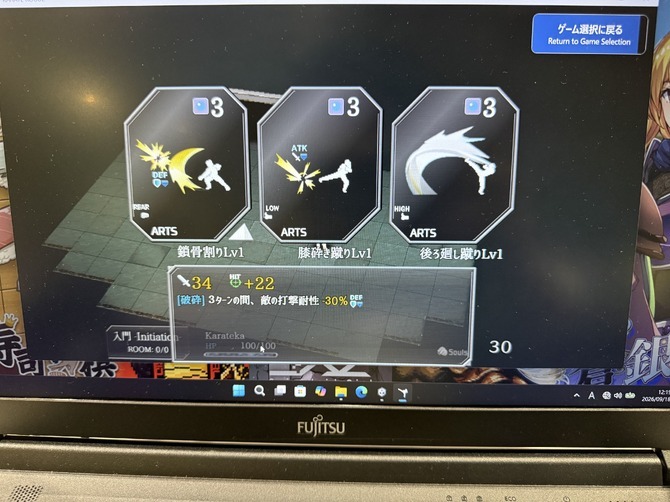
After playing it, I realized that the key to this game lies in which “stance” you adopt and what attacks you unleash from that stance. Stances combine offense and defense, turning the enemy’s attack turn into an opportunity. You parry an attack and then land a counterattack. There’s a real sense of satisfaction when this sequence comes together perfectly.
Plus, as you defeat bosses and other enemies, you unlock new moves, so the more cards you have in your deck, the more versatile your combat strategies become. It’s a game that looks like a lot of fun—defeating various enemies while exploring synergies, such as “knocking them back with this move and following up with a roundhouse kick.” It’s scheduled for release in 2026, and a demo is currently available.
Godslayer: Blue Silver


*Godslayer: Blue Silver* (Sword_Guild) is the only title among the five that has already been released (launched July 21, 2026). It’s a region-conquest simulation RPG where the bonds between party members determine your fate.
This is a straight-up simulation RPG. It doesn’t try to be flashy; it feels like a classic SRPG played head-on. It also incorporates features designed to bring battles to a swift conclusion, such as the “Combat Chain System,” which allows you to take another turn by exploiting an enemy’s weakness, and the “Squad System,” where defeating a squad leader can cause the entire enemy force to collapse instantly.
With its late-90s-style pixel art animations and other nostalgic elements, fans of classic simulation RPGs are sure to enjoy this game. The structure—where you expand your territory in the strategy phase’s map mode and the scenario changes based on your chosen route—will be irresistible to anyone who’s played games of this genre before.
XenoTechArena


The concept behind *XenoTechArena* (DSPSE) is “Don’t defeat the enemy—smash them together!!” It’s a top-down roguelike arena shooter.
When you actually play it, you’ll find that—just as described—normal attacks aren’t all that powerful. So what do you do? Can you charge at enemies to knock them back, send them crashing into other enemies, and take them down with chain damage? That’s where the real challenge lies.Just shooting at a single enemy gets you nowhere; you have to read the positioning of the hordes and figure out “where to charge.” This mental shift is what makes it fun.
With its world—a blend of cyberpunk and “Neo-Japan as seen from abroad”—brilliantly brought to life through pixel art and chip-tune BGM, it was a fun, quick-to-play 2D top-down action game.It also features “Class Fusion,” which lets you combine classes like “Ninja Head,” “Geisha Girl,” and “Sumo Rider.” This title is also scheduled for release in 2026, and a demo is currently available.
Sushi Shogi
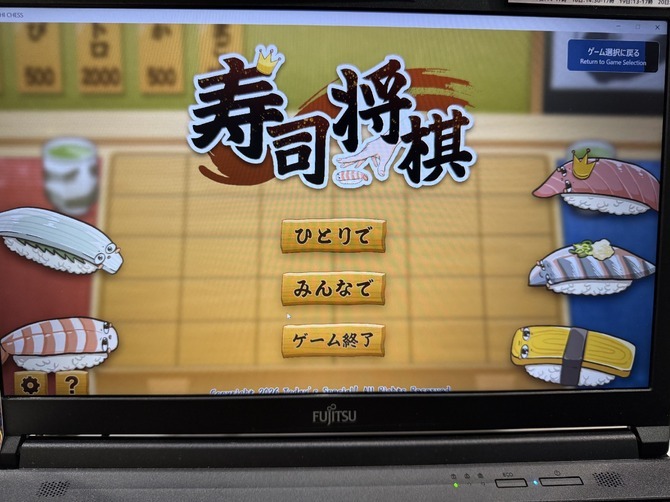

And this time, the game that personally made me think, “Now that’s a great idea,” was *Sushi Shogi* (Today’s Special!).
The gameplay is simple: it’s a turn-based game where you battle by moving sushi pieces that have price tags attached. Depending on the type of sushi, the distance and route you can move in a single turn—as well as the price—vary. The rule is that capturing your opponent’s sushi gives you an advantage on the board, but the player who captures it must pay the price. You win when your opponent’s balance reaches 0 yen.You can also reduce your opponent’s cash by moving sushi into their territory. Placing “Ootoro” in your opponent’s territory guarantees an instant victory.
This is where the game differs fundamentally from standard shogi: in this game, “letting your opponent capture a piece brings them closer to victory.” If you capture a piece, your position on the board improves, but your cash balance decreases. If you let your opponent capture a piece, you preserve your cash balance, but your position on the board worsens.
As a result, a strategic balancing act emerges: should you drag the “King” (Ootoro) or other high-value pieces all the way to your opponent’s territory to win, or should you create a situation where your opponent keeps capturing your pieces, gradually whittling their funds down to 0 yen?That feeling of “I can take it, but I don’t want to”—something that absolutely never happens in shogi—was truly refreshing.
What’s more, on your turn when you don’t want to move a piece of sushi, you can pass by drinking tea from your teacup—but you have to pay for that tea yourself, and there’s a limit on how many times you can do it. It’s clever how even the loopholes come with a cost. Scheduled for release in March 2027, a free demo version is currently available.
Animaoid Girl


Last up is *Animaoid Girl* (PANDRI-DON). Set in a “kemonomimi × Hong Kong × cyberpunk” world, it’s a multi-ending adventure game where you raise a girl who transforms into a beast.
The first thing that impressed me was the selection screen at the start of the game, where you can decide your ideal animal form. It’s just so cute. The structure—where the story begins with you choosing what kind of animal you want to become—is directly linked to the game’s theme.
And above all, the heroine is just too cute. Her ethereal, translucent illustrations come to life vividly through Live2D, and every single expression and gesture is meticulously crafted. I realized early on that this was the kind of game that would make time fly by.
At the same time, I was struck by the incredibly rich atmosphere of the cyberpunk world, reminiscent of Kowloon City. The cuteness, combined with the somewhat dim, gritty texture of the city lurking behind it—it’s precisely because these two elements coexist that the girl’s worry about “looking different from everyone else” carries such weight. It was the kind of game I could have played forever if I’d had the time.
“The live, on-the-spot vibe felt ‘indie’—it was like a festival.”
After finishing the demo, I had the chance to speak with the staff at the booth.
They said that actually being able to participate in this format was a truly great experience. And the reasons they gave for this were so authentic—it was really great to hear.
They said—people around them were worried because they didn’t show up to set up the day before the event; even the day before, the build for the event wasn’t finished, so they had to make last-minute changes; a more user-friendly UI for the demo was suddenly shared among the team members; and they even made the posters at the very last minute.
By any normal standard, this would be a tightrope walk. However, they said that this sense of spontaneity—dealing with things as they came—is precisely the “indie vibe,” and that’s what made it feel like a festival.
Come to think of it, this is something that would absolutely never happen at a major publisher’s booth. It wasn’t a case of everyone being perfectly prepared from the start; rather, it was a group of people who had come together to share the burden of those five days, working nonstop both the day before and on the day of the event to bring it all together. The atmosphere at the booth truly reflected how much they were enjoying the process itself.
They came together because the rules had changed, the workload had increased, and they couldn’t do it alone. As a result, karate, beast-themed characters, charging attacks, pixel art tactics, and sushi billing all ended up side by side at a single booth.
A “back alley” is a place you can’t reach unless you turn off the main street. And usually, the most interesting shops are found in places like that. This booth was exactly that kind of place.
All five titles I introduced have pages on Steam, and many of them have demo versions available. If anything catches your eye, be sure to check it out for yourself.



