


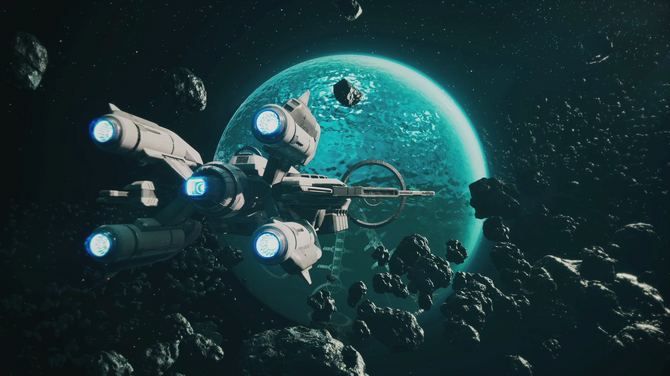
The Gundam series is a robot franchise that has spread not only throughout Japan but all over the world.
A new addition is set to join this long-running and legendary Gundam series: *GUNDAM ROGUE ORBIT*. As the first entry in the Gundam series to originate as a video game rather than an anime, it stands out as a unique entry in the franchise and has been generating buzz since its announcement.
In this article, we present an interview with two individuals involved in the production of this highly anticipated title.
We want gamers around the world to learn more about Gundam games
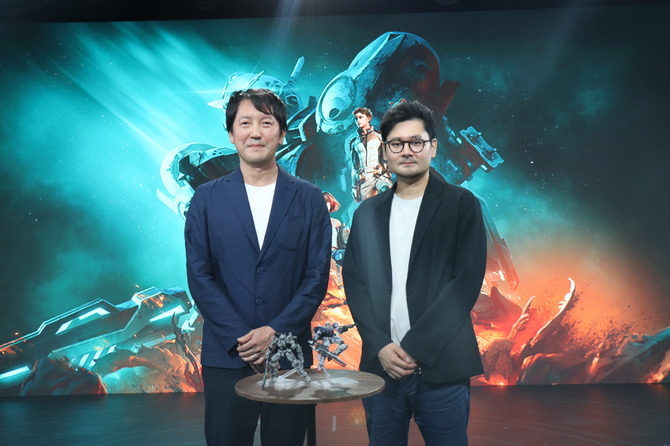
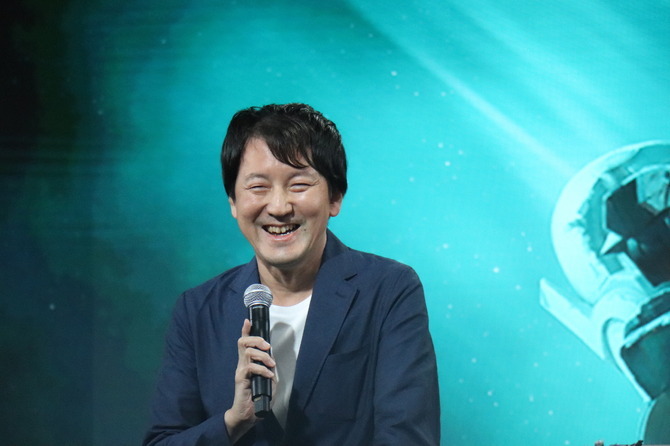
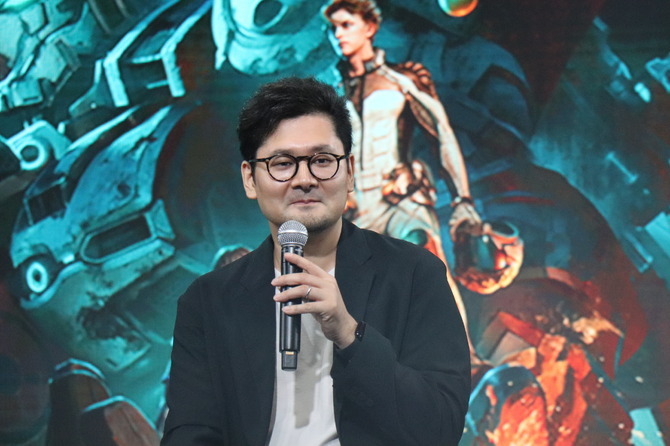
We interviewed Producer Yuya Toyama (pictured right, hereinafter referred to as Mr. Toyama) and Director Yoshiyuki Serizawa (pictured left, hereinafter referred to as Mr. Serizawa).
――We’ve heard this title features a completely new world setting. Could you tell us how this project came about?
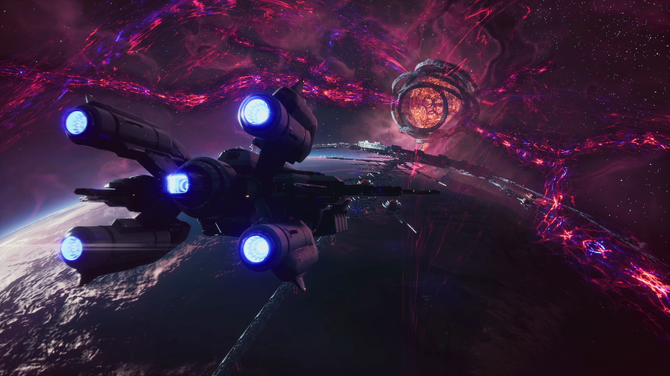
Mr. Toyama: This title, *GUNDAM ROGUEORBIT*, was launched as a project at Bandai Namco Entertainment under the mission to “deliver Gundam works not only to domestic players but to gamers around the world.” As a new challenge involving a different approach, we conducted extensive technical verification and planning discussions over a long period of time.After much trial and error while exploring various possibilities, we arrived at a new game concept: “Gundam vs. Extraterrestrial Lifeforms.”
――I understand that your focus on a worldwide audience led to the adoption of photorealistic graphics.
Mr. Toyama: That was indeed one factor. We also wanted to aim for a new form of expression through unprecedented efforts, which is why we’re taking on the challenge of photorealism.
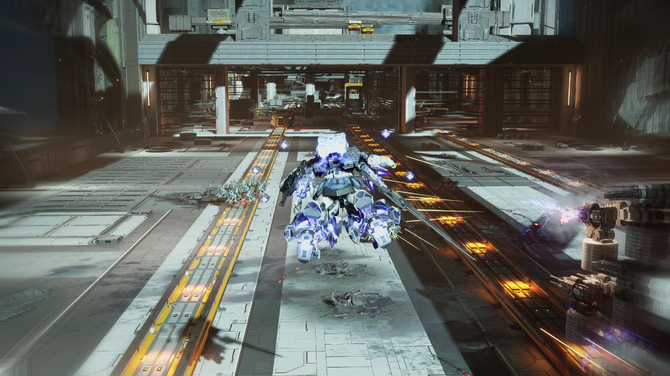
Mr. Serizawa: In this RG project, we’re presenting a new sci-fi world, and since we want to attract a wide range of players from around the world, we determined that a photorealistic art style is superior for expressing the unique textures of sci-fi mechs, as well as the textures of character designs and costumes.We’re also aiming to attract interest not just as a Gundam game, but as a sci-fi action game in its own right.
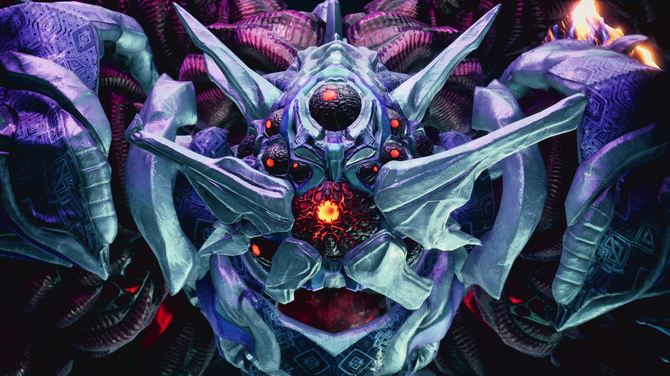
――I think this is a bold endeavor, given that this title is a completely new project. When it comes to Gundam games, there have been other genres like simulation games, but could you tell us why you chose to adopt the high-speed action format this time?
Mr. Toyama: The primary reason was, of course, our desire to appeal to the segment of customers who prefer more engaging, high-definition action games. Furthermore, since our studio—including the development team—has staff who have worked on numerous Gundam games, we selected this genre after conducting various technical evaluations and considering our history, in order to best leverage those strengths.
Mr. Serizawa: When it came to making the most of the premise—where the player controls a Gundam facing off against the Apocalypse, a “battle against a gigantic, powerful enemy”—we felt that an action game offered the most satisfying experience.Among the many Gundam games with a long history, there are certainly titles with a sense of weight to them. However, after weighing modern action games against recent Gundam works—and placing a strong emphasis on high speed and mobility—we opted for high-speed action.
*RG Project: A new Gundam media mix project in which multiple media, such as animation and games, share the same worldview and history, depicting the story from different perspectives and distances.
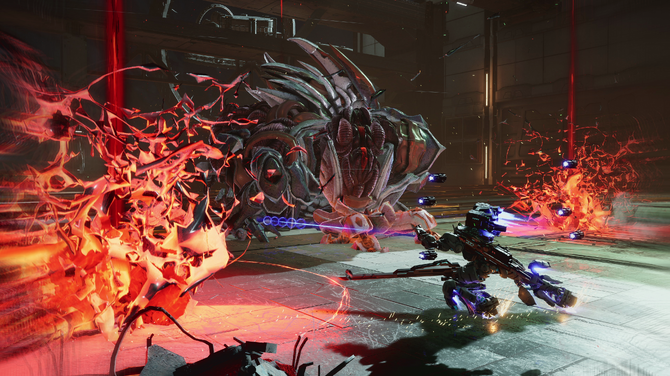
――As an action game, this title centers on melee weapons, but I feel that in many Gundam series, units often carry long-range weapons. Why did you choose to focus on close-range weapons? Also, the main mobile suit in this game, the Gundam Helix, has interchangeable exterior parts—so what exactly is the Gundam Helix?
Mr. Toyama: Regarding your first question about “focusing on close-range combat,” it stems from the mission I mentioned earlier: “to deliver Gundam works not only to domestic but also to global gamers.” With that in mind, we aim to create an engaging action game that balances the development team’s strengths—responsive controls and intense battles—into a cohesive experience.
“What does Gundam mean in this game?” is quite a difficult question, but I believe that when players experience the game—including those aspects—they’ll come to appreciate its appeal.
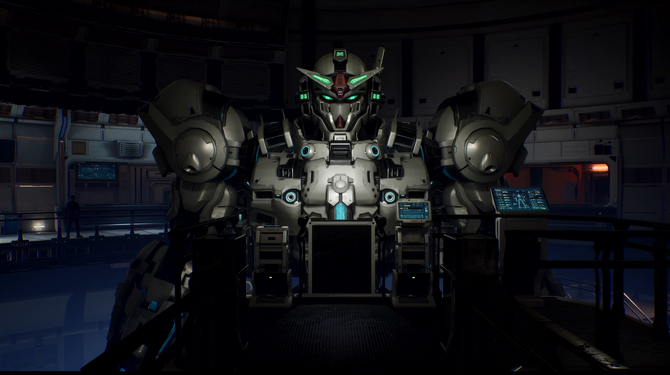
Mr. Serizawa: The decision to focus on close-quarters action was largely driven by our desire to emphasize the sense of impact—such as destroying specific body parts of a massive enemy like Apocalypse.We wanted to offer the “Ace Pilot Experience”—the core concept of this game—to players around the world. As part of that, we place great importance on conveying to players worldwide exactly what a Mobile Suit is. You see your own Gundam Helix standing on the deck and think, “I’m going to get into that.”And once they board—through the boarding sequence where the hatch opens, they enter the cockpit, external footage plays on the cockpit screens, they receive mission instructions from the captain and operators, and then launch from the catapult—we’ve incorporated these elements into the gameplay so players can experience that flow firsthand.
Then there’s the human drama aspect. Since this is a completely original title, we’re depicting the protagonist, Lex, as he meets various people and grows into an ace pilot—and we hope players will find this aspect engaging as well.
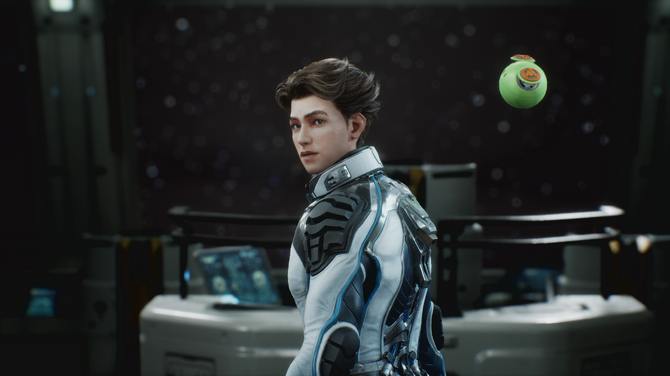
――As a robot game and robot-themed title aimed at a worldwide audience, I get the sense that while intelligent, autonomous robots are popular as characters overseas, there’s a sort of “curse” that piloted robots don’t sell well internationally. Could you tell us about your strategy for this game and any specific efforts you’re making to convey its appeal?
Mr. Toyama: As you experienced in the demo, this game allows you to become the pilot yourself—listening to mission briefings, boarding the robot, and even catching a glimpse of the protagonist as you launch into battle. We’re taking great care during development to ensure players truly feel like they’re in the pilot’s seat, fully experiencing the sensation of being the one in control.
During development, as we incorporated feedback—including from Bandai Namco’s overseas teams—we added elements like cockpit scenes. We’re crafting the game so that even players overseas, who may not typically be interested in piloted robots, can clearly see that “this kind of entertainment content exists.”I believe the game successfully conveys this aspect, and I’m confident that gamers around the world—whom we hope to reach with this new appeal—will feel it as well.
Mr. Serizawa: As I mentioned earlier, with Gunpla and, more recently, through video streaming services, the Gundam franchise is expanding worldwide. However, I believe there’s a very difficult challenge in knowing which title to choose to get started with—or where to begin watching.In that context, as part of our effort to effectively convey the appeal of Gundam, I believe this title offers the perfect opportunity to showcase the catharsis of piloting a Gundam Helix on the battlefield and becoming an ace pilot yourself, as well as the human drama, inner conflicts, and personal growth that unfold outside of combat.By expressing these elements in this game, we hope to further highlight the appeal of Gundam and build a global fanbase for Gundam games.
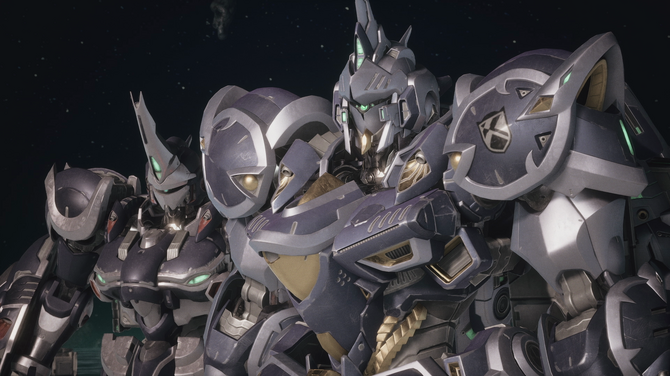
――We heard that Director Kamiyama was involved in establishing the game’s world setting. What specific discussions took place, and how did Director Kamiyama develop his vision?
Mr. Toyama: Regarding Director Kamiyama’s involvement in this game, our development team participated in the scenario meetings for his anime *Mobile Suit Gundam RG XARX-ZERO*, and we’ve incorporated some of the art designs from that project into the game.After the anime’s world setting was established, it was shared with the game staff. Using that as a foundation, and to maximize the gaming experience, we separated the time periods depicted in the anime *Gundam RG XARX-ZERO* from those in this title, *ROGUE ORBIT*,and we then adapted that into a brand-new scenario specifically for the game. In terms of Mobile Suit design, the waist sections actually share a common mechanism, and such settings have been incorporated as well. There are also other subtle, interconnected elements throughout.
Mr. Serizawa: We’re being very careful not to create content that can’t be enjoyed unless you’ve watched or played one of the two. I’m 55 years old now, and I’m part of the generation that watched the first broadcast in 1979 in real time. The worldview of this RG project is incredibly inspiring to me, and I’m eager to successfully translate it into the game.
Within that framework, we’re depicting the tension of an action game where players face off against massive enemies in a battle against “Apocalypse,” an extraterrestrial life form.To tie the world-building together, we’re using the “Three Gospels” brought by the Apocalypse—gravity control, ultra-high-pressure propulsion, and materialization—as common themes to maintain a sense of continuity across the universe.
――I understand this title falls into the high-speed action genre. You mentioned targeting a global audience—could you tell us more specifically what demographic and age group you have in mind?
Mr. Toyama: I believe there has been a significant increase recently in opportunities for people around the world to be drawn to what are often described as exhilarating, responsive Japanese action games. This is also a strength of Japanese development teams, including Bandai Namco Studios, so in terms of building on that appeal, I believe we can create something captivating that only we can make.I believe the game will be appealing not only to fans of the Gundam series but also to those who are unfamiliar with “Gundam” and can still find it engaging.
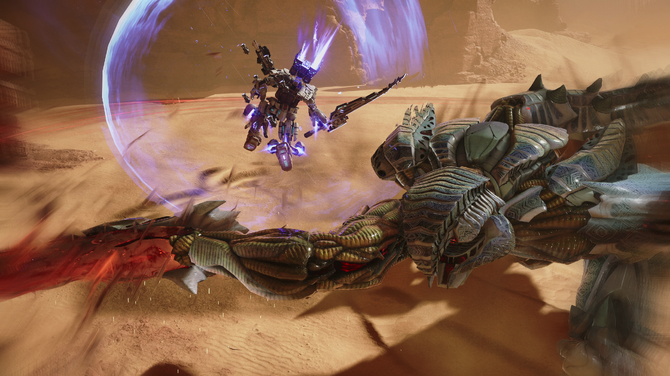
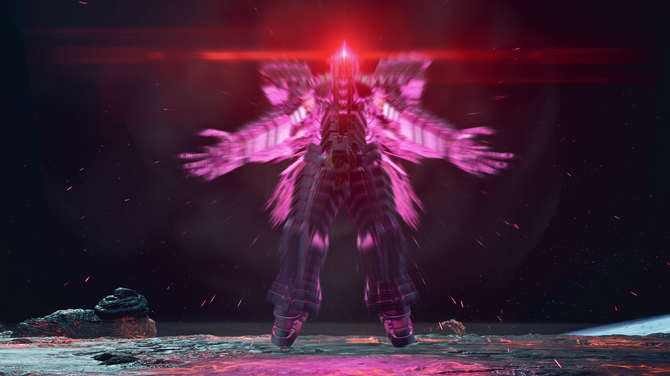
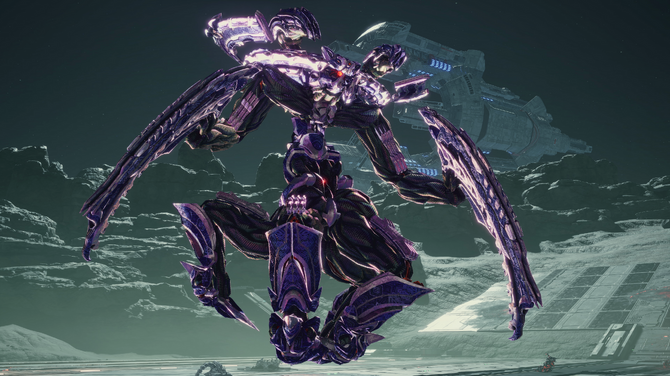
We’re also pushing the boundaries of photorealism in the graphics, and I believe we’ve achieved a visually striking look unlike any previous Gundam game. With highly detailed depictions—such as the mechanical mechanisms that open with even a slight attack—I think this could be the first Gundam game to attract customers who haven’t previously considered mecha games to be their thing. We want to reach those people.
Mr. Serizawa: It might not be a specific trend, but I think there’s a high demand—in terms of numbers—for high-difficulty, close-quarters action games. However, that isn’t the main focus this time. The priority is that not only fans of the *Gundam* series but also people who aren’t familiar with “Gundam” can enjoy it, so we want as many people as possible to pick it up and have fun. With that in mind, we prioritized a satisfying gameplay experience.
――Let’s talk about the game’s scope. Could you tell us about the estimated playtime, the number and types of Mobile Suits featured, the types of Apocalypse enemies, and the number of weapons and parts? Also, regarding the game’s high-speed action, I’d like to hear about its strengths and the aspects you paid particular attention to.
Mr. Toyama: First, regarding the game’s scope, we plan to release specific information on the number of parts and weapon types gradually. For now, I’d like to say that what’s been revealed so far is just a fraction of what’s to come.As for the game’s length, if you follow the story linearly, I think it will likely take around 20 hours. Of course, if you experiment with various equipment or build and test mobile suits to your liking as you play, the time will vary depending on the player, but I imagine that’s about the average for most people.
As for our commitment to the action, I’ll definitely let the director speak on that. I think his passion will really shine through (laughs).
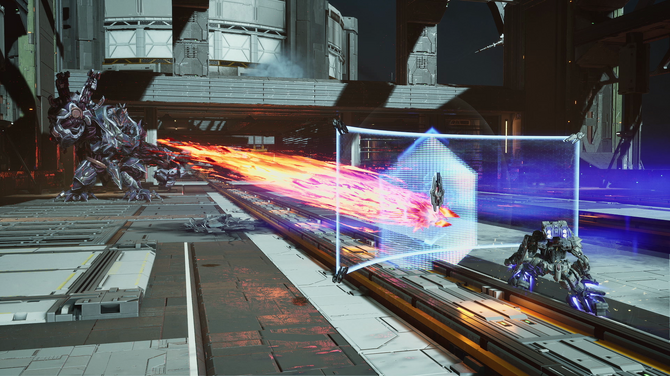
Mr. Serizawa: The more we lean toward high-speed action, the more I worry we might lose too much of that “Mobile Suit” feel. That’s why we place a strong emphasis on “heaviness”—whether it’s the powerful attack of the Assault Sword you tried out, the impact of a Lance strike, or the stun that follows.Incorporating those elements allows us to convey a sense of weight, the essence of a Mobile Suit, and the feeling of a massive, 18-meter-tall humanoid weapon. However, since we’re aiming for high-speed action, we prioritized a satisfying feel over pushing that realism to the absolute limit. For example, Tactical Skills can be used to interrupt any action at any time to eliminate openings, and you can even use a step to close the gap after a strong attack.The counteraction known as “Shift” can also be used at any time, provided the gauge is full.
In this way, the action is high-speed yet retains a sense of weight, and whenever that weight poses a risk, players can switch to their own swift actions. We’ve been mindful of these elements, carefully balancing and prioritizing both high-speed action and the sense of weight inherent to Mobile Suits.
Mr. Toyama: The action animations also incorporate the expertise of the development team that has worked on Gundam games up to this point. I believe the action is packed with elements that allow players to enjoy the various aspects of past Gundam games.
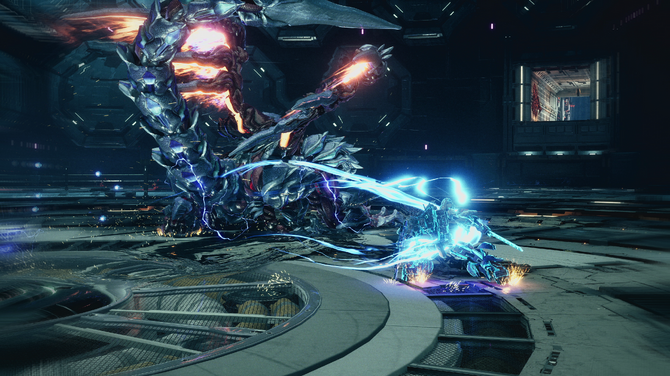
――Was a lot of attention paid to the parts that deploy when the unit moves or boosts?
Mr. Serizawa: Yes. This is the Gundam Helix, but the same applies to all three mobile suit lines you saw today—when you perform a charge attack, the thrusters open up. We’re taking on the challenge of achieving the kind of intricate mechanical realism and higher-resolution depiction of mobile suits that’s only possible in a video game, and that’s another area where we’ve paid special attention.
Mr. Toyama: The art team has generously brought to life a wide variety of visual expressions that are only possible in a video game. They’ve infused that same spirit into the plastic models as well, so I believe the result is a product with a high level of attention to detail.
――I think Gundam is a franchise with many passionate fans. This is a challenging project with a completely transformed world setting, but could you tell us what points you were careful to preserve as “essential elements of a Gundam game,” and what difficulties you faced?
Mr. Toyama: To be honest, there are some aspects we haven’t been able to fully convey in the footage we’ve released so far. However, while the game depicts a battle against an unknown entity called “Apocalypse,” we’ve carefully crafted the story so that the drama between the characters remains at its core. That’s the central axis we’ve been careful not to stray from.
We’ve released footage featuring a variety of characters, and each one has a well-defined backstory. The protagonist, Rex, takes center stage as the pilot of the special Mobile Suit, the Gundam Helix. We’re focused on depicting the connections between people and the emotions that arise from them. We’ve made sure to stay firmly committed to that core theme throughout development.
Mr. Serizawa: The same goes for the design aspects.We’re conscious of preserving the iconic elements that make you instantly recognize “This is a Gundam,” while ensuring the design’s appeal isn’t compromised. By adding intricate details and depicting the mobile suit with a streamlined body rather than flat surfaces, we’re careful to convey the idea that “Gundams are weapons that people pilot into battle—they’re really cool.”
Then, of course, there’s the moment when you climb in and head out into battle—and the beam rifle. While close-quarters combat is the main focus, we’ve made sure the charged beam rifle can deal substantial damage as well. Basically, we’re focused on fighting primarily through close-quarters combat while retaining the beam rifle element. Within that framework, we’ve worked to achieve high-speed action.
――As the RG Project continues to expand, I’d like to ask you once again about this title’s positioning within the series. Also, you mentioned that you’re strongly focused on the overseas market—in terms of strategy beyond the game’s content itself, how do you plan to reach international audiences?
Mr. Toyama: Regarding the RG Project’s positioning, our mission for the game is to “deliver Gundam works not only to domestic players but to gamers around the world.” To that end, we’re tackling aspects that haven’t been explicitly explored before. In the game itself, we’ve taken on a wide range of challenges, including photorealistic visuals and the design of the enemies players face.
Our goal is to make these games a gateway into the series even for those unfamiliar with the Gundam franchise. That’s the direction we’ve been moving toward. In terms of our positioning, we’re delivering these games as part of our efforts to break free from conventional frameworks—all with the aim of creating opportunities for people to discover the appeal of Gundam. I believe that is one of the major missions entrusted to us.
Mr. Serizawa: We have the anime and we have the games, and since the games stand completely on their own, we’ve developed them with the mindset that we want people to enjoy each one separately.
Plastic model kits are selling extremely well, Gundam Base locations are opening across the country, and video content is continuing to grow on streaming services. When it comes to games, however, I feel we’re lagging behind. With this title, I hope we can at least spark the beginning of a global expansion for Gundam games.
“GUNDAM ROGUE ORBIT” is scheduled for release on Friday, March 5, 2027, forPS5,XBOX Series X|S, andSteam .
©SUNRISE
*Screenshots are from a work-in-progress version.



