


Even a place you casually pass by can take on a completely different meaning the moment you realize something about it. The short puzzle adventure game “PW7A,” created by independent developer Suika Tabe Tabe Usagi, is built around that “Aha!” moment.
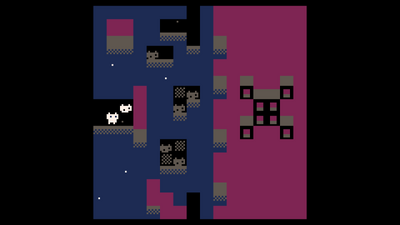
This PICO-8-made 2D game has players control a robot that has awakened from a long slumber to explore ruins.It was released for free on itch.io on August 24, 2026, and surpassed 5,000 browser plays in just 17 days. In response to the unexpectedly positive reception, development of the Steam version is currently underway.
Game*Spark conducted an email interview with the developer, Suika Tabetabe Usagi. We asked in depth about the influences from games like *Outer Wilds* and *TUNIC*, the design of puzzles that encourage players to “discover” things, balancing indie development with work and parenting, and the journey leading up to the Steam release.Without delving into specific puzzle solutions, we explore the philosophy behind game development.
◆ Captivated by *Outer Wilds* and *TUNIC*—Creating a Game for the First Time in Five Years
—First, could you tell us what inspired you to create *PW7A*? Did it start with a puzzle idea, a world concept, or the thought, “I want to create this kind of experience”?
Watermelon-Eating Rabbit: I had been making games on my own about five years ago, but after that, I got busy with work and raising my child, so I took a long break from game development.
During that time, playing *Outer Wilds* and *TUNIC* made me appreciate experiences where the player’s own discoveries and understanding drive the game’s progression, and I became interested in the “Thinky” genre—games that emphasize understanding, deduction, and moments of insight.
Then, at BitSummit this past May, I had the opportunity to speak with a game developer I admire, which reignited my desire to make games.
That’s when I decided to create *PW7A*—an experience where the path forward is unlocked by the player’s own insights, regardless of their skill level with action controls.

――Are there any games or other works that influenced you while creating *PW7A*? Please let us know if there are any, including movies, manga, novels, or other non-game media.
Watermelon-Eating Rabbit: The games that influenced me the most were *Outer Wilds* and *TUNIC*. I was strongly drawn to the experience where the player’s own acquisition of knowledge changes what they can do and how they perceive the world.
In terms of puzzle design, I was influenced by *Leap Year* and *Void Stranger*, and for the mechanics where acquiring knowledge leads to the discovery of new abilities, I drew inspiration from *Öoo*.
As for short works, I also drew inspiration from *Carrot Kingdom!* and *The Boons of IIUIR*. Additionally, the game’s world was influenced by *Cave Story*.
――In this game, more than simply acquiring items or abilities, it’s the player’s own “Aha!” moment—that realization—that becomes the driving force behind opening up new paths. Could you tell us why you chose this approach to game design?
Watermelon-Eating Rabbit: When creating the game, as I was paring down various elements, I thought about what to keep.
I placed particular emphasis on ensuring that the knowledge gained wouldn’t just serve as a “key” to moving forward, but would also become a “function” that enables players to do new things. I wanted a single realization to give rise to multiple sources of joy.
Additionally, we designed the map so that gaining new knowledge changes the meaning of places you’ve visited before, making you want to explore them on your own—thinking, “Maybe I can do something there, too?”
While the game does have a suggested route, players aren’t required to follow it; we place great importance on allowing them to explore freely, relying on their own understanding.

◆ It’s Okay to Realize Things Before Seeing the “Clue” — Behind the Scenes of Puzzle Design
—How do you create puzzles that “prompt players to realize” solutions? If you give too many hints, the puzzle becomes too easy; if you give too few, it becomes unfair. I’m curious about how you struck that balance.
Watermelon-Eating Rabbit: Basically, we design with the approach of showing “information that allows players to infer what they’ll be able to do later” first, and placing the “key piece of information” at the end. We adjusted the difficulty primarily based on the amount of the former information.
It’s perfectly fine if players figure it out before seeing the decisive clue. In fact, we place great importance on the fact that players come to realize the solution at different times. On the other hand, if too many people figure it out too early, the purpose of including the decisive clue is diminished, so we were mindful of striking that balance.
While it’s possible to restrict players’ movement until they make the discovery, the map in this game is compact, so we designed it to allow for as much freedom of exploration as possible.
It’s perfectly fine for players to solve the puzzles in a different order than intended; we want them to enjoy the process of progressing by building on their own discoveries. Additionally, we’ve included mechanisms to ensure that, no matter which path they take, the core experience we value as creators remains intact.
――Were there any instances where players solved puzzles in ways different from what the developers had anticipated, or got stuck in unexpected places? Please share any examples of puzzle changes made based on playtesting or feedback after the itch.io version was released.
Watermelon-Eating Rabbit: We released the itch.io version without prior third-party playtesting, but fortunately, we didn’t need to make any major changes to the puzzles after release.
However, we discovered that quite a few players got stuck in exploration because they didn’t realize they could use a feature they’d acquired in other areas. So, we made adjustments so that players would naturally discover those possibilities as they continued exploring.
This time, I learned a lot from actual player feedback, which reaffirmed the importance of conducting playtests before release.
――“PW7A” is a fairly compact game, lasting about an hour. Could you tell us why you chose to limit the playtime to this length, and how the game’s design was influenced by its short format?
Watermelon-Eating Rabbit: Actually, I didn’t set out to make it about an hour long from the start.
Since I’m an independent developer, my production time and skills are limited, so I designed the game based on what I was capable of.
I’ve always enjoyed a “subtractive” approach to game design, so this time I decided to make puzzle-solving the core of the gameplay and not include other main gameplay elements like action. Instead, I prioritized creating an experience where the world expands through the player’s own discoveries and understanding.
By narrowing down the elements and packing as many ideas as possible within the constraints of PICO-8, the game ended up being about an hour long.
――In recent years, deeply intricate puzzle games like *ANIMAL WELL*, *TUNIC*, and *Blue Prince*—where the player’s discovery of knowledge and rules directly drives progress—have gained popularity.At the same time, compact titles like *Leap Year* have emerged, allowing players to experience that same appeal in a short amount of time. As a developer, what are your thoughts on this recent trend in puzzle games?
Watermelon-Eating Rabbit: I love games like *TUNIC* and *Blue Prince*, where the world expands through knowledge and discovery, so I’m delighted to see more options like these becoming available.
It’s impressive to see games like *Leap Year* and *Öoo* emerging in recent years—titles that let you experience the joy of discovery even in a short play session.
Long-form games often feature grand objectives and a depth that comes from gradually accumulating knowledge over time, leading to interconnected discoveries. On the other hand, I think short-form games have the appeal of being able to place bold ideas and mechanics—ones that are difficult to incorporate into longer games—at the very heart of the experience.
Each has its own unique merits, and I’m glad we can now enjoy this kind of fun in games of various scales.
――Also, such games are sometimes referred to as “Metroid Brainers.” Do you consider *PW7A* to be part of this lineage of “games where knowledge expands the world”? Or did you have a different approach in mind during development?
Watermelon-Eating Rabbit: Yes, I do consider it to be part of the lineage of games known as “Metroid Brainia” or “knowledge-unlock” titles.
However, I do think there’s a bit of a dilemma with this genre. If players know in advance that it’s a “game where knowledge expands the world,” some of the fun that was meant to be discovered by the player themselves might be revealed too early.
That’s why, with *PW7A*, I deliberately chose not to highlight terms like “Metroidvania” or “knowledge-unlock” and instead introduced it as a “puzzle adventure.” I’d be happy if players could discover the mechanics of the game world with as few preconceptions as possible.

◆Developed Between Work and Parenting—Ideas Born from PICO-8’s Constraints
――I get the impression that, in addition to large-scale, complex puzzle games, there’s also been an increase in small-scale puzzle games designed to entertain players with a single idea in a short amount of time. What are your thoughts on the compatibility between indie development and short puzzle games?
Watermelon-Eating Rabbit: I think indie development and short puzzle games are a great match. Since indie developers inevitably have limited resources—such as time and skills—the short-form format, which makes it easier to narrow down the scope of production, is very appealing.
I also find it interesting that short games make it easier to see the entire game at a glance, which makes it easier to adopt bold mechanics. In *PW7A*, for example, I incorporated bold design choices related to the game’s core mechanics, but I took care to ensure that the roles of other elements weren’t lost.
Of course, just because a game is short doesn’t mean it’s easy to make, but I feel that the ability to pursue unique forms of fun even within limited resources makes it a great fit for indie development.
――This game was created using PICO-8. Could you tell us why you chose PICO-8? Also, were there any ways in which the constraints—such as the number of colors or screen size—actually had a positive impact on the design of the puzzles or the game world?
Watermelon-Eating Rabbit: The biggest challenge in indie development was the time and effort required to create artwork. Since I was making the game in between work and raising my child, I wanted to minimize the burden of creating assets as much as possible.
Because PICO-8 has a low resolution, it’s easy to make a game work even with relatively simple graphics, and since colors are selected from a predefined palette, that helped with color coordination as well. I think these constraints were a major advantage when working on the project within a limited timeframe.
Additionally, the map constraints of PICO-8 sparked ideas related to movement, which I incorporated into the game’s mechanics. Ultimately, I feel that it was thanks to PICO-8 that I was able to complete the game on my own in about three months.
◆5,000 plays in 17 days. An unexpected response led to a Steam version
――The itch.io version surpassed 5,000 browser plays within 17 days of release, and we’ve received a lot of feedback from overseas as well. Was the response greater than you expected, and are there any player reactions that particularly stood out to you?
Watermelon-Eating Rabbit: Originally, I thought of it as a playtest and was just hoping a few acquaintances would give it a try, so I was surprised that so many people actually played it.
I was especially happy that Mr. Takahashi, the creator of *Öoo*, played it right after release and told me, “This is fun!” It was also impressive to see that people not only from English-speaking countries but also from China and South Korea played it.
At first, I thought the itch.io version would be the end of the project, but even people who don’t usually play puzzle games told me they found it fun, which made me hope this could help popularize the “knowledge unlock” genre. To introduce the game to an even wider audience, I decided to develop a Steam version.
――For the Steam version, the BGM has been completely revamped, with Shiro handling the music. Could you tell us the story behind creating new BGM for this release and how you hope the music will change the *PW7A* experience? Also, please let us know if there are any other changes from the itch.io version besides the BGM.
Watermelon-Eating Rabbit: For the itch.io version, since I didn’t have the skills to compose music myself, I used tracks available for free.The selection of music available for use in PICO-8 is limited, and the tracks that matched my vision weren’t licensed for commercial use, so I initially prioritized quality by releasing the game for free. While I like all the tracks I used, I needed to create new BGM for the Steam release.
I’d been listening to Shiro’s (@petit_zome) music on podcasts for a while and was amazed by his technical skill. When I tweeted on X that I was struggling with the BGM, our mutual friend Tsukiichi introduced us, which led to this collaboration.
Shiro-san helped me learn how to use the PICO-8 tools from the very beginning, and I asked him to capture the image of a cute robot exploring space alone, while making sure not to emphasize the sense of loneliness too strongly. I feel the finished tracks have such depth that you don’t even notice the limitations of PICO-8.
Since this game doesn’t rely heavily on narrative within the game itself, I was delighted that the music added such depth to the world. I also believe the music is designed to help players maintain a calm mindset and try again when they get stuck on a puzzle.
As for elements other than the BGM, the game itself is already using nearly all of PICO-8’s available memory, so it’s difficult to add any major new features.

◆ Three Games the Developer Has Been Interested In Lately, and a Message to Players
――If you don’t mind, could you tell us about three puzzle games you’ve played recently that you found fun? I’d also like to ask what aspects of each one left a lasting impression on you.
Watermelon-Eating Rabbit: Since I’ve been focusing on the development of “PW7A” since June, I haven’t had much time to play games lately. However, I’d like to introduce three titles—including puzzle games—that have particularly stuck with me from the ones I’ve played over the past year or two.
『Type Help』
I found the mechanic where players themselves input information they’ve deduced—such as characters, locations, and times—particularly interesting. What really stuck with me was how deducing clues was directly tied to progressing through the game. A remastered version titled *The Case of the Galley Mansion* was recently released, and I’m looking forward to playing that as well.
*Speltnael*
I was impressed by how the original game system and puzzle-solving mechanics meshed so perfectly. I think this is a title that lets you enjoy both the fun of understanding new mechanics and the fun of using them to solve puzzles.
『Calling』
This is a short game I experienced at this year’s BitSummit. I was struck by the unique control scheme, which only allows you to gather information in fragments, forcing you to solve puzzles by piecing together the missing pieces. I was drawn to the bold game design—something only possible in a short game.
――Finally, could you share a message for those interested in this game?
Watermelon-Eating Rabbit: “PW7A” is a short puzzle adventure where the player’s own “Aha!” moments become the driving force that opens up new paths. Since it doesn’t require action-based controls or quick decision-making, I’d be thrilled if even those unfamiliar with puzzle adventures would give it a try.
The estimated playtime is about one hour, but the time it takes to complete the game varies from person to person. We’d be happy whether you solve it quickly or take your time and think things through as you go.
We hope you’ll enjoy the game at your own pace without worrying about the time. You can add it to your Steam wishlist, so if you’re interested, we’d love it if you’d add it there.
――Thank you very much!
A free browser version of “PW7A” is currently available on itch.io. The Steam version has no release date set yet, but we’re currently accepting Wishlist additions.
