


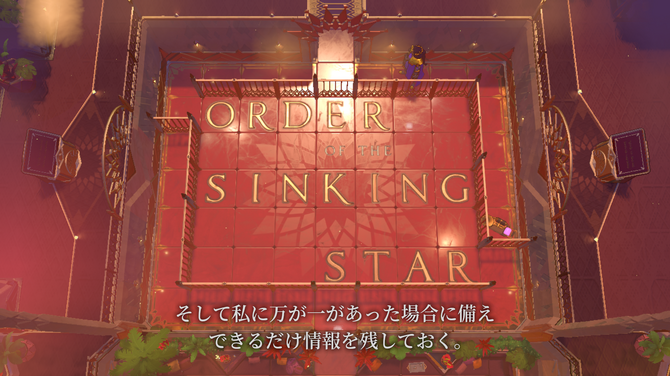
The puzzle game *Order of the Sinking Star*, released for the Nintendo Switch 2 and PS5 on October 29, 2026, boasts a massive scope—it’s said to feature “over 1,000 stages and take hundreds of hours to complete.”The game was created by Jonathan Blow, known for producing popular, unconventional puzzle games such as *Braid* and *The Witness*. As this was his first new release in quite some time, it felt like fans’ expectations were running quite high.
*Order of the Sinking Star* (PlayStation Store)
*Order of the Sinking Star* (Nintendo Store)
I’ve played this game for just under 20 hours so far, but to be honest, it still feels like I’m in the very early stages, and the finish line is nowhere in sight. …Writing that might make you think, “A game that long sounds like a lot of work,” but those 20 hours were also “time spent being pleasantly challenged anew with each stage and continuously experiencing the thrill of ‘I solved it!’”
So, in this article, based on my actual gameplay experience with *Order of the Sinking Star*, I’ll explain the puzzles and highlight the appeal of each of the game’s four distinctive worlds.
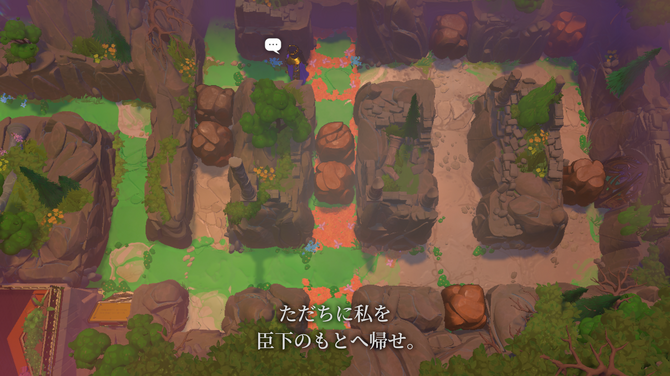
At its core, the game features a puzzle genre known as “warehouse puzzles.” You move your character one square at a time to achieve the objective set for each stage—such as “pushing a rock onto a switch to clear a path to the goal.”
That said, it’s certainly not just a standard “warehouse puzzle.” The core of this game lies in the fact that every stage incorporates rules with a unique twist. You could describe it as a massive collection of “variations on the warehouse puzzle” theme.
The “Overworld,” which connects the individual puzzle stages, is a puzzle in its own right. Even on your way to the stages, you’ll enjoy putting your wit and ingenuity to the test.While this game is said to take “hundreds of hours” to complete, your progress depends heavily on your “moments of inspiration,” so the time required will vary from person to person. In my case, I found it quite challenging from the very beginning, and there weren’t many stages I could clear smoothly. At this rate, I have a feeling it might take more than just a few hundred hours…

From the location you reach after completing the tutorial, four worlds stretch out in all four cardinal directions. Each world features a completely different type of puzzle, so let’s introduce them one by one.

In the northern world, “Heroes of the Transporters,” you’ll solve puzzles by strategically switching between characters with different abilities to move objects, much like a warehouse worker. The three characters introduced early on are: a strongman who can push two or more rocks at once; a character who can’t push rocks but can pull them; and a character who can swap positions with rocks or other characters to move.
The character who pushes rocks is straightforward to use, but the other two are quite tricky. The character who pulls will drag a rock whenever they move in the pulling direction, and the character who swaps positions will be forced to swap places with any object at their destination.I found myself scratching my head countless times over situations like “I didn’t want to pull it, but I ended up pulling it” or “I didn’t want to warp, but I had no choice”—yet it’s precisely this lack of freedom that is the heart of the puzzle.
The sense of satisfaction when you finally solve a puzzle by skillfully combining the three characters’ abilities is truly exceptional. In typical warehouse-style puzzle games, if you push a rock into a corner or up against a wall, it often becomes stuck and you’re left with a dead end. One of the interesting aspects of this game is that you can use pulling and swapping to rescue rocks from right up against the walls.

The star of the Eastern World is the mirror. You can warp your reflection or objects in the mirror to the direction the mirror is facing. Partway through, two or more mirrors appear, requiring counterintuitive solutions—such as splitting your character—which makes the puzzles increasingly challenging.
I felt there were more situations requiring precise, one-square adjustments than in the other worlds, but as a result, it feels like the most pure “warehouse keeper” game among the four worlds—giving it the impression of a classic, orthodox “puzzle” game.Since there are fewer character-specific quirks and action-oriented elements, you can fully savor the joy of a classic puzzle—carefully studying the board and building your logic step by step.
Personally, since I could narrow down the solution using a process of elimination—thinking, “If I’m going to use this mirror, I have no choice but to stand here”—I found that the Eastern World was the one I progressed through most smoothly.
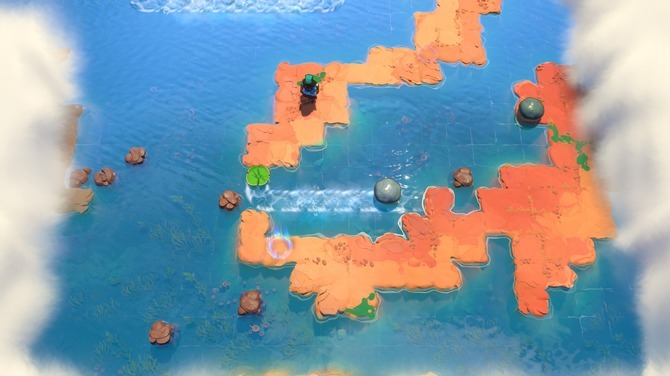
In the Southern World, you progress by kicking bouncing stones, utilizing water currents, and crossing over water. There are many rules to memorize, such as how the stones behave, so it felt quite difficult at first.
Another defining feature of this world is its strong action-puzzle element, such as kicking stones at just the right moment. That said, since you can fast-forward, rewind, and retry, the design ensures you can overcome even the most challenging action sequences without feeling overwhelmed.
This world is full of surprises—such as paths opening up in ways completely different from the solutions I initially imagined—and it’s a world where you’ll frequently experience that “Eureka!” moment. While it was quite challenging for me, I was able to fully savor its freshness and fun all the more because of it.
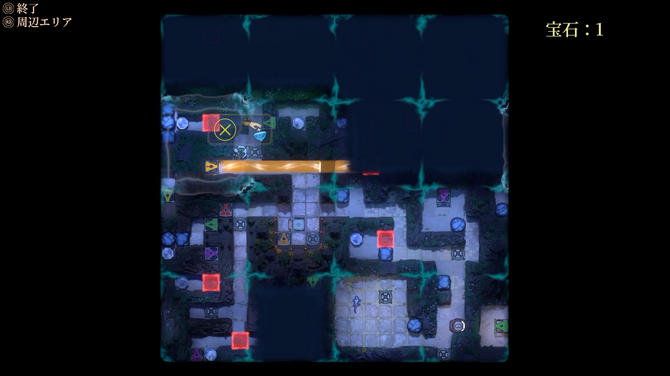
In the West World, you place collected gems to activate a beam emitter and use beams—each with different effects depending on their color—to pass through walls or destroy rocks while collecting more gems, all with the goal of escaping the cave.
Since each stage is massive and features mechanisms that span multiple screens and interact with one another, you’ll generally play from a “bird’s-eye view.” As a result, the visuals differ significantly from the puzzles in other worlds, making for a refreshing experience.
However, because there’s so much to think about—and due to unique constraints like the inability to change direction instantly—the difficulty feels considerably higher than in other worlds. Furthermore, the high degree of freedom makes you wonder, “Isn’t there more than one solution?” which adds to the world’s appeal.
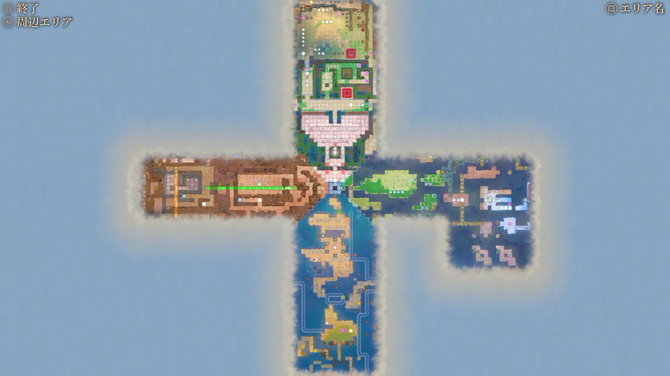
Not only does the puzzle style change drastically every four worlds, but even within the same world, the trends vary by location, and unique rules are added one after another—so you never get bored. I think the sensation of being “submerged” in such a massive volume of puzzles is an experience you rarely find anywhere else.
*Order of the Sinking Star* is by no means a casual puzzle game. However, the handy “redo” feature supports trial-and-error, allowing you to take your time tackling even the toughest puzzles.
Not only is this a must-play for puzzle game enthusiasts, but it’s also a title I highly recommend even to those new to serious puzzle games. If you’re looking for a puzzle game on Switch 2 or PS5 that will keep you engrossed for hours on end, be sure to give this one a try.
Developed by Thekla, Inc. and Arc Games, *Order of the Sinking Star* is now available for Nintendo Switch 2 and PS5 via PLAYISM, released on Thursday, October 29. The standard retail price is 3,400 yen (tax included).
*Order of the Sinking Star* (PlayStation Store)
*Order of the Sinking Star* (Nintendo Store)
