


Note: This article is a sequel to the previously published piece, “The Character of Iron, the Weight of the Heart: The Philosophy of Firearms in ‘Dolls Frontline.’” Reading both articles together will provide a deeper understanding.
“Firearm Philosophy” is an approach proposed by the author that examines “why a particular gun is present in a work of fiction” and “how it is portrayed.” Following on from the previous article, this piece uses critical analysis to explore how *Dolls Frontline 2: Exilium* has reinterpreted the concept of “gun names.”
There is a view that “names” are a concept akin to “curses.”
In Japan, there has long been a belief in “kotodama” (the spiritual power of words), and a custom known as “real-name taboo” existed, in which people refrained from casually uttering a person’s real name (“imin”).Furthermore, there are similar examples around the world—such as the Chinese practice of “hiki” (avoiding taboo names)—where people carefully consider and avoid calling out names. It was believed that revealing and calling someone by their true name would grant power to enemies or malevolent entities.
Modern psychology also includes research on names and their effects.In reports on the “Dorian Gray Effect”—which posits that the social image associated with a name is reflected even in one’s facial features—it has been hypothesized that individuals may unconsciously adjust their facial expressions, hairstyles, and overall demeanor to align with the social stereotypes associated with their names (such as names that sound gentle or strict).
Whether viewed as “magical or religious taboos” in ancient customs or as “self-fulfilling prophecies” in modern social psychology, the belief that names possess power and meaning beyond mere symbols is widely held.
And if that name is the “name of a weapon” that has claimed countless lives throughout history, the significance attached to it is by no means trivial.
In my previous article, I explored the strategic RPG *Dolls Frontline*, where android tactical dolls bear the names of firearms and live as “weapons that fight to gain a heart and be loved.” The names of the firearms defined them and, at times, influenced their very existence.But at the same time, those names were also meant for others to call them by and form connections with them.
And at the end of that article, I mentioned the sequel: “Just as the Elite Doll 416 abandoned her own name to call herself Kurukai, a sense of ‘Exilium’ lingers beyond the names of the guns.”
This article explores precisely what lies beyond that. In this sequel, *Dolls Frontline 2: Exilium*, while some characters let go of their gun names, others continue to go by the same names. Furthermore, there are those who were never even able to choose their own names.
In the past, the handling of names carried a sense of “precariousness.” In the harsh wilderness of this game, they turn at the sound of their names, embracing that very precariousness.
Why do they choose to abandon their names—or to keep them?
From the Cage of a Name to the Battlefield of the “Self”
The Tactical Dolls from the previous game reflected the history and design philosophy of their firearms—their codenames—in their character design, extending even to their personalities and appearances. Whether they were American-made M16A1s or Soviet-made AK-47s, these were not merely identifying names; they also defined who they were.
The earnest 416; the M4 SOPMOD II, with her obsession with modifications. If a firearm’s design philosophy and history are reflected in a character’s personality and appearance, then the name of the gun is more than just a label. While it signifies who she is, it also binds and restricts her very existence.
However, in this installment, both the environment surrounding them and the game’s feel have changed significantly. In the previous game, they fought as part of a “squad”—composed of their own clones, known as dummy dolls—serving as combat forces for a large-scale PMC (private military company).In contrast, this installment features a smaller scale of combat. It has evolved into a tactical RPG where each doll operates as an “individual,” taking cover behind obstacles on a 3D battlefield.
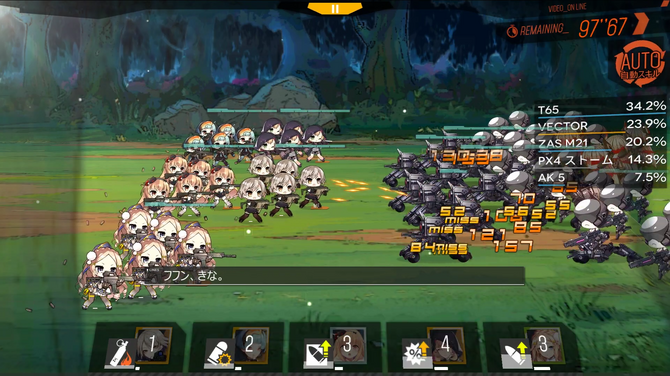
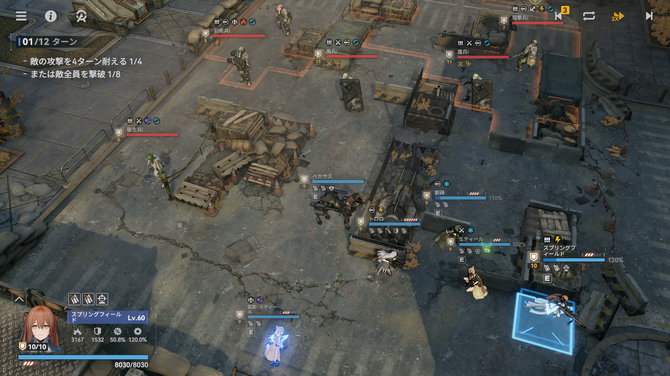
Even more symbolic is the fact that the game system now “separates the dolls from their firearms.”In the previous game, the characters were tied to “that specific gun,” but in this installment, you can freely switch them to different firearms in the equipment menu—even within the same category. System-wise, they have been liberated from the constraints of being tied to a specific gun.
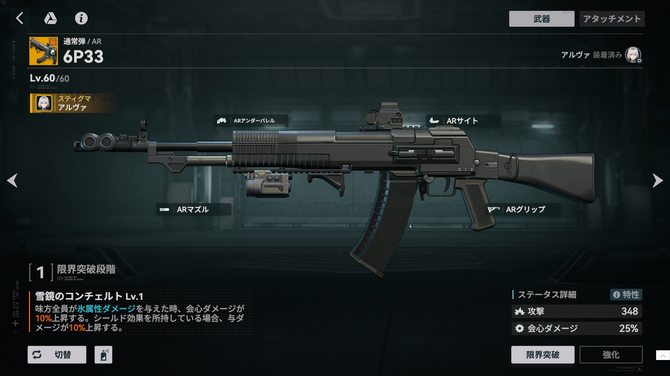
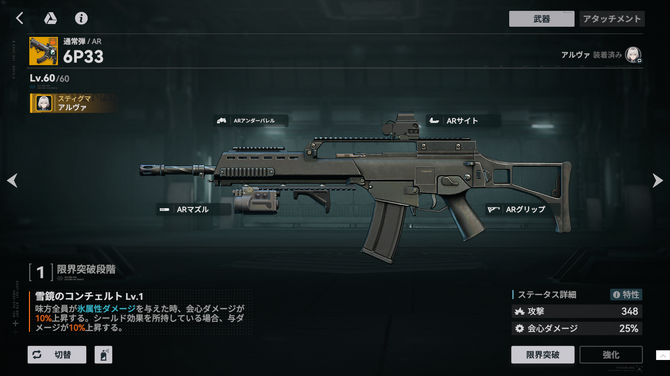
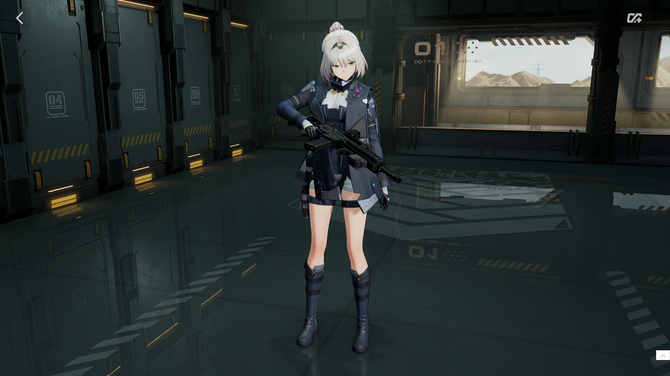
The subtitle of this game, “Exilium,” means “exile.” They have been severed from a massive military organization and the fate of the world, and now find themselves wandering a contaminated world. Having lost their place in the world and standing alone in the wilderness as individuals, some have abandoned their names, some have kept them, and for others, only their names remain.
Those Who Cast Off the Curse and Grasp the Steel
The elite doll known as “416” in the previous game, *1*, has cast aside that name in this installment and now goes by “Kurukai” as an individual. This is not merely a name change. It signifies a transformation: she, who was once closely tied to the name of a gun, no longer defines herself by that name.
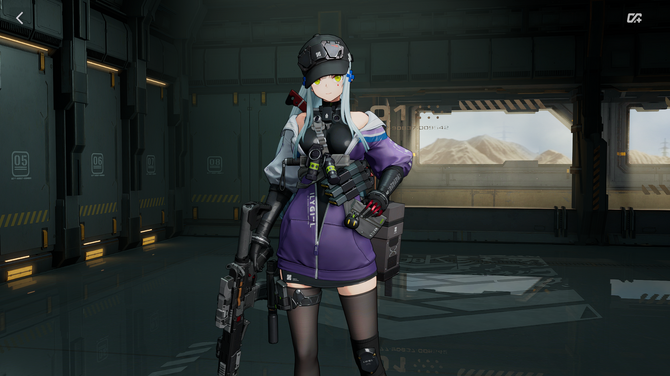
What’s interesting here is that the real-world HK416 is also a “gun that changed its name.” Originally called the “HK M4,” this rifle was renamed to its current designation following a legal dispute with Colt, the company that holds the M4 trademark.
Furthermore, the HK416 was the result of improvements aimed at overcoming the M4’s weaknesses and creating “a more reliable firearm.”Given this history, it makes sense that the 416 from the previous game—which claimed to be “perfect”—was portrayed as a meticulous and inflexible robot. And in this installment, Kurukai’s continued dedication to honing his skills and refining his abilities suggests that he has not abandoned his pursuit of that “perfection.”
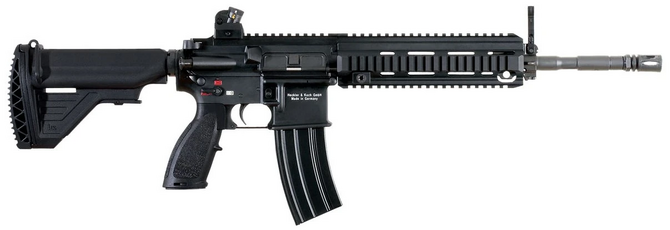

However, what she seeks has changed. It is no longer the pursuit of a “perfect weapon” that functions exactly according to its given design philosophy, as it once was. Rather, it is a journey toward becoming a “perfect individual” who survives the wilderness by her own will and continues to prove herself.It can be said that, precisely because she possesses her own proven capabilities, she no longer needs to rely on the gun’s brand—which guarantees the product’s value—to define herself.
While the real firearm was caught up in the fate of a trademarked product and forced to change its name amid legal disputes, she—as a doll—chose to relinquish that name of her own accord. A forced name change versus a chosen one. Even if the names are the same, their meanings are not.
To begin with, the names of firearms often derive from people’s names. “AK” stands for “Kalashnikov Automatic Rifle (автомат Калашникова),” and “Colt,” “Browning,” “Luger,” and “Mauser” are all named after their developers or founders. The history of firearms has repeatedly followed this pattern of people’s names becoming model names.
Kurukai’s name change can also be interpreted as an act of retracing that history in reverse. It is a journey back from the “name of a weapon” to a “person’s name” once again.
Her struggle up to this point had been a strange manifestation of existence—"an HK416 shooting an HK416." But having cast aside her name, she no longer defines herself solely by the name of a gun. "Kurukai, as an individual, grasps a single gun as a tool for survival."
The gun is no longer the sole proof of her soul.It is a tool she takes in hand to survive the contaminated zone and to keep her comrades alive until tomorrow, and with that change, the meaning of pulling the trigger also changes. She no longer fires as an existence defined by the gun’s name; rather, she takes the gun into her own hands and takes the lives of others. For one who has cast aside her name, the excuse “I shoot because it’s a gun” no longer holds water.
She must accept the weight of that act as her own choice.
Those Who Continue to Embrace Their Names
On the other hand, there are Tactical Dolls who do not abandon their names and continue to bear the same names as in the previous game—such as Mosin-Nagant and Vector. However, their reason for retaining their names lies somewhat different from a tragic resolve like “not letting go of a curse.”
The Mosin-Nagant is a rifle officially adopted by the Russian Empire in 1891. It is a historical relic that has absorbed the memories of two world wars, numerous revolutions and civil wars, and the collapse of an empire—and one that still makes its presence felt in today’s conflict zones.What’s interesting is that the name itself is already a composite. It combines the names of Russian Major General Sergei Mosin and the Belgian Nagant brothers—two names engraved on a single rifle.
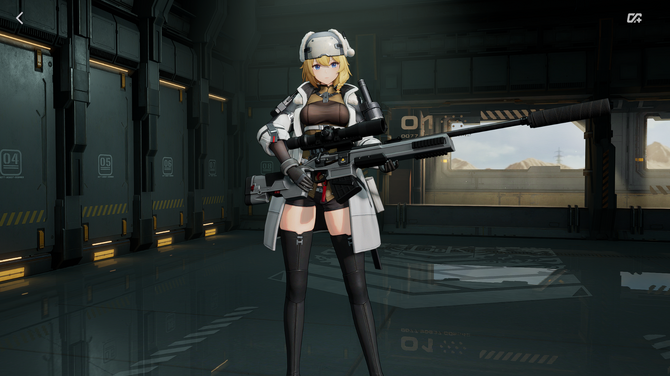
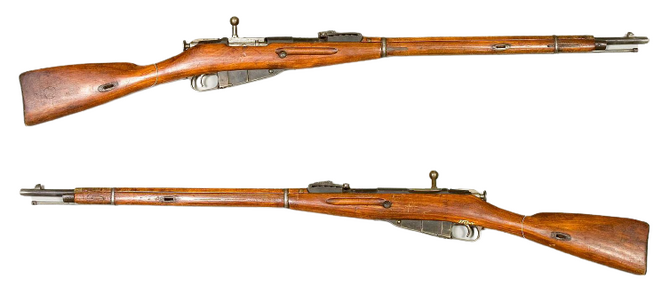
What actually happens to a rifle once its military service is over? Retired military rifles are often sold off to the civilian market. The Mosin-Nagant is no exception; large quantities of surplus rifles have flooded markets around the world, and it has endured globally as a tool for hunting, target shooting, and collecting.
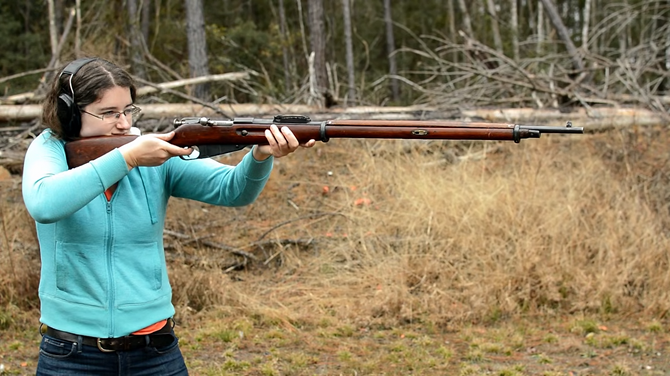
This is an example of a firearm that continues to be used as a firearm even after losing its place in the military, demonstrating that “dismissal” does not necessarily mean the end of its existence. The reason why the Mosin-Nagant doll continues to bear a name with such a weighty history is surprisingly simple.“Because I love the real Mosin-Nagant and have an extraordinary attachment to it”—that’s all there is to it.
For her, keeping the name has become a choice of her own, not a fate imposed upon her. That the reason is simply “because I like it” may be the strongest possible answer, given that the name carries a weight akin to a curse. After all, she is overwriting that curse with “love.”
In contrast, Vector has little interest in the name itself. The KRISS Vector, on which it is based, is a submachine gun thoroughly specialized for close-quarters combat.Thanks to the unique “Super V” mechanism—in which the bolt sinks beneath the barrel as it recoils—recoil is directed downward rather than causing the muzzle to rise, allowing for controlled automatic fire at over 1,000 rounds per minute.
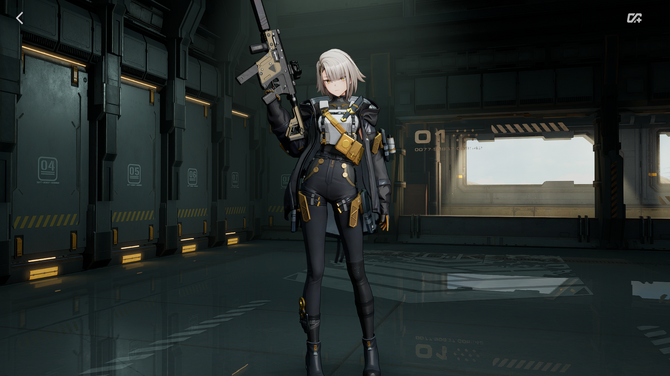

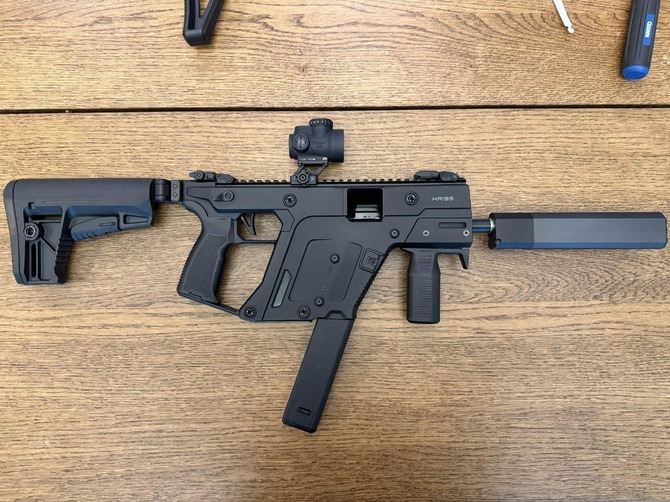
Both its functionality and its distinctive shape are the product of a philosophy centered on firepower, making no attempt to hide its intent to destroy.In the game, the Vector also acts as a fire-attribute supporter, hurling incendiary grenades to burn down most of the map. The taciturn character doesn’t seem to have much reason to either abandon her name or cling to it.
However, just because she doesn’t care about her name doesn’t mean she’s stagnated as a person. While she grapples with the cold-bloodedness carried over from the previous game and the slight pessimism she’s newly acquired in this one, her caring nature toward her comrades remains unchanged. As a squad leader, she has steadily grown through various experiences and real combat.
Precisely because her inner world has deepened and she is moving forward, whether the name she currently bears belongs to a gun or not is likely a trivial matter to her.Even though they all share the “name of a gun,” for Kurukai it is a cage to be cast off; for Mosin-Nagant, it is the name of something she loves; and for Vector, it is nothing more than a label she doesn’t particularly care about. The curse does not reside in the name itself, but arises from the relationship between the name and the one who bears it.
They take on a name because they like it. They keep it simply because they have no particular attachment to it.
What lies there is a freedom all their own—one distinct from the act of shedding a name.
A Wilderness Where Two Paths Intersect — The Two Grozas
The path of casting aside one’s name, and the path of embracing it. Groza, who stands alongside the Commander as a protagonist-level character in this work, finds herself at the point where these two paths intersect in a complex web.
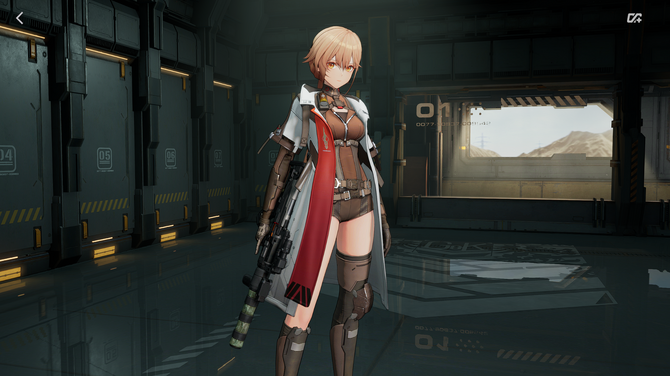
The real-world OTs-14 Groza is a bullpup-style assault rifle developed for Russian special forces; “Groza” means “thunderstorm” in Russian. It is not uncommon for Russian firearms to be given nicknames like this in addition to their clinical model numbers.

In this game, the two names of this single weapon are split between two dolls. The base unit of the Groza, destroyed during a battle early in the game, was recovered and modified through enemy scheming, reappearing on the battlefield as an extremely powerful third-generation doll that inherited her mental data (personality and memories). That is the OTs-14.
In this game, Groza suffers from amnesia for some reason at the start, while the OTs-14—who joined the protagonists’ party after the battle—stands beside her, exhibiting different behavior influenced by the personality inherited from the previous game and the partial memories that have resurfaced.
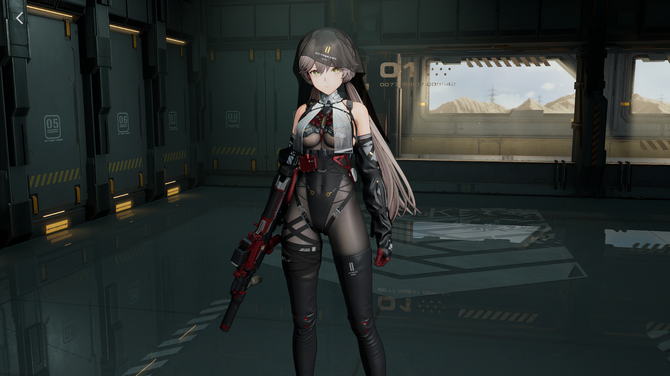
Thus, the one born on the enemy side who retained her memories came to be known by the model number “OTs-14,” while the one who lost her memories—still serving in the commander’s unit—retained the name “Gloza.” Memory and name had been split into separate entities.
Kurkai, Mosin-Nagant, and Vector were all able to choose their own names. For Groza, however, who had lost her memories, her name was neither something she chose nor something she discarded—it was simply “what remained.” Yet precisely because of this, the name “Groza” serves as both a curse and a source of strength for her.
It appears to be the last anchor holding onto the questions “Who are you?” and “Where should you return?” for her, who has lost the “substance of her personality”—her past memories.
In my previous article, I referred to 416 (Kurukai) as the “hidden protagonist.” The former hidden protagonist has relinquished their name, while the overt protagonist of this work, having lost their memory, clings only to their name. This symmetry lends the story a profound depth of shadow.
Beyond the Name of the Gun
The four characters we’ve focused on so far share one common trait: “Their names have already become detached from the guns themselves.”
The four—Kurkai has let go of his name, the Mosin-Nagant cherishes its name, Vector pays no heed to it, and only the name remains for Groza.The same “name of a gun,” depending on its relationship with its owner, can become a cage to be cast off, a token of affection, a mere label, or a final refuge. The battlefields of *Dolls Frontline 2: Exilium* are filled with this diverse mix of philosophies regarding firearms.
The game does not tell us which of these is the “right” way to live. The only fact that remains is that every girl is pulling the trigger, caked in mud, to earn her daily bread. In the previous game, they chose to “fight to be loved.” In this sequel, they are asked, “As whom do you shoot?”
From the perspective of a real firearm, even if its owner changes, its name changes, or its role changes, the gun remains a cold lump of iron. However, their names are no longer mere symbols referring to a lump of iron; they function as “the doll’s own name”—and no one else’s.
An entity that was once a gun no longer needs to be one; it acquires a name and becomes a person. This is the most beautiful culmination of a weapon truly “encountering the heart.”
What makes this beautiful is that they are able to experience the true meaning of a name. Throughout this article, I have consistently treated names as something akin to a “curse” that binds the other person. Yet, by their very nature, names exist precisely “to be imbued with blessings and wishes, and to be called by someone.”
In the previous game, many of the dolls first offered their names to the player—the Commander—in the form of a self-introduction. Stating one’s name is also an expression of the wish, “I want you to call me by that name.” And being called is an affirmation that “I want you to be there”; continuing to call a name is a form of love.
It doesn’t matter how cold a weapon’s name may be—or whether it is cold at all. What makes that love come alive is the warm voice of someone who keeps calling that name. And one of the owners of that voice is us, the players ourselves, who stand alongside them as Commanders.
The curse of a name transforms into love as long as someone continues to call it.
Beyond the names of the guns. Even today, they turn around when they hear their names called.

“Dolls Frontline 2: Exilium” is currently available as a free-to-play game for PC and mobile.Following maintenance ending at 12:00 on October 29, a themed event is scheduled to begin, featuring “Wellrod MkII” and “Gr G41” from *Doll’s Frontline 1* as playable units alongside a new main story.
〈Image Source〉
*4 Photo by U.S. soldier Jeremy
*5 Photo by Chris Parker: Wikimedia Commons - Shooting with an OC-14



