


"Cyberpunk: Edgerunners 2" premiered exclusively on Netflix on October 20.
With Umi Igarashi taking over as director from the previous installment, “Edgerunners,” and a younger core creative team, this masterpiece offered a fresh perspective on the people living in Night City.
Game*Spark conducted an interview with director Kai Igarashi and screenwriter Masahiko Otsuka. We’ll take an in-depth look at the behind-the-scenes story of “Edge Runners 2” and explore the passion Director Igarashi poured into this project.
Please note that this article contains major spoilers for *Edge Runners* and *Edge Runners 2*. If you haven’t watched either series yet, hit the back button on your browser right now, open Netflix, and watch both series with your mom!
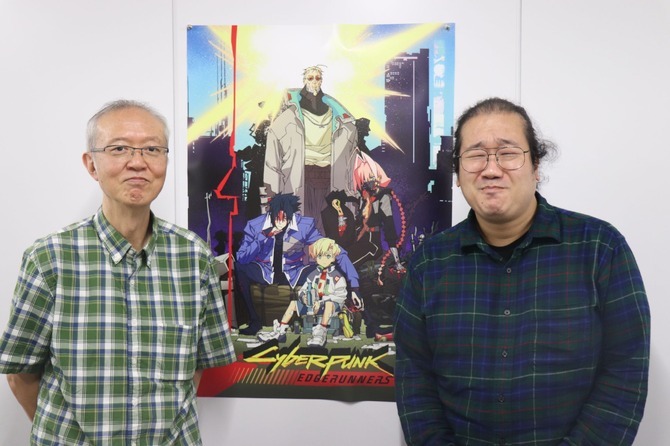
――First of all, could you both please introduce yourselves?
Igarashi: My name is Igarashi, and I directed “Cyberpunk: Edgerunners 2.”
Otsuka: I’m Otsuka, President of TRIGGER, and I served as series composer and screenwriter for “Cyberpunk: Edgerunners 2.”
――Director Igarashi, I got the impression that you were also involved in the key animation for the main series.
Igarashi: No, I actually only did key animation for a few shots in the final episode. I was mainly involved in editing, storyboarding, and—as is typical—directorial checks, where I reviewed each shot individually.
――Thank you. To start off, I’d like to ask about the background behind the production of “Edge Runners 2.”
Otsuka: Thankfully, the previous series, “Cyberpunk: Edgerunners,” was very well-received, and CDPR approached us asking, “Would you like to do another one?”However, by that time, the director of the previous series, Imaishi (Hiroyuki Imaishi), and the chief animation director, Yoshinari (Akira Yoshinari), were already working on their next projects, so it was difficult for them to return.
So, I asked, “Would it be okay if, for example, the director were to change?” CDPR replied, “It’s fine if the director changes; we’d just like TRIGGER to continue working on it.”
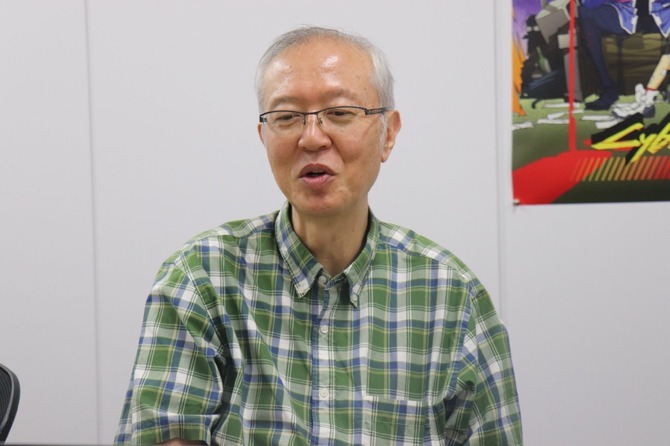
Next, we had to decide, “So, who should we make the director?” Igarashi-kun had been in charge of Episode 6 [*] of the previous series—a pretty important episode—and personally, I’d been thinking, “It’s about time Igarashi-kun took on directing.” So I approached him about it, but he was actually pretty reluctant (laughs).
[*] Episode 6 of the previous series, “Edge Runners,” titled “Girl on Fire / Enveloped in Flames.” Director Igarashi served as storyboard artist and animation director. Ikki Kanno, who served as character designer and chief animation director for “Edge Runners 2,” also served as co-animation director.
After some serious persuasion, I finally got his agreement, so I said, “If Director Igarashi is okay with it, please let him do it,” and that’s how the project got started.
――You mentioned that he “wasn’t keen on it”—did you, Director Igarashi, feel any pressure or have any concerns?
Igarashi: It wasn’t so much pressure as thinking, “I’m practically guaranteed to lose.” For one thing, I wondered if I even stood a chance against the previous work created by Mr. Imaishi and Mr. Yoshinari! Plus, I was pretty worn out after working on Episode 6. I was feeling quite discouraged.
――Is that so?
Igarashi: Partly because of that, my initial reaction to the offer was more like, “Hold on a second…” But after various twists and turns, I actually started to feel that having a slim chance of success might actually be a better “opportunity.” Plus, I came up with an idea along the lines of, “If we can pull this off,” so I used that as a starting point to move forward with production.
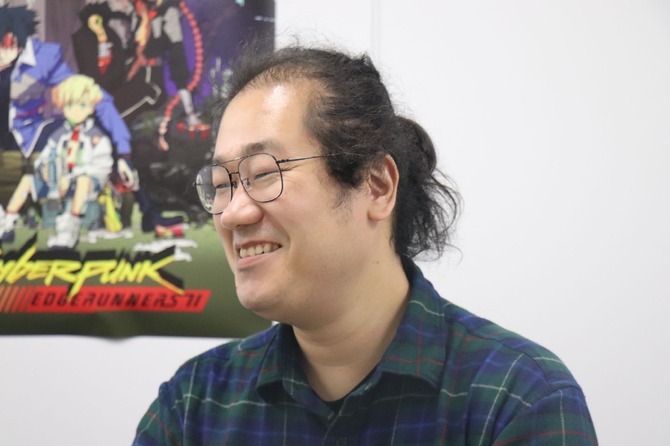
――I had the chance to watch an advance screening, and while the previous work had a noir-like feel—or rather, left a completely different impression than any previous TRIGGER production—this new work builds on that while retaining the passion unique to TRIGGER’s works, making it a truly compelling piece. Did your collaboration with CDPR begin as early as the scriptwriting stage?
Otsuka: Yes, we worked together in that way on the previous title as well. But this time, CDPR actually provided us with an initial plot outline—something along the lines of “this is the kind of story we want to tell”—and we built the project based on that.
――On the other hand, Director Igarashi had his own ideas he wanted to pursue, right?
Igarashi: My initial proposal included rough concepts for D and Capri—those two characters were the ones I had in mind from the very beginning.
――I see.
Igarashi: The storyline I had in mind was something like, “At first, the female character is flesh-and-blood, but when she dies, maybe her consciousness becomes digital.” However, at that time, I hadn’t fully grasped the mechanics of *Cyberpunk 2077* myself, and in the end, I was told, “That’s not possible with the technology within the game’s setting.”
After that, I kept asking things like, “Can we incorporate Black Wall into this?” and we went through a series of complicated back-and-forth exchanges where they’d say, “That’s not possible,” as we worked on it. Well, it was a parallel process, after all. There were ideas from the CDPR side, as well as my own ideas, and it was a back-and-forth where they’d respond to my proposals and I’d throw new ones back at them—all while Mr. Otsuka watched over the process.

Otsuka: Co-writer Stybór also had strong convictions about “what he wanted to do,” and the director, for his part, had his own convictions like “it can’t be done any other way”… Stybór would casually say something like, “Wouldn’t this solve the problem if we did it this way?” but there were times when I’d respond, “No, no, that just won’t work!”
I saw their opinions as practically polar opposites, so I spent a lot of time during production agonizing over how on earth we were going to reconcile them. As I mentioned earlier, the characters did have a basic prototype, but they evolved significantly as we developed them, so to be honest, I don’t even really remember the exact path they took to reach their current form. In any case, it took a complex series of back-and-forth discussions to arrive at what we have now.
"Defying the System" Visual Style and the Energy of Character Designer Ikki Kanno
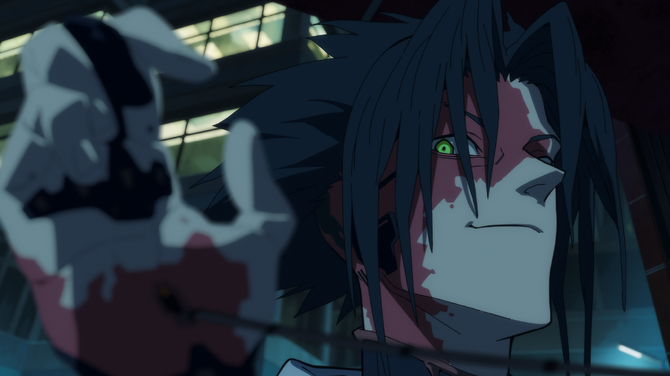
――Next, let’s talk about the visuals. In this series, Ikki Kanno is in charge of character design and chief animation director.Mr. Kanno served as animation director for Part A of Episode 6 in the previous series, and I think many viewers were struck by those sharp, angular forms. In that sense, while there’s a connection to the previous work, your design style differs from Mr. Yoshinari’s. I’d like to ask you about the themes you focused on in composing the visuals.
Igarashi: I think there was a part in our earlier conversation where I mentioned that I was initially reluctant—and the reason for that was a sense of dissonance I felt regarding the previous series.Even though David met a truly tragic end in the previous series, the intensity of the visuals and music made it feel as though his death was being glorified, and right after it ended, that single point really stuck with me. He’s a poor guy, you know. Though it’s an interesting work, of course!
So, as a starting point, if I were to take on the project, rather than further glorifying that aspect, I was also thinking, “Could I take a direction that goes against that system of glorification?” At that point, there was absolutely no doubt in my mind that “above all, we need powerful visuals.” And as someone I could trust to deliver those powerful visuals, I thought I’d like Kanno-kun to handle the character design.

――I see. Did you have any involvement in the visual style, Mr. Otsuka?
Otsuka: Honestly, my involvement stopped at the script. I left almost everything on set to Igarashi-kun.
――Is that so? So you were really just acting as a bridge, so to speak.
Otsuka: That’s right. What was expected of the script was basically, “Just get the basics in order.” I was writing it while thinking it would probably change quite a bit during the storyboard phase. However, while I was conscious of creating a work that was completely different from the previous one, I also felt there had to be some connecting elements.
Since I was one of the few staff members returning from the previous film, I made a conscious effort to incorporate that aspect. But once production started, I figured, “I should just let the staff do whatever they want,” so I didn’t get involved at all after that.
――Regarding the character design, elements like Talia’s intake were the subject of discussion for being “90s-style,” but personally, I feel it’s actually different from typical 90s anime design. For example, even when it comes to shadows, they don’t have that “seaweed-like” quality; I feel the more flat art style is a defining characteristic of this work.So I’d like to ask both of you: what do you find appealing about Mr. Kanno’s character designs?
Igarashi: Well, my own artistic foundation isn’t really based on highly three-dimensional art. If anything, it’s more like I go back and forth between flat and three-dimensional elements. I feel like Sugano-kun did a fantastic job of bringing all those elements together. To put it bluntly, things like Talia’s air intakes are incredibly tricky to render in three dimensions.
――That’s true—it seems like just drawing the three-view projections would be a struggle.
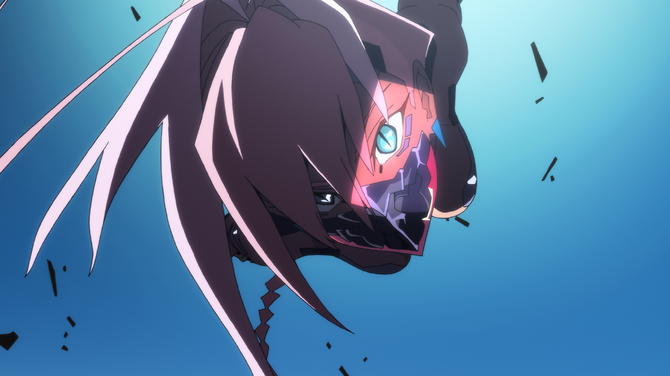
Igarashi: Even if I say, “I want to try that,” when it comes to actually drawing it well—like with her hairstyle—I’d end up asking, “So what happens if I draw it from this angle?”D’s hair seems put together at first glance, but while the tips have a certain flow, it’s also a bit messy. And Roman’s hairstyle—though it looks simple—is actually exquisite. I really think only Sugano-kun could have pulled it off.
Of course, Sugano-kun’s bold artwork is part of it, but it’s really his skill in tying everything together in the details. His combination of personal talent and a distinctive style is what makes him so great. He delivers results that exceed expectations—or rather, he goes above and beyond what you ask of him.
Also, to be honest, rather than the ’90s style, the Kaneda-esque effects [*] were actually the primary reference we had from the start. So, in terms of “how to bridge the gap between the character designs and those effects,” I thought it would be great to work with someone like Kanno-kun—someone with that kind of foundation who can pull off all sorts of things.
[*] A jagged, edgy effect style for which animator Iko Kaneda was known.His work is characterized by the lightning effects in the Dragon’s Nest scene from *Castle in the Sky* (1986) and the effect animation in the opening sequence of *Very! Lucky Man* (1994). His influence can also be seen in the effect animation for Capri in *Edge Runners 2*.
Otsuka: Back when we were working on *Promare* (2019), I saw the first key frames Kanno-kun drew. I thought he was talented right from the start, but his style was a bit more standard back then. He gradually started to be influenced by the people at the studio, though.
Igarashi: So that’s why it was a mistake to put me in charge of training him during *Promare*! (laughs)
Otsuka: That’s how it all started (laughs). No, seriously, I could really feel how much he’d evolved while being influenced by truly talented people around him. This time, it was his first job as a character designer, and he worked incredibly hard on the main animation as well. He’s continuing to evolve right in the midst of production.
I could feel such intense energy—the kind that makes you think, “There’s no way us old guys could pull this off anymore”—and that’s one of the highlights of this film.
“I wanted to portray Hikari as a powerful presence.”
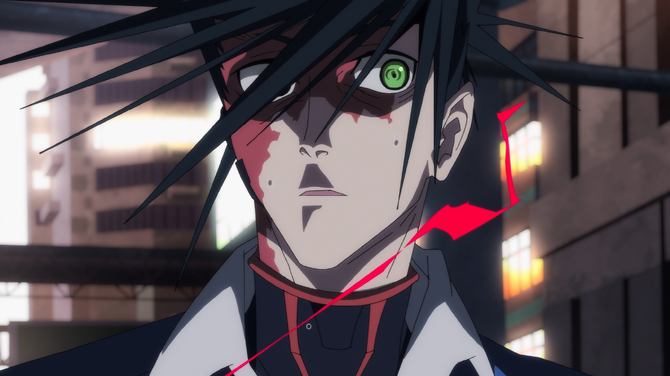
――Also, Capri’s animation in Episode 3 draws on the so-called “Kaneda-style” tradition while featuring a more dynamic approach. Depending on the shot, some scenes are almost like flat compositions—complete as single illustrations—and it was simply a pleasure to watch. So, I’d like to ask how you arrived at that particular style.
Igarashi: Conceptually, the character of Capri was originally meant to be a much freer entity—or rather, I envisioned her as a “character with fewer set rules.” However, there was a concern that with so few rules, “if we continued down this path, some viewers might find it difficult to recognize Yosuga in her depiction.”
I was thinking about how to bring that together into a cohesive character. Originally, she was just a red silhouette with only a face, and various green parts moving around… something like that.
――So, sort of just enough to vaguely look like a person, I guess?
Igarashi: That’s right. But even I realized that would be too impractical to pull off as an anime, so I enlisted the help of Kanno-kun and the team at Design Works.In particular, Motoki [*] came up with all sorts of ideas based on the original concept. After discussing it with him, we were able to refine it into its current form. That’s why, when the character first appears in Episode 3, you can still sense that original vibe.
[*] A manga artist known for creating compelling science fiction and fantasy works based on settings that align with the world-building, not just the visuals. His depictions, which convey a strong fascination with gadgets, are particularly captivating.In particular, the depiction of a cyborg’s meal in the short story “Cybernetic Meal” (published in 2017), included in the collection *First Contact: Motoi Madoguchi Works (2025, Futabasha)*, clearly influenced the way Talia’s meals are portrayed in this work.
I wanted to create a look that, while retaining a human form, had a two-dimensional, almost abstract quality—as if she could take on any shape—so I had her appear that way in Episode 3. The artist in charge of the original artwork seemed to enjoy it too; they experimented with various approaches, and I think that’s how we ended up with such a cool design. I was also really happy with the fish in Episode 8.
――I see. So that was something that came straight from the storyboards?
Igarashi: Well, even in the storyboards, I was giving off a vibe like, “Go ahead and do it.”

――Just a vibe? (laughs)
Igarashi: I was giving off that vibe (laughs). I was drawing up the storyboard with a “If you get it, go for it~” kind of attitude, but the person who actually got it was—well, Yōto-kun [*]—so it was a total win-win!
[*] An animator whose flamboyant, heroic storyboards and direction in Part A of Episode 31 of “Jujutsu Kaisen (2023)” became a hot topic.
――Also, regarding Mr. Kanno’s designs and animation, I felt that the background art for Night City was composed with a rather stark visual style. I’d like to ask you what aspects you prioritized when creating the visuals, such as the composition of the frames and the selection of locations.
Igarashi: I wanted to give more thought to “how the light comes in,” so I did make that a central focus. Especially in the early parts, I looked for spots where I could emphasize things like rays of light streaming in. Also, for scenes where the entire area is suddenly bathed in light, I considered those even at the storyboard stage, and I’d go back to the storyboards to re-examine the locations—it was a mix of various approaches.
Otsuka: There were even scenes in the script that were originally written for nighttime but ended up being set during the day, so I remember thinking, “Oh, so that’s how it’s going to be.” It was like, “Wow.”
――I see. I think viewers were also surprised that daytime Night City became such an iconic visual.On the other hand, there were episodes where the depiction of water was particularly crucial, such as the “D” shot at the end of Episode 5 and Episode 8, for which Sho Oi [*] was in charge of the storyboards. I think these are important scenes for the drama as well, so I’d like to ask about the directorial intent and themes in light of the overall tone.
[*] An animator who gained attention for his work on the robot anime within Episode 8 of *Don’t Touch the Animation Club!* (2020) and for the opening sequence of *Dandadan* (2024). His dynamic proportions, compositions, and rough, expressive brushwork that conveys emotion are particularly captivating.
Igarashi: Hmm… I might just say something like, “What are you talking about?”

――Not at all—in fact, that’s exactly what I want to ask about.
Igarashi: I simply wanted to depict light as a powerful presence. I wanted to incorporate light into my work as something that embodies power, a certain will, or anything that affects people—regardless of good or evil.
That’s why there are scenes where characters run toward the light, or conversely, are overwhelmed by it. I also thought it would be nice to tie that in with the fact that Capri is an “effect entity.” Since Capri is an effect, she is light itself. I wanted to portray her not so much as a single personality, but simply as power itself.
――I see! Come to think of it, this film strongly featured various light source motifs throughout—not just reflections on water, but also the sun and flames.
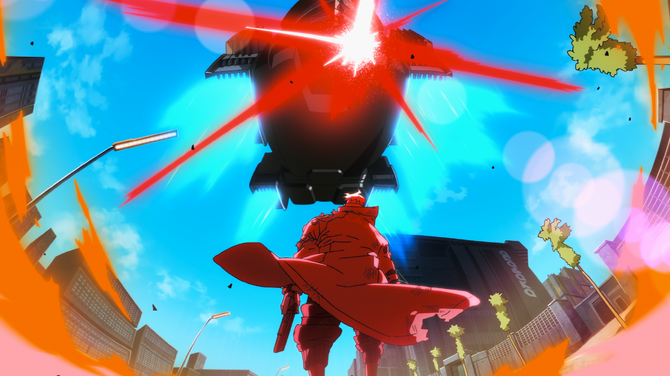
Igarashi: That’s why the reflection on the sea at the end of Episode 5, for example…
――Personally, my first thought was, “That’s ‘FLCL’ (2000)!”
Igarashi: Really? (laughs) Is that so?
――Well, it was just the texture of the ocean. In the show, it’s not really the ocean—it’s a river, actually.
Igarashi: I see. Actually, that footage was shot by Mr. Kariya (Nobuhide Kariya [*]), the director of Episode 5, who went all the way to Kamakura to film the ocean. That’s why I just end up calling it the ocean.
[*] An animator who served as storyboard artist and director for Episode 4 of “Bocchi the Rock! (2022)” and as storyboard artist and director for Episode 10 of “Freiren: The Funeral (2023).”His work is known for its vivid depictions of the characters’ everyday lives and the natural timing of their dialogue. For this series, he served as storyboard artist and director for Episode 5 and co-animation director for Episode 9.
――I think it was a scene where the power of light and water was really well conveyed.
“Night City” as Seen by Kai Igarashi and Masahiko Otsuka
――Next, one distinctive visual element carried over from the previous work is the shakiness in the Cyberpsycho’s eyes. In this series, I found the use of “frames-within-frames” to delve into the character’s inner world to be incredibly cool. Even when viewed as a whole, the quiet yet tense shots are very impressive. I’d like to ask if there were any particular aspects you focused on in terms of direction, or any references you used.
Igarashi: Speaking of that, regarding the “frame-within-a-frame”—during production, we actually called it the “Romance Frame,” after the shots Roman was filming.
――I see. So that’s the angle from which Roman is filming.
Igarashi: Basically, yes—though there are a few slight variations mixed in. But rather than just Roman’s point of view, it’s more like a kind of “god’s-eye view.” It serves as a way to suddenly shift the tone of the scene. We were able to use it quite effectively to create a sense of pacing and rhythm.As for whether we planned it that way from the start—well, there were moments during production on set when we realized we could use it that way.
――Next, what really left a strong impression on me was the comedy style, which was different from the previous work.In the previous work, while maintaining the tone of Night City, there were a lot of dark jokes that blended with Director Imaishi’s style, but this time it feels more offbeat. Personally, I got a sense of the atmosphere from the “SSSS.GRIDMAN” series—I’d like to ask about the kind of discussions that took place during production.
Igarashi: Well, it was partly about changing the atmosphere. When you play around with the various jobs in *Cyberpunk 2077*, that kind of everyday atmosphere isn’t really there—though, I suppose it does happen occasionally. But the fact that it “happens occasionally” means there should be more of it in Night City.

So, in a way, we took a bit of a creative liberty with that. Conversely, in that sense, I vaguely wondered, “Couldn’t the anime offer a different perspective on the game?” and thought it would be nice if we could do that. But simply put, I also just like those kinds of gags, so some of it is just based on my personal taste.
――I could sense Director Igarashi’s personal taste, as well as the hidden charms of Night City that don’t usually come to the surface. One thing that stood out in particular was the scene midway through Episode 1 where “35mm” appears in huge letters.
Igarashi: I put that in thinking it would get rejected, but it didn’t (laughs).I thought, “I have a feeling they’re going to say this is no good,” so I put it in just in case, and then it was like, “They didn’t mention it—is this okay?!” But after that, I couldn’t get away with anything quite that over-the-top. That scene captures Roman’s sense of excitement—or rather, I’m trying to convey that kind of feeling whenever I can.
Also, even though the huge “35mm” text is floating there, only Roman is reacting to it, while Saru doesn’t seem to care at all—it creates this sense of a gap in perception.
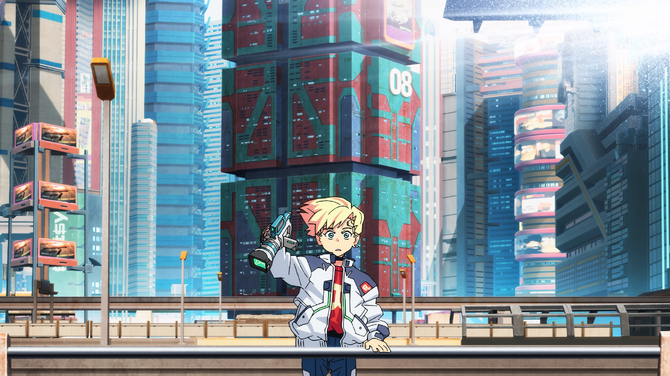
――From what we’ve heard so far, I think Director Igarashi has a certain “vision of Night City,” but could you both describe what Night City looked like from your perspectives?
Igarashi: Hmm… Well, basically, I think it’s a terrible city.
――That’s definitely true.
Igarashi: But we’d already depicted the city’s worst aspects in the previous game. Since it ended with “a young man who died after getting caught up in it, and a young woman left behind,” this time I wanted to be a bit more specific—I thought it would be nice to end on a positive note after rebelling against the city’s system itself.
I was thinking, “Even though it’s a terrible place, couldn’t we end it with them just running off at full speed?” So in that sense, I think we pulled it off. Also, while Night City is indeed a terrible place, I felt that its harshness probably reflects reality.
Taking that into account, I was thinking along the lines of, “Even amidst all that cruelty, surely there must be something we can do to reexamine ourselves and move forward…?” So I really hoped we could pull that off.
――Thank you. I felt this game really highlights the contrast between the city and the people living in it. And yet, even though the plot took a wild turn, I felt like it ended on a surprisingly bright note—that’s what made it such a satisfying experience.
I’ve also heard that Mike Ponsmith, who built the underlying world, placed a lot of emphasis in the tabletop RPG on depicting how “there are people struggling to survive right in the midst of such a terrible city.”
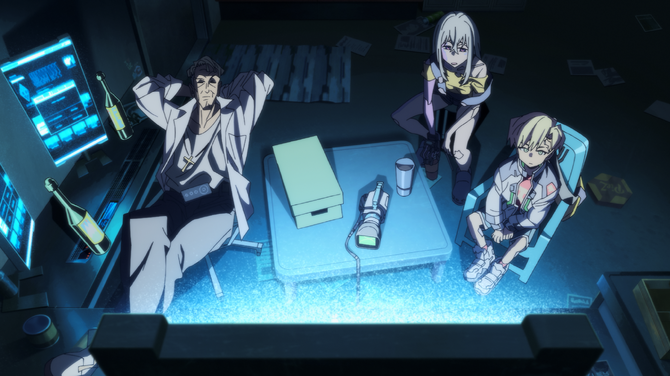
Igarashi: I spent quite a bit of time just wandering around the city in the game without doing anything in particular, and there are plenty of ordinary people about—plus, there’s a lot of detail in areas unrelated to the main story, right? When you see that, you realize the city isn’t actually that dysfunctional. If you run someone over, the police show up.Personally, I was actually more intrigued by things like “homeless people who just sleep all the time.”
Part of it is that I saw it firsthand while actually playing the game, but even during production, I was thinking, “Is there a way to approach this from an even lower perspective—one that isn’t even a side quest?”
Otsuka: My impression is exactly the same as when I played the game. Before playing, I thought it might be a much more gritty game, but when I actually played it, I was surprised to find that the characters felt surprisingly human.
So, when it comes to designing characters, I’ve felt since the previous game that it’s okay to make them feel human. Since this title took on more of an ensemble drama format, I think the contrast between people—not just between the city and its people—actually helped bring out the question of “what kind of city is this?”
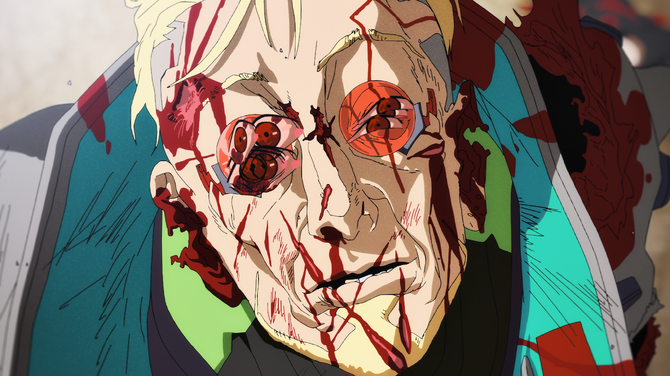
On the other hand, as long as you’re in the city, there’s this aspect where you have to gradually turn your body into a machine just to survive. In other words, it means drifting away from being human, doesn’t it? Conversely, if you become too mechanized, you develop cyberpsychosis—which essentially means you die, or rather, you cease to exist as a human being.
“You have to mechanize, but you can’t mechanize too much”—that’s what makes it interesting, isn’t it? Ultimately, it’s a story about what happens when your humanity is gradually squeezed out of you, or what remains after it’s been whittled away. I think we were able to depict a wider variety of character archetypes than in the previous game, so if readers can sense “what kind of city Night City is” through those different archetypes, then I’d consider it a success as the creator.
――Thank you. That’s exactly what you mean by the “cost of humanity,” isn’t it?
My Favorite “Cursed” Character

TRIGGER’s YouTube channel uploaded a commentary for Episode 6 of the previous series, where Director Igarashi mentioned, “I wanted to fully curse David.” There are many such “cursed” characters in this series as well, so I’d like to ask both of you about your favorite characters.
Igarashi: Ah, in terms of curses. My favorites, huh… D, of course, but if I say “D,” I feel like people would just be like, “Well, duh.” Aside from D—and excluding the main characters—I really like Kyoko and Yupi. If you’re talking about characters that embody the “Night City” vibe, these two are actually the kind you’d see more often.
――Yeah, the kind you often see in side jobs.
Igarashi: Exactly—the kind where they “die in a flash.” They die just as you start to realize, “I don’t really understand the full story, but there must be something going on here.” I really like that kind of thing. Also, Yupi is such a badass woman! I love the way she goes down!
――That scene was just overwhelming to watch.
Igarashi: Thanks in part to Oi-kun, who handled the storyboards for Episode 8, I think it turned out to be a really valuable episode.Kyoko’s death scene is something else, too. D could have ascended to heaven by merging with Capri, the effect entity, and ended things there, but Kyoko dies suddenly right at the very last moment—just as she’s about to “see” the perfect form she was trying to create.

I actually thought that, in terms of the relationship between “the effect and oneself,” theirs was quite similar. I thought, “I probably wouldn’t be able to fuse with an effect myself.”
――That was an absolutely fantastic story. What I enjoyed most about Kyoko was her animation—the way she’s always darting around. I really liked how she moves in a way that’s both flesh-and-blood yet comical, so having Capri there as a contrast makes perfect sense.
Igarashi: Yeah, that’s true.
Otsuka: I was only involved up to the script stage, but when the rough character sketches came out, looking at Capri and Kyoko, I was like, “Wait, are we really going with this?” (laughs). I thought, “Well, CDPR will probably say no,” but then we got the OK, and I was like, “Wait, OK!?”

――Was it kind of a “anything goes” situation in that regard?
Otsuka: I think there was some resistance, though. Shita, what about you? Was there any pushback from CDPR regarding the designs?
Shunsuke Shita (Animation Producer): Well, with Kyoko and others, I initially thought, “There’s no way this is going to fly” (laughs). But we had repeated discussions from our side, focusing on, “This is what the director wants to do, and it would be interesting if she were in the story—so how can we make it acceptable within the world-building?” It seems like they eventually gave us the green light through that process.I also got the sense that CDPR is pretty open-minded.
――So it was kind of a “as long as we bring out the characters’ charm, it’s fine” kind of attitude?
Shita: Of course, her charm was a factor, but it was actually quite surprising that they gave us the green light once we properly explained that “Kyoko is necessary for this world in the animation.”
Otsuka: That was a huge challenge (laughs). I thought, “They wouldn’t normally include that, would they!?”
Shita: Deep down, I thought, “This probably won’t fly.”
――Plus, she has this “Doraemon-esque” voice.
Otsuka: (Laughs). In that sense, my role ends with the script, but then the director makes changes, and once it becomes storyboards, the animators bring it to life… Since the character develops through that process, even for me, the final character feels fresh. It’s like, “Oh, so that’s how it turned out.”

So it’s hard to say which character is my favorite. Whenever I’m told, “We want to introduce this kind of character”—whether it’s from the director or from Shitiboru—they only ever talk about total jerks! (laughs).
We start from the point of asking, “How are we supposed to make people like this character?” But they probably weren’t complete jerks from the start, so if I can properly figure out how they ended up this way, I might even come to like them myself.
――I see—so you grew to like them as you were creating them.
Otsuka: If I can’t love them myself, the audience won’t be able to love them either. In that sense, I do have a soft spot for every character.
――Thank you. I was wondering if either of you has a favorite episode you’d like to share.
Igarashi: Hmm… Well, it really depends on “which perspective you’re looking at it from.” There are episodes that are important for each individual character, and then there’s also the perspective of which episodes feature major incidents…
In terms of things actually happening, Episode 8 definitely stands out. But Episode 9, as a prelude to the main incident, was also really good. So, conversely, there are actually episodes where not much happens at all. I like those too—enough that I wish there were more of them.

――I see. So it’s as if the plot isn’t really moving forward.
Igarashi: Exactly—like Episode 4, or Episodes 6 and 7. Even for myself, with the more laid-back episodes, I sometimes thought, “I wish I could’ve done a little more,” but there were parts where I just couldn’t. Still, I also like the moments where I feel like, “I think I managed to create a nice atmosphere,” so it really depends on which perspective you take. It feels like it changes completely depending on that.
Otsuka: It was like that even when I was writing the script—it didn’t really feel like a typical TV series. Since I’d been told from the start that it would be released all at once, I treated it like a slightly longer movie and wrote it as a continuous story. Of course, there are natural breaks.
On top of that, as I mentioned at the preview screening, it was interesting to watch from the sidelines how “the passion of the cast and crew gradually builds, and their skills improve.”
In that sense, I found it objectively fascinating to watch how the intensity built up as we moved into the second half. By the final episode, there were even moments where I thought, “Was the script really like this?” (laughs).
Igarashi: No way! I stayed true to the flow (laughs).

――That’s true—I was watching it thinking, “There’s no way this was in the script.”
Otsuka: (Laughs). That’s part of the fun, isn’t it? It was fascinating to see how the show gradually became imbued with the energy of the creators—or rather, the energy on set—so, conversely, it’s hard to pinpoint which specific episode was the best. My overall impression is that the whole series was entertaining.
Behind the Scenes of the Opening Sequence
――I’d also like to ask about the soundtrack. Looking at the work as a whole, I feel that it’s not just the visuals but Tsuneo Imahori’s [*1] soundtrack that really defines the tone of this series. So, I’d love to hear about your approach to the sound design as well.
Igarashi: From the very beginning, I wanted to establish an attitude of defiance against the inevitable. I was constantly discussing with Assistant Director Uchida (Naoto Uchida [*2]) about which musician would be the best fit for that.
[*1] Tsuneo Imahori… A guitarist and composer who composed the soundtrack for the Madhouse version of “Trigun” (1998), among other works. He is said to draw influence from the traditional genre of British folk, as well as from avant-garde guitarists such as Frank Zappa.
[*2] Naoto Uchida... An animator who has served as key animator, animation director, and storyboard artist on series such as “Mob Psycho 100” and “My Hero Academia.”His appeal lies not only in his three-dimensional brushwork, which succinctly captures the forms of characters, but also in his cinematic direction—conveying the situation through his composition in storyboards and other visual elements.

Given that this is a cyberpunk project, Mr. Imahori’s name naturally came up, but I hesitated a bit because he hadn’t been working on anime for a while.
After that, I went to one of Mr. Imahori’s live shows, and his performance was incredibly powerful. It wasn’t just a rehash of old material—I really got the sense that he was creating something for “now,” so I asked him to join the project.
Also, earlier we were talking about how “even though it’s described as ’90s, it doesn’t really feel that ’90s,” right?
――That’s right—with all due respect.
Igarashi: No, but that’s exactly what I wanted to achieve. That’s actually part of the reason I asked Mr. Imahori. Mr. Imahori has been active since the ’90s—or, in terms of his career, since around the mid-’80s, I think—and he’s still going strong with his music today, having experienced that entire era firsthand.
I had this idea that “while he understands our tone, he might be able to build a bridge between the ’90s and the present.”
I also wanted him to be mindful of the musical genres featured in this work—like post-punk, Japanese rock from the ’80s and ’90s, and early 2000s American hardcore—and when I brought all those elements together, Imori-san naturally became the obvious choice. Looking back, it all makes perfect sense.

――On top of that, it was a real shock to hear The Cure’s “10:15 Saturday Night” playing in the opening sequence. It made me think, “I never would have thought of that.”
Igarashi: I was asked, “Is there a song you’d like to use in the opening sequence?” But I can’t quite recall how it all unfolded.
Shita: Well, while we were working on the script, Director Igarashi had mentioned that he was envisioning a song by The Cure, so we placed the order with CDPR based on that.
――I see. It’s one of The Cure’s very earliest songs, and I was really happy about the UK New Wave aspect of it, too.
Igarashi: Compared to Franz (Franz Ferdinand [*]), it does feel like we’ve gone back to our roots a bit (laughs).
[*] A Scottish rock band that provided “This Fire,” the opening theme for the previous game. They’re known for catchy riffs and danceable rhythms based on an eight-beat pattern, and you can sense influences from UK New Wave bands like The Cure. They’re also one of the bands that influenced the “four-on-the-floor” style in Japanese rock.
――That’s true. But speaking of a return to roots, I think it wasn’t as direct as if we’d played Frank Zappa, who you mentioned influenced you.
Igarashi: That’s certainly true.
――For the opening sequence, Mr. Imaishi handled the storyboards, and Mr. Yoshinari and Mr. Sushio were in charge of the key animation.
Igarashi: That was really just due to last-minute circumstances.

Shita: Since we’d already specified the theme song, at first it seemed like Director Igarashi might be able to handle it.
Igarashi: Things were getting more and more urgent. I had some ideas—“I’ve got ideas up to a certain point!”—and a few rough sketches, but toward the end, I just couldn’t keep up with the actual work.
Imaishi-san came to my rescue, and after we exchanged ideas and source material, he put it all together. As for the animation itself, since it was such a last-minute rush, we ended up with an incredibly strong lineup (laughs).
Shita: That’s a classic anime story, isn’t it? (laughs).
――All the talented artists show up (laughs). In terms of direction, the contrast between the silhouettes and the frames was really striking.
Igarashi: I’d been thinking about carrying over the use of silhouettes from the previous work. So, in terms of how to give it a different flavor, I felt like I was scheming up various approaches.
――In both the opening and ending sequences, this series features plastic bags floating through the skies of Night City. Personally, I’m speculating that this might encapsulate Director Igarashi’s vision—could you tell us what you aimed to convey through this series?
Igarashi: My thoughts, you say… Well, there are certainly many hardships, but I wanted to convey the idea that “the only way to achieve anything is to focus on the present moment and push forward with determination.”

――Thank you. Finally, could you both share a message for our readers?
Otsuka: Well, this is a film that our young staff worked incredibly hard to create, and I’m sure you’ll definitely feel that passion, so please be sure to watch it!
Igarashi: It might sound a bit presumptuous to say this, but we gave it our all, and it’s packed with the full effort of so many people. That said, even though we gave it our all, the result isn’t necessarily what you’d expect—it’s turned out to be something different—so I’d be really happy if you’d check it out.
――Thank you very much!

This film is imbued with the passionate dedication of Director Igarashi, Mr. Otsuka, and the entire staff. This article has given us a glimpse behind the scenes. Based on this interview, it might be a good idea to dive back into the world of “Edge Runners 2” once again.
Additionally, TRIGGER’s YouTube channel will be releasing staff commentary for each episode of “Edge Runners 2” in sequence. This should also serve as a helpful guide to enjoying the series even more.
“Cyberpunk: Edgerunners 2” is currently streaming exclusively on Netflix.



