


"Days with a Golden Retriever" depicts the peaceful days spent living with a Golden Retriever.
This pet simulation game uses FMV (Full Motion Video) footage of the developer’s real-life dog, Pichu. The game features not only feeding, walking, and playing fetch, but also the dog’s whimsical pranks and unexpected behaviors.
Game*Spark conducted an email interview with the developer, Pablo, and asked him about everything from why he chose his dog as the main character to behind-the-scenes stories about the development.
“Pichu” is a reference to Pokémon. Why he made his dog the game’s protagonist

――What inspired you to create a game starring your dog, Pichu?
Pablo: Ever since my wife and I got a dog, we’ve been watching a lot of dog videos on social media, and they always surprise us or make us laugh.We’d been filming tons of videos of Pichu ourselves, so one day it occurred to me that maybe I could compile them into a game. Plus, Pichu is so cute that people often stop us while we’re out walking to ask if they can pet him. So I thought, why not let more people spend time with Pichu?
――Could you tell us the origin of the name “Pichu” and what his personality is like?
Pablo: The name comes from the Pokémon “Pichu.” Both my kids and I love Pokémon, and the golden coat of a Golden Retriever reminds me of Pichu’s yellow color.
We wanted a family dog that was gentle with the kids, and Pichu is exactly what we were looking for. He’s so calm that he hardly ever barks back, even when other dogs bark at him. What he loves most is eating and going for walks. He’ll eat just about anything, so we have to be careful to keep him from gaining weight.Also, whenever he spots something he thinks he might be able to take, he has a habit of rolling around on top of it. I guess he’s marking it with his scent to say, “This is mine!”
――Is Pichu’s actual personality reflected in the game?
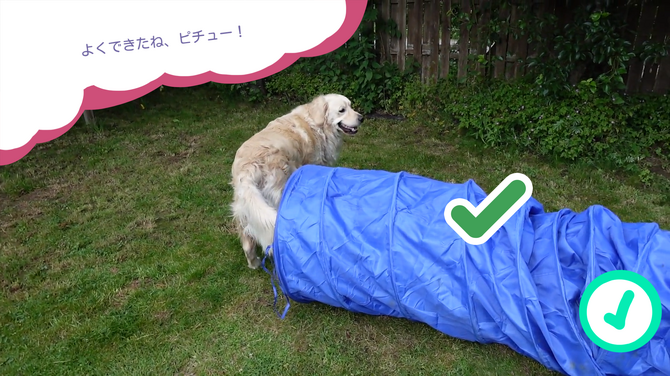
Pablo: Of course. There are scenes where Pichu picks up things he shouldn’t have—like egg cartons, hats, or mops—and runs off with them, but none of that was staged. We filmed the moment he was misbehaving, and whenever we tried to take it back, he’d run away unless we told him to give it back.
There isn’t a single scene in the game where you’d think, “That’s not like Pichu.” The way he looks genuinely happy when he realizes it’s time to play fetch is exactly as it is in real life. That’s the strength of this work. You’re not seeing a character following a script—you’re seeing a real dog.
Life with an Unscripted Dog, Captured in Live-Action Rather Than 3DCG
—Why did you decide to make an FMV game using live-action footage instead of 3DCG?
Pablo: Even before I came up with the idea for the game, I had a massive collection of videos of Pichu, and my initial concept was to compile them and make them interactive. So FMV was a natural choice. To improve the image quality, we ended up reshooting all the footage with a camera, but the core concept remained the same.
Live-action creates an experience rooted in reality. Since Pichu can’t act, its emotions and reactions are genuine. With 3D models, you’re aware that the movements were created by animators, but here, you can witness real reactions.
――During filming, do you wait for Pichu to act naturally, or do you set up specific situations?
Pablo: For the most part, we film things that happen naturally in everyday life. For scenes like playtime, training, or the garden tunnel, we set up the situation and then leave it up to Pichu.Once, while I was unboxing a garden tunnel, Pichu got so excited that he jumped inside before it was even opened and got stuck. He somehow managed to turn around and make his way back out—that adorable footage is featured in the trailer.
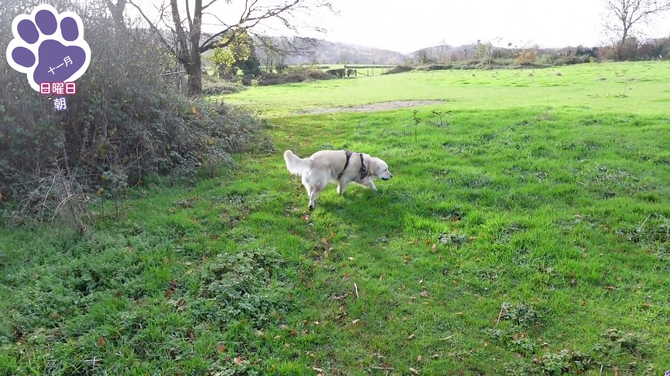
My absolute rule is to never force Pichu to do anything he doesn’t want to do for the sake of the game. We usually go for a walk for about an hour in the morning, but Pichu always decides where to go. Even if he doesn’t take me to the spot I want to film, I don’t force him—I’ll just go another day.
――Beyond simply selecting pre-recorded footage, what did you aim to do to create a sense of living together?
Pablo: I believe you need a sufficient variety of choices and types of footage. For example, with the ball-tossing game, there are four possible outcomes: the throw is too weak, so Pichu starts playing on its own; a gentle toss; a firm toss; or a throw that’s too strong, sending the ball flying outside the play area. I filmed multiple takes for each of these outcomes. Having a rich variety of different footage is what creates the feeling of actually living with Pichu.
――Have unexpected behaviors ever changed your production plans?
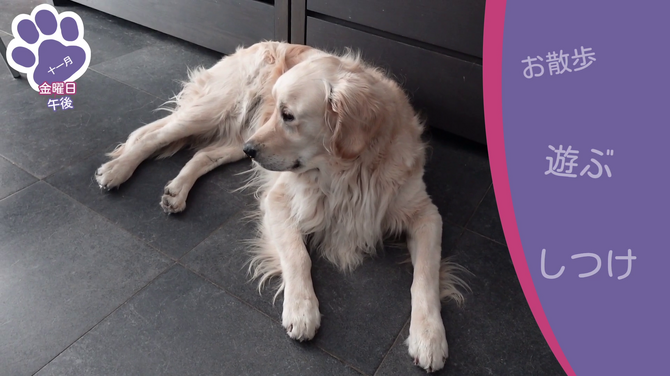
Pablo: Many times! We had planned a scene where Pichu plays with a ball that makes a loud noise, but Pichu absolutely hates that toy—he turns his head away whenever I bring it near him. So we changed our plans and made sure he dislikes that toy in the game as well. This adds a sense of realism—it shows that dogs don’t like every single toy. The scene where he plays a prank by stealing things wasn’t originally planned either.
During one walk, he suddenly lay down on the ground and refused to move. Since I always have my camera with me, I was able to capture it, and as a result, in the game, he sometimes refuses to go for a walk depending on the day. Looking back now, Pichu has helped me not only as an actor but also as a game designer. There are so many features that were born from his behavior.
A character-development system inspired by *Persona 5*. Absolutely no penalties
—Why did you choose the six parameters of Affection, Happiness, Obedience, Agility, Sociability, and Trust?
Pablo: The basic idea came to me while I was playing *Persona 5*. In that game, you deepen relationships with people through your actions, and by raising social parameters, you can unlock new behaviors, right? I wanted to apply that concept to a single central character—a dog. I thought about elements that would fit life with a dog, and settled on these six.
――“Obedience” and “Happiness” seem like they might conflict. Is this a game about learning proper training?
Pablo: No. It’s not a guide to dog care or training; it’s simply a game designed for players to relax and have fun. There are absolutely no penalties. Even if you let your dog get away with mischief, its “Obedience” won’t drop, and even if you let it keep playing with something it picked up, it won’t put you at a disadvantage when you try to take it back later.What you do is entirely up to the player. However, the parameters that increase will vary, and the actions unlocked as a result will differ accordingly.
――How do you approach players who seek efficiency versus those who just want to take it easy?
Pablo: The most important thing is a relaxing experience. Of course, there are efficient ways to play, but I want to encourage new discoveries.There’s no “Game Over,” no negative feedback, stats don’t decrease, and there are no time limits. The worst-case scenario when taking an action is simply that “nothing increases.” There’s almost no reason to optimize. I’m the type of person who wants to optimize everything in games, but I’d like people like me to be able to enjoy this as a way to unwind.
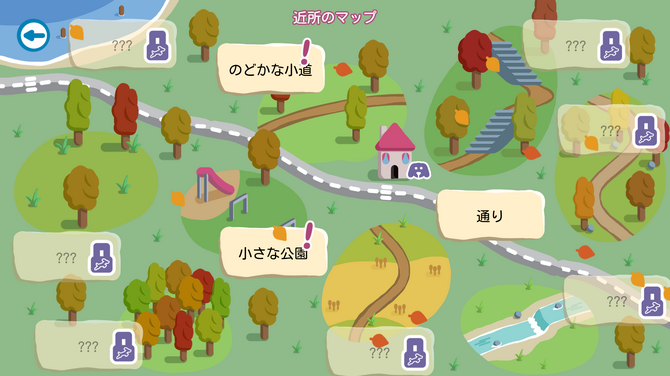
――Why can players discover new locations while walking and record other dogs in “Nosebook”?
Pablo: Interaction between dogs is important for their socialization, and it’s fun to see how Pichu reacts to the dogs he meets. Some of them are really energetic! Unlike *nintendogs*, where you always adopt a Golden Retriever, I wanted to introduce other breeds during walks in this game. I’m also grateful to all the neighbors who gave us permission to film.
Discovering new places is also important for gameplay—it unlocks more content, and you can enjoy different visuals in the same location depending on the season. I also wanted to showcase Belgium’s rustic countryside scenery in a way that feels fresh to people living in big cities. I live in the countryside myself, and the fact that it’s an ideal environment for large dogs really helped with the filming.
A game that serves as a keepsake of family memories. And to players in Japan
――Wouldn’t you say this game also serves as a record of the time you spent with Pichu?
Pablo: That’s exactly right. Before the announcement, I wasn’t sure if people would be interested in such an unconventional game, but I thought that even if no one was interested, it would still be a wonderful memory for my family. I’m still creating it with the intention of documenting the time I’ve spent with Pichu.
I actually wrote the game’s code myself and even filmed Pichu sleeping right beside me, incorporating those scenes into the gameplay. While it was a bit of a shortcut to be able to use our everyday life as-is, I also really like the nested structure where players write the code for the very game they’re currently playing.
Someday, when Pichu leaves us, this game will hold special meaning. I hope that day is still a long way off. Pichu is only 3 years old, so I want to enjoy every day to the fullest from here on out.
――We’ve been getting a huge response from Japan. What do you think resonated with people?
Pablo: I’m very happy about that. My family and I love Japanese culture, manga, and anime—even our dog’s name comes from Pokémon. We plan to visit Japan for the first time within the next few years. I’m not entirely sure what resonated, but I suppose it’s the cuteness.
I think the innovative aspect of this game is that we used live-action footage to convey cuteness. Live-action games are often used for horror, detective stories, or adult-oriented content, but I don’t know of any other examples where it’s been used this way. Above all, Pichu itself is just so cute! There might be people who don’t like the game, but I think it’s almost impossible to dislike Pichu.
――Finally, could you share one aspect of Pichu’s charm that you’d like Japanese players to pay attention to?
Pablo: It’s that Pichu is just being himself. He’s not a “stunt dog” performing special tricks in front of the camera on command—he’s just a regular dog. The joy he shows when he realizes it’s time for a brushing session or a game of fetch is so genuine that you’ll know it’s real the moment you see it. I’d be happy if that happiness reaches all of you players and warms your hearts.
――Thank you very much!
"Days with a Golden Retriever" is scheduled for release on PC (Steam) in February 2027. A demo version is currently available for free.
