


The other player can’t see your screen at all—in this desperate situation where terrifying enemies roam, how accurately can you convey what’s happening?
“Beyond the Dark: Night Watch” is a two-player cooperative horror adventure game exclusively for the Nintendo Switch 2, released on October 22, 2026.
Q-Games is handling publishing for the Asian region. Development is led by Atlantis Studio, based in southern France. Founded by creators who worked on titles such as *The Order: 1886* and the PSP version of *God of War*, this is the studio’s debut title.
In this article, we bring you a hands-on report on the game and an interview with the developers.
Different Perspectives, Different Information! The Asymmetric Roles of the “Explorer” and the “Observer”
The game’s most distinctive feature is the asymmetry of information—divided between what’s on the screen and what’s in the player’s hands.
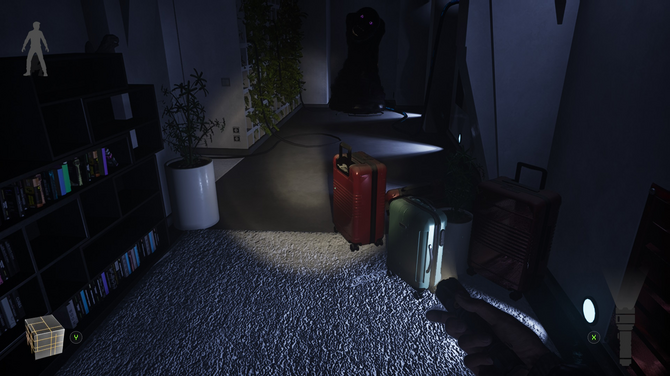
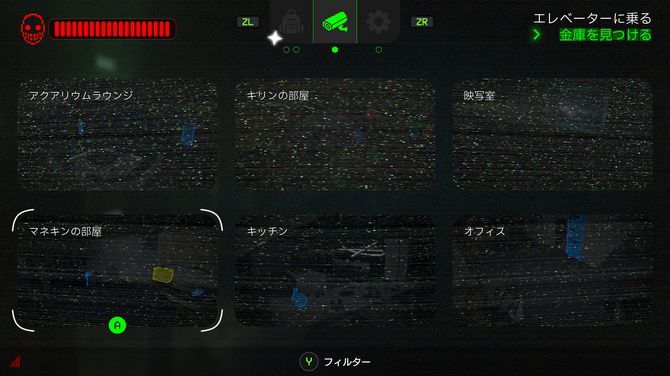
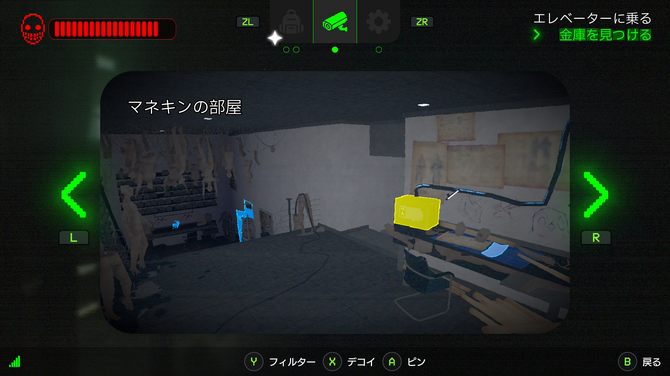
On one side is the “Explorer,” who moves through a creepy mansion in first-person view, searching for keys and fleeing the threat of “Gloam” lurking in the shadows.On the other side is the “Observer,” who never sets foot on the scene but uses surveillance camera footage and tools at their fingertips to relay their partner’s location and next steps in real time.The Observer’s monitor screen is displayed on the TV. Because this is a completely asymmetrical system where the two players navigate two distinct screens, the key to success lies in verbally describing the situations each sees to one another and engaging in constant dialogue.
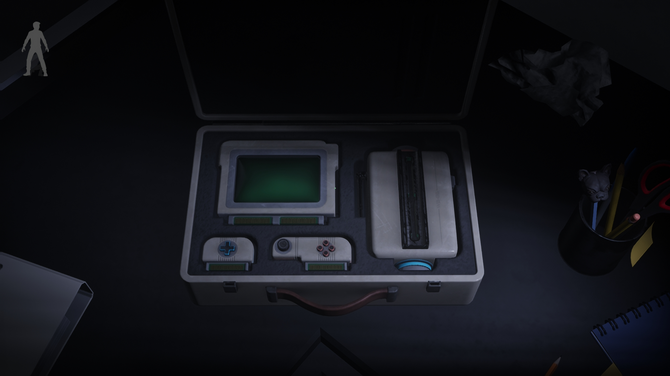
The Observer’s screen features tabs for the inventory, cameras, and settings, while targets are displayed in real time at the top of the screen. Collected documents and photos are listed in the inventory and serve as clues for the search.
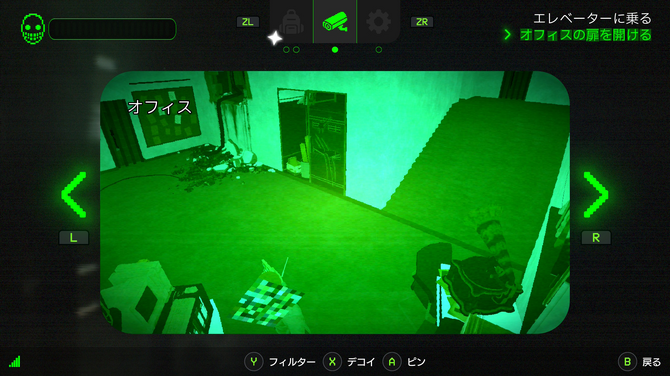
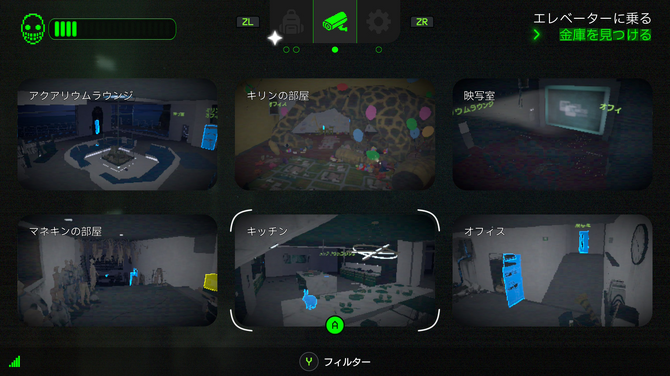
Further heightening the player’s tension is the “Signal Strength” indicator displayed on the Observer’s screen. This value, which indicates the connection quality with surrounding cameras, is designed to decrease as the distance between Groome and the Explorer shrinks.It’s not possible to simply watch from a safe distance through the cameras; the Observer must also play while constantly on edge.
An Escape Drama in the Darkness Overcome Through Extreme Teamwork
The story begins with a man waking up in a cold, dark room. As he explores the eerie mansion without understanding his situation, he discovers and acquires essential items—such as a flashlight to illuminate his path—along with the “device controlled by the other player (the Observer),” which holds the key to his fate.The moment he obtains this device, the Observer begins controlling him through the screen, and the quest to escape—a collaboration between the two—begins.
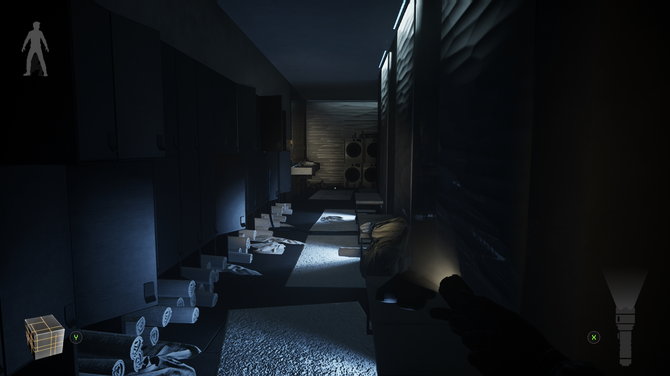
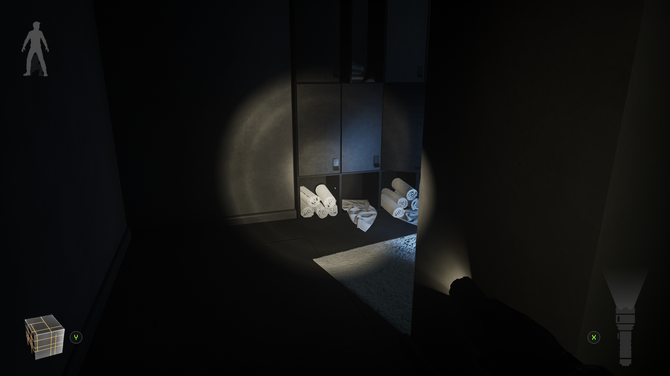
The path to escape is far from straightforward. Through surveillance cameras, the Observer constantly tracks the location of the Groome (a shadowy threat) as it roams the hallways and rooms, issuing instructions to the Explorer to navigate a safe route.
The complex mechanisms that stand in your way—such as door locks—are generally designed so that they cannot be solved by a single player alone. For example, if the Explorer’s screen displays a keypad for entering a code, the old diary or wiring diagram that provides clues to that code will only appear on the Observer’s screen.Only by verbally sharing the information each player sees and communicating with one another can they solve the puzzles.
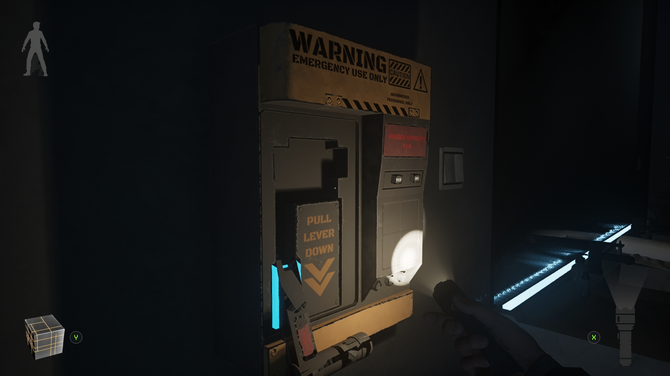
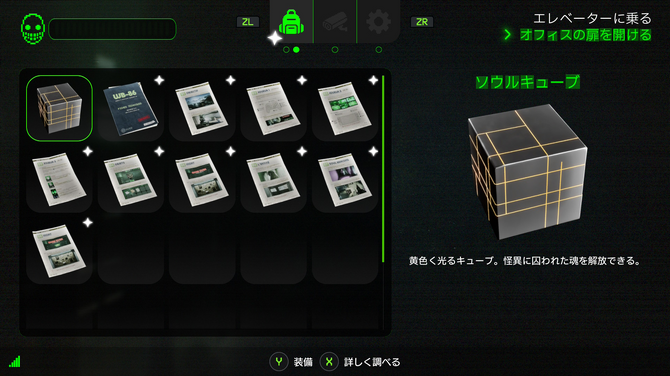
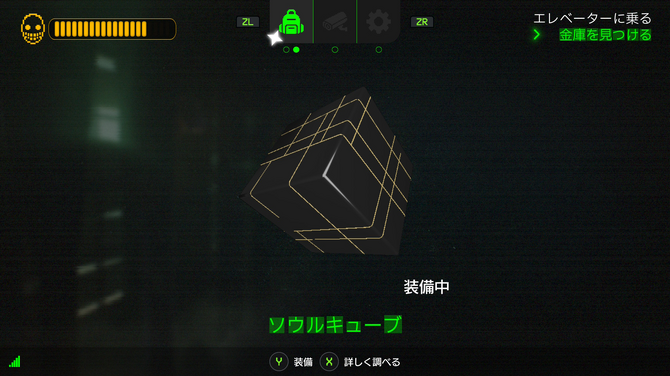
This cooperative dynamic is also built into item management. Items picked up by the Explorer on-site are first stored in their inventory, but the Explorer cannot use them on their own.To actually use an item, the Observer—who has an overview of the entire situation—must select the appropriate item from the inventory screen and “hand it over” to the Explorer. While terrified by the looming shadow of the Groome, players must make decisions through dialogue and pass the necessary items back and forth, which once again tests their ability to communicate with one another.
Since the roaming Groome reacts hypersensitively to sound and light, even a momentary lapse in attention—such as the sound of running or forgetting to turn off a light—can be fatal.If you’re spotted by a Groome and it’s “Game Over,” you’ll have to start over from the beginning, but the knowledge and clues you’ve acquired will carry over. By making good use of these, you’ll get closer to completing the game with each playthrough.
Furthermore, the game features traps that reveal the explorers’ location with loud noises, as well as mechanisms where a mark called a “Soul Beacon” is left at the spot where you fall, restricting your subsequent movements.
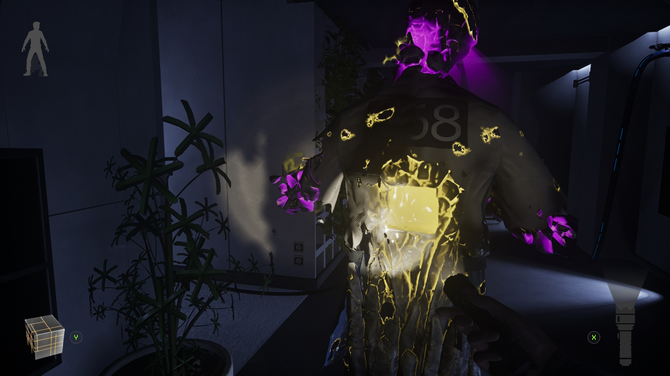
However, even if you’re spotted and cornered, there’s no need to give up. Use the Watcher’s bird’s-eye view to identify safe havens—such as lockers—where you can escape and get out of a tight spot.You can also temporarily disable Groome by placing a “Soul Cube”—one of the game’s items—into the recess on its back. Collect the keys and important items hidden within the area, then open the door leading to the next area to clear the stage. The sense of accomplishment when you overcome a difficult situation through teamwork is truly special.
If you’re someone who says, “I’m terrible at horror games and even looking at the screen scares me, but I’m good at calmly assessing the situation and giving instructions,” you can become the Observer and act as the command center, pointing out safe routes using the overall map and camera feeds.Conversely, if someone who says, “I’m good at controlling the character, but horror elements really freak me out,” takes on the role of the Explorer, they’ll have to press forward while panicking due to the Observer’s situation updates and the on-site terror—and the interaction between players will likely be engulfed in a whirlwind of screams.
The game features an exquisite design where differences in strengths and weaknesses align perfectly with role assignments, allowing players to enjoy dialogue while compensating for each other’s weaknesses.
Inspired by Real-Life TV Show Experiences!? How to Create “Chaos” for Two Players
Next, we present an interview with Nico Augusto of Atlantis Studio, the game’s developer.
—What inspired this game? Please tell us about the starting point for development and the experience you initially wanted to create.
Nico Augusto: It’s based on my own childhood experience of being too scared to play horror games myself. Back then, I’d sit next to my older sister while she played, and we’d figure out how to solve puzzles together or help each other out.Last year, when Nintendo Switch 2’s “Share Play” feature was announced, I thought, “Could I turn that childhood experience into a game system?” and began development as a two-player co-op title.
—Why did you choose an asymmetric system where two players cooperate to progress, even though it’s a horror game?
Nico Augusto: There aren’t that many co-op games on the market to begin with, and asymmetric co-op horror games are even rarer.
Our team places a strong emphasis on communication between players and the “social experiment” aspect of the game, so we decided to return to our roots: “couch play” (playing side-by-side on the sofa in the same room).This is the play environment that brings out the game’s appeal to the fullest. Of course, we support online play as well, but sitting side by side and sharing the same space and experience is the ideal scenario—and it’s what we prioritized most during development.
—What kind of distinct appeal did you aim to create for the Explorer and the Observer, respectively?
Nico Augusto: As gamers get older, the amount of time they can devote to gaming inevitably decreases, doesn’t it? That’s precisely why we believed that the time spent playing games with someone else becomes a limited, special moment shared with loved ones, such as family or friends.
When two people play together, it’s often the case that one is a “core gamer” (Player 1) who’s accustomed to action and controller controls, while the other (Player 2) doesn’t usually play games much. We designed Player 2’s role based on this real-world play scenario.We reasoned, “If we can provide a second screen with intuitive and simple controls, even people who aren’t used to gaming should be able to enjoy the game on an equal footing.”
The Explorer handles character movement and quick actions, while the Observer can focus on their role as the “brain” and “command center,” calmly assessing the overall situation.
—What was the intention behind creating a deliberate disparity in the information available to the two players? Also, could you tell us what measures you took to ensure the Observer doesn’t become merely a navigator?
Nico Augusto: We conceived this purely from a game design perspective. The underlying concept was that “the first player faces the horror from the first-person perspective on the TV screen, while the second player analyzes the overall situation from a separate screen and guides the first player.”
Throughout development, we consistently struggled to balance the roles of both players and the elements they could influence. In early versions, the burden on the first player was too heavy, while the second player often found themselves with too much downtime. So, to ensure both players could be equally immersed, we gradually transferred some of the first player’s tasks to the second player’s control elements.Since this was an unprecedented system, we were essentially feeling our way forward, making adjustments through repeated playtesting and feedback. Precisely because there were no similar titles to draw on, it was a truly rewarding challenge.
—In this game, the act of players communicating information to each other verbally is an integral part of the gameplay. What adjustments did you make to ensure that information wasn’t conveyed too easily, yet wasn’t so difficult to convey that it became a source of stress?
Nico Augusto: If there’s too much information, the game becomes too easy and loses its tension; conversely, if there’s too little, it creates unreasonable stress. Therefore, while presenting the necessary information, we deliberately incorporated misleading clues and small “traps” to create confusion.We focused on balancing the game to intentionally create that “exquisite chaos”—where information is right in front of you, but you can’t quite grasp it right away.
In the early stages, players learn the game’s unique rules and basics through a tutorial, and as the game progresses, we introduce complex mechanics to ramp up the confusion and excitement. The more players immerse themselves in the game, the more unpredictable gameplay experiences and human drama emerge.As a developer, it was truly fun to watch players panic and banter with each other during playtesting—I even found myself bursting out laughing at times.
—Not only can Groome only be seen through the Observer’s surveillance cameras, but if you keep watching him, he’ll destroy the camera; conversely, when he’s not in the camera’s view, he makes movements that are hard to predict. How did the idea of making this “see/don’t see” dynamic a strategic element come about?
Nico Augusto: Initially, we planned for Groome to be visible only through the Observer’s surveillance camera. However, as we conducted more playtests, we realized this made the game far too difficult. Explorers on-site were completely unable to spot the monster or assess the situation, placing 100% of the burden and responsibility on the Observer.So, to spread the burden, we changed the design so that the explorers could also see Groome directly. As a result, the explorers can now accurately assess their own situation and experience the terror closing in on them along with an overwhelming sense of realism. You could call it a blessing in disguise, but I feel it was a very effective design change.
Actually, I used to work on the production of paranormal investigation shows (such as *Ghost Hunters*), where my job involved monitoring thousands of hours of DVR (security and surveillance) camera footage.It was grueling work—staking out every room and hallway of an old castle with as many as 32 cameras, staring at the monitors nonstop for 10 to 15 hours at a time. While the staff conducted investigations on-site, I sat in the monitoring room, reviewing the camera footage and issuing instructions via walkie-talkie.
That real-life experience is the very foundation of the Observer in this game. While investigators on the scene in the darkness couldn’t see certain things, they were clearly visible to me on the other side of the camera—I incorporated that unique sense of tension and that strange sensation directly into the game system.
—Please explain the reasoning behind using a system where traces of failure remain in the world as “Soul Beacons,” rather than the standard checkpoint system.
Nico Augusto: “We wanted to incorporate the concept that ‘the mansion itself remembers past failures and tragedies that the player would rather forget.’” In typical games, when you die, you’re reset to a save point, and the world rewinds as if nothing had happened.However, Soul Beacons leave a tangible remnant of the very moment the player lost their life within the world.
Past misjudgments, miscommunications, moments of panic—the results of these are etched into that location as traces. When you revisit the same room, the vivid memory of what happened there is brought back to life, so I believe this system aligns very well with the game’s world-building.
Furthermore, Soul Beacons serve as a catalyst for genuine conversation among players. They go beyond being mere records of failure; they become topics of conversation that players can visually share, such as, “We really panicked there, didn’t we?”
—While the game offers a relatively compact experience, replayability is also highlighted as a key feature. What differences arise between the first playthrough and subsequent ones? Aside from switching roles, are there changes to the puzzles, enemies, or environment?
Nico Augusto: Even in areas you’ve already traversed as an Explorer, switching roles and taking a bird’s-eye view reveals a completely different landscape. By changing your perspective, you can finally understand the answers to questions like, “Why did my partner give that instruction?” or “Why did I overlook that important clue?”During the first playthrough, you’re desperate to unravel the mansion’s secrets and survive, but from the second playthrough onward, you’ll have the leeway to pay attention to even the finest details of the mansion. This allows for a deeper gameplay experience, where you can refine your teamwork and use the knowledge gained previously to navigate the challenges more strategically.
Furthermore, the gameplay unfolds very differently depending on the players’ individual personalities and the pairings. Even in rooms whose layout you already know, the differing perspectives and reactions of your partner constantly give rise to fresh surprises and unpredictable drama.
—When two players with different levels of experience—such as someone who’s good at horror, someone who’s good at puzzles, or someone who isn’t very familiar with games—play together, how does the game account for the differences between them?
Nico Augusto: We believe that the differences in playstyle and knowledge levels between players are precisely what make this game so compelling. Even someone who excels at horror and can push forward quickly will encounter situations where they need the help of a partner with keen insight who can notice subtle changes and connections between pieces of information.Similarly, even someone who doesn’t usually play games can make a significant contribution to the team by calmly observing the screen, asking the right questions, and quickly noticing suspicious anomalies in the camera feed.
We designed the game with the intention of allowing these two roles to shine in completely different ways. Rather than requiring the same level of gameplay skill or reflexes from both players, our primary goal was to create a situation where players feel compelled to listen to each other.
—While this is a horror game, it’s also a game where two players progress while conversing. I imagine that playing with a friend can sometimes turn fear into laughter—is that something you anticipated as a way to enjoy the game? Was there anything you focused on to maintain the sense of fear even when playing with a partner?
Nico Augusto: Absolutely! When you’re playing with someone you know well, there are moments when sheer terror or panic suddenly gives way to bursts of laughter, right?
We don’t intend to eliminate that laughter or the lighthearted atmosphere. On the contrary, in a horror experience where you share fear with someone else, those emotional swings are precisely what make for a memorable and wonderful experience. However, the moment you’re faced with a situation where you “have to open the next door yourself,” all the laughter vanishes in an instant.
The fact that roles are clearly defined also plays a part in maintaining the tension. Even though you can call out to each other, issue warnings, and help one another through the screen, your partner isn’t physically standing right next to you (within the game world). The gap between “feeling your partner’s presence right nearby, yet being overwhelmingly alone on the scene” creates a pleasant sense of tension.
—Please tell us about how you created the atmosphere, including the visuals and ambient sounds in each area. You’ve incorporated vastly different worlds within the same mansion—such as Brutalism, Victorian style, and medieval-style underground spaces—so what was the intention behind these changes?
Nico Augusto: We designed it to convey the sense that this mansion is a weighty place that has absorbed the intentions, secrets, and history of various people over the ages. As players venture deeper into the mansion, the architectural style itself alters their psychological state and the impression of the space.
In the warm, lived-in spaces, players find themselves reflecting on the former residents; in the cold, inorganic spaces, suspicions grow about what might have taken place here; and as they descend further underground, the design evokes a sense of the ancient, eerie presence slumbering at the very bottom of it all.The sound design is what firmly ties these visual spaces to the player’s experience. By using sound to convey the vastness of the space and the depth of the silence, it fosters a strong sense of unease: “In this place that seems empty at first glance, is there really no one here…?”
The changes in the environment and atmosphere themselves serve as vital clues for deciphering the mansion’s backstory. It would be our greatest reward if, every time you step into a new area, you feel a chill run down your spine, wondering, “Just what kind of terrifying place have I stumbled into?”
—You’ve cast Troy Baker as the narrator. What role does he play in this game? Is he more than just a narrator—does he play a role in the overall setting of this world?
Nico Augusto: Troy Baker provided the narration at the beginning of the game. His deep, resonant voice draws players into the world of *Beyond the Dark: Night Watch*, followed by the theme song “Beyond the Dark,” which plays like the opening credits of a movie.
That track is filled with a sense of foreboding about the chase and escape that are about to begin.It creates an unsettling atmosphere: “Something is chasing something else. But it’s unclear who is the hunter and who is the hunted.” And once you step inside the mansion, the background music composed by Oscar Araujo—known for his work on the *Castlevania* and *Metroid* series—accompanies you as the conductor of the gaming experience.
His music vividly captures the tension and silence in each room, as well as the presence of an unseen threat. As for the true meaning and mechanics behind the casting of Troy Baker, please experience it for yourself by playing the game.
—This title is conceived as the first episode of a horror anthology series titled *Beyond the Dark*. While each entry is a standalone story, they’re said to tie into a larger mystery across the series. How do you envision developing this series moving forward?
Nico Augusto: We aim for each episode to be a self-contained work with its own unique setting, characters, and horror experience. By doing so, we want to make it easy for anyone—even those who haven’t played the previous titles—to jump right in at any point in the series.
At the same time, I want fans who follow the series to feel the depth of a single, expansive world that connects all the stories.It’s a mechanism where names, items, or events that appear in one title reappear in later titles with entirely different, significant meanings. I want to develop this into a substantial series that goes beyond a one-off anthology and truly satisfies players’ curiosity.
I feel that the greatest thrill of working on an anthology is depicting diverse and unique forms of horror while gradually piecing together a vast jigsaw puzzle of mystery.
—Finally, when playing this game together, could you tell us what specific aspects you’d like players to enjoy the most? Also, from the development team’s perspective, with what kind of partners do you think the game is particularly fun to play?
Nico Augusto: I hope players will enjoy the moment when, as they progress through the game, they suddenly realize they’ve established their “own unique signals and methods of communication.” No matter what kind of pair you’re with, you’ll inevitably develop your own style of communication as you play.
Some pairs will coordinate very carefully and meticulously, while others might force their way through while screaming, arguing, or laughing hysterically. This game is designed for anyone—whether friends, partners, or family—who wants to step into the unknown and face fear together through conversation.
As the development team, what makes us happiest is seeing people who would normally never play a horror game alone find the courage to move forward—saying, “Let’s open just one more door”—by working together with someone else.
—Thank you very much!
*Beyond the Dark: Night Watch* is now available for Nintendo Switch 2. This highly anticipated title embodies the essence of co-op play—and takes its fun to the extreme—by making the game experience all the more engaging the greater the gap between players’ control skills and tolerance for horror.
The game supports both local wireless play and online play. In addition to sharing the game locally via “Share Play,” it also features a “Friend’s Pass” that allows players who haven’t purchased the game to join in. With its incredibly broad accessibility—even allowing players on the previous-generation Nintendo Switch to participate—you’ll be fully prepared to drag your friends and partners into the horror abyss.



