


In recent years, the survival horror genre has been experiencing a resurgence.
Classic titles such as *Resident Evil RE:4* (2023), *Dead Space* (2023), and *Silent Hill 2* (2024) have been remade using modern technology, and new titles—including *Silent Hill f*—have also been released.This proves that the game systems and horror elements cultivated over many years remain fully relevant today.

Amid this trend, *The Sinking City 2*, developed by Frogwares, was released on August 18, 2026.
This title is a third-person survival horror game based on the world of H.P. Lovecraft. While the 2019 predecessor, *The Sinking City*, was an open-world detective adventure, the sequel has taken a sharp turn toward emphasizing exploration, combat, and resource management.

Its game design clearly shows strong influences from classic titles in the genre, such as *Resident Evil*. But is this game simply an imitation of existing survival horror titles?
In reality, the combination of the investigation system carried over from the previous game, the grotesque monsters unique to Lovecraft’s works, and the exploration of the submerged city of Arkham creates a unique appeal all its own.
In this article, we’ll examine what *The Sinking City 2* aims to achieve as a survival horror game and how it distinguishes itself from other titles. We’ll take another look at its appeal and level of polish.

◆ An Intensive Exploration Experience Born from Abandoning the Open World

One of the major changes in this title is the shift away from the vast open world of the previous game to a structure where players progress through multiple areas in sequence.
Set in the 1920s, “Arkham” is a city largely submerged by a supernatural flood. The protagonist, Calvin Rafferty, explores the ruined city to save his girlfriend, Fay, who has fallen into a coma.
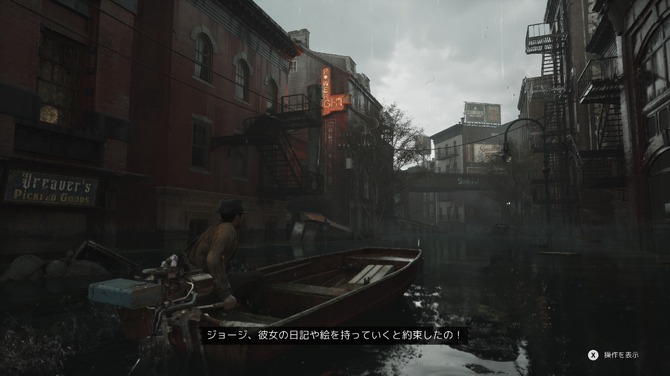
In the early stages, you’ll travel along flooded roads in a small boat and investigate nearby buildings to open floodgates. Even after reaching your destination, you won’t be able to proceed immediately. You’ll gradually expand your range of movement by searching for keys and mechanisms while exploring the labyrinthine buildings.
This structure is reminiscent of the police station in *Resident Evil RE:2*, but what’s interesting is how the setting of a flooded city directly influences the exploration mechanics.
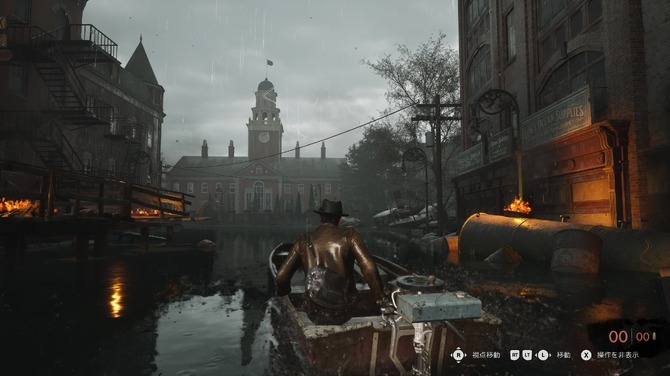
Places that were once roads have turned into waterways, and since normal routes are no longer accessible, you’ll need to take detours through buildings or operate various mechanisms. Furthermore, even in areas you’ve already visited, new enemies may appear or obstacles may alter your path, so you can’t let your guard down until you’re back at your starting point.
Rather than the open-world expansiveness of the previous game, this title emphasizes “exploration density,” with secrets and discoveries waiting in every single room.

As a result of this change, the act of exploration itself becomes the core of the game, seamlessly blending the “joy of discovering new paths” with the “fear of venturing into the unknown.”
◆ Connect clues to unravel mysteries. The unique “Investigation” system

The biggest factor that sets this game apart from other survival horror titles is its unique “investigation” system.
In the previous title, *The Sinking City*, the core gameplay revolved around a system—similar to the *Sherlock Holmes* series—where players gathered evidence, organized information, and deduced the truth.
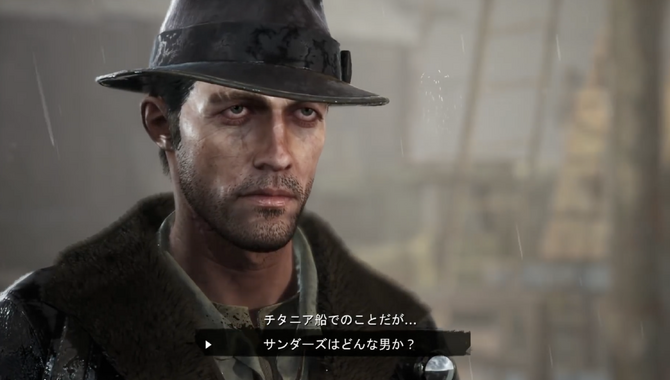
While in the previous game, “investigating” itself was a means of advancing the story, the investigation system in this title is essentially optional.
You don’t necessarily have to solve every case; instead, the system is designed so that taking detours allows you to acquire useful items and new abilities.
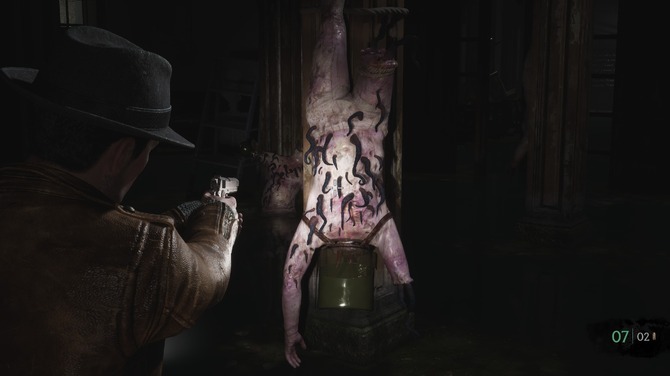
For example, in the church early in the game, you can follow a suspicious lead separate from your original objective of opening the floodgates.
In other words, if you continue investigating and succeed, it can lead to inventory expansion, weapon upgrades, and the acquisition of special abilities; however, even if you don’t solve optional cases, it won’t affect the progression of the main story or the game’s completion.
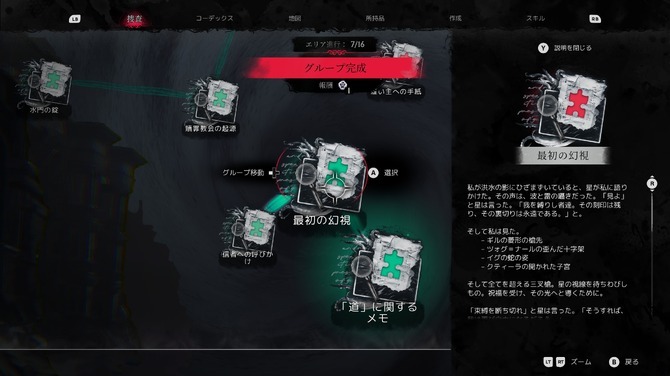
Additionally, the “Mind Palace” system—where you gather information from in-game documents and organize your thoughts—remains. You can enjoy puzzle-solving that differs from traditional survival horror, such as deducing access codes from documents and your surroundings.

This is where the game really shines: while in titles like *Resident Evil* the act of searching for items is the primary goal of exploration, this game adds another layer of enjoyment to the process—namely, “investigating cases.”
By gathering clues, you’ll uncover what happened in the ruins. And by solving the case, you’ll gain an advantage in your next exploration. It’s a system where uncovering the truth directly translates into a means of survival.
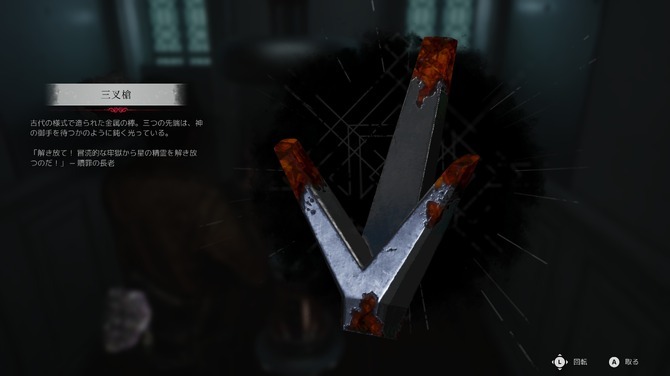
In Lovecraft’s works, stories of people seeking forbidden knowledge and heading toward destruction are depicted time and again. This game takes a unique approach by linking that “quest for knowledge” to the survival horror reward system.
◆You Can’t Rest Easy Even After Defeating Monsters! Monstrous Enemies That Exploit “Corpses”

Combat also features ingenious design and unique mechanics specific to this game.
While *Dead Space* was known for combat involving the severing of Necromorph limbs, *The Sinking City 2* reflects the ecology of Lovecraftian monsters in the strategic interplay with enemies.

A prime example is the “Slither,” a worm-like parasitic creature that invades the corpses of Arkham’s residents and manipulates their bodies to attack you. What makes it distinctive is that even a headshot doesn’t guarantee an easy kill.
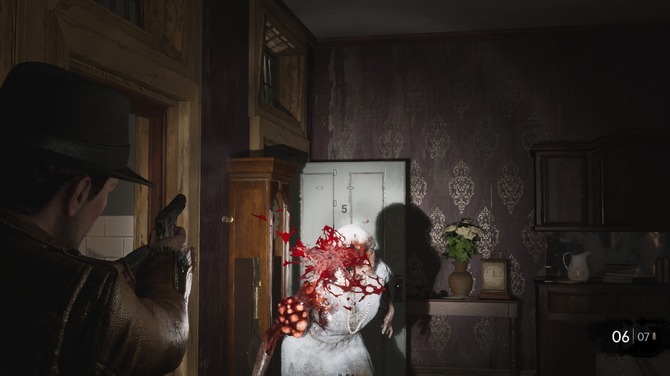
You must target the tumor-like weak point formed by the parasite, and you have to pinpoint its location every time the enemy moves. Furthermore, even if you destroy the host’s body, the parasite may survive, move to another corpse, and attack again.
Therefore, you cannot let your guard down even after defeating an enemy. Depending on the situation, you may need to stomp on the parasite to eliminate it, meaning you cannot ensure your safety through gunfire alone.
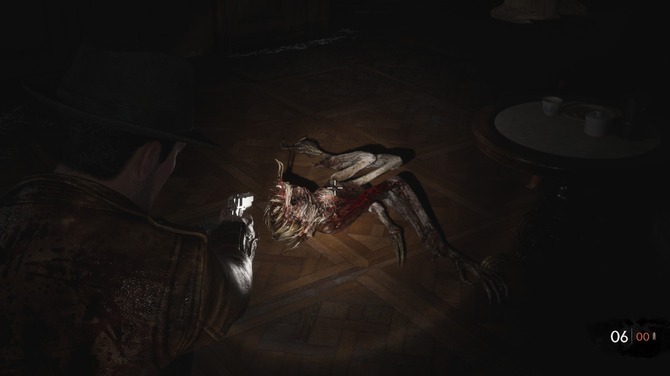
Furthermore, the small “Stygian Harvesters” excel at ambushes rather than head-on combat and tend to flee when attacked. Pursuing them too aggressively risks being surrounded by other individuals, so you must make decisions based on their movements.

Should you use up ammunition to ensure a kill, or evade the enemy and press on? There are also situations where you must use the same resources to craft both healing items and ammunition, making the strict resource management typical of survival horror games crucial.
Of course, the combat controls and enemy reactions can feel a bit rough around the edges. Even so, the fact that the combat system incorporates not just the monsters’ appearances but their very ecology is one of this game’s greatest appeals.
◆A Submerged City, a Hospital, a Fish Market—Different “Lovecraftian Horrors” in Each Area
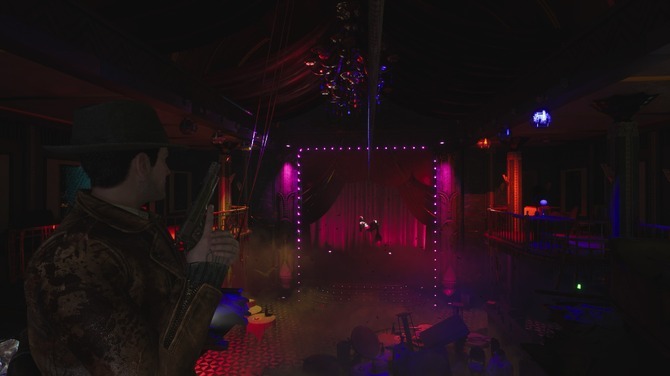
In terms of world-building, this game takes a different direction from *Silent Hill* and *Resident Evil*.
Whereas *Silent Hill 2* reflected the protagonist’s guilt and psychological state through the town’s abnormal scenery, the Arkham depicted in *The Sinking City 2* is portrayed as a place where non-human entities are encroaching upon the city.
From the early stages, where you navigate flooded streets in a small boat, to Aclay Memorial Hospital with its eerie medical equipment, and the fish market where sea monsters roam—the nature of the horror changes depending on the location you visit.

In the hospital in particular, you’ll encounter mechanisms that blend medicine and the supernatural, such as a bizarre authentication device that uses human faces. At the fish market, you’ll solve puzzles that make use of the location’s unique features, such as operating a crane to move the rotting carcass of a giant whale.
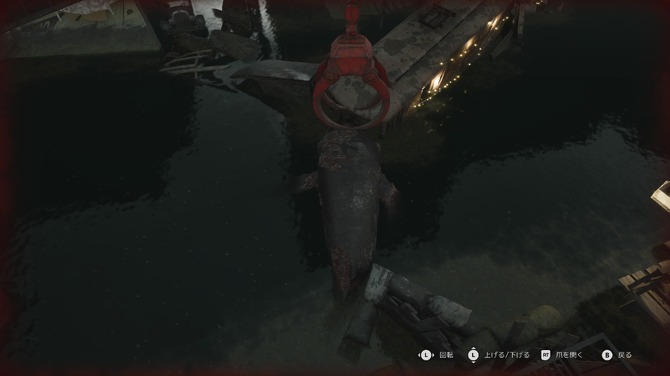
Furthermore, the connections to Lovecraft’s works add to the game’s appeal.
By exploring the city—from Miskatonic University, a symbol of Arkham, to the “Deep Ones” from *The Shadow over Innsmouth*, as well as documents and signs reminiscent of various characters and place names from the original works—you’ll deepen your understanding of the game’s world.

Another defining feature is that the source of terror isn’t limited to the protagonist’s inner psyche. The city built by humans itself is being reshaped by incomprehensible entities. The joy of exploring that world meshes perfectly with the series’ investigative elements.

On the other hand, while you can freely explore the submerged city mainly in the early stages, the latter half of the game is structured around clearing individual stages in sequence. Although it’s a bit of a shame that you can’t wander around the captivating city of Arkham more freely, I’d like to commend the game for allowing you to experience different eerie concepts in each area.
◆ A “Classic” Survival Horror Game That Goes Beyond Merely Mimicking Masterpieces

That said, it’s not necessarily the case that *The Sinking City 2* has reached a level of polish that surpasses the genre’s masterpieces.
I definitely feel there are areas where it falls short: the satisfying feel of gunfire and the overall polish of combat don’t quite match *Resident Evil RE:4*; the intricate enemy reactions and presentation don’t quite match *Dead Space*; and the connection between the story and horror doesn’t quite match *Silent Hill 2*.

In particular, during mandatory enemy encounters and boss battles, the tension felt during normal exploration can sometimes fade. The investigation system isn’t as deep as it was in the previous game, and the pacing feels rushed toward the end of the story. I suspect this is where opinions will be particularly divided.
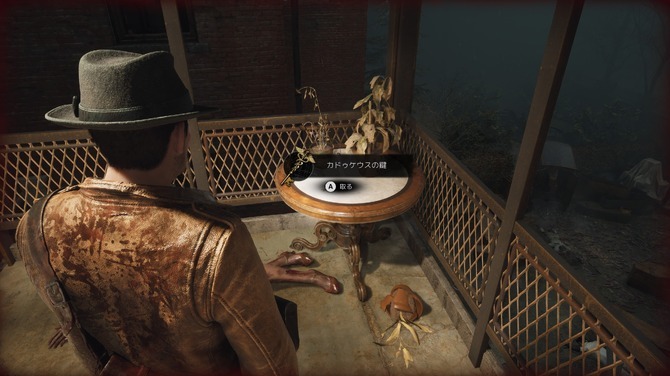
However, I believe the game’s appeal lies not only in the polish of its individual elements but also in how the developers incorporated their own strengths into the core survival horror gameplay system.
You explore ruins, read documents, investigate incidents, and solve mysteries. As a result, you acquire supplies and abilities, allowing you to move on to the next dangerous location.
It is the combination of this sequence of events with a Lovecraftian worldview and grotesque monsters that creates the unique gameplay experience of *The Sinking City 2*.
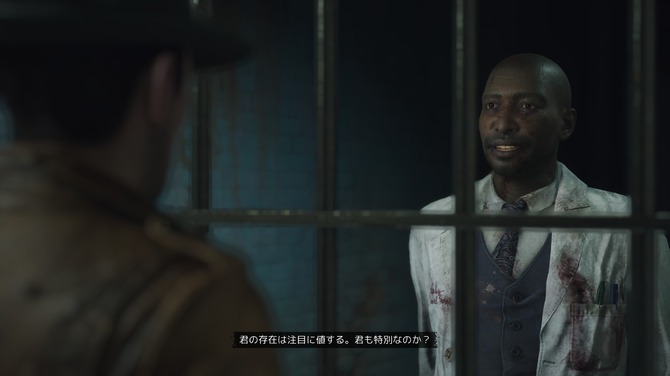
Of course, there is still room for improvement. However, the fact that the game prioritizes the joy of “exploring an unknown world and using that knowledge to survive”—rather than just the sophistication of combat or the spectacle of horror—is highly significant.
*The Sinking City 2* isn’t a game that fundamentally redefines the conventions of the survival horror genre. Nevertheless, it demonstrates that it’s possible to incorporate the appeal of other genres into an established game system and create a unique charm. As a title that showcases this potential, it’s certainly worthy of high praise.


*The Sinking City 2* is now available for PC (Steam, Epic Games Store, GOG.com), PS5, and Xbox Series X|S.



