


This series features interviews with the developers of intriguing new indie games. In this installment, we bring you a mini-interview with the developers of the hardcore shooter *Kusan: City of Wolves*, developed by CIRCLEfromDOT and released on July 31 for PC, PS5, Xbox Series X|S, and Nintendo Switch.
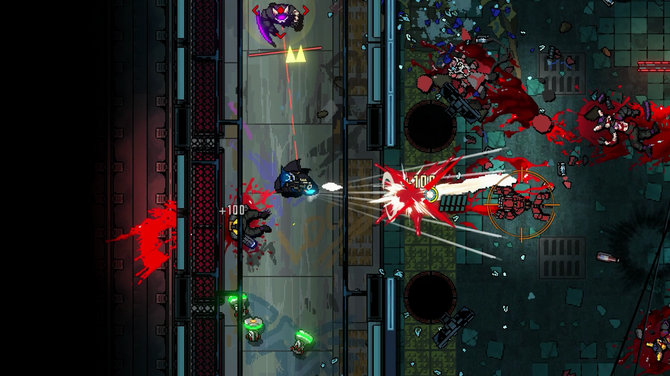
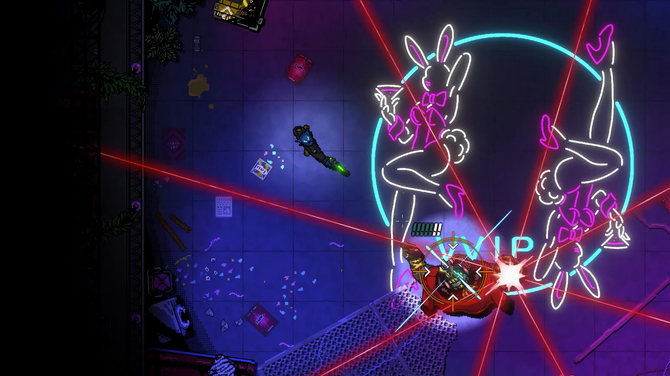
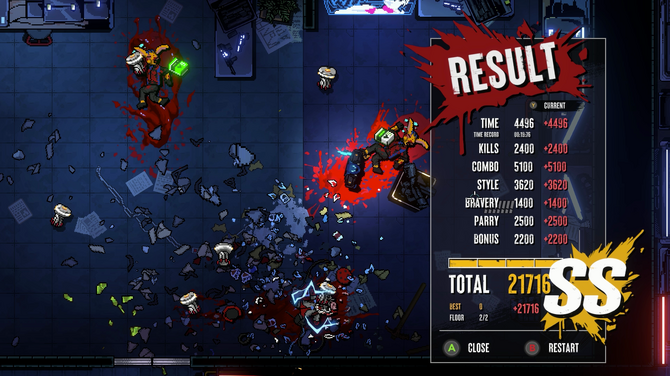
Set in “Kusan,” a massive metropolis ruled by violence and corruption, this hardcore top-down action shooter follows “Jin,” a former soldier turned mercenary, as he fights to protect a mysterious girl.Amid the tension where a single hit means instant death, players must utilize gunfire, blades, parries, and dodges to wipe out enemies. The game features a total of 54 meticulously crafted stages and supports Japanese.
“Kusan: City of Wolves” is available for 1,900 yen.
――First, please introduce yourself. What’s your favorite game?
Jung-kyu: Hello.I’m Jung-kyu Yeom, CEO and game designer at CIRCLEfromDOT, an indie game studio based in Busan, South Korea. We founded the studio in 2018, and after about eight years of development, we released our debut title, *Kusan: City of Wolves*, this past July.
I’m a huge fan of the *Metal Gear Solid* series, the *Monster Hunter* series, and the *God of War* series. My absolute favorite is *Metal Gear Solid 3: Snake Eater*—the seamless blend of gameplay, story, and presentation made it a truly special experience that has stayed with me ever since.Recently, I’ve been playing *Onimusha: Way of the Sword*; I’ve cleared all the side quests, and all that’s left is the final boss battle.
Just as these games have moved me so deeply, I hope to one day create a memorable work that will stay with someone else as well.
――Please tell us about the key features of this game. Also, how did you come up with the idea?
Jung-kyu: The central concept of *Kusan: City of Wolves* is very simple: “What would happen if a cyborg John Wick were to be thrown into the world of *Hotline Miami*?” Our goal was to create an experience where players could fully embody the role of a masterful action movie protagonist.In the *John Wick* movie series, the protagonist instantly adapts to constantly changing battle situations by making full use of firearms, close-quarters combat, and the surrounding environment. We wanted to express that sensation as a fast-paced, satisfying top-down action game.
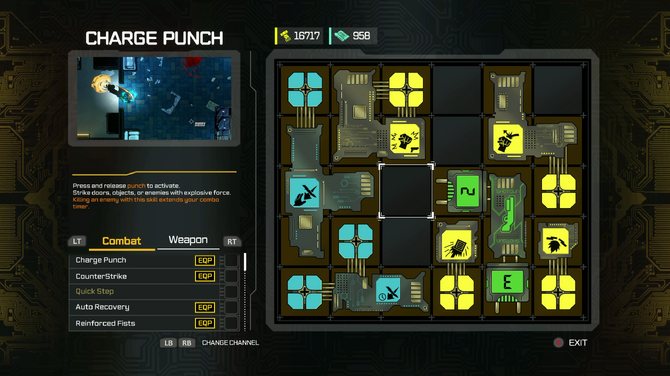
This concept gave rise to systems like the “Warhand”—a cybernetic prosthetic arm capable of delivering powerful punches and even deflecting bullets—and the “Quantum Knife,” which allows players to attack surrounding enemies while performing other actions. Players combine these tools to overcome various combat situations in their own unique style.
However, our goal wasn’t simply to create flashy and complex combat. Our true objective was for players to observe the battlefield, devise a plan, put it into action, and steadily improve through trial and error.I believe the greatest thrill in *Kusan: City of Wolves* lies in that very moment when you’re able to race through a grueling stage—one that once seemed impossible to clear—with surprising speed and style.
――Were there any games that influenced the development of this title?
Jung-kyu: *Hotline Miami* was the starting point for this game and remained a crucial guiding light throughout the development process. Whenever we hit a wall with the game’s fun factor, we’d return to *Hotline Miami* and thoroughly analyze what it was that made it so compelling to players.
The film series that influenced us the most was the “John Wick” series. We poured all our energy into figuring out how to translate that action—where the protagonist seamlessly combines a variety of combat techniques to overcome crises—into the game’s systems.We also drew significant inspiration from *SEKIRO: SHADOWS DIE TWICE* for our boss battles. We were particularly impressed by the tense back-and-forth of the combat and the way the game allows players to acknowledge their mistakes and learn from them when they lose.
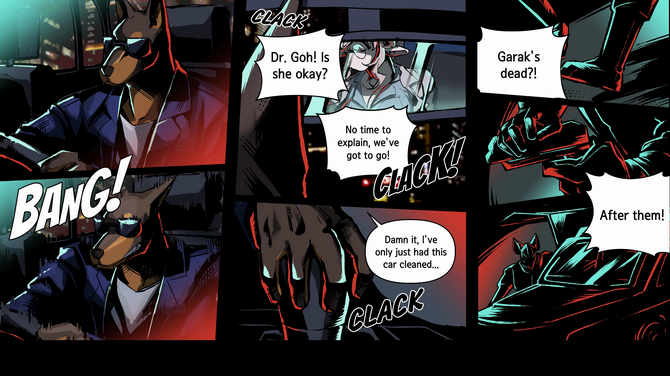
We also drew inspiration from games such as *Katana ZERO*, *Ghostrunner*, *Monster Hunter*, and *DREDGE*. In terms of movies, we referenced *Léon*, *Logan*, and *The Rock*, and the graphic novel-style cutscenes in this game were heavily influenced by the original *Max Payne*.Furthermore, I absolutely love the deep world-building and emotional expression found in manga series like *Berserk* and *Fullmetal Alchemist*.
What mattered most to us wasn’t simply extracting various elements from these works, but reinterpreting the emotions and inspiration we drew from them into a style unique to *Kusan: City of Wolves*.
――Please tell us about one of the most memorable moments during the development of this game.
Jung-kyu: One of the most memorable events during the development period was our participation in “BitSummit,” an indie game event held in Kyoto, Japan, in 2024. Since this was our first time exhibiting at an overseas game show, it was a very special experience for us.
During the event, a fan who was traveling from Europe or the U.S. to Japan went out of their way to visit our booth.It was truly surprising—and filled us with gratitude—to meet a fan in person at our first overseas event who already knew about and had been following our game. It was a moment when we truly realized that the game we were creating in our small development studio in Busan had reached people so far away.
In addition, many of the visitors to our booth left warm words of encouragement on sticky notes. Every single one of those messages touched us deeply, and we still treasure the sticky notes we received as precious mementos for our development team.
Although we faced many difficult times during the long development period—which spanned roughly eight years—I believe it was only thanks to your passionate support that we were able to complete this game. The warm welcome we received at BitSummit, our first overseas game show, remains a special memory for us to this day.
――What kind of user feedback have you received since release? Please share any that left a particularly strong impression on you.
Jung-kyu: We’ve received mostly positive reviews, but we’ve also received feedback pointing out areas that need improvement. In particular, the feedback that “some sections and boss battles are confusing” left a strong impression on me. For some players, this led to situations where they felt, “I don’t know what to do” or “I don’t know how to handle this.”We wanted to create a game that offered a satisfying challenge, but the experience of “getting stuck because the difficulty itself is unclear” was not what we intended.
Therefore, we released a patch to address these issues. Looking at recent reviews, it seems these fixes have reduced stress during gameplay, but we will continue to closely monitor player feedback moving forward.
This experience has reaffirmed the importance of playtesting before release. We’ve learned that it’s not enough to simply ensure our target audience enjoys the game; we must also verify that first-time players can correctly understand the game’s rules and hints without additional explanation. Even things that may seem obvious to developers are by no means obvious to players experiencing the game for the first time.
For our next project, we plan to involve more inexperienced testers from the early stages of development and regularly evaluate the first-time play experience. We will use the feedback from this project not only to improve *Kusan: City of Wolves* but also to ensure we are fully prepared for our next title.
――Taking user feedback into account, could you tell us about your plans for future updates?
Jung-kyu: Since the release, we’ve received feedback from some players stating that “the difficulty is too high, making it hard to progress.” To ensure that these players can also enjoy both the action and the story of *Kusan: City of Wolves*, we’re developing a “Story Mode” with a lower difficulty level, and we’re currently conducting test plays.While the sense of accomplishment that comes from overcoming grueling challenges is a key element of the experience we want to provide, we believe that the optimal difficulty level for generating that sense of accomplishment varies from player to player.
During playtesting, we were delighted to see that this Story Mode is allowing players to fully experience the enjoyment we originally intended to deliver. Our goal was never simply to create a game that’s just difficult. Rather, we wanted players to experience the “joy of improvement”—as they master the nuances of combat and overcome challenges in their own unique style.
Moving forward, we will continue to cherish and preserve the core appeal of *Kusan: City of Wolves*. At the same time, we’ll listen to player feedback and keep refining the game so that even those who haven’t been able to fully enjoy it due to its high difficulty level will feel encouraged to give it a try.
――Could you tell us about the Japanese localization for this game? What was included in the localization, what were the challenges, and what has the reaction been like from Japan?
Jung-kyu: *Kusan: City of Wolves* supports Japanese, and fortunately, we haven’t received any reports of major issues with the Japanese translation since its release.Initially, we had planned to target primarily the Western markets, but after announcing the game, we were pleasantly surprised by the tremendous interest shown by people in Japan. I’m particularly delighted by the reactions from Japanese players on X (formerly Twitter) and the attention we’ve received from Japanese gaming media.
I myself love Japanese games and have been greatly influenced by them, so seeing Japanese players take an interest in the work we create is an experience so moving that words cannot express it.
I sincerely hope that Japanese players will be able to fully enjoy not only the action but also the story and the charming characters in this game, without feeling any language barrier.
――Is it okay to stream and monetize this game?
Jung-kyu: Yes, of course. It brings us great joy to see players sharing their gaming experiences through videos and livestreams of *Kusan: City of Wolves*.
Even with the same game, playstyles and strategies vary completely from player to player. Seeing such diverse gameplay firsthand is a real joy for us as developers.
We welcome the posting of gameplay videos, reviews, walkthroughs, and livestreams on platforms such as YouTube and Twitch, and we also welcome monetization.
We look forward to seeing even more players freely share their stylish gameplay and unforgettable moments.
――Finally, please share a message for our Japanese readers.
Jung-kyu: First and foremost, I’d like to express my heartfelt gratitude to all our Japanese readers for their interest in *Kusan: City of Wolves*.
I grew up playing Japanese games. Titles like *Metal Gear Solid*, *Monster Hunter*, and *SEKIRO: SHADOWS DIE TWICE* not only gave me unforgettable experiences but continue to influence me even now, as a game designer.
When we began developing *Kusan: City of Wolves* eight years ago, our goal was simple: “to create a game that we ourselves could truly enjoy.” However, as development progressed, that vision gradually evolved.We came to want to create a game that would make players feel that both the “money” and “time” they invest were truly “worth it.”
*Kusan: City of Wolves* is by no means an easy game. However, the intense sense of accomplishment that awaits you after overcoming grueling challenges is precisely one of the supreme gaming experiences we most wanted to deliver. We hope you’ll enjoy not only the action but also the distinctive characters, the music, and the “neon noir” world.
We are a small development team based in Busan, South Korea, and we are truly delighted and proud to have this opportunity to introduce our game to players in Japan across the ocean.
We hope that *Kusan: City of Wolves* will be an exciting and enjoyable experience that stays with you forever. Thank you very much!
――Thank you very much.
◆ About “Spotlight on Indie Mini-Q&A”
This series features email interviews with indie developers about their games shortly after release. To ensure regular updates, we’ve standardized the questions, with the goal of sharing the voices of as many developers as possible. Please also enjoy our archive of over 1,000 other interview articles.
