


Arc System Works will release the simulation RPG *Demon’s Knight Fever* on October 22, 2026.
This unique title is billed as a “Kill, Kill, Kill—Enemies and Allies Alike: A Character-Building RTA Simulation RPG Where You Get Stronger the More You Die.”
In typical simulation RPGs, players are expected to gather and train allies while striving to achieve victory with as few casualties as possible. However, in this game, the key to success lies in actively killing your own “minions” and utilizing their sacrifices.
The game’s producer is Sohei Shinkawa, who worked on titles such as *Makai Senki Disgaea* and *The Doll Princess of the Kingdom of Mar*, and who previously served as President and CEO of Nippon Ichi Software.
After leaving the company in 2022, Mr. Shinkawa founded Super Niche LLC. He is currently engaged in a wide range of creative activities, including not only game development but also writing novels.
Game*Spark interviewed Mr. Shinkawa just before the game’s release. We spoke with him about the unique game systems designed to differentiate the title from the “Disgaea” series, his philosophy on black comedy, the collaboration with Drecom, and his future prospects.
“I Didn’t Want to Make Something Just Like ‘Disgaea’”: The Reason Behind an SRPG Where You Kill Your Own Allies
――First, please introduce yourself and tell us about your role in this project.
Sohei Shinkawa (hereinafter Shinkawa): I’m Sohei Shinkawa from Super Niche LLC. I’m a former employee of Nippon Ichi Software. I’ve been in the game industry for 30 years and have been a novelist for 4 years.
*Demon’s Knight Fever* is set to be released on October 22, but it originally began four years ago—around the time I started working as a novelist—when I wrote the original story under the pen name Roman Kitayama. Once it was decided the story would be adapted into a game, I took on the role of producer under my real name, Sohei Shinkawa.
――This game features a system where “the more you die, the stronger you become”—the exact opposite of the standard SRPG formula. How did this concept come about?
Shinkawa: There are several reasons, but first, in my 30 years in the game industry, there are three themes I consider my life’s work. One is fantasy, another is dark comedy, and the third is horror.
In terms of fantasy, there’s *The Doll Princess of the Kingdom of Mar* and, more recently, *Etranger Overlord*. For dark comedy, there’s *Makai Senki Disgaea*, and for horror, *Hayarigami*. I intend to continue working on these genres in the future.
It was with this in mind that I decided to create a new dark comedy title: *Demon’s Night Fever*. However, I fully expected from the start that it would be compared to *Disgaea*.
I have a personal policy of not wanting to make the same thing twice. Sequels are a different story, but I don’t like making a new game that’s similar to something I’ve created in the past, nor do I like making games that are similar to those created by others.
That’s exactly why I started by deciding to make something as different from *Disgaea* as possible. Since this is a dark comedy, “evil” is the central theme. So, I wanted to completely break away from the fundamentals of the simulation RPG genre.
In a typical simulation RPG, you gather allies, train them, and defeat enemies without letting your allies die. That’s true of *Fire Emblem* and *Tactics Ogre*, and I think even *Disgaea* was the same.
But when I thought about pursuing the path of evil to its extreme, I wondered if you even need allies in the first place. Instead of allies, you have “servants”—and wouldn’t it be fine if those servants were disposable? From that idea, the “Kill Battle” system was born, where you fight by killing your own allies.
――When I actually played the game, I was surprised to find that there were all sorts of wicked deeds to commit besides killing your own allies. How did you go about developing this system?
Shinkawa: Broadly speaking, there are two main aspects: battle and character development. Since both are centered on the theme of “evil,” we wanted players to do as many wicked things as possible—both in battle and during character development. Moreover, we wanted to ensure there was variety so it wouldn’t become one-dimensional.
In character development, players can do more than just commit misdeeds—they can steal items, kidnap minions, and plunder treasure in random dungeons. We also included an element where players use “Evil Points” to level up via a skill board.
By offering variety in character development, I hoped players would devise their own unique strategies.
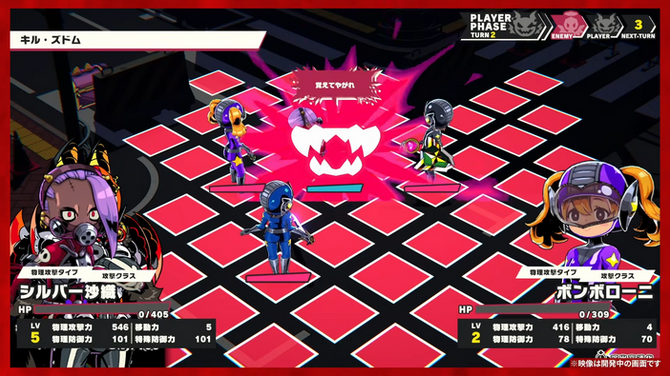
In battle, too, it’s not just about defeating enemies with “Kill Skills” triggered by killing allies. There are also abilities like “Teleport,” which forces you to swap positions with an ally, and “HP Absorption,” which drains a minion’s HP.
Basically, it’s a system where you exploit your minions, sacrifice them, and use that to achieve various goals. In short, we developed the game with the goal of consistently upholding the concept of “enjoying evil” in both character development and combat.
The visuals and UI change with each chapter. The fun of “servants” who won’t do as you’re told

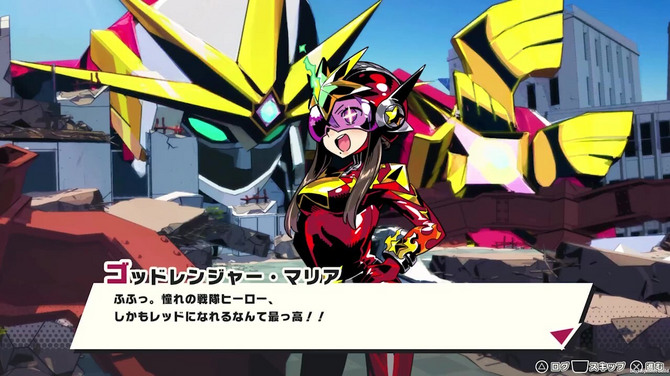
――In this game, the atmosphere changes completely with each chapter, and even the appearances of the protagonist and Maria change. Did you face any challenges when coming up with these variations?
Shinkawa: We considered all sorts of combinations. For example, we even thought about matchups like “The Great Detective vs. The Gentleman Thief” or “The Giant Monster vs. The Giant of Light.”
However, since we had to ensure the battles functioned as a simulation RPG, we had to eliminate the more difficult ones. The reason we increased the variety was, ultimately, because we didn’t want players to get bored.
We’ve designed the game to be as engaging as possible, but I think players will inevitably get bored if the same battles keep repeating. That’s why we went to the trouble of changing the theme, the available actions, the visuals, and even the UI for each chapter—it was quite an elaborate and tedious process (laughs). We really put a lot of effort into coming up with ways to keep players from getting bored.
――Another distinctive feature is that the servants don’t always follow the player’s orders. While this adds a fun element of unpredictability, wasn’t it difficult to balance the game so it didn’t feel unfair as a strategy game?
Shinkawa: First of all, there’s the fundamental premise that “minions don’t listen to you.” On top of that, figuring out how to make the game work as a simulation RPG was a major challenge.
Servants are categorized into attack types, support types, ranged types, melee types, and tank types, each with its own distinct action logic. Additionally, we’ve included a “Action Prediction” feature that shows what they’re planning to do next—albeit only for the next turn.
If you want to play exactly as you envision, I hope you’ll use these rules as a guide to strategize. Personally, though, I’m the type who doesn’t pay any attention to those rules at all—I just play by the seat of my pants (laughs).
Even so, using Teleport gives you quite a bit of control. For example, you can swap positions with a minion to place it right in the middle of the enemy group and then kill it. That way, you can wipe out both the enemies and your own allies.
Since that’s my playstyle, even when I’m winging it, I feel like I’m still in control exactly as I intended.
――The minions were designed by Yuji Hinata, and they’re really cute, aren’t they? Do you have a favorite, Mr. Shinkawa?
Shinkawa: They’re all cute, but my favorites are the minions on the Super Sentai hero side and the ones on the witch side that appear in the witch arc. There are characters that look like they’re wearing costumes, and I really like those—they’re pretty cute.
In this game, you keep killing your favorite minions, reincarnating them, and making them stronger. As the chapters change, the appearances of the new characters you can kidnap also change, but you can keep killing your favorite minions and carrying them over. I think being able to nurture them like that is one of the game’s charms.
――Some of the minions’ names are so funny they make you laugh out loud. Are those assigned randomly?
Shinkawa: They’re random. I don’t think there were that many—maybe around 50 to 100 different ones. There might be cases where it just happens to be your own name, but there’s no malicious intent behind it (laughs).
Game Over Isn’t a Failure: Three Mechanics That Make You Want to Try Again and Again

――In this game, it’s important to keep trying even after a “Game Over,” isn’t it? On the other hand, I imagine some SRPG players would prefer to avoid failure as much as possible. What measures did you take to make players want to try again even after failing?
Shinkawa: There are three main elements. First, by earning achievements, players can start the next playthrough from a more advantageous position.
Another is that players gradually get the hang of it with each playthrough. By playing repeatedly, they devise their own strategies, and their skills improve. We wanted that to serve as motivation.
And finally, there’s the story. We designed it so players think, “I wonder what happens next?” or “I can’t stop until I see what happens next.” By combining these three elements, we designed the game so that even if you die over and over again, you’ll still want to keep playing.
――With the “Character Development RTA” system, there’s a possibility that the optimal solution will eventually converge to a single path. Have you implemented any measures to ensure there’s flexibility in character development strategies?
Shinkawa: Since we’ve prepared multiple character-building methods, I think players will be unsure at first. They’ll likely split into two groups: those who focus on a single method and those who try them all out evenly.
However, no matter which approach they take, I think they’ll likely hit the time limit around Chapter 2 and get a Game Over. At that point, I want them to experiment and think, “Next time, I’ll try this,” or “I haven’t tried that yet.” That’s why we’ve deliberately included multiple variations in the character-building methods.
――When I actually played it, I found the difficulty to be quite high. Could you offer some advice for players who are just starting out?
Shinkawa: Even if you get a “Game Over,” this isn’t a game where you have to start from scratch. We designed it with repeated play in mind, and it’s structured so you can play in a “New Game Plus” style.
If you take your time and figure out your own strategy, you’ll definitely be able to clear the game. I’d be thrilled if you enjoyed it.
Our benchmark for dark comedy is *Dr. Slump*. A fondness for villains you can’t help but love
――The protagonist, Kyoshiro, is a game programmer working at a “black company,” right? Why did you choose to make him this kind of character?
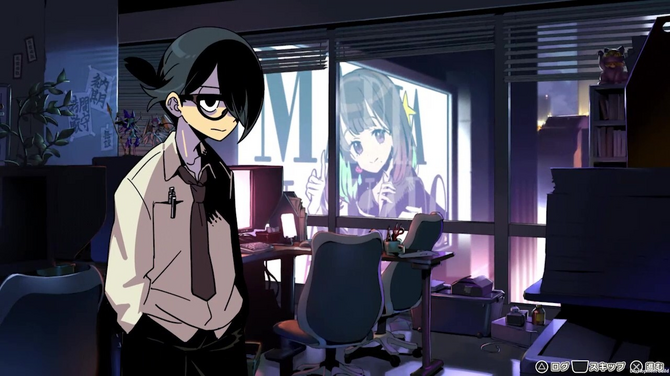
Shinkawa: I wanted to create a character that, even if players couldn’t fully empathize with him when projecting themselves onto him, would make them think, “It’s totally plausible that this guy would do something bad.”
He’s a character who harbors resentment toward the world, society, and humanity itself—someone who thinks things like, “Humanity should be wiped out,” “Let the popular kids explode,” or “Everyone should just die.” That’s how Kyoshiro was born.
I made him a game programmer at a “black company” because I thought that would create a certain level of relatability when turned into a game. I figured a “corporate slave” in the game industry would be better than one at a financial institution (laughs).
――When creating black comedy or dark comedy, is there anything you’re particularly mindful of? Do you have a personal line—a boundary—for how far you’ll go before it becomes offensive?
Shinkawa: My personal boundary is *Dr. Slump: Arale-chan*.
I was part of the “Arale-chan” generation when I was in elementary school, and I grew up watching that series. While I love the Arale-chan drawn by Akira Toriyama, I was especially drawn to the world created by Dr. Mashirito—a world filled with villains and unpleasant characters like King Nico and Suppaman who are fun and impossible to truly hate.
Even though the characters in *Disgaea* are demons or demon lords, there’s something about them that makes them hard to hate, isn’t there? That aspect was strongly influenced by *Dr. Slump*. For me, the benchmark for dark comedy is Akira Toriyama and *Dr. Slump*.
syudou’s theme song turned out even better than I imagined. We even produced an opening video that wasn’t originally planned.
――The theme song for this title, “Dropout,” was composed by syudou. When you commissioned the song, what kind of image or theme did you convey to him?
Shinkawa: It was actually Dricom, the company in charge of development, that originally introduced us to syudou. Dricom is handling the overall sound production, and they were the ones who suggested we ask syudou to work with us.
My reaction was like, “Huh, really!?” (laughs). I told them, “If you’d be willing to do it, please do!”
Since syudou was going to handle both the lyrics and the vocals, we just gave him the game’s story and concept, and decided to leave the rest entirely up to him.
And sure enough—he delivered something that fit the game perfectly. We hadn’t even considered asking for any revisions at first, but the result exceeded our expectations, which really boosted our motivation.
――Did the music inspire you in any way that influenced the development?
Shinkawa: Yes, actually. To be honest, we hadn’t planned on creating an opening video at all. But after listening to the song, we thought, “We really have to make this,” so we decided to produce the opening.
――How did you proceed with production alongside Dricom, the company in charge of development? Were there any ideas proposed by Dricom?
Shinkawa: Dricom gave us almost complete creative freedom, so it was really easy to work with them.
That said, when it came to things like how to handle recording sessions, they made sure to be thorough where it mattered. I learned from both Dricom and Arc System Works that “this is how a proper company makes games.”
Since I’d only ever made games at Nippon Ichi Software up until then, it really hit home just how much we’d been relying on sheer momentum and grit (laughs).
――This title is priced at 4,950 yen (including tax), making it relatively affordable. What was the reasoning behind this pricing?
Shinkawa: The final pricing was determined by Arc System Works, who is handling the publishing.
There are so many games being released these days, and I think new IPs, in particular, can be quite a tough sell for users. I believe the pricing reflects that mindset, and conversely, they likely thought that at this price point, there’s a chance people would give a new IP a try.
I, too, understand that it’s quite a challenge to pay full price for a new title you know little about.
However, as I mentioned at the beginning, *Demon’s Knight Fever* is a game that sets out to completely shatter the conventions of the simulation RPG genre. I really hope that anyone interested in this kind of title will give it a try.
We might even get some criticism from simulation RPG fans saying, “That game system is impossible!” But since we developed this system with the intention of leaving our mark on the history of simulation RPGs, I’d really like you to buy and play it so you can be a living witness to that.
――As you mentioned in a previous interview, rather than aiming for mass appeal, you’re aiming to create a truly unique title, aren’t you?
Shinkawa: That’s right. It’s “super niche” (laughs).
――I get the impression that Arc System Works, especially since the start of this year, has been putting a lot of effort into new IPs outside the fighting game genre, such as *Donutal* and *Clifa: The Divine Countenance*. What are your thoughts on that trend?
Shinkawa: When I think of Arc System Works, I think of a world-renowned fighting game developer. However, even creating a single fighting game takes a considerable amount of time and money. Given that, I think it’s important to continue building the brand in other genres as well.
Personally, I’m deeply grateful that they agreed to publish our game. That’s why I worked hard on it, hoping it would serve as a stepping stone toward establishing “Arc System Works as an RPG developer” and “Arc System Works as a simulation RPG developer.”
66 More Titles to Go by Age 75: The Creative Potential I Discovered After Leaving the Company
――Let’s step away from the game for a moment and talk about your future prospects. Now that *Demon’s Night Fever* has been released, is there anything you’d like to focus on next, Mr. Shinkawa?
Shinkawa: First, I want to spend at least a year thoroughly promoting *Demon’s Knight Fever* to boost sales and pave the way for a sequel.
Aside from that, I’m currently working on various other games. As things stand now, I think I might be able to unveil two new titles at the next BitSummit in Kyoto. Beyond games, I also want to keep challenging myself with new forms of entertainment, such as board games, video content, and short films.
――Since going independent, you’ve worked on a truly vast number of projects, haven’t you? Generally, many creators tend to focus on just one or two projects at a time—what’s the secret to being able to keep producing so energetically?
Shinkawa: I never imagined I’d end up producing so much, either. However, after leaving Nippon Ichi Software and starting my own one-person company, I no longer had to worry about running a business or supporting employees.
In that sense, I was able to let go of those constraints and think, “I’ll try everything I want to do or find interesting”—and I realized I could actually accomplish more than I expected. That said, I’m starting to think that taking on any more right now might be a bit too much (laughs).
Since my games are being released one after another, I’d like to maintain a pace where I release about 3 to 5 titles a year and use that time to create another 3 to 5 new ones.
I had the privilege of working at Nippon Ichi Software for 26 years. So, I plan to spend the next 26 years focusing on super-niche projects. That would take me to age 75.
I’m 53 now, so that leaves me 22 years. If I release three titles a year, that means I can put out 66 more titles.
――66 titles! That’s an incredible number.
Shinkawa: When I think about it that way, it doesn’t seem so bad—actually, it sounds like a lot of fun (laughs).
――Finally, since this is a brand-new IP, I imagine there are some people who are still on the fence about buying it. Could you share a message for them?
Shinkawa: The one thing I can absolutely promise is that “you’ve never played a simulation RPG with a gameplay feel like this before.” That’s one thing I can guarantee without a doubt.
There’s no falsehood in those words, so I really hope anyone who’s interested will go ahead and buy it.
Also, I’m not really one for crowdfunding. Instead, I’m happiest when people support us by buying the game we’ve created.
If you’re willing to contribute 5,000 yen to a crowdfunding campaign, I’d rather you use that 5,000 yen to buy *Demon’s Night Fever*. That way, I’ll be able to make the next game. I’d be incredibly happy if you supported us by buying the game in that way.
――I see.
Shinkawa: For example, if you spent a whole day with friends—going to karaoke, having dinner, and going to see a movie—you’d spend more than 5,000 yen, right?
――That’s true.
Shinkawa: Could you just set that aside—just this once, just this one time—for *Demons Night Fever*? Please? (laughs)
――That’s a great idea (laughs). Thank you very much!

“Demons Night Fever” is now available for PC (Steam), PS5, and Nintendo Switch.
