


Night City—a city that runs on money, steel (chrome), and human blood and dignity.
“Cyberpunk: Edgerunners 2,” streaming exclusively on Netflix starting October 20, depicts the lives of four individuals caught up in the ruthlessness of Night City.
The previous installment, “Cyberpunk: Edgerunners,” told the story of David Martinez—once just a boy—as he raced through the fringes of Night City faster than anyone else.“Edge Runners 2,” the sequel directed by Kai Igarashi, can be described as a work that “vividly portrays” the people surviving on the Edge from a different perspective.
In this review, Game*Spark brings you a glimpse of the insane charm of this series.Please note that this article may briefly touch on elements from Episodes 1 through 3 of the series, but please don’t let that bother you. After all, their tragic circumstances are all too common in Night City. As for the drama they weave and where their stories lead, we invite you, the readers, to discover that for yourselves.
The “Edge” of an Underworld Drenched in Steel and Blood, and the “Humanity” of the Characters
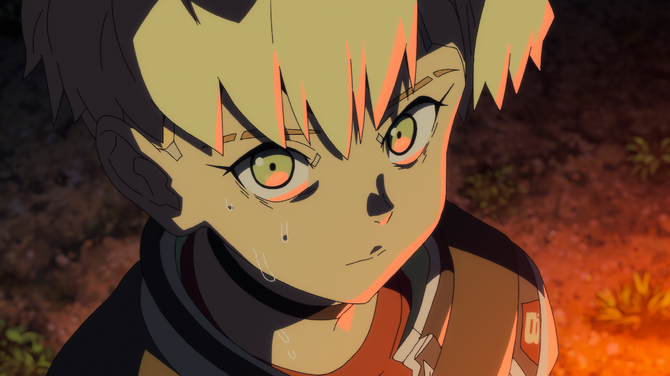
This is an ensemble drama where the perspectives of the four main characters intersect one after another. “Romain Carax,” the protagonist and “photographer,” meets the down-and-out cyberpunk “Weak Kingsley,”“D,” a netrunner obsessed with avenging his fallen comrade, and “Talia Yang,” the Chrome-obsessed daughter of a Corp executive—and he bears witness to their harrowing lives.
While the previous installment depicted David’s journey to reach the other side of the Edge, this installment can be described as a work that explores each main character’s “distance from the Edge.”
For example, Weak, a former cyberpunk, was once a legendary mercenary known as “The King,” but after nearly developing cyberpsychosis, nearly all of his cyberware was suppressed. His former glory as an Edgerunner has faded, and he is now forced to live a miserable existence as the washed-up “Weak.”
D and Talia, too, carry their own vulnerabilities. The razor-sharp cruelty of Night City is repeatedly contrasted with their “dignity and underlying fragility” throughout the story.
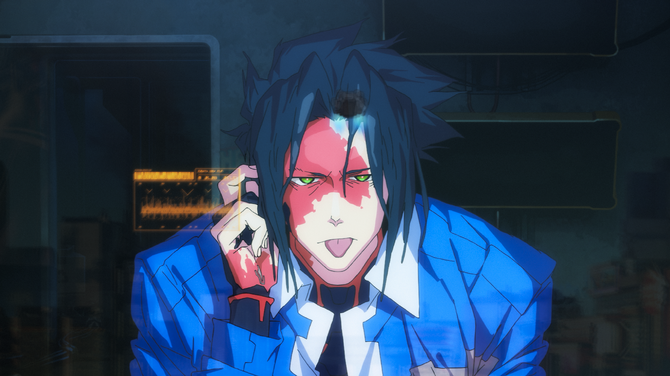
However, their “weakness” can also be described, in cyberpunk terms, as “humanity.” It is the offbeat comedic scenes that directly reflect their human charm.While the comedy in the previous game followed the tone of *Cyberpunk 2077*—dark humor so over-the-top it made you laugh despite yourself—the comedy in this installment has a classic Japanese animation style and is much cuter.
For example, Week’s awkward, down-to-earth demeanor is the very definition of a “clumsy old guy” and is utterly endearing, while D’s airheaded, spacey antics and Talia’s brazen selfishness also evoke a sense of “moe” thanks to the subtle direction.
Romano, who takes on the role of the straight man, seems at first glance to be a level-headed, sensible person, but there are moments here and there where we catch glimpses of his otherworldly eccentricity. Overall, this is an enjoyable work that highlights the contrast between the bleak coldness of Night City and the human warmth of its characters.
Edgy visuals that redefine the TRIGGER style, blending moments of stillness and movement
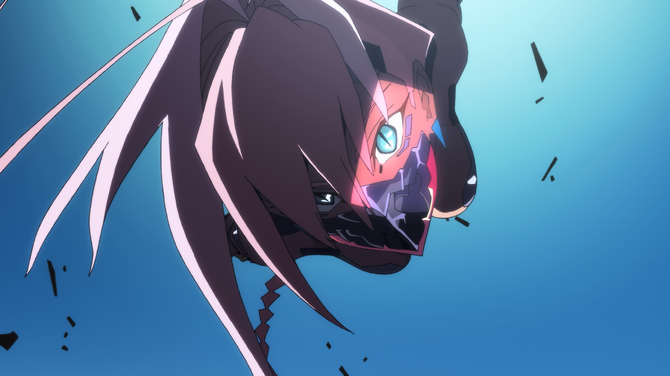
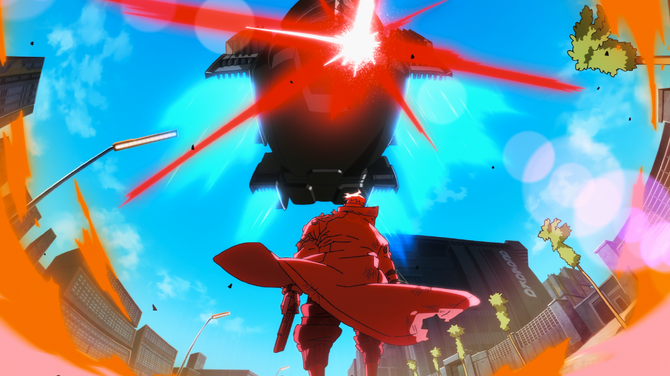
At the same time, the desolate cruelty of Night City depicted in this work is reflected in the visual composition. While the previous installment centered on a look featuring Night City’s dazzling neon lights, this installment is symbolized by the sun scorching Night City and the parched concrete.
Combined with the sharp-lined, flat characters designed by Lead Character Designer and Chief Animation Director Ikki Kanno, this creates an impression of a thoroughly parched Night City.
While there are numerous action sequences—a specialty of TRIGGER—in the shot composition, what left a strong personal impression on me was the quiet visual composition, such as still frames. The characters’ performances are restrained, yet the ingenious editing creates scenes brimming with tension.
Among these, the episode for which up-and-coming animator Sho Oi served as storyboard artist stood out to me as the absolute highlight. It was a thrilling production where the contrast between stillness and motion shone through, using the sheer power of the visuals to convey the characters’ emotions—unfolding a breathtaking spectacle both in terms of drama and visual composition.
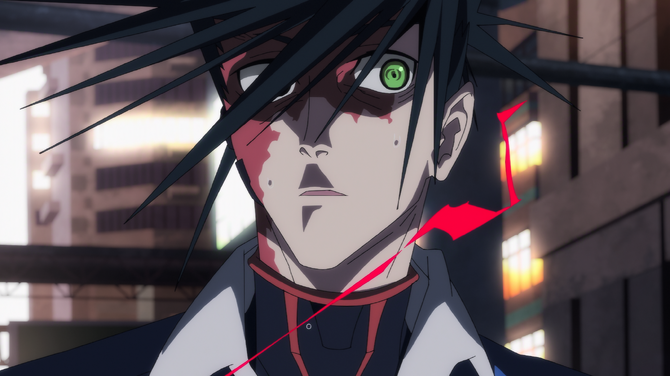
That said, the action animation is also a major draw of this series. One element worth noting in the action sequences is “Capri,” the mysterious personality construct that appears in the series. While Capri interacts with the story as a disembodied digital entity, it can actually be described as the most “TRIGGER-esque” character in the series.Capri’s animation style reflects that of animator Isao Kaneda, who has left a lasting influence on Japanese animation.
The so-called “Kaneda-style” animation primarily relies on techniques that effectively captivate the audience with just a few frames—such as dynamic action sequences with sharp contrasts in pace and jagged visual effects.
Hiroyuki Imaishi, who founded TRIGGER and directed the previous series, was also an avid follower of Kaneda’s work. Imaishi is an animator who has pioneered his own unique style by fusing the “Kaneda-style” animation with the styles of American comic book artists such as Jack Kirby and Mike Mignola.In addition, Yo Yoshinari, the lead character designer on the previous work, is also an animator who draws on the Kaneda style (the animation for the third opening sequence of *Paniponi Dash* is a must-see), and Mr. Kaneda’s influence on TRIGGER is immeasurable.
Capri’s animation style in this work builds on Imaishi’s style—which itself draws from the Kaneda School—while taking on the challenge of even more avant-garde expression.It’s incredibly cool how the animation dynamically shifts forms while fluctuating between frame rates that are almost at the limit of a picture-story show, and in some shots, it even resembles a geometric composition that utilizes the entire screen. You could say this character has redefined TRIGGER’s signature style in an unconventional way—a feat made possible precisely because it is a formless entity.
On the Border Between Life and Death: The “Drama” That Roman Sought
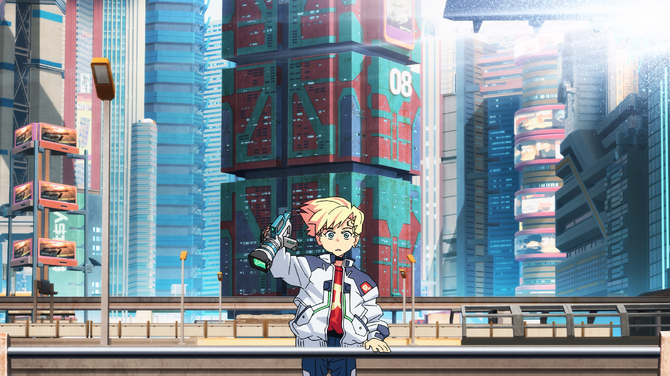
Romain, a photographer, is a key character who ties together the ensemble drama of the main characters. Early in the film, Romain delivers a line:
“Great movies, you see, come at you by breaking down barriers. They exist, yet they transcend them. They exist, yet they vanish.”
As is well known from *Cyberpunk 2077* and its predecessor, *Edge Runners*, BrainDance is considered the most dramatic medium in Night City.BD is a cutting-edge medium that allows viewers to subjectively experience even the filmmaker’s emotions, rendering traditional visual media obsolete. However, Roman flatly states, “You can’t tell a story with BD.” In other words, one could say, “It is precisely because there is a barrier (the ‘edge’) separating the viewer that a movie can tell a story.”
Isn’t this experience something we can feel not only in films but also in video games? It’s not because everything feels like an extension of reality, but precisely because the events are unfolding on the screen that the story feels like it’s speaking directly to us. Players who have played *Cyberpunk 2077* should be especially familiar with this sensation.
After meeting Week, D, and Talia, Roman attempts to capture a fleeting moment of their lives with an antique-looking video camera. The footage Roman shoots is often of terrible quality, and he frequently fails to even capture their facial expressions properly. Yet you’ll be able to sense the vivid emotions and drama that exist only within those images.
The fate of these characters—who managed to survive despite being tossed about by the cruel forces of Night City—and the conclusion to the drama Roman sought are all captured within that film.
Overall Impression
“Cyberpunk: Edgerunners 2” was a work that depicted the “edge” of the people living in Night City from various angles in a different way than its predecessor. It can be said that this work fully leverages TRIGGER’s current “cutting-edge” capabilities, not only in storytelling but also in visual expression.I highly recommend this series not only to fans of the previous installment and *Cyberpunk 2077*, but also to anyone who wants to experience the “present” of animation as an art form.
Game*Spark Review: “Cyberpunk: Edgerunners 2” Netflix October 20, 2026
Both the story and the animation are cutting-edge in every sense
-
GOOD
- A vivid ensemble drama of people struggling to survive in Night City
- Cutting-edge visual style that shines through the contrast between stillness and motion
- The main characters’ charming humanity and “moe” appeal
BAD
- I just couldn’t find anything to complain about!
