


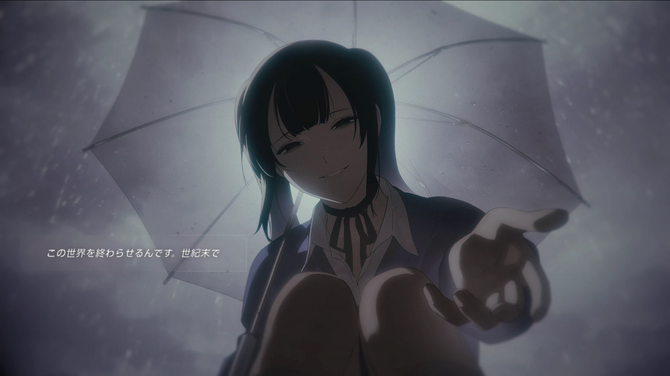
"Rain98," a lo-fi × psychological suspense adventure game from the game label "C#4R4CT3R."Set in Shibuya in 1998, the game follows your strange life together with Reina Amahara (Voiced by Rio Tsuchiya), a girl who longs for the world’s collapse—and a demo version of this title was released on October 17, 2026.
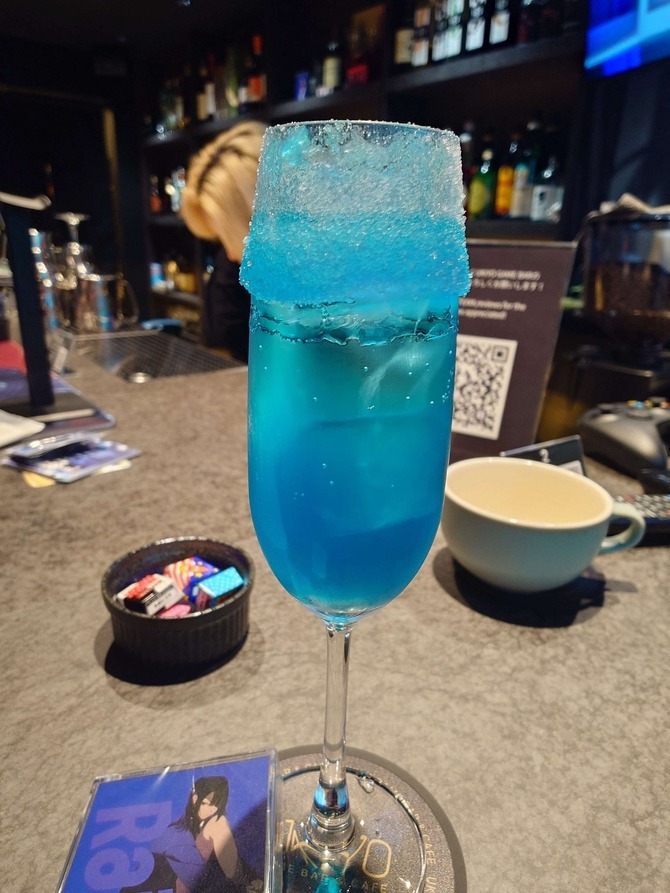
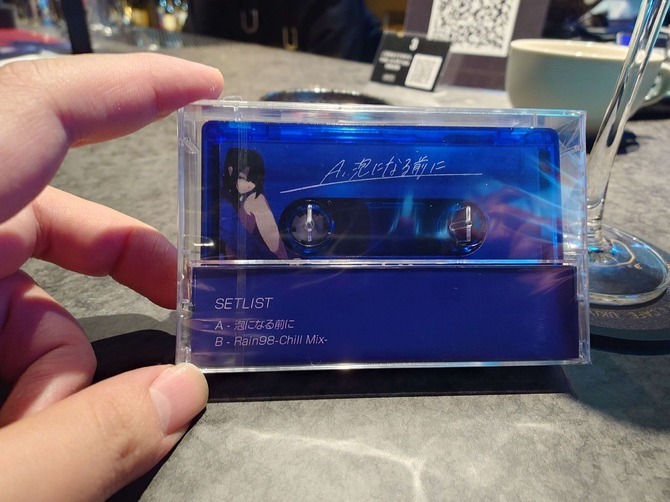
Ahead of the official release, I had the opportunity to try out the game early at “UKIYO GAME BAR & CAFE.” While I’ve covered the details in a separate article, suffice it to say I fell completely in love with the game’s world and the heroine, Reina… Even though it was a massive demo lasting over three hours, I found myself completely engrossed in the gameplay.
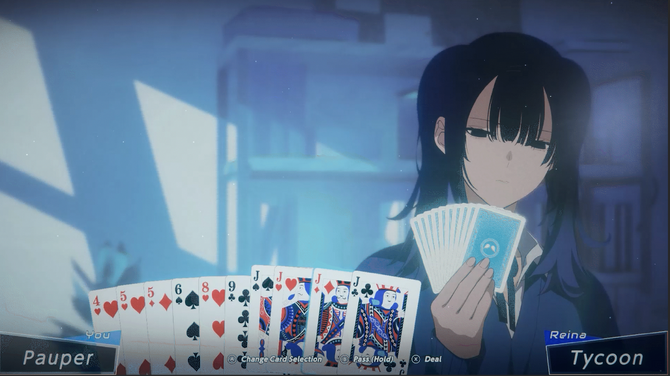
Afterward, I had the opportunity to interview the game’s development team, so I decided to ask them in-depth questions about my impressions from playing the demo.“Why is the setting 1998?” “What are your thoughts on this era?” “Why is Reina Amahara so captivating?”—By posing these questions, I gained a whole new perspective on the world of *Rain98*.
Interviewee
Director: Shoon T
Lead Developer: Takeshi Ihara (referred to as Takeshi in the text)
Art Director/Character Designer: dada
◆Inspired by “Video”: The World of *Rain98*, Woven from Over 300 Pieces of Art
――First, I’d like to ask about the artwork in this game. I found it incredibly captivating—what kind of direction were you aiming for during production?
dada: Since this is C#4R4CT3R’s first title, we wanted to bring out our originality. The setting is the ’90s, so while we did adopt certain elements that matched the anime and culture of that era, our basic goal was to create something that captured the atmosphere and feel of that time while still giving it our own unique “flavor.”
――“Vibe.” I see—I think I get what you mean.
dada: “Rain98” itself is quite different from the typical “play with cute girls” games, after all.
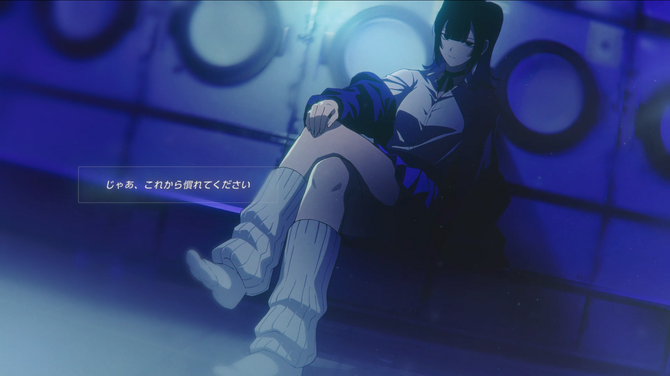
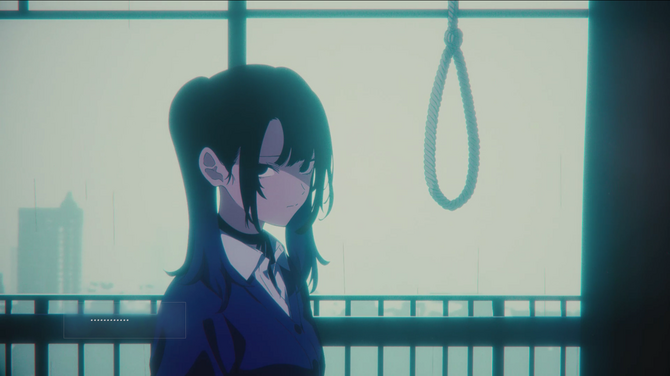
Also, for the backgrounds, we’re creating assets based on 3D while incorporating cinematographic effects. It’s closer to a cinematic approach than the typical still images (*event CGs, single illustrations*) found in visual novels.
Shoon T: We’ve been exploring a style that’s sort of like “90s anime as seen from today’s perspective.” We’re incorporating elements like the interplay of light and shadow and a sense of grain, while keeping the art style fresh. We wanted to bring out that kind of ambiguous charm. We felt that approach would highlight our originality and add value.
If we were simply trying to recreate the 90s themselves, or capture a “Showa-era” or “Heisei-era” feel, we could just copy something that already exists. Instead, I thought it would be better to skillfully blend in modern elements as well.
――Are there any specific works that served as inspiration?
Shoon T: *Perfect Blue* is one, and within our team, many people also love the portrayal of emotions and the delicate depiction of everyday life in *I Can Hear the Sea*.Then there are Kitano’s films, too. Japanese cinema was quite strong in the ’90s, so I want to distill the best aspects of those works. We’ll all watch them together and discuss things like, “We should incorporate this element here.”
――Given the title and the overall atmosphere, *serial experiments lain* also comes to mind.
Shoon T: We didn’t model it directly on *serial experiments lain*, but it just so happened that the title and the time period overlapped. Since it was a work I’ve always liked, I rewatched it while paying attention to the atmosphere and other elements.
Takeshi: While we often reference other games for the actual gameplay mechanics, we primarily draw inspiration from visual media. I think that influence is reflected in the style of our final product.
Shoon T: I love visual novels from that era, like *Teach Me How to Say Goodbye*, so there’s definitely some influence there. But as a team, we generally didn’t go in that direction; we mostly drew inspiration from visual media.
……Oh, speaking of games, we drew quite a bit of inspiration from the atmosphere of *Enjoy the Family Restaurant*. We’d originally planned for the game to be about that size, but before we knew it, it had grown enormously.
――The demo alone is three hours long, after all. In terms of volume, while playing, I was struck by just how many illustrations there were. How many were actually drawn?
dada: Hmm, I’m not sure. I don’t really remember.
Takeshi: Um… (looking at his PC), well, there are at least 300 frames just in the demo alone.
――300!?
dada: It might actually be the highest number for a 2D game. You often see visual novel games advertised with the tagline, “Features over XX still images!” but I think this number will far exceed those expectations.
――You hardly reuse any assets at all, do you?
dada: That’s right. Of course, there are some parts we reuse, but because we made sure to prepare assets specifically to bring the scenario to life, it feels like we’ve ended up with a lot more unique illustrations.
Shoon T: It’s amazing that you’re drawing each one by hand.
――It’s not just “amazing”—to be honest, it was downright terrifying while playing. I kept thinking, “I mean, I’m happy and having fun, but how much work went into this…?”
dada: This ties back to what we were talking about earlier, but *Rain98* is more of a “visual work” than a visual novel. We’re creating it with the same mindset as a theatrical anime or a movie storyboard.
So, just to create a single shot, we’re drawing a huge number of frames. When you factor that in, I don’t think even 300 would be enough…
――By the way, how far into the story does the demo cover?
Shoon T: It covers Chapter 2 out of a total of 7 chapters.
――But that’s not even a third of the game! And that’s with that much work already!?
Shoon T: (Laughs). It’s already grown beyond what we anticipated by Chapter 2, so it might still expand even further.
――That’s terrifying… You’re really putting a lot of care into this, aren’t you?
dada: That’s exactly why we’d be happy if you could enjoy that level of attention to detail.
The whole project is being driven by a lot of passion, so we’re reworking even the tiniest shots over and over again.
Shoon T: It feels like we’re driven by curiosity—like, “If we just keep making everything exactly as it is, what kind of game will we end up with?”
――Actually, it’s changed a lot since last year’s demo, hasn’t it? Even in the same scenes, the still images have changed.
Shoon T: Our team is amazing. They come up with lots of ideas like, “I don’t like it unless it’s like this,” or “I want to do this more,” and they actively redo or redraw the same parts. The game is packed with that kind of attention to detail.
――It really feels like a typical indie game development environment.
Shoon T: We’re currently a team of about 30 people, so technically we’re not an indie studio anymore. But we still approach development with that spirit of “going all out on what we want to do.”
――Another thing that surprised me while playing was how great the game feels. The presentation is satisfying, and the player flow is carefully crafted. It has a gameplay feel that, in a good way, doesn’t quite feel like a typical adventure game.
dada: Shoon T and Takeshi are in charge of different sections, but everyone on the team is highly attuned to the “feel” of the presentation.Everyone pays attention to the “feel” and the pleasure of the experience from their own unique perspectives. We even discuss very detailed aspects, like the sense of sound and how things are presented. I think this is the result of combining everyone’s insights.
Shoon T: We place “pleasure” in a very important position as a core concept. It’s a somewhat vague concept, but since we (dada and Takeshi) have been friends for a long time, we can share our opinions openly and honestly. So even with something vague, we can keep working on it until it takes a concrete form.I think that’s what creates the novelty of the experience.
Takeshi: Even when creating a single prompt, if we just take something from another game and use it as-is, it sometimes just doesn’t fit the overall atmosphere. Since that lowers the game’s overall immersion, we discuss it without compromise.
dada: Though I do think, “It’ll probably change again before release” (laughs).
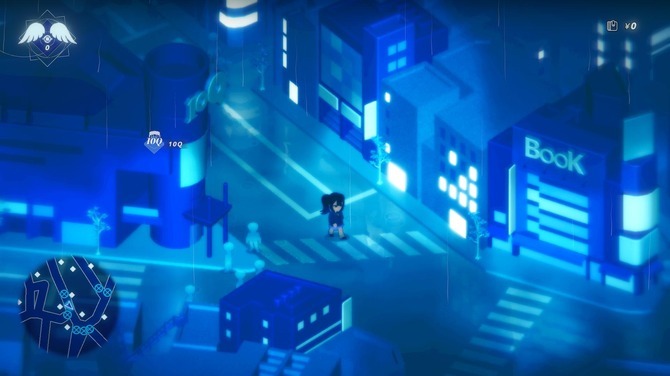
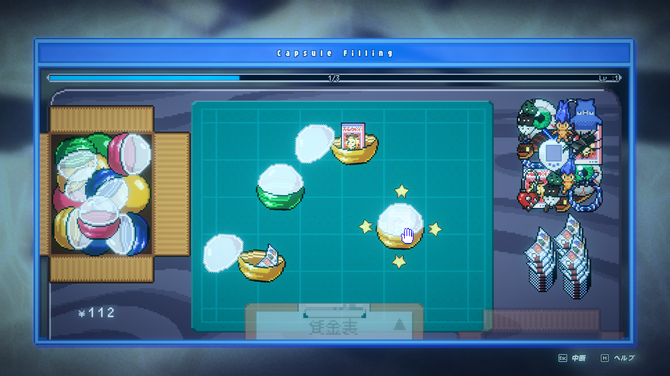
―― (Laughs). Actually, the atmosphere is really consistent, isn’t it? Even while incorporating unique elements like pixel art and PC-98-style screens, you’ve managed to preserve the essence of *Rain98*, so to speak.
dada: First off, we decided to give the dimension where Reina is with the protagonist a cinematic feel. On top of that, we thought it might be fun to introduce a different atmosphere for the mini-games. We figured players would appreciate elements that pay homage to the era, like low-poly graphics or pixel art.
On top of that, as I mentioned earlier, we’ve standardized the “photography” process. We’ve ensured consistency in how light scatters across the artwork and in the textures, so that even when the assets are completely different, players can still sense that they share the same worldview to some extent.
Takeshi: Technically speaking, the same person applies the photography effects to both the still images and the minigames. So there’s no inconsistency—I think players are experiencing the game through a consistent filter.
dada: But it was actually a lot of work, wasn’t it? I think the maps took about a year, right?
Takeshi: I think there were even times when the graphics looked like an Famicom game.
dada: It really was tough at first (laughs).
――I can really tell how tough it was (laughs). The minigames were all created independently, too, weren’t they? It looks like it must have taken an insane amount of man-hours.
dada: That’s exactly right. But we’ve all just gotten used to it… We’re like, “That’s just how this project is.”
But it’s fun, though. Since each minigame has its own distinct atmosphere, each team member can bring their own personality to the design. It feels like we’re creating a single, cohesive work, so we’re really enjoying the process.
――With such elaborate production, it seems like the development period must have been long. When did you actually start development?
Shoon T: We started about a year and a half ago.
――That much content in a year and a half!?
Shoon T: And we’ve actually reworked it several times.
Takeshi: I think I mentioned that “the scale of the game changed”—partly because of that, we actually had to rebuild the whole thing from scratch at one point.
――I was thinking it must have taken an even more astronomical amount of time. That’s amazing… Also, I recall you mentioned previously that “there wouldn’t be branching routes,” so I’d like to ask about the circumstances that led to that change.
Shoon T: Back when I said that, the script actually wasn’t finished yet. Now that it’s complete, you can consider branching routes a confirmed feature.
We’re planning elements that will change based on in-game choices, walking around town with Reina, and other actions you take along the way. The details aren’t finalized yet, but I don’t think it’ll end up being too complicated.
――To begin with, the protagonist and Reina are building up their emotions in order to destroy the world, right? If they keep doing that, they’ll start to grow attached to the world, and I feel like they might end up taking the “don’t destroy it” route.
Shoon T: I’m not sure about that. I can’t go into specifics just yet (laughs). Just keep in mind the question: “What does ‘daily life for the sake of destruction’ actually look like?”
――As a story, it’s also about finding warmth in a cold world, isn’t it?
Shoon T: I’ve sprinkled in various motifs—like heat, fish, and so on. They live with passion, yet they still want to destroy the world. So it’s like, “What does it actually mean to destroy it?”
“What would happen if I created a so-called ‘Sekai-kei’ style work from a contemporary perspective?” That’s something I’ve always wanted to do. So while the broad outline of this story is “a tale of destroying the world,” I think the experience it offers will be surprisingly fresh.
◆Reina Amahara is a “cliché.” Her facial expressions were the key to her design.
――I’d like to hear more about the heroine, Reina Amahara. First, what were you aiming for in terms of her design?
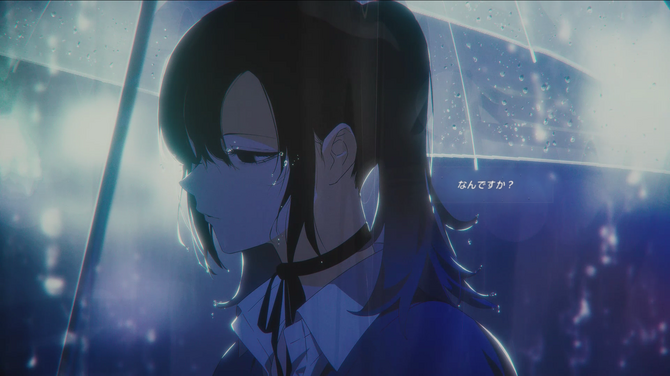
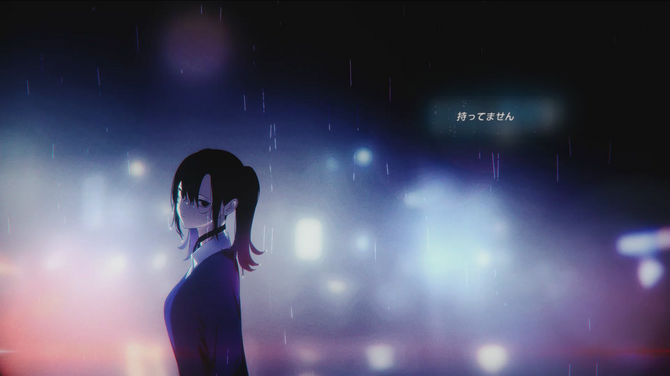
dada: At first, I had some more generic design ideas, but as I talked with Shoon T, I realized, “If I’m going to draw her, I have to express that kind of depth that doesn’t show on the surface.” So when finalizing the design, I started with her acting.
――Her acting?
dada: I sketched out several expressions that Reina makes in the story—like when she’s smoking or glaring at someone.
Usually, I think character design starts with things like, “Does the outline create a distinct silhouette?” or “Is the color balance right?” But this time, my approach was to start with the idea that “with this design, she’d probably make expressions like this,” and from there, I worked to capture her form and shape.
――I see—it’s like casting an actor for a role. By the way, were there any specific motifs you drew from?
dada: It’s the betta fish she keeps. The twin tails, for example, are inspired by its fins.
To begin with, when looking at the story as a whole, Shoon T had this image of Reina as “a single girl inside the aquarium that is Tokyo.” She has a strong will to live, but she’s the kind who might die at any moment.
――I think I see what you mean.
dada: It wasn’t just a matter of making her look cute, so it was challenging.
Shoon T: What makes dada’s artistry so special is his ability to infuse that kind of dramatic depth while still making it catchy.
――By the way, is there any meaning behind the name “Reina Amahara”?
Shoon T: Well, there is a meaning…
――So you can’t say just yet.
Shoon T: That’s right. As you can see from the scene about her name at the beginning of the demo, “What does her name mean?” is an important element of the story. So I’d be happy if you could look forward to the scenario, including that aspect.
――I’m looking forward to it! Also, speaking of Reina, I thought Rio Tsuchiya’s performance was absolutely exquisite.
Shoon T: There’s actually so much of her in the game that it almost feels like we made it specifically for Ms. Tsuchiya’s fans. It’s like you’ll get a lifetime’s worth of her voice (laughs).
――It’s a perfect fit for Ms. Tsuchiya’s image, isn’t it? It’s almost as if the role was written specifically for her.
Shoon T: Looking back now, that’s true (laughs). That said, we decided to ask Ms. Tsuchiya after the character’s personality and design were finalized and we’d listened to various voice samples, so it didn’t start with the idea of “Let’s use Ms. Tsuchiya.”
dada: It was a unanimous decision, wasn’t it?
Shoon T: We just thought, “This is the one,” based on the impression of her voice. It wasn’t until after we’d decided that we found out she’d played characters with a similar vibe.
――I really think it’s a wonderful casting choice. The way she conveys emotions is so nuanced, isn’t it?
Shoon T: During the direction, I asked her to portray a character who generally keeps her emotions hidden, but still let just a hint of those ambiguous inner feelings show through. I think she managed to strike just the right balance.
Since the demo version consisted entirely of everyday scenes, her emotions were fairly consistent, but I think we’ll see more of her different sides going forward.
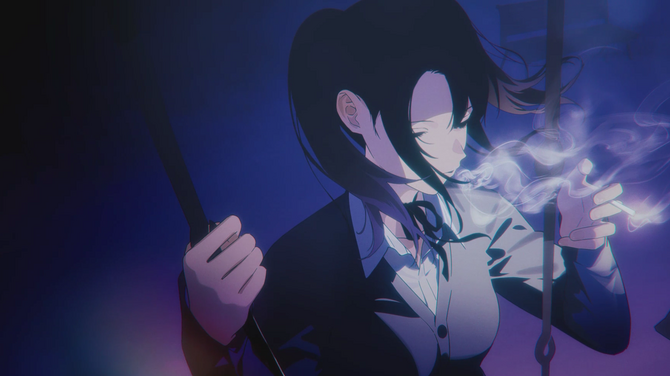
――I’m looking forward to it. By the way, what brand of cigarettes is Reina smoking?
Shoon T: It’s Marlboro. However, there was some discussion that the thickness might be a bit off in terms of the design… so it might change.
――Thank you. One last question: even as it is, the volume is already staggering—do you have a clear timeline for completion yet…?
Shoon T: We do!
――That’s great! Once again, thank you so much for your time today!
"Rain98" is scheduled for release on PC (Steam) in 2026.



