


On October 9, 2026, *Cyan Heart*, developed by independent developer Shoei Sio, was released.
This horror adventure features exploration from a “selfie perspective”—a unique camera angle for a video game.
Players control the protagonist, a young girl named Sara, as she explores a derelict facility, disarming traps and solving puzzles while making her way to the facility’s deepest depths to stop the dangerous energy known as “Cyan.”

The game’s most distinctive feature is that players cannot look directly ahead as they would in a standard first-person or third-person perspective; instead, they must rely on the view behind them, the ground beneath their feet, and Sarah’s frightened expression to navigate their way through the facility.
In this article, we’ll introduce the “one-of-a-kind” gameplay experience that can only be found in this game.
◆ Controls, Languages, and Options

First, let’s cover the various options. This game supports keyboard, mouse, and gamepad. I used a Steam Controller and was able to play through to the end without any issues.

The game also supports multiple languages, including Japanese, and I encountered no issues with the UI or on-screen text. You can also adjust settings such as resolution, display mode, camera shake, and BGM volume.
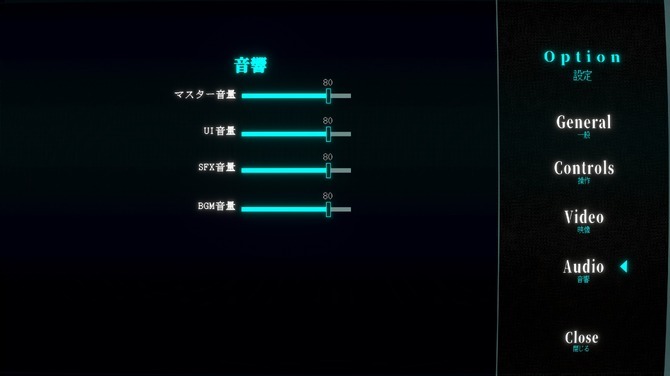
It struck me that the sophisticated design—from the faintly fluorescent “cyan” Mincho font and UI to the title logo—really catches the eye.
Incidentally, the developer, Shoei Sio, is reportedly a current college student majoring in design. That certainly explains his exceptional sense of style.
◆ Explore abandoned facilities from an unprecedented “selfie perspective”! Experience a one-of-a-kind sense of terror and anxiety


When you launch the game, you’ll see the protagonist, a young girl named “Sarah,” wearing a Russian hat (ushanka) in a desolate space. Her expression is filled with a sense of unease.
Immediately afterward, the game transitions to a tutorial that also serves as an explanation of the controls. The basic controls are: use the left stick to move forward, the right stick to adjust your viewpoint, LB to temporarily face forward, and RB to zoom.
You can also turn around with the B button and interact with objects using the A button.
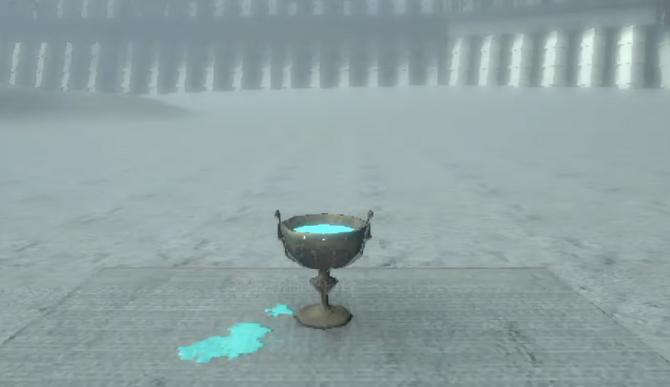
A large vessel filled with cyan (blue-green) liquid appears before Sara’s eyes. What on earth is this…? The very next moment, the screen distorts as if being sucked into it.


When she comes to, Sarah finds herself in what appears to be a dimly lit facility. Various machines and computers are scattered about.
You can interact with it using the A button to access the main monitor console—or at least you’d like to, but you’re prompted for a password.


Looking around, she discovers a note with a typical-looking sequence of numbers written on it. She enters it and successfully gains access.


She then inserts the chipped cassette into the D drive and sets out to explore the underground facility (colony) known as “BSP A-1.”

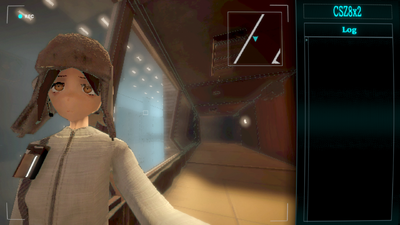
The game’s most distinctive feature is its unique “selfie perspective”—neither first-person nor third-person—which serves as the default view. Through Sara’s portable device, the “CSZ8x2,” the player’s perspective is fixed to an “in-camera view.”
From this perspective, when Sara walks toward the foreground of the screen, the player “moves forward,” and when she moves toward the background, the player “moves backward.” In other words, the player is forced into an extremely restrictive control scheme where “her face on the screen and the scenery behind her are the only things you can rely on.”
This camera work offers a rather fresh experience, but at the same time, it creates a strong sense of stress while playing. Furthermore, changing direction at will is quite difficult to manage until you get used to it.

Furthermore, since you can’t see the direction you’re heading, you can’t check what lies around corners or inside rooms in advance. The wobble of Sarah’s legs and the camera shake caused by her walking feel very realistic, and when she dashes, the camera tilts upward to focus on her face, further restricting your field of view.
Although there are absolutely no monsters in this game, this “lack of visibility” meant I was constantly plagued by anxiety and fear—never knowing what might suddenly appear on screen.
Sarah’s frightened and anxious expressions—which, precisely because of the first-person perspective, foster a sense of solidarity and unity with the player—only serve to heighten that anxiety. Personally, I’ll keep it a secret that this frightened face hits a little too close to home for my own kinks…

As you venture deeper into the facility, Sarah is suddenly attacked by “something.” The screen cuts to a new scene, and this is where the story really begins.

Another distinctive feature of this game is its retro, low-poly visual style. The creator has mentioned that the eerie art style—a blend of dim blue lighting and digital noise—was inspired by the atmosphere of works like *serial experiments lain* and *Mouthwashing*, creating a unique, psychedelic, and underground world.

“Magenta Heart,” a clean energy source that once supported society’s infrastructure, has transformed into “Cyan”—a dangerous substance that corrodes and corrupts everything—and the world above ground has already fallen into ruin.
Sara visited the ruined facility to stop the spread of Cyan… but there’s no one around, and she’s all alone.
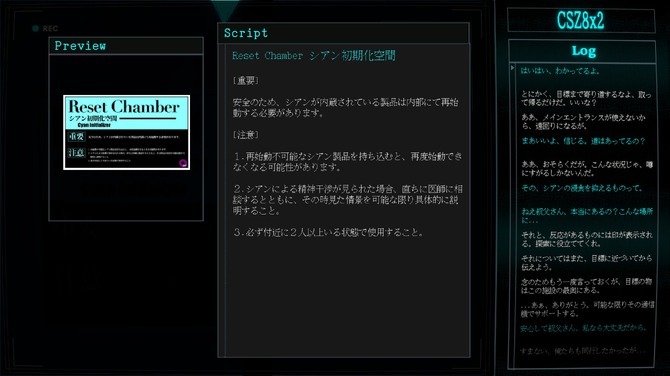
Instead, she occasionally receives voice communications from “comrades” believed to be on the surface. Players use these radio communications as a navigation aid to find their way and as clues to unravel the story’s background.

Additionally, unlike the demo version, the full game includes a support system designed to alleviate the excessive stress caused by the “first-person perspective.”
For example, using the “Glance System” allows you to temporarily face the direction of travel, enabling you to focus on areas or objects that catch your interest. While this doesn’t switch your view completely to a front-facing perspective, it provides clues to help you partially gauge your surroundings.

Furthermore, if you place a pin on the screen toward a location or destination you want to reach, the game will automatically move you there. This is a very useful feature that helps you navigate complex terrain—where it’s difficult to walk while maintaining the “selfie perspective” (moving toward the foreground)—or reach hidden passages.

Puzzle-solving is also a key element of this game, making it quite challenging. Here, to open the shutter, you must arrange the correct colors on the Cyan Initialization Panel… but with no hints provided, I found myself at a loss.

As I retraced my steps a bit and explored the area, I discovered a switch on a door and went inside.

Inside, I found an object similar to the one displayed on the panel, connected by blue and red wires. Ah, I see—this is probably the clue to the puzzle I was stuck on earlier.
I immediately went back and tried entering the colors again…
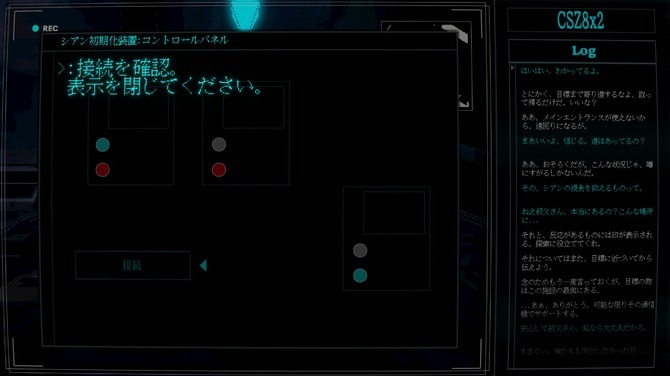

The connection was successfully established, the door opened, and I moved on to the next area.


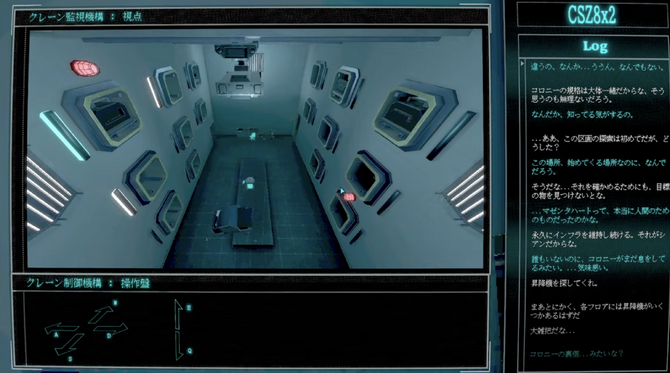
Just like this, many challenges await as I move forward—from figuring out the password to unlock gate locks to controlling a crane via a control panel to lower the elevator.


While maintaining contact with the surface, Sara heads toward a new facility.
At first, it’s just a dark ruin, but as she advances, digital noise begins to streak across the screen, revealing eerie scenes tinted with “cyan”—the madness of this world—as well as logs (records) from those who once inhabited the facility.

Will she be able to safely stop the “Cyan” from running amok? And will she find the answer to the fundamental question at the heart of the game: “Why must Sara continue to document her journey with selfies, even at the risk of her own safety?”
Please play the game and find out for yourself.
The game begins by imposing a strict constraint on the player—the “selfie perspective”—and transforms this into a unique gameplay experience centered on “observing the character’s expressions” and “mastering the system by relying on sound and light,” thereby generating a sense of anxiety and fear that builds gradually.
Additionally, the cyberpunk low-poly graphics and decadent background music—reminiscent of *lain*—fit perfectly with the game’s world, contributing to a high level of immersion. The compact playtime of about 2 to 5 hours to complete the game was also a plus.

On the other hand, the narrow field of view and camera work can easily cause motion sickness, and since it’s difficult to grasp what’s happening directly in front of you, exploration and puzzles are quite challenging—leading to significant stress regarding the controls. These are points of contention, and the game’s unique “selfie perspective” may actually be raising the barrier to entry.

That said, the game’s world and mechanics are definitely worth checking out. I highly recommend giving this horror game a try.
"Cyan Heart" is currently available on PC (Steam) at a 10% discount—1,170 yen—through October 19.



