


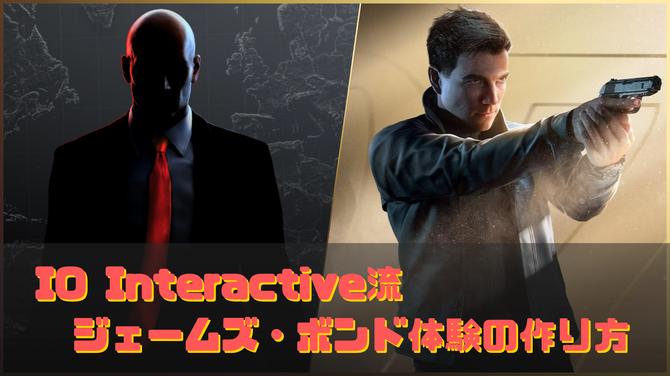
When I finished *007: First Light*, I felt the same sense of satisfaction as if I’d just watched a brand-new *007* movie.
You race around the globe in luxury cars and outwit your opponents with witty banter. You also infiltrate hostile foreign territories, navigate gunfights, and close in on the massive conspiracy swirling behind it all.The game is generously packed with countless symbols that epitomize the legendary “007” film series. It was, without a doubt, the experience of starring in a “007” movie all on my own.
However, after finishing the game, I was left with a slightly strange feeling.
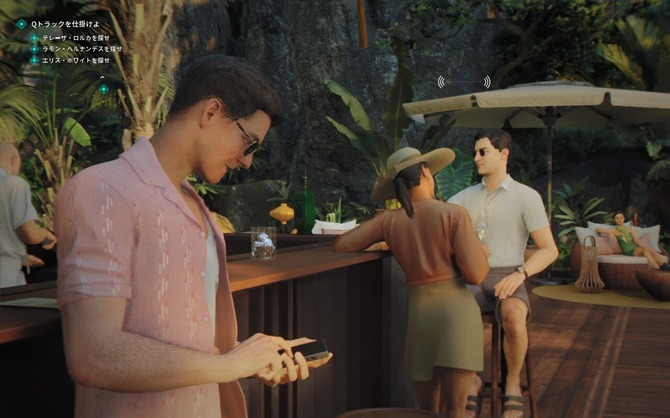
Even though this game so faithfully incorporates “007” elements, the moments during gameplay when I most strongly felt “I am James Bond right now” weren’t the familiar, show-stopping scenes from the movies. Observing my surroundings, reading my opponent’s openings, and finding a way to escape the situation.For some reason, I found those unassuming moments far more satisfying than the scenes designed to recreate Bond on the silver screen.
If that’s the case, what should we really be focusing on when adapting “007” into a game?
Is it the structure of a single film?Or is it the very actions Bond repeatedly performs during his missions? When I think about this, I’m reminded of *HITMAN*, another title created by IO Interactive. This is because, even though James Bond never appears in *HITMAN* even once, there are moments when I feel the character is “acting more like Bond” than in *007: First Light*.
As I explore the reasons behind this, it becomes clear that both works incorporate the essence of “007” into their games in completely different ways.
As the medium changes, so does the form of the story
Ian Fleming, the creator of the “007” series, wanted a name for his protagonist that “sounded as simple, dull, and ordinary as possible.” It is said that the name “James Bond” was intended to make him as anonymous as possible.
Of course, one reason was likely that it was a name befitting the profession of a spy. However, what was important to Fleming was that by making Bond an anonymous figure, readers could project themselves onto him.
He savors fine drinks and meals, drives luxury cars, and meets beautiful women. And then, he throws himself into dangerous missions.The true appeal of the “007” novels lay not in observing James Bond from the outside, but in the reader synchronizing with him and stepping into that glamorous and dangerous world.
However, when the series was adapted into films, that dynamic changed.
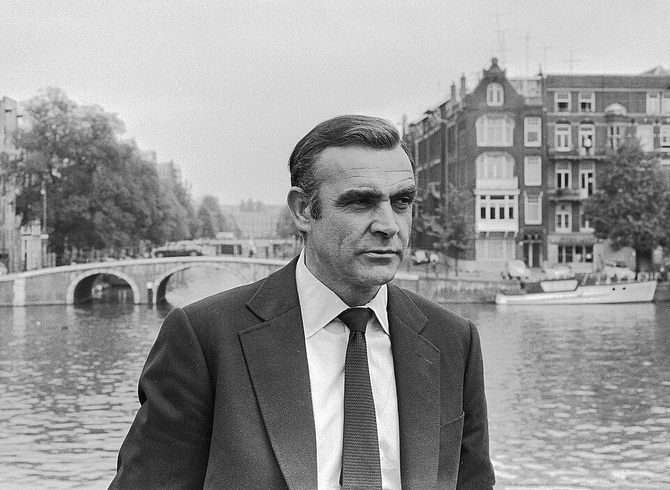
The Bond who appeared on screen had the specific face and physique of Sean Connery—from the way he wore his suit to the way he drank his drinks, right down to the way he looked at women. There was no longer any blank space for readers to freely project themselves onto him.James Bond transformed from an anonymous man onto whom readers could project themselves into an “attractive man different from themselves” with a distinct appearance and mannerisms.
Even more intriguing is the presence of Sean Connery himself, the actor who portrayed that Bond. Born into the working class in Edinburgh and having experienced various manual labor jobs—including delivering milk—he rose to become a global star by playing James Bond.
In other words, it wasn’t just the James Bond on screen that audiences admired. Because this was layered with the real-life story of Connery himself drastically changing his life by becoming Bond, Bond gradually became a figure people aspired to, thinking, “I want to be like that, too.”
Even though it’s the same “007,” our relationship with Bond changes depending on the medium. And as that relationship changes, the way the story is delivered naturally changes as well.So, what kind of relationship did the “007” video game series seek to create between the player and James Bond? The answer chosen by *007: First Light* was remarkably clear.
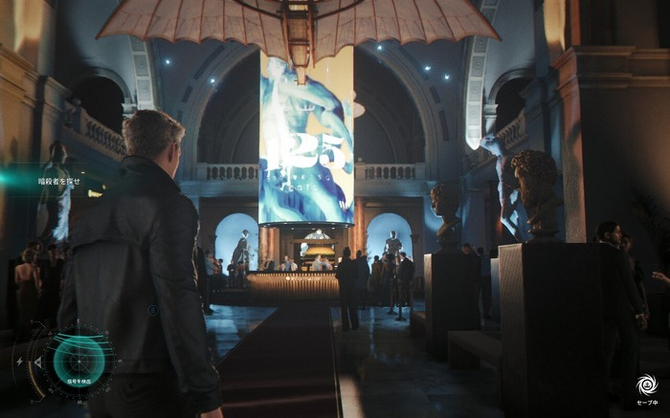
James Bond Who Grows Alongside the Player
This game does not depict a fully formed James Bond. It is an origin story in which a raw, young man undergoes training and real-world missions, gradually growing into the “007” we all know.
This premise aligns exceptionally well with the medium of video games. That’s because, at the beginning of the story, Bond isn’t the only one who’s inexperienced. The player, too, doesn’t know how to go undercover, isn’t used to gunfights, and has no idea how to use the gadgets. As the player completes missions, they learn the controls and acquire the skills to read situations and improvise their way out of trouble.
In other words, the very process by which the player improves at *007: First Light* overlaps with the protagonist’s journey toward becoming James Bond. By honing their skills, the player gradually draws closer to the “Bond as an aspirational figure” created by the movies. I think this is a clever resolution that seamlessly integrates a growth experience unique to games.
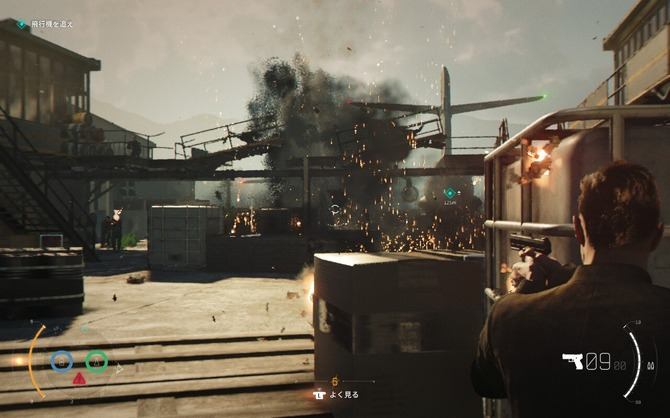
At the same time, the overall structure of the story is thoroughly cinematic. You start out as a trainee, are thrown into the thick of combat following a shocking incident, and eventually begin to piece together the full picture of the case. This narrative progression is quintessentially “007.”
What stood out most to me was the early training sequence. Rather than having players carefully work through each training exercise one by one, the game lets you experience them in rapid succession as the scenes cut between them, much like a cinematic montage. By linking gameplay sequences together like a series of cuts, the game accelerates the pace and propels the character’s growth forward.
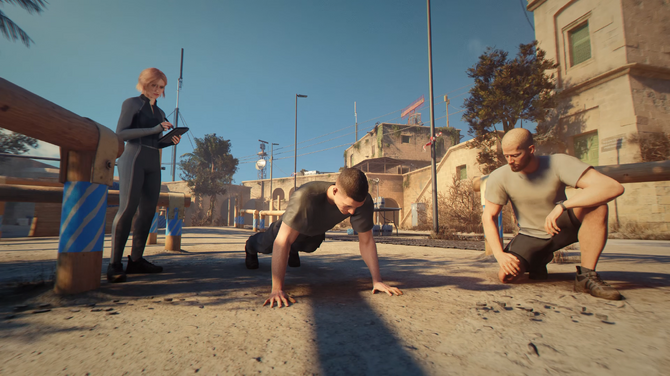
Even though the player is in control, the gameplay itself feels as though it’s being driven by cinematic editing. That sensation is one of the game’s unique charms. In that sense, *007: First Light* was a title that tackled the daunting challenge of “making a ‘007’ movie playable as a game” head-on.
Furthermore, the title sequence best symbolizes the game’s cinematic aspirations. If asked what the greatest appeal of the “007” series is, I would cite this without hesitation.Motifs and lyrics symbolic of each film, along with the images of life and death—or sex and death—that run through the entire series. These elements intertwine within a few minutes of footage, foreshadowing the “007” world about to unfold. That is where its charm lies.
The title sequence for *007: First Light* was also magnificent. It flows seamlessly from the explosion in the preceding cutscene into the visuals, revealing a new world of James Bond accompanied by Lana Del Rey’s glamorous yet decadent vocals. And as the track ends, it transitions beautifully back to the cutscene.While there are parts that strongly evoke the influence of *Skyfall*, it serves as a flawless opening that heralds a new generation of “007.”
“007” Diluted Over 20 Hours
However, when I reached the ending after playing for nearly 20 hours, I was left with a strange sensation. Looking back, the title sequence—which should have been so vivid—felt as though I’d seen it a long time ago.
Come to think of it, that’s only natural. In a movie, the runtime from the title sequence to the ending is roughly two hours. You can race straight through to the climax while maintaining the mood set by those opening images. But in *007: First Light*, that journey spans about 20 hours.
Of course, there’s little point in making a simple comparison of runtime between games and movies. But what struck me here wasn’t the duration itself.
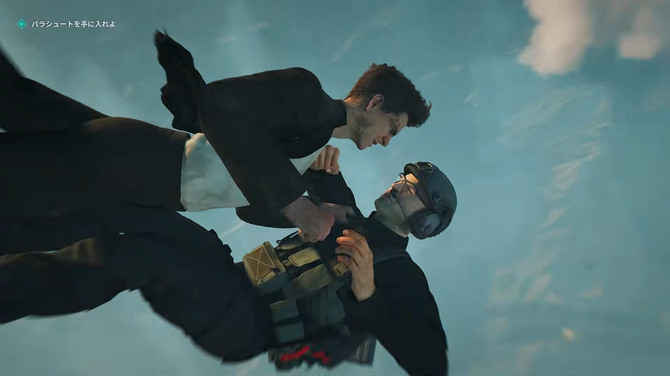
Perhaps the problem lies in the fact that the structure of a single “007” movie was scaled up and applied to the game as a whole.If you take the rhythm of “007”—which was condensed into about two hours in the movie—and stretch it out to 20 hours while retaining its structure, the intensity of each individual “007”-esque moment naturally diminishes. In fact, I was left with the impression that the pacing dragged, especially in the second half.
So, conversely, what if, instead of expanding a single “007” movie, we broke down the pleasures within it into smaller units and made each one repeatable as a game?
IO Interactive had the answer to that question long before *007: First Light*.
*HITMAN*.
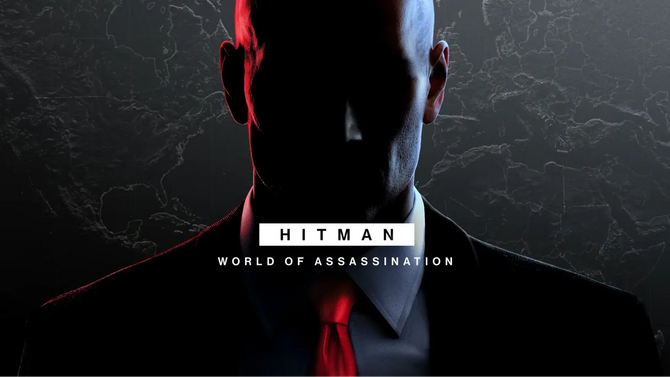
*HITMAN*: Another Form of “007”
To put it simply, the narrative structures of *007: First Light* and the *HITMAN* reboot are surprisingly similar.
The protagonist, an agent, undergoes training to become a professional, carries out missions around the world, and confronts a figure who could be described as his own shadow. Eventually, he uncovers the conspiracy behind what initially appeared to be a series of isolated incidents.Broadly speaking, both are stories in which the protagonist evolves into “007” or “47.” However, the way these stories are structured as games differs significantly.

*007 First Light* races through a single, massive narrative from start to finish. In contrast, *HITMAN*, while possessing an overarching story that runs throughout the game, divides each individual mission—set in various locations around the world—into segments that function like standalone episodes of a drama.
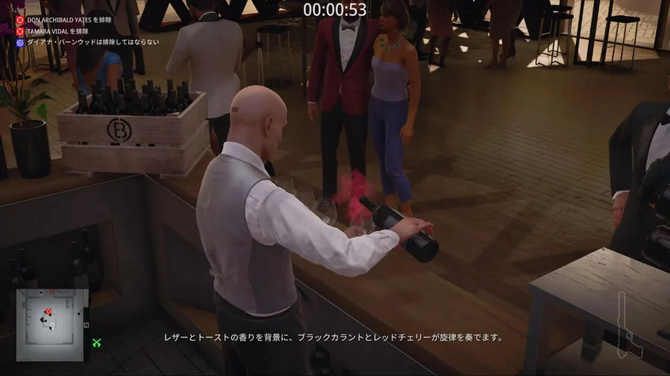
What’s noteworthy is this approach to structuring the game. *HITMAN* focuses on being assigned a mission upon arriving in a foreign land, infiltrating the location, and solving problems using on-the-spot intelligence and split-second decisions. It condenses the pleasures that define the “007” experience into a single mission.
In other words, it takes those quintessential “007” moments—which in a movie might occur only a few times throughout a single narrative—and turns them into self-contained missions, repeating the process in one location after another.As a result, *HITMAN* develops a rhythm akin to a series of short spy dramas unfolding one after another—a rhythm distinct from that of following a single, lengthy spy movie.
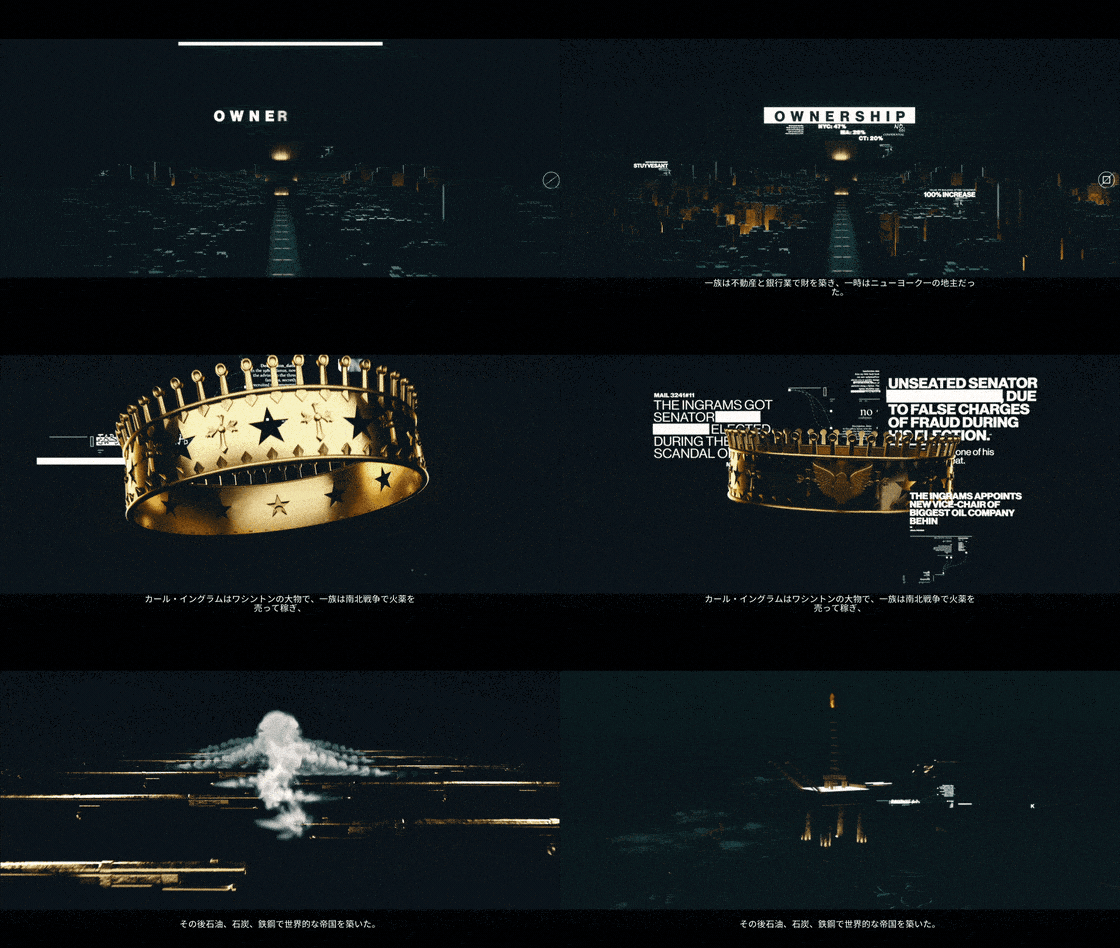
I’d also like to touch on the briefings at the start of each mission. The target’s background, past, current situation, and the significance of the mission at hand—this segment, which concisely summarizes such information through narration and stylish visuals, has become one of the defining elements of *HITMAN*.
Of course, the format is completely different from the *007* title sequences. Still, I think there’s a certain similarity in their roles.
Using visuals and music to shift the player’s mindset and condense the excitement of “a new mission is about to begin” into a brief moment. Whereas *007: First Light* sounded the starting gun for “007 is beginning” just once during its 20-hour journey, *HITMAN* sounds it for every single mission.

Don’t just control Bond—think like Bond
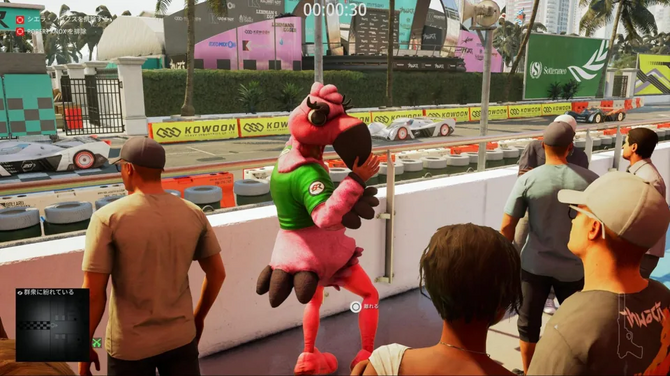
Who will you impersonate, and where will you infiltrate? How will you gather intelligence and get close to your target? In *HITMAN*, you use your own judgment to piece together the situations that Bond navigates so brilliantly in the movies. Observe your surroundings, cross-reference vast amounts of information with your gadgets, and devise your own strategy.While *007: First Light* also features similar scenes at key moments, *HITMAN* differs fundamentally in that it places this approach at the very heart of the gameplay.
In other words, in *HITMAN*, rather than controlling the character of James Bond, the player is made to emulate the very thought process that James Bond employs in the movies. There is neither Bond’s face, nor his voice, nor his name. Yet the decision of “how to navigate this situation” feels strangely close to Bond’s sensibility.
If we break down the appeal of “007” into two parts, the picture becomes clearer. One is the “cinematic pleasure” derived from dazzling spectacle and charismatic characters. The other is the “pleasure of thinking”—reading the situation and improvising your way through missions.
*007: First Light* focused more strongly on the former. It took the cinematic Bond—an object of admiration—and made him playable. In a sense, it’s a work that transformed the *007* films themselves into something playable. In contrast, *HITMAN* is a work that extracts the “pleasure of thinking” found within the *007* universe one element at a time and translates it into a different medium.
What’s interesting is that this “pleasure of thought” resonates in some ways with the experience of reading a novel.Readers of the novels follow Bond’s inner thoughts and decision-making process from the inside. Of course, reading is a passive experience—since the decisions themselves are in the author’s hands—so it’s not the same as a game where you actively devise strategies. Still, it’s fair to say that this experience is closer to the anonymous sense of being a participant that flowed through Fleming’s prose than simply watching a star’s actions.
It’s nothing short of a strange reversal. Although *007: First Light* bears Bond’s name, it’s actually *HITMAN*—in which Bond never appears at all—that comes closest to that sensation of “entering the world as a participant,” the very feeling Fleming went so far as to preserve by deliberately choosing an ordinary name.
Making a Movie “Playable” vs. Turning It into a “Game”
When you compare these two works side by side, it becomes clear that the same studio, IO Interactive, produced two very different answers.
Of course, this isn’t a simple matter of which one is superior. It’s a choice of what to discard and what to keep. But to be honest, it comes down to how strongly they were able to preserve the core of the “007” experience. If measured solely on that point, it seemed to me that *HITMAN* had the edge.

Another factor is that the cinematic “007” essence that *007: First Light* sought to capture is itself undergoing a fundamental shift right now. The portrayal of Bond girls—which once colored the series—and the far-fetched, outlandish elements are gradually receding under modern values.The restraint embodied by the Bonds since Daniel Craig is a manifestation of this, and *007: First Light*, which bills itself as representing a new generation, naturally follows in that vein.
What *HITMAN* distilled may not have merely been something that happened to be well-suited for games, but rather the core element of the “007” identity that is most resistant to wear and tear.
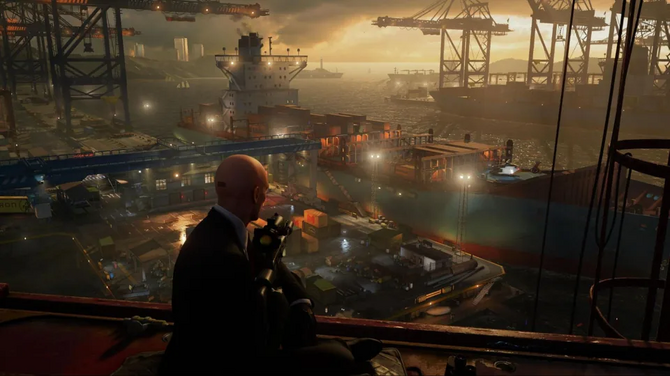
What’s interesting is that IO Interactive—which had effectively brought “007” to life as a game through *HITMAN*—chose not to follow the same path when entrusted with the real “007.” The very differences between the two titles reveal the traces of their ongoing exploration of the question: “What does it mean to translate a movie into a game?”
Transposing a story into a different medium does not mean simply transporting it while preserving its original form. It means identifying where the pleasure lies within the work and translating that into the form of the new medium. Simply making Bond playable does not make it a “007” game.
*007: First Light* let the player play as James Bond. *HITMAN* made the player think like James Bond. It is precisely within this difference that we can see each game’s distinct answer to the challenge of turning “007” into a video game.


¥7,500
(価格・在庫状況は記事公開時点のものです)



