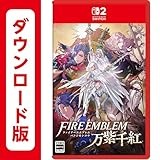
"Fire Emblem: Three Houses," the latest entry in the series that shares the same world as the Nintendo Switch hit "Fire Emblem: Three Houses," has seen reviews split down the middle both overseas and in Japan since its release.While the game has received high marks on the international review aggregator Metacritic—with a critic score of 89 and a user score of 8.6—reviews on Amazon Japan are mixed, averaging 3.6 stars. Opinions seem to be polarized between those who absolutely love it and those who can’t stand it.
Indeed, it feels as though the game is designed in such a way that opinions are bound to be divided on various fronts. The ensemble drama, whose tone varies significantly depending on the route chosen, shapes players’ preferences from the very beginning, and the exploration and character-raising elements—unseen in previous entries in the series—make it feel more like a strategy or CRPG than an SRPG.
Even so, there’s no doubt this is a title with undeniable charm. Why are opinions so divided on this game, and why does it possess such an unfathomable charm that makes it impossible to dislike? Here’s our review of the enigmatic title *Fire Emblem: Ten Thousand Colors*. Please be aware that this review contains some spoilers regarding the game’s systems and storyline toward the end.
Strategy on a Macro Level, SRPG on a Micro Level
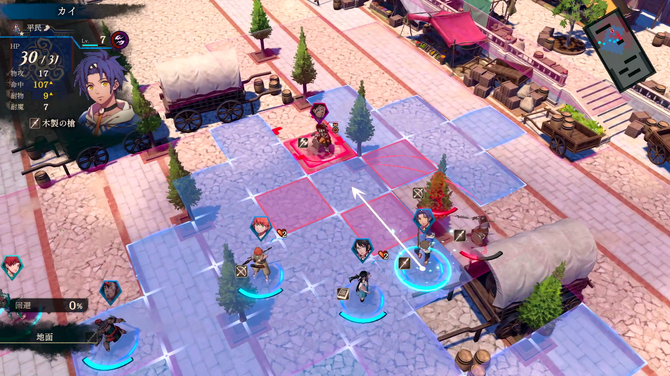
“Famicom Wars” is a simulation game where you control units to defeat enemies on a grid-based, top-down field. The “Fire Emblem” series takes these units and transforms them into unique characters, adding RPG-style progression elements.
Because the units aren’t simply disposable “infantry” or “tanks,” but rather unique characters, each has distinct stats, leading to differences in their skills and performance.As you continue battling in this harsh world where “fallen comrades do not return,” and as your characters grow and their traits become even more pronounced, you’ll constantly devise strategies to let them shine even brighter.
Until now, most titles in the series have followed a basic alternating cycle: the simulation phase → story progression → simulation phase.While there have been changes to the elements in between—such as the introduction of the world map in *Fire Emblem: Fates* and the base customization feature in *Fire Emblem if*—the overall framework remains based on this alternating cycle.
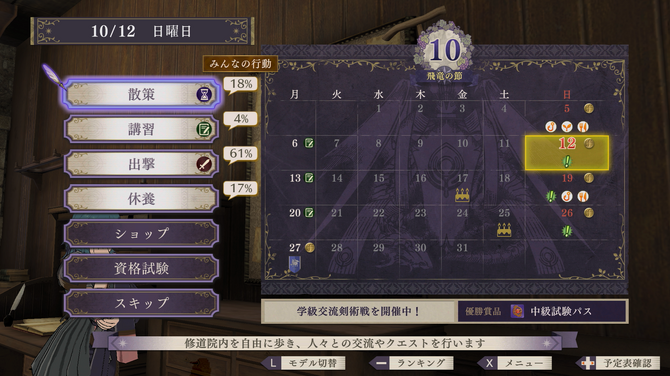
*Fire Emblem: Three Houses* marked a clear departure from this progression. In this game, where you take on the role of a teacher at a military academy to guide your students, the story progresses on a calendar basis. Since a main story battle always awaits at the end of each period (month), you spend the time leading up to it training your students and interacting with them.
*Fire Emblem: Three Houses*, simply put, centers its cycle on a combination of this calendar-based progression and the world map system from *Fire Emblem: Fates*.
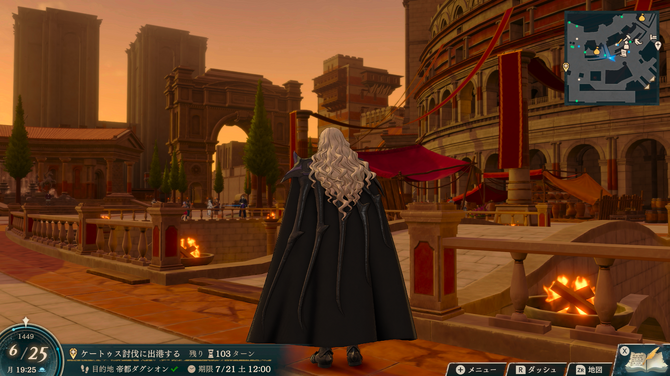
“Dagshion,” the game’s main hub, is home to various facilities designed to help the entire party grow, including “Training” to develop character skills, “Meals” to raise support values between characters, “Theater,” and “Worship” to strengthen the blessings received from the gods.
At times, you’ll need to venture out onto the “World Map” to explore. Here, you can obtain powerful weapons and armor, gather various resources, complete side quests, and level up your characters.
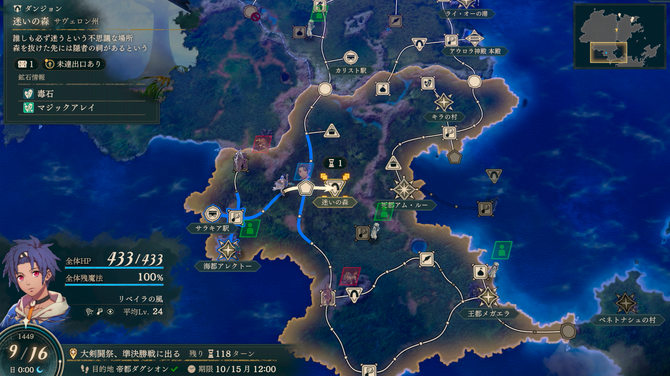
In the towns scattered across the continent, you’ll find merchants selling local specialties, which can be used to enhance other items, trade, or complete quests. You can also obtain information about nearby locations from townspeople, which helps you acquire new materials or venture into dungeons to level up.
The sight of these adventures unfolding bit by bit—as if surveying the continent’s map from a bird’s-eye view—evokes the charm of the good old-fashioned CRPGs.
Since many of these actions consume “turns”—a unit of time linked to the in-game clock—you’ll need to plan your moves carefully if you want to level up efficiently. This is a vastly different experience from *Fire Emblem: Three Houses*, where, even with similar preparation phases, you could generally just proceed in a linear fashion.
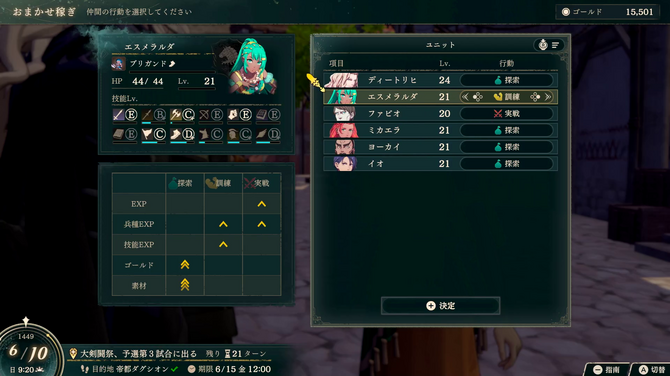
Since the preparation segments take even longer than in *Fire Emblem: Three Houses*, this time can be stressful for players who are eager to get to the main story’s SRPG portion.You can use the “Auto-Grind” feature—which consumes a set number of turns to level up or gather materials—to save time, but if you’re aiming for efficient character development, you’ll inevitably need to engage with other elements of the game.
On the other hand, these exploration and character-building elements become more enjoyable as you gradually learn the most effective ways to approach them.By its very nature, combat extends to external factors such as the strength of your allies, the resources you’ve secured leading up to battle, and whether you’ve gained public support (fame); I feel this game incorporates these elements into the role-playing experience and elevates them into a strategic experience.
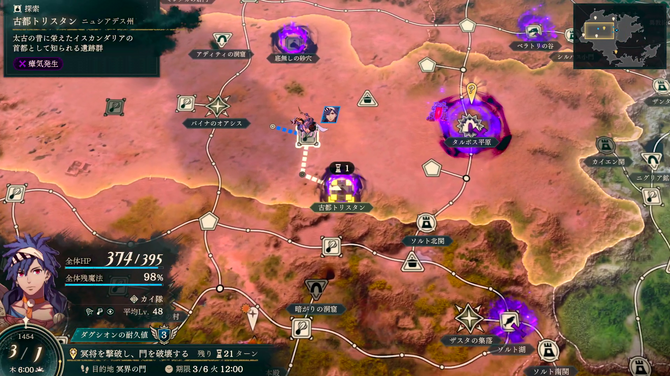
To further expand this gameplay, more in-depth systems are introduced in the latter half of the game. As the story shifts five years forward and the decisive battle against the Demon Lord Barol begins, control on the world map shifts from the “adventuring protagonist” to “multiple units” assembled by the player.The various systems introduced five years ago also take on greater importance, and the scope of what you need to do becomes even more vast.
The effort put into the strategy elements is clearly reflected in the SRPG aspects as well, which significantly changes the level of challenge.Even on Normal difficulty, the game is balanced so that in the latter half, you cannot win without fully utilizing all your resources and systems. Furthermore, with different mechanics in every playthrough—including the side stories—maps that demand flexible tactics create an experience that is anything but straightforward.
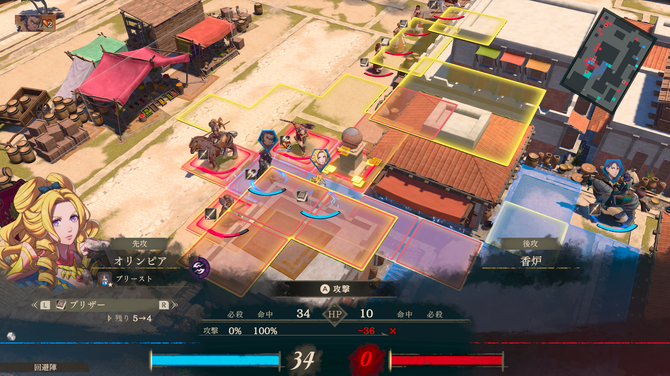
Adventures and wars viewed from a bird’s-eye perspective, and the individual battles unfolding when you zoom in. The game’s defining feature is the ability to shift between these two structures: managing strategy on a macro level while engaging in SRPG gameplay on a micro level.It’s intriguing that, even though Koei Tecmo Games—which participated in the development of *Fire Emblem: Three Houses*—wasn’t involved in this title, the game actually feels even more imbued with the signature style of Kou Shibusawa.
Many players overseas are more familiar with this kind of experience—which is closer to strategy games and CRPGs—than those in Japan, and these cultural differences may be one of the factors contributing to the disparity in reception between domestic and international audiences.
A captivating ensemble drama with vastly different tones
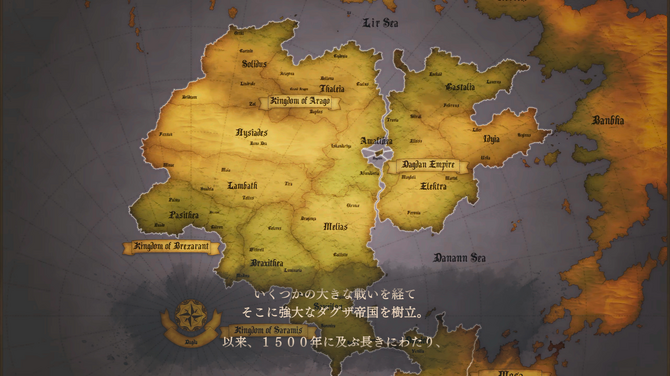
The game is set on “Dagza,” a vast, warm continent located far to the south of “Fodlan,” the setting of the previous title, *Fire Emblem: Three Houses*. The imperial capital, Dagshion, is situated on an island floating in the center of a large lake at the heart of the continent.
The four protagonists—Kai, Dietrich, Theodora, and Leda—take on the “Great Gladiatorial Festival,” a tournament held in Dagshion, aiming to win the honor bestowed by the Divine Pope: the power to “grant any wish.”
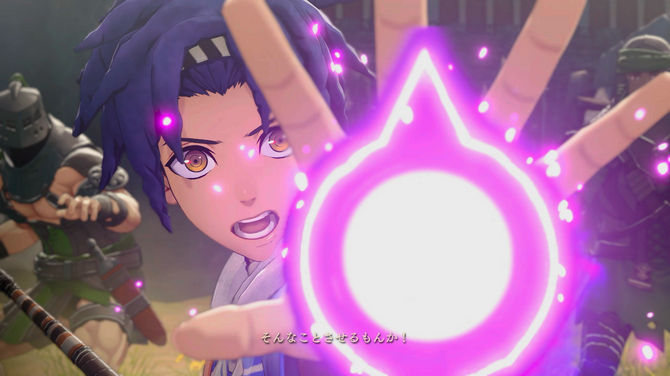
One of the defining features of this title is the ensemble drama surrounding the four protagonists as they navigate the Great Gladiatorial Festival, but what’s particularly noteworthy is how distinct their individual storylines are. While it’s true that all four share the same goal—winning the festival—the tone and themes of the stories depicted on their journeys to that goal are entirely different.
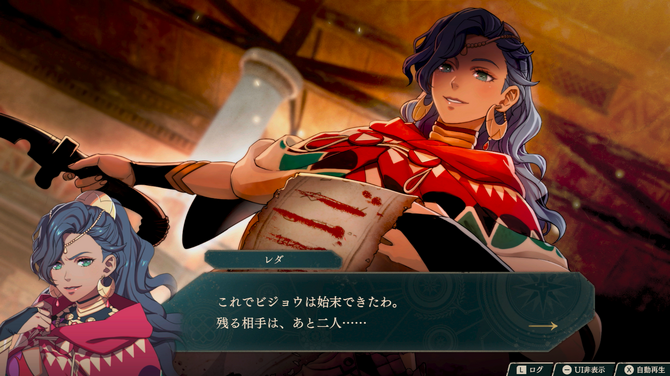
The story of “Kai”—a classic young male protagonist who becomes entangled in events tied to the very foundations of this world’s mythology—is filled with tension yet maintains a consistently gentle atmosphere.In contrast, “Leda’s” route—in which she charges forward without hesitation, even at the cost of her own destruction, to carry out her “revenge”—takes on a dark tone.
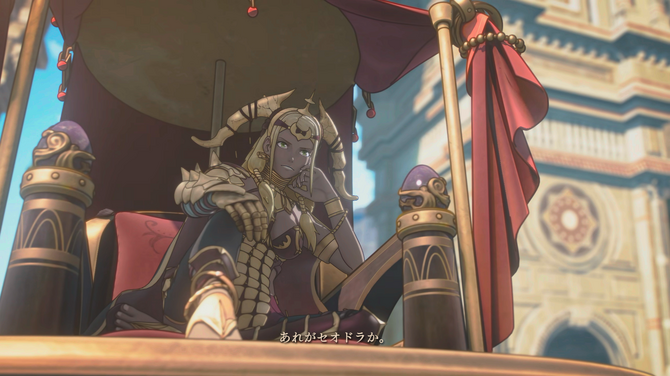
In the route featuring “Dietrich,” a native of Fodra, the sci-fi elements that were only hinted at in the previous game take center stage, delving deeply into the secrets of this world. The only route where matters are measured in terms of nations, people, and faith is that of “Theodora,” the sole protagonist who holds the position of king of a nation.
In terms of the game system as well, differences have been introduced in what the four protagonists can do in both exploration and combat, allowing for a somewhat varied role-playing experience.
Furthermore, each protagonist’s perspective inevitably reveals mysteries that remain hidden from the others. The structure, in which the complex and intricate history of “Dagza”—which is far from straightforward—and the events unfolding behind the scenes are gradually unveiled alongside each protagonist’s story, is truly masterful.
Because scenarios for all four characters are prepared in advance, there’s always something happening behind the scenes. The meticulously crafted, fantasy-style setting—developed since the previous title, *Fire Emblem: Three Houses*—serves as the foundation for this intricately interwoven ensemble drama.
The previous title, *Fire Emblem: Three Houses*, also featured a system where the story branched based on the three classes you chose, yet the narrative maintained a unified tone overall. This time, however, each route features a completely different tone and theme, allowing me to enjoy it with a fresh perspective every time.
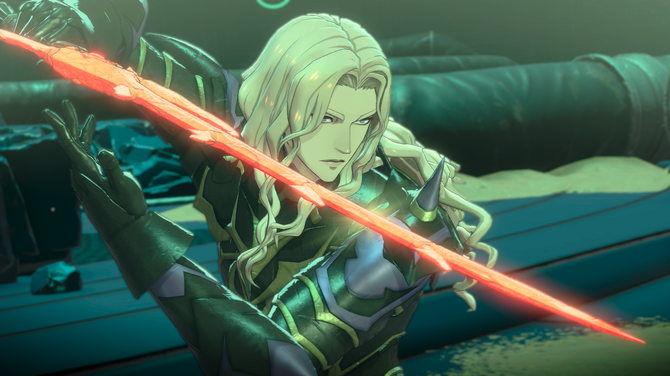
On the other hand, I think this is also one of the reasons why opinions on this game are so divided. For example, among the four character routes, I personally liked Kai’s the most because I was moved by the gentle themes of that route. Conversely, a friend who loves the *Winds of Fate* setting said the Dietrich route was the best, while the Kai route was just so-so.
Ultimately, assuming you plan to play all routes, the fact that it’s an ensemble drama with such distinctly different tones and themes is a major strength. The ability to depict everything from grand themes to subtle ones, and from the national level to the personal level, stems from the broad scope of the world of Dagza. As a result, the game is designed so that different players will naturally have different favorite routes.
However, if the route you choose at the start isn’t to your liking, combined with the tedious early-game pacing I’ll discuss later, the game may struggle to keep players motivated.
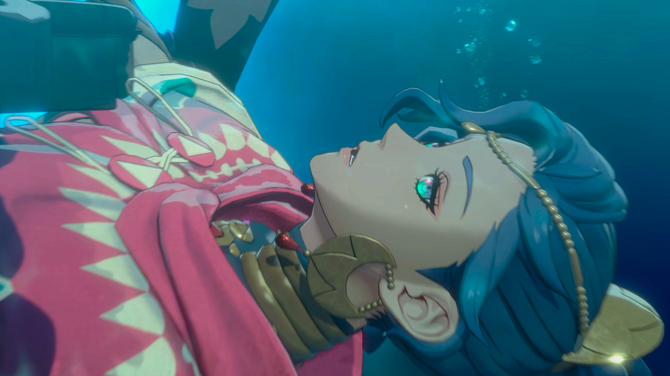
In the previous title, *Fire Emblem: Three Houses*, the story remained largely the same regardless of the route chosen in the first half of the game, with significant changes only beginning in the latter half. In contrast, *Fire Emblem: Three Houses: The Four Seasons* features significant differences in the story during the first half, which then converge in the latter half.
Because the period when the story’s tone is differentiated overlaps with the period when players are learning the game systems, some players may find themselves in a situation that is “critically boring.”
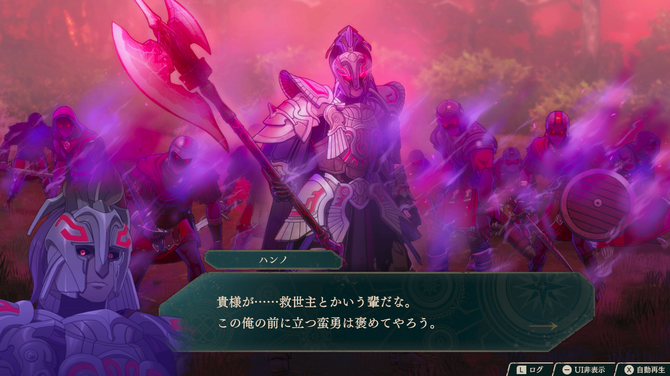
Furthermore, there’s an issue with the portion of the game after the story converges. The narrative in this title fizzles out rapidly in the latter half.Compared to the Great Gladiatorial Festival, where the main characters’ motives were intricately intertwined, the final battle against the “Demon Lord Barol” in the latter half of the game remains confined to a simplified “good versus evil” structure throughout.
The focus also shifts to the “My Unit” “Ishmar”—whom you’ll control five years later—and the goddess “Photona” who guides him, while the characters who played active roles five years prior rarely appear on screen. This seems to be partly due to system constraints stemming from the player’s ability to freely select which units to deploy in battle.
Furthermore, the fact that many mysteries remain unresolved until the very end adds to the sense that the late-game scenario is lacking. It’s a real shame that, despite having established such a compelling world, setting, and numerous details five years prior, almost none of these elements are utilized in the climactic battle set five years later.
Some Characters Reduced to Merely “Pawns”
There are numerous scenes that portray the four protagonists and the main characters surrounding them in a compelling way, and the main story, side stories, and sub-events provide ample depth to their personalities, relationships, and backstories.
On the other hand, this game features a large number of characters who can be recruited into your party, and recruiting them is essential for strengthening your forces. Since each character has a different background and unique strengths, players will have to work hard to raise their affinity and reputation.
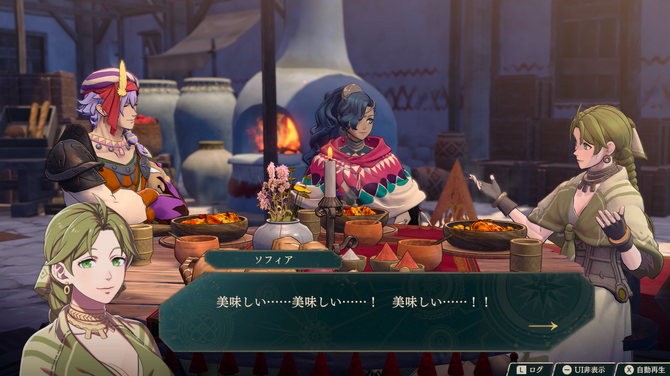
Naturally, once you’ve gone to the trouble of recruiting a character, you’ll want to know what kind of person they are. In previous games in the series, character personalities have been portrayed through a system called “Support Conversations,” which features dialogue scenes between characters.
In particular, the previous installment, *Winds of Fate*, featured an enormous number of support conversations—among the largest in the series—with events prepared for nearly every possible character pairing, showcasing an astonishing level of detail.
It seems *Tales of the Rose* wasn’t quite able to match that level of support conversations… but even so, the number has dropped drastically. Or rather, because of the freedom in character selection and recruitment this time around, it’s actually rare for characters with support conversations to end up on the same side, leading to a situation where it’s common to reach the end of the game without ever seeing a support conversation for certain characters.
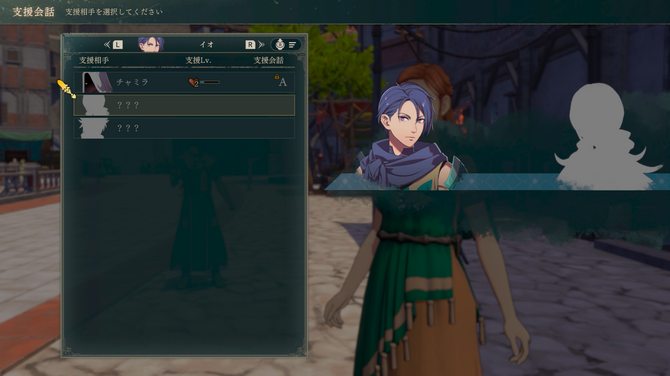
Even if you go to the trouble of recruiting a character, there might be no support conversations, leaving you in the dark about who they really are. As a result, they end up feeling like nothing more than pawns in battle.
It’s true that the number of support conversations in *Winds of Fate* is unprecedented even within the series, and the resources required seem staggering. On the other hand, it’s also a fact that this very abundance brought the game’s appeal as a “character-driven game” to the forefront and helped attract a new user base.
Given that this installment centers on the four protagonists and the scouting system, it’s obvious that the freedom to mix and match characters as allies is greater than in previous titles. Honestly, I feel that the opportunity to see characters interact in various combinations should have been incorporated as a reward in its own right.
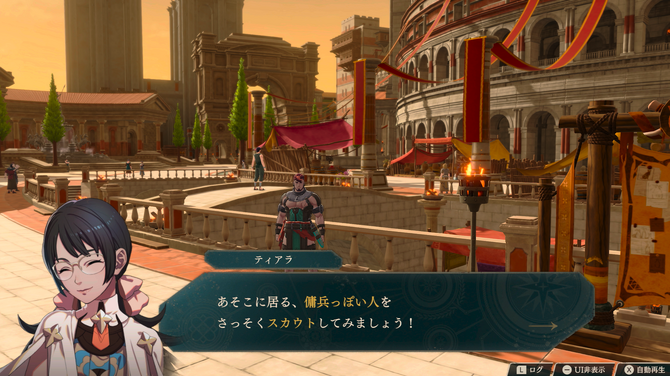
At the very least, I wish they had included support conversations between the main characters and the characters who are confirmed to be scouted first in each route. I simply don’t understand why they deliberately chose characters without support conversations for these roles.
A Disjointed Flow and Puzzling Systems That Overshadow the Game’s Appeal
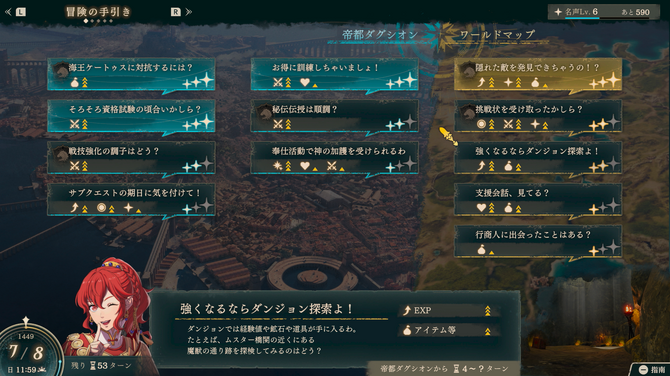
As mentioned above, the number of things you ultimately need to do in *The Land of Dugza* becomes overwhelming. To prevent players from getting lost on where to start, elements are unlocked in a systematic order during the early stages.
Even so, if you find yourself unsure of what to do, you can use the “Adventure Guide” menu, which suggests your current priorities in order of importance. The tutorial is also designed so that explanations appear whenever a new system is introduced, and these can later be reviewed in a list organized by category in the “Guide” menu.
The combat difficulty is also kept fairly low in the early stages, clearly demonstrating the game’s intent to guide players step by step.
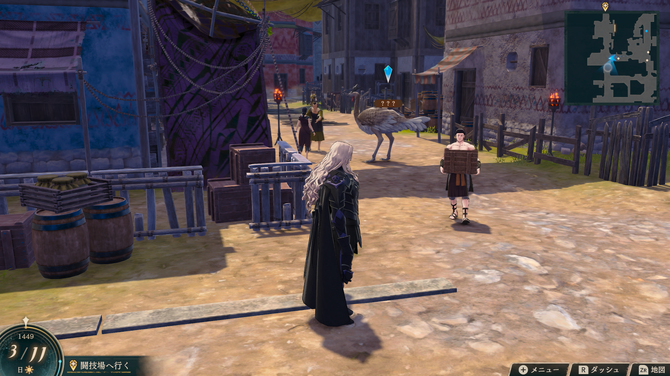
On the other hand, there are occasional moments during gameplay that feel puzzling, such as important elements that lack any explanation whatsoever, or systems that lack a sense of consistent direction.
For example, icons indicating the locations of fully voiced event scenes—which occur on specific dates or at specific locations—are displayed unusually inconspicuously on the map screen for some reason; the bulletin board strangely fails to list nearly all side quests and is designed to serve no purpose whatsoever once the tutorial is complete;or the fact that enemies possessing the “Blessing of the Underworld” skill—which nullifies attacks under specific conditions—don’t have this noted in their status screens…
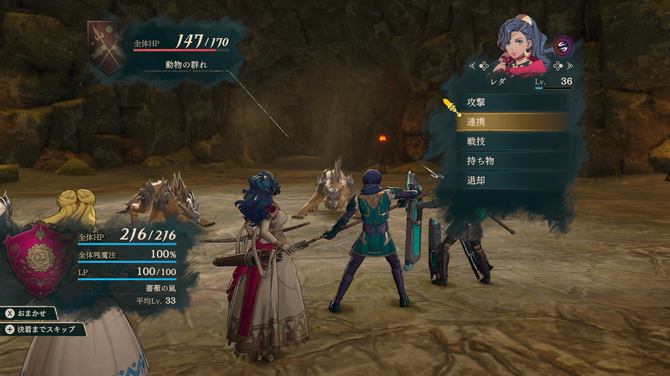
The “Quick Battle” system—a command-based battle format newly added in this title—is intended to present the frequent battles that occur during the adventure at a brisk pace, but the essence of the gameplay lies, above all, in resource management during exploration.
Consequently, the very act of selecting commands hinders the overall pace of play. The developers are likely aware of this, which is why a “Skip” function was included—but if that’s the case, it seems like they could have simply used an auto-battle system from the start, like in *WWA* or *For the Frogs the Bell Tolls*, where results are immediate.
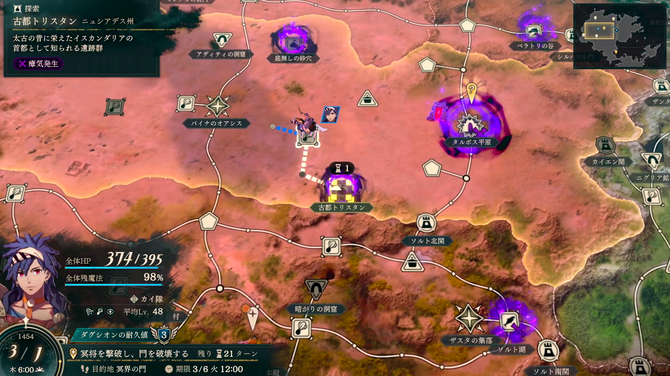
With a game cycle that differs significantly from past entries, this title feels as though it’s dipping a toe into the world of *Nobunaga’s Ambition* or *Civilization*; however, it gives the impression that the guidance and systems haven’t quite kept pace with the increasingly complex concepts.
To begin with, the systems in those strategy games are incomparably more complex than this one’s, and it’s simply impossible for the game to be designed so that players can understand everything on their first playthrough. However, if Nintendo is going to market *Fire Emblem* under its brand right now, it’s absolutely necessary to guide players carefully.
Perhaps because of this, the game lacks consistency in how thoroughly it supports players given the complexity of its goals, and I get the impression that this is causing unnecessary stress for players.
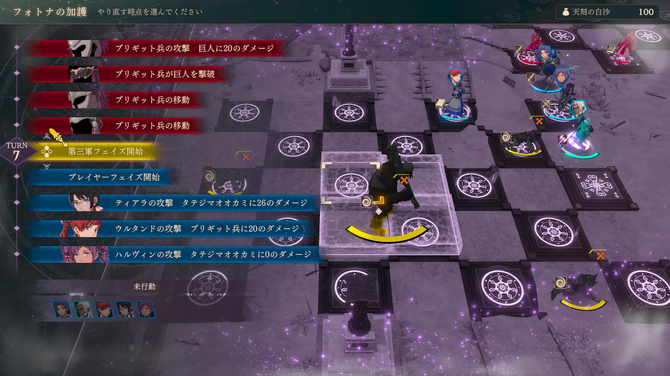
Does the game want players to enjoy free character development, follow a predetermined path, watch cutscenes, or explore on their own? Because certain elements are unlocked too late or, conversely, too early, and because there are no clear paths leading to important systems, there are frequent moments where the game’s intentions aren’t clear.
It does become very interesting once players gradually understand these various systems and learn to master them… but that doesn’t happen until the latter half of the game. Since the strategy elements don’t truly come into their own until five years in, the appeal of the game’s unique concept is barely felt in the early stages.
This title already features a challenging style that’s vastly different from previous entries. If the developers intended to see this challenge through under this brand, I wish they had allocated more resources than ever before to fine-tuning the details and demonstrated from the very beginning—in a flawless manner—that this direction was the right one.
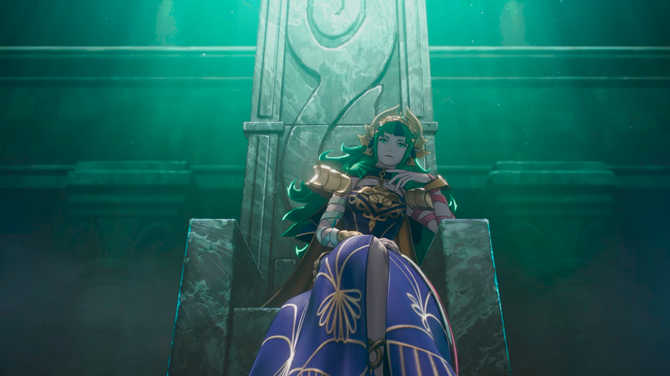
“Dagza,” the setting of *Fire Emblem: A Thousand Blossoms*, is a captivating fantasy world capable of fully depicting both grand-scale narratives—such as mythology, science fiction, and wars between nations—and personal-scale stories involving family, revenge, and romance.The ensemble drama depicted there fully capitalizes on this potential, with each story featuring vastly different themes and tones.
In terms of gameplay, the calendar system from *Three Houses* is combined with the world map system from *Echoes*, making the preparation of combat strength, resources, and reputation an integral part of the role-playing experience. A key feature of this title is its dual nature: on a macro level, players manage resources and develop their forces through strategic planning, while on a micro level, they conquer simulation maps.
On the other hand, I believe the fact that the lengthy early-game tutorial designed to teach this complex system overlaps with the ensemble drama phase—where preferences vary greatly due to the starkly different tones—is a major factor in significantly dampening the motivation of some players.It’s a real shame that these issues—including several inconsistent game mechanics—end up overshadowing the game’s appeal.
Game*Spark Review: “Fire Emblem: A Thousand Blossoms” Nintendo Switch 2 September 17, 2026
Inconsistencies That Overshadow the Diverse Ensemble Story and the Appeal of New Role-Playing Elements
-
GOOD
- A captivating ensemble drama with distinct themes and tones
- The “Dagza” world, meticulously crafted to fully bring these stories to life
- Strategy elements that let you role-play on a grand scale
- Numerous end-game maps that demand flexible combat to make the most of everything
BAD
- A tedious and inconsistent narrative flow that causes the game to take an extremely long time to really get going
- Supporting characters who lack opportunities to make players care about them
- A story that rapidly loses depth five years later